
La plupart des conseils en marketing sur les réseaux sociaux traitent encore la discipline comme si nous étions en 2021 : choisissez vos plateformes, publiez régulièrement, suivez l'engagement, recommencez. Ce guide n'est pas faux, mais il est incomplet. Si vous cherchez des conseils de marketing sur les réseaux sociaux qui prennent réellement en compte la manière dont fonctionne la découverte aujourd'hui, c'est par ici qu'il faut commencer.
En 2026, votre contenu sur les réseaux sociaux ne se contente pas de toucher les personnes qui font défiler leur flux. Il atteint également les modèles d'IA qui synthétisent les réponses pour elles. ChatGPT, Gemini, Perplexity et les AI Overviews dans Google Search s'appuient sur le contenu public du web pour générer des réponses, et les plateformes sur lesquelles ils s'appuient le plus incluent YouTube, Reddit, les articles LinkedIn et les plateformes de publication à long format comme Substack et Medium. Un plan de marketing sur les réseaux sociaux qui ignore cette dimension optimise pour une audience tout en restant invisible pour une autre.

Cela change ce qu'une stratégie sur les réseaux sociaux doit accomplir. Elle doit toujours générer de l'engagement, du trafic et des conversions auprès des audiences humaines. Mais elle doit aussi produire le type de contenu de fond, indexable et public que les modèles d'IA citent lorsque quelqu'un demande « quel est le meilleur moyen de faire X » ou « quels outils valent la peine d'être envisagés pour Y ».
L'échelle de grandeur montre bien pourquoi c'est important. L'analyse d'avril 2026 de DataReportal estime qu'il y avait 5,79 milliards d'identités d'utilisateurs de réseaux sociaux dans le monde, soit environ 70 % de la population mondiale. Selon le même rapport, l'utilisateur type interagit avec environ 6,5 plateformes différentes chaque mois.
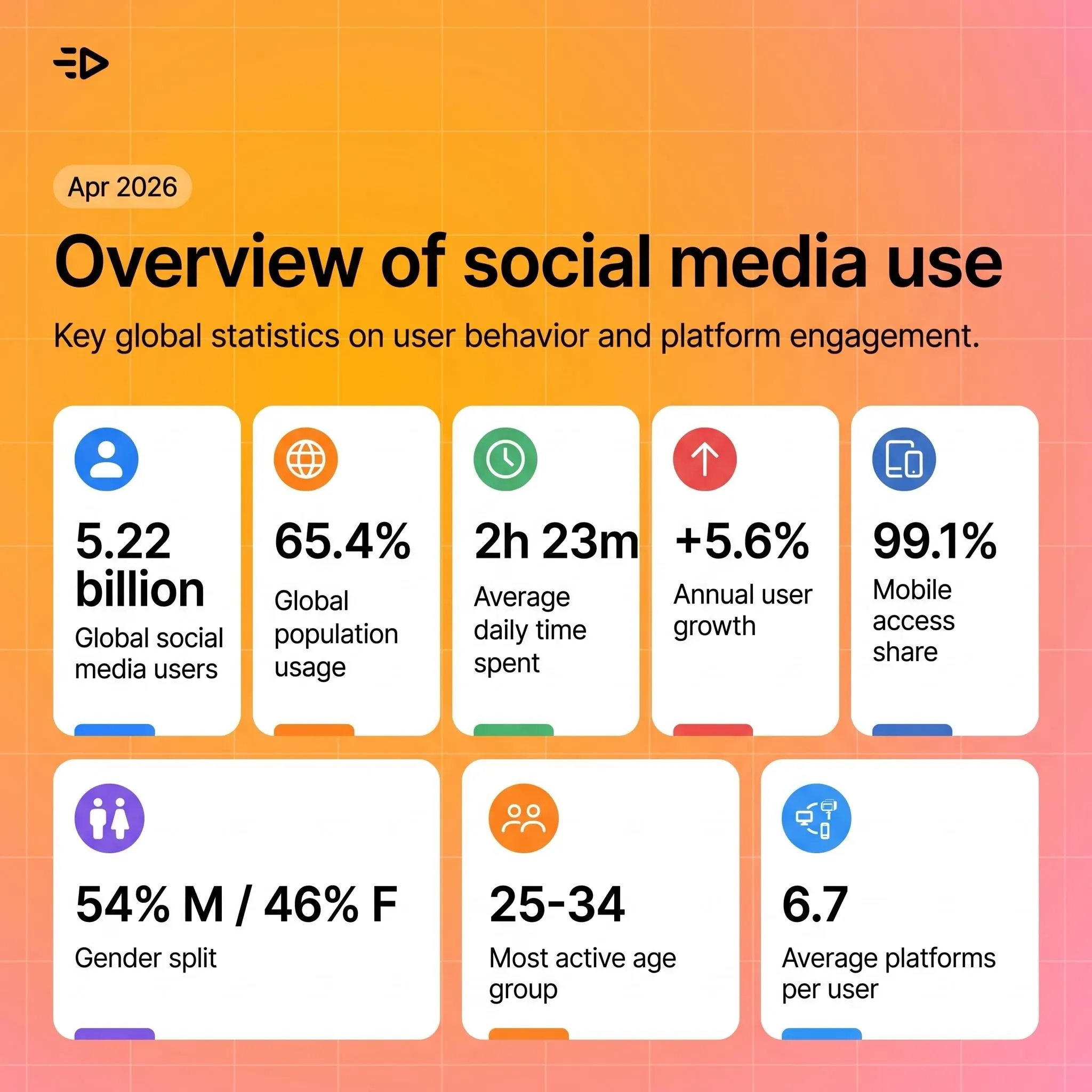
Votre audience passe un temps considérable sur plusieurs plateformes, chacune ayant des attentes différentes en matière de contenu, de format et de ton. Pendant ce temps, une part croissante de la découverte se fait via la recherche propulsée par l'IA, où le contenu social public et riche en texte est poussé vers des utilisateurs qui n'ouvrent jamais la plateforme sur laquelle il a été publié.
Les entreprises qui construisent des stratégies sur les réseaux sociaux autour de cette double audience (humains et machines) multiplieront leur visibilité. Celles qui mesurent encore le succès uniquement aux likes se demanderont où est passée leur portée.
Ce guide vous explique comment créer un plan pour les réseaux sociaux qui se connecte à de réels résultats commerciaux sur ces deux niveaux, de la définition des objectifs à l'optimisation. Ces mêmes étapes servent de modèle pour faire du marketing sur les réseaux sociaux d'une manière qui résiste aux changements de plateformes et d'algorithmes.
Définissez des objectifs avant de choisir des tactiques
Toute stratégie de marketing sur les réseaux sociaux devrait commencer par une question : à quoi ressemble le succès pour l'entreprise ?
Pas pour le compte Instagram. Pour l'entreprise.
Une stratégie de marketing social efficace commence par des objectifs, pas par des tactiques.
Les objectifs sur les réseaux sociaux doivent découler d'un objectif commercial. Si l'entreprise a besoin de leads, la stratégie sociale doit générer du trafic qualifié vers une page de destination ou une ressource protégée. Si l'entreprise a besoin de notoriété sur un nouveau marché, la stratégie doit donner la priorité à la portée et à la fréquence auprès d'un segment d'audience spécifique. Si la rétention client est la priorité, l'engagement de la communauté et la réactivité du support deviennent l'axe principal.
Objectifs courants sur les réseaux sociaux autour desquels bâtir des plans :
Notoriété de la marque : Augmenter la portée et les impressions auprès d'un segment d'audience défini.
Trafic : Générer des visites vers une page de destination spécifique, un blog ou une page produit.
Génération de leads : Capturer des adresses e-mail ou des demandes de démo grâce à des offres pensées d'abord pour les réseaux sociaux.
Croissance de la communauté : Bâtir une audience engagée qui interagit régulièrement, et pas seulement des abonnés passifs.
Support client : Réduire les temps de réponse et résoudre les problèmes sur les canaux publics.
Ventes : Générer des achats directs via le social commerce, les fonctionnalités de paiement natives (comme TikTok Shop ou Instagram Shopping) ou des campagnes de reciblage pour ramener les audiences chaudes vers votre boutique.
Rendez chaque objectif mesurable. « Développer notre Instagram » n'est pas un objectif. « Toucher 50 000 comptes par mois sur Instagram avec un taux d'engagement de plus de 3 % d'ici le troisième trimestre » vous donne un cap précis à viser et à évaluer.
Si vous avez besoin d'un cadre plus approfondi pour définir des objectifs de campagne et les lier à des indicateurs commerciaux, nous avons traité cela en détail dans comment lancer une campagne marketing de zéro.
Comprenez votre audience en profondeur
La plus grande perte de temps en marketing sur les réseaux sociaux est de créer du contenu pour une audience que vous n'avez pas définie. Vous finissez par deviner les formats, les tons et les sujets, puis vous vous demandez pourquoi l'engagement reste plat.

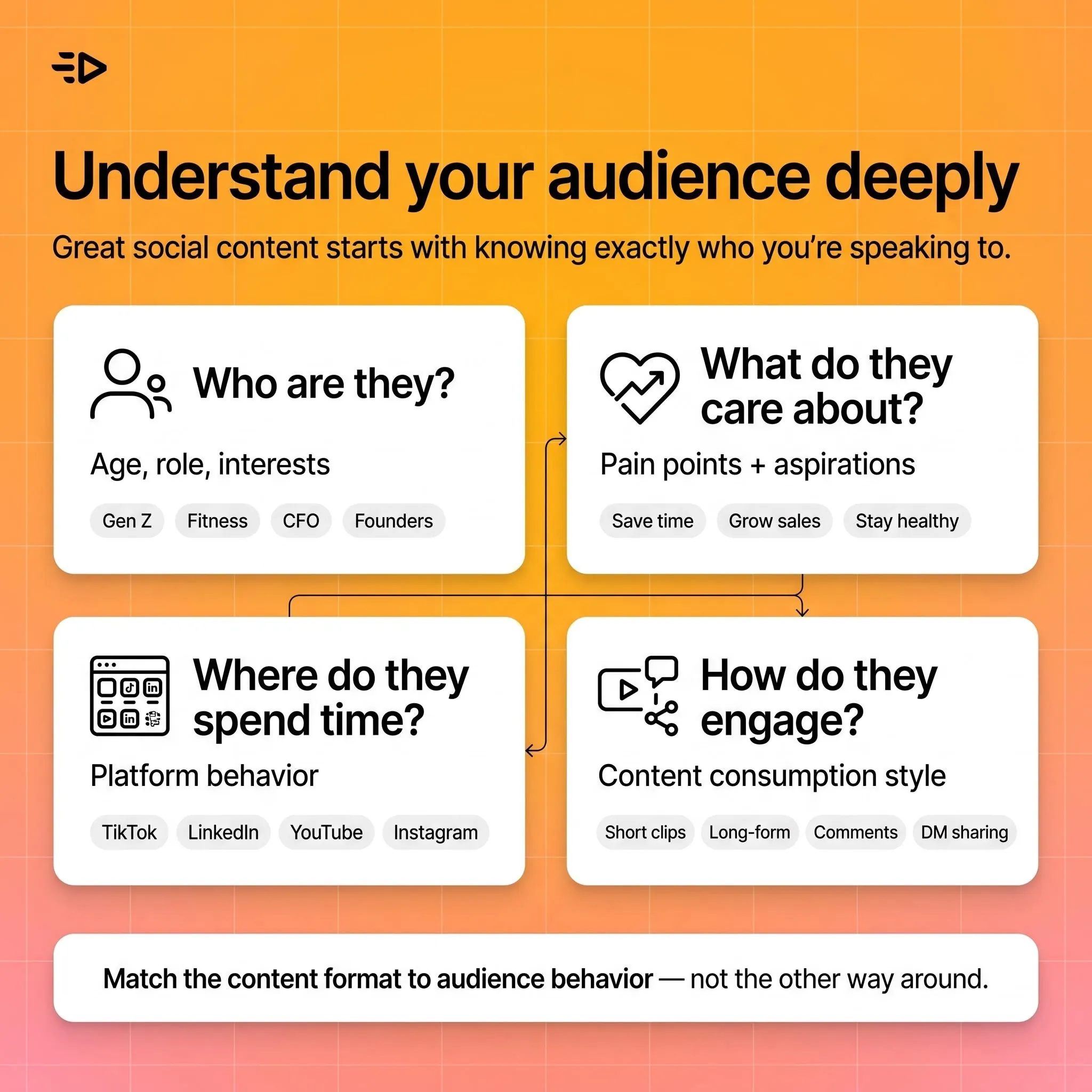
La recherche d'audience pour les réseaux sociaux devrait répondre à :
Qui sont-ils ? Données démographiques, rôles professionnels, intérêts et étape de vie. Un passionné de fitness de 24 ans sur TikTok consomme du contenu de manière totalement différente d'un directeur financier de 45 ans sur LinkedIn.
Qu'est-ce qui les intéresse ? Points de friction, aspirations, questions qu'ils se posent et problèmes qu'ils essaient de résoudre.
Où passent-ils du temps ? Les préférences de plateformes varient considérablement selon l'âge. L'enquête 2025 du Pew Research Center a révélé que 80 % des adultes américains âgés de 18 à 29 ans utilisent Instagram, contre seulement 19 % des adultes de 65 ans et plus. TikTok et Snapchat affichent des biais d'âge similaires. YouTube et Facebook ont la portée la plus large selon l'enquête de Pew, avec une utilisation majoritaire dans la plupart des tranches démographiques.
Comment s'engagent-ils ? Regardent-ils des vidéos longues ? Font-ils défiler des clips courts ? Lisent-ils les légendes ? Interagissent-ils dans les commentaires ? Partagent-ils en DM ? Le format du contenu doit s'adapter au comportement, et non l'inverse.
Commencez par les données que vous possédez déjà. Les fiches CRM, l'analyse du site web, les données d'engagement par e-mail et les insights sociaux existants vous donneront une image bien plus claire que n'importe quel persona théorique. Superposez ensuite des recherches spécifiques aux plateformes pour comprendre où votre audience est la plus accessible et la plus réceptive. Savoir utiliser efficacement les réseaux sociaux commence ici, en adaptant le contenu aux comportements réels de l'audience plutôt qu'à des suppositions.
Choisissez vos plateformes de manière intentionnelle
Vous n'avez pas besoin d'être partout. Vous devez être là où votre audience est attentive, dans le format qu'elle attend, avec un message qui résonne.
Le cadre de stratégie marketing de l'Université de San Diego recommande de commencer par deux ou trois plateformes clés plutôt que de s'éparpiller sur six. Une présence ciblée avec un contenu de qualité et régulier surpasse une présence dispersée avec des publications sporadiques sur tous les réseaux. Cette focalisation est l'une des stratégies de marketing sur les réseaux sociaux les plus négligées, car approfondir quelques canaux est bien plus efficace que de survoler l'intégralité d'entre eux.
Voici une approche pratique pour sélectionner vos plateformes :
YouTube (84 % des adultes américains) : Portée la plus large. Idéal pour l'éducation, les démos de produits, le contenu long format et la découverte par recherche. Fort potentiel pour les marques capables de produire régulièrement du contenu vidéo utile.
Facebook (71 % des adultes américains) : Reste le plus grand réseau social en termes d'utilisateurs actifs. Idéal pour les groupes communautaires, le commerce local, le reciblage et les tranches d'âge plus mûres. La portée organique des pages de marque étant limitée, une amplification payante est généralement requise.
Instagram (50 % des adultes américains) : Plateforme visuelle avant tout. Les Reels stimulent la découverte, les Stories favorisent l'engagement et le feed assoit la présence de marque. Idéal pour les 18-44 ans.
TikTok (37 % des adultes américains) : Plateforme axée sur la découverte dynamique grâce à de la vidéo courte. Utilisation quotidienne la plus élevée chez les jeunes adultes (environ la moitié des 18-29 ans l'utilisent quotidiennement). Valorise le contenu créatif et natif plutôt qu'une production trop léchée.
LinkedIn : La plateforme B2B par excellence. Idéale pour le leadership d'opinion, le recrutement et pour toucher des profils professionnels. L'algorithme vidéo de LinkedIn s'est considérablement développé en 2026, en faisant un excellent canal pour les vidéos courtes, en plus de sa force historique sur les publications textuelles. Les articles LinkedIn sont particulièrement précieux pour les stratégies de marketing sur les réseaux sociaux en 2026 car ils sont publics et indexables par les moteurs de recherche et les modèles d'IA. Lorsque quelqu'un pose une question sur votre secteur à ChatGPT ou Perplexity, un article LinkedIn bien rédigé a des chances d'être cité en réponse. Les articles LinkedIn les plus efficaces se concentrent sur un sujet précis de manière assez approfondie pour démontrer votre expertise, et ils peuvent être déclinés en posts courts, carrousels et vidéos. La plateforme a tendance à valoriser les analyses spécifiques, utiles et non promotionnelles plutôt que les messages de marque génériques.
Reddit : Souvent négligé dans les plans de marketing sur les réseaux sociaux, mais de plus en plus crucial en 2026 pour une raison simple : les modèles d'IA citent énormément les fils de discussion Reddit. Le contenu Reddit apparaît fréquemment dans les AI Overviews de Google, les réponses de Perplexity et celles de ChatGPT car les discussions sont publiques, riches en texte et structurées autour de questions précises. Les marques qui participent de manière authentique aux subreddits pertinents (en répondant aux questions, en partageant leur expertise, en contribuant aux débats) gagnent en visibilité à la fois auprès de l'audience du subreddit et auprès des modèles d'IA qui indexent ces conversations. Reddit n'est pas une plateforme de diffusion descendante. L'autopromotion y est rapidement sanctionnée par des votes négatifs. Mais pour les marques prêtes à apporter une réelle valeur ajoutée aux communautés liées à leur secteur, c'est l'un des canaux offrant le meilleur effet de levier pour la découvrabilité à long terme.
X (anciennement Twitter), Snapchat, Pinterest : Chacun sert une audience et un cas d'usage précis. À envisager si vos données d'audience montrent une présence significative, mais non essentiels pour débuter la plupart des plans de marketing sur les réseaux sociaux.
Comparatif des plateformes de réseaux sociaux
Plateforme | Portée (adultes US) | Idéal pour | Format de contenu | Découvrable par l'IA ? |
|---|---|---|---|---|
YouTube | 84% | Éducation, démos, découverte par recherche | Format long + Shorts | Oui (transcriptions, métadonnées) |
71% | Communauté, business local, reciblage | Mixte, priorité au payant | Non | |
50% | Présence de marque, storytelling visuel | Reels, Stories, carrousels | Non | |
TikTok | 37% | Découverte format court, audiences jeunes | Vidéo courte | Non |
Ciblé B2B | Leadership d'opinion, portée B2B | Articles, posts textuels, vidéo | Oui (articles indexables) | |
Communautés de niche | Q&A authentique, découvrabilité à long terme | Discussions par fils | Oui (fils publics) |
Plateformes découvrables par l'IA vs. environnements fermés
Lorsque vous choisissez où vous concentrer, ne regardez pas seulement qui est sur chaque plateforme, mais demandez-vous si le contenu que vous y créez peut être trouvé en dehors de celle-ci.
Certaines plateformes produisent du contenu auquel les modèles d'IA et les moteurs de recherche peuvent accéder et qu'ils peuvent citer. YouTube (via les transcriptions et les métadonnées), Reddit (threads publics), les articles LinkedIn (format long indexable) et les plateformes d'édition comme Substack et Medium entrent tous dans cette catégorie. Le contenu créé ici a un effet cumulatif : il touche l'audience de la plateforme aujourd'hui et continue de remonter dans les réponses générées par l'IA et les résultats de recherche au fil du temps.
D'autres plateformes sont des environnements fermés. Instagram, TikTok, Facebook et Snapchat sont puissants pour toucher des audiences humaines dans leur flux, mais leur contenu est largement invisible pour les moteurs de recherche d'IA. Une vidéo TikTok peut faire un million de vues, mais ChatGPT ne la citera jamais pour répondre à une question sur votre secteur.
Cela ne signifie pas que les plateformes fermées ne valent pas la peine d'être utilisées. Elles sont indispensables pour l'engagement, la création de communauté, la distribution payante et la découverte de formats courts. Mais si votre stratégie sur les réseaux sociaux produit uniquement du contenu dans des espaces fermés, vous construisez une visibilité qui revient à zéro à chaque mise à jour d'algorithme. En 2026, les meilleures stratégies sur les réseaux sociaux intègrent au moins un canal produisant du contenu public, indexable et découvrable par l'IA en parallèle de plateformes axées sur l'engagement direct.
Sélectionnez les plateformes où votre audience passe déjà du temps. Allez ensuite en profondeur plutôt que de vous éparpiller, et assurez-vous qu'au moins une partie de votre contenu social soit visible au-delà du simple flux.
Lire aussi : Comment créer une vidéo à partir de photos grâce à l'IA
Auditez ce que vous avez déjà
Avant de créer de nouvelles choses, observez ce qui fonctionne déjà (et ce qui ne fonctionne pas).
Un audit de réseaux sociaux ne doit pas forcément prendre une semaine. Le guide des meilleures pratiques de l'UCSB recommande d'examiner une check-list d'éléments pratiques que vous pouvez passer en revue en une après-midi :
Optimisation des profils : Chaque profil est-il complet, cohérent et fidèle à la marque ? Les bios expliquent-elles clairement ce que vous faites et qui vous aidez ?
Performance du contenu : Quels posts des 90 derniers jours ont généré le plus d'engagement, de portée et de clics ? Lesquels ont fait un flop ? Cherchez des schémas récurrents de format, de sujet et d'heure.
Fréquence de publication : À quelle fréquence publiez-vous sur chaque plateforme ? Est-ce régulier ou s'agit-il de pics et de creux selon qui s'en rappelle ?
Qualité de l'engagement : Obtenez-vous des interactions significatives (commentaires, partages, enregistrements, DM) ou simplement des likes des 30 mêmes abonnés ?
Impact sur le trafic : Les réseaux sociaux génèrent-ils de vraies visites sur votre site ? Vérifiez Google Analytics pour analyser le trafic référent des réseaux sociaux et identifier les plateformes les plus rentables.
L'audit vous offre une vision claire de votre point de départ. Il révèle également ce qu'il faut arrêter de faire (formats peu performants, comptes délaissés) et ce sur quoi vous devez insister (formats et sujets qui résonnent déjà).
Lire aussi : L'IA générative dans la publicité : comment elle transforme le créatif, le ciblage et la mesure
Bâtissez des piliers de contenu et un système de publication
Les publications aléatoires sont l'ennemi de tout plan de marketing sur les réseaux sociaux. Vous avez besoin d'une structure qui rende la création de contenu reproductible, régulière et connectée à vos objectifs.
Les piliers de contenu sont 3 à 5 thèmes récurrents qui structurent tout ce que vous publiez. Ils doivent être connectés aux besoins de votre audience et à vos objectifs commerciaux. Par exemple, une entreprise SaaS B2B pourrait articuler sa prise de parole autour de :
L'éducation produit (comment l'outil résout des problèmes précis)
L'analyse sectorielle (les tendances et données clés pour l'audience)
Les histoires de clients (de vrais résultats d'utilisateurs réels)
Les coulisses (transparence de l'équipe, de la culture et des process)
Les leviers d'engagement (questions, sondages, avis tranchés)
Ces piliers garantissent la cohérence de votre flux tout en évitant la répétitivité. Chacun d'entre eux peut générer des dizaines de posts individuels sous différents formats.
Un point important pour 2026 : assurez-vous qu'au moins l'un de vos piliers de contenu produise du contenu public, textuel et de fond, que les modèles d'IA peuvent indexer. Un carrousel Instagram sur les tendances du secteur est précieux pour l'engagement, mais un article LinkedIn ou une vidéo YouTube sur le même sujet crée une visibilité à long terme via la recherche IA. Votre grille de piliers doit inclure au moins un format au service de l'audience IA, en plus de l'audience humaine.
Une fois vos piliers posés, mettez en place votre système de publication :
Calendrier éditorial : Planifiez à 2 ou 4 semaines. Associez chaque post à un pilier, une plateforme et un format. Conservez de la place pour du contenu réactif (sujets chauds, actualité), mais n'en faites pas votre production principale.
Flux de production : Définissez qui rédige, qui conçoit, qui valide et qui publie. Même s'il s'agit d'une seule et même personne multitâche, formaliser ces étapes évite de laisser passer des détails importants.
Déclinaison de contenu : Tout contenu fort doit être décliné sous plusieurs formats. Un article de blog devient un carrousel LinkedIn, une courte synthèse vidéo, une section de newsletter et trois posts courts. Cette méthode démultiplie votre volume de production sans démultiplier les efforts.
Régularité : La régularité compte plus que la fréquence de publication. Publier trois fois par semaine à jour fixe est plus payant que de publier dix fois une semaine et plus rien la suivante. Trouvez un rythme que votre équipe peut tenir sur la durée.
Adaptez le contenu aux codes de chaque plateforme
Une même idée nécessite un habillage différent pour chaque plateforme. Publier le même contenu brut partout est le meilleur moyen de tuer l'engagement.
Chaque réseau a ses propres codes :
La vidéo courte (TikTok, Instagram Reels, YouTube Shorts) est taillée pour la découverte. Ces plateformes poussent le contenu auprès de nouvelles audiences sur la base de signaux d'engagement, pas du nombre d'abonnés. Votre vidéo doit capter l'attention dans les 1 à 2 premières secondes et apporter de la valeur rapidement.
Pour les équipes devant produire de la vidéo courte en quantité, la production traditionnelle est intenable. Tourner, monter et formater une seule vidéo de 30 secondes par plateforme et par jour consomme des heures d'efforts. Des outils vidéo IA comme Creatify permettent de générer de multiples variations de vidéos publicitaires à partir d'une URL produit ou d'un prompt texte, libérant ainsi du temps pour tester différents accroches, formats et messages sans bloquer toute une semaine sur la production.
LinkedIn valorise les posts qui affichent un point de vue fort. Les comptes personnels y surperforment généralement les pages de marque en portée organique. Les réflexions de fond, les retours d'expérience et les analyses de secteur fonctionnent très bien, et le développement de l'algorithme vidéo de LinkedIn signifie que les formats courts y bénéficient désormais d'une excellente visibilité. Pour les formats plus longs, les articles LinkedIn sont l'un des rares formats sociaux contribuant directement à la visibilité sur l'IA de recherche car ils sont publics et indexables. Lorsque les modèles d'IA répondent à des questions sur votre industrie, les articles LinkedIn qui proposent des cadres clairs, des retours d'expérience précis et une vraie expertise sont le type de contenu cité en priorité. Considérez ces articles comme un pilier stratégique, pas seulement comme un simple moyen de recycler du contenu. Rédigez-les pour expliquer des méthodologies, partager des leçons apprises ou décortiquer des sujets industriels complexes avec le niveau de détail nécessaire pour asseoir une vraie autorité.
La grille Instagram et les Stories sont visuelles avant tout. Des images de qualité, des carrousels éducatifs et des Stories interactives (sondages, questions, quiz) génèrent le plus d'engagement.
Facebook reste idéal pour l'animation de communauté, la promotion d'événements et la distribution payante. La portée organique pour les pages professionnelles y étant très faible, considérez-le principalement comme un canal payant pour la plupart de vos objectifs marketing.
Le principe est simple : adaptez l'idée, pas seulement les dimensions de l'image. L'annonce d'un lancement produit doit avoir un visage et un ton différents sur TikTok et sur LinkedIn. Même message, exécution adaptée aux usages natifs de chaque réseau.
Lire aussi : Comment lancer une campagne marketing de zéro
Visez l'engagement, pas seulement la portée
La portée vous indique combien de personnes ont vu votre contenu. L'engagement vous montre combien de personnes s'y sont intéressées.

Les réseaux sociaux sont un espace de dialogue bidirectionnel. Les marques qui les traitent comme un simple canal de diffusion (on publie et on s'en va) sous-performent systématiquement par rapport à celles qui s'impliquent dans les échanges.
Méthodes concrètes pour stimuler l'engagement :
Répondez rapidement aux commentaires. Particulièrement dans la première heure après publication, période durant laquelle les algorithmes évaluent si votre contenu mérite d'être diffusé plus largement.
Posez des questions qui incitent à de vraies réponses. Évitez les « qu'en pensez-vous ? » (trop vagues), préférez des questions ciblées : « Quel est votre principal point de blocage lors du lancement d'une campagne publicitaire ? » ou « Quelle plateforme génère le plus de revenus pour votre activité ? »
Utilisez les fonctionnalités interactives. Les sondages, quiz, stickers questions et les formats « ceci ou cela » en Story augmentent le taux d'interaction et signalent aux algorithmes que votre audience est active.
Mettez votre communauté en avant. Partagez des cas clients, relayez le contenu généré par vos utilisateurs et valorisez les contributions de votre audience. Cela fidélise et encourage une participation active.
Mettez en place des processus de réponse. Déterminez qui gère les DM et les commentaires, quel est l'objectif de délai de réponse et comment escalader les demandes de support client. Les failles de service client sur les réseaux sociaux se produisent aux yeux de tous, ce qui rend la rapidité d'exécution plus cruciale ici que sur n'importe quel autre canal.
Intégrez le social payant de manière stratégique
Le social organique développe votre présence. Le social payant apporte de la précision.
Les deux jouent des rôles complémentaires dans une stratégie de marketing sur les réseaux sociaux globale, et fonctionnent de concert.
Le contenu organique construit la confiance, la voix de la marque et la communauté sur le long terme. Le payant amplifie vos contenus organiques les plus performants, cible des segments d'audience précis et accélère vos résultats lorsque vous avez des échéances précises.
Quelques règles d'or pour un usage efficace de la publicité sociale :
Soutenez ce qui a déjà fait ses preuves, pas des suppositions. Si un post fonctionne bien en organique, y associer du budget publicitaire augmente vos chances d'obtenir un bon retour sur investissement. Financer des visuels non validés par le marché est une méthode très coûteuse pour apprendre ce qui fonctionne.
Ciblez les étapes de votre tunnel de conversion. Haut de tunnel : campagnes de notoriété sur des critères d'intérêt globaux. Milieu : reciblage des visiteurs de votre site ou des personnes ayant interagi avec vos contenus passés. Bas de tunnel : campagnes de conversion directes avec des offres ciblées pour vos audiences mûres.
Testez vos créations à grande échelle. Les plateformes comme Meta et TikTok favorisent les annonceurs qui proposent de nombreuses variations visuelles. Diffuser plusieurs formats d'annonces aide l'algorithme à identifier plus vite les plus performants. C'est là que votre volume de production créative devient un véritable avantage concurrentiel.
Fixez des budgets et des KPIs précis. Déterminez vos objectifs de coût par clic, coût par lead ou coût d'acquisition avant de vous lancer. Si vous n'avez pas encore ces chiffres, démarrez avec un petit budget de test pour établir vos propres repères.
Lire aussi : Comment créer une vidéo de formation sans équipe de tournage en 2026
Mesurez l'essentiel et optimisez
Un plan de marketing sur les réseaux sociaux sans mesure d'impact n'est qu'un calendrier de publication mieux présenté.
Faites correspondre vos indicateurs à vos objectifs :
Notoriété : Portée, impressions, vues de vidéos, taux de croissance des abonnés.
Engagement : Taux d'engagement (interactions divisées par la portée), enregistrements, partages, commentaires, DM.
Trafic : Taux de clic, visites référentes (via Google Analytics), performance des liens trackés via UTM.
Conversion : Leads générés, coût par lead, achats attribués aux canaux sociaux, ROAS sur les campagnes payantes.
Service client : Temps de réponse, taux de résolution, tonalité globale dans les commentaires et DM.
Découvrabilité par l'IA : Présence ou non de votre contenu dans les réponses générées par ChatGPT, Gemini, Perplexity ou Google AI Overviews. Il s'agit d'une catégorie d'indicateurs récente, mais des outils de monitoring de marque dédiés aux LLM permettent de suivre la fréquence à laquelle votre marque ou vos contenus sont cités. Même des vérifications manuelles (rechercher vos thèmes clés sur Perplexity ou ChatGPT et regarder si votre contenu remonte) vous donneront de précieuses indications. Si vous publiez du contenu de fond public et indexable sur YouTube, LinkedIn ou Reddit mais qu'il n'apparaît jamais dans les réponses d'IA, c'est le signal qu'il vous faut ajuster la profondeur, le format ou le focus thématique de votre contenu.
Analysez les performances chaque semaine pour des ajustements rapides, et chaque mois pour les décisions stratégiques. Le point hebdomadaire permet de corriger rapidement les liens morts, les publicités sous-performantes et les baisses d'engagement. Le bilan mensuel met en lumière les tendances globales : quels piliers de contenu fonctionnent, quelles plateformes justifient le temps investi et si le plan progresse vers les objectifs trimestriels.
Menez des tests structurés. Ne modifiez qu'une variable à la fois : heure de publication, type d'accroche, format du contenu, formulation de l'appel à l'action ou choix visuel de l'annonce. Documentez ce que vous avez testé, les résultats obtenus et les leçons apprises. Avec le temps, cette démarche transforme votre stratégie sociale en un système auto-apprenant.
Les plateformes évoluent en permanence. Les algorithmes changent, de nouvelles fonctionnalités sortent et les comportements d'audience se renouvellent. Le plan que vous concevez aujourd'hui devra être ajusté dans six mois. Intégrez la mesure de performance au cœur du système pour pouvoir pivoter sans devoir tout reprendre de zéro.
Les erreurs classiques à éviter
Publier sans objectif clair. S'il vous est impossible d'expliquer pourquoi un post précis existe et ce qu'il doit accomplir, il ne devrait probablement pas être publié.
Vouloir être partout à la fois. Trois canaux bien gérés avec du contenu de qualité régulier surclasseront toujours six plateformes laissées à l'abandon. La concentration est une stratégie, pas une contrainte.
Considérer les réseaux sociaux comme un canal de diffusion unilatéral. Diffuser du contenu sans jamais interagir revient à organiser une fête et à rester caché dans la cuisine. Le cœur des réseaux, c'est l'échange.
Ignorer la data. Publier sans analyser ses indicateurs revient à naviguer à l'aveugle avec un simple calendrier de contenu. Regardez les chiffres, ajustez le tir, et stoppez ce qui ne fonctionne pas.
Se focaliser sur les métriques de vanité. Le nombre d'abonnés et les likes sont gratifiants pour l'ego mais ne paient pas les factures. Suivez les indicateurs directement liés aux objectifs business : trafic, prospects, conversions et chiffre d'affaires.
L'irrégularité. Un rythme de publication décousu indique aux algorithmes comme à votre audience un manque d'engagement de votre part. La régularité crée la confiance et entretient votre visibilité.
Le refus de s'adapter. Les stratégies sociales qui fonctionnaient très bien en 2024 méritent d'être revues en 2026. Les plateformes bougent, les usages changent, les formats évoluent. Bâtissez un plan, mais traitez-le comme un document de travail vivant.
Ignorer l'audience IA. Si l'intégralité de vos efforts sur les réseaux sociaux se concentre sur des espaces fermés (Instagram, TikTok, Snapchat) au détriment des espaces ouverts indexables (YouTube, articles LinkedIn, Reddit), vous passez à côté du canal de découverte marketing qui connaît la plus forte croissance. En 2026, un plan social média efficace doit dédier au moins un flux de contenu à ce que les modèles d'IA peuvent parcourir, décoder et citer.
Un plan d'action concret sur 30 jours
Si vous lancez votre plan sur les réseaux sociaux de zéro, voici le programme sur quatre semaines :
Semaine 1 : Les bases. Auditez vos comptes existants. Fixez 1 ou 2 objectifs d'affaires associés à vos réseaux sociaux. Identifiez vos segments d'audience cibles. Choisissez 2 ou 3 plateformes clés en fonction de ces cibles.
Semaine 2 : La stratégie. Définissez 3 à 5 piliers de contenu. Fixez les KPIs de chaque objectif. Établissez votre charte éditoriale et vos axes de discours. Analysez vos concurrents directs (pour vous différencier, pas pour copier).
Semaine 3 : La création. Construisez votre planning de publication pour le premier mois. Produisez vos premiers contenus (textes, visuels, vidéos). Configurez vos outils de suivi (UTMs, pixels de conversion, dashboards de reporting). Cadrez vos processus de modération et d'engagement.
Semaine 4 : Lancement et apprentissage. Commencez les publications. Échangez sur chaque commentaire et message privé inboxé. Suivez quotidiennement vos premiers indicateurs. Repérez ce qui démarre fort et ce qui peine à convaincre. Ajustez le planning dès les premiers retours de terrain.
Au bout de 30 jours, vous disposerez d'un plan de marketing sur les réseaux sociaux opérationnel et alimenté par de vraies données terrain, et non plus par de la théorie. Appuyez-vous sur ces données pour optimiser votre stratégie pour le mois suivant.
Foire Aux Questions
Qu'est-ce qu'un plan de marketing sur les réseaux sociaux ?
Un plan de marketing sur les réseaux sociaux est une stratégie formalisée qui détaille vos objectifs commerciaux associés, vos cibles clés, les plateformes retenues, vos thématiques de contenu, votre rythme de publication et votre cadre de mesure de performance. Il traduit des objectifs d'affaires en actions opérationnelles sur les réseaux sociaux, avec des indicateurs clés définis pour évaluer l'efficacité de vos campagnes.
Comment concevoir une stratégie sur les réseaux sociaux à partir de zéro ?
Commencez par fixer les objectifs d'affaires que vos réseaux sociaux devront soutenir. Étudiez vos cibles pour identifier les réseaux qu'elles utilisent le plus. Faites l'inventaire de vos canaux existants pour dégager des tendances. Bâtissez 3 à 5 piliers éditoriaux, préparez votre calendrier de publication, déployez vos outils de tracking et lancez vos publications. Analysez l'impact chaque semaine, ajustez mensuellement et optimisez la stratégie globale chaque trimestre sur la base de vos chiffres.
Sur combien de réseaux sociaux une entreprise doit-elle être présente ?
Deux à trois canaux constituent un excellent départ pour la majorité des entreprises. Il est bien plus efficace de délivrer une présence suivie et de qualité sur un petit nombre de canaux plutôt que de publier de manière irrégulière sur six réseaux à la fois. Sélectionnez vos plateformes là où vos cibles passent du temps, et non par simple mimétisme ou selon les dernières modes.
À quelle fréquence faut-il publier sur les réseaux sociaux ?
La régularité prime sur le volume brut. Publier trois à cinq fois par semaine sur votre canal principal est un bon rythme de départ pour de nombreuses équipes. La bonne cadence est celle que vous pouvez assumer tout en garantissant la qualité de vos contenus et le suivi des commentaires associés. Un rythme régulier sur plusieurs mois surclassera toujours des salves de publications quotidiennes suivies de semaines d'inactivité totale.
Quelle différence y a-t-il entre une stratégie sur les réseaux sociaux et un calendrier éditorial ?
La stratégie fixe les objectifs, identifie les cibles, sélectionne les canaux, cadre les messages clés et définit les modalités de mesure des résultats. Le calendrier éditorial est l'outil opérationnel qui planifie la diffusion concrète de chaque publication. La stratégie apporte le « pourquoi » et le « quoi ». Le calendrier s'occupe du « quand ». Vous avez besoin des deux, mais la stratégie doit impérativement guider le calendrier.
Comment évaluer le succès d'une démarche marketing sur les réseaux sociaux ?
Associez vos indicateurs à vos objectifs réels. Pour la notoriété, suivez la portée et les impressions. Pour l'engagement, analysez les taux d'interaction, les sauvegardes et partages. Pour le trafic, surveillez les taux de clics et le volume de visites référentes. Pour les ventes et leads, suivez vos volumes de prospects, coûts par lead et chiffres d'affaires attribués. Faites un point hebdo pour vos ajustements rapides et mensuel pour vos orientations de fond.
Comment utiliser efficacement les réseaux sociaux pour son marketing ?
Concentrez vos efforts sur trois clés : l'adéquation à vos cibles (publiez là où se trouvent vos clients, dans les formats qu'ils plébiscitent), la régularité (tenez un rythme d'animation stable) et la mesure (pilotez vos performances sur des indicateurs d'affaires pour adapter vos actions). Un marketing social performant repose également sur la qualité des interactions : répondre aux commentaires, prendre part aux échanges et animer sa communauté font partie intégrante du travail.
Les petites entreprises ont-elles intérêt à investir dans le social payant ?
Le payant mérite d'être testé dès lors que vous disposez d'un flux organique régulier et que vous avez identifié les contenus qui plaisent à votre audience. Débutez modestement. Boostez vos meilleures publications organiques ou ciblez une page d'atterrissage précise avec un indicateur de conversion clair. Même un budget de 5 à 10 $ par jour peut vous apporter des enseignements précieux sur les segments d'audience et les accroches créatives réceptives. Ajustez ensuite vos investissements selon vos résultats réels, jamais sur de simples intuitions.
Comment les contenus de réseaux sociaux intègrent-ils les moteurs de recherche d'IA ?
Les modèles d'IA comme ChatGPT, Gemini et Perplexity s'appuient sur le contenu public et indexable du web pour formuler leurs synthèses. Les réseaux sociaux dont les pages sont en accès libre et très textuelles, comme YouTube (via les scripts de transcription de vidéos), Reddit (fils de discussion publics), les articles LinkedIn officiels et les plateformes à format long comme Substack et Medium, sont les plus susceptibles d'être cités en sources. À l'inverse, les contenus diffusés sur des plateformes fermées comme Instagram, TikTok et Snapchat restent globalement inaccessibles pour ces moteurs d'IA. En 2026, un plan social média performant doit inclure au moins un canal ouvert et optimisé pour ces moteurs d'IA, en parallèle de vos outils d'engagement direct.