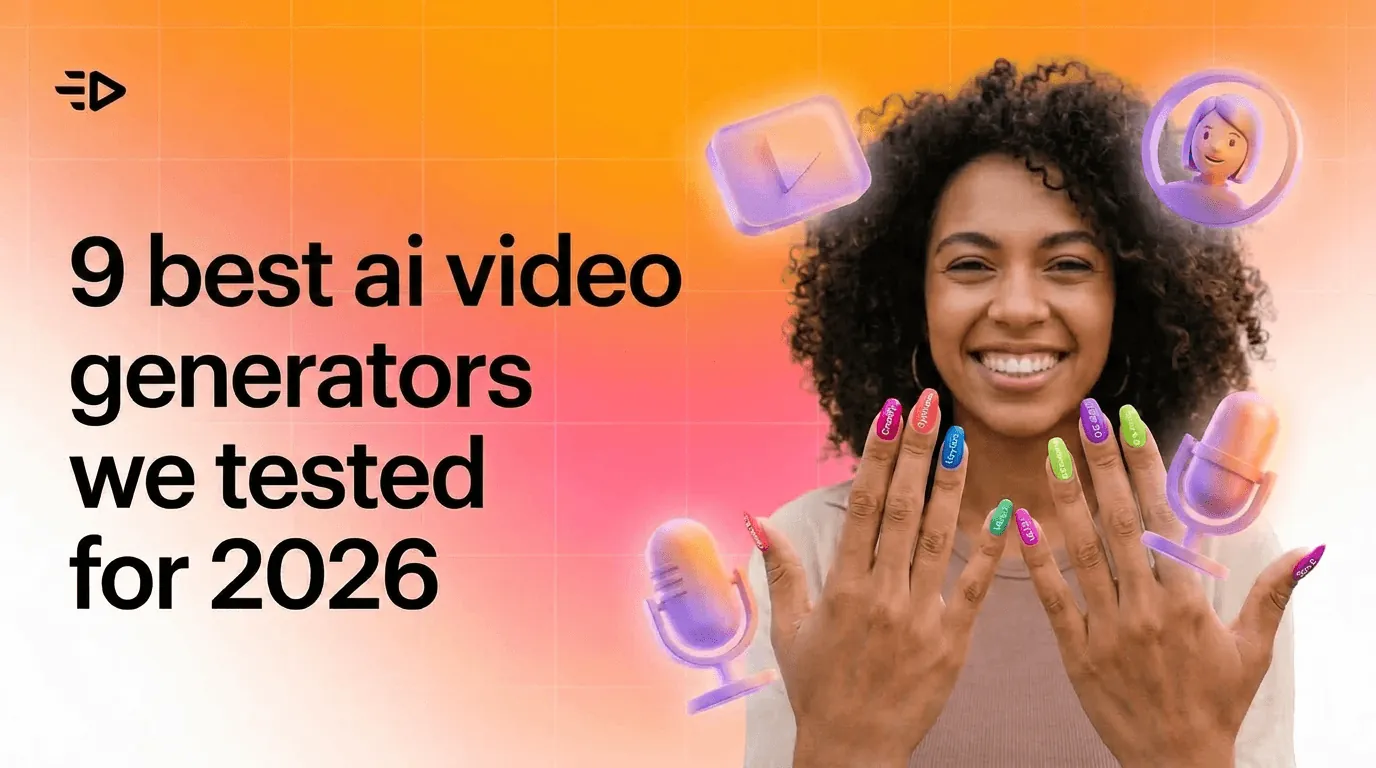

9 best AI video generators we tested for 2026

9 best AI video generators we tested for 2026

Written by

Creatify Team

9 best ai video generators
Creatify logo

Creatify Team

SHARE

LinkedIn icon
X icon
Facebook icon

IN THIS ARTICLE

There are more AI video tools than ever in 2026, and the categories have split hard. Avatar platforms, cinematic generators, and ad-focused systems each solve different problems. Picking the wrong one costs time and money.

We tested 9 tools across three categories: AI ad platforms, avatar-based video generators, and prompt-based cinematic generators. For each, we evaluated output quality, speed, use-case fit, pricing, and where things break in real use.

One thing to say upfront: there's no single best AI video generator. The right tool depends entirely on what you're making. This guide will get you to the right answer fast.

Quick comparison table

Tool

Best for

Free plan

Starting price

Synthesia

L&D, corporate training

Yes (limited)

$18/mo

Creatify

Ad creatives, UGC, ecommerce

Yes (10 credits/mo)

$33/mo

HeyGen

Multilingual business video

Yes (3 videos/mo)

$29/mo

Kling 3.0

Cinematic B-roll, realism

Yes

~$10/mo

Luma Ray 3.14

Fast iteration, creative shots

Yes

$9.99/mo

Minimax 2.3

High-texture prompt-based video

Yes

Free tier available

Seedance 2.0

Affordable cinematic with audio

Yes

Affordable tiers

Veo 3.1

Structured prompt-to-video

Via Gemini

Via Google plans

Runway 4.5

Creative editing, film work

Yes

$15/mo

How we evaluated these tools

We scored each tool across five criteria: output quality (realism, lip-sync, motion fluidity), speed from input to usable output, use-case fit, pricing relative to what you get, and real-world limitations. For cinematic generators, we also referenced Curious Refuge's 2026 benchmark scores. For ad-focused platforms, we referenced VideoAdAgent Bench v1 data.

1. Synthesia - best for corporate training and L&D
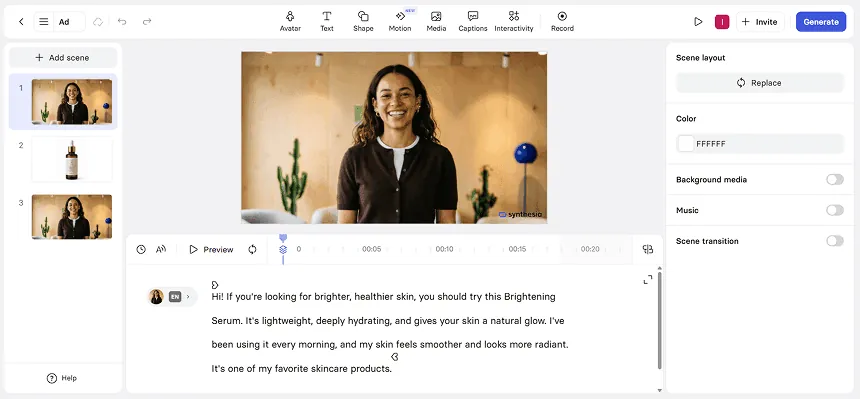
Synthesia is the go-to for learning and development teams, HR departments, and internal communications. It's the most mature platform in the corporate video space, used by companies like Zoom, Heineken, and Bosch.
Synthesia SS

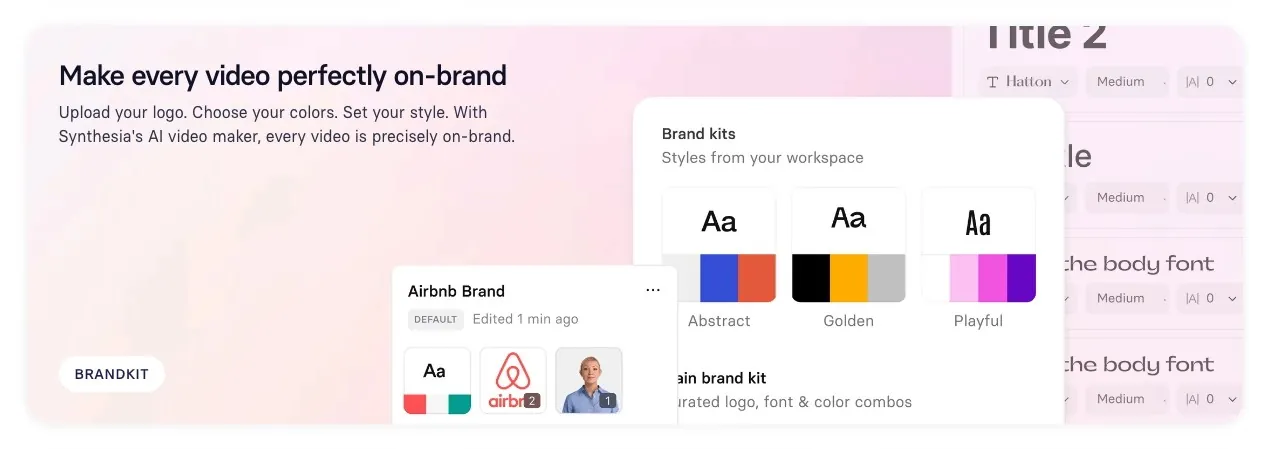
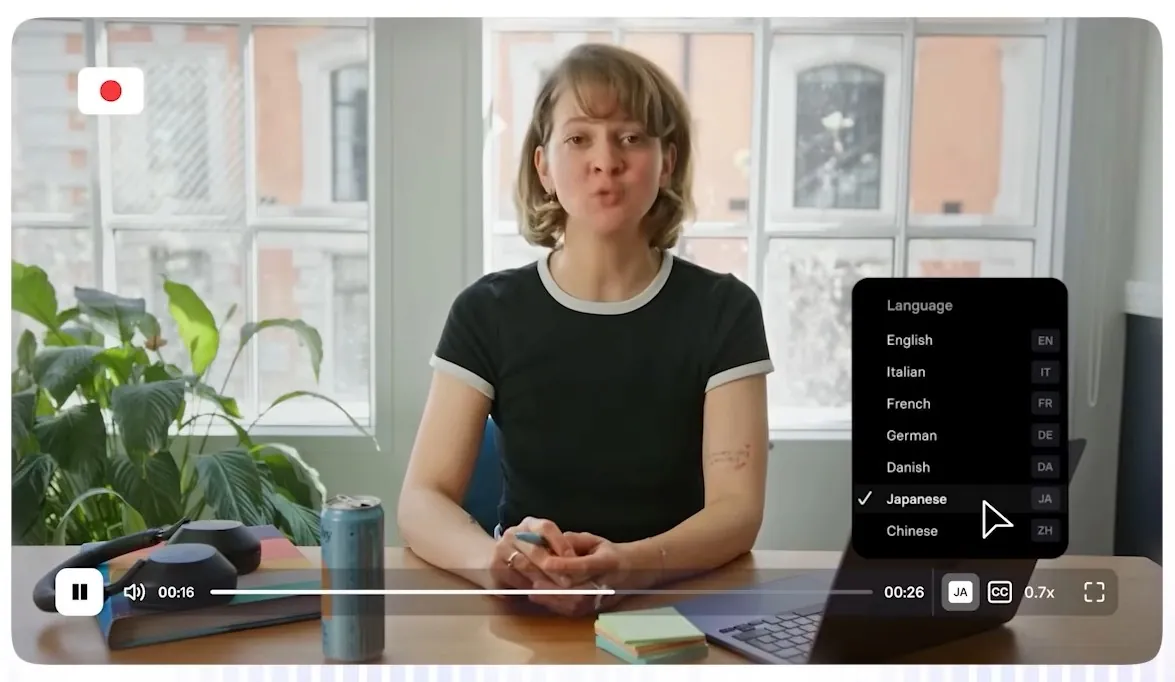
The core pitch: turn a script into a professional training video without cameras, studios, or scheduling. It works well for that use case. The avatar library has 240+ options, the template library is large, and multilingual output (140+ languages) handles localization well.
Languagne choose Synthesia

Where Synthesia falls short is flexibility. Creative control is limited compared to full video editors, and advanced features including 1-click translation and SCORM export are locked to Enterprise. Users on lower plans report frustration with monthly video minute caps. The uncanny valley issue appears in longer videos — short training clips look solid; anything over 2-3 minutes can start to feel slightly off in facial movement.

Strengths:

  • Strong template library for corporate and educational content

  • 140+ languages, solid AI dubbing

  • Clean interface, non-technical users get up to speed fast

  • Reliable for high-volume standardized training content

Limitations:

  • 1-click translation and SCORM locked to Enterprise

  • Monthly video minute caps on lower plans

  • Limited creative flexibility for marketing-style content

  • Uncanny valley artifacts in longer videos

Pricing: Free (limited) | Starter $18/mo | Creator $64/mo | Enterprise: custom

Best for: L&D teams, HR, internal communications, corporate training

Read also: Creatify vs Synthesia: Which AI Marketing Video Service is Best?

2. Creatify - best for ad creatives and performance marketing
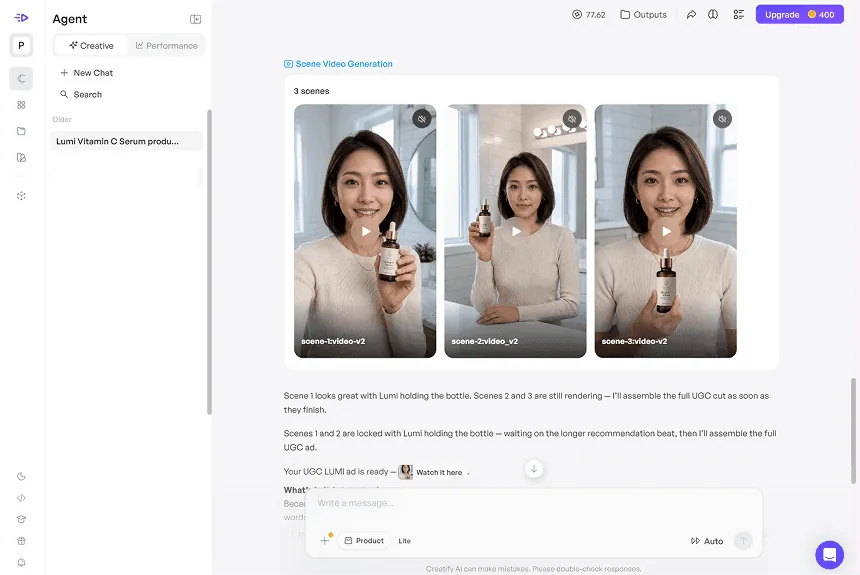
Creatify is purpose-built for one job: creating video ads that convert. Where most AI video tools are general-purpose, Creatify is built specifically for performance marketing - ecommerce brands, DTC, agencies, and app studios running paid campaigns across Meta, TikTok, YouTube, and CTV.

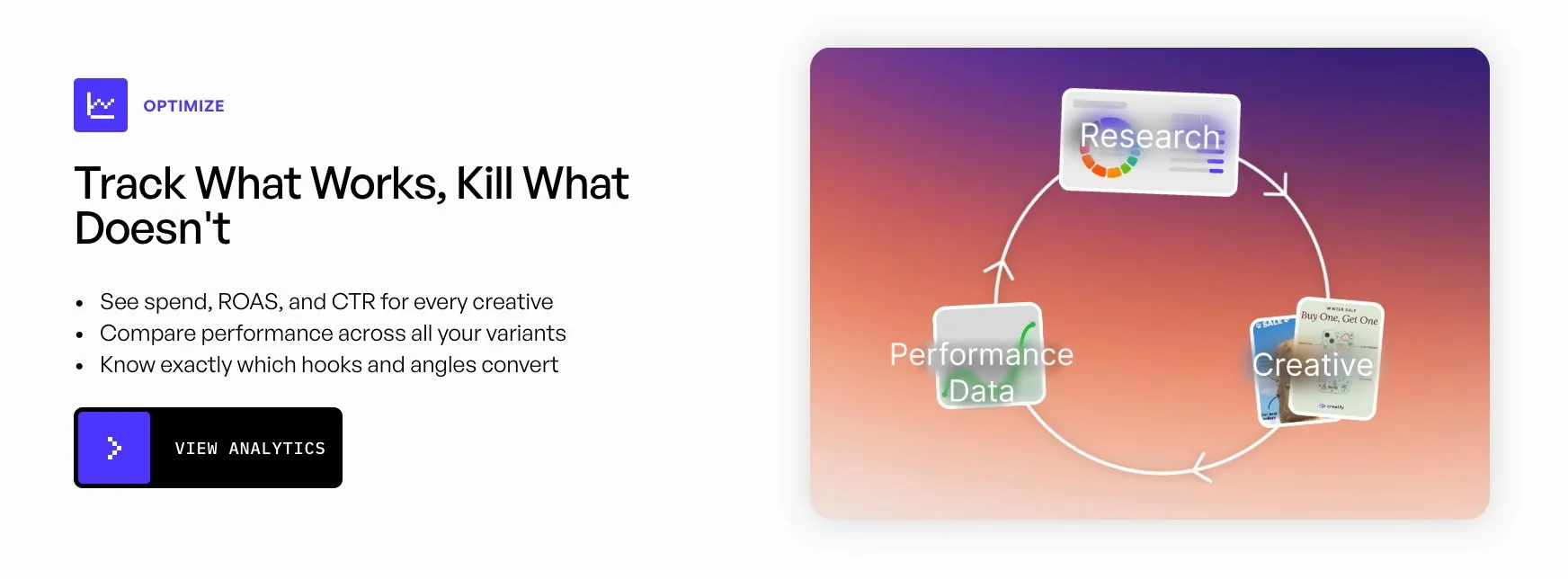
The flagship feature is Creatify Agent: an agentic creative system that owns the entire ad production pipeline from brief to finished video. Drop a product URL or describe your product in the chat window, and the Agent researches the brand, studies competitors and trending content in the category, writes scripts, casts avatars, generates shots in parallel, scores audio, and runs QA against the brief before anything is delivered. It operates in two modes: Auto (chat-based, handles everything conversationally) and Flow (canvas-based, gives you node-level control over every production step without leaving the same session).
Creatify screenshot

On VideoAdAgent Bench v1, Creatify Agent scored a 94% win-rate against the leading AI ad agent and 93% against raw video models, with a +43% margin on finished-ad quality across 20 briefs, 16 systems, and approximately 1,400 pairwise verdicts.

The URL-to-Video workflow is the fastest entry point: paste any product URL from Amazon, Shopify, Etsy, or the App Store, and Creatify pulls product details, generates 5-10 script variations, and produces ready-to-run video ads in under 60 seconds.

The results from real campaigns are documented. 1MORE ran Creatify avatar ads against traditional influencer videos and saw +200% purchases, +158% link clicks, and +14.74% ROAS. Tec-Do 2.0 cut video production time by 97% (3 days to 1 hour) and cost by 90% ($20 to $2 per video). Alibaba sellers generated 200K+ videos in 90 days, with 80%+ used in actual paid campaigns.
Choose an avatar SS

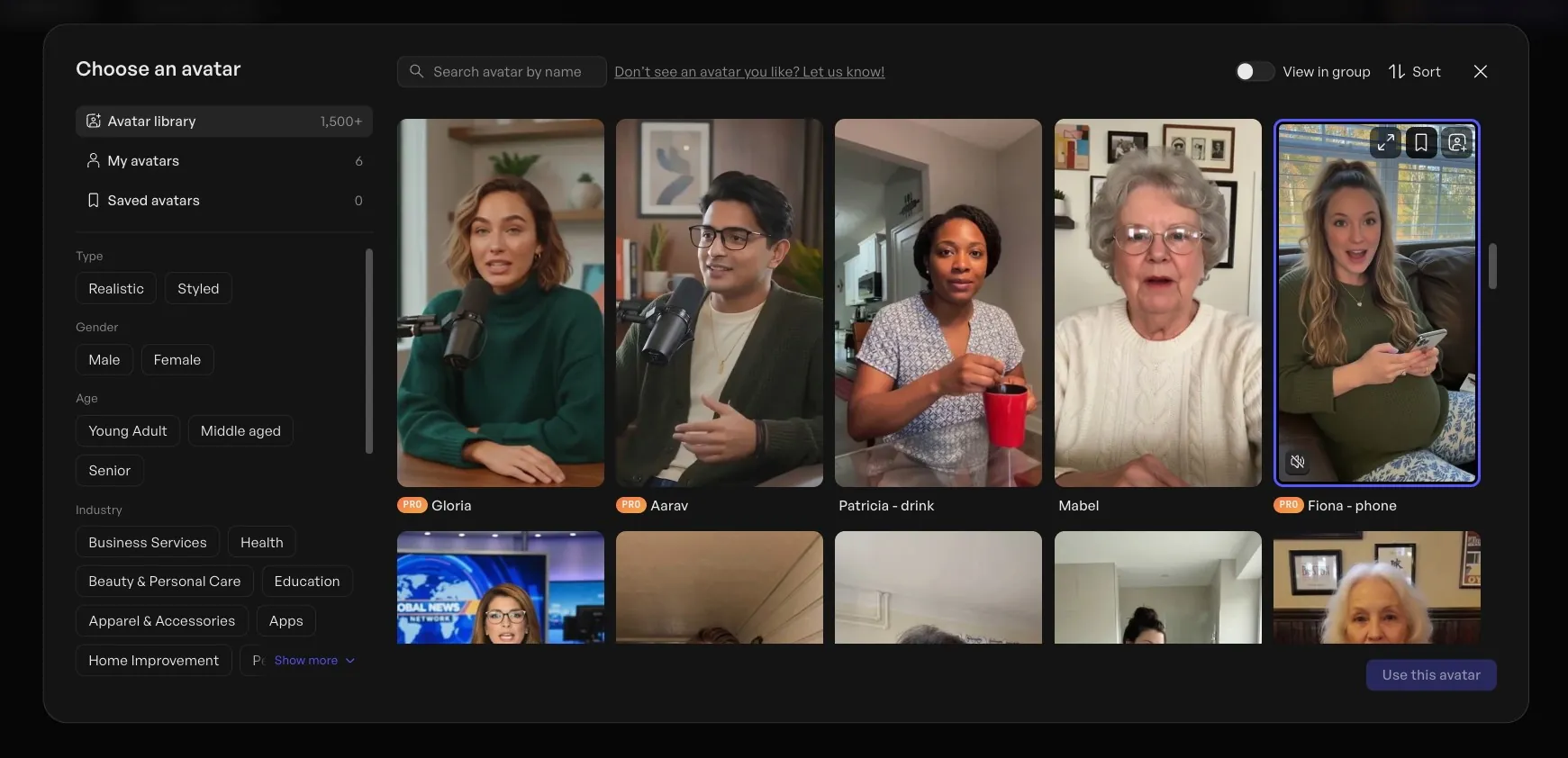
The avatar library runs 1,500+ options powered by Aurora, Creatify's proprietary diffusion transformer model. Custom avatars can be created from a photo upload or a text description. The Asset Generator adds 40+ AI models including Veo 3.1, Kling 3.0, and Seedance 2.0 for generating visual assets beyond avatar video.

Strengths:

  • Creatify Agent handles research, scripting, casting, production, and QA from a single chat or canvas interface

  • URL-to-video produces 5-10 ad variations in under 60 seconds

  • Aurora model delivers realistic avatar output purpose-built for paid ads

  • 1,500+ avatars, custom avatar creation via photo upload or text prompt

  • 75+ languages with native lip-sync

  • Multi-format output: 9:16, 16:9, 1:1 in one pass

  • Asset Generator: 40+ AI models for image, video, and audio generation

  • SOC 2 Type II certified

Limitations:

  • Less suited for long-form training content or cinematic storytelling

  • Aurora and AdFlow are Pro plan and above

Pricing: Free (10 credits/mo, ~2 videos, watermarked) | Starter $33/mo | Pro $49/mo | Enterprise: custom

Best for: Ecommerce brands, DTC marketers, agencies, performance marketers, app studios

Read also: Why Creatify.ai is the Best AI Avatar Platform – Full Comparison

3. HeyGen - best for multilingual business video
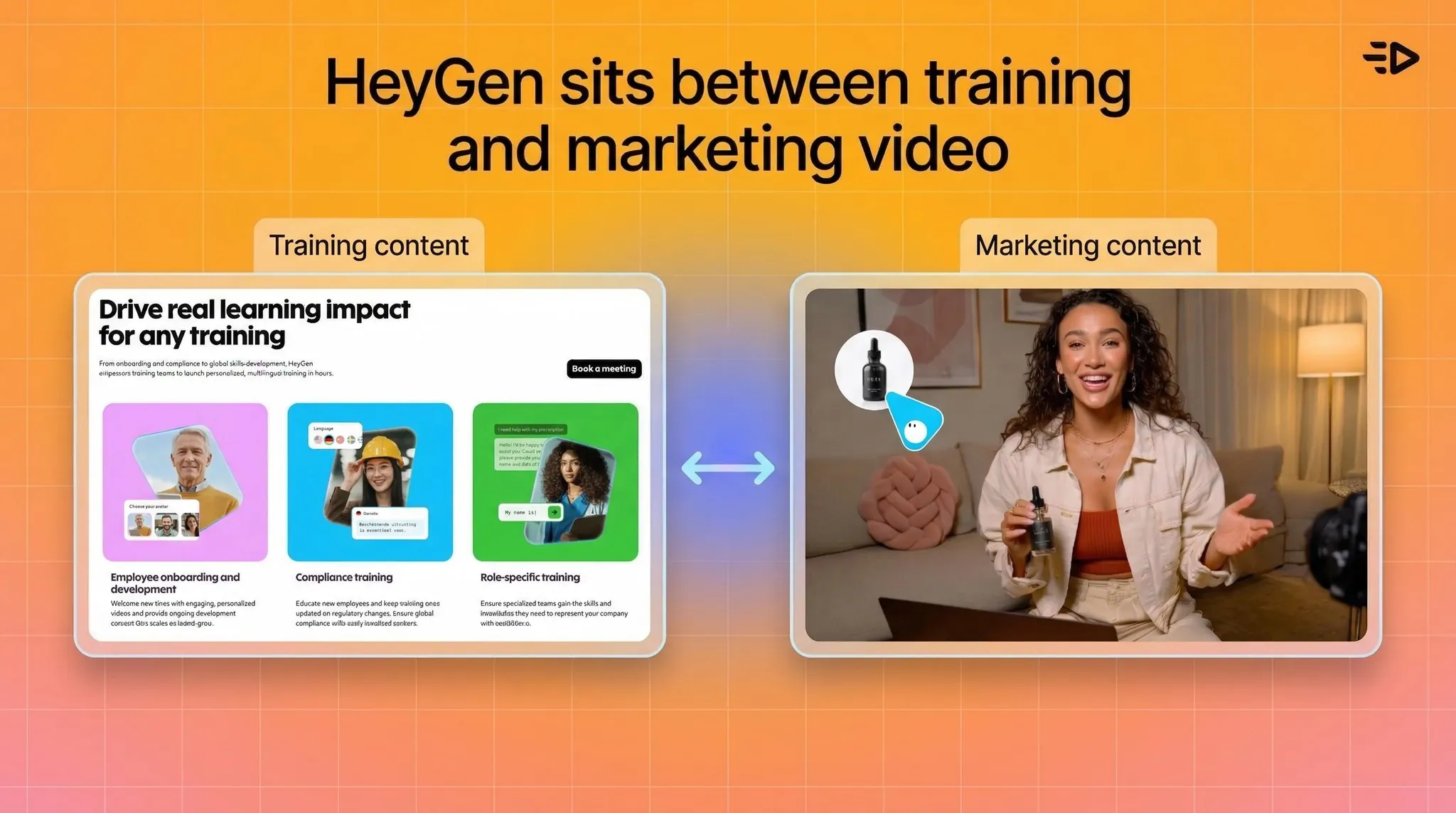
HeyGen sits between Synthesia (training-first) and Creatify (ads-first). Its strongest use case is scalable presenter-style video, particularly for multilingual content and personalized outreach.
HeyGen training and marketing content

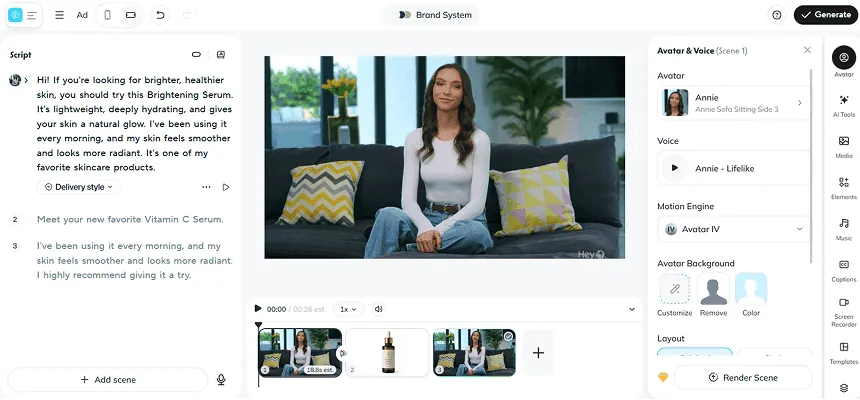
The platform supports 175+ languages with translation included on paid plans, a meaningful advantage over Synthesia, which locks translation to Enterprise. For teams creating localized content across multiple markets, this matters. The Creator plan offers unlimited video generation for standard avatars, which is solid value for consistent producers.

The catch: HeyGen's most realistic output (Avatar IV) is credit-gated, and the 200 monthly credit allocation on Creator translates to roughly 10 minutes of Avatar IV video. Customer support complaints and processing time variability are recurring themes in user reviews.
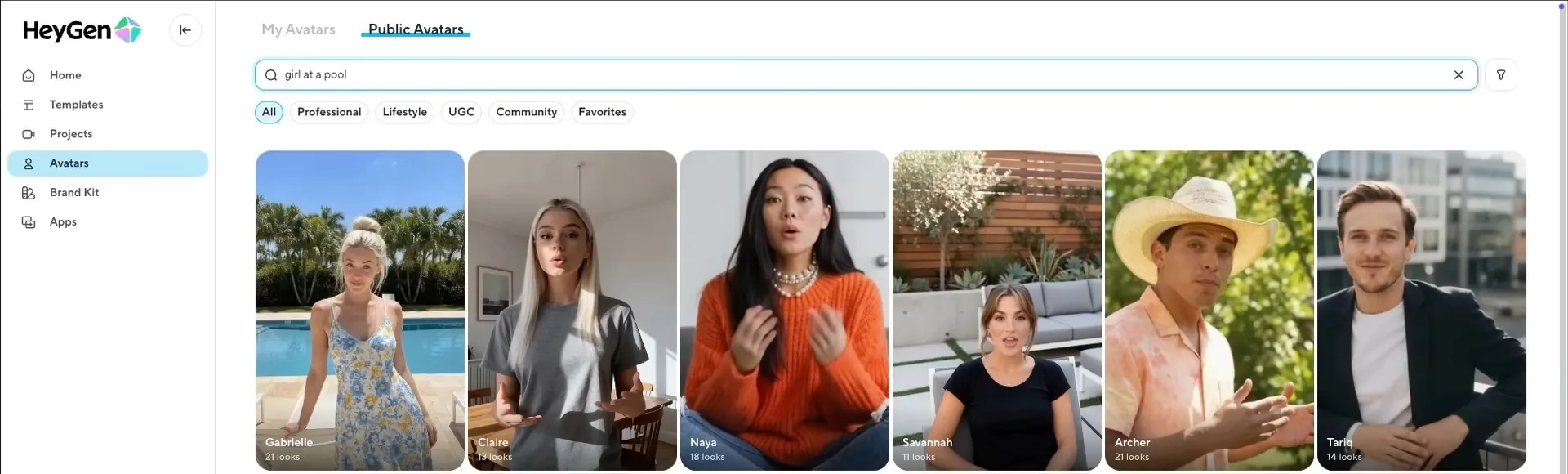
HeyGen SS


Strengths:

  • Translation included at lower tiers (175+ languages)

  • Unlimited standard avatar video on paid plans

  • API for programmatic video generation workflows

  • Clean, accessible interface

Limitations:

  • Avatar IV (premium model) heavily credit-gated

  • Customer support issues documented across multiple reviews

  • Processing time can vary significantly at peak usage

  • Business plan ($149/mo) is a large jump from Creator

Pricing: Free (3 videos/mo) | Creator $29/mo ($24 annual) | Business $149/mo | Enterprise: custom

Best for: Marketing teams, multilingual content production, business communications

Read also: What is HeyGen AI and What is the Best HeyGen Alternative

4. Kling 3.0 - best overall cinematic generator
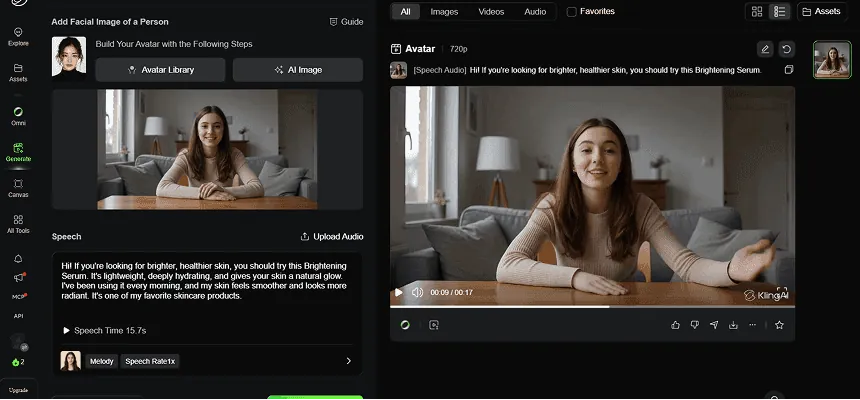
For pure video generation quality, Kling 3.0 currently sits at the top of the benchmark rankings. Curious Refuge's 2026 testing scored it 8.1/10 overall, with visual fidelity at 8.4 - the highest in the field.
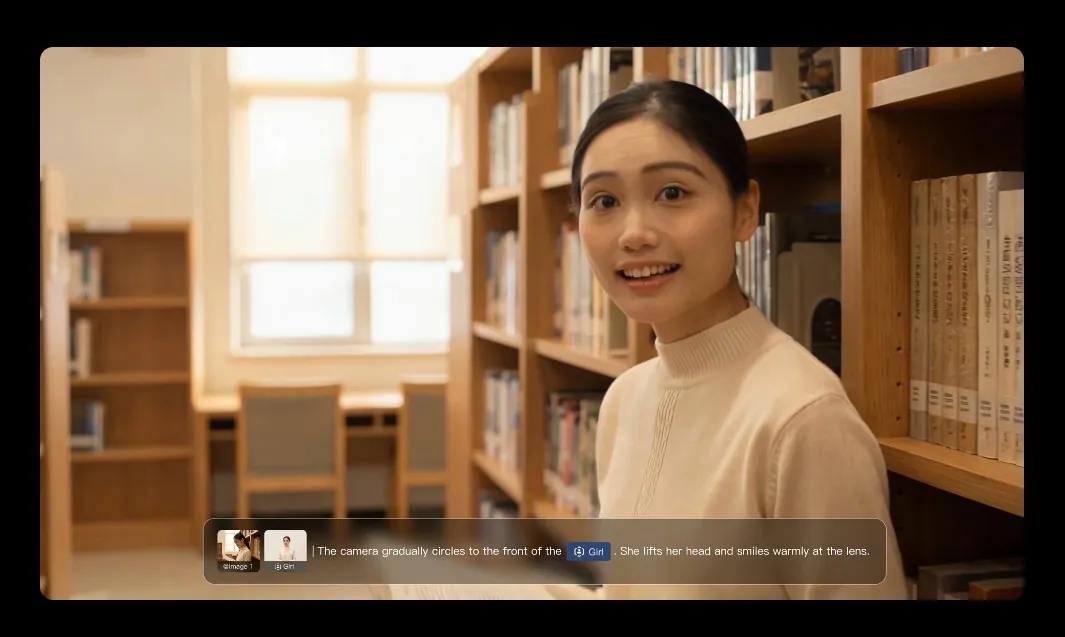
Kling 3.0 SS

The output is crisp, temporally consistent, and handles realistic human characters and motion better than any other prompt-based model tested. For B-roll generation, creative campaigns, or any use case requiring photorealistic footage from text or image prompts, this is the strongest option.

It's not an avatar platform. There's no script-to-presenter workflow here. It generates footage that looks like it could have been filmed.
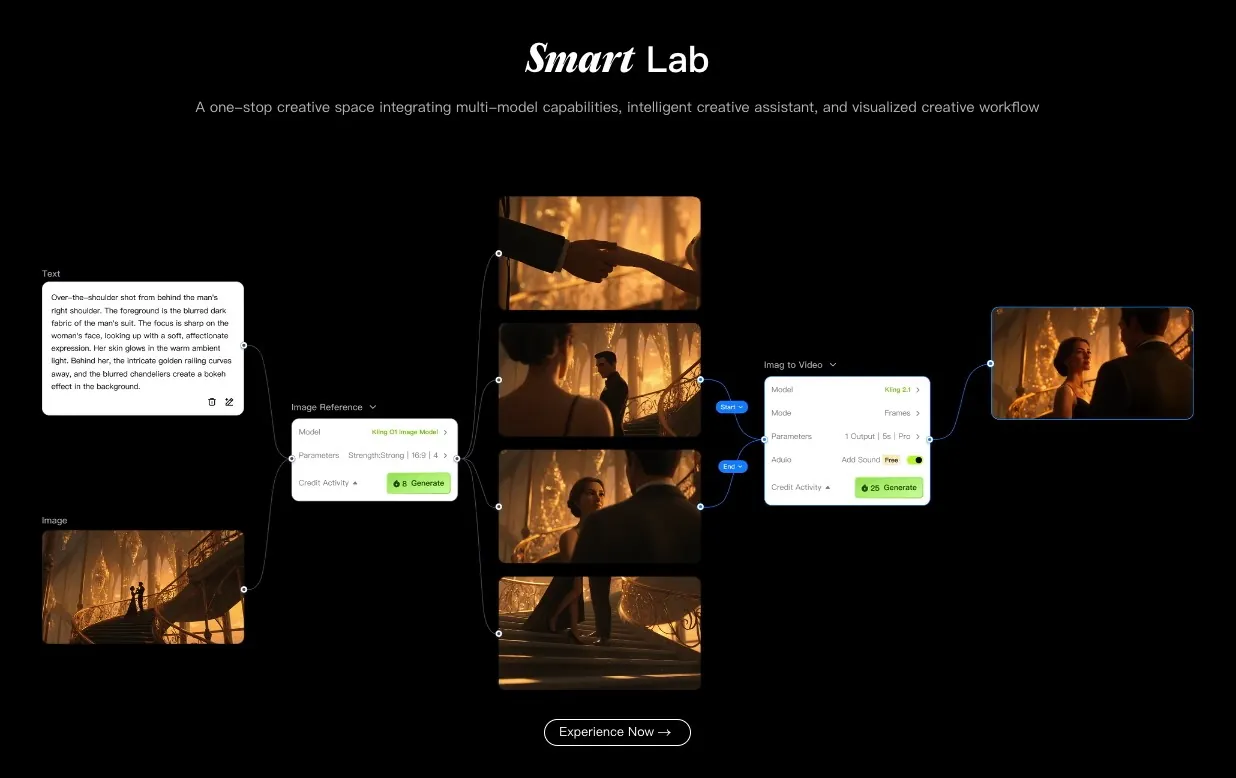
Smart Lab SS

Strengths:

  • Best benchmark scores of any cinematic generator (8.1/10, Curious Refuge 2026)

  • Visual fidelity and temporal consistency stand out

  • Strong human character and motion realism

Limitations:

  • Complex prompt adherence can still trip it up

  • Interface less polished for non-technical users

  • No avatar or presenter-style content capability

Pricing: Free tier | Paid plans from ~$10/mo

Best for: Creative directors, filmmakers, B-roll generation, cinematic ad assets

5. Luma Ray 3.14 - best for fast creative iteration
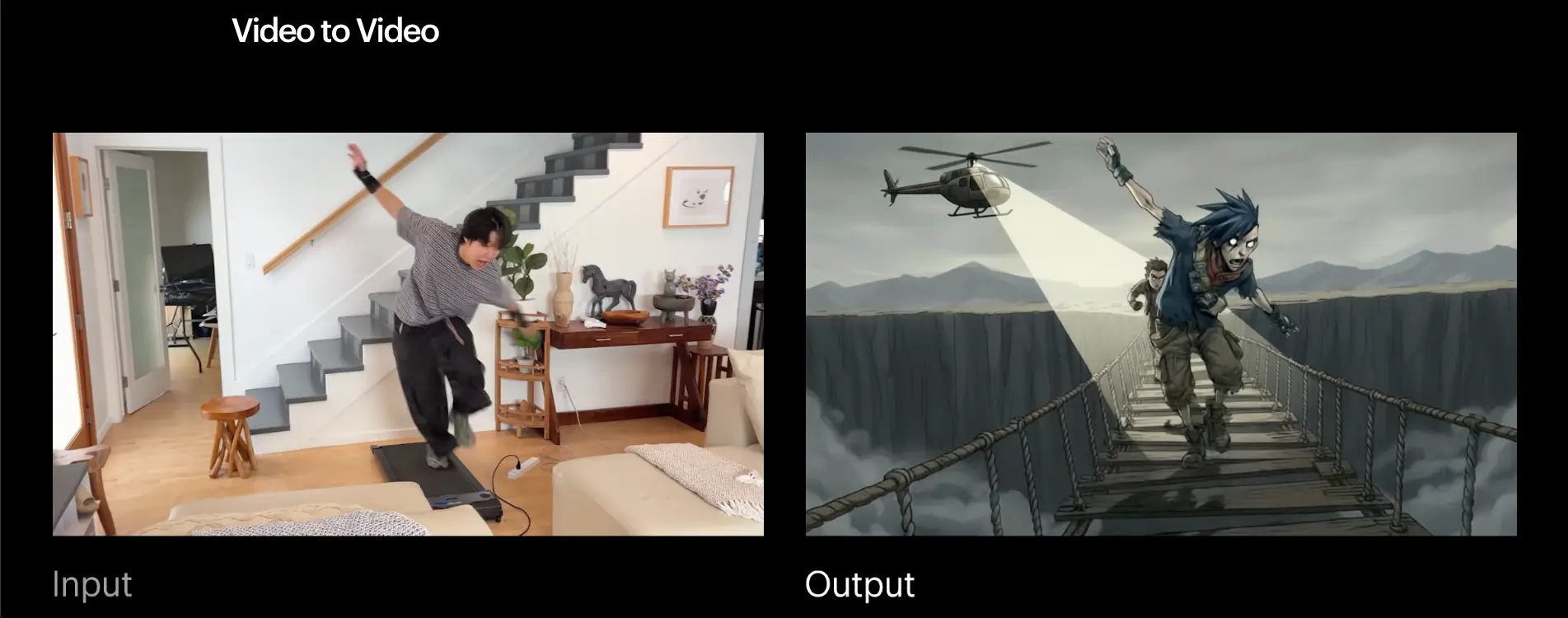
Luma Ray 3.14 scored 7.6/10 in Curious Refuge's benchmark testing, with standout visual fidelity (8.4) that briefly put it at the top of the rankings before Kling 3.0 released. Draft Mode is genuinely useful: preview your generation before spending credits. For teams that iterate quickly through a lot of concepts, this saves meaningful time and budget.
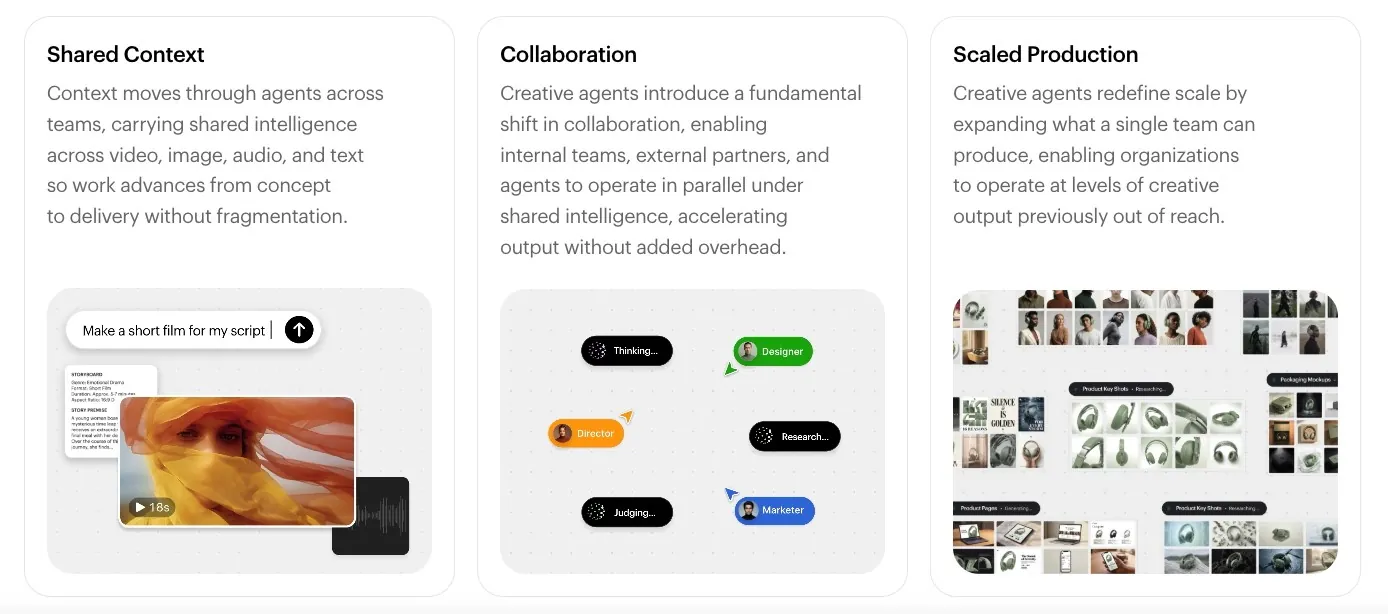
Luma Ray 3.14

Strengths:

  • Draft Mode for credit-free previews

  • Strong visual fidelity (8.4/10)

  • Fast generation for rapid concept testing

  • Accessible entry price

Limitations:

  • Not designed for presenter-style or instructional content

  • Slightly lower overall score than Kling 3.0

Pricing: Free tier | From $9.99/mo

Best for: Creative concepting, B-roll, social content, fast visual iteration

6. Minimax 2.3 - best for overlooked value
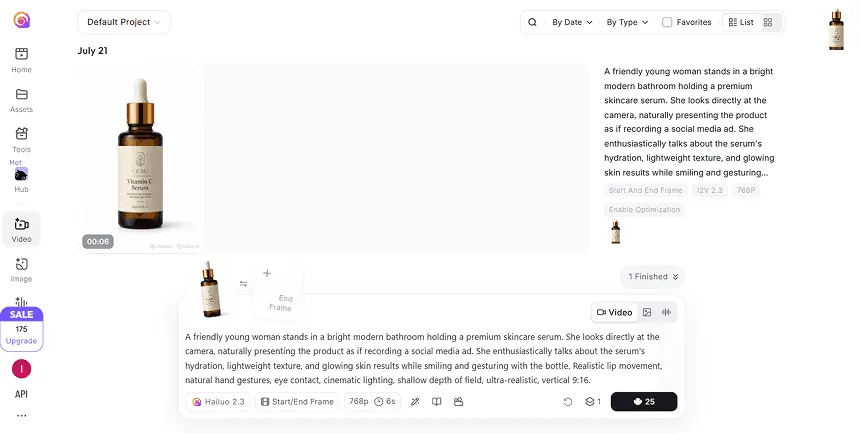
Minimax 2.3 scored 7.49/10 - just behind Luma - and is one of the most underused AI video tools right now. It rewards prompt craft: write prompts like camera directions (framing, motion, composition) and it follows well, producing high-texture footage with minimal hallucination.

MiniMax SS

Not the most cinematic output at surface level, but for professional workflows where clean, controlled imagery matters more than visual flair, it punches above its profile.

Strengths:

  • Strong prompt adherence (8.0/10) when prompted as shot directions

  • High-texture imagery, minimal hallucination

  • Good value relative to output quality

Limitations:

  • Temporal consistency (6.3/10) is the weakest link

  • Requires prompt discipline to get the best results

Pricing: Free tier available

Best for: Professional workflows, controlled imagery, precision prompt users
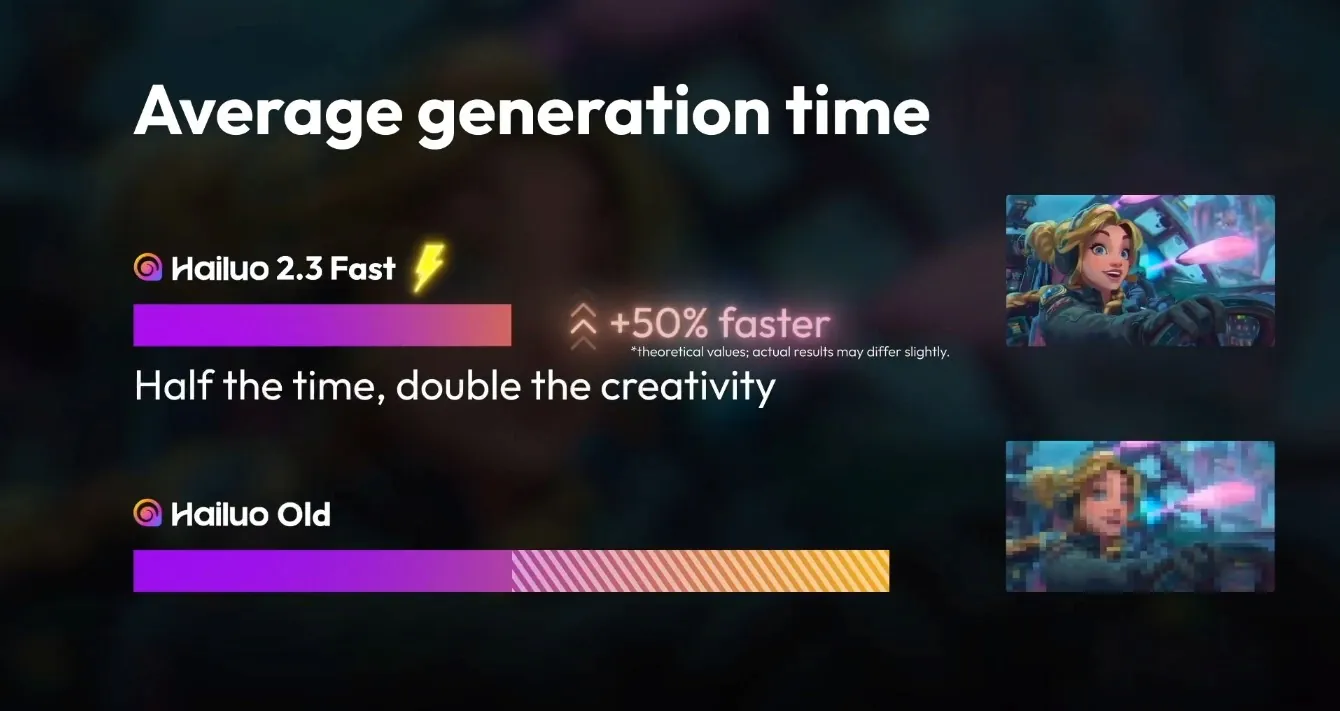
Average Generation Time

7. Seedance 2.0 - best budget cinematic option

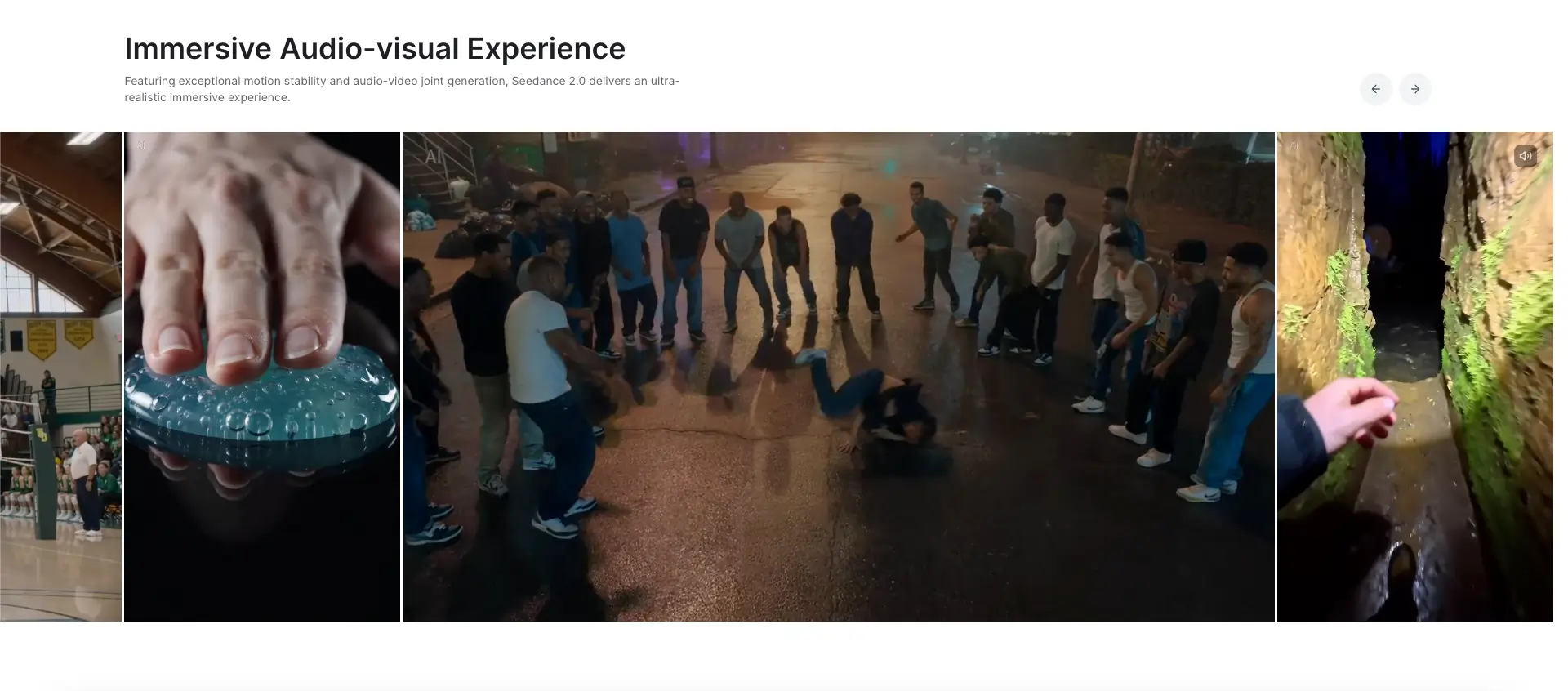
Seedance 2.0 is ByteDance's latest generation, and a meaningful step up from 1.5 Pro. The headline improvement is a unified multimodal architecture: text, images, audio, and video references feed into a single generation request instead of separate tools for each input type. Output is 1080p with up to 30% faster generation than previous versions, clips extend up to 30 seconds, and it generates audio and video together (dialogue, ambience, SFX) frame-accurately with no post-sync work.
Immersive Audio Visuals experience

Strengths:

  • Unified multimodal inputs in one flow

  • Native joint audio-video generation, frame-accurate

  • Up to 30-second clips for proper short-form content

  • ~30% faster generation than Seedance 1.5 Pro

  • Better temporal stability than previous version

Limitations:

  • Not at the top of benchmarks on any single metric vs. Kling or Luma

  • Pricing and API access still evolving

Pricing: Free access available, affordable paid tiers

Best for: Budget-conscious creators, content teams needing audio-synced output, commercial short-form production

8. Veo 3.1 (Google) - best for structured prompt control
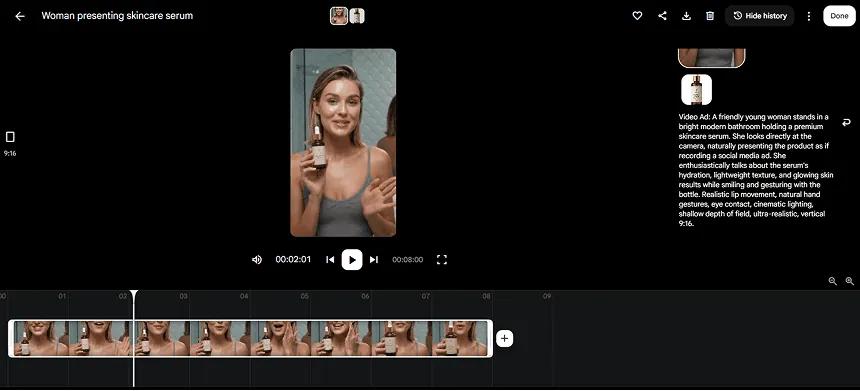
Google's Veo 3.1 scored 7.2/10 overall with strong prompt adherence (7.8/10). The ingredient-based prompting system gives compositional control that most models don't offer: specify elements, camera position, and movement with precision.
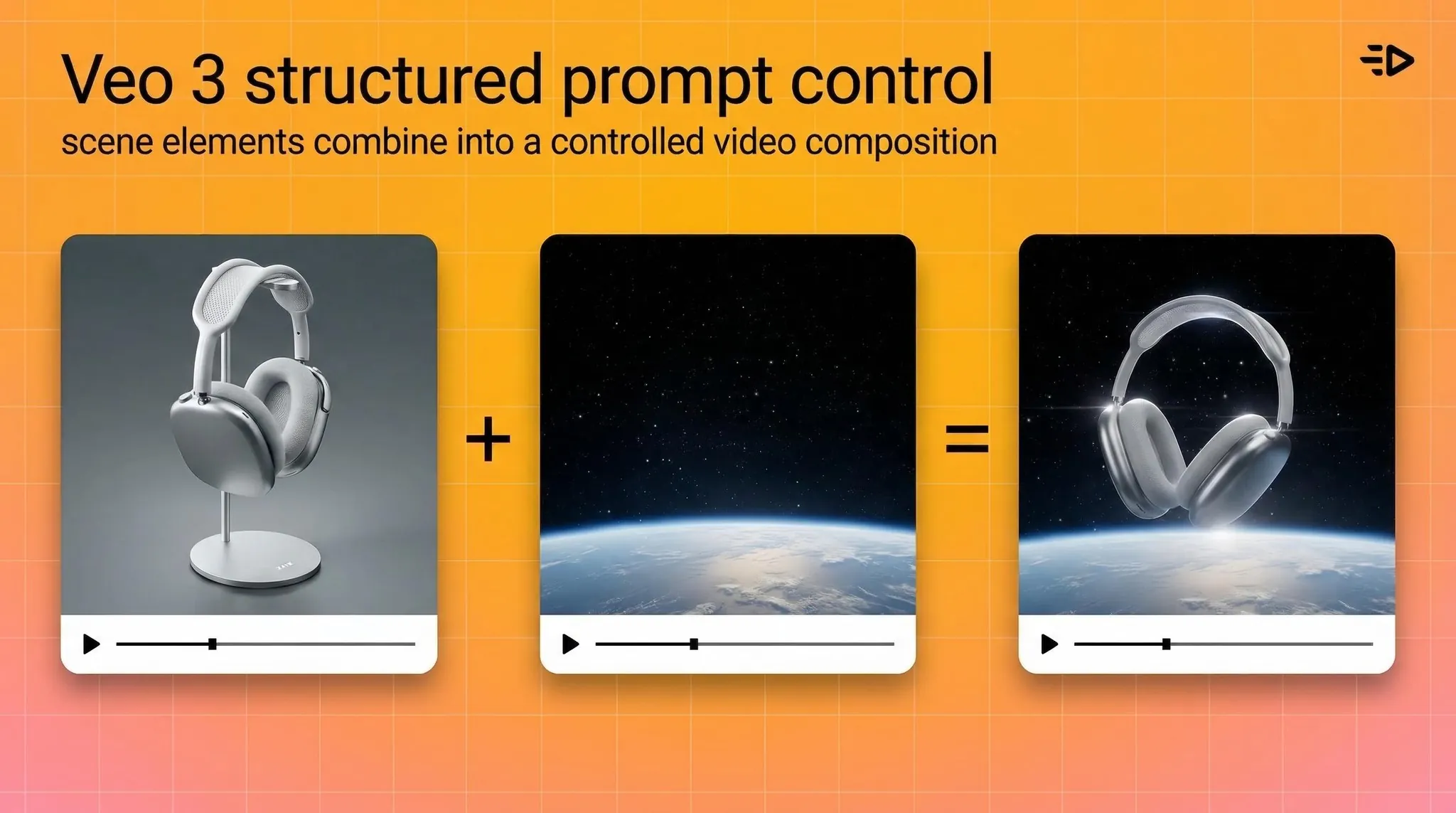
Veo3 Structured prompt

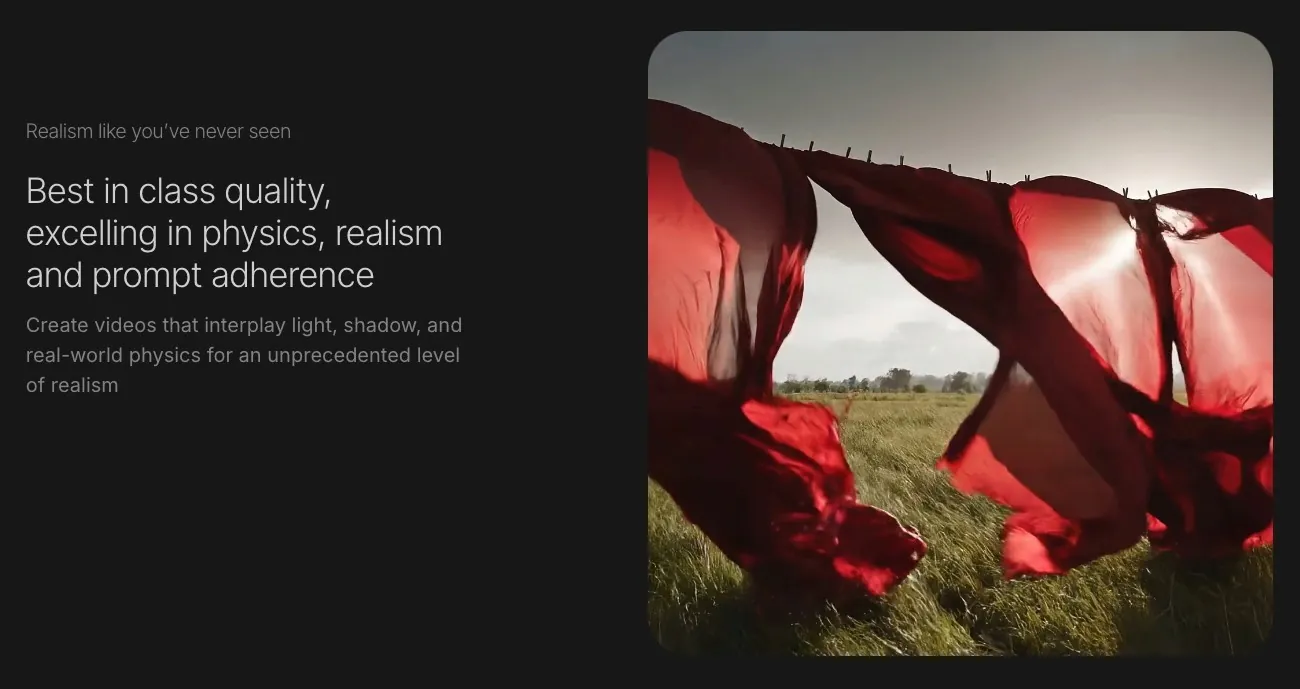
The "AI look" shows up in some generations, but for creators who prioritize structure and control over cinematic flair, it's a solid choice. Available via Google Gemini plans with a fast mode (Veo 3.1 Fast, 6.9/10) for cheaper iteration.
Veo3 Realism

Strengths:

  • Strong compositional control via ingredient-based prompting

  • Multiple quality tiers (Quality and Fast modes)

  • Google-backed reliability and consistent updates

Limitations:

  • Some outputs retain a visible AI look

  • Access and watermark rules vary by tier

  • Not available as a standalone product — requires Gemini access

Pricing: No free tier via API | Pay-per-second on Gemini API paid tier — Veo 3.1 Standard: $0.40/s (720p/1080p), $0.60/s (4K); Veo 3.1 Fast: $0.15/s (720p/1080p), $0.35/s (4K)

Best for: Creators who value prompt precision and structured visual output

9. Runway 4.5 - best for film and creative editing

Runway 4.5 SS

Runway started the AI filmmaking conversation and remains the strongest option for professional video editors who want AI to extend an existing workflow. Gen 4.5 has timeline and keyframe-like controls that no other tool on this list matches at the same level.
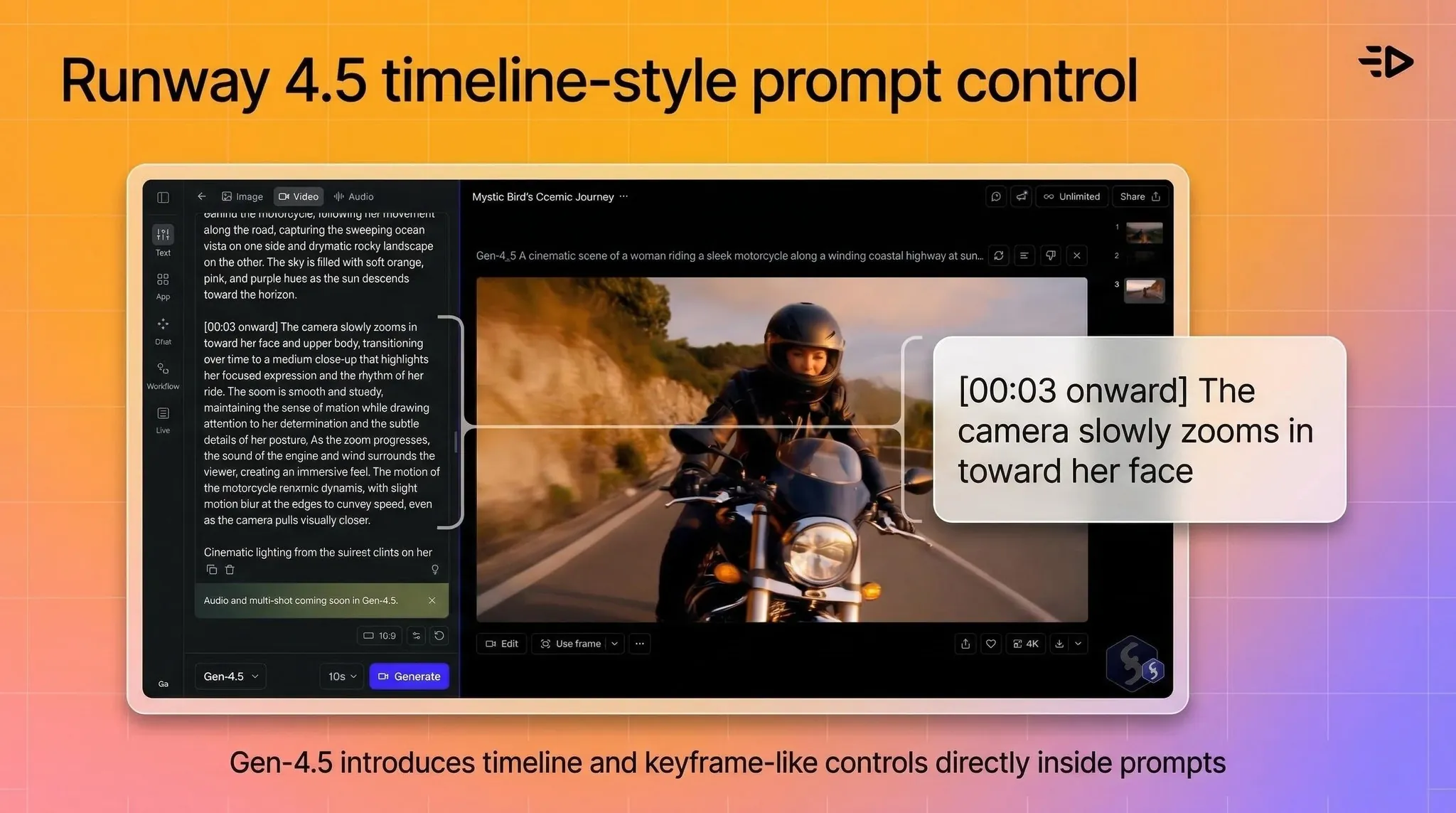
Runway 4.5 timeline-style prompt

That said, benchmark scores tell an honest story: Curious Refuge scored Runway 4.5 at 6.2/10, behind Kling, Luma, Minimax, Seedance, and both Veo versions. Runway claimed Gen 4.5 was the best AI video model available; independent testing didn't support that.

Strengths:

  • Advanced creative control: timeline features, keyframe-like capabilities

  • Best for editors who want AI as part of a post-production workflow

  • Strong ecosystem and community for creative professionals

Limitations:

  • 6.2/10 benchmark score, lower than most competitors here

  • Steeper learning curve for non-editors

  • Requires existing video editing skills to get the best results

Pricing: Free tier | From $15/mo

Best for: Professional editors, filmmakers, creative agencies, post-production workflows

Free vs. paid video generators: what you actually get

Every tool on this list has a free tier, but free means different things across platforms.

For cinematic generators (Kling, Luma, Runway, Veo), free tiers include watermarked output, limited generation credits, and non-commercial usage rights. Good for testing and concepting, not for publishing.

For avatar platforms, the gaps are more significant. Synthesia's free plan is essentially a demo. HeyGen caps at 3 videos per month. Creatify's free plan gives 10 credits (about 2 videos) with watermarks - useful for testing, not for running campaigns.

If you're running actual campaigns, factor paid plan costs in from day one. The math almost always still lands dramatically cheaper than traditional production.

Read also: 17 best AI avatar generators and tools we tested in 2026

Which tool should you use?

Running paid ads, ecommerce, or UGC campaigns: Creatify. Purpose-built for performance marketing, with Creatify Agent handling the full production pipeline and URL-to-video for the fastest entry.

Corporate training or internal communications: Synthesia. Best template library, most mature platform for L&D, trusted by enterprise teams.

Multilingual business video at scale: HeyGen. Translation included at lower tiers, unlimited standard video, API for automation.

Cinematic B-roll or creative footage: Kling 3.0 for quality-first, Luma Ray 3.14 for fast iteration, Runway 4.5 if you're already a video editor.

Budget-conscious cinematic work: Seedance 2.0 or Minimax 2.3.

Frequently Asked Questions

What is the best AI video generator in 2026?

The best AI video generator depends on your use case. For ad creatives and performance marketing, Creatify leads, with Creatify Agent handling the full pipeline from research to finished ad. For corporate training, Synthesia is the most mature platform. For cinematic B-roll quality, Kling 3.0 scores highest in independent benchmarks. Pick the tool that matches what you're actually making.

What are the best free AI video generator tools in 2026?

Most top AI video generators offer free tiers: Creatify (10 credits/mo, ~2 videos), HeyGen (3 videos/mo), Synthesia (limited demo), Kling, Luma, and Runway all have free access. All free tiers add watermarks and restrict commercial use. They're useful for testing, not for publishing in live campaigns.

What is the best free AI text-to-video generator?

For cinematic output, Kling and Luma both offer free tiers with solid generation quality. For ad-focused text-to-video, Creatify's free plan (10 credits/mo) includes URL-to-video and Creatify Agent on all plans including free.

Which AI video platform is best for ecommerce?

Creatify is purpose-built for ecommerce. The URL-to-video feature converts any product link into 5-10 ad variations in under 60 seconds. Documented results include +200% purchases and +158% link clicks from 1MORE's avatar ad campaigns vs. static images. Alibaba sellers generated 200K+ videos in 90 days using Creatify's embedded integration.

What is the best AI video generator for social media ads?

Creatify for platform-optimized ad creatives across TikTok, Instagram, and Meta. Creatify Agent handles research, scripting, and production, outputs are natively formatted for 9:16, and the Aurora model produces avatar quality that holds up in paid placements. VideoAdAgent Bench v1 puts it at a 94% win-rate against competing AI ad agents.

How much do AI video tools cost in 2026?

Paid plans start from $9.99-$33/month for most tools. Creatify starts at $33/month (Starter), Synthesia at $18/month, HeyGen at $29/month, Runway at $15/month, and Luma at $9.99/month. Enterprise pricing is custom across all platforms. All offer free tiers for testing.

What's the difference between AI avatar platforms and cinematic AI video generators?

Avatar-based platforms (Creatify, Synthesia, HeyGen) turn scripts into presenter-led videos with digital humans — best for ads, training, and messaging. Cinematic generators (Kling, Luma, Runway, Veo) create footage from text or image prompts — best for B-roll, visual storytelling, and creative production. Most production workflows benefit from using both categories.

What is the best AI video maker for beginners?

Creatify and HeyGen both have interfaces that don't require prior video production experience. Creatify's URL-to-video workflow is the fastest path from zero to a finished ad — paste a product URL, choose from generated options, export. No editing skills required.
There are more AI video tools than ever in 2026, and the categories have split hard. Avatar platforms, cinematic generators, and ad-focused systems each solve different problems. Picking the wrong one costs time and money.

We tested 9 tools across three categories: AI ad platforms, avatar-based video generators, and prompt-based cinematic generators. For each, we evaluated output quality, speed, use-case fit, pricing, and where things break in real use.

One thing to say upfront: there's no single best AI video generator. The right tool depends entirely on what you're making. This guide will get you to the right answer fast.

Quick comparison table

Tool

Best for

Free plan

Starting price

Synthesia

L&D, corporate training

Yes (limited)

$18/mo

Creatify

Ad creatives, UGC, ecommerce

Yes (10 credits/mo)

$33/mo

HeyGen

Multilingual business video

Yes (3 videos/mo)

$29/mo

Kling 3.0

Cinematic B-roll, realism

Yes

~$10/mo

Luma Ray 3.14

Fast iteration, creative shots

Yes

$9.99/mo

Minimax 2.3

High-texture prompt-based video

Yes

Free tier available

Seedance 2.0

Affordable cinematic with audio

Yes

Affordable tiers

Veo 3.1

Structured prompt-to-video

Via Gemini

Via Google plans

Runway 4.5

Creative editing, film work

Yes

$15/mo

How we evaluated these tools

We scored each tool across five criteria: output quality (realism, lip-sync, motion fluidity), speed from input to usable output, use-case fit, pricing relative to what you get, and real-world limitations. For cinematic generators, we also referenced Curious Refuge's 2026 benchmark scores. For ad-focused platforms, we referenced VideoAdAgent Bench v1 data.

1. Synthesia - best for corporate training and L&D

Synthesia is the go-to for learning and development teams, HR departments, and internal communications. It's the most mature platform in the corporate video space, used by companies like Zoom, Heineken, and Bosch.

Synthesia SS

The core pitch: turn a script into a professional training video without cameras, studios, or scheduling. It works well for that use case. The avatar library has 240+ options, the template library is large, and multilingual output (140+ languages) handles localization well.

Languagne choose Synthesia

Where Synthesia falls short is flexibility. Creative control is limited compared to full video editors, and advanced features including 1-click translation and SCORM export are locked to Enterprise. Users on lower plans report frustration with monthly video minute caps. The uncanny valley issue appears in longer videos — short training clips look solid; anything over 2-3 minutes can start to feel slightly off in facial movement.

Strengths:

  • Strong template library for corporate and educational content

  • 140+ languages, solid AI dubbing

  • Clean interface, non-technical users get up to speed fast

  • Reliable for high-volume standardized training content

Limitations:

  • 1-click translation and SCORM locked to Enterprise

  • Monthly video minute caps on lower plans

  • Limited creative flexibility for marketing-style content

  • Uncanny valley artifacts in longer videos

Pricing: Free (limited) | Starter $18/mo | Creator $64/mo | Enterprise: custom

Best for: L&D teams, HR, internal communications, corporate training

Read also: Creatify vs Synthesia: Which AI Marketing Video Service is Best?

2. Creatify - best for ad creatives and performance marketing

Creatify is purpose-built for one job: creating video ads that convert. Where most AI video tools are general-purpose, Creatify is built specifically for performance marketing - ecommerce brands, DTC, agencies, and app studios running paid campaigns across Meta, TikTok, YouTube, and CTV.

The flagship feature is Creatify Agent: an agentic creative system that owns the entire ad production pipeline from brief to finished video. Drop a product URL or describe your product in the chat window, and the Agent researches the brand, studies competitors and trending content in the category, writes scripts, casts avatars, generates shots in parallel, scores audio, and runs QA against the brief before anything is delivered. It operates in two modes: Auto (chat-based, handles everything conversationally) and Flow (canvas-based, gives you node-level control over every production step without leaving the same session).

Creatify screenshot

On VideoAdAgent Bench v1, Creatify Agent scored a 94% win-rate against the leading AI ad agent and 93% against raw video models, with a +43% margin on finished-ad quality across 20 briefs, 16 systems, and approximately 1,400 pairwise verdicts.

The URL-to-Video workflow is the fastest entry point: paste any product URL from Amazon, Shopify, Etsy, or the App Store, and Creatify pulls product details, generates 5-10 script variations, and produces ready-to-run video ads in under 60 seconds.

The results from real campaigns are documented. 1MORE ran Creatify avatar ads against traditional influencer videos and saw +200% purchases, +158% link clicks, and +14.74% ROAS. Tec-Do 2.0 cut video production time by 97% (3 days to 1 hour) and cost by 90% ($20 to $2 per video). Alibaba sellers generated 200K+ videos in 90 days, with 80%+ used in actual paid campaigns.

Choose an avatar SS

The avatar library runs 1,500+ options powered by Aurora, Creatify's proprietary diffusion transformer model. Custom avatars can be created from a photo upload or a text description. The Asset Generator adds 40+ AI models including Veo 3.1, Kling 3.0, and Seedance 2.0 for generating visual assets beyond avatar video.

Strengths:

  • Creatify Agent handles research, scripting, casting, production, and QA from a single chat or canvas interface

  • URL-to-video produces 5-10 ad variations in under 60 seconds

  • Aurora model delivers realistic avatar output purpose-built for paid ads

  • 1,500+ avatars, custom avatar creation via photo upload or text prompt

  • 75+ languages with native lip-sync

  • Multi-format output: 9:16, 16:9, 1:1 in one pass

  • Asset Generator: 40+ AI models for image, video, and audio generation

  • SOC 2 Type II certified

Limitations:

  • Less suited for long-form training content or cinematic storytelling

  • Aurora and AdFlow are Pro plan and above

Pricing: Free (10 credits/mo, ~2 videos, watermarked) | Starter $33/mo | Pro $49/mo | Enterprise: custom

Best for: Ecommerce brands, DTC marketers, agencies, performance marketers, app studios

Read also: Why Creatify.ai is the Best AI Avatar Platform – Full Comparison

3. HeyGen - best for multilingual business video

HeyGen sits between Synthesia (training-first) and Creatify (ads-first). Its strongest use case is scalable presenter-style video, particularly for multilingual content and personalized outreach.

HeyGen training and marketing content

The platform supports 175+ languages with translation included on paid plans, a meaningful advantage over Synthesia, which locks translation to Enterprise. For teams creating localized content across multiple markets, this matters. The Creator plan offers unlimited video generation for standard avatars, which is solid value for consistent producers.

The catch: HeyGen's most realistic output (Avatar IV) is credit-gated, and the 200 monthly credit allocation on Creator translates to roughly 10 minutes of Avatar IV video. Customer support complaints and processing time variability are recurring themes in user reviews.

HeyGen SS


Strengths:

  • Translation included at lower tiers (175+ languages)

  • Unlimited standard avatar video on paid plans

  • API for programmatic video generation workflows

  • Clean, accessible interface

Limitations:

  • Avatar IV (premium model) heavily credit-gated

  • Customer support issues documented across multiple reviews

  • Processing time can vary significantly at peak usage

  • Business plan ($149/mo) is a large jump from Creator

Pricing: Free (3 videos/mo) | Creator $29/mo ($24 annual) | Business $149/mo | Enterprise: custom

Best for: Marketing teams, multilingual content production, business communications

Read also: What is HeyGen AI and What is the Best HeyGen Alternative

4. Kling 3.0 - best overall cinematic generator

For pure video generation quality, Kling 3.0 currently sits at the top of the benchmark rankings. Curious Refuge's 2026 testing scored it 8.1/10 overall, with visual fidelity at 8.4 - the highest in the field.

Kling 3.0 SS

The output is crisp, temporally consistent, and handles realistic human characters and motion better than any other prompt-based model tested. For B-roll generation, creative campaigns, or any use case requiring photorealistic footage from text or image prompts, this is the strongest option.

It's not an avatar platform. There's no script-to-presenter workflow here. It generates footage that looks like it could have been filmed.

Smart Lab SS

Strengths:

  • Best benchmark scores of any cinematic generator (8.1/10, Curious Refuge 2026)

  • Visual fidelity and temporal consistency stand out

  • Strong human character and motion realism

Limitations:

  • Complex prompt adherence can still trip it up

  • Interface less polished for non-technical users

  • No avatar or presenter-style content capability

Pricing: Free tier | Paid plans from ~$10/mo

Best for: Creative directors, filmmakers, B-roll generation, cinematic ad assets

5. Luma Ray 3.14 - best for fast creative iteration

Luma Ray 3.14 scored 7.6/10 in Curious Refuge's benchmark testing, with standout visual fidelity (8.4) that briefly put it at the top of the rankings before Kling 3.0 released. Draft Mode is genuinely useful: preview your generation before spending credits. For teams that iterate quickly through a lot of concepts, this saves meaningful time and budget.

Luma Ray 3.14

Strengths:

  • Draft Mode for credit-free previews

  • Strong visual fidelity (8.4/10)

  • Fast generation for rapid concept testing

  • Accessible entry price

Limitations:

  • Not designed for presenter-style or instructional content

  • Slightly lower overall score than Kling 3.0

Pricing: Free tier | From $9.99/mo

Best for: Creative concepting, B-roll, social content, fast visual iteration

6. Minimax 2.3 - best for overlooked value

Minimax 2.3 scored 7.49/10 - just behind Luma - and is one of the most underused AI video tools right now. It rewards prompt craft: write prompts like camera directions (framing, motion, composition) and it follows well, producing high-texture footage with minimal hallucination.

MiniMax SS

Not the most cinematic output at surface level, but for professional workflows where clean, controlled imagery matters more than visual flair, it punches above its profile.

Strengths:

  • Strong prompt adherence (8.0/10) when prompted as shot directions

  • High-texture imagery, minimal hallucination

  • Good value relative to output quality

Limitations:

  • Temporal consistency (6.3/10) is the weakest link

  • Requires prompt discipline to get the best results

Pricing: Free tier available

Best for: Professional workflows, controlled imagery, precision prompt users

Average Generation Time

7. Seedance 2.0 - best budget cinematic option

Seedance 2.0 is ByteDance's latest generation, and a meaningful step up from 1.5 Pro. The headline improvement is a unified multimodal architecture: text, images, audio, and video references feed into a single generation request instead of separate tools for each input type. Output is 1080p with up to 30% faster generation than previous versions, clips extend up to 30 seconds, and it generates audio and video together (dialogue, ambience, SFX) frame-accurately with no post-sync work.

Immersive Audio Visuals experience

Strengths:

  • Unified multimodal inputs in one flow

  • Native joint audio-video generation, frame-accurate

  • Up to 30-second clips for proper short-form content

  • ~30% faster generation than Seedance 1.5 Pro

  • Better temporal stability than previous version

Limitations:

  • Not at the top of benchmarks on any single metric vs. Kling or Luma

  • Pricing and API access still evolving

Pricing: Free access available, affordable paid tiers

Best for: Budget-conscious creators, content teams needing audio-synced output, commercial short-form production

8. Veo 3.1 (Google) - best for structured prompt control

Google's Veo 3.1 scored 7.2/10 overall with strong prompt adherence (7.8/10). The ingredient-based prompting system gives compositional control that most models don't offer: specify elements, camera position, and movement with precision.

Veo3 Structured prompt

The "AI look" shows up in some generations, but for creators who prioritize structure and control over cinematic flair, it's a solid choice. Available via Google Gemini plans with a fast mode (Veo 3.1 Fast, 6.9/10) for cheaper iteration.

Veo3 Realism

Strengths:

  • Strong compositional control via ingredient-based prompting

  • Multiple quality tiers (Quality and Fast modes)

  • Google-backed reliability and consistent updates

Limitations:

  • Some outputs retain a visible AI look

  • Access and watermark rules vary by tier

  • Not available as a standalone product — requires Gemini access

Pricing: No free tier via API | Pay-per-second on Gemini API paid tier — Veo 3.1 Standard: $0.40/s (720p/1080p), $0.60/s (4K); Veo 3.1 Fast: $0.15/s (720p/1080p), $0.35/s (4K)

Best for: Creators who value prompt precision and structured visual output

9. Runway 4.5 - best for film and creative editing

Runway 4.5 SS

Runway started the AI filmmaking conversation and remains the strongest option for professional video editors who want AI to extend an existing workflow. Gen 4.5 has timeline and keyframe-like controls that no other tool on this list matches at the same level.

Runway 4.5 timeline-style prompt

That said, benchmark scores tell an honest story: Curious Refuge scored Runway 4.5 at 6.2/10, behind Kling, Luma, Minimax, Seedance, and both Veo versions. Runway claimed Gen 4.5 was the best AI video model available; independent testing didn't support that.

Strengths:

  • Advanced creative control: timeline features, keyframe-like capabilities

  • Best for editors who want AI as part of a post-production workflow

  • Strong ecosystem and community for creative professionals

Limitations:

  • 6.2/10 benchmark score, lower than most competitors here

  • Steeper learning curve for non-editors

  • Requires existing video editing skills to get the best results

Pricing: Free tier | From $15/mo

Best for: Professional editors, filmmakers, creative agencies, post-production workflows

Free vs. paid video generators: what you actually get

Every tool on this list has a free tier, but free means different things across platforms.

For cinematic generators (Kling, Luma, Runway, Veo), free tiers include watermarked output, limited generation credits, and non-commercial usage rights. Good for testing and concepting, not for publishing.

For avatar platforms, the gaps are more significant. Synthesia's free plan is essentially a demo. HeyGen caps at 3 videos per month. Creatify's free plan gives 10 credits (about 2 videos) with watermarks - useful for testing, not for running campaigns.

If you're running actual campaigns, factor paid plan costs in from day one. The math almost always still lands dramatically cheaper than traditional production.

Read also: 17 best AI avatar generators and tools we tested in 2026

Which tool should you use?

Running paid ads, ecommerce, or UGC campaigns: Creatify. Purpose-built for performance marketing, with Creatify Agent handling the full production pipeline and URL-to-video for the fastest entry.

Corporate training or internal communications: Synthesia. Best template library, most mature platform for L&D, trusted by enterprise teams.

Multilingual business video at scale: HeyGen. Translation included at lower tiers, unlimited standard video, API for automation.

Cinematic B-roll or creative footage: Kling 3.0 for quality-first, Luma Ray 3.14 for fast iteration, Runway 4.5 if you're already a video editor.

Budget-conscious cinematic work: Seedance 2.0 or Minimax 2.3.

Frequently Asked Questions

What is the best AI video generator in 2026?

The best AI video generator depends on your use case. For ad creatives and performance marketing, Creatify leads, with Creatify Agent handling the full pipeline from research to finished ad. For corporate training, Synthesia is the most mature platform. For cinematic B-roll quality, Kling 3.0 scores highest in independent benchmarks. Pick the tool that matches what you're actually making.

What are the best free AI video generator tools in 2026?

Most top AI video generators offer free tiers: Creatify (10 credits/mo, ~2 videos), HeyGen (3 videos/mo), Synthesia (limited demo), Kling, Luma, and Runway all have free access. All free tiers add watermarks and restrict commercial use. They're useful for testing, not for publishing in live campaigns.

What is the best free AI text-to-video generator?

For cinematic output, Kling and Luma both offer free tiers with solid generation quality. For ad-focused text-to-video, Creatify's free plan (10 credits/mo) includes URL-to-video and Creatify Agent on all plans including free.

Which AI video platform is best for ecommerce?

Creatify is purpose-built for ecommerce. The URL-to-video feature converts any product link into 5-10 ad variations in under 60 seconds. Documented results include +200% purchases and +158% link clicks from 1MORE's avatar ad campaigns vs. static images. Alibaba sellers generated 200K+ videos in 90 days using Creatify's embedded integration.

What is the best AI video generator for social media ads?

Creatify for platform-optimized ad creatives across TikTok, Instagram, and Meta. Creatify Agent handles research, scripting, and production, outputs are natively formatted for 9:16, and the Aurora model produces avatar quality that holds up in paid placements. VideoAdAgent Bench v1 puts it at a 94% win-rate against competing AI ad agents.

How much do AI video tools cost in 2026?

Paid plans start from $9.99-$33/month for most tools. Creatify starts at $33/month (Starter), Synthesia at $18/month, HeyGen at $29/month, Runway at $15/month, and Luma at $9.99/month. Enterprise pricing is custom across all platforms. All offer free tiers for testing.

What's the difference between AI avatar platforms and cinematic AI video generators?

Avatar-based platforms (Creatify, Synthesia, HeyGen) turn scripts into presenter-led videos with digital humans — best for ads, training, and messaging. Cinematic generators (Kling, Luma, Runway, Veo) create footage from text or image prompts — best for B-roll, visual storytelling, and creative production. Most production workflows benefit from using both categories.

What is the best AI video maker for beginners?

Creatify and HeyGen both have interfaces that don't require prior video production experience. Creatify's URL-to-video workflow is the fastest path from zero to a finished ad — paste a product URL, choose from generated options, export. No editing skills required.
Icon
Icon

Ready to turn your product into an engaging video?

Ready to speed up your marketing?

Test your new product ideas in minutes with AI-generated video ads

Arrow icon.
Gradient

Ready to speed up your marketing?

Test your new product ideas in minutes with AI-generated video ads

Arrow icon.
Gradient

Ready to speed up your marketing?

Test your new product ideas in minutes with AI-generated video ads

Arrow icon.
Gradient

Ready to speed up your marketing?

Test your new product ideas in minutes with AI-generated video ads

Arrow icon.
Gradient
Gradient