Creatify Team
SHARE


IN THIS ARTICLE
In November 2023, a TikTok user posted a video of her car burned out after a fire, with her Stanley cup still in the cupholder and ice still inside it. That was user-generated content: a customer, her own phone, no deal with anyone. Then Stanley's president Terence Reilly replied with a TikTok of his own, offering to replace her car.
Under the FTC's influencer guidance, free products count as a brand relationship. So once the car arrived, any later post she made endorsing Stanley would call for a disclosure. Same person, same cup, same phone, and her next Stanley video would sit closer to influencer marketing than UGC.
That’s why “UGC” and “influencer marketing” blur together. The videos often look identical. What separates them is the relationship behind the video, and that relationship can change after the post goes up. This guide sorts out six terms people swap freely in user generated content influencer marketing: UGC, influencer marketing, influencer-generated content, paid UGC creators, AI UGC and AI influencers.

User-generated content vs influencer marketing: three questions that sort every term
You can place almost any piece of creator-style content by answering three questions:
Who made it: a customer, a paid creator, an influencer, or an AI?
Whose audience sees it: the creator's own followers, or people the brand reaches through its ads and channels?
What changed hands: nothing, free product, money, or equity?
Here's how the six terms answer them.
Term | Who made it | Whose audience | What changed hands |
|---|---|---|---|
Organic UGC | A customer | The customer's followers | Nothing |
Influencer marketing | A creator with a following | The creator's followers | Money, product, commission or equity |
Influencer-generated content | An influencer | The brand's ads, plus the creator's feed | Money, plus usage rights |
Paid UGC creator content | A hired creator | The brand's ads and channels | A per-video fee and usage rights |
AI UGC | The brand, with an AI avatar | The brand's ads | Nothing changes hands with the "creator" |
AI influencer | A studio running a synthetic persona | The persona's followers | Money, between the brand and the studio owning the AI persona |
The rest of this guide takes each row in turn, with the places they overlap.
UGC: what customers make on their own
Organic user-generated content is anything people post about a brand without being asked or paid. The purest version is still Nathan Apodaca's 2020 TikTok, where he skateboarded to work drinking Ocean Spray Cran-Raspberry and lip-syncing Fleetwood Mac's "Dreams." Marketing Dive reported it passed 26 million views and pushed "Dreams" to its highest US streaming numbers ever.

Source: TikTok
Apodaca had no deal with Ocean Spray. The brand's reply came after the fact: it gifted him a cranberry-red truck, and CEO Tom Hayes joined TikTok to pay tribute. The follow-up passed 10 million views.
So UGC can reach a huge audience without being influencer marketing. What decides it is that no one arranged the post. Brands can still encourage UGC with a hashtag challenge or a review request. It's still made by users, but once there's a prize, a discount or free product attached, the posts may need a disclosure. If you want to run a customer's post in your own ads, though, get their permission first, in writing, covering where and how long you'll run it.
▶ Read also: What is UGC content? Meaning, examples, and tips for marketers
Influencer marketing: paying for someone's audience
Influencer marketing is a brand paying a creator to reach the creator's audience. You're buying distribution and trust, and the content is part of the package. eMarketer estimated US influencer marketing spend, meaning what brands pay creators for sponsored social posts, at $10.52 billion in 2025 and projects about $12.2 billion in 2026. The IAB's broader measure of creator ad spend, which includes paid boosts of creator posts, was projected to reach $37 billion in 2025, up 26% from $29.5 billion in 2024.
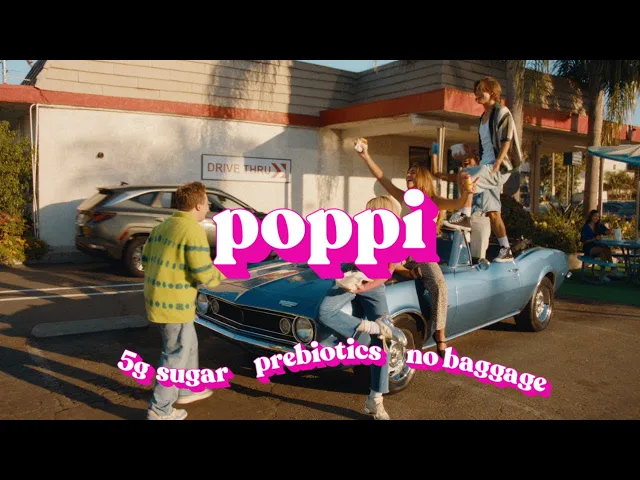
Plenty of influencer marketing looks nothing like UGC. Poppi's 60-second Super Bowl LIX spot starred creators Alix Earle and Jake Shane alongside Love Island's Rob Rausch, but music video director Dave Meyers directed it, with agency VIRTUE Worldwide. It's a creator campaign shot like a TV commercial. Earle is also a Poppi investor, and equity counts as a relationship too.
Stanley's own growth shows the classic model. CNBC reported that in 2019, after Stanley had declined to keep making the Quencher, the commerce site The Buy Guide ordered 5,000 of the cups and sold out within days. Terence Reilly became president in 2020, turned the site's founders into official partners on color launches, and Stanley's sales grew from $73 million in 2019 to a projected $750 million-plus in 2023. The car fire video went viral on top of years of paid, planned partnerships.
The rules follow the relationship. The FTC says influencers must disclose any "financial, employment, personal, or family relationship" with a brand, including free products. The disclosure has to sit in the content itself, in plain words like "ad" or "sponsored," and platform tags alone may not be enough.
Influencer-generated content: the influencer's post becomes your ad
Influencer-generated content (IGC) is what brands call an influencer's content once they reuse it, usually as a paid ad. The creator makes the video and often posts it to their own feed. Then the brand puts its media budget behind it.
The platforms have built formats for exactly this. TikTok's Spark Ads let a brand run a creator's organic post as an ad with the creator's authorization, and the likes, comments and follows go back to the original post. Meta's partnership ads work similarly on Instagram and Facebook, and Meta says they deliver 19% lower cost per acquisition and 13% higher click-through rates on average.

IGC is where UGC influencer marketing and paid media overlap most. You get an influencer's credibility and your own targeting in the same ad. The contract has to cover usage rights: how long you can run the content, on which platforms, and whether you can edit it.
Paid UGC creators: UGC in look, freelance production in fact
This is the term that causes most of the confusion. In paid social, "UGC" often means something else entirely: content from a paid UGC creator, someone hired to film native-looking videos, like unboxings, reviews and testimonials, that the brand runs from its own ad account. The creator often never posts it and may have only a few hundred followers. You're paying for their performance on camera and their eye for the format. Their audience barely matters.
That makes the "UGC vs influencer" question simple on this point. An influencer usually sells reach. A UGC creator usually sells content. Plenty of people do both, and brands can hire an influencer purely as a UGC creator, but it's a different purchase.
The catch is honesty. The FTC's Endorsement Guides, section 255.2(c), say that ads showing people presented as "actual consumers" should use actual consumers, or "clearly and conspicuously disclose" that they aren't actual consumers. A hired creator who reviews a product they've never used, in a video built to look like a customer's post, risks crossing that line. The safe setup is to ship the creator the product and let them use it before filming.
Content can also move from organic UGC into a paid relationship. In late 2022, TikTok creators Alexis Frost and Keith Lee posted their own videos about a Chipotle quesadilla order. The trend drove 30.6 million views of related content, and on March 2, 2023, Chipotle added their versions to its app for a limited time as the "Keithadilla" and the "Fajita Quesadilla Hack," with both creators part of the launch. Their first videos were UGC. The launch was a partnership.

Source: TikTok
AI UGC: UGC-style ads with synthetic presenters
AI UGC means UGC-style ads made with AI avatars in place of human creators. The avatar holds the product, talks to the camera and follows a script, but no person filmed it. The brand makes the whole thing, so no creator relationship exists at all.
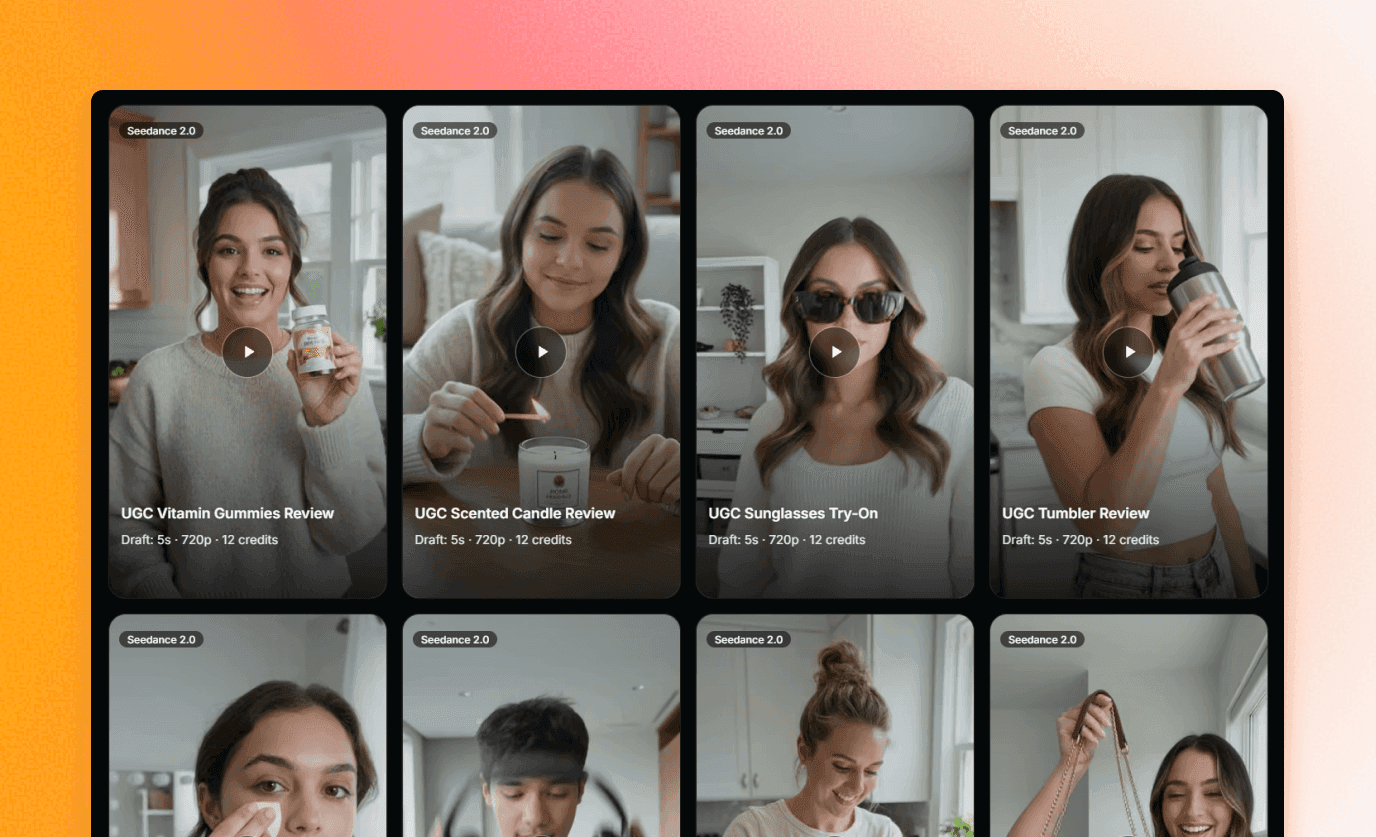
Marketers are moving fast here. In the same IAB report, nearly three in four creator ad buyers were already using AI or planned to within a year. And 95% had concerns about AI in creator marketing, with loss of human connection at the top of the list.
The legal line matters more than the tech. The FTC's rule banning fake reviews and testimonials, announced August 14, 2024 and in effect since October 21, 2024, prohibits testimonials that "misrepresent that they are by someone who does not exist, such as AI-generated fake reviews." An avatar that demonstrates a product or explains its features works like a presenter, though any product claims it makes still need to be true. An avatar presented as a real customer saying "I've used this for three months and my skin cleared up" is a testimonial from someone who doesn't exist.
Disclosure rules are tightening too. New York's synthetic performer law, in effect since June 9, 2026, requires covered ads to disclose when they use AI-generated "synthetic performers" that look like real people, with fines of $1,000 for a first violation and $5,000 after that. TikTok already requires a label on realistic AI-generated video.
AI influencers: a synthetic persona with an audience
An AI influencer, also called a virtual influencer, is a persistent digital character with its own feed, personality and followers. The best-known is Lil Miquela, who was approaching 3 million Instagram followers in 2024 and has worked with Dior, Calvin Klein and BMW. Her creator, Brud, was acquired by Dapper Labs in 2021.

The difference from AI UGC is the audience. AI UGC is a synthetic actor in a brand's ad. An AI influencer is a synthetic creator the brand pays to reach its followers, which makes it influencer marketing with a digital face. The FTC's Endorsement Guides define an endorser as a party that "could be or appear to be an individual, group, or institution," and the agency said the wording is meant to cover "non-existent entities that purport to give endorsements." A paid post from an AI influencer needs a sponsorship disclosure just like a human's, and the brand shouldn't let viewers think the persona is a real person.
Where Creatify fits
We make AI UGC, so here's where we think it works and where it doesn't.
Where it fits is volume. Creatify Agent can take a product link and produce a UGC-style ad with one of our 1,500+ avatars in any of 75+ languages, for about $5-8 per finished ad on every plan. You can also build a custom avatar from a real person's photo or video with Image to Avatar or Video to Avatar. That's a way to test ten hooks before you spend on a creator.
Where it doesn't fit is borrowed trust. An avatar has no audience and no lived experience with your product, so it can't replace an influencer, and it shouldn't pose as a customer. Our own customer data points the same way. For our customer Tec-Do, AI ads cut the cost per video from $20 to $2 and performed at 70-80% of ads with real actors. That's a strong trade for testing and scale, and it's why most brands run both.
Summing it up
UGC is what customers post on their own. Influencer marketing is paying for someone's audience. Influencer-generated content is an influencer's post running as your ad. Paid UGC creators make customer-style content for your ad account. AI UGC swaps the creator for an avatar, and AI influencers swap the influencer for a persona.
The bonus insight: keep track of relationships as closely as you track content. The same video can start as UGC and turn into a sponsorship the day a brand sends a gift, like Stanley's car or Ocean Spray's truck. Keep a record of what you've given every creator who posts about you, because that record decides which rules apply, whatever the video looks like.
Frequently Asked Questions
What is UGC influencer marketing?
UGC influencer marketing usually means brands working with creators to make authentic, customer-style content, either posted to the creator's audience or run as the brand's ads. Strictly, UGC is unpaid customer content and influencer marketing is a paid partnership. The term covers the overlap, like paid UGC creators and influencer-generated content.
What's the difference between UGC and influencer marketing?
UGC is content customers create on their own, with no deal involved. Influencer marketing is a paid or gifted partnership where a brand reaches a creator's audience. The deciding factor is the relationship, since both can look identical on screen.
What is influencer-generated content?
Influencer-generated content is content an influencer makes for a brand that the brand then reuses, usually as a paid ad through formats like TikTok Spark Ads or Meta partnership ads. It combines the influencer's credibility with the brand's targeting, so the contract needs clear usage rights.
Is a UGC creator the same as an influencer?
No. A UGC creator is paid to produce content the brand runs from its own accounts, and their follower count barely matters. An influencer is paid mainly for access to their audience. Many people do both, but a brand buys different things in each case.
Do UGC creators and influencers need to disclose sponsorships?
Influencers must disclose any brand relationship, including free products, in the content itself. Paid UGC that runs from a brand's own ad account usually reads as the brand's ad, but if the video presents the creator as a real customer, they should be one or the ad should say they aren't.
Is AI UGC legal to use in ads?
Yes, with limits. AI avatars can present and demonstrate products, but under the FTC's 2024 rule, they can't give fake testimonials that imply a real customer's experience. Some places now require labels too, like New York's synthetic performer law and TikTok's rules for realistic AI video.
In November 2023, a TikTok user posted a video of her car burned out after a fire, with her Stanley cup still in the cupholder and ice still inside it. That was user-generated content: a customer, her own phone, no deal with anyone. Then Stanley's president Terence Reilly replied with a TikTok of his own, offering to replace her car.
Under the FTC's influencer guidance, free products count as a brand relationship. So once the car arrived, any later post she made endorsing Stanley would call for a disclosure. Same person, same cup, same phone, and her next Stanley video would sit closer to influencer marketing than UGC.
That’s why “UGC” and “influencer marketing” blur together. The videos often look identical. What separates them is the relationship behind the video, and that relationship can change after the post goes up. This guide sorts out six terms people swap freely in user generated content influencer marketing: UGC, influencer marketing, influencer-generated content, paid UGC creators, AI UGC and AI influencers.
User-generated content vs influencer marketing: three questions that sort every term
You can place almost any piece of creator-style content by answering three questions:
Who made it: a customer, a paid creator, an influencer, or an AI?
Whose audience sees it: the creator's own followers, or people the brand reaches through its ads and channels?
What changed hands: nothing, free product, money, or equity?
Here's how the six terms answer them.
Term | Who made it | Whose audience | What changed hands |
|---|---|---|---|
Organic UGC | A customer | The customer's followers | Nothing |
Influencer marketing | A creator with a following | The creator's followers | Money, product, commission or equity |
Influencer-generated content | An influencer | The brand's ads, plus the creator's feed | Money, plus usage rights |
Paid UGC creator content | A hired creator | The brand's ads and channels | A per-video fee and usage rights |
AI UGC | The brand, with an AI avatar | The brand's ads | Nothing changes hands with the "creator" |
AI influencer | A studio running a synthetic persona | The persona's followers | Money, between the brand and the studio owning the AI persona |
The rest of this guide takes each row in turn, with the places they overlap.
UGC: what customers make on their own
Organic user-generated content is anything people post about a brand without being asked or paid. The purest version is still Nathan Apodaca's 2020 TikTok, where he skateboarded to work drinking Ocean Spray Cran-Raspberry and lip-syncing Fleetwood Mac's "Dreams." Marketing Dive reported it passed 26 million views and pushed "Dreams" to its highest US streaming numbers ever.
Source: TikTok
Apodaca had no deal with Ocean Spray. The brand's reply came after the fact: it gifted him a cranberry-red truck, and CEO Tom Hayes joined TikTok to pay tribute. The follow-up passed 10 million views.
So UGC can reach a huge audience without being influencer marketing. What decides it is that no one arranged the post. Brands can still encourage UGC with a hashtag challenge or a review request. It's still made by users, but once there's a prize, a discount or free product attached, the posts may need a disclosure. If you want to run a customer's post in your own ads, though, get their permission first, in writing, covering where and how long you'll run it.
▶ Read also: What is UGC content? Meaning, examples, and tips for marketers
Influencer marketing: paying for someone's audience
Influencer marketing is a brand paying a creator to reach the creator's audience. You're buying distribution and trust, and the content is part of the package. eMarketer estimated US influencer marketing spend, meaning what brands pay creators for sponsored social posts, at $10.52 billion in 2025 and projects about $12.2 billion in 2026. The IAB's broader measure of creator ad spend, which includes paid boosts of creator posts, was projected to reach $37 billion in 2025, up 26% from $29.5 billion in 2024.
Plenty of influencer marketing looks nothing like UGC. Poppi's 60-second Super Bowl LIX spot starred creators Alix Earle and Jake Shane alongside Love Island's Rob Rausch, but music video director Dave Meyers directed it, with agency VIRTUE Worldwide. It's a creator campaign shot like a TV commercial. Earle is also a Poppi investor, and equity counts as a relationship too.
Stanley's own growth shows the classic model. CNBC reported that in 2019, after Stanley had declined to keep making the Quencher, the commerce site The Buy Guide ordered 5,000 of the cups and sold out within days. Terence Reilly became president in 2020, turned the site's founders into official partners on color launches, and Stanley's sales grew from $73 million in 2019 to a projected $750 million-plus in 2023. The car fire video went viral on top of years of paid, planned partnerships.
The rules follow the relationship. The FTC says influencers must disclose any "financial, employment, personal, or family relationship" with a brand, including free products. The disclosure has to sit in the content itself, in plain words like "ad" or "sponsored," and platform tags alone may not be enough.
Influencer-generated content: the influencer's post becomes your ad
Influencer-generated content (IGC) is what brands call an influencer's content once they reuse it, usually as a paid ad. The creator makes the video and often posts it to their own feed. Then the brand puts its media budget behind it.
The platforms have built formats for exactly this. TikTok's Spark Ads let a brand run a creator's organic post as an ad with the creator's authorization, and the likes, comments and follows go back to the original post. Meta's partnership ads work similarly on Instagram and Facebook, and Meta says they deliver 19% lower cost per acquisition and 13% higher click-through rates on average.
IGC is where UGC influencer marketing and paid media overlap most. You get an influencer's credibility and your own targeting in the same ad. The contract has to cover usage rights: how long you can run the content, on which platforms, and whether you can edit it.
Paid UGC creators: UGC in look, freelance production in fact
This is the term that causes most of the confusion. In paid social, "UGC" often means something else entirely: content from a paid UGC creator, someone hired to film native-looking videos, like unboxings, reviews and testimonials, that the brand runs from its own ad account. The creator often never posts it and may have only a few hundred followers. You're paying for their performance on camera and their eye for the format. Their audience barely matters.
That makes the "UGC vs influencer" question simple on this point. An influencer usually sells reach. A UGC creator usually sells content. Plenty of people do both, and brands can hire an influencer purely as a UGC creator, but it's a different purchase.
The catch is honesty. The FTC's Endorsement Guides, section 255.2(c), say that ads showing people presented as "actual consumers" should use actual consumers, or "clearly and conspicuously disclose" that they aren't actual consumers. A hired creator who reviews a product they've never used, in a video built to look like a customer's post, risks crossing that line. The safe setup is to ship the creator the product and let them use it before filming.
Content can also move from organic UGC into a paid relationship. In late 2022, TikTok creators Alexis Frost and Keith Lee posted their own videos about a Chipotle quesadilla order. The trend drove 30.6 million views of related content, and on March 2, 2023, Chipotle added their versions to its app for a limited time as the "Keithadilla" and the "Fajita Quesadilla Hack," with both creators part of the launch. Their first videos were UGC. The launch was a partnership.
Source: TikTok
AI UGC: UGC-style ads with synthetic presenters
AI UGC means UGC-style ads made with AI avatars in place of human creators. The avatar holds the product, talks to the camera and follows a script, but no person filmed it. The brand makes the whole thing, so no creator relationship exists at all.
Marketers are moving fast here. In the same IAB report, nearly three in four creator ad buyers were already using AI or planned to within a year. And 95% had concerns about AI in creator marketing, with loss of human connection at the top of the list.
The legal line matters more than the tech. The FTC's rule banning fake reviews and testimonials, announced August 14, 2024 and in effect since October 21, 2024, prohibits testimonials that "misrepresent that they are by someone who does not exist, such as AI-generated fake reviews." An avatar that demonstrates a product or explains its features works like a presenter, though any product claims it makes still need to be true. An avatar presented as a real customer saying "I've used this for three months and my skin cleared up" is a testimonial from someone who doesn't exist.
Disclosure rules are tightening too. New York's synthetic performer law, in effect since June 9, 2026, requires covered ads to disclose when they use AI-generated "synthetic performers" that look like real people, with fines of $1,000 for a first violation and $5,000 after that. TikTok already requires a label on realistic AI-generated video.
AI influencers: a synthetic persona with an audience
An AI influencer, also called a virtual influencer, is a persistent digital character with its own feed, personality and followers. The best-known is Lil Miquela, who was approaching 3 million Instagram followers in 2024 and has worked with Dior, Calvin Klein and BMW. Her creator, Brud, was acquired by Dapper Labs in 2021.
The difference from AI UGC is the audience. AI UGC is a synthetic actor in a brand's ad. An AI influencer is a synthetic creator the brand pays to reach its followers, which makes it influencer marketing with a digital face. The FTC's Endorsement Guides define an endorser as a party that "could be or appear to be an individual, group, or institution," and the agency said the wording is meant to cover "non-existent entities that purport to give endorsements." A paid post from an AI influencer needs a sponsorship disclosure just like a human's, and the brand shouldn't let viewers think the persona is a real person.
Where Creatify fits
We make AI UGC, so here's where we think it works and where it doesn't.
Where it fits is volume. Creatify Agent can take a product link and produce a UGC-style ad with one of our 1,500+ avatars in any of 75+ languages, for about $5-8 per finished ad on every plan. You can also build a custom avatar from a real person's photo or video with Image to Avatar or Video to Avatar. That's a way to test ten hooks before you spend on a creator.
Where it doesn't fit is borrowed trust. An avatar has no audience and no lived experience with your product, so it can't replace an influencer, and it shouldn't pose as a customer. Our own customer data points the same way. For our customer Tec-Do, AI ads cut the cost per video from $20 to $2 and performed at 70-80% of ads with real actors. That's a strong trade for testing and scale, and it's why most brands run both.
Summing it up
UGC is what customers post on their own. Influencer marketing is paying for someone's audience. Influencer-generated content is an influencer's post running as your ad. Paid UGC creators make customer-style content for your ad account. AI UGC swaps the creator for an avatar, and AI influencers swap the influencer for a persona.
The bonus insight: keep track of relationships as closely as you track content. The same video can start as UGC and turn into a sponsorship the day a brand sends a gift, like Stanley's car or Ocean Spray's truck. Keep a record of what you've given every creator who posts about you, because that record decides which rules apply, whatever the video looks like.
Frequently Asked Questions
What is UGC influencer marketing?
UGC influencer marketing usually means brands working with creators to make authentic, customer-style content, either posted to the creator's audience or run as the brand's ads. Strictly, UGC is unpaid customer content and influencer marketing is a paid partnership. The term covers the overlap, like paid UGC creators and influencer-generated content.
What's the difference between UGC and influencer marketing?
UGC is content customers create on their own, with no deal involved. Influencer marketing is a paid or gifted partnership where a brand reaches a creator's audience. The deciding factor is the relationship, since both can look identical on screen.
What is influencer-generated content?
Influencer-generated content is content an influencer makes for a brand that the brand then reuses, usually as a paid ad through formats like TikTok Spark Ads or Meta partnership ads. It combines the influencer's credibility with the brand's targeting, so the contract needs clear usage rights.
Is a UGC creator the same as an influencer?
No. A UGC creator is paid to produce content the brand runs from its own accounts, and their follower count barely matters. An influencer is paid mainly for access to their audience. Many people do both, but a brand buys different things in each case.
Do UGC creators and influencers need to disclose sponsorships?
Influencers must disclose any brand relationship, including free products, in the content itself. Paid UGC that runs from a brand's own ad account usually reads as the brand's ad, but if the video presents the creator as a real customer, they should be one or the ad should say they aren't.
Is AI UGC legal to use in ads?
Yes, with limits. AI avatars can present and demonstrate products, but under the FTC's 2024 rule, they can't give fake testimonials that imply a real customer's experience. Some places now require labels too, like New York's synthetic performer law and TikTok's rules for realistic AI video.