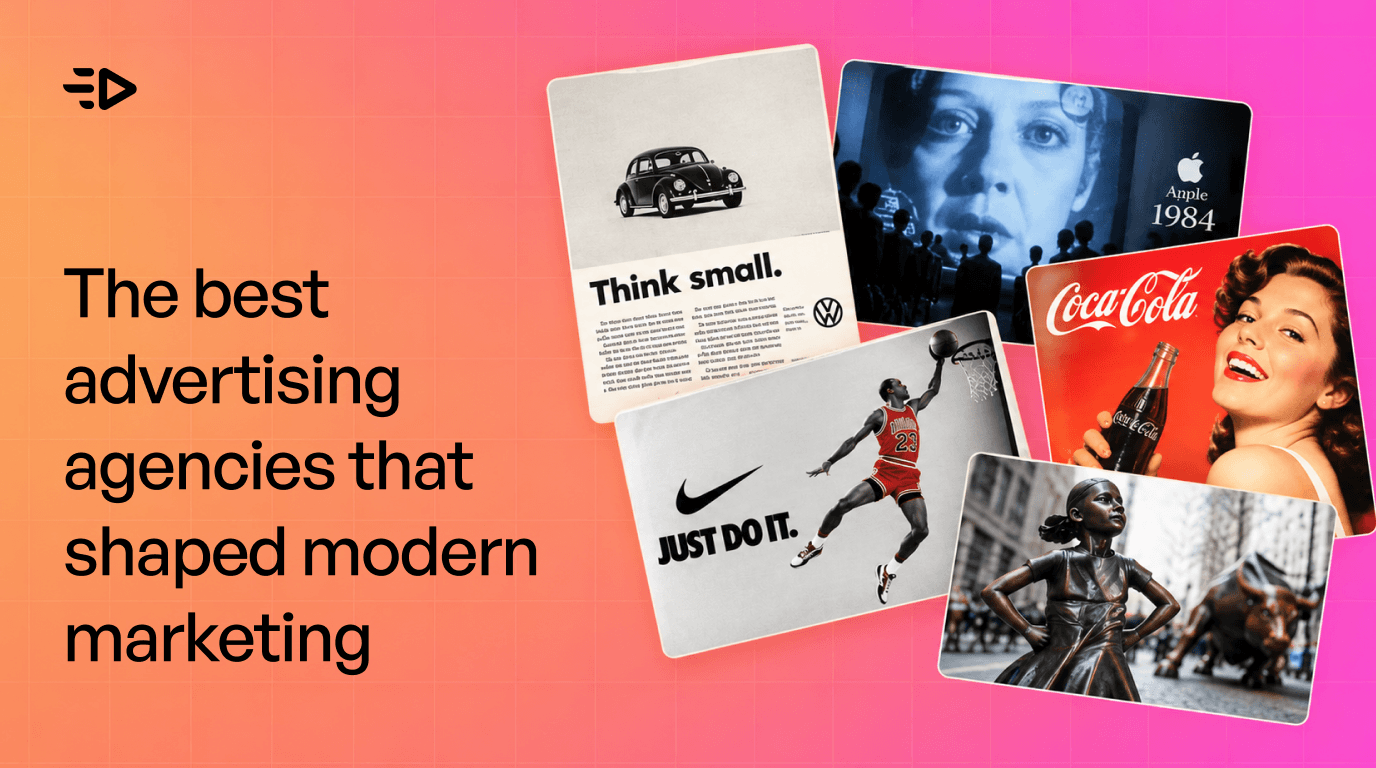

For most of the 20th century, some of the best ideas in popular culture came out of advertising agencies. A Volkswagen ad told Americans to think small. A cowboy on a billboard sold a cigarette for decades. An Apple commercial aired nationally once, during the 1984 Super Bowl, and people still talk about it.
A lot of the rules marketers follow today were written in one New York office. In 1948, David Ogilvy opened an agency and started telling copywriters to do their homework, write headlines that sell, and respect the reader. His most famous line still lands: "The consumer isn't a moron; she is your wife." Open almost any performance marketing playbook in 2026 and you'll find his ideas under new names.
The industry got so good that it built its own festival. In 1954, screen-advertising companies met in Venice to celebrate ad films, and the trophy they handed out was modelled on the lion of St Mark's Square. That festival became Cannes Lions, and a Lion became the highest honor in the business.
Here’s how it all started, and how it got so great: the best advertising agencies, the people, and the work that made advertising part of culture. Some of these shops filled trophy cabinets. Others won a handful of awards and changed the business anyway.
Before the big ideas: agencies older than radio
Two of today’s top advertising agencies started before most homes had a radio. George Batten opened his agency in 1891, and in 1928 it merged with Barton, Durstine & Osborn to become BBDO. Harrison K. McCann opened his in 1912, according to McCann's own history, and joined forces with Alfred Erickson's agency in 1930.
BBDO's "O," Alex Osborn, later popularized the word brainstorming. The agency's archive reads like a list of lines your grandparents could sing: Pepsi's "Pepsi generation," Campbell's "M'm! M'm! Good!", and Burger King's "Have it your way." McCann still works under the line it's known for: "Truth Well Told."
Leo Burnett fills the supermarket with friends
Leo Burnett opened his agency in Chicago in 1935, and his gift was giving products a face. Tony the Tiger arrived in 1952, the Marlboro Man in 1954, and the Pillsbury Doughboy and United's "Fly the friendly skies" in 1965. His shop also turned the existing Green Giant into the friendlier Jolly Green Giant.
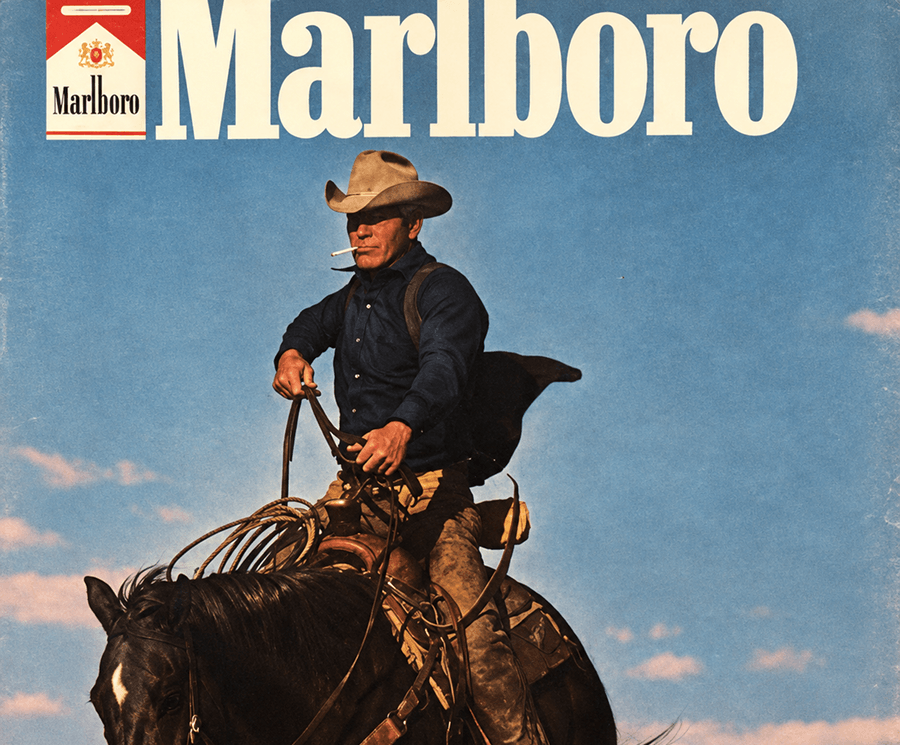
Walk down a cereal aisle today and you're still shopping in Leo Burnett's world. Mascots, recurring characters, a cowboy who stands for a whole idea of freedom: he made them a standard way to build a brand.
David Ogilvy writes the rulebook
Ogilvy opened his agency in 1948 as Hewitt, Ogilvy, Benson & Mather. His 1958 Rolls-Royce ad ran one of the most quoted headlines ever written: "At 60 miles an hour the loudest noise in this new Rolls-Royce comes from the electric clock."
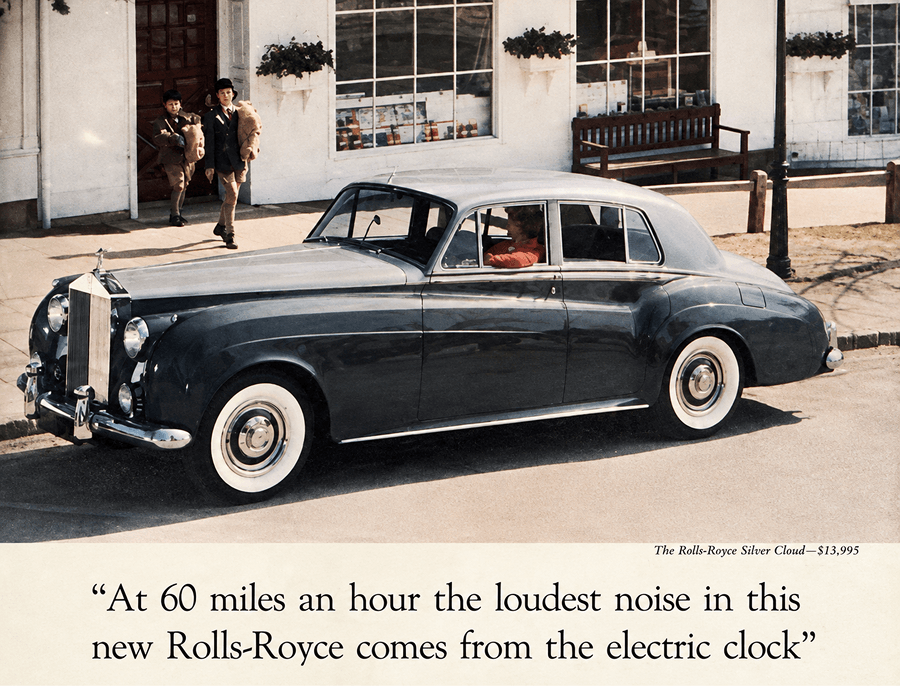
That headline is the whole Ogilvy method in one sentence. Find a true, specific fact about the product, and let it do the selling. In 1963 he put the method in a book, "Confessions of an Advertising Man," and the 4A's still calls it required reading.
Bill Bernbach starts the creative revolution
A year after Ogilvy, Ned Doyle, Maxwell Dane, and Bill Bernbach opened Doyle Dane Bernbach in Manhattan in June 1949. Bernbach is widely credited with pairing copywriters and art directors as one team, which is still how creative agencies work.
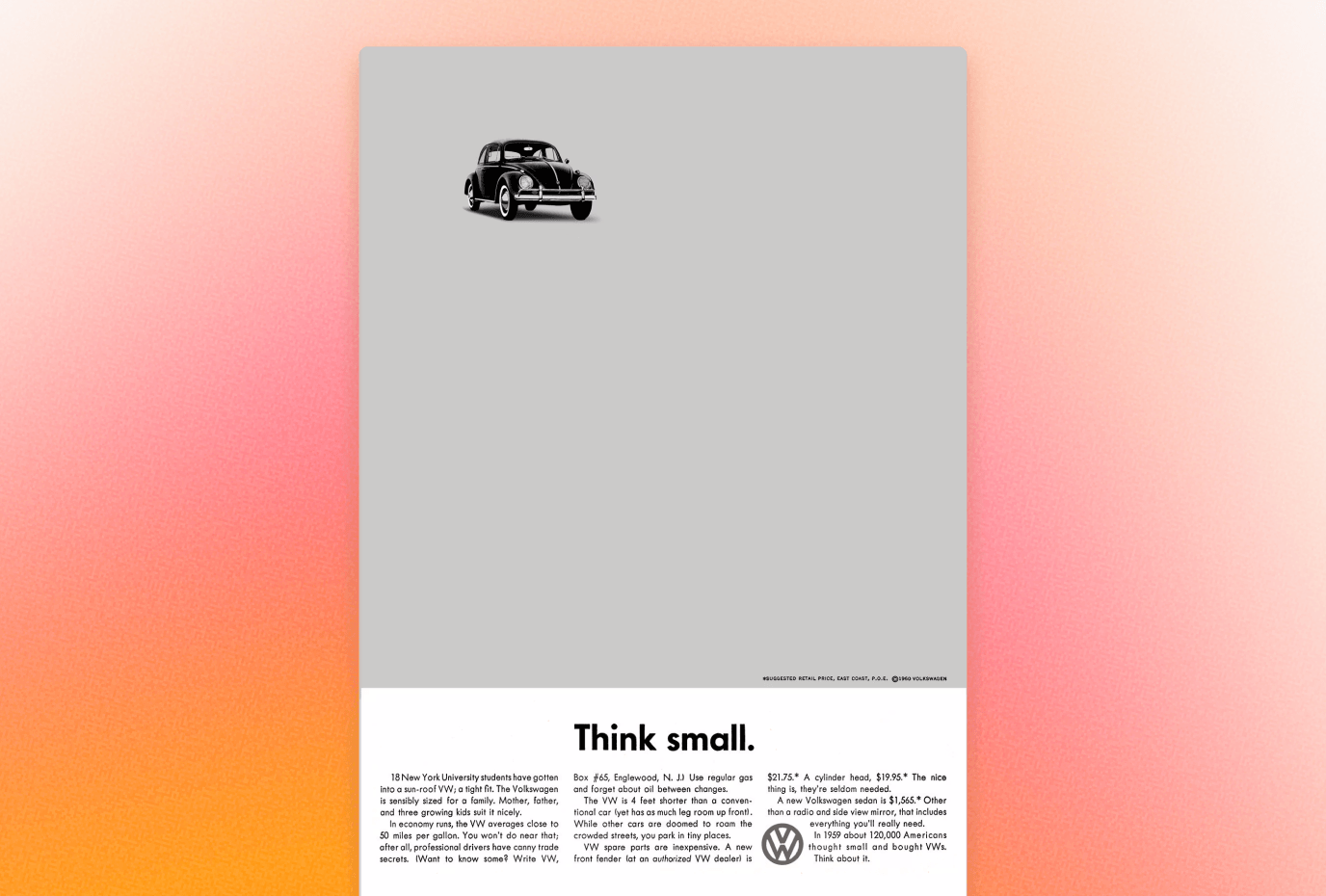
Then DDB won Volkswagen and made "Think Small" (1959): a tiny car floating in white space, with copy that poked fun at its own product. In a decade of chrome and tail fins, it made a small, odd-looking German car something to be proud of. Ad Age later ranked DDB's Volkswagen campaign the best of the 20th century.
The 1970s: ads become pop culture
In 1971, McCann put a crowd of young people on a hilltop and had them sing "I'd Like to Buy the World a Coke". It's still the ad many people picture when they think of Coca-Cola.
Across the Atlantic, brothers Charles and Maurice Saatchi opened Saatchi & Saatchi in London in 1970. Their 1978 poster for the Conservative Party, "Labour Isn't Working," showed a long dole queue and became one of the most famous political ads in British history. In the 1980s, the brothers bought their way to becoming the world's largest advertising group.
The 1980s: rebels in Los Angeles, Portland, and London
Jay Chiat and Guy Day had merged their agencies in Los Angeles in 1968. In 1984, Chiat/Day made Apple's "1984," directed by Ridley Scott. It aired once nationally, during Super Bowl XVIII on 22 January 1984, and turned the Super Bowl break into the biggest stage in advertising.
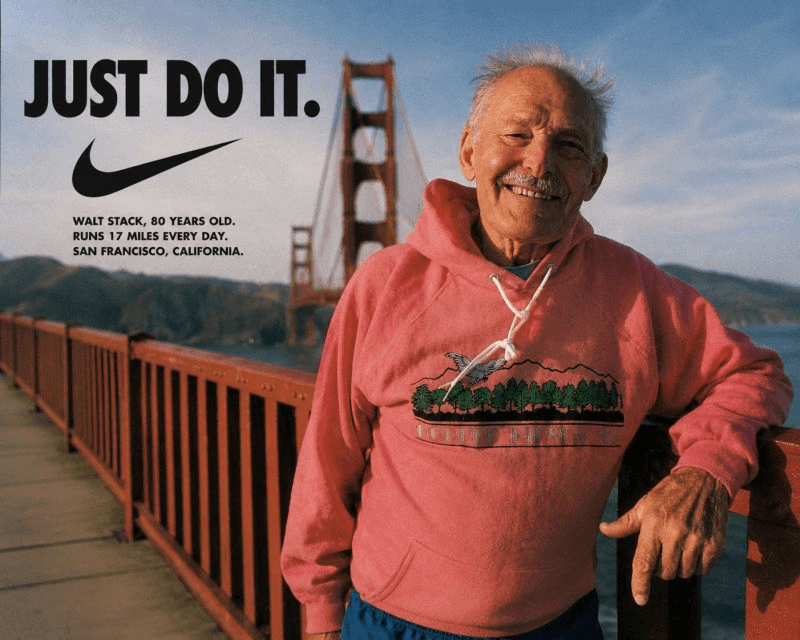
In Portland, Oregon, Dan Wieden and David Kennedy opened Wieden+Kennedy on 1 April 1982, with Nike as their first big client. In 1988 Wieden wrote "Just Do It," which debuted in an ad with 80-year-old runner Walt Stack. He later said he adapted it from the last words of a man facing execution: "Let's do it."
In London, also in 1982, John Bartle, Nigel Bogle, and John Hegarty founded BBH. Their black sheep logo came from an early Levi's ad with the line "When the world zigs, zag." On Boxing Day 1985, BBH's "Laundrette" showed Nick Kamen stripping to his boxers in a 1950s launderette, and Levi's says it reignited sales of the 501.
The 1990s: got milk? and Think Different
Jeff Goodby, Rich Silverstein, and Andy Berlin opened their San Francisco agency in 1983. Ten years later it launched "got milk?" with a spot about a history buff who can't answer a radio quiz question because his mouth is full of peanut butter and he's out of milk. Two words, and the dairy industry had a catchphrase for decades.
In 1997, TBWA\Chiat\Day (Chiat/Day had merged with TBWA in 1995) gave Apple "Think Different." And in December 1996, a small group including Robert Saville and Mark Waites opened Mother in London, the shop that later gave Boots "Here come the girls" and IKEA "The wonderful everyday."
The internet years: Small creative companies, huge Ideas
The early web belonged to creative advertising agencies willing to be weird. In 2004, Crispin Porter + Bogusky and The Barbarian Group built Burger King's "Subservient Chicken", a website where a man in a chicken suit acted out the commands you typed. It drew over a million hits in its first day.
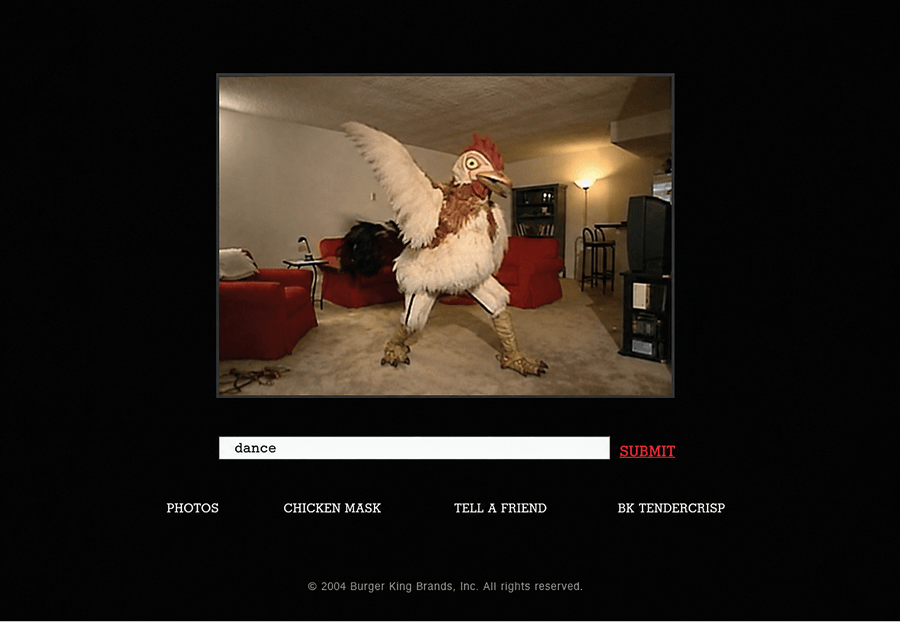
CP+B's Burger King run was short. Alex Bogusky left in 2010, and Burger King ended the relationship in 2011. The chicken still shows up in histories of digital advertising.
Australian creative director David Droga opened Droga5 in New York in 2006 and got noticed fast with a video for Marc Ecko that appeared to show someone tagging Air Force One. In 2010 it made Jay-Z's "Decoded" for Bing, hiding every page of his memoir in places around the world tied to the story. It won both the Outdoor and Integrated Grands Prix at Cannes in 2011.
The Cannes era: a smell, a sketch, and a statue
The 2010s were a golden run for big ideas with big trophies, and a Lion became the quickest way to settle any argument about the best creative agency. W+K won the Cannes Film Grand Prix two years in a row: Old Spice's "The Man Your Man Could Smell Like" in 2010 and Nike's "Write the Future" in 2011.
Ogilvy Brasil's Dove "Real Beauty Sketches" had a forensic artist draw women first from their own description, then from a stranger's. It won the 2013 Titanium Grand Prix. Two years later, Leo Burnett and MSLGroup's Always #LikeAGirl asked what it means to run or throw "like a girl" and won the PR Grand Prix.
Then McCann New York put a bronze girl in front of Wall Street's charging bull for State Street Global Advisors. "Fearless Girl" won four Grands Prix and 18 Lions in 2017. The next year, Saatchi New York's "It's a Tide Ad" turned every Super Bowl commercial into a possible Tide ad and took the Film Grand Prix.
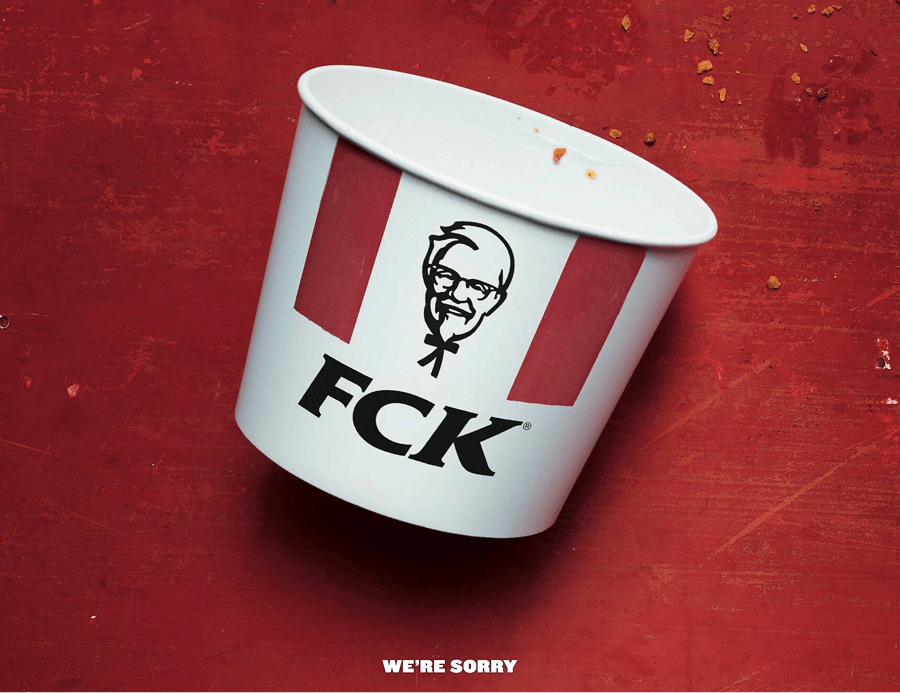
Some classics never needed a Grand Prix. When a chicken shortage closed hundreds of KFC's UK restaurants in 2018, Mother rearranged the letters on the bucket to spell "FCK" and ran it as a full-page apology. It won Gold Lions, and it's probably the most famous corporate apology in advertising.
The 2020s: the legends keep winning
The old names haven't slowed down. AMV BBDO's #WombStories for Bodyform won the 2021 Titanium Grand Prix. adam&eveDDB's "The Last Photo" for the suicide-prevention charity CALM won the 2023 Film Grand Prix. In 2024, W+K's DoorDash "All The Ads" turned a Super Bowl spot into a giveaway of every product advertised in the game and won the Titanium Grand Prix.
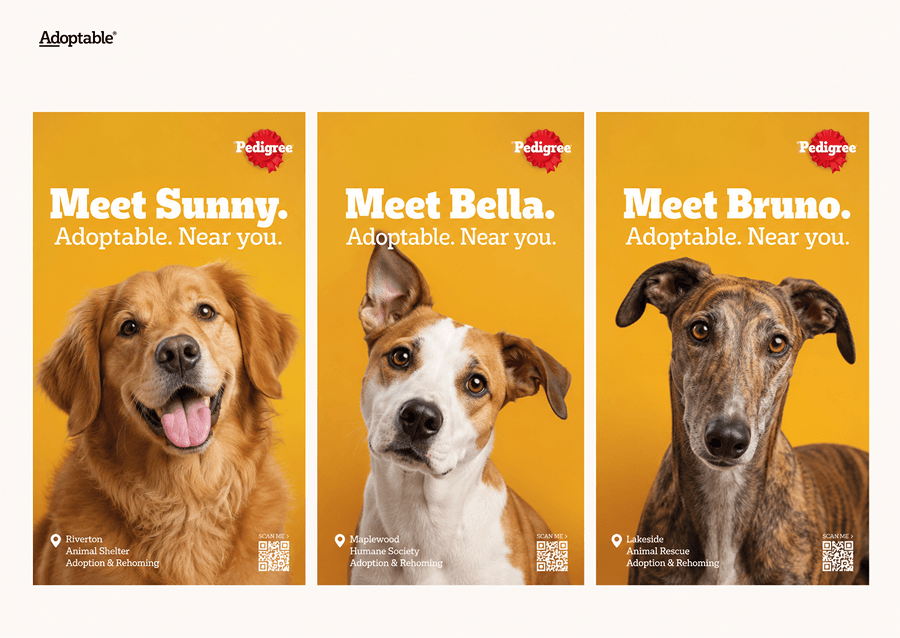
The same year, Colenso BBDO in Auckland used AI to turn shelter-dog photos into ads for local dogs you could adopt. Pedigree "Adoptable" took the Outdoor Grand Prix. And in 2025, Dove's 20-year Real Beauty platform won two more Grands Prix, for Glass and Creative Strategy.
Ogilvy has now been Cannes Network of the Year eight times since 2012, most recently in 2026. The same year, Mother won the Film Grand Prix for its campaign for Anthropic's Claude.
Where the top advertising agencies are now
The work is still great. The companies behind it have been through the biggest shake-up in decades.
DDB had a year most networks only dream of: in June 2025 it was Network of the Year with 112 Lions (100 after its Brazilian agency DM9 withdrew three campaigns over entry rule violations). Less than six months later, Omnicom, which had just bought IPG, announced it would retire the DDB name. "It is not a question of age and legacy. It is just a question of relevance," said Troy Ruhanen, who then ran Omnicom Advertising (The Drum).
Most DDB offices were folded into TBWA by mid-2026, and in London, adam&eveDDB became Adam & Eve\TBWA. Omnicom kept three creative networks: TBWA, BBDO, and McCann. Ruhanen retired in September 2026 with the integration complete, and BBDO chairman Andrew Robertson now runs Omnicom Advertising.
Elsewhere, the names of the top ad agencies live on in new shapes:
Agency | Founded | Where it is in 2026 |
|---|---|---|
Ogilvy | 1948 | Owned by WPP, inside WPP Creative with VML and AKQA |
BBDO | 1928 | One of Omnicom's three creative networks; took in several FCB and DDB offices |
McCann | 1912 (McCann-Erickson from 1930) | One of Omnicom's three creative networks |
DDB | 1949 | Name retired by Omnicom; offices folded into TBWA, BBDO, and in some markets McCann |
Leo Burnett | 1935 | Merged with Publicis Worldwide into Leo in 2025; Leo Australia won the 2026 Titanium Grand Prix |
Saatchi & Saatchi | 1970 | A Publicis creative brand, headquartered in London |
TBWA\Chiat\Day | 1968 (as Chiat/Day) | Omnicom, part of the TBWA network, which absorbed most of DDB and MullenLowe |
Wieden+Kennedy | 1982 | Independent, held in a trust designed so the agency is never sold |
BBH | 1982 | Fully owned by Publicis since 2012; absorbed Publicis India in 2026 |
Goodby Silverstein & Partners | 1983 | Omnicom; Rich Silverstein is stepping down at the end of 2026 |
Mother | 1996 | Independent |
Droga5 | 2006 | Part of Accenture Song since 2019; David Droga is now Accenture's vice chair |
Crispin Porter + Bogusky | 1965 (as Crispin's agency) | Owned by Stagwell, renamed Crispin in North America |
If you've heard people talk about the "big six" holding companies, that list is now five: Omnicom, Publicis Groupe, WPP, Dentsu, and Havas. Omnicom's purchase of IPG closed in November 2025.
Read more: Video Marketing Agency: When to Hire One vs Using AI Tools
Standing on their shoulders
At Creatify, we're part of today's adtech, and this history is personal for us. What we build sits on ideas these agencies proved first: one strong thought can carry hundreds of executions, a copywriter and an art director think better together, and the person watching the ad is smart.
Our creative agent works a bit like Bernbach’s teams did, writing the script and building the visuals together from a single brief. Once the idea is right, our ad generator turns it into the many sizes and versions today’s channels need. Our AI Performance Agent then runs them across Meta, Google and TikTok, so you can see which ones people actually respond to.
We're grateful to the people who walked the long road from the hilltop to the newsfeed. We learned from the greats, and we're building on top of what they built.
Summing it up
Advertising became part of culture because a few agencies treated it as a craft. Burnett gave brands faces, Ogilvy gave them facts, Bernbach gave them wit, and the rebels of the 1980s gave them attitude. The best of that work still wins at Cannes, even as the companies behind it merge and rename.
One last thing worth noticing. Almost every campaign in this story is built on one simple, true observation: a car is small, a clock is loud, milk runs out. The tools have changed completely since 1959. The hard part, finding that one true thing, hasn't changed at all.
FAQ
Which advertising agencies shaped modern marketing?
The agencies that set the rules are Ogilvy, DDB, Leo Burnett, BBDO, and McCann, followed by Saatchi & Saatchi, Chiat/Day, Wieden+Kennedy, and BBH. In the internet era, smaller shops like Crispin Porter + Bogusky and Droga5 showed what digital ideas could do.
What is the most famous ad campaign of all time?
There's no official ranking of fame, but Volkswagen's "Think Small" by DDB (1959) is a strong answer: Ad Age ranked DDB's Volkswagen campaign the best of the 20th century.
Which agency has won the most at Cannes Lions?
By Network of the Year titles, Ogilvy leads with eight wins since 2012, including 2024 and 2026. BBDO has won it seven times.
Is DDB still an agency?
DDB no longer exists as a global network. Omnicom announced on 1 December 2025 that it would retire the name, and most DDB offices were merged into TBWA by mid-2026, with others moving to BBDO or, in some markets, McCann.
What happened to Leo Burnett?
Publicis merged Leo Burnett with Publicis Worldwide in January 2025 to create a single creative network called Leo. The work continues under the new name.
Which famous ad agencies are still independent?
Wieden+Kennedy and Mother are the best-known independents among the legendary agencies. W+K's shares are held in a trust designed to stop the agency from ever being sold.