Équipe Creatify
PARTAGER


DANS CET ARTICLE
Synthesia est une application de création vidéo IA qui propose de la création et du doublage vidéo IA professionnels. Nous explorons les meilleures alternatives professionnelles à Synthesia pour la génération de vidéos IA en 2026. Les principales alternatives incluent Creatify, Heygen et Colossyan.
Nous classons Creatify en tête pour le marketing de performance, tandis que chacune des quatre autres plateformes se distingue pour un type de travail différent. Cet article explique les workflows, les tarifs et les limites de ces cinq alternatives, afin que vous puissiez identifier la plateforme qui correspond le mieux à votre format vidéo et à votre canal de distribution.
Points clés à retenir
Creatify est une suite complète de création publicitaire vidéo basée sur des agents, idéale pour concevoir des publicités Meta, TikTok et YouTube.
Colossyan propose des modules de formation SCORM avec des quiz interactifs.
HeyGen propose des jumeaux numériques ultra-réalistes et prend en charge plus de 175 langues.
D-ID propose une animation photo économique et des outils d'agents en temps réel pour des expériences intégrées plutôt que pour des files d'attente de production publicitaire.
Les meilleures alternatives à Synthesia
Creatify pour les tests publicitaires de produits et l'UGC à grand volume
HeyGen pour des vidéos d'avatars multilingues réalistes
Colossyan pour des formations SCORM interactives
D-ID pour de la vidéo à partir de photos économique et des agents en temps réel
Elai pour des vidéos explicatives à partir de documents
Qu'est-ce qui définit la meilleure alternative à Synthesia ?
Creatify démarre à partir d'URL de produits, Colossyan à partir de scénarios de formation, D-ID à partir de photos ou d'interactions en direct, et Elai à partir de documents. Nous avons évalué chaque produit selon son workflow source-vers-vidéo, son format de sortie et ses exigences techniques. Nous avons comparé la manière dont chaque plateforme intègre le contenu source, produit la vidéo et gère la diffusion.
Workflow source-vers-vidéo. Workflow source-vers-vidéo. Choisissez une plateforme qui accepte le matériel source que votre équipe utilise déjà.
Esthétique de rendu. Adaptez le style des images de créateurs de type UGC, un présentateur studio impeccable ou une tête parlante animée à partir d'une photo selon le canal où les spectateurs la visionneront.
Rentabilité des volumes. Les forfaits basés sur des crédits facturent chaque rendu vidéo, révision et variante.
Apprentissage et gouvernance. L'exportation SCORM de Colossyan et ses fonctionnalités d'apprentissage interactif en font un outil idéal pour l'intégration LMS.
Personnalisation et localisation. Vérifiez l'accès aux avatars personnalisés et la couverture linguistique lorsqu'une campagne dépend d'un porte-parole identifiable ou de versions régionales.
Les meilleures alternatives à Synthesia en un coup d'œil
Produit | Idéal pour | Fonctionnalité clé | Tarifs |
|---|---|---|---|
Creatify | Création publicitaire basée sur des agents de haute qualité | Workflow URL produit-vers-publicité avec suivi des concurrents | 10 crédits gratuits ; Starter environ $33–39/mois ; Pro $99/mois |
HeyGen | Vidéos d'avatars multilingues réalistes | Avatar IV/V et plus de 175 langues | Forfait gratuit ; Creator environ $24–29/mois avec facturation annuelle |
Colossyan | Formation SCORM interactive | Scènes multi-avatars, quiz et SCORM | Gratuit/Starter environ $19–27/mois avec facturation annuelle ; Professional environ $59/mois |
D-ID | Vidéo à partir de photos économique et agents en temps réel | Animation photo et agents expressifs V4 | Lite environ $4.70–5.90/mois ; Pro environ $16–29/mois |
Elai | Vidéos explicatives à partir de documents | Workflow document, PPT et URL-vers-vidéo | Consultez les tarifs actuels sur le site officiel d'Elai |
Testez le comparatif de Creatify avec Synthesia et son workflow URL-vers-vidéo avec une seule page produit, trois angles d'audience et plusieurs variantes courtes. Lancez ce test pour voir si les crédits de Creatify correspondent à votre rythme de test.
Meilleure alternative à Synthesia pour les publicités de produits haute performance et l'UGC
Creatify (Web)
Avantages de Creatify :
Génère des publicités vidéo et image à partir d'URL de produits, de briefs et d'actifs de marque
Prend en charge les tests publicitaires à grand volume avec plus de 1 500 acteurs IA sur le forfait Pro, des variations par lots et l'Ad Clone.
Connecte la production créative avec Meta, TikTok et d'autres flux publicitaires
Inconvénients de Creatify :
Les rendus premium ou plus longs peuvent consommer de 2 à 20 crédits par vidéo
N'égale pas Colossyan ou Synthesia pour le SCORM natif et les formations d'entreprise de format long
Creatify transforme les pages produits et les briefs en variantes publicitaires sociales de style UGC. Ses agents publicitaires peuvent créer intelligemment des publicités à partir de millions d'exemples de publicités performantes pour vous aider à obtenir le taux de conversion le plus élevé.
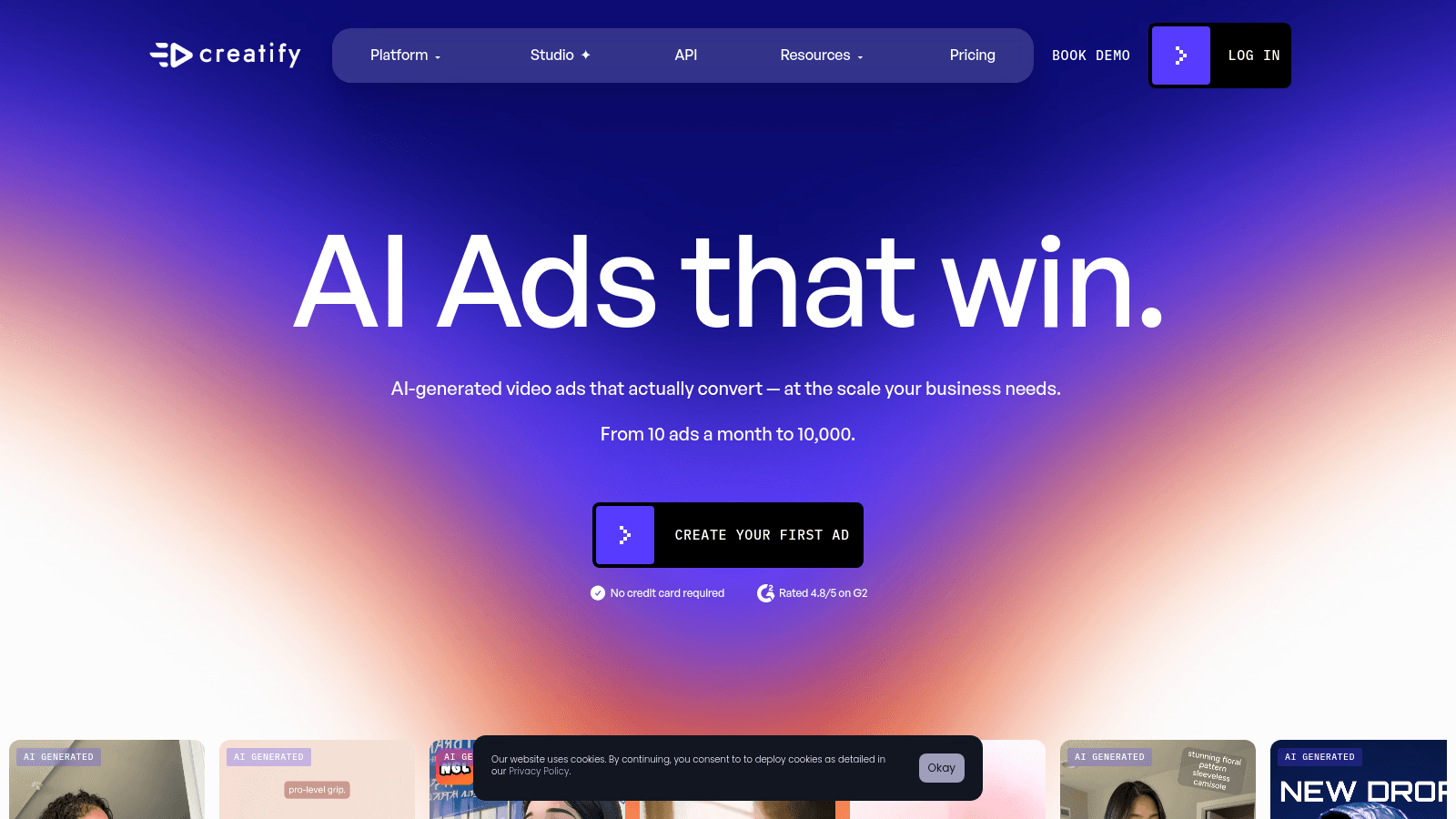
La page d'accueil de Creatify avec le slogan d'accroche « AI Ads that win » et un bouton d'appel à l'action.
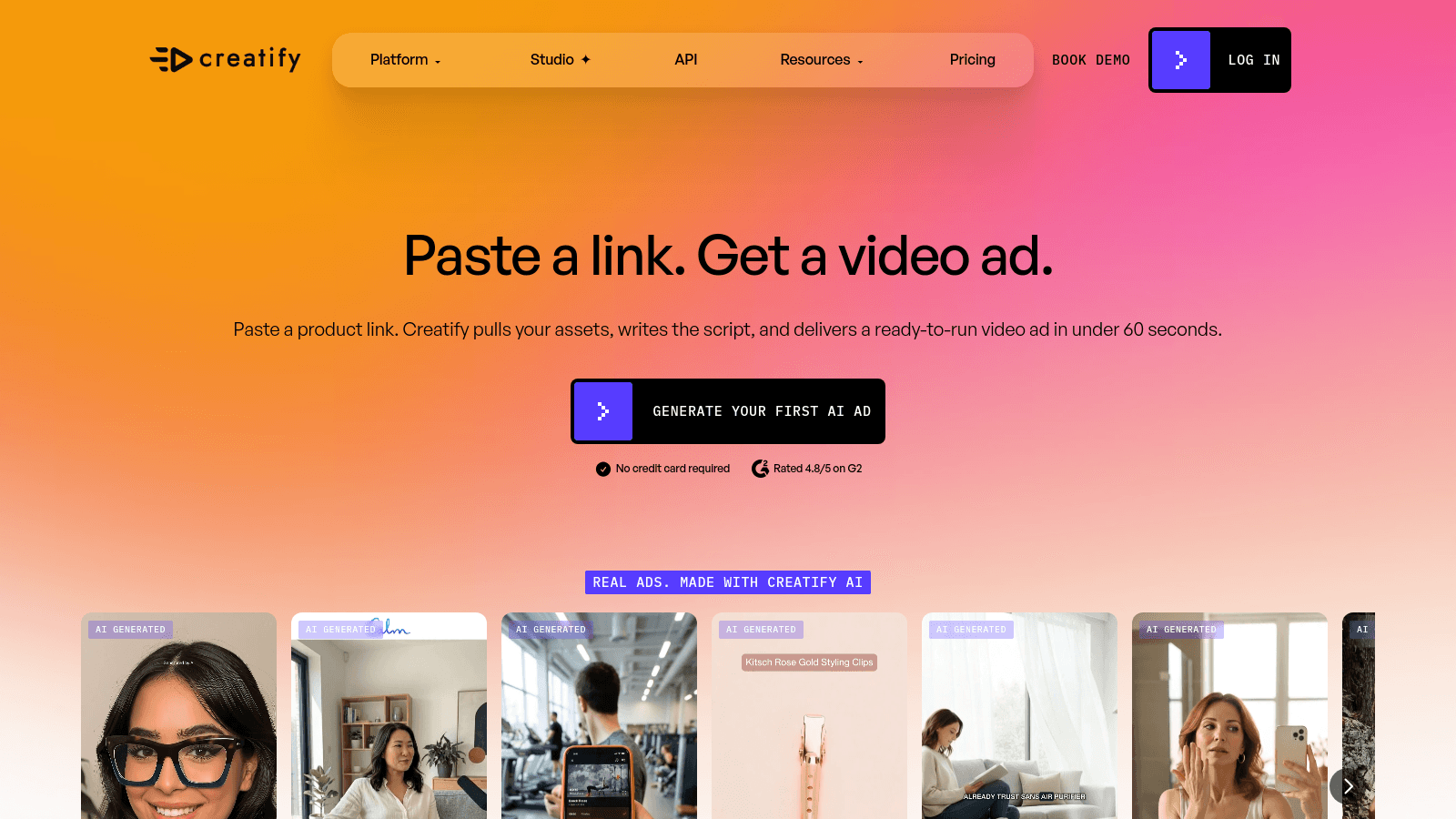
Page de destination de Creatify avec une interface de générateur d'URL vers vidéo publicitaire et des exemples de reels vidéo générés par IA.
L'Agent Creatify analyse les marques et les concurrents, développe des scripts avec des avatars et produit des publicités image ou vidéo. L'Ad Clone et le Competitor Tracker fournissent aux marketeurs des éléments de référence avant de générer une variante. Le Performance Agent crée un workflow de campagne social ads en connectant les comptes publicitaires, en analysant les dépenses et en surveillant les résultats dès le lancement.
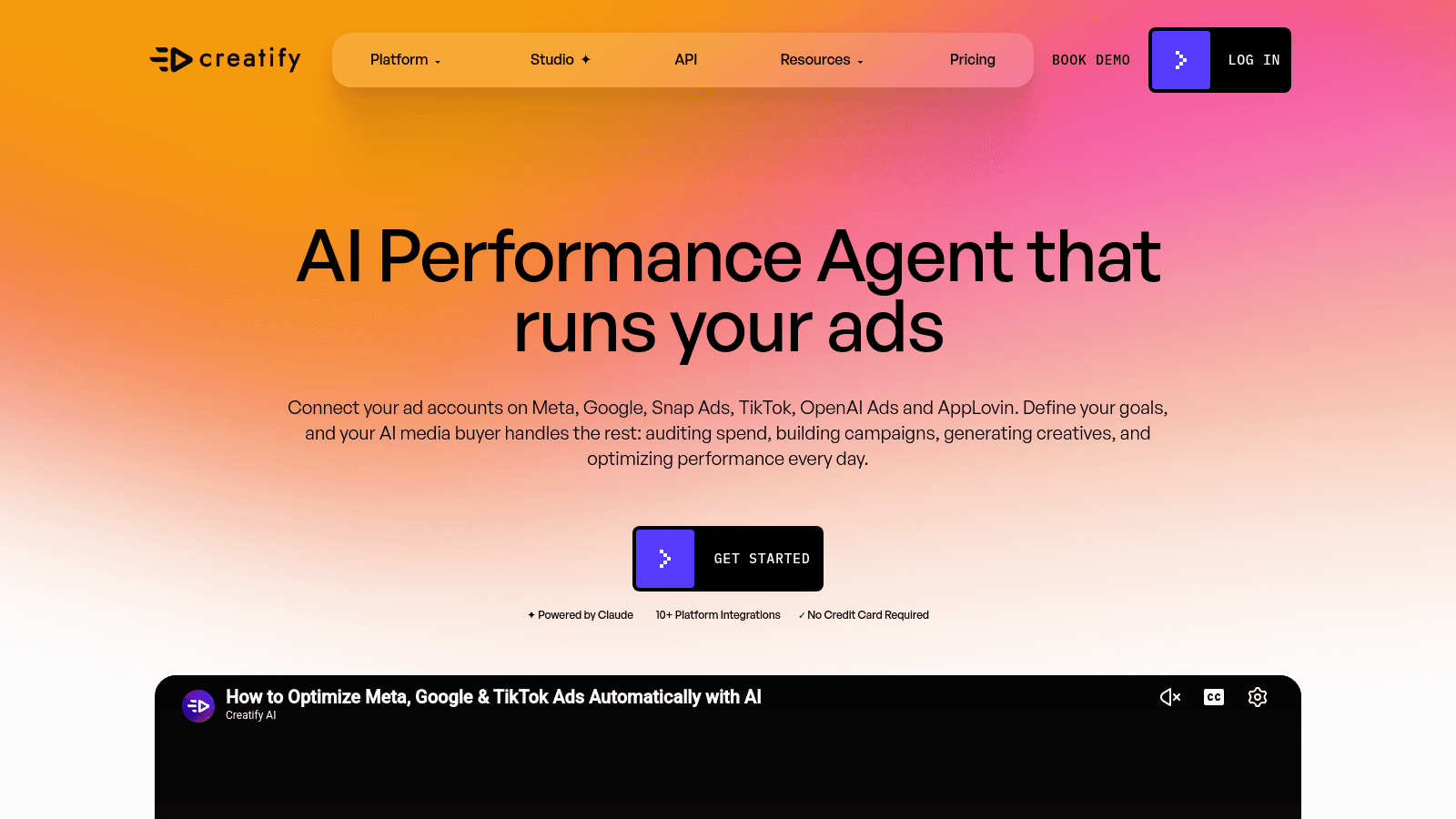
Page de destination de Creatify AI présentant un titre sur un agent de performance IA pour diffuser des publicités digitales.
Le forfait gratuit comprend 10 crédits, soit environ deux courtes vidéos filigranées. Le forfait Starter offre 100 crédits, tandis que le forfait Pro propose plus de 300 crédits et jusqu'à cinq accès utilisateurs. Creatify précise qu'une vidéo typique de 15 à 30 secondes consomme environ cinq crédits, selon le modèle et la durée. Avec environ cinq crédits par vidéo de 15 à 30 secondes, un forfait Starter de 100 crédits couvre environ 20 concepts types avant les nouveaux rendus ou l'utilisation de modèles premium. Les avis sur G2 et Trustpilot ont soulevé des questions sur la transparence des crédits et le besoin d'un polissage humain, mais une équipe peut limiter les pertes en réservant les rendus premium aux concepts qui ont validé une première phase de test.
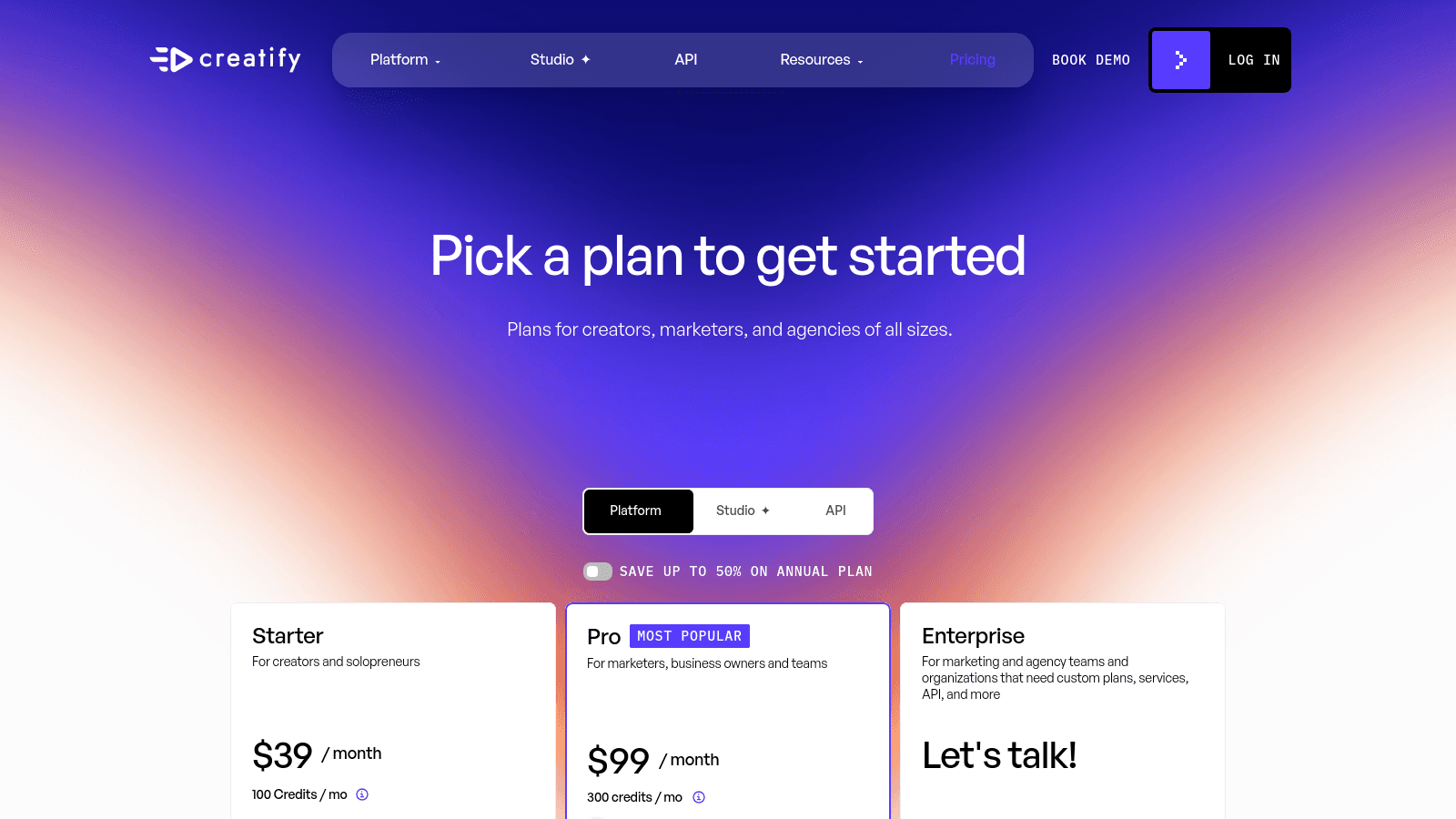
La page de tarification de Creatify affichant les niveaux d'abonnement Starter, Pro et Enterprise sur un fond dégradé dynamique.
Creatify indique que Designrr a augmenté son ROAS de 0,77 à 1,33 et réduit son CPA de $55 à $30 grâce à son workflow créatif. Un cas client publié fait état d'une baisse de 45 % du CPA. Ces résultats rapportés par les clients mettent en évidence l'indicateur clé que les équipes d'acquisition payante doivent mesurer : si multiplier les tests créatifs améliore l'efficacité média.
Tarif de Creatify : L'allocation de crédits de Creatify rend les forfaits payants plus adaptés aux équipes capables d'anticiper une production créative récurrente.
Meilleure alternative à Synthesia pour des vidéos d'avatars multilingues réalistes
HeyGen (Web)
Avantages de HeyGen :
L'Avatar IV/V est fréquemment très bien noté pour ses micro-expressions dans les comparatifs de 2026
Prend en charge plus de 175 langues et plus de 500 jumeaux numériques de catalogue
Inclut un jumeau personnalisé dans le forfait gratuit
Inconvénients de HeyGen :
Les rendus premium de l'Avatar IV/V peuvent consommer les crédits rapidement
La conformité SCORM et la gouvernance L&D réglementée sont plus faibles que sur les plateformes de formation dédiées
Les modèles d'avatars de HeyGen placent le réalisme du présentateur au cœur de la campagne. Les comparatifs de 2026 évaluent souvent l'Avatar IV/V de HeyGen au sommet pour le réalisme facial. HeyGen propose plus de 500 jumeaux numériques standard et prend en charge plus de 175 langues, selon son site officiel. Les équipes de vente, de localisation et de vidéo personnalisée peuvent s'appuyer sur la variété linguistique de HeyGen pour conserver un même présentateur sur différentes déclinaisons régionales.
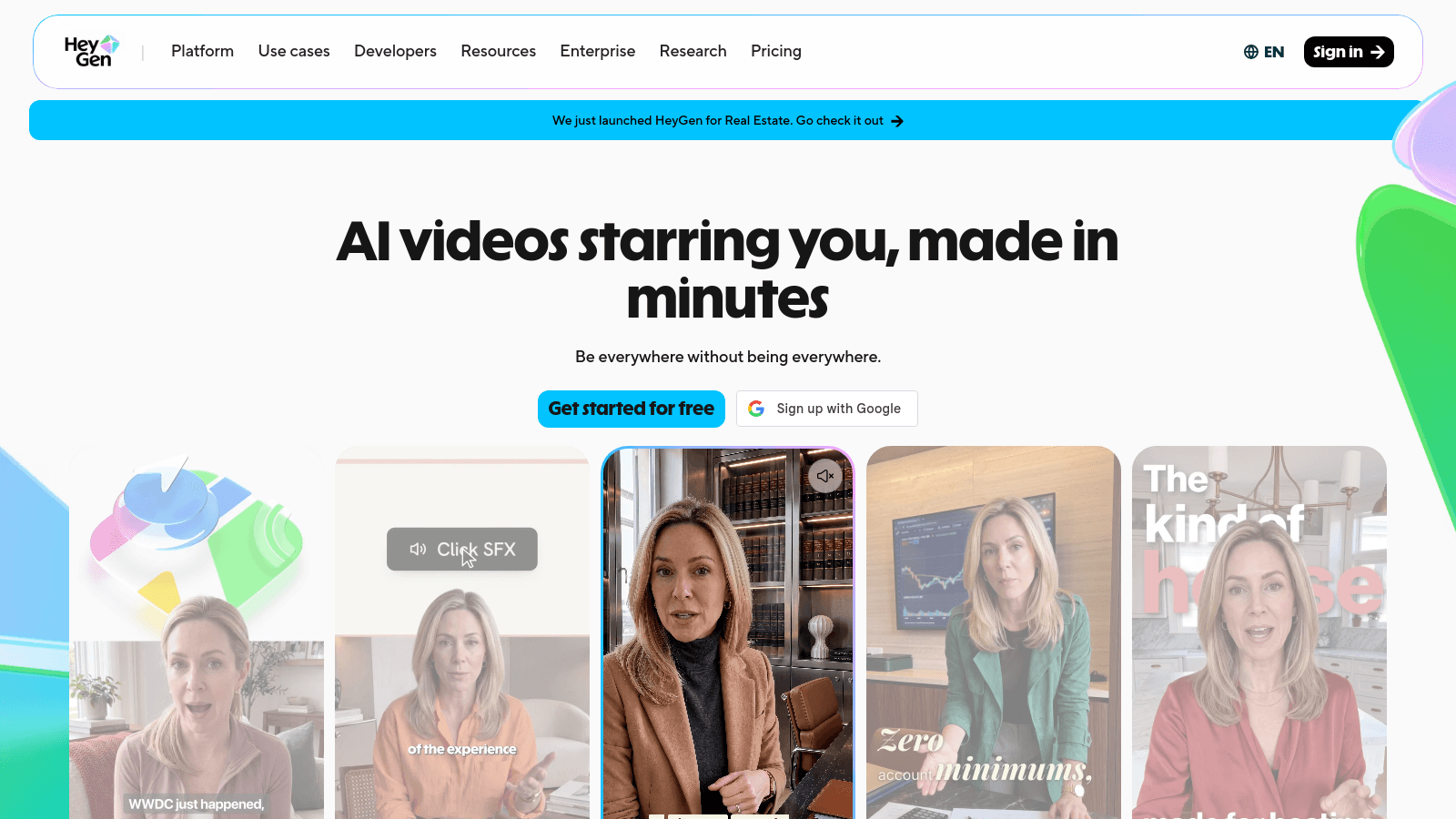
Page de destination de HeyGen avec un titre sur les vidéos IA et des exemples de contenus vidéo générés par IA.
Le forfait Creator annuel regroupe 600 crédits et prend en charge des vidéos 1080p de 30 minutes pour environ $24–29 par mois. Le forfait gratuit comprend trois vidéos d'une minute par mois et un jumeau personnalisé. Utilisez cette version gratuite avec un script réel et quelques déclinaisons linguistiques, car une démo standard ne révélera pas les nuances de prononciation, de rythme ou de ressemblance propres à votre campagne.
Les rendus premium Avatar IV/V peuvent consommer des crédits plus rapidement que la génération standard. Les équipes peuvent justifier ces coûts de rendu premium plus élevés lorsque le réalisme facial impacte directement la performance de la campagne. HeyGen est le concurrent le plus direct de Synthesia pour les équipes recherchant un présentateur digital multilingue soigné ; les équipes social ads qui partent de flux produits et ont besoin de tester de nombreuses variantes publicitaires trouveront un meilleur allié avec un outil de création publicitaire dédié.
Tarif de HeyGen : Forfait gratuit disponible ; Creator à environ $24–29/mois en facturation annuelle pour 600 crédits.
Meilleure alternative à Synthesia pour des formations SCORM interactives
Colossyan (Web)
Avantages de Colossyan :
Prend en charge les scènes de dialogue multi-avatars pour des scénarios de mise en situation
Ajoute le SCORM, des quiz interactifs et des embranchements au niveau Professional
Offre de 150 à plus de 300 avatars sur les forfaits d'entrée
Inconvénients de Colossyan :
Nombre de minutes limité sur les forfaits Gratuit et Starter
Les avatars personnalisés Studio coûtent environ $1,000 par an
Colossyan prend en charge la formation interactive au sein de laquelle les apprenants complètent des quiz, des activités avec embranchements et des modules basés sur des scénarios. Professional est l'offre de Colossyan adaptée à ces besoins, d'après la page des tarifs de Colossyan. Ces fonctionnalités permettent à une équipe L&D de structurer des contenus basés sur des scénarios pour un LMS et d'évaluer la progression des apprenants directement dans l'environnement du cours.
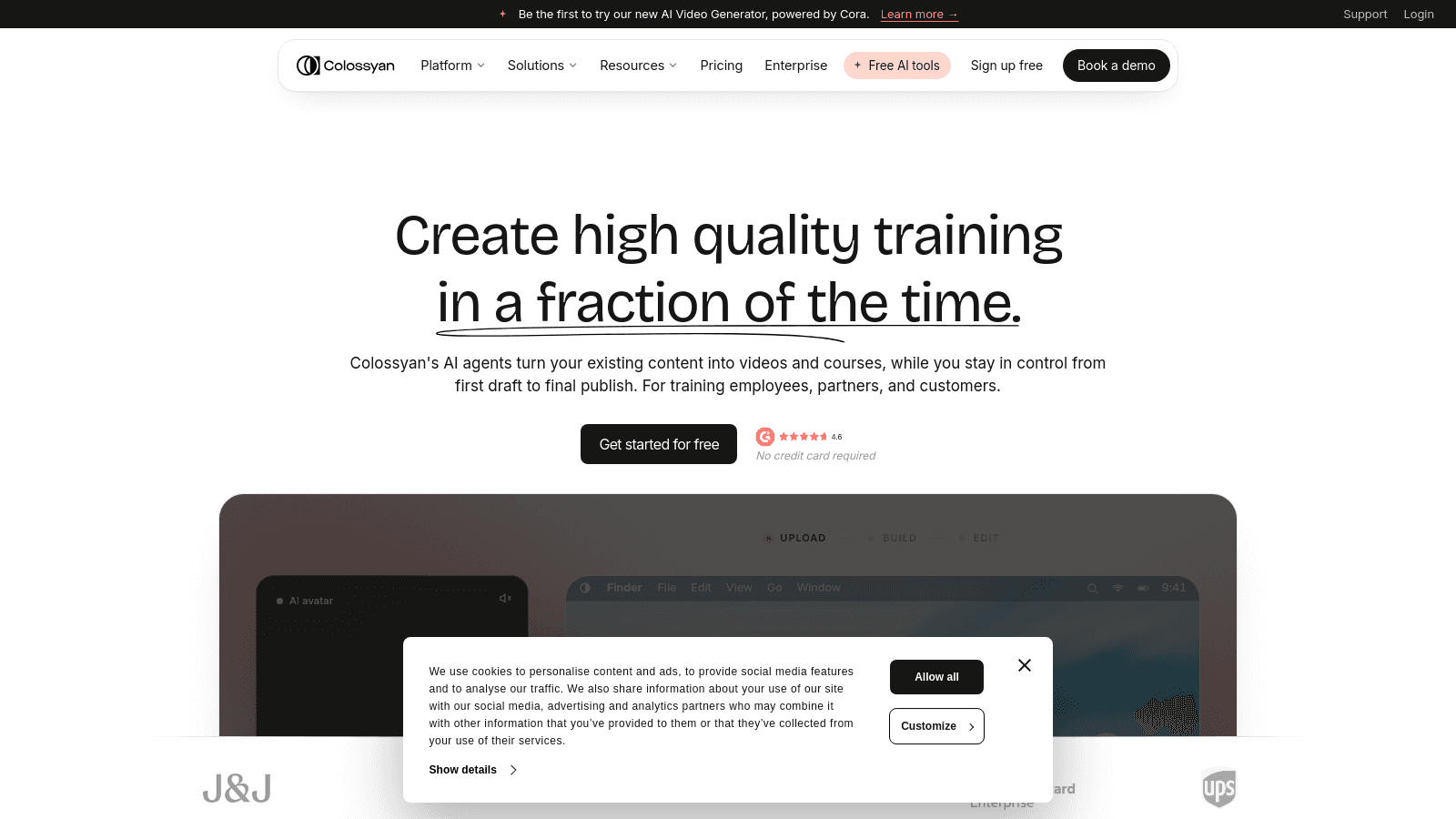
Page de destination de la plateforme de création vidéo Colossyan AI présentant un titre sur la création efficace de vidéos de formation.
Le dialogue multi-avatars donne aux scénarios professionnels une structure plus solide qu'un simple narrateur unique. Vous pouvez utiliser un avatar comme manager et un autre comme employé, puis transformer une interaction de conformité ou de service client en une scène interactive où l'apprenant doit prendre une décision. Ce format est parfait pour l'onboarding interne, car le cours illustre le comportement idéal avant de tester la compréhension.
Les offres Free et Starter de Colossyan coûtent environ $19–27 par mois en facturation annuelle, tandis que la formule Professional s'élève à environ $59 par mois. Un avatar personnalisé de studio coûte environ $1,000 par an, de sorte que les concepteurs de formation peuvent démarrer avec des avatars standard et réserver cette dépense aux modules où un porte-parole identifiable booste réellement l'engagement ou la conformité. Privilégiez cette option pour les modules interactifs et les scénarios à plusieurs interlocuteurs ; utilisez une plateforme orientée UGC pour le volume publicitaire de performance.
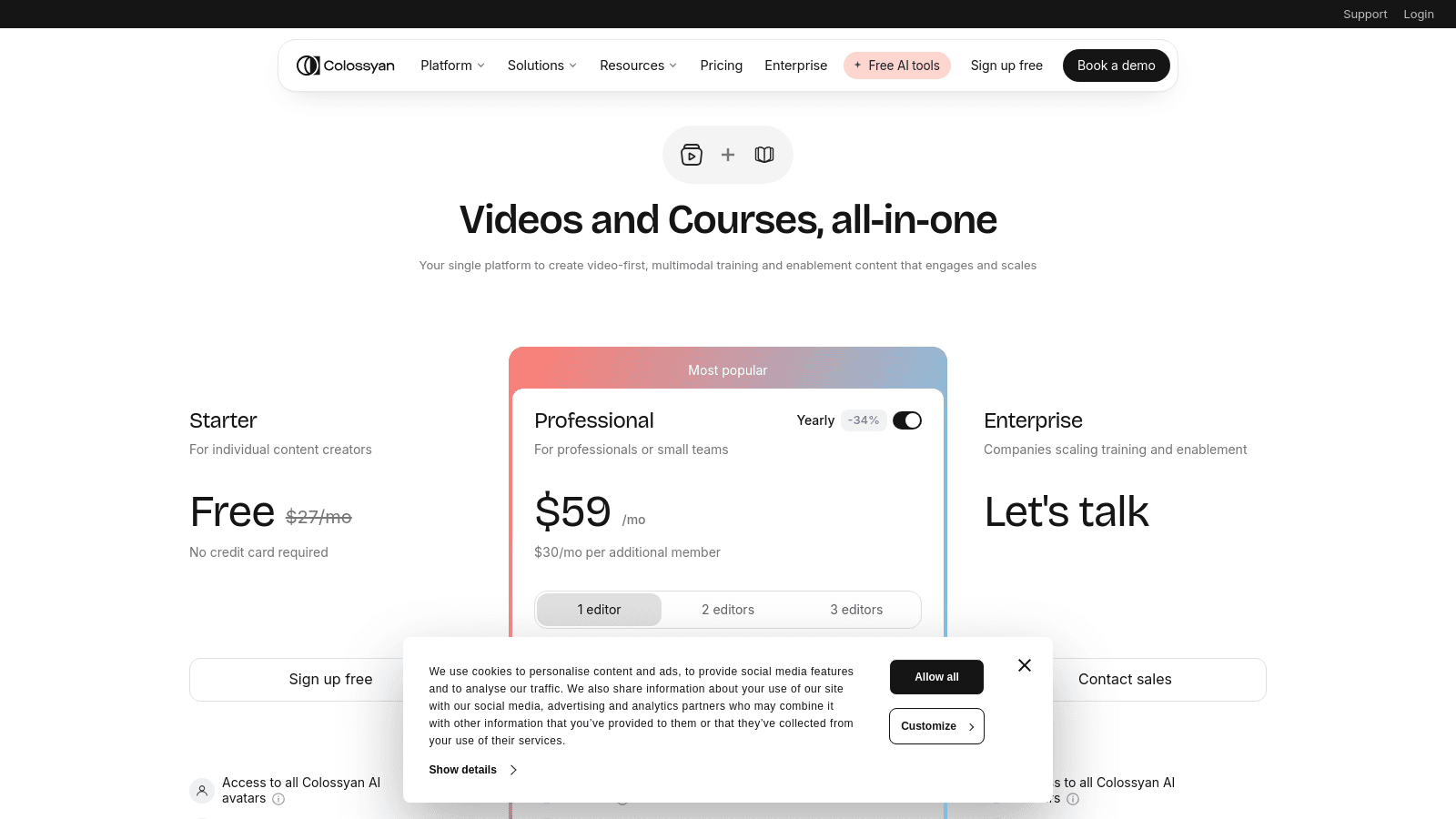
Page de tarification de Colossyan montrant les forfaits Starter, Professional et Enterprise avec une fenêtre d'acceptation des cookies.
Tarif de Colossyan : Choix de forfait Colossyan : Optez pour Professional pour le SCORM et les modules à embranchements ; utilisez les avatars standards à moins qu'un présentateur personnalisé n'améliore de façon mesurable l'adoption ou la conformité du cours.
Meilleure alternative à Synthesia pour la vidéo à partir de photos économique et les agents en temps réel
D-ID (Web, API)
Avantages de D-ID :
Anime des photos pour en faire des vidéos de têtes parlantes
Propose des agents expressifs V4 en temps réel avec une latence annoncée inférieure à 500 ms
Offre une approche orientée API pour des expériences intégrées
Inconvénients de D-ID :
Les fonctionnalités avancées sont plus onéreuses que l'offre d'entrée Lite
N'est pas conçu pour les tests publicitaires de masse ou la distribution d'apprentissage SCORM native
D-ID offre l'accès le plus économique de cette liste pour l'animation de photos et les expérimentations vidéo conversationnelles. Son forfait Lite coûte environ $4.70–5.90 par mois et inclut 10 minutes de vidéo. Au lieu d'imposer un processus basé sur des avatars de catalogue, le produit anime une photo importée pour créer une vidéo d'interlocuteur virtuel. Une petite équipe peut ainsi tester un porte-parole à partir d'une photo sur une landing page ou dans du contenu de support avant d'investir dans une suite de production plus globale.
Le produit se démarque des outils vidéo classiques pré-rendus grâce à l'interaction en temps réel. D-ID indique que ses agents expressifs V4 fonctionnent avec une latence de moins de 500 millisecondes, et l'accès API permet aux développeurs d'intégrer un avatar conversationnel directement au sein d'une autre interface produit. C'est l'idéal pour un guide digital ou un agent de support, où l'utilisateur attend une réponse immédiate plutôt qu'une bibliothèque de vidéos fixes.
Le forfait Pro de D-ID coûte environ $16–29 par mois, tandis que les formules Advanced sont plus onéreuses. D-ID applique des tarifs distincts pour les animations de photos, les agents en direct et l'usage de l'API. D-ID prend en charge les avatars conversationnels intégrés et les prototypes vidéo basés sur des photos via son outil web et son API.
Tarif de D-ID : Choix de forfait D-ID : Utilisez Lite pour des tests rapides d'animation photo ; optez pour Pro ou Advanced pour des déploiements d'agents en direct ou d'API à plus forte capacité.
Meilleure alternative à Synthesia pour les vidéos explicatives à partir de documents
Elai (Web)
Avantages d'Elai :
Convertit des documents, des présentations et des URL en vidéo
S'intègre parfaitement aux workflows de formation et de vidéos explicatives basés sur des contenus écrits existants
Propose une tarification à la minute simple et prévisible
Inconvénients d'Elai :
Moins axé sur la déclinaison d'UGC social ads que Creatify
Propose moins de spécialisations documentées d'agents en temps réel que D-ID
Elai est parfait pour les équipes qui démarrent d'un document, d'une présentation ou d'une page web plutôt que d'un brief de publicité sociale. Elai convertit ces documents et présentations en vidéos explicatives ou de formation avec un tarif à la minute. Ce point de départ permet aux équipes de contenu et d'enablement de transformer un actif de connaissances écrit en un projet vidéo sans avoir à extraire manuellement chaque élément vers un script de présentation diapositive par diapositive.
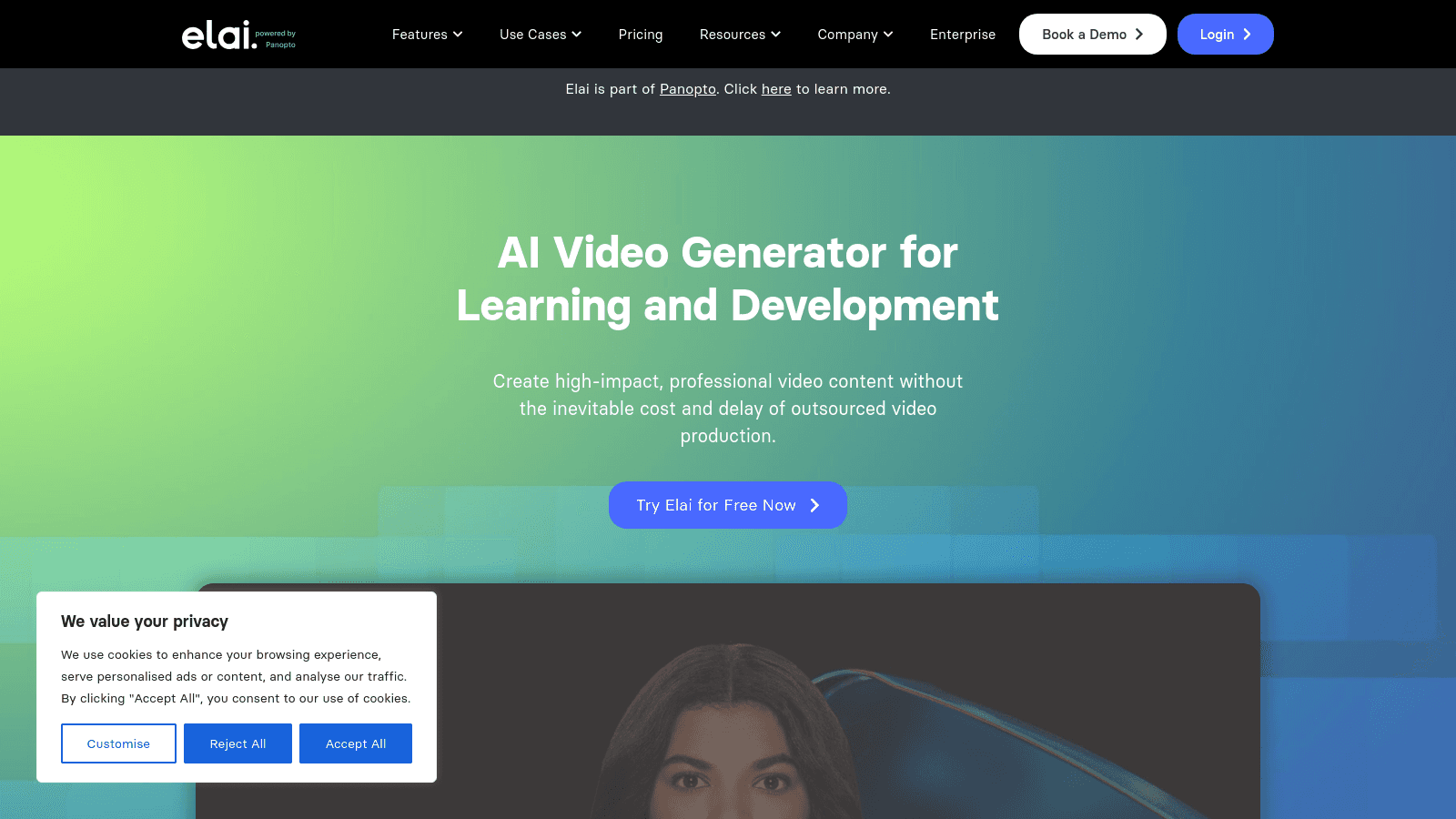
Page de destination du générateur de vidéos Elai AI présentant des outils pour le learning and development avec un bouton d'essai gratuit.
Cette approche est particulièrement efficace lorsque le matériel source est stable et que l'objectif de production est une explication claire. Un manuel de produit, une présentation d'onboarding ou une page de politique interne contiennent déjà la structure pédagogique, permettant à l'équipe de se concentrer sur la précision et la présentation plutôt que sur la génération de dizaines d'accroches. Les équipes de paid media ont besoin de ces accroches, de ces formats et de ces variantes influencées par la concurrence, c'est pourquoi un outil publicitaire UGC reste plus adapté à cette tâche précise.
Elai figure en bonne place pour les vidéos explicatives et de formation basées sur des sources écrites solides. D-ID anime une photo ou propulse un agent en direct ; Elai convertit les documents, PPT et URL en vidéos explicatives.
Tarif d'Elai : Consultez les offres et les tarifs à la minute actuels sur le site officiel d'Elai.
Quelle alternative à Synthesia choisir ?
Creatify est le meilleur point de départ pour les équipes créant des social ads payantes à partir d'URL de produits. Orientez les interactions à base de photos et les documents sources vers D-ID et Elai. Creatify transforme les URL de produits en publicités sociales payantes, tandis que Colossyan transforme des scénarios d'apprentissage en modules LMS. Choisissez HeyGen lorsque le réalisme du présentateur est crucial ; utilisez D-ID pour une interaction en direct. Des ressources sources inadaptées engendrent des efforts de rédaction et d'adaptation supplémentaires : les équipes doivent reformuler le texte d'une page produit en contenu de formation ou restructurer un manuel d'instruction en format publicitaire avant de pouvoir lancer la production.
Les équipes de paid social devraient commencer par un petit lot de créations sur Creatify et l'évaluer selon des métriques de campagne. Utilisez le CPA pour juger un petit volume de variantes Creatify générées à partir d'une seule page produit. Les équipes qui conçoivent des formations internes devraient évaluer Colossyan par rapport aux exigences de leur LMS, tandis que celles qui recherchent un réalisme de présentation maximal testeront HeyGen avec leurs propres porte-paroles et scripts linguistiques.
FAQ
Quelle alternative à Synthesia est la plus adaptée pour tester des publicités sur les réseaux payants en 2026 ?
Creatify — son workflow URL produit-vers-UGC aide les équipes à générer rapidement de nombreuses variantes publicitaires de style créateur pour Meta, TikTok et YouTube.
Quelle est la meilleure alternative si nous avons besoin de formations compatibles SCORM ?
Colossyan — conçu spécifiquement pour des modules d'apprentissage interactifs avec des quiz et un format SCORM, ce qui le rend parfaitement adapté pour l'intégration dans un LMS.
Quel outil est le plus réaliste pour des vidéos d'avatars multilingues ?
HeyGen — axé sur des rendus d'avatars ultra-réalistes et prenant en charge plus de 175 langues pour les flux de localisation multilingues.
Si nous cherchons de la vidéo à partir de photos économique ou des expériences d'agents conversationnels en temps réel, que choisir ?
D-ID — reconnu pour son animation photo économique et ses outils d'agents en temps réel, plus adaptés aux cas d'usage interactifs ou intégrés qu'à la production publicitaire de masse.
Quelle est la meilleure option pour convertir des documents en vidéos explicatives ?
Elai — utilise des documents, des PPT ou des URL pour générer des vidéos explicatives, aidant ainsi les équipes à transformer plus vite leurs contenus existants en vidéos conformes à leur charte.
Synthesia est une application de création vidéo IA qui propose de la création et du doublage vidéo IA professionnels. Nous explorons les meilleures alternatives professionnelles à Synthesia pour la génération de vidéos IA en 2026. Les principales alternatives incluent Creatify, Heygen et Colossyan.
Nous classons Creatify en tête pour le marketing de performance, tandis que chacune des quatre autres plateformes se distingue pour un type de travail différent. Cet article explique les workflows, les tarifs et les limites de ces cinq alternatives, afin que vous puissiez identifier la plateforme qui correspond le mieux à votre format vidéo et à votre canal de distribution.
Points clés à retenir
Creatify est une suite complète de création publicitaire vidéo basée sur des agents, idéale pour concevoir des publicités Meta, TikTok et YouTube.
Colossyan propose des modules de formation SCORM avec des quiz interactifs.
HeyGen propose des jumeaux numériques ultra-réalistes et prend en charge plus de 175 langues.
D-ID propose une animation photo économique et des outils d'agents en temps réel pour des expériences intégrées plutôt que pour des files d'attente de production publicitaire.
Les meilleures alternatives à Synthesia
Creatify pour les tests publicitaires de produits et l'UGC à grand volume
HeyGen pour des vidéos d'avatars multilingues réalistes
Colossyan pour des formations SCORM interactives
D-ID pour de la vidéo à partir de photos économique et des agents en temps réel
Elai pour des vidéos explicatives à partir de documents
Qu'est-ce qui définit la meilleure alternative à Synthesia ?
Creatify démarre à partir d'URL de produits, Colossyan à partir de scénarios de formation, D-ID à partir de photos ou d'interactions en direct, et Elai à partir de documents. Nous avons évalué chaque produit selon son workflow source-vers-vidéo, son format de sortie et ses exigences techniques. Nous avons comparé la manière dont chaque plateforme intègre le contenu source, produit la vidéo et gère la diffusion.
Workflow source-vers-vidéo. Workflow source-vers-vidéo. Choisissez une plateforme qui accepte le matériel source que votre équipe utilise déjà.
Esthétique de rendu. Adaptez le style des images de créateurs de type UGC, un présentateur studio impeccable ou une tête parlante animée à partir d'une photo selon le canal où les spectateurs la visionneront.
Rentabilité des volumes. Les forfaits basés sur des crédits facturent chaque rendu vidéo, révision et variante.
Apprentissage et gouvernance. L'exportation SCORM de Colossyan et ses fonctionnalités d'apprentissage interactif en font un outil idéal pour l'intégration LMS.
Personnalisation et localisation. Vérifiez l'accès aux avatars personnalisés et la couverture linguistique lorsqu'une campagne dépend d'un porte-parole identifiable ou de versions régionales.
Les meilleures alternatives à Synthesia en un coup d'œil
Produit | Idéal pour | Fonctionnalité clé | Tarifs |
|---|---|---|---|
Creatify | Création publicitaire basée sur des agents de haute qualité | Workflow URL produit-vers-publicité avec suivi des concurrents | 10 crédits gratuits ; Starter environ $33–39/mois ; Pro $99/mois |
HeyGen | Vidéos d'avatars multilingues réalistes | Avatar IV/V et plus de 175 langues | Forfait gratuit ; Creator environ $24–29/mois avec facturation annuelle |
Colossyan | Formation SCORM interactive | Scènes multi-avatars, quiz et SCORM | Gratuit/Starter environ $19–27/mois avec facturation annuelle ; Professional environ $59/mois |
D-ID | Vidéo à partir de photos économique et agents en temps réel | Animation photo et agents expressifs V4 | Lite environ $4.70–5.90/mois ; Pro environ $16–29/mois |
Elai | Vidéos explicatives à partir de documents | Workflow document, PPT et URL-vers-vidéo | Consultez les tarifs actuels sur le site officiel d'Elai |
Testez le comparatif de Creatify avec Synthesia et son workflow URL-vers-vidéo avec une seule page produit, trois angles d'audience et plusieurs variantes courtes. Lancez ce test pour voir si les crédits de Creatify correspondent à votre rythme de test.
Meilleure alternative à Synthesia pour les publicités de produits haute performance et l'UGC
Creatify (Web)
Avantages de Creatify :
Génère des publicités vidéo et image à partir d'URL de produits, de briefs et d'actifs de marque
Prend en charge les tests publicitaires à grand volume avec plus de 1 500 acteurs IA sur le forfait Pro, des variations par lots et l'Ad Clone.
Connecte la production créative avec Meta, TikTok et d'autres flux publicitaires
Inconvénients de Creatify :
Les rendus premium ou plus longs peuvent consommer de 2 à 20 crédits par vidéo
N'égale pas Colossyan ou Synthesia pour le SCORM natif et les formations d'entreprise de format long
Creatify transforme les pages produits et les briefs en variantes publicitaires sociales de style UGC. Ses agents publicitaires peuvent créer intelligemment des publicités à partir de millions d'exemples de publicités performantes pour vous aider à obtenir le taux de conversion le plus élevé.
La page d'accueil de Creatify avec le slogan d'accroche « AI Ads that win » et un bouton d'appel à l'action.
Page de destination de Creatify avec une interface de générateur d'URL vers vidéo publicitaire et des exemples de reels vidéo générés par IA.
L'Agent Creatify analyse les marques et les concurrents, développe des scripts avec des avatars et produit des publicités image ou vidéo. L'Ad Clone et le Competitor Tracker fournissent aux marketeurs des éléments de référence avant de générer une variante. Le Performance Agent crée un workflow de campagne social ads en connectant les comptes publicitaires, en analysant les dépenses et en surveillant les résultats dès le lancement.
Page de destination de Creatify AI présentant un titre sur un agent de performance IA pour diffuser des publicités digitales.
Le forfait gratuit comprend 10 crédits, soit environ deux courtes vidéos filigranées. Le forfait Starter offre 100 crédits, tandis que le forfait Pro propose plus de 300 crédits et jusqu'à cinq accès utilisateurs. Creatify précise qu'une vidéo typique de 15 à 30 secondes consomme environ cinq crédits, selon le modèle et la durée. Avec environ cinq crédits par vidéo de 15 à 30 secondes, un forfait Starter de 100 crédits couvre environ 20 concepts types avant les nouveaux rendus ou l'utilisation de modèles premium. Les avis sur G2 et Trustpilot ont soulevé des questions sur la transparence des crédits et le besoin d'un polissage humain, mais une équipe peut limiter les pertes en réservant les rendus premium aux concepts qui ont validé une première phase de test.
La page de tarification de Creatify affichant les niveaux d'abonnement Starter, Pro et Enterprise sur un fond dégradé dynamique.
Creatify indique que Designrr a augmenté son ROAS de 0,77 à 1,33 et réduit son CPA de $55 à $30 grâce à son workflow créatif. Un cas client publié fait état d'une baisse de 45 % du CPA. Ces résultats rapportés par les clients mettent en évidence l'indicateur clé que les équipes d'acquisition payante doivent mesurer : si multiplier les tests créatifs améliore l'efficacité média.
Tarif de Creatify : L'allocation de crédits de Creatify rend les forfaits payants plus adaptés aux équipes capables d'anticiper une production créative récurrente.
Meilleure alternative à Synthesia pour des vidéos d'avatars multilingues réalistes
HeyGen (Web)
Avantages de HeyGen :
L'Avatar IV/V est fréquemment très bien noté pour ses micro-expressions dans les comparatifs de 2026
Prend en charge plus de 175 langues et plus de 500 jumeaux numériques de catalogue
Inclut un jumeau personnalisé dans le forfait gratuit
Inconvénients de HeyGen :
Les rendus premium de l'Avatar IV/V peuvent consommer les crédits rapidement
La conformité SCORM et la gouvernance L&D réglementée sont plus faibles que sur les plateformes de formation dédiées
Les modèles d'avatars de HeyGen placent le réalisme du présentateur au cœur de la campagne. Les comparatifs de 2026 évaluent souvent l'Avatar IV/V de HeyGen au sommet pour le réalisme facial. HeyGen propose plus de 500 jumeaux numériques standard et prend en charge plus de 175 langues, selon son site officiel. Les équipes de vente, de localisation et de vidéo personnalisée peuvent s'appuyer sur la variété linguistique de HeyGen pour conserver un même présentateur sur différentes déclinaisons régionales.
Page de destination de HeyGen avec un titre sur les vidéos IA et des exemples de contenus vidéo générés par IA.
Le forfait Creator annuel regroupe 600 crédits et prend en charge des vidéos 1080p de 30 minutes pour environ $24–29 par mois. Le forfait gratuit comprend trois vidéos d'une minute par mois et un jumeau personnalisé. Utilisez cette version gratuite avec un script réel et quelques déclinaisons linguistiques, car une démo standard ne révélera pas les nuances de prononciation, de rythme ou de ressemblance propres à votre campagne.
Les rendus premium Avatar IV/V peuvent consommer des crédits plus rapidement que la génération standard. Les équipes peuvent justifier ces coûts de rendu premium plus élevés lorsque le réalisme facial impacte directement la performance de la campagne. HeyGen est le concurrent le plus direct de Synthesia pour les équipes recherchant un présentateur digital multilingue soigné ; les équipes social ads qui partent de flux produits et ont besoin de tester de nombreuses variantes publicitaires trouveront un meilleur allié avec un outil de création publicitaire dédié.
Tarif de HeyGen : Forfait gratuit disponible ; Creator à environ $24–29/mois en facturation annuelle pour 600 crédits.
Meilleure alternative à Synthesia pour des formations SCORM interactives
Colossyan (Web)
Avantages de Colossyan :
Prend en charge les scènes de dialogue multi-avatars pour des scénarios de mise en situation
Ajoute le SCORM, des quiz interactifs et des embranchements au niveau Professional
Offre de 150 à plus de 300 avatars sur les forfaits d'entrée
Inconvénients de Colossyan :
Nombre de minutes limité sur les forfaits Gratuit et Starter
Les avatars personnalisés Studio coûtent environ $1,000 par an
Colossyan prend en charge la formation interactive au sein de laquelle les apprenants complètent des quiz, des activités avec embranchements et des modules basés sur des scénarios. Professional est l'offre de Colossyan adaptée à ces besoins, d'après la page des tarifs de Colossyan. Ces fonctionnalités permettent à une équipe L&D de structurer des contenus basés sur des scénarios pour un LMS et d'évaluer la progression des apprenants directement dans l'environnement du cours.
Page de destination de la plateforme de création vidéo Colossyan AI présentant un titre sur la création efficace de vidéos de formation.
Le dialogue multi-avatars donne aux scénarios professionnels une structure plus solide qu'un simple narrateur unique. Vous pouvez utiliser un avatar comme manager et un autre comme employé, puis transformer une interaction de conformité ou de service client en une scène interactive où l'apprenant doit prendre une décision. Ce format est parfait pour l'onboarding interne, car le cours illustre le comportement idéal avant de tester la compréhension.
Les offres Free et Starter de Colossyan coûtent environ $19–27 par mois en facturation annuelle, tandis que la formule Professional s'élève à environ $59 par mois. Un avatar personnalisé de studio coûte environ $1,000 par an, de sorte que les concepteurs de formation peuvent démarrer avec des avatars standard et réserver cette dépense aux modules où un porte-parole identifiable booste réellement l'engagement ou la conformité. Privilégiez cette option pour les modules interactifs et les scénarios à plusieurs interlocuteurs ; utilisez une plateforme orientée UGC pour le volume publicitaire de performance.
Page de tarification de Colossyan montrant les forfaits Starter, Professional et Enterprise avec une fenêtre d'acceptation des cookies.
Tarif de Colossyan : Choix de forfait Colossyan : Optez pour Professional pour le SCORM et les modules à embranchements ; utilisez les avatars standards à moins qu'un présentateur personnalisé n'améliore de façon mesurable l'adoption ou la conformité du cours.
Meilleure alternative à Synthesia pour la vidéo à partir de photos économique et les agents en temps réel
D-ID (Web, API)
Avantages de D-ID :
Anime des photos pour en faire des vidéos de têtes parlantes
Propose des agents expressifs V4 en temps réel avec une latence annoncée inférieure à 500 ms
Offre une approche orientée API pour des expériences intégrées
Inconvénients de D-ID :
Les fonctionnalités avancées sont plus onéreuses que l'offre d'entrée Lite
N'est pas conçu pour les tests publicitaires de masse ou la distribution d'apprentissage SCORM native
D-ID offre l'accès le plus économique de cette liste pour l'animation de photos et les expérimentations vidéo conversationnelles. Son forfait Lite coûte environ $4.70–5.90 par mois et inclut 10 minutes de vidéo. Au lieu d'imposer un processus basé sur des avatars de catalogue, le produit anime une photo importée pour créer une vidéo d'interlocuteur virtuel. Une petite équipe peut ainsi tester un porte-parole à partir d'une photo sur une landing page ou dans du contenu de support avant d'investir dans une suite de production plus globale.
Le produit se démarque des outils vidéo classiques pré-rendus grâce à l'interaction en temps réel. D-ID indique que ses agents expressifs V4 fonctionnent avec une latence de moins de 500 millisecondes, et l'accès API permet aux développeurs d'intégrer un avatar conversationnel directement au sein d'une autre interface produit. C'est l'idéal pour un guide digital ou un agent de support, où l'utilisateur attend une réponse immédiate plutôt qu'une bibliothèque de vidéos fixes.
Le forfait Pro de D-ID coûte environ $16–29 par mois, tandis que les formules Advanced sont plus onéreuses. D-ID applique des tarifs distincts pour les animations de photos, les agents en direct et l'usage de l'API. D-ID prend en charge les avatars conversationnels intégrés et les prototypes vidéo basés sur des photos via son outil web et son API.
Tarif de D-ID : Choix de forfait D-ID : Utilisez Lite pour des tests rapides d'animation photo ; optez pour Pro ou Advanced pour des déploiements d'agents en direct ou d'API à plus forte capacité.
Meilleure alternative à Synthesia pour les vidéos explicatives à partir de documents
Elai (Web)
Avantages d'Elai :
Convertit des documents, des présentations et des URL en vidéo
S'intègre parfaitement aux workflows de formation et de vidéos explicatives basés sur des contenus écrits existants
Propose une tarification à la minute simple et prévisible
Inconvénients d'Elai :
Moins axé sur la déclinaison d'UGC social ads que Creatify
Propose moins de spécialisations documentées d'agents en temps réel que D-ID
Elai est parfait pour les équipes qui démarrent d'un document, d'une présentation ou d'une page web plutôt que d'un brief de publicité sociale. Elai convertit ces documents et présentations en vidéos explicatives ou de formation avec un tarif à la minute. Ce point de départ permet aux équipes de contenu et d'enablement de transformer un actif de connaissances écrit en un projet vidéo sans avoir à extraire manuellement chaque élément vers un script de présentation diapositive par diapositive.
Page de destination du générateur de vidéos Elai AI présentant des outils pour le learning and development avec un bouton d'essai gratuit.
Cette approche est particulièrement efficace lorsque le matériel source est stable et que l'objectif de production est une explication claire. Un manuel de produit, une présentation d'onboarding ou une page de politique interne contiennent déjà la structure pédagogique, permettant à l'équipe de se concentrer sur la précision et la présentation plutôt que sur la génération de dizaines d'accroches. Les équipes de paid media ont besoin de ces accroches, de ces formats et de ces variantes influencées par la concurrence, c'est pourquoi un outil publicitaire UGC reste plus adapté à cette tâche précise.
Elai figure en bonne place pour les vidéos explicatives et de formation basées sur des sources écrites solides. D-ID anime une photo ou propulse un agent en direct ; Elai convertit les documents, PPT et URL en vidéos explicatives.
Tarif d'Elai : Consultez les offres et les tarifs à la minute actuels sur le site officiel d'Elai.
Quelle alternative à Synthesia choisir ?
Creatify est le meilleur point de départ pour les équipes créant des social ads payantes à partir d'URL de produits. Orientez les interactions à base de photos et les documents sources vers D-ID et Elai. Creatify transforme les URL de produits en publicités sociales payantes, tandis que Colossyan transforme des scénarios d'apprentissage en modules LMS. Choisissez HeyGen lorsque le réalisme du présentateur est crucial ; utilisez D-ID pour une interaction en direct. Des ressources sources inadaptées engendrent des efforts de rédaction et d'adaptation supplémentaires : les équipes doivent reformuler le texte d'une page produit en contenu de formation ou restructurer un manuel d'instruction en format publicitaire avant de pouvoir lancer la production.
Les équipes de paid social devraient commencer par un petit lot de créations sur Creatify et l'évaluer selon des métriques de campagne. Utilisez le CPA pour juger un petit volume de variantes Creatify générées à partir d'une seule page produit. Les équipes qui conçoivent des formations internes devraient évaluer Colossyan par rapport aux exigences de leur LMS, tandis que celles qui recherchent un réalisme de présentation maximal testeront HeyGen avec leurs propres porte-paroles et scripts linguistiques.
FAQ
Quelle alternative à Synthesia est la plus adaptée pour tester des publicités sur les réseaux payants en 2026 ?
Creatify — son workflow URL produit-vers-UGC aide les équipes à générer rapidement de nombreuses variantes publicitaires de style créateur pour Meta, TikTok et YouTube.
Quelle est la meilleure alternative si nous avons besoin de formations compatibles SCORM ?
Colossyan — conçu spécifiquement pour des modules d'apprentissage interactifs avec des quiz et un format SCORM, ce qui le rend parfaitement adapté pour l'intégration dans un LMS.
Quel outil est le plus réaliste pour des vidéos d'avatars multilingues ?
HeyGen — axé sur des rendus d'avatars ultra-réalistes et prenant en charge plus de 175 langues pour les flux de localisation multilingues.
Si nous cherchons de la vidéo à partir de photos économique ou des expériences d'agents conversationnels en temps réel, que choisir ?
D-ID — reconnu pour son animation photo économique et ses outils d'agents en temps réel, plus adaptés aux cas d'usage interactifs ou intégrés qu'à la production publicitaire de masse.
Quelle est la meilleure option pour convertir des documents en vidéos explicatives ?
Elai — utilise des documents, des PPT ou des URL pour générer des vidéos explicatives, aidant ainsi les équipes à transformer plus vite leurs contenus existants en vidéos conformes à leur charte.

Prêt à transformer votre produit en une vidéo captivante ?