

Adtech: How AI is transforming video ad creation in 2026

Adtech: How AI is transforming video ad creation in 2026

Written by

Creatify Team

Adtech - how AI is transforming video ad creation
Creatify logo

Creatify Team

SHARE

LinkedIn icon
X icon
Facebook icon

IN THIS ARTICLE

By early 2024, roughly 65% of organizations were regularly using generative AI - nearly double the year before. In video advertising specifically, IAB's 2025 Digital Video Ad Spend & Strategy Report found that 86% of buyers say they use or plan to use generative AI to build video ad creative. And about 22% of video ad creative in 2024 was already built or enhanced with generative AI, with projections that nearly 40% of video ad creative will use gen‑AI by 2026.

These aren't future projections from a speculative white paper. This is what's happening right now in adtech. Generative AI and machine learning have moved from experimental add-ons to embedded infrastructure across the video ad workflow - from script ideation to production to real-time creative optimization.

This article breaks down exactly how that transformation works, what it means for ecommerce and performance marketers, and where the real ROI is showing up.

How we got here: from programmatic buying to programmatic creative

For the last decade adtech has been mostly about automation. Programmatic buying automated where ads run. Real-time bidding automated how much you pay. Machine learning automated who sees what.

But the creative itself? That stayed manual for a long time. Storyboards, production shoots, editing suites, rounds of revisions - the entire creative workflow operated at human speed while everything around it ran at machine speed.
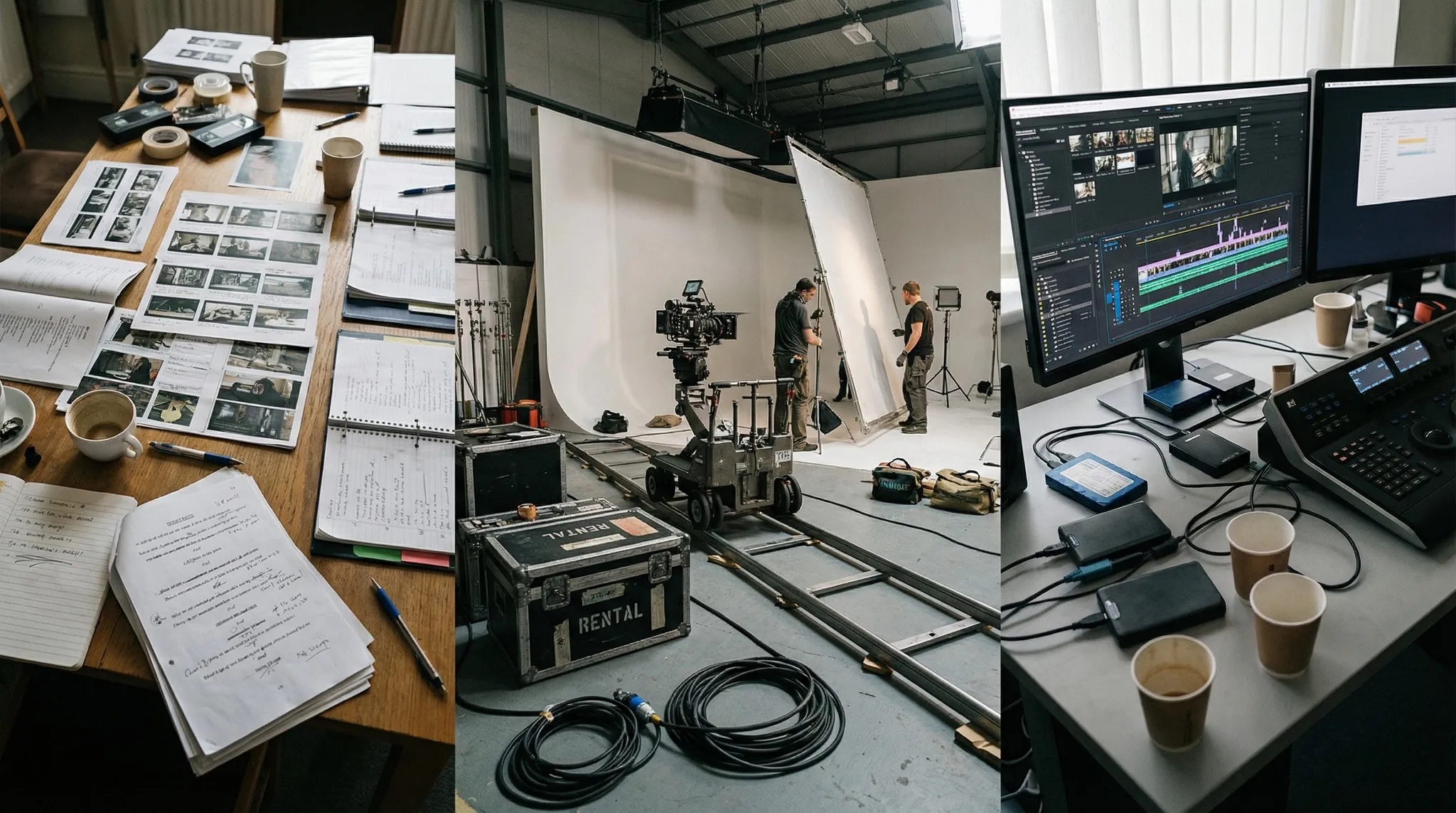
Planning Production Creating

Dynamic creative optimization (DCO) was the bridge. DCO systems assemble video elements - copy, visuals, offers, CTAs - in real time based on user signals like location, behavior, device, and browsing history. Instead of producing one hero ad and hoping it works everywhere, DCO produces thousands of combinations from a master template and lets machine learning pick the best version for each impression.

That was the first crack in the wall. AI-generated content (AIGC) is what knocked the whole wall down. Now the machine doesn't just assemble pre-made assets. It creates them.
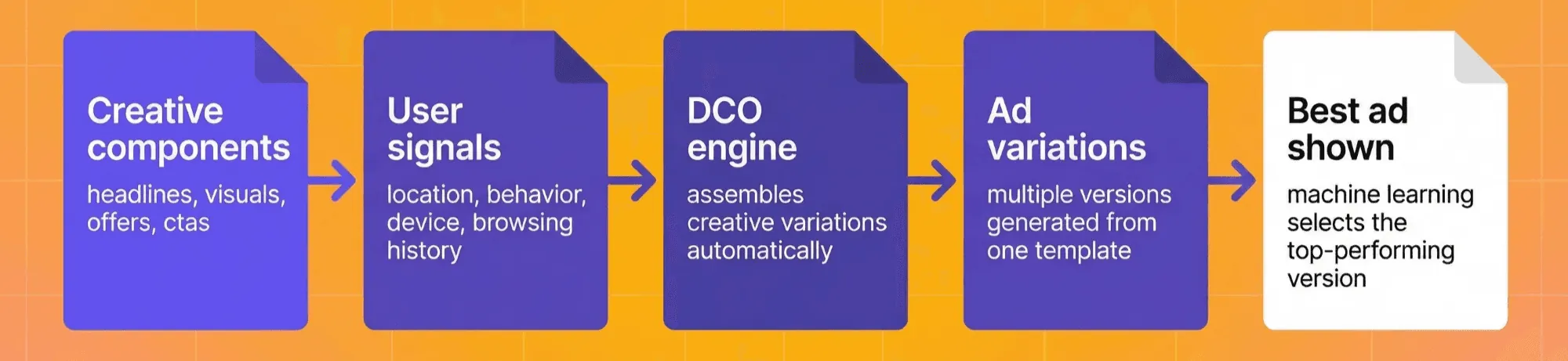
Creative components User SDignals DCO Engine Ad variations

What generative AI actually does in video ad creation

Let's be specific about what "AIGC" means in this context, because the term gets used loosely.

In advertising, generative AI refers to models that create or transform images, video, audio, and copy from data, prompts, or templates. You give the system a product URL, a brief, or a set of brand assets - and it produces finished video ad variants optimized for different audiences and platforms.
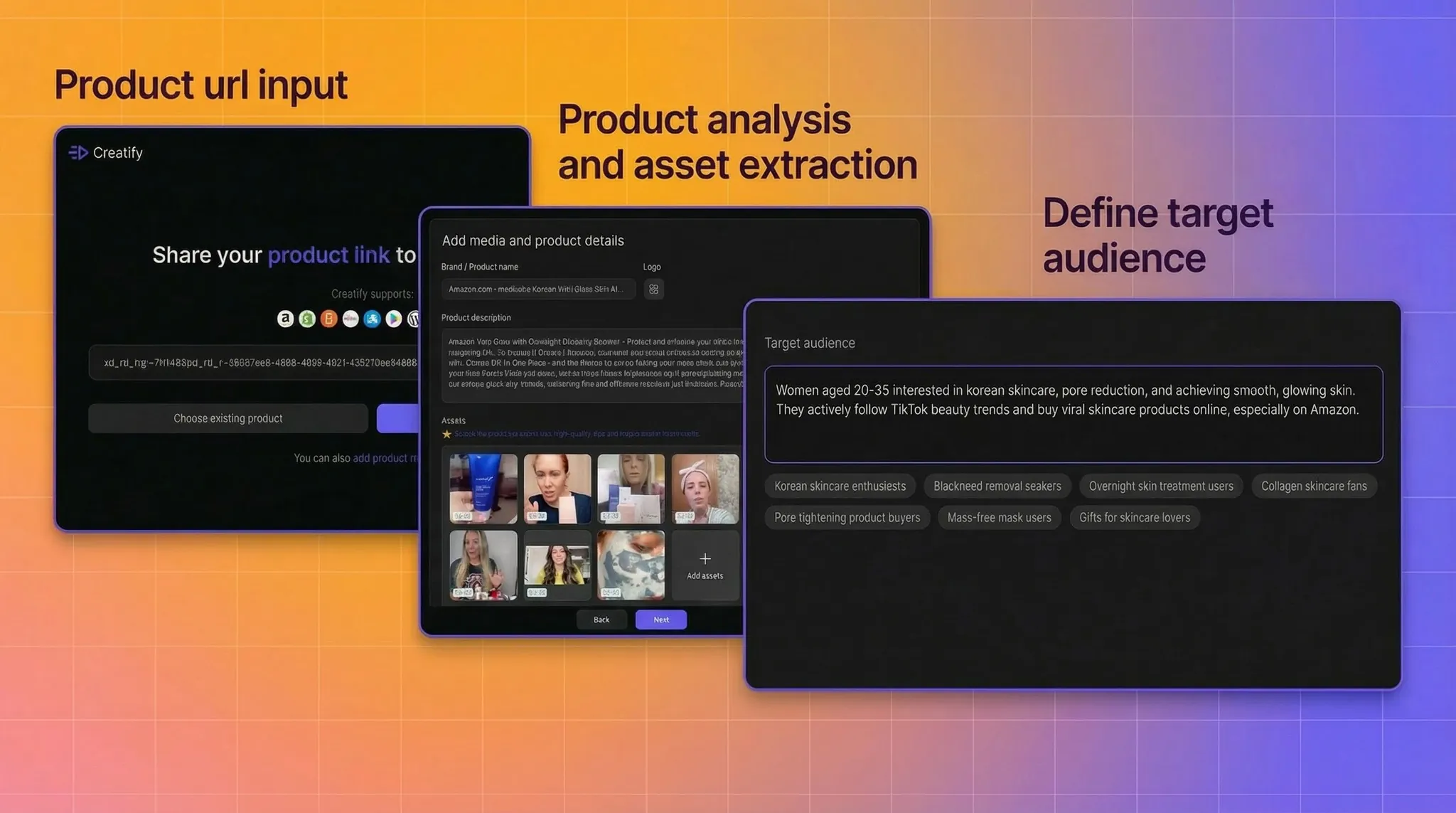
Product URL Input

Deloitte's media and entertainment outlook identifies generative AI as one of the most impactful technologies reshaping marketing and media operations. McKinsey's research on AI-powered marketing indicates that commercial leaders investing in AI see 3-15% revenue uplift and 10-20% sales ROI improvements.

But the headline numbers miss the more interesting story. The transformation isn't just about cost savings or speed. It's about making things possible that were literally impossible before - like personalizing video ads at the individual level, or testing 150 creative variations in two weeks instead of 5 ads over three months.

AI across the video ad workflow

Strategy and script development

AI doesn't just make video production faster. It changes how campaigns are conceived.

Machine learning models analyze historical campaign data, consumer behavior patterns, and market trends to generate creative strategies and script variations tailored to specific audience segments. Academic research from Oklahoma State University supports what practitioners are seeing in the field: gen-AI augments rather than replaces human creativity, supporting "creative partnerships" where the AI generates dozens of angles and hooks while humans apply brand judgment and regulatory guardrails.

Creatify's AI Script Writer, for example, is trained on thousands of high-performing social media ads. You paste a product URL, and it generates 5-10 script variations with platform-specific hooks, benefit-driven copy, and CTAs. The scripts aren't random - they're informed by what actually works on TikTok, Instagram, Meta, and YouTube.
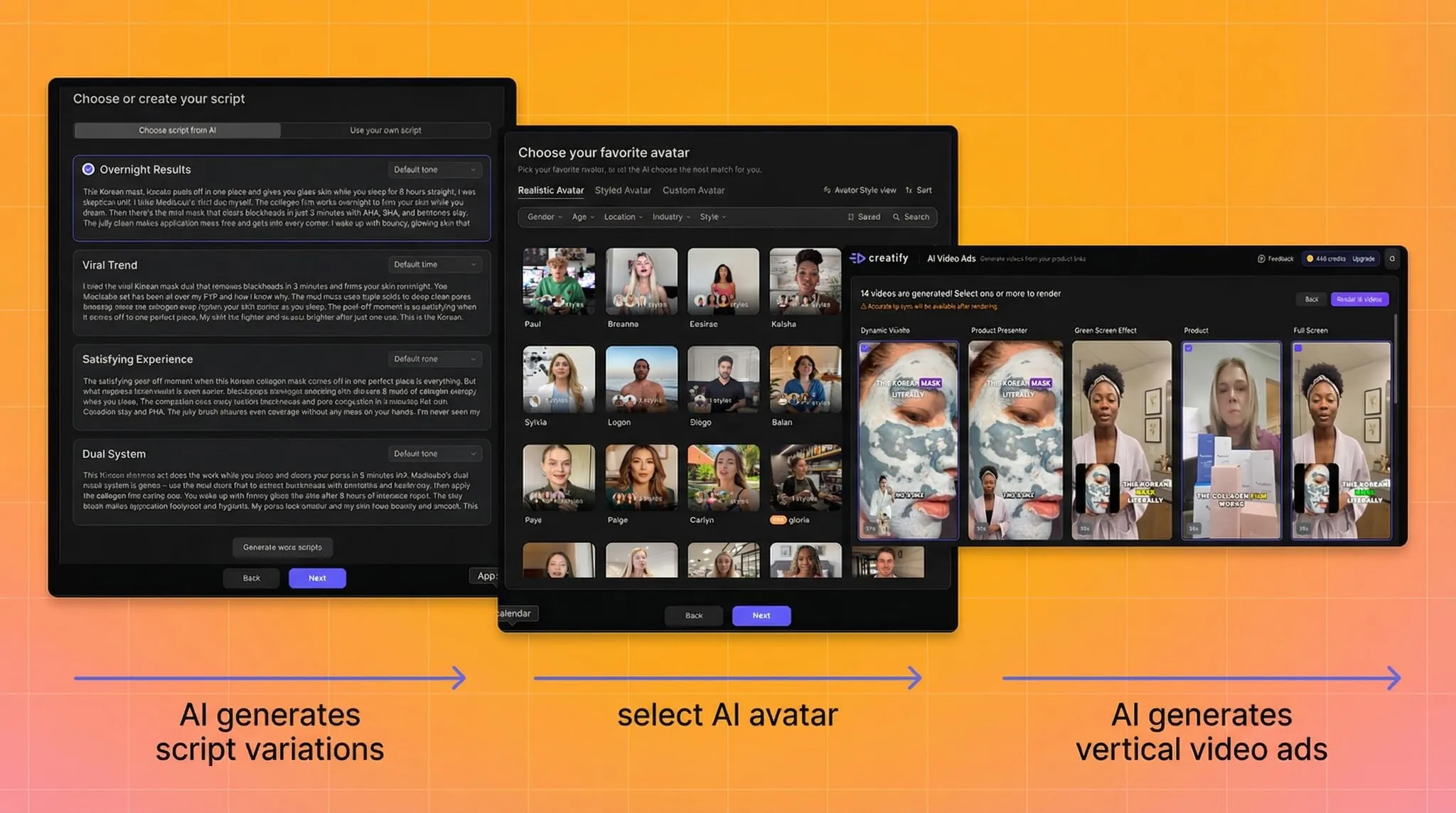
AI generated script variations

Production: from assets to finished video ads

This is where the economics change most dramatically.

A field experiment by researchers at MIT and the University of Missouri, involving over 21,000 consumers, found that AI-generated personalized video ads can reduce production costs by approximately 90% compared to traditional methods. The same study found that AI could create 100,000 personalized video ads for around $220,000 - the equivalent would cost $12 million with traditional production.

That's not a marginal improvement. That's a category change.

In practice, this means an ecommerce brand can take a product page URL, feed it to a platform like Creatify, and get back multiple finished video ads - complete with AI avatars, voiceovers, product visuals, captions, and music - in minutes instead of weeks. The URL-to-Video workflow scans the product page, extracts descriptions and images, generates scripts, and produces platform-ready ads in 9:16, 16:9, and 1:1 formats.

Traditional production for a single video ad runs $3,000-$15,000. With AI video generation, campaigns can see production costs fall by around 90%, as demonstrated in recent MIT research on personalized AI video. This is what makes A/B testing at scale financially viable for the first time.
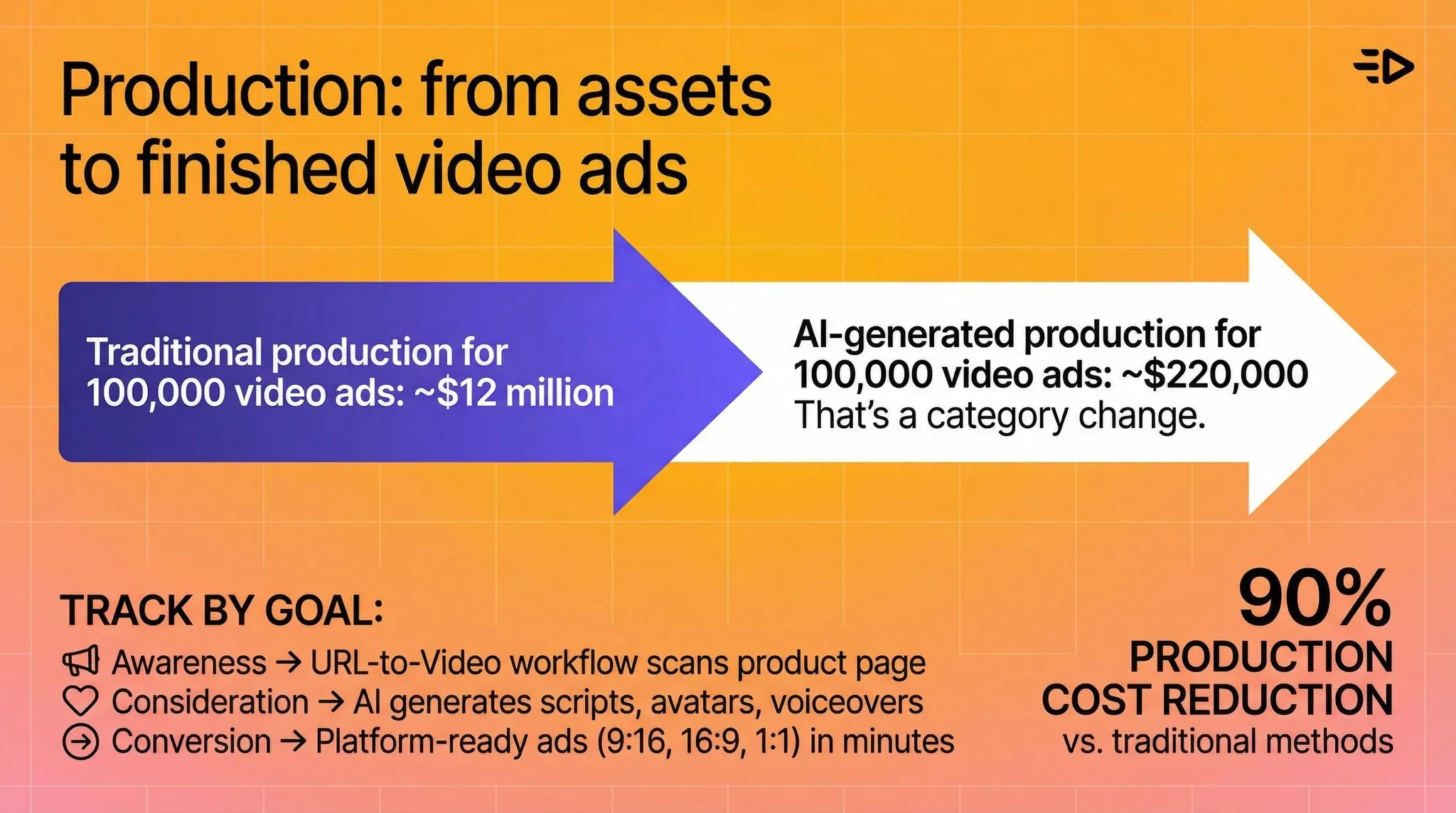
From assets to finished video ads

Personalization and dynamic creative

This is where machine learning in marketing gets really interesting.

DCO engines use algorithms to assemble video elements in real time based on signals like location, weather, browsing behavior, and device type. The result is thousands of creative combinations from a single master template, with machine learning favoring the variants that perform best for each impression.

For ecommerce, this means AI can tailor product video ads to individual user behavior - showing different products, offers, and messages based on browsing history, cart contents, and previous purchases. A shopper who viewed winter jackets sees a jacket ad. A shopper who abandoned a cart sees a retargeting video featuring exactly the products they left behind. Same campaign, completely different creative.

Measurement and optimization loops

The MIT experiment produced one of the clearest data points on generative AI advertising effectiveness: AI-generated personalized video ads increased click-through rates by 6-9 percentage points compared to both personalized image ads and generic video ads.

That's not a rounding error. In a world where a 1-2 point CTR improvement justifies a campaign change, a 6-9 point lift changes how you allocate budget.

What makes AI-driven creative optimization compound over time is the feedback loop. Performance data - watch time, CTR, conversions - feeds back into the models, improving subsequent creative generations. Each cycle of testing produces better inputs for the next cycle. The system learns what works and produces more of it.

Creatify's AdMax product is built around this loop. It combines competitor insights, video generation, creative testing, and performance analytics into a single system. The Qula360 case study illustrates what this looks like in practice: an ecommerce agency tested video ads against their standard static image ads, and CTR tripled (6.74% vs. 2.24%) while cost per result dropped from $18.51 to $0.10. That's a 185x improvement in cost efficiency from a single creative format test.
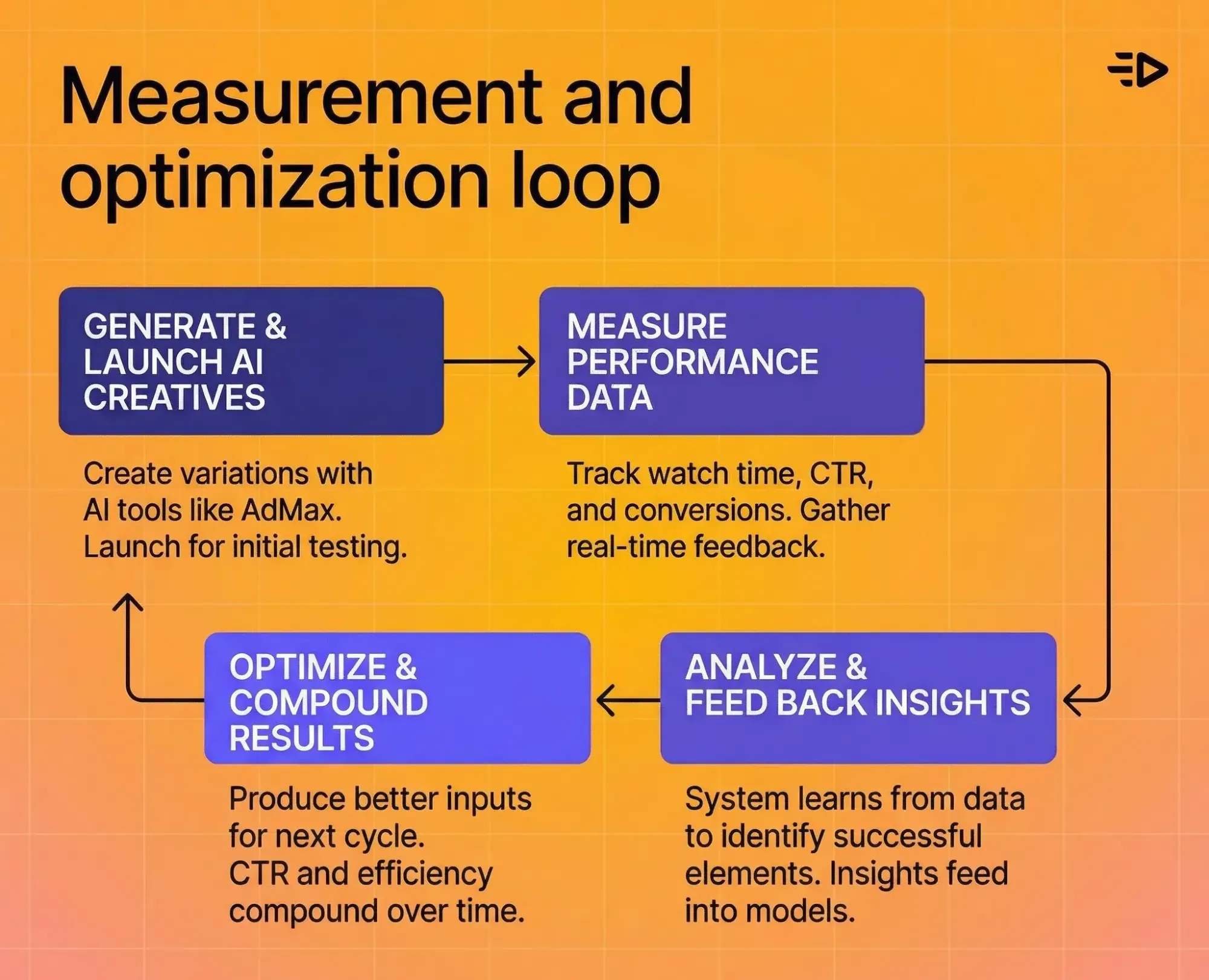
Measurement and OPT loop

AI in ecommerce: turning product feeds into video at scale

Ecommerce is where generative AI advertising hits hardest, because the pain point is most acute.

A retailer with 5,000 SKUs cannot produce individual video ads for each product using traditional methods. The math doesn't work. At $3,000-$15,000 per video, even covering your top 100 products would cost $300K-$1.5M. And by the time you've produced them, inventory has changed, prices have shifted, and seasonal relevance has moved on.

AI flips this. Product feeds - images, titles, prices, descriptions - become the raw input for automated video generation. The system creates platform-specific ads (vertical for TikTok/Reels, horizontal for CTV, square for feeds) from catalog data, updating in real time as inventory and pricing change.

Creatify's URL-to-Video feature does exactly this. Paste a Shopify, Amazon, or product page URL. The system extracts product information, generates script variations, pairs them with AI avatars or product video styles, and outputs finished ads. Do this across your top 500 products and you have a creative library that would have taken months and hundreds of thousands of dollars to produce traditionally.

Alibaba-owned Flamingo Shop used Creatify to go from 0 AI avatar videos to 100+ per month, with 30% faster creative production. The economics of traditional fashion shoots ($1,500-$7,500 per shoot producing 4-15 usable clips) made it impossible to test at the volume needed to find winning creative angles. AI made it standard operating procedure.

Read also: 17 best AI avatar generators & tools

Machine learning in marketing: beyond creative production

Generative AI handles the creative. Machine learning handles the intelligence around it.

Audience targeting and segmentation

Machine learning models analyze patterns across customer data to identify high-value segments and micro-audiences for video campaigns. Dynamic audience targeting continuously updates segment definitions based on response data, feeding more effective creative to emerging audience clusters.

Research published in ScienceDirect confirms that perceived relevance and personalization significantly increase purchase intention and engagement. The practical implication: the more precisely you can match creative to audience, the better everything performs. Machine learning makes that matching possible at scale.

Creative analytics

This is newer and arguably more valuable than targeting alone. AI analyzes large volumes of video ads to detect which visual motifs, pacing patterns, text overlays, and narrative structures correlate with performance. Instead of a creative director guessing why an ad worked, the system identifies specific elements - a particular hook format, a specific color palette, a certain CTA placement - that drove results.

AdExchanger's reporting on generative AI in advertising describes how these models suggest creative improvements grounded in performance data rather than subjective taste. The creative brief becomes data-informed, not just instinct-driven.

Attribution across channels

AI helps marketers model user journeys and estimate each touchpoint's contribution across social, CTV, display, and search. This informs both budget allocation and creative decisions - shifting spend and creative variants toward channels where AI predicts the highest incremental lift.

As third-party cookies continue to deprecate, first-party data and privacy-safe measurement become central to making these models work.
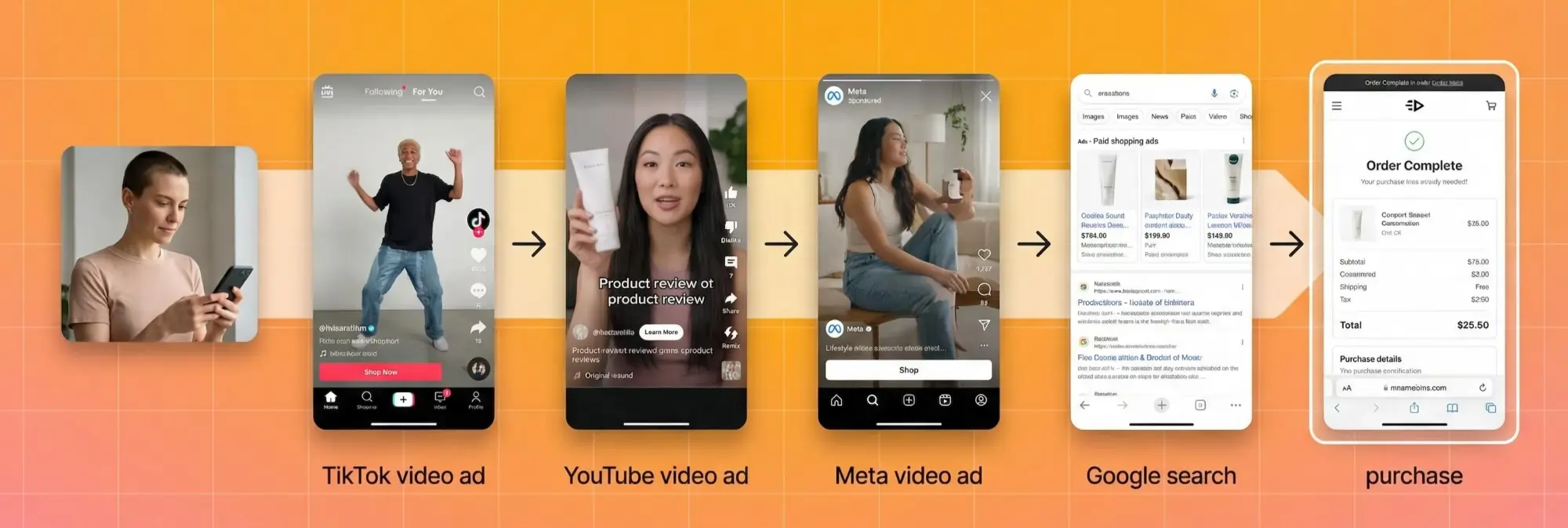
Video ads

Governance, transparency, and the trust question

Speed and scale are meaningless if your audience doesn't trust the output.

IAB research reveals a gap between how advertisers think consumers feel about AI-generated ads and how consumers actually feel. The short version: consumers are more skeptical than advertisers assume.

IAB's AI Transparency and Disclosure Framework recommends risk-based disclosure when AI materially affects authenticity, identity, or representation - like synthetic spokespeople, digital twins, or AI-generated voices. The framework tries to balance transparency with the practical reality that over-disclosure creates "label fatigue" where every piece of content carries disclaimers nobody reads.

For brands, the practical considerations are:

Deepfakes and misrepresentation. The same technology that creates a compelling product ad can create deceptive content. Legal challenges around AI-generated video and synthetic media are multiplying, and brands need internal guardrails and content verification processes.

Data privacy. Training generative models on user-generated content without clear consent raises privacy and bias concerns. Marketers should understand model provenance and data governance practices for any AI tools they deploy.

Brand safety. Risk assessments covering bias, misleading content, and IP infringement should happen before deploying AI-generated video campaigns at scale, not after something goes wrong.

Creatify addresses this through content moderation systems, SOC 2 Type II certification, and enterprise-level security and privacy controls on higher-tier plans.

How to get started: a practical roadmap

If you're a performance marketer or ecommerce team looking to integrate AI into your video ad workflow, here's a phased approach.

Phase 1: Script and creative ideation. Start by using AI to generate script variations and creative concepts for your existing campaigns. Test AI-generated scripts against your current copy. This is low-risk, high-learning. On Creatify, paste a product URL and review the script variations the AI generates. Edit what needs editing, then generate the video.

Phase 2: Production at scale. Once you've validated that AI-generated scripts perform, move to full video production. Generate 20-50 video variations per product and run them through your existing ad platforms. Creatify's Pro plan supports this with 1,500+ avatars, 22+ AI models, and direct launch to Meta and TikTok.

Phase 3: End-to-end optimization. Integrate AI into the full loop - from creative generation to performance measurement to the next round of creative generation. This is where tools like Creatify's AdMax come in, combining competitor insights, creative testing, and analytics into a continuous improvement cycle.

Prioritize use cases where AI clearly adds the most value: high-volume ecommerce catalogs, campaigns requiring frequent creative refreshes, and channels with rich performance data. Define success metrics upfront - CTR lift, conversion uplift, cost per acquisition reduction - and run controlled tests to quantify impact.

The Unicorn Marketers case study is a good benchmark: they took over an underperforming ad account spending $5,000 daily with a 0.77 ROAS and an exhausted creative library. Using Creatify, they produced 150+ video ad variations in two weeks. CPA dropped 45% (from $55 to $30), ROAS improved 73% (from 0.77 to 1.33), and the account unlocked a 15% budget increase.
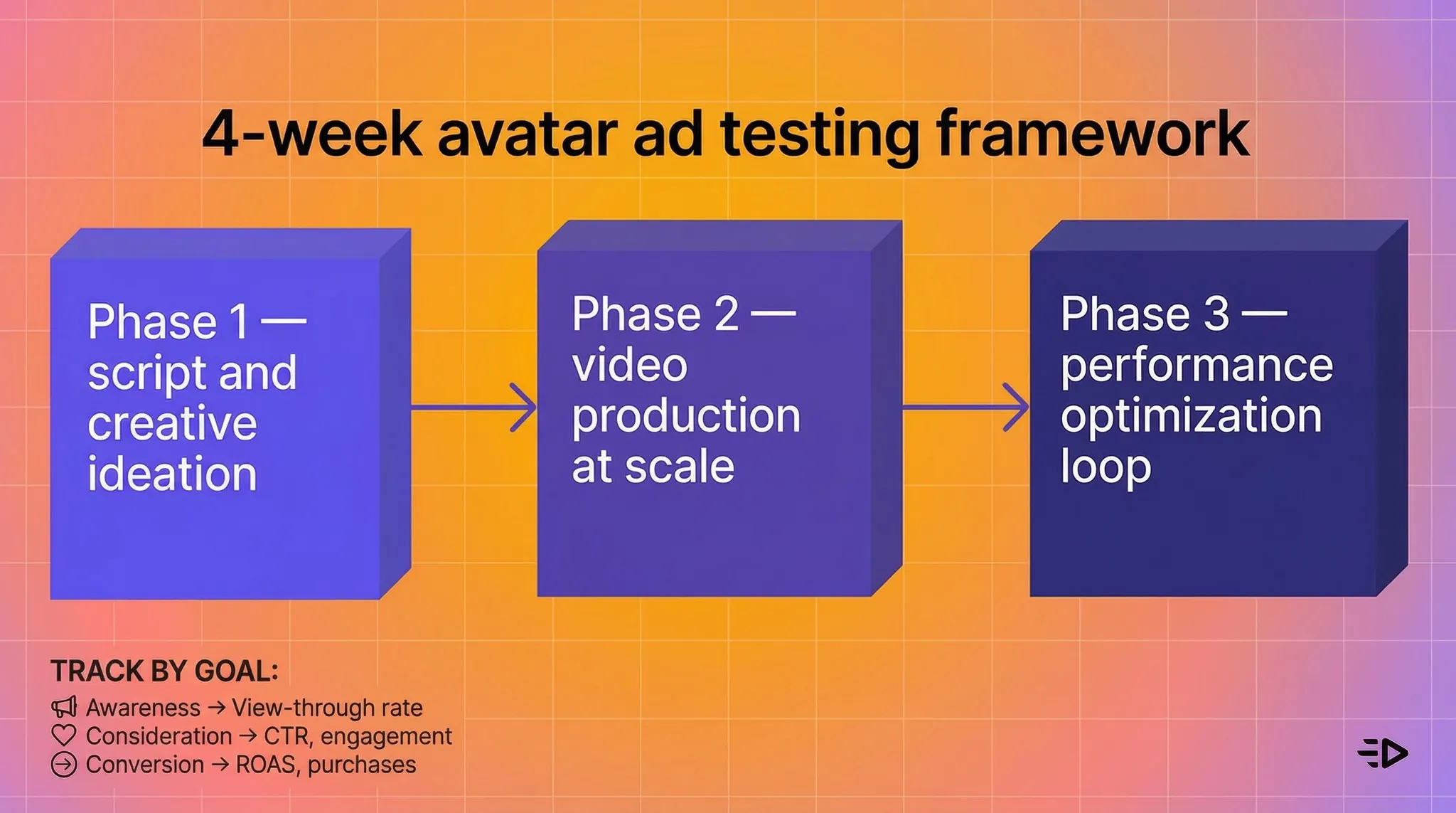
4 weel avatar ad testing

What comes next

The trajectory is clear. Video ad creative is moving from human-produced to AI-augmented to AI-first for high-volume performance marketing. McKinsey's research indicates that organizations investing more than 20% of digital budgets in AI are building cross-functional teams of marketers, data scientists, and engineers to operationalize it.

New hybrid roles are emerging - "creative technologists" and "AI creative strategists" who translate brand goals into effective prompts and experiments. The intersection of creative and data isn't a future trend; it's a job description that exists today.

The brands that win won't be the ones with the most sophisticated AI. They'll be the ones that combine AI's scale and speed with human judgment, ethical guardrails, and clean performance data. The technology makes high-quality video cheap and fast. Strategy and taste are what make it effective.

FAQs

What is adtech in the context of AI video advertising?

Adtech (advertising technology) refers to the systems and software that automate the buying, targeting, delivery, and measurement of digital advertising. In video advertising, adtech now includes AI-powered tools for script generation, automated video production, dynamic creative optimization, audience targeting, and performance analytics. These systems use generative AI and machine learning to create, personalize, and optimize video ads at scale.

What is AIGC and how does it apply to advertising?

AIGC stands for AI-generated content. In advertising, it refers to video, images, audio, and copy produced by generative AI models rather than traditional production methods. AIGC tools take inputs like product URLs, brand assets, or text prompts and generate finished video ad creative - complete with visuals, voiceovers, and music - in minutes rather than weeks.

How is generative AI advertising different from traditional video ad production?

Traditional video ad production requires actors, studios, directors, editors, and weeks of coordination. Generative AI advertising automates this workflow - you provide product information and brand guidelines, and the AI produces finished video ads. MIT research found this approach reduces production costs by approximately 90% while increasing engagement by 6-9 percentage points through personalization capabilities impossible with traditional methods.

How does machine learning in marketing improve video ad performance?

Machine learning optimizes video ads by analyzing performance data (watch time, CTR, conversions) across thousands of creative variants and audience segments. It identifies which visual elements, scripts, and formats work best for each micro-audience, then automatically favors higher-performing combinations. Over time, these feedback loops compound - each testing cycle produces better inputs for the next cycle.

Can AI in ecommerce replace human creative teams?

No. Academic and industry research consistently shows that AI augments rather than replaces human creativity in advertising. AI handles production scale, variation generation, and data analysis. Humans handle brand strategy, creative direction, quality control, and ethical oversight. The most effective setup is "guided personalization" - humans control messaging and strategy while AI handles production and optimization.

What's the ROI of using AI for video ad creation?

ROI varies by implementation, but documented results are strong. MIT research showed 90% cost reduction in video production and 6-9 percentage point CTR improvements. Creatify case studies show agencies achieving 45% CPA reductions, 73% ROAS improvements, and 3x CTR increases when switching from static to AI-generated video ads. Organizations investing in AI for marketing report 3-15% revenue uplift according to McKinsey data.

How does artificial intelligence advertising handle brand safety and ethics?

Responsible AI advertising requires transparency about synthetic content, content moderation systems, data privacy compliance, and internal review processes. IAB's AI Transparency and Disclosure Framework recommends risk-based disclosure when AI materially affects authenticity or representation. Brands should implement AI risk assessments before deploying at scale and maintain human oversight of AI-generated creative.

What should marketers look for in an AI video ad platform?

Production capabilities (how many video types and formats), AI model quality (avatar realism, voice naturalness), platform integrations (Meta, TikTok, CTV), creative testing and analytics features, scalability for large product catalogs, governance and compliance features (content moderation, data security), and pricing structure relative to your production volume needs.


By early 2024, roughly 65% of organizations were regularly using generative AI - nearly double the year before. In video advertising specifically, IAB's 2025 Digital Video Ad Spend & Strategy Report found that 86% of buyers say they use or plan to use generative AI to build video ad creative. And about 22% of video ad creative in 2024 was already built or enhanced with generative AI, with projections that nearly 40% of video ad creative will use gen‑AI by 2026.

These aren't future projections from a speculative white paper. This is what's happening right now in adtech. Generative AI and machine learning have moved from experimental add-ons to embedded infrastructure across the video ad workflow - from script ideation to production to real-time creative optimization.

This article breaks down exactly how that transformation works, what it means for ecommerce and performance marketers, and where the real ROI is showing up.

How we got here: from programmatic buying to programmatic creative

For the last decade adtech has been mostly about automation. Programmatic buying automated where ads run. Real-time bidding automated how much you pay. Machine learning automated who sees what.

But the creative itself? That stayed manual for a long time. Storyboards, production shoots, editing suites, rounds of revisions - the entire creative workflow operated at human speed while everything around it ran at machine speed.

Planning Production Creating

Dynamic creative optimization (DCO) was the bridge. DCO systems assemble video elements - copy, visuals, offers, CTAs - in real time based on user signals like location, behavior, device, and browsing history. Instead of producing one hero ad and hoping it works everywhere, DCO produces thousands of combinations from a master template and lets machine learning pick the best version for each impression.

That was the first crack in the wall. AI-generated content (AIGC) is what knocked the whole wall down. Now the machine doesn't just assemble pre-made assets. It creates them.

Creative components User SDignals DCO Engine Ad variations

What generative AI actually does in video ad creation

Let's be specific about what "AIGC" means in this context, because the term gets used loosely.

In advertising, generative AI refers to models that create or transform images, video, audio, and copy from data, prompts, or templates. You give the system a product URL, a brief, or a set of brand assets - and it produces finished video ad variants optimized for different audiences and platforms.

Product URL Input

Deloitte's media and entertainment outlook identifies generative AI as one of the most impactful technologies reshaping marketing and media operations. McKinsey's research on AI-powered marketing indicates that commercial leaders investing in AI see 3-15% revenue uplift and 10-20% sales ROI improvements.

But the headline numbers miss the more interesting story. The transformation isn't just about cost savings or speed. It's about making things possible that were literally impossible before - like personalizing video ads at the individual level, or testing 150 creative variations in two weeks instead of 5 ads over three months.

AI across the video ad workflow

Strategy and script development

AI doesn't just make video production faster. It changes how campaigns are conceived.

Machine learning models analyze historical campaign data, consumer behavior patterns, and market trends to generate creative strategies and script variations tailored to specific audience segments. Academic research from Oklahoma State University supports what practitioners are seeing in the field: gen-AI augments rather than replaces human creativity, supporting "creative partnerships" where the AI generates dozens of angles and hooks while humans apply brand judgment and regulatory guardrails.

Creatify's AI Script Writer, for example, is trained on thousands of high-performing social media ads. You paste a product URL, and it generates 5-10 script variations with platform-specific hooks, benefit-driven copy, and CTAs. The scripts aren't random - they're informed by what actually works on TikTok, Instagram, Meta, and YouTube.

AI generated script variations

Production: from assets to finished video ads

This is where the economics change most dramatically.

A field experiment by researchers at MIT and the University of Missouri, involving over 21,000 consumers, found that AI-generated personalized video ads can reduce production costs by approximately 90% compared to traditional methods. The same study found that AI could create 100,000 personalized video ads for around $220,000 - the equivalent would cost $12 million with traditional production.

That's not a marginal improvement. That's a category change.

In practice, this means an ecommerce brand can take a product page URL, feed it to a platform like Creatify, and get back multiple finished video ads - complete with AI avatars, voiceovers, product visuals, captions, and music - in minutes instead of weeks. The URL-to-Video workflow scans the product page, extracts descriptions and images, generates scripts, and produces platform-ready ads in 9:16, 16:9, and 1:1 formats.

Traditional production for a single video ad runs $3,000-$15,000. With AI video generation, campaigns can see production costs fall by around 90%, as demonstrated in recent MIT research on personalized AI video. This is what makes A/B testing at scale financially viable for the first time.

From assets to finished video ads

Personalization and dynamic creative

This is where machine learning in marketing gets really interesting.

DCO engines use algorithms to assemble video elements in real time based on signals like location, weather, browsing behavior, and device type. The result is thousands of creative combinations from a single master template, with machine learning favoring the variants that perform best for each impression.

For ecommerce, this means AI can tailor product video ads to individual user behavior - showing different products, offers, and messages based on browsing history, cart contents, and previous purchases. A shopper who viewed winter jackets sees a jacket ad. A shopper who abandoned a cart sees a retargeting video featuring exactly the products they left behind. Same campaign, completely different creative.

Measurement and optimization loops

The MIT experiment produced one of the clearest data points on generative AI advertising effectiveness: AI-generated personalized video ads increased click-through rates by 6-9 percentage points compared to both personalized image ads and generic video ads.

That's not a rounding error. In a world where a 1-2 point CTR improvement justifies a campaign change, a 6-9 point lift changes how you allocate budget.

What makes AI-driven creative optimization compound over time is the feedback loop. Performance data - watch time, CTR, conversions - feeds back into the models, improving subsequent creative generations. Each cycle of testing produces better inputs for the next cycle. The system learns what works and produces more of it.

Creatify's AdMax product is built around this loop. It combines competitor insights, video generation, creative testing, and performance analytics into a single system. The Qula360 case study illustrates what this looks like in practice: an ecommerce agency tested video ads against their standard static image ads, and CTR tripled (6.74% vs. 2.24%) while cost per result dropped from $18.51 to $0.10. That's a 185x improvement in cost efficiency from a single creative format test.

Measurement and OPT loop

AI in ecommerce: turning product feeds into video at scale

Ecommerce is where generative AI advertising hits hardest, because the pain point is most acute.

A retailer with 5,000 SKUs cannot produce individual video ads for each product using traditional methods. The math doesn't work. At $3,000-$15,000 per video, even covering your top 100 products would cost $300K-$1.5M. And by the time you've produced them, inventory has changed, prices have shifted, and seasonal relevance has moved on.

AI flips this. Product feeds - images, titles, prices, descriptions - become the raw input for automated video generation. The system creates platform-specific ads (vertical for TikTok/Reels, horizontal for CTV, square for feeds) from catalog data, updating in real time as inventory and pricing change.

Creatify's URL-to-Video feature does exactly this. Paste a Shopify, Amazon, or product page URL. The system extracts product information, generates script variations, pairs them with AI avatars or product video styles, and outputs finished ads. Do this across your top 500 products and you have a creative library that would have taken months and hundreds of thousands of dollars to produce traditionally.

Alibaba-owned Flamingo Shop used Creatify to go from 0 AI avatar videos to 100+ per month, with 30% faster creative production. The economics of traditional fashion shoots ($1,500-$7,500 per shoot producing 4-15 usable clips) made it impossible to test at the volume needed to find winning creative angles. AI made it standard operating procedure.

Read also: 17 best AI avatar generators & tools

Machine learning in marketing: beyond creative production

Generative AI handles the creative. Machine learning handles the intelligence around it.

Audience targeting and segmentation

Machine learning models analyze patterns across customer data to identify high-value segments and micro-audiences for video campaigns. Dynamic audience targeting continuously updates segment definitions based on response data, feeding more effective creative to emerging audience clusters.

Research published in ScienceDirect confirms that perceived relevance and personalization significantly increase purchase intention and engagement. The practical implication: the more precisely you can match creative to audience, the better everything performs. Machine learning makes that matching possible at scale.

Creative analytics

This is newer and arguably more valuable than targeting alone. AI analyzes large volumes of video ads to detect which visual motifs, pacing patterns, text overlays, and narrative structures correlate with performance. Instead of a creative director guessing why an ad worked, the system identifies specific elements - a particular hook format, a specific color palette, a certain CTA placement - that drove results.

AdExchanger's reporting on generative AI in advertising describes how these models suggest creative improvements grounded in performance data rather than subjective taste. The creative brief becomes data-informed, not just instinct-driven.

Attribution across channels

AI helps marketers model user journeys and estimate each touchpoint's contribution across social, CTV, display, and search. This informs both budget allocation and creative decisions - shifting spend and creative variants toward channels where AI predicts the highest incremental lift.

As third-party cookies continue to deprecate, first-party data and privacy-safe measurement become central to making these models work.

Video ads

Governance, transparency, and the trust question

Speed and scale are meaningless if your audience doesn't trust the output.

IAB research reveals a gap between how advertisers think consumers feel about AI-generated ads and how consumers actually feel. The short version: consumers are more skeptical than advertisers assume.

IAB's AI Transparency and Disclosure Framework recommends risk-based disclosure when AI materially affects authenticity, identity, or representation - like synthetic spokespeople, digital twins, or AI-generated voices. The framework tries to balance transparency with the practical reality that over-disclosure creates "label fatigue" where every piece of content carries disclaimers nobody reads.

For brands, the practical considerations are:

Deepfakes and misrepresentation. The same technology that creates a compelling product ad can create deceptive content. Legal challenges around AI-generated video and synthetic media are multiplying, and brands need internal guardrails and content verification processes.

Data privacy. Training generative models on user-generated content without clear consent raises privacy and bias concerns. Marketers should understand model provenance and data governance practices for any AI tools they deploy.

Brand safety. Risk assessments covering bias, misleading content, and IP infringement should happen before deploying AI-generated video campaigns at scale, not after something goes wrong.

Creatify addresses this through content moderation systems, SOC 2 Type II certification, and enterprise-level security and privacy controls on higher-tier plans.

How to get started: a practical roadmap

If you're a performance marketer or ecommerce team looking to integrate AI into your video ad workflow, here's a phased approach.

Phase 1: Script and creative ideation. Start by using AI to generate script variations and creative concepts for your existing campaigns. Test AI-generated scripts against your current copy. This is low-risk, high-learning. On Creatify, paste a product URL and review the script variations the AI generates. Edit what needs editing, then generate the video.

Phase 2: Production at scale. Once you've validated that AI-generated scripts perform, move to full video production. Generate 20-50 video variations per product and run them through your existing ad platforms. Creatify's Pro plan supports this with 1,500+ avatars, 22+ AI models, and direct launch to Meta and TikTok.

Phase 3: End-to-end optimization. Integrate AI into the full loop - from creative generation to performance measurement to the next round of creative generation. This is where tools like Creatify's AdMax come in, combining competitor insights, creative testing, and analytics into a continuous improvement cycle.

Prioritize use cases where AI clearly adds the most value: high-volume ecommerce catalogs, campaigns requiring frequent creative refreshes, and channels with rich performance data. Define success metrics upfront - CTR lift, conversion uplift, cost per acquisition reduction - and run controlled tests to quantify impact.

The Unicorn Marketers case study is a good benchmark: they took over an underperforming ad account spending $5,000 daily with a 0.77 ROAS and an exhausted creative library. Using Creatify, they produced 150+ video ad variations in two weeks. CPA dropped 45% (from $55 to $30), ROAS improved 73% (from 0.77 to 1.33), and the account unlocked a 15% budget increase.

4 weel avatar ad testing

What comes next

The trajectory is clear. Video ad creative is moving from human-produced to AI-augmented to AI-first for high-volume performance marketing. McKinsey's research indicates that organizations investing more than 20% of digital budgets in AI are building cross-functional teams of marketers, data scientists, and engineers to operationalize it.

New hybrid roles are emerging - "creative technologists" and "AI creative strategists" who translate brand goals into effective prompts and experiments. The intersection of creative and data isn't a future trend; it's a job description that exists today.

The brands that win won't be the ones with the most sophisticated AI. They'll be the ones that combine AI's scale and speed with human judgment, ethical guardrails, and clean performance data. The technology makes high-quality video cheap and fast. Strategy and taste are what make it effective.

FAQs

What is adtech in the context of AI video advertising?

Adtech (advertising technology) refers to the systems and software that automate the buying, targeting, delivery, and measurement of digital advertising. In video advertising, adtech now includes AI-powered tools for script generation, automated video production, dynamic creative optimization, audience targeting, and performance analytics. These systems use generative AI and machine learning to create, personalize, and optimize video ads at scale.

What is AIGC and how does it apply to advertising?

AIGC stands for AI-generated content. In advertising, it refers to video, images, audio, and copy produced by generative AI models rather than traditional production methods. AIGC tools take inputs like product URLs, brand assets, or text prompts and generate finished video ad creative - complete with visuals, voiceovers, and music - in minutes rather than weeks.

How is generative AI advertising different from traditional video ad production?

Traditional video ad production requires actors, studios, directors, editors, and weeks of coordination. Generative AI advertising automates this workflow - you provide product information and brand guidelines, and the AI produces finished video ads. MIT research found this approach reduces production costs by approximately 90% while increasing engagement by 6-9 percentage points through personalization capabilities impossible with traditional methods.

How does machine learning in marketing improve video ad performance?

Machine learning optimizes video ads by analyzing performance data (watch time, CTR, conversions) across thousands of creative variants and audience segments. It identifies which visual elements, scripts, and formats work best for each micro-audience, then automatically favors higher-performing combinations. Over time, these feedback loops compound - each testing cycle produces better inputs for the next cycle.

Can AI in ecommerce replace human creative teams?

No. Academic and industry research consistently shows that AI augments rather than replaces human creativity in advertising. AI handles production scale, variation generation, and data analysis. Humans handle brand strategy, creative direction, quality control, and ethical oversight. The most effective setup is "guided personalization" - humans control messaging and strategy while AI handles production and optimization.

What's the ROI of using AI for video ad creation?

ROI varies by implementation, but documented results are strong. MIT research showed 90% cost reduction in video production and 6-9 percentage point CTR improvements. Creatify case studies show agencies achieving 45% CPA reductions, 73% ROAS improvements, and 3x CTR increases when switching from static to AI-generated video ads. Organizations investing in AI for marketing report 3-15% revenue uplift according to McKinsey data.

How does artificial intelligence advertising handle brand safety and ethics?

Responsible AI advertising requires transparency about synthetic content, content moderation systems, data privacy compliance, and internal review processes. IAB's AI Transparency and Disclosure Framework recommends risk-based disclosure when AI materially affects authenticity or representation. Brands should implement AI risk assessments before deploying at scale and maintain human oversight of AI-generated creative.

What should marketers look for in an AI video ad platform?

Production capabilities (how many video types and formats), AI model quality (avatar realism, voice naturalness), platform integrations (Meta, TikTok, CTV), creative testing and analytics features, scalability for large product catalogs, governance and compliance features (content moderation, data security), and pricing structure relative to your production volume needs.


Icon
Icon

Ready to turn your product into an engaging video?

Ready to speed up your marketing?

Test your new product ideas in minutes with AI-generated video ads

Arrow icon.
Gradient

Ready to speed up your marketing?

Test your new product ideas in minutes with AI-generated video ads

Arrow icon.
Gradient

Ready to speed up your marketing?

Test your new product ideas in minutes with AI-generated video ads

Arrow icon.
Gradient

Ready to speed up your marketing?

Test your new product ideas in minutes with AI-generated video ads

Arrow icon.
Gradient
Gradient