
Équipe Creatify
PARTAGER


DANS CET ARTICLE
Le creative est le levier le plus puissant dont vous disposez en paid media. L'analyse de Nielsen sur des centaines de campagnes montre que près de la moitié de l'impact des ventes publicitaires repose sur le creative lui-même, devant l'achat média, la portée et le ciblage réunis.
Le goulet d'étranglement est donc le volume. Les plateformes publicitaires modernes sont gourmandes en contenu, et vous avez besoin d'un flux continu de variantes alignées sur votre marque pour les alimenter. Produire cela manuellement, un designer après l'autre, ne suffit plus.
C'est là que les outils d'automatisation créative entrent en jeu : ils permettent de créer des templates, de générer, de redimensionner, de décliner et de personnaliser les visuels publicitaires pour qu'une petite équipe puisse livrer ce qui nécessitait auparavant tout un département. Voici neuf outils qui valent l'investissement en 2026, avec leurs points forts, leurs limites et comment faire votre choix.
Un mot d'honnêteté : l'un de ces outils est le nôtre (Creatify, au numéro 5). Il se trouve au milieu de la liste car c'est là qu'il a sa place dans un comparatif équitable, et non tout en haut.
Ce que font les outils d'automatisation créative
L'automatisation créative englobe les logiciels qui transforment une idée approuvée en plusieurs dizaines de ressources finales avec moins de travail manuel. Certains outils sont axés sur le design, d'autres se concentrent sur les bannières display et l'optimisation créative dynamique (DCO), et un groupe plus récent génère directement des vidéos IA et des publicités de style UGC.
La raison pour laquelle cette catégorie se développe : la création personnalisée est payante. McKinsey estime que la personnalisation permet d'augmenter les revenus de 10 à 15 %, mais seulement pour les équipes capables de produire suffisamment de variantes sur mesure pour que cela devienne réalité. L'automatisation est le moyen d'y parvenir sans tripler les effectifs.
Comment lire cette liste
Le fait qu'un outil « vaille l'investissement » dépend de ce que vous produisez. En parcourant la liste, évaluez plusieurs critères : le type de format dont vous avez besoin (bannières display, visuels statiques pour les réseaux sociaux ou vidéo), le volume et la taille de l'équipe, les exigences de contrôle de marque et de conformité, l'intégration avec vos plateformes publicitaires et le modèle de tarification, car plusieurs de ces outils sont réservés aux grandes entreprises avec des tarifs sur devis.
1. Adobe GenStudio
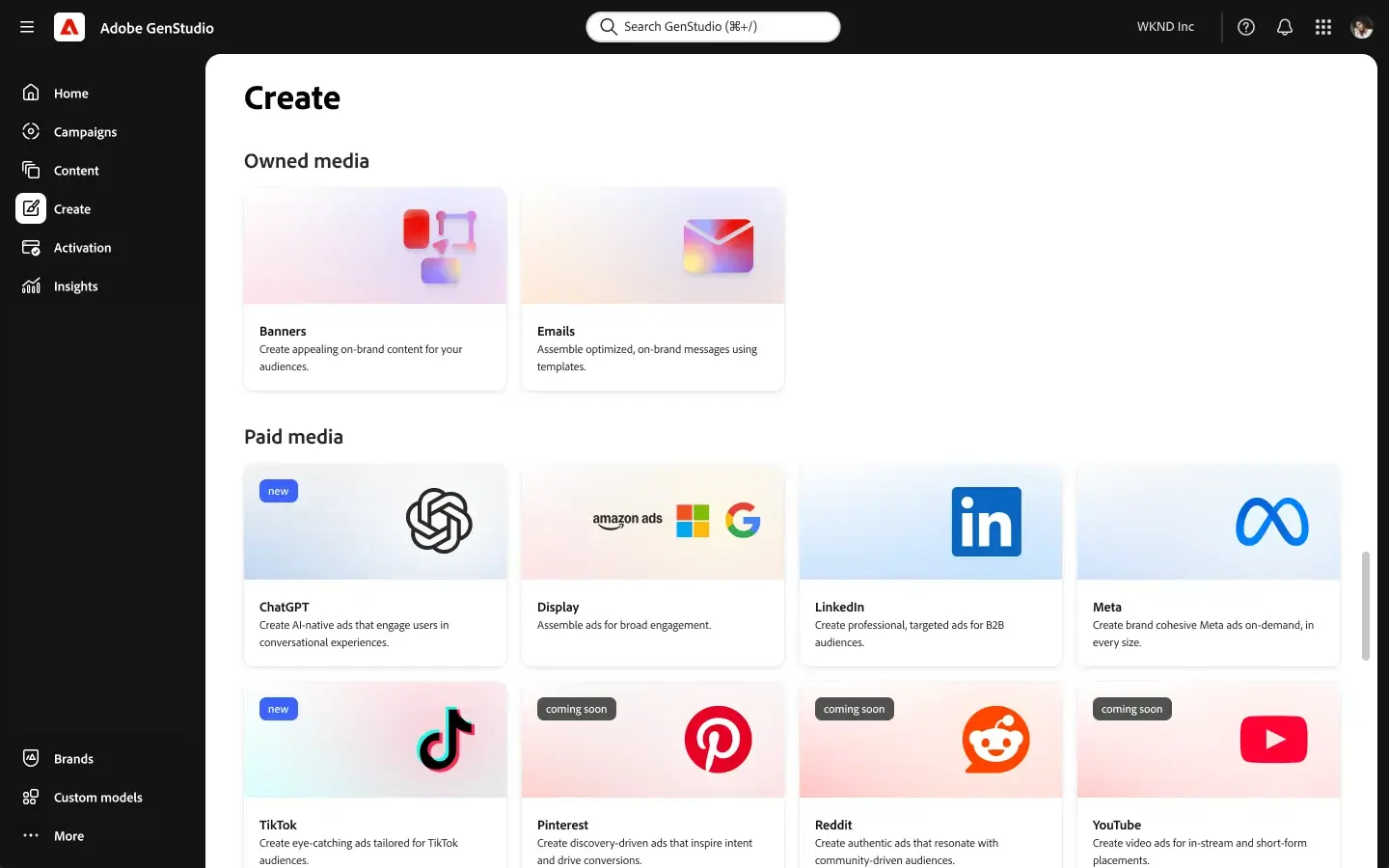
Adobe GenStudio, associé à Firefly, est l'option poids lourd pour gérer l'ensemble d'une chaîne de production de contenu. Les mises à jour d'Adobe pour 2025 et 2026 ont ajouté un constructeur de workflow pour des pipelines de production réutilisables, plus de 20 actions génératives et créatives incluant l'intégration d'objets et les vérifications de marque, ainsi que des modèles personnalisés formés sur vos propres actifs de marque via Firefly Foundry.
Idéal pour les grandes entreprises qui utilisent déjà Adobe Experience Manager et Creative Cloud. L'avantage réside dans la profondeur : gouvernance, sécurité de la marque et production générative au sein d'un seul système connecté. Le coût de cette complétude est la complexité, c'est donc disproportionné pour une équipe agile qui a simplement besoin de lancer plus de publicités rapidement.
2. Smartly
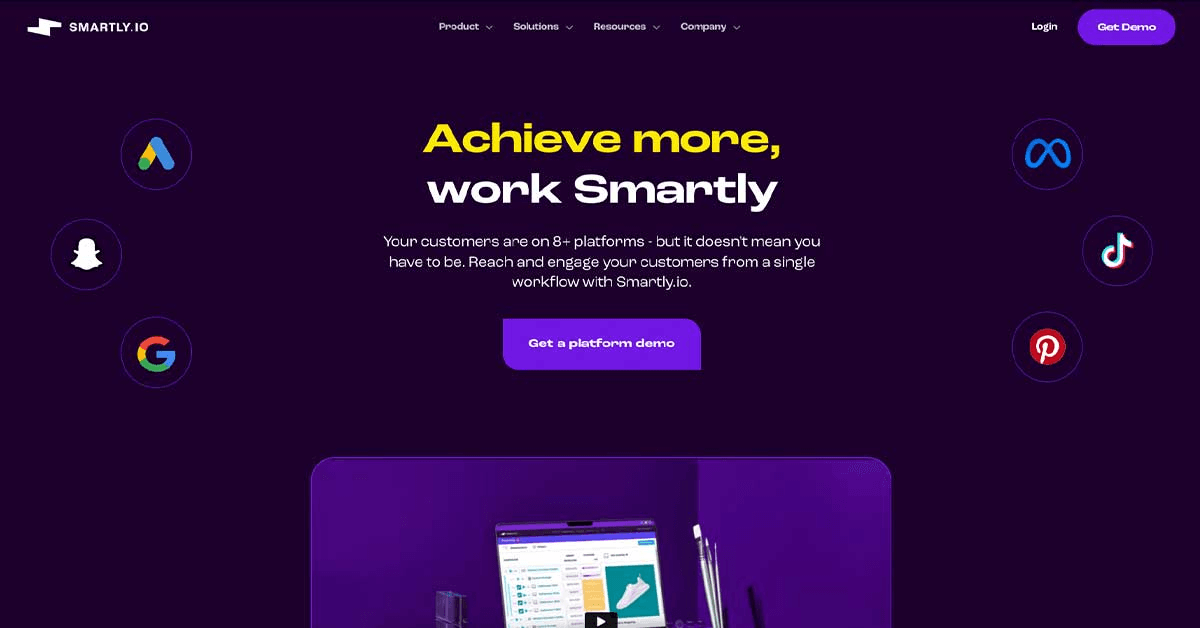
Smartly combine la production créative et l'achat média pour les équipes social et de performance. Sa force réside dans la création dynamique basée sur des flux : importez un catalogue de produits et générez des variantes publicitaires adaptées sur Meta, TikTok et d'autres canaux, puis gérez le budget au même endroit.
Idéal pour les grandes équipes de performance qui gèrent d'importantes campagnes sur les réseaux sociaux. Les tarifs sont destinés aux entreprises et sur devis, et l'accent est mis sur le paid social. C'est donc une plateforme trop complexe si vos besoins sont plus simples ou si vos canaux sont principalement axés sur le display.
3. Celtra
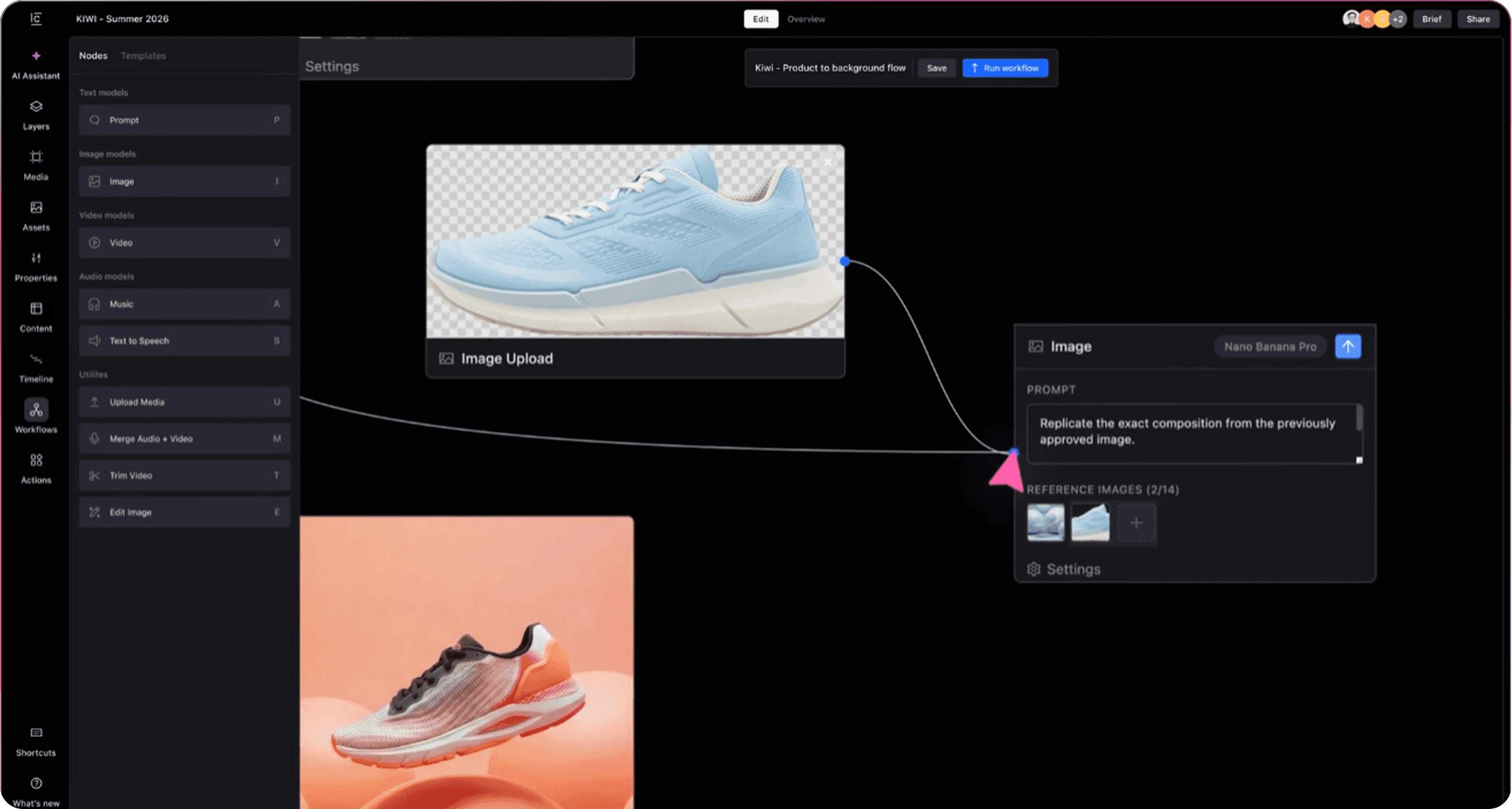
Celtra est conçu pour la production créative à grande échelle sur le display et le social, avec de solides fonctionnalités de création dynamique. Les grandes marques et agences l'utilisent pour lancer rapidement d'importants volumes de variantes conformes à leur charte graphique.
Idéal pour les équipes créatives d'entreprise qui produisent à grande échelle. Une limite honnête souvent signalée dans les comparatifs : il n'intègre pas de gestion de campagne native, vous devrez donc diffuser vos médias ailleurs. Comme la plupart des outils de cette catégorie, il s'adresse aux entreprises avec une tarification sur devis.
4. Bannerflow
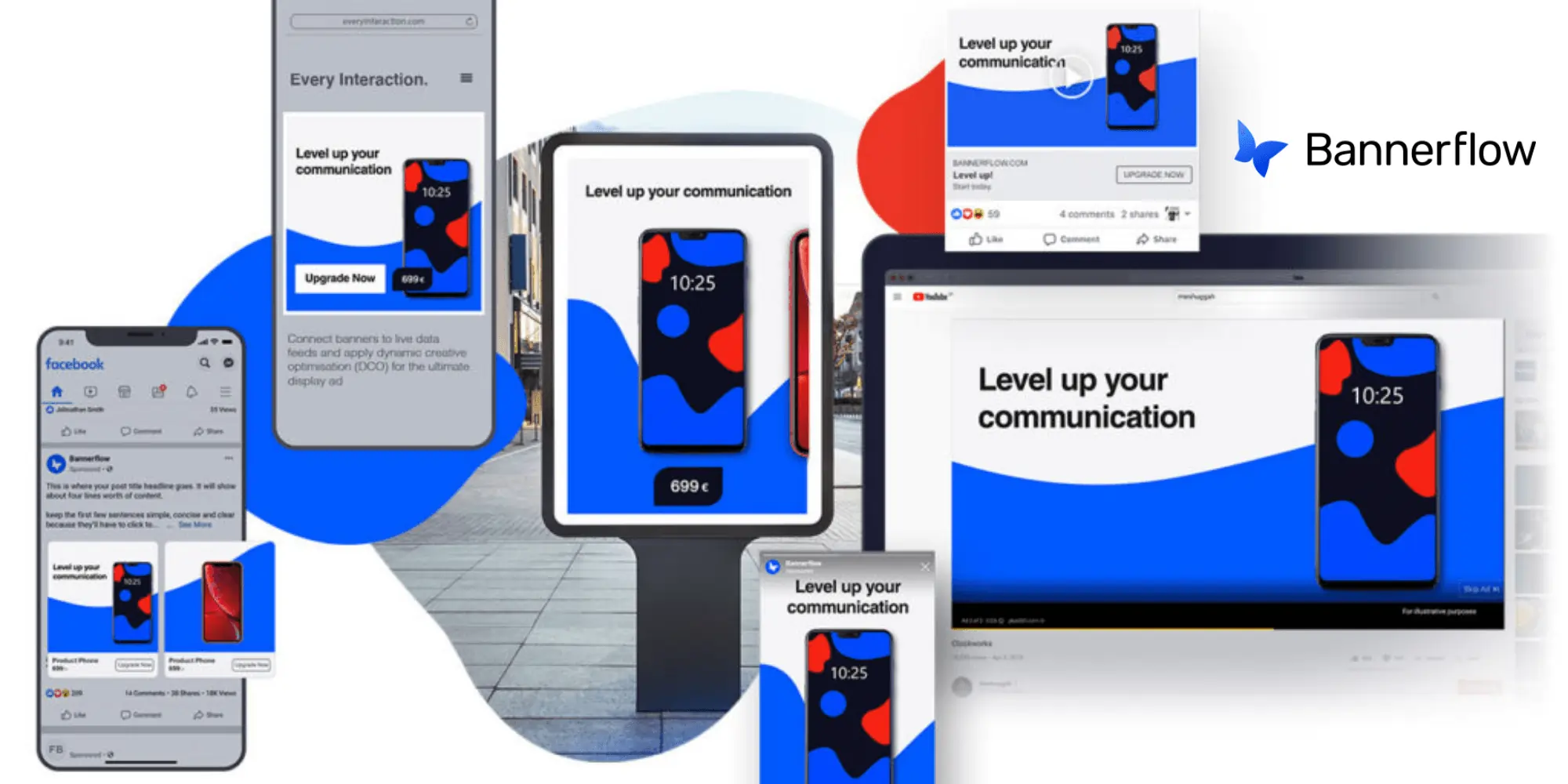
Bannerflow se spécialise dans la production de publicités display. Vous construisez un modèle maître et il l'adapte en publicités HTML5 natives, modifiables et animées pour chaque taille, audience et plateforme, avec un contrôle strict de l'image de marque tout au long du processus.
Idéal pour les équipes de performance et les agences produisant de gros volumes de campagnes display. Si les bannières sont votre cœur de métier, c'est l'un des meilleurs choix possibles. Si vous recherchez de la vidéo courte ou de l'UGC, ce n'est pas l'outil adapté.
5. Creatify
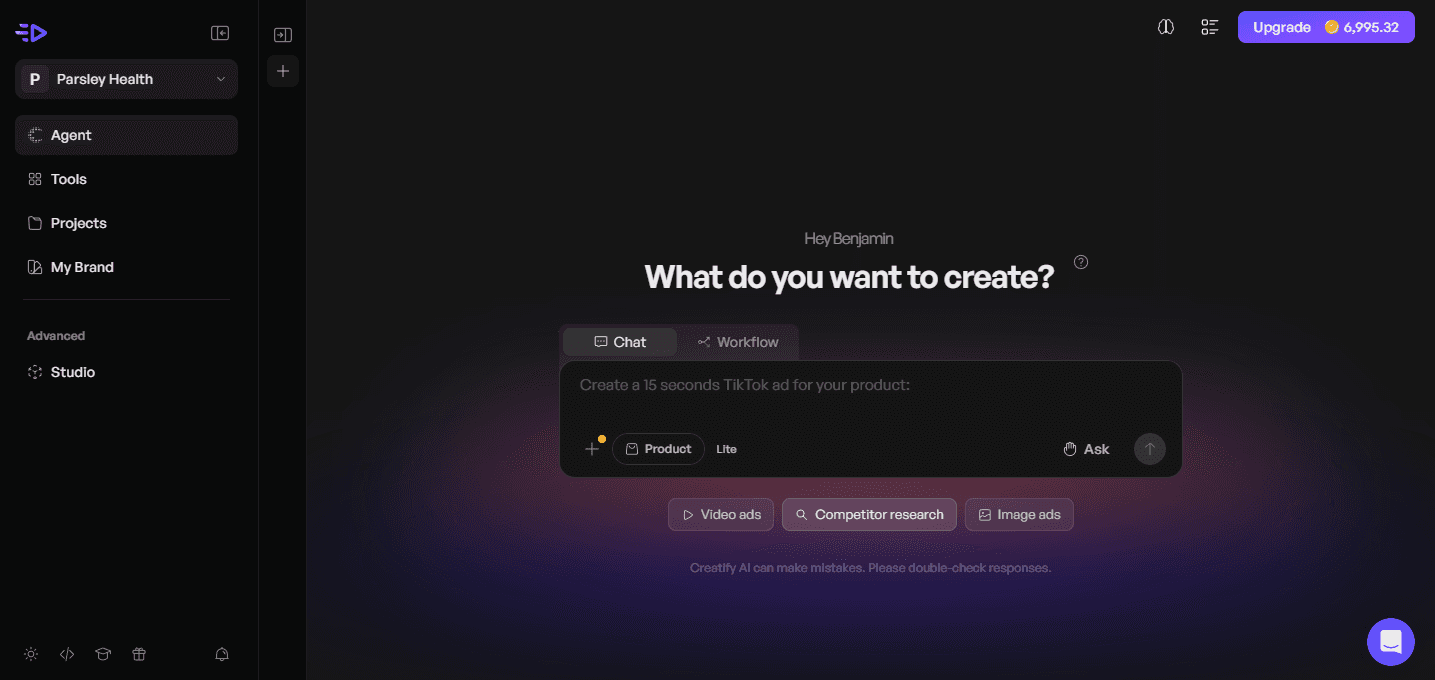
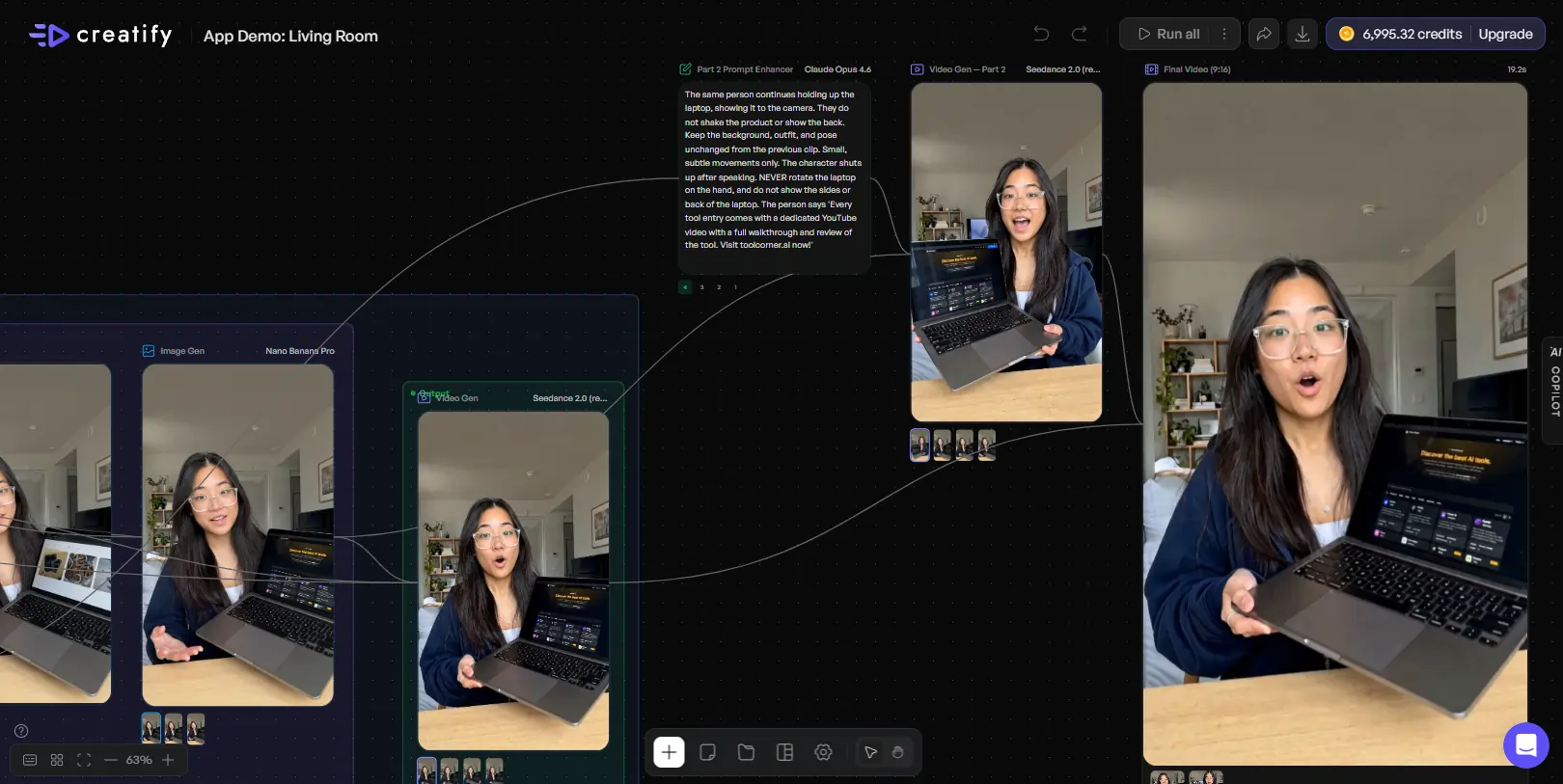
Creatify (notre outil) se concentre sur un segment que les plateformes display ci-dessus ignorent généralement : la vidéo IA et les publicités de style UGC. Collez l'URL d'un produit et son outil URL-to-Video génère des variantes vidéo prêtes à l'emploi en moins d'une minute, en s'appuyant sur plus de 1 500 avatars IA et plus de 75 langues. Son système d'agents, Creatify Agent, gère un brief de bout en bout : recherche sur la marque, rédaction des scripts, casting des avatars, génération des plans et contrôle qualité visuel avant toute exportation.
Idéal pour les marques e-commerce et DTC, les marketeurs d'applications et les agences qui ont besoin d'un volume important de vidéos courtes et de publicités UGC sans avoir à tourner de séquences. Les tarifs incluent une offre gratuite. Les abonnements payants commencent à $33/mois, avec des forfaits Entreprise sur mesure disponibles. À titre d'exemple, le fournisseur de marketing Tec-Do 2.0 a réduit le coût par vidéo de 20 $ à 2 $ et a généré 3x plus de vues qu'avec des publicités d'images après être passé à Creatify, selon leur étude de cas.
6. Canva Magic Studio
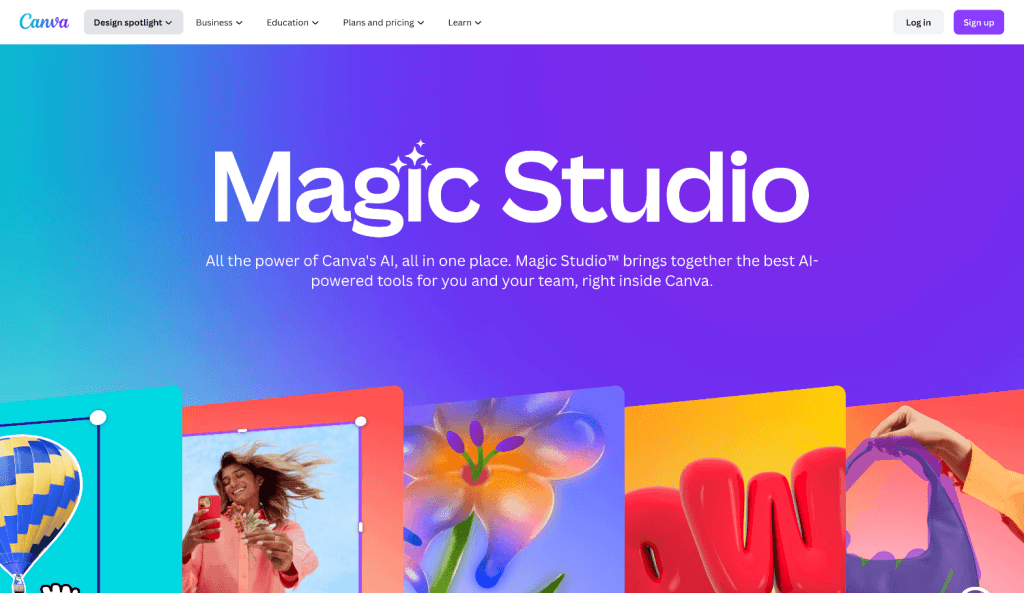
Magic Studio de Canva apporte l'automatisation aux personnes qui ne sont pas designers. Sa fonctionnalité de création en masse transforme un fichier CSV ou une feuille de calcul en des centaines de déclinaisons de designs en associant des colonnes à un modèle, et les mises à jour de Canva AI en 2026 ont ajouté un modèle spécifique au design et l'édition conversationnelle.
Idéal pour les petites équipes et les solopreneurs qui créent des graphiques pour les réseaux sociaux et des visuels simples à moindre coût, avec des abonnements payants à partir d'environ 15 $ par mois. Il s'agit d'un outil de conception générale plutôt que d'un moteur de paid-media, de sorte qu'il lui manque les tests de performance, la DCO et la profondeur d'intégration publicitaire offerts par les outils dédiés.
7. Creatopy
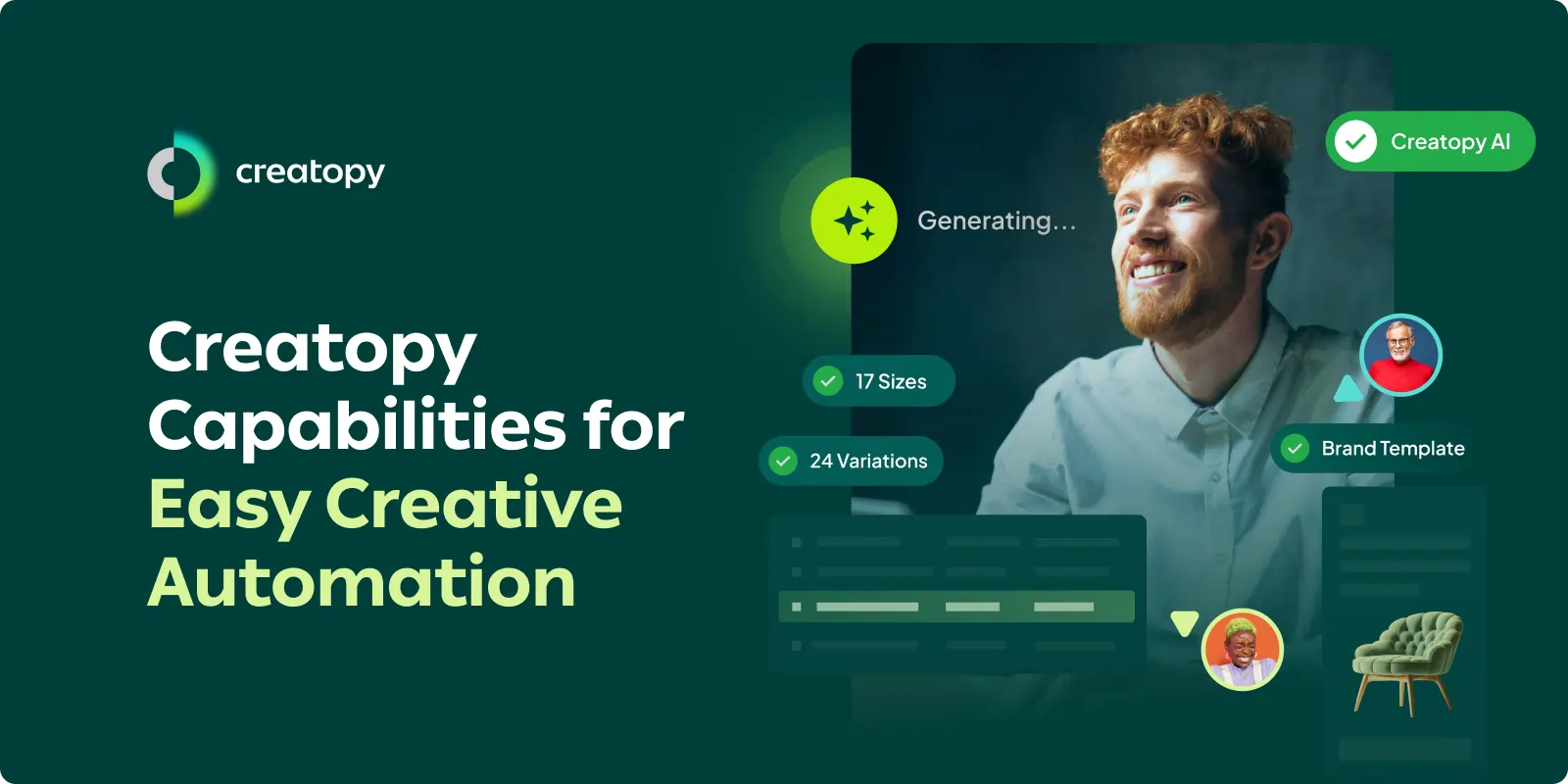
Creatopy se positionne sur le segment intermédiaire de l'automatisation display, avec une interface très soignée axée sur le design. Il génère des séries de bannières HTML5 dans de nombreux formats à partir d'un seul design, gère l'animation et prend en charge la planification ainsi que les kits de marque.
Idéal pour les équipes de taille moyenne qui produisent beaucoup de bannières display et recherchent un rendu plus professionnel qu'un éditeur générique, sans pour autant payer des tarifs d'entreprise. Comme pour les autres spécialistes des bannières, la vidéo et l'UGC ne sont pas sa spécialité.
8. Rocketium
Rocketium s'adresse aux opérations créatives pour le retail et l'e-commerce, en associant l'IA à des experts humains pour la validation. Il gère les briefs de bout en bout, y compris les modèles, les contrôles de conformité de la marque et des distributeurs, le déclinaison de versions, la transcréation et la vidéo.
Idéal pour les grandes marques de vente au détail et d'e-commerce qui gèrent de nombreuses références (SKUs), des marchés multiples et des règles de conformité strictes sur les marketplaces. L'aspect service managé en fait un outil puissant pour ce cas d'usage, mais plus lourd que ce dont une équipe autonome aurait besoin pour des publicités sociales quotidiennes.
9. AdCreative.ai
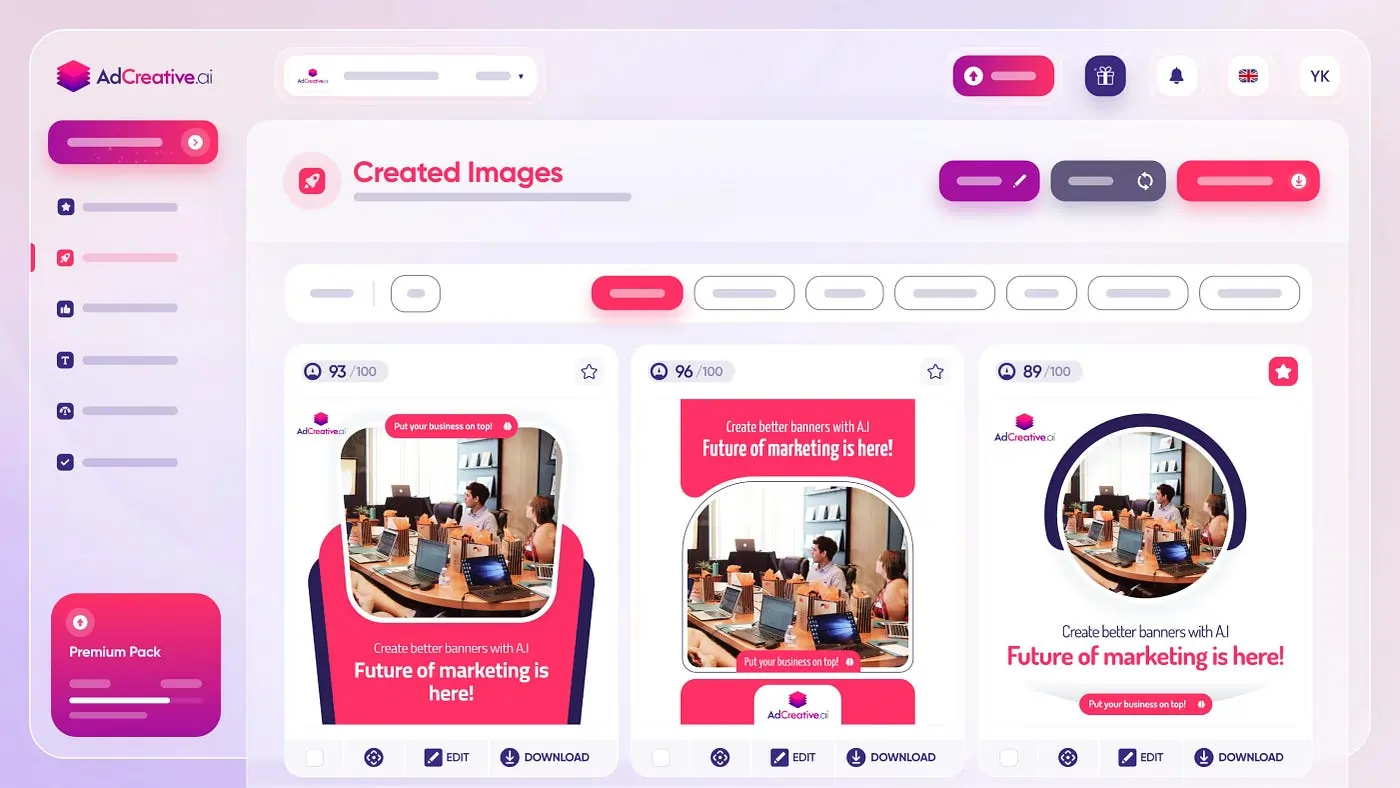
AdCreative.ai génère des visuels publicitaires rapidement et attribue une note aux variantes en fonction de leur performance prédictive, ce qui plaît aux spécialistes du growth marketing qui souhaitent lancer rapidement des options d'annonces conformes à leur marque. L'outil s'intègre aux principales plateformes publicitaires et se concentre principalement sur les formats statiques.
Idéal pour les PME et les équipes de growth qui privilégient la rapidité et un workflow axé sur la conversion. La qualité du rendu peut varier et nécessite parfois une vérification humaine, et l'accent mis sur le statique signifie qu'il est moins adapté aux équipes dont le prochain goulot d'étranglement est la vidéo.
À lire également : Comment créer une vidéo de formation sans équipe de tournage
Comment choisir le bon logiciel d'automatisation créative
Partez de vos formats de sortie, car cela réduit rapidement les options. Pour la vidéo courte et l'UGC, Creatify est le choix évident. Pour des ensembles de bannières display, tournez-vous vers Bannerflow, Creatopy ou Celtra. Pour une chaîne logistique de contenu d'entreprise, choisissez Adobe GenStudio. Pour des flux sociaux à grande échelle avec achat média intégré, optez pour Smartly. S'il s'agit d'un travail de design simple et économique, préférez Canva. Pour des opérations créatives de retail, privilégiez Rocketium. Pour des visuels de performance statiques rapides, choisissez AdCreative.ai.
Prenez ensuite en compte l'échelle et le budget. Des outils en libre-service comme Creatify, Canva, Creatopy et AdCreative.ai vous permettent de démarrer modestement et d'évoluer. Les plateformes d'entreprise (Adobe, Smartly, Celtra, Bannerflow, Rocketium) offrent plus de contrôle et d'évolutivité, avec des processus de vente personnalisés et des tarifs sur devis. Quelle que soit la plateforme d'automatisation créative que vous choisissez, la bonne sera celle qui correspond directement aux créations que vous diffusez réellement.
Quelle que soit votre liste finale, faites un test en conditions réelles avant de vous engager. La plupart de ces outils proposent une offre gratuite ou un essai : produire vos propres publicités pendant une semaine vous en apprendra bien plus que n'importe quel tableau de fonctionnalités, y compris celui-ci.
Foire Aux Questions
Qu'est-ce que l'automatisation créative ?
L'automatisation créative désigne les logiciels qui transforment un concept approuvé en plusieurs variantes d'annonces finalisées avec moins de travail manuel, grâce à l'utilisation de templates, à la génération de contenu, au redimensionnement, au déclinaison de versions et à la personnalisation. Elle s'étend des outils de design aux plateformes de création dynamique et aux générateurs de vidéo IA.
Quels sont les meilleurs outils d'automatisation créative en 2026 ?
Parmi les solutions performantes en 2026, citons Adobe GenStudio, Smartly, Celtra et Bannerflow pour les équipes d'entreprise, Creatify pour les vidéos IA et les publicités UGC, Canva Magic Studio pour la création de designs simples, Creatopy pour les bannières display, Rocketium pour la conformité et la création retail, et AdCreative.ai pour des visuels statiques rapides. Le bon choix dépend majoritairement des formats publicitaires que vous produisez le plus.
Quelle est la différence entre une plateforme d'automatisation créative et un outil de design ?
Un outil de design comme Canva vous aide à créer des visuels uniques plus rapidement. Une plateforme d'automatisation créative est conçue pour produire, décliner et personnaliser des créations à grande échelle, souvent avec des contrôles de marque, des intégrations de plateformes publicitaires et des tests de performance natifs. Certains outils brouillent les pistes, mais la vraie distinction est de savoir si l'outil a été conçu pour le volume et le paid media, ou pour de la création graphique ponctuelle.
L'automatisation créative en vaut-elle la peine pour les petites entreprises ?
Oui, le plus souvent, à condition de choisir un outil en libre-service plutôt qu'une plateforme d'entreprise. Des solutions comme Creatify, Canva et AdCreative.ai proposent des tarifs très abordables ou des versions d'essai et éliminent le coût de la production manuelle de chaque actif, là où les petites équipes perdent généralement beaucoup de temps et de budget.
Quel est le meilleur outil d'automatisation créative publicitaire pour la vidéo ?
Pour les vidéos courtes et les publicités de style UGC, Creatify est spécialement conçu pour cela : il transforme l'URL d'un produit en variantes vidéo prêtes à être diffusées grâce à des avatars IA dans des dizaines de langues. La plupart des autres outils de cette liste se concentrent sur les bannières display ou les visuels statiques, et seront donc moins adaptés si la vidéo est votre priorité absolue.
Comment l'automatisation des workflows créatifs permet-elle de gagner du temps ?
L'automatisation des workflows créatifs supprime toutes les étapes répétitives entre l'idée originale et la publicité finale : redimensionnement dans tous les formats, modifications des textes ou des produits selon les variantes, application des règles de la marque, et circuits de validation. Les équipes qui automatisent ces processus passent souvent d'une poignée de créations par mois à plusieurs centaines, sans augmenter leurs effectifs.
Le creative est le levier le plus puissant dont vous disposez en paid media. L'analyse de Nielsen sur des centaines de campagnes montre que près de la moitié de l'impact des ventes publicitaires repose sur le creative lui-même, devant l'achat média, la portée et le ciblage réunis.
Le goulet d'étranglement est donc le volume. Les plateformes publicitaires modernes sont gourmandes en contenu, et vous avez besoin d'un flux continu de variantes alignées sur votre marque pour les alimenter. Produire cela manuellement, un designer après l'autre, ne suffit plus.
C'est là que les outils d'automatisation créative entrent en jeu : ils permettent de créer des templates, de générer, de redimensionner, de décliner et de personnaliser les visuels publicitaires pour qu'une petite équipe puisse livrer ce qui nécessitait auparavant tout un département. Voici neuf outils qui valent l'investissement en 2026, avec leurs points forts, leurs limites et comment faire votre choix.
Un mot d'honnêteté : l'un de ces outils est le nôtre (Creatify, au numéro 5). Il se trouve au milieu de la liste car c'est là qu'il a sa place dans un comparatif équitable, et non tout en haut.
Ce que font les outils d'automatisation créative
L'automatisation créative englobe les logiciels qui transforment une idée approuvée en plusieurs dizaines de ressources finales avec moins de travail manuel. Certains outils sont axés sur le design, d'autres se concentrent sur les bannières display et l'optimisation créative dynamique (DCO), et un groupe plus récent génère directement des vidéos IA et des publicités de style UGC.
La raison pour laquelle cette catégorie se développe : la création personnalisée est payante. McKinsey estime que la personnalisation permet d'augmenter les revenus de 10 à 15 %, mais seulement pour les équipes capables de produire suffisamment de variantes sur mesure pour que cela devienne réalité. L'automatisation est le moyen d'y parvenir sans tripler les effectifs.
Comment lire cette liste
Le fait qu'un outil « vaille l'investissement » dépend de ce que vous produisez. En parcourant la liste, évaluez plusieurs critères : le type de format dont vous avez besoin (bannières display, visuels statiques pour les réseaux sociaux ou vidéo), le volume et la taille de l'équipe, les exigences de contrôle de marque et de conformité, l'intégration avec vos plateformes publicitaires et le modèle de tarification, car plusieurs de ces outils sont réservés aux grandes entreprises avec des tarifs sur devis.
1. Adobe GenStudio
Adobe GenStudio, associé à Firefly, est l'option poids lourd pour gérer l'ensemble d'une chaîne de production de contenu. Les mises à jour d'Adobe pour 2025 et 2026 ont ajouté un constructeur de workflow pour des pipelines de production réutilisables, plus de 20 actions génératives et créatives incluant l'intégration d'objets et les vérifications de marque, ainsi que des modèles personnalisés formés sur vos propres actifs de marque via Firefly Foundry.
Idéal pour les grandes entreprises qui utilisent déjà Adobe Experience Manager et Creative Cloud. L'avantage réside dans la profondeur : gouvernance, sécurité de la marque et production générative au sein d'un seul système connecté. Le coût de cette complétude est la complexité, c'est donc disproportionné pour une équipe agile qui a simplement besoin de lancer plus de publicités rapidement.
2. Smartly
Smartly combine la production créative et l'achat média pour les équipes social et de performance. Sa force réside dans la création dynamique basée sur des flux : importez un catalogue de produits et générez des variantes publicitaires adaptées sur Meta, TikTok et d'autres canaux, puis gérez le budget au même endroit.
Idéal pour les grandes équipes de performance qui gèrent d'importantes campagnes sur les réseaux sociaux. Les tarifs sont destinés aux entreprises et sur devis, et l'accent est mis sur le paid social. C'est donc une plateforme trop complexe si vos besoins sont plus simples ou si vos canaux sont principalement axés sur le display.
3. Celtra
Celtra est conçu pour la production créative à grande échelle sur le display et le social, avec de solides fonctionnalités de création dynamique. Les grandes marques et agences l'utilisent pour lancer rapidement d'importants volumes de variantes conformes à leur charte graphique.
Idéal pour les équipes créatives d'entreprise qui produisent à grande échelle. Une limite honnête souvent signalée dans les comparatifs : il n'intègre pas de gestion de campagne native, vous devrez donc diffuser vos médias ailleurs. Comme la plupart des outils de cette catégorie, il s'adresse aux entreprises avec une tarification sur devis.
4. Bannerflow
Bannerflow se spécialise dans la production de publicités display. Vous construisez un modèle maître et il l'adapte en publicités HTML5 natives, modifiables et animées pour chaque taille, audience et plateforme, avec un contrôle strict de l'image de marque tout au long du processus.
Idéal pour les équipes de performance et les agences produisant de gros volumes de campagnes display. Si les bannières sont votre cœur de métier, c'est l'un des meilleurs choix possibles. Si vous recherchez de la vidéo courte ou de l'UGC, ce n'est pas l'outil adapté.
5. Creatify
Creatify (notre outil) se concentre sur un segment que les plateformes display ci-dessus ignorent généralement : la vidéo IA et les publicités de style UGC. Collez l'URL d'un produit et son outil URL-to-Video génère des variantes vidéo prêtes à l'emploi en moins d'une minute, en s'appuyant sur plus de 1 500 avatars IA et plus de 75 langues. Son système d'agents, Creatify Agent, gère un brief de bout en bout : recherche sur la marque, rédaction des scripts, casting des avatars, génération des plans et contrôle qualité visuel avant toute exportation.
Idéal pour les marques e-commerce et DTC, les marketeurs d'applications et les agences qui ont besoin d'un volume important de vidéos courtes et de publicités UGC sans avoir à tourner de séquences. Les tarifs incluent une offre gratuite. Les abonnements payants commencent à $33/mois, avec des forfaits Entreprise sur mesure disponibles. À titre d'exemple, le fournisseur de marketing Tec-Do 2.0 a réduit le coût par vidéo de 20 $ à 2 $ et a généré 3x plus de vues qu'avec des publicités d'images après être passé à Creatify, selon leur étude de cas.
6. Canva Magic Studio
Magic Studio de Canva apporte l'automatisation aux personnes qui ne sont pas designers. Sa fonctionnalité de création en masse transforme un fichier CSV ou une feuille de calcul en des centaines de déclinaisons de designs en associant des colonnes à un modèle, et les mises à jour de Canva AI en 2026 ont ajouté un modèle spécifique au design et l'édition conversationnelle.
Idéal pour les petites équipes et les solopreneurs qui créent des graphiques pour les réseaux sociaux et des visuels simples à moindre coût, avec des abonnements payants à partir d'environ 15 $ par mois. Il s'agit d'un outil de conception générale plutôt que d'un moteur de paid-media, de sorte qu'il lui manque les tests de performance, la DCO et la profondeur d'intégration publicitaire offerts par les outils dédiés.
7. Creatopy
Creatopy se positionne sur le segment intermédiaire de l'automatisation display, avec une interface très soignée axée sur le design. Il génère des séries de bannières HTML5 dans de nombreux formats à partir d'un seul design, gère l'animation et prend en charge la planification ainsi que les kits de marque.
Idéal pour les équipes de taille moyenne qui produisent beaucoup de bannières display et recherchent un rendu plus professionnel qu'un éditeur générique, sans pour autant payer des tarifs d'entreprise. Comme pour les autres spécialistes des bannières, la vidéo et l'UGC ne sont pas sa spécialité.
8. Rocketium
Rocketium s'adresse aux opérations créatives pour le retail et l'e-commerce, en associant l'IA à des experts humains pour la validation. Il gère les briefs de bout en bout, y compris les modèles, les contrôles de conformité de la marque et des distributeurs, le déclinaison de versions, la transcréation et la vidéo.
Idéal pour les grandes marques de vente au détail et d'e-commerce qui gèrent de nombreuses références (SKUs), des marchés multiples et des règles de conformité strictes sur les marketplaces. L'aspect service managé en fait un outil puissant pour ce cas d'usage, mais plus lourd que ce dont une équipe autonome aurait besoin pour des publicités sociales quotidiennes.
9. AdCreative.ai
AdCreative.ai génère des visuels publicitaires rapidement et attribue une note aux variantes en fonction de leur performance prédictive, ce qui plaît aux spécialistes du growth marketing qui souhaitent lancer rapidement des options d'annonces conformes à leur marque. L'outil s'intègre aux principales plateformes publicitaires et se concentre principalement sur les formats statiques.
Idéal pour les PME et les équipes de growth qui privilégient la rapidité et un workflow axé sur la conversion. La qualité du rendu peut varier et nécessite parfois une vérification humaine, et l'accent mis sur le statique signifie qu'il est moins adapté aux équipes dont le prochain goulot d'étranglement est la vidéo.
À lire également : Comment créer une vidéo de formation sans équipe de tournage
Comment choisir le bon logiciel d'automatisation créative
Partez de vos formats de sortie, car cela réduit rapidement les options. Pour la vidéo courte et l'UGC, Creatify est le choix évident. Pour des ensembles de bannières display, tournez-vous vers Bannerflow, Creatopy ou Celtra. Pour une chaîne logistique de contenu d'entreprise, choisissez Adobe GenStudio. Pour des flux sociaux à grande échelle avec achat média intégré, optez pour Smartly. S'il s'agit d'un travail de design simple et économique, préférez Canva. Pour des opérations créatives de retail, privilégiez Rocketium. Pour des visuels de performance statiques rapides, choisissez AdCreative.ai.
Prenez ensuite en compte l'échelle et le budget. Des outils en libre-service comme Creatify, Canva, Creatopy et AdCreative.ai vous permettent de démarrer modestement et d'évoluer. Les plateformes d'entreprise (Adobe, Smartly, Celtra, Bannerflow, Rocketium) offrent plus de contrôle et d'évolutivité, avec des processus de vente personnalisés et des tarifs sur devis. Quelle que soit la plateforme d'automatisation créative que vous choisissez, la bonne sera celle qui correspond directement aux créations que vous diffusez réellement.
Quelle que soit votre liste finale, faites un test en conditions réelles avant de vous engager. La plupart de ces outils proposent une offre gratuite ou un essai : produire vos propres publicités pendant une semaine vous en apprendra bien plus que n'importe quel tableau de fonctionnalités, y compris celui-ci.
Foire Aux Questions
Qu'est-ce que l'automatisation créative ?
L'automatisation créative désigne les logiciels qui transforment un concept approuvé en plusieurs variantes d'annonces finalisées avec moins de travail manuel, grâce à l'utilisation de templates, à la génération de contenu, au redimensionnement, au déclinaison de versions et à la personnalisation. Elle s'étend des outils de design aux plateformes de création dynamique et aux générateurs de vidéo IA.
Quels sont les meilleurs outils d'automatisation créative en 2026 ?
Parmi les solutions performantes en 2026, citons Adobe GenStudio, Smartly, Celtra et Bannerflow pour les équipes d'entreprise, Creatify pour les vidéos IA et les publicités UGC, Canva Magic Studio pour la création de designs simples, Creatopy pour les bannières display, Rocketium pour la conformité et la création retail, et AdCreative.ai pour des visuels statiques rapides. Le bon choix dépend majoritairement des formats publicitaires que vous produisez le plus.
Quelle est la différence entre une plateforme d'automatisation créative et un outil de design ?
Un outil de design comme Canva vous aide à créer des visuels uniques plus rapidement. Une plateforme d'automatisation créative est conçue pour produire, décliner et personnaliser des créations à grande échelle, souvent avec des contrôles de marque, des intégrations de plateformes publicitaires et des tests de performance natifs. Certains outils brouillent les pistes, mais la vraie distinction est de savoir si l'outil a été conçu pour le volume et le paid media, ou pour de la création graphique ponctuelle.
L'automatisation créative en vaut-elle la peine pour les petites entreprises ?
Oui, le plus souvent, à condition de choisir un outil en libre-service plutôt qu'une plateforme d'entreprise. Des solutions comme Creatify, Canva et AdCreative.ai proposent des tarifs très abordables ou des versions d'essai et éliminent le coût de la production manuelle de chaque actif, là où les petites équipes perdent généralement beaucoup de temps et de budget.
Quel est le meilleur outil d'automatisation créative publicitaire pour la vidéo ?
Pour les vidéos courtes et les publicités de style UGC, Creatify est spécialement conçu pour cela : il transforme l'URL d'un produit en variantes vidéo prêtes à être diffusées grâce à des avatars IA dans des dizaines de langues. La plupart des autres outils de cette liste se concentrent sur les bannières display ou les visuels statiques, et seront donc moins adaptés si la vidéo est votre priorité absolue.
Comment l'automatisation des workflows créatifs permet-elle de gagner du temps ?
L'automatisation des workflows créatifs supprime toutes les étapes répétitives entre l'idée originale et la publicité finale : redimensionnement dans tous les formats, modifications des textes ou des produits selon les variantes, application des règles de la marque, et circuits de validation. Les équipes qui automatisent ces processus passent souvent d'une poignée de créations par mois à plusieurs centaines, sans augmenter leurs effectifs.

Prêt à transformer votre produit en une vidéo captivante ?