
The global virtual influencer market was valued at roughly $6.33 billion in 2024 and is projected to reach $111.78 billion by 2033. Brands across fashion, beauty, tech, fitness, and ecommerce are building AI influencers to produce content at a pace and cost that human creator partnerships can't match.
The appeal is there: an AI influencer is available 24/7, never misses a deadline, doesn't require contracts or shipping logistics, and can be customized for any audience, language, or platform you're targeting. You maintain complete creative control over messaging, tone, and visual identity.
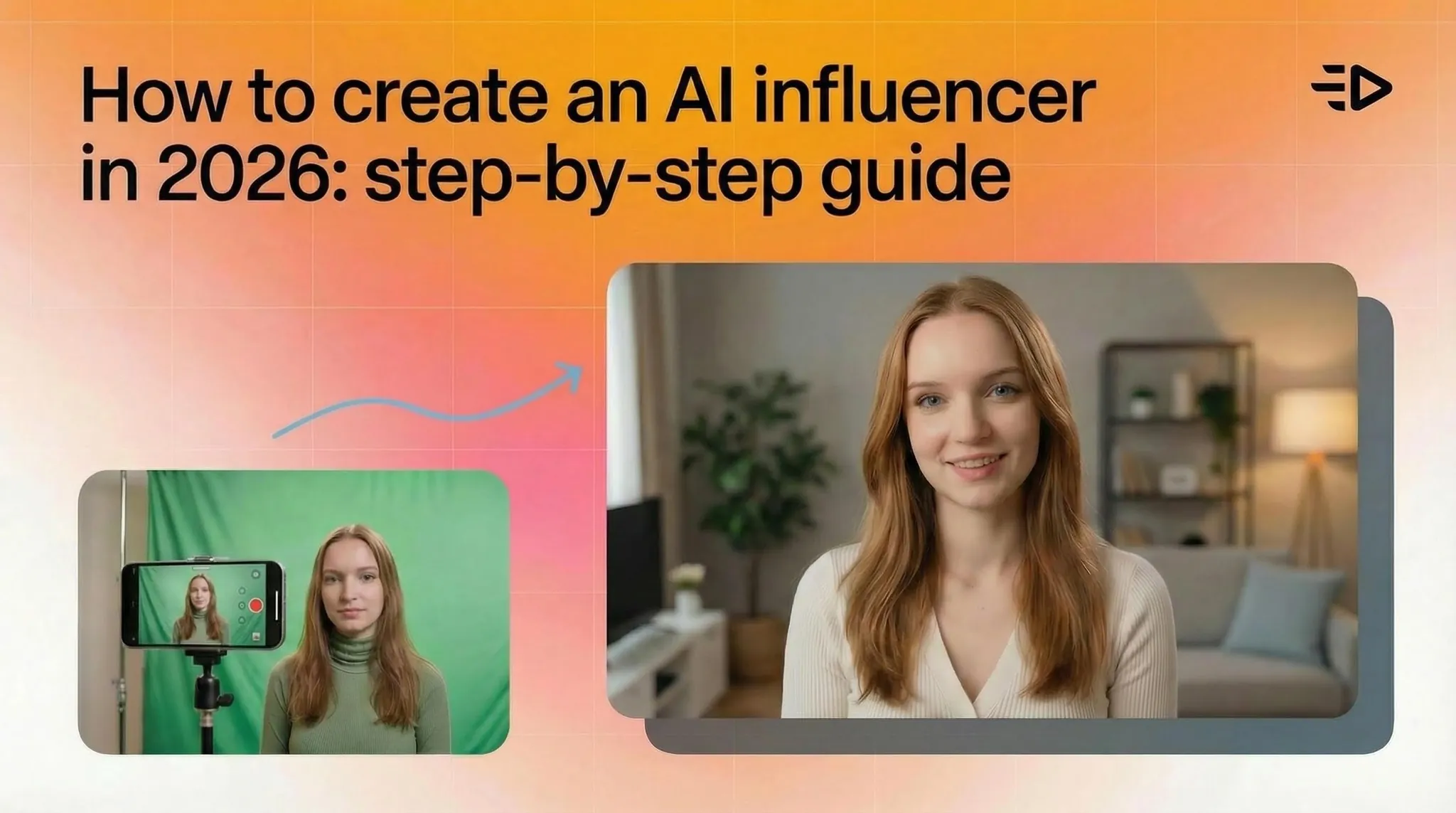
This guide walks you through the full process of creating an AI influencer - from strategic planning and character design through production, publishing, and scaling. Whether you're wondering how to create an AI influencer from scratch or looking to scale an existing virtual persona, we'll cover the concepts and then show you exactly how to make your first AI influencer video using Creatify's avatar library.
Watch the full build below, then follow the written steps.
What is an AI influencer?
An AI influencer is a virtual persona whose appearance, voice, and content are generated or controlled by artificial intelligence. Unlike traditional CGI mascots or animated brand characters, modern AI influencers are designed to look, speak, and behave like real people - delivering content on platforms like Instagram, TikTok, and YouTube that's often indistinguishable from human-created videos at first glance.
There's a spectrum. On one end, you have fully synthetic virtual humans built entirely with generative AI models. On the other, you have AI-assisted creators where a real person's likeness is enhanced or replicated with AI tools. In between, there are photorealistic "AI Instagram models" created with image generation and post-production, and real-time interactive AI personas that can respond to comments and DMs with conversational AI.
For most brands and marketers, the practical application is the middle ground: photorealistic AI avatars that deliver scripted video content for ads, social media, and brand campaigns. That's the use case this guide focuses on.
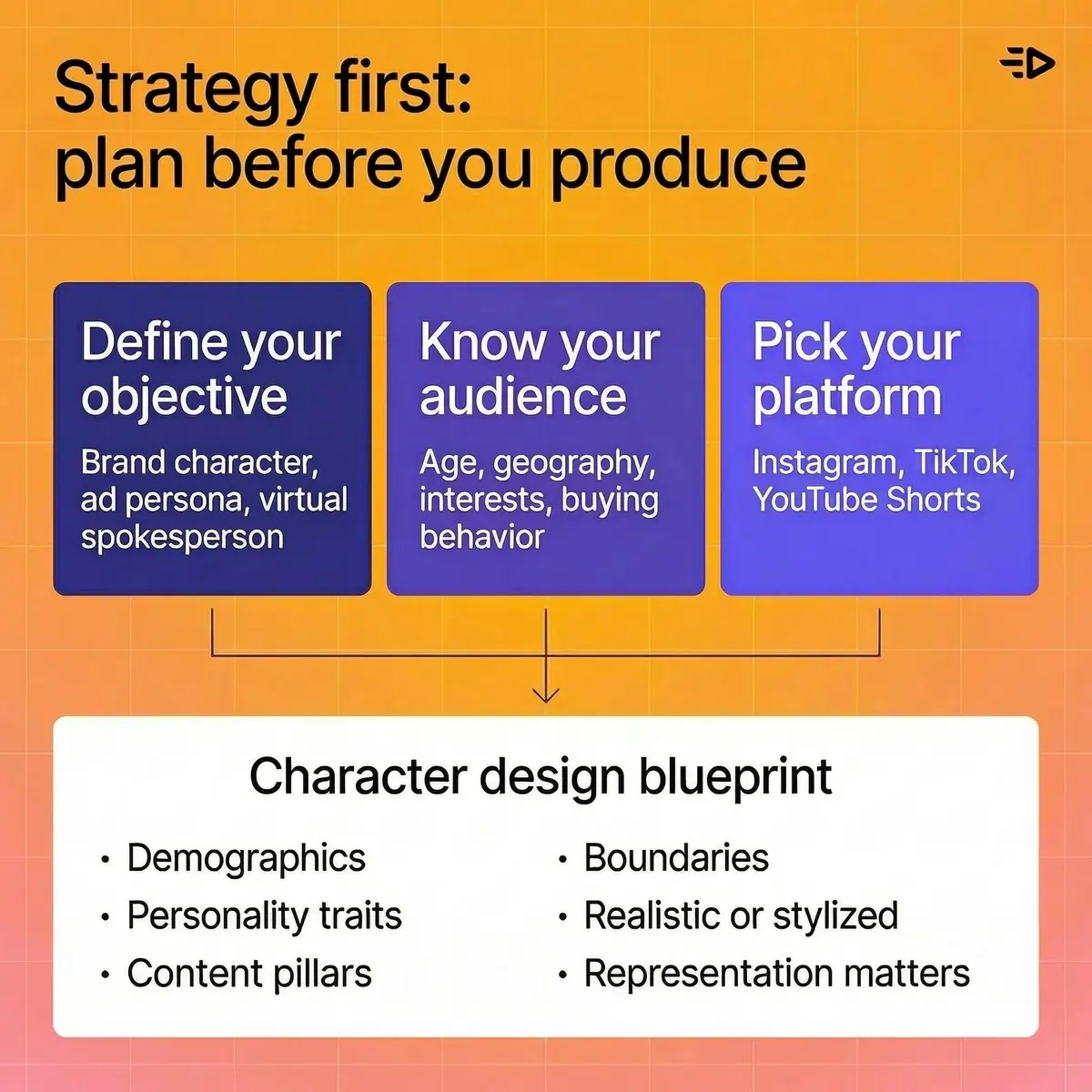
Strategy first: Plan before you produce
Before you learn how to create AI influencer content that actually performs, you need to get three foundational elements right. Creating an AI influencer without a clear strategy is a fast way to waste time and credits.
Define your objective. Are you building a brand-owned character for ongoing social content? An AI persona for performance ad creatives? A virtual spokesperson for product launches? Your objective determines everything downstream - platform choice, visual style, posting frequency, and budget.
Know your audience. Map who you're trying to reach: age, geography, interests, cultural context, and buying behavior. An AI influencer targeting Gen Z beauty consumers on TikTok needs a fundamentally different aesthetic, voice, and content style than one targeting B2B SaaS buyers on LinkedIn. Align your persona with your brand values and the diversity of the audience you're serving.
Pick your platform. Instagram favors polished visuals and carousel storytelling. TikTok rewards raw, fast-paced, personality-driven video. YouTube Shorts sits somewhere in between. Each platform has different aspect ratios, caption norms, and engagement patterns that shape how your AI influencer should look and sound.
Read also: How AI is transforming video ad creation
How to create an AI influencer video with Creatify: Step-by-step
Here's the practical walkthrough. Creatify's avatar library gives you the fastest path from concept to finished AI influencer video - no filming, no 3D modeling, no post-production pipeline.
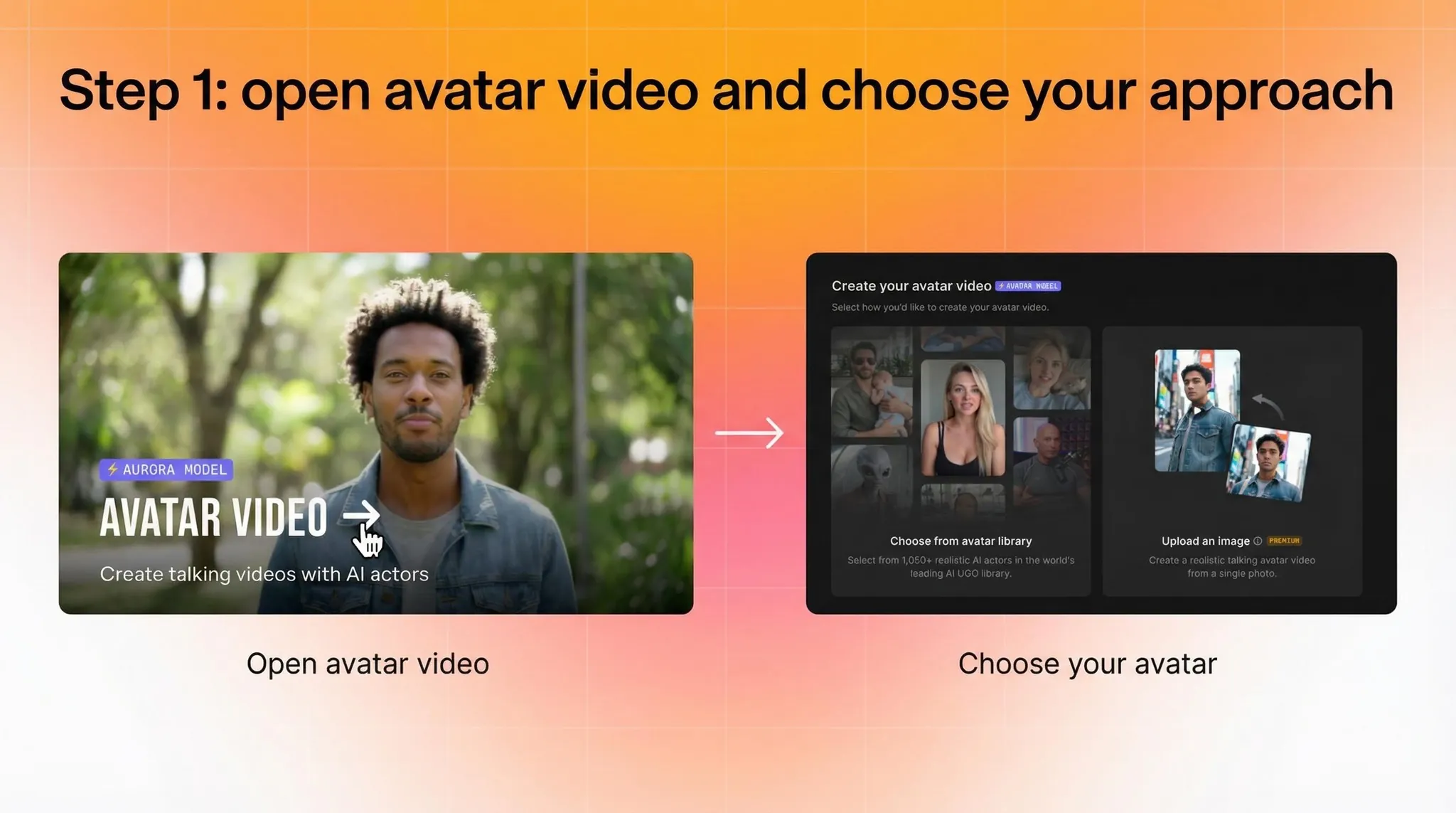
Step 1: Open "Avatar video" and choose your approach
Navigate to Creatify's homepage and click "Avatar Video." You'll see two options: upload an image to create a custom twin avatar (BYOA), or choose from the existing avatar library.
For most creators getting started, the library is the fastest path. It gives you instant access to avatars that have already been optimized for video performance across thousands of campaigns.
If you want a unique AI influencer built from your own likeness or a specific visual identity, Creatify's custom avatar options (BYOA from video or image, DYOA from text descriptions) are available starting from the Starter plan.
Step 2: Filter for your ideal persona
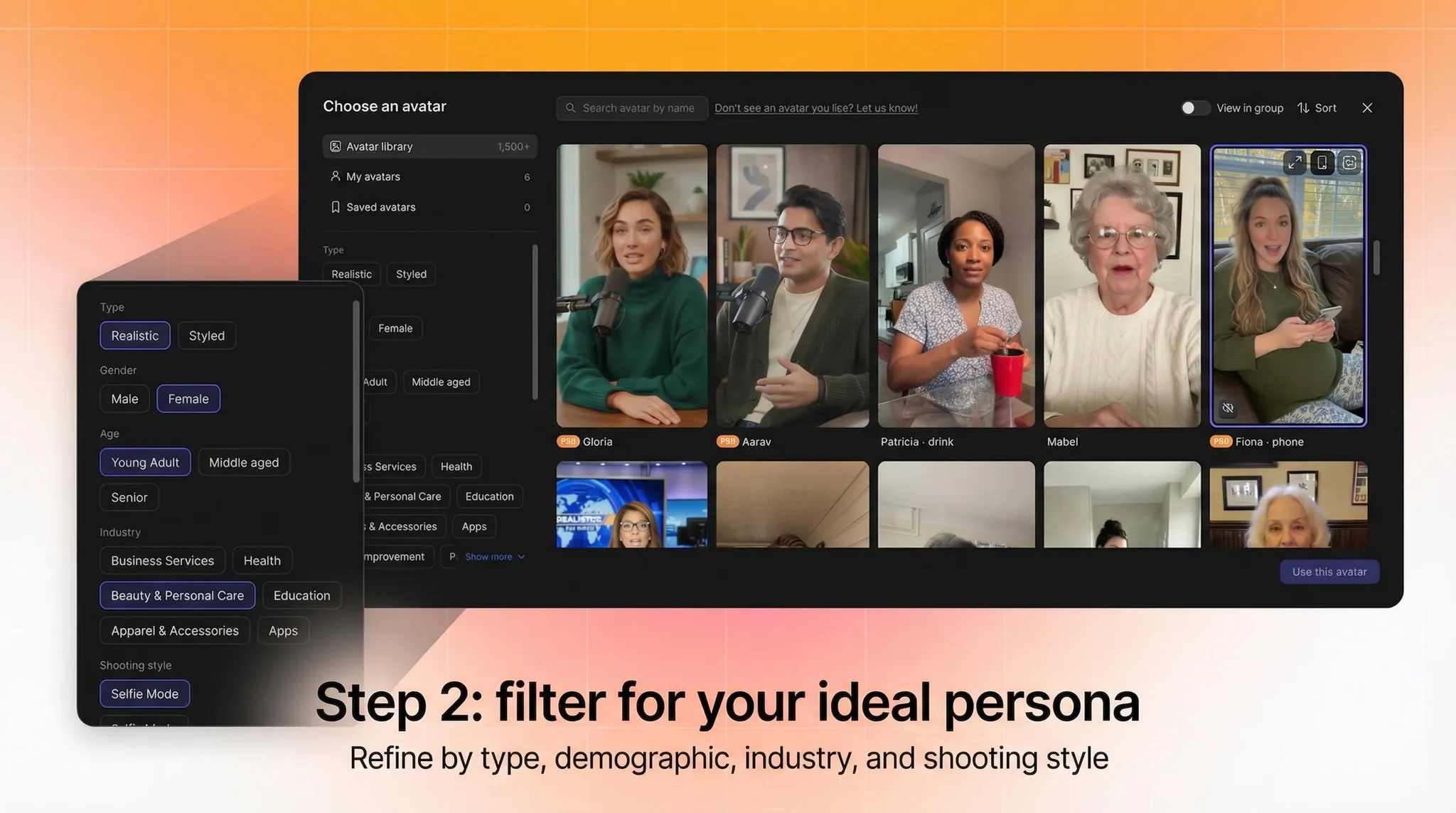
This is where Creatify's filtering system becomes powerful. You can search and filter the 1,500+ avatar library by type (realistic or stylized), gender, age range (young adult, middle-aged, senior), industry vertical (beauty, tech, fitness, finance, sports), and shooting style (including selfie modes that mimic UGC-style content).
You can also sort by most popular avatars - these tend to perform well because they've been tested across thousands of campaigns.
For example, if you're promoting a beauty product, you might filter for: realistic type, female, young adult, beauty and personal care industry, selfie shooting style. Browse the results and select the avatar that matches the energy and aesthetic you want for your brand.
Step 3: Write or generate your script
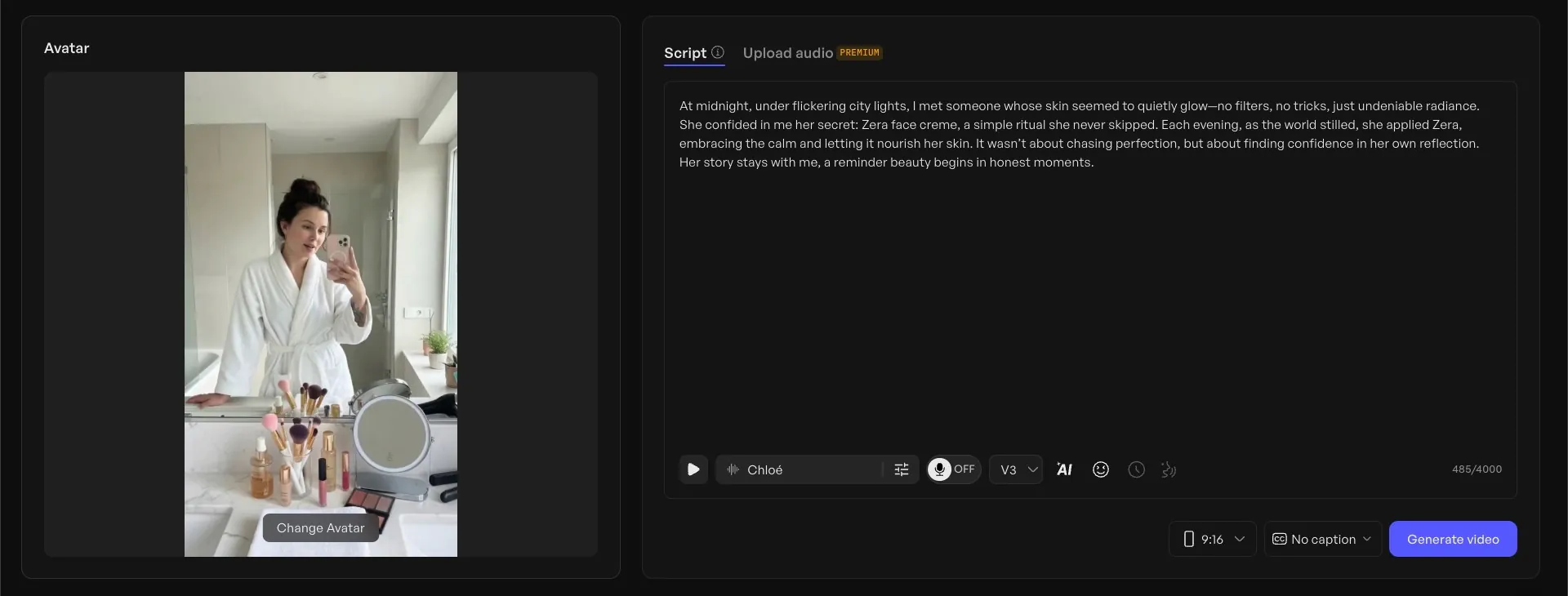
Once you select your avatar, you're brought to the scripting screen with three options: upload audio to auto-generate a transcript, input your own script manually, or use Creatify's AI Script Writer.
The AI Script Writer is trained on thousands of successful social media ads and generates platform-specific copy. Type a prompt describing your product and objective - something like "generate a script for a hydrating skincare cream" - and the system offers multiple script styles: storytelling (narrative-driven), promotional (direct sales focus), exploratory (educational tone), and motivational (inspirational messaging). Choose the style that matches your campaign objective.
Creatify automatically matches a voice to your chosen avatar, but you can click into the voice library to browse 140+ options filtered by language, accent, and gender. The right voice pairing matters - it can make or break how authentic your AI influencer feels.
Step 4: Add emotional delivery with tags
This is where your AI influencer goes from robotic to believable. Creatify's V3 voice model supports emotional tags that control exactly how your avatar delivers each line.
Click the emoji button at the bottom of your script. The AI suggests emotional tags like [excited], [whispering], [laughing], or [serious] based on the context of each line. You can override these manually - for instance, changing an opening line from [whispering] to [excited] if you want high energy from the first frame.

These adjustments create significant differences in how authentic and engaging the final video feels. A beauty product ad that opens with genuine enthusiasm reads completely differently than one that starts flat.
Step 5: Set aspect ratio and captions
Choose your aspect ratio based on where you're running the content: 9:16 for TikTok, Instagram Reels, and YouTube Shorts; 16:9 for YouTube pre-roll or website embeds; 1:1 for feed posts.
Add captions. Over 85% of social video is watched without sound, so this isn't optional for performance content. Creatify offers a caption style library - browse options that match your platform aesthetic. TikTok-style serif captions tend to increase watch time on short-form vertical content.
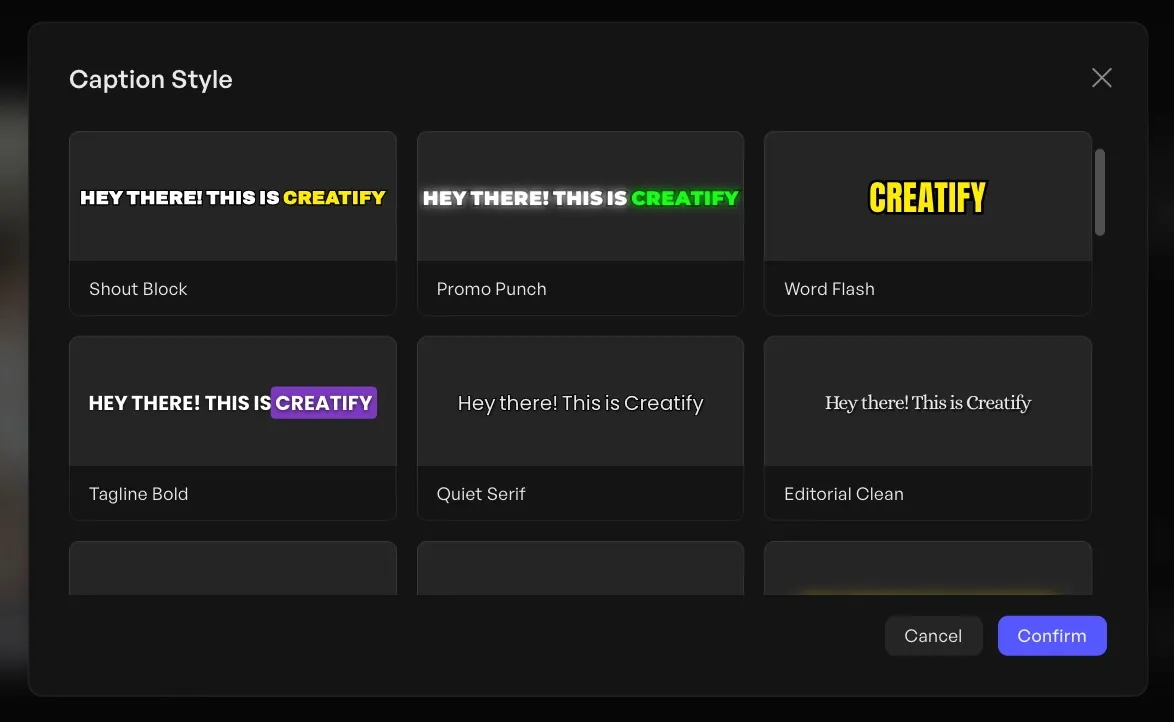
Step 6: Generate, review, and render
Hit "Generate Video" and then "Render." Typical render time is 5-10 minutes depending on video length. When it's ready, review the output: check lip-sync accuracy, emotional delivery, pacing, and overall feel. Creatify's Aurora model produces 24fps lip-sync with full-body expressiveness (facial movements, head motion, hand gestures, eye contact, natural expressions), so quality is consistently high - but always watch through at least once before publishing.
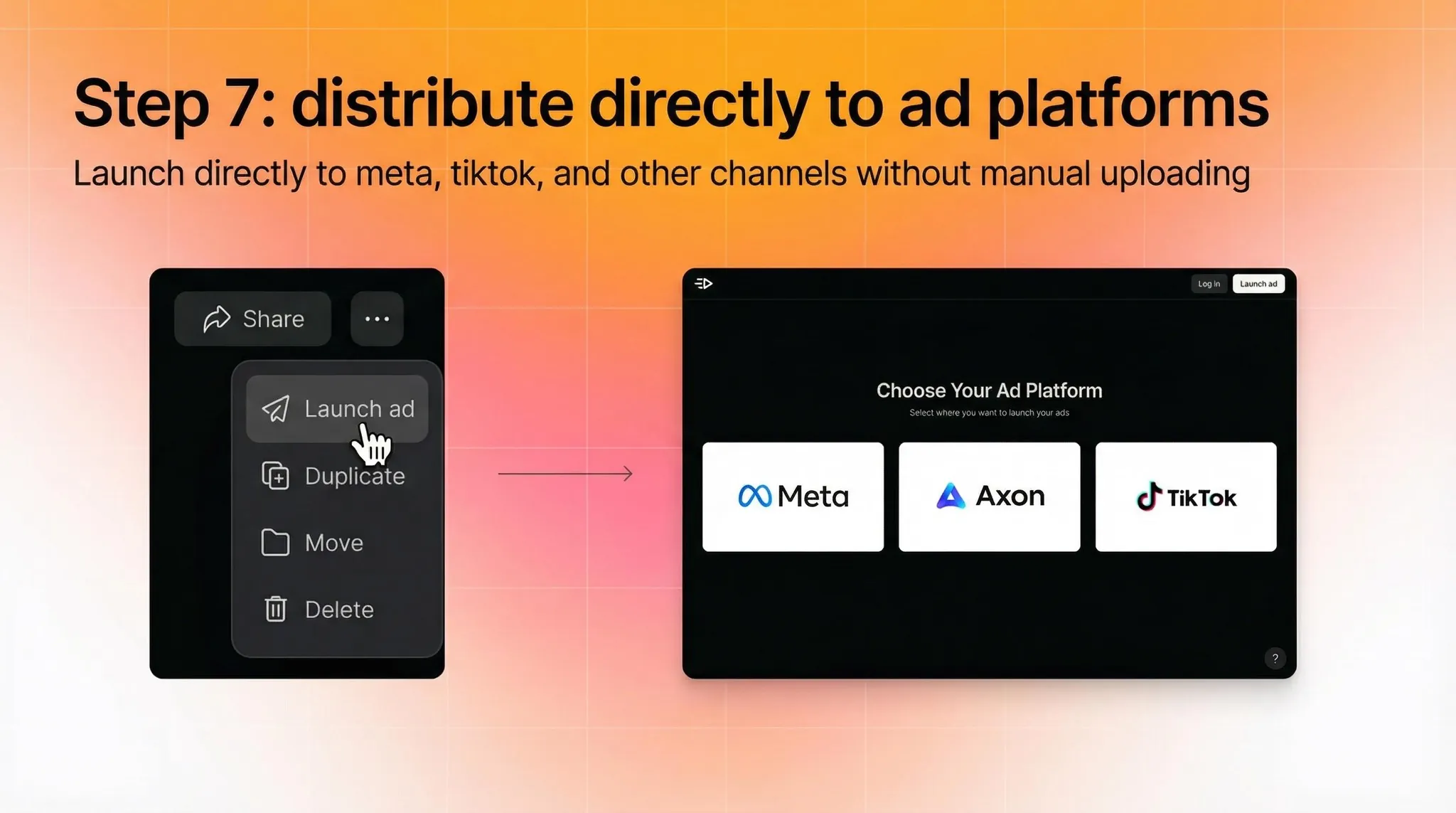
Step 7: Distribute directly to ad platforms
Once you're satisfied, you have several options: direct link sharing for internal reviews, social media sharing for organic testing, or ad platform integration to launch directly on Meta, TikTok, or other channels. The ability to launch straight to ad platforms from Creatify eliminates manual uploading and reformatting - everything is already optimized for each platform's specifications.
Read also: 17 best AI avatar generators & tools
Why brands are building AI influencers
Traditional influencer marketing has a well-documented set of friction points. A single sponsored post from a mid-tier human influencer can cost $500 to $50,000+ depending on following and niche. Coordinating a campaign involves contracts, negotiations, product shipping, shooting schedules, revision rounds, and approval cycles. Timelines stretch from weeks to months. And when the campaign ends, you don't own the creator relationship - they move on to the next brand deal.
AI influencers eliminate most of that friction. The business case centers on four advantages: total creative control (no miscommunication or off-brand messaging), production speed (minutes instead of weeks), cost predictability (flat subscription vs. per-post fees), and unlimited testing capacity (try ten variations of the same concept in an afternoon instead of committing to a single execution).
The use cases extend across industries. Fashion and beauty brands use virtual models to showcase products without scheduling photo shoots. Gaming and tech companies deploy AI personas as brand ambassadors. E-commerce brands learn how to make AI influencer video ads to test messaging, hooks, and audience targeting at a scale that's financially impossible with human creators.
Character design: building a believable AI person
A convincing AI influencer needs more than a face. If you're figuring out how to create an AI person that audiences actually connect with, it starts with building a coherent identity.
Create a character sheet. Define demographics (age, background, interests), personality traits (humorous, aspirational, educational, rebellious), content pillars (beauty, fitness, tech, lifestyle), and boundaries (topics the character won't touch). This document becomes your creative brief for every piece of content. Consistent backstory and personality drive engagement even when audiences know the influencer is AI-generated.
Choose realistic or stylized. Photorealistic AI people perform well for product-focused content where you want viewers to connect with the presenter as they would a human creator. Stylized or illustrated characters can sometimes reduce identity confusion and work better for brands that want to be transparent about the AI nature of their content.
Prioritize representation. Your AI influencer library should reflect the diversity of your actual audience. This isn't just an ethical consideration - it's a performance one. Audiences engage more with content that feels relevant to their own experience. Avoid narrow beauty ideals and stereotypical representations that can alienate segments of your market or create reputational risk.
How to scale from one AI influencer to a full roster
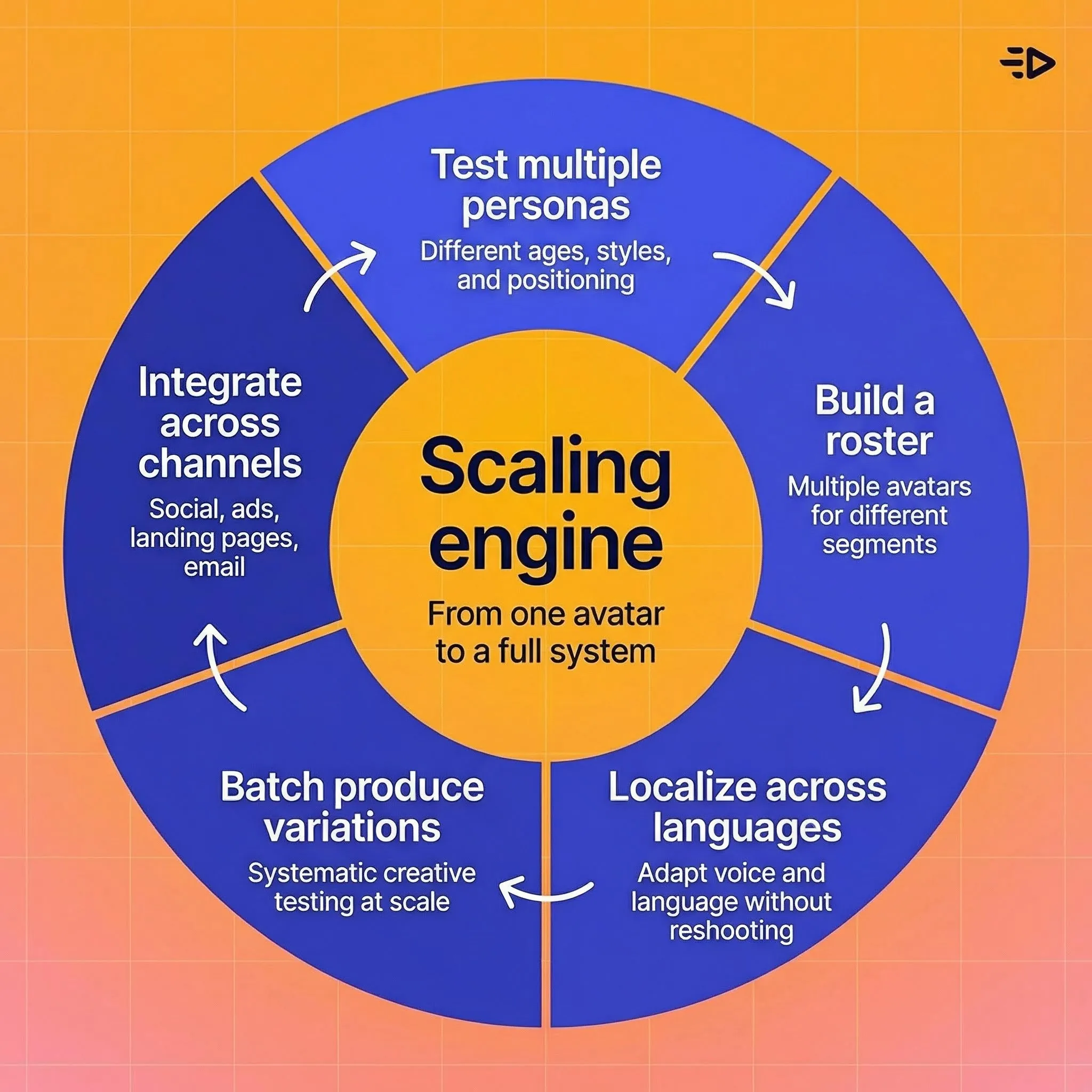
Once your first AI influencer video is working, the next step is scale. This is where the economics of learning how to make AI people at volume get genuinely interesting.
Test multiple personas. Does your audience respond better to different ages, genders, or presentation styles? With Creatify's 1,500+ avatar library, you can test a young female beauty enthusiast against a mature wellness expert using the same script in the same afternoon. Each variable takes roughly 10 minutes to produce, so you can run a comprehensive creative testing matrix that would normally take weeks and cost thousands.
Build a roster, not just a character. Brands targeting multiple demographics or regions benefit from maintaining several AI personas rather than relying on a single flagship character. Different avatars for different audience segments, product lines, or geographic markets.
Localize across languages. Creatify supports 75+ languages with 140+ voices. You can take high-performing AI influencers and produce localized versions for different markets without re-shooting or re-recording. The same avatar speaks Portuguese for Brazil, Japanese for Japan, and German for DACH markets.
Use batch production for ad testing. Creatify's batch mode lets you generate dozens of variations systematically - different avatars, scripts, hooks, CTAs, and emotional tones - in a single production session. Flamingo Shop went from zero AI avatar videos to 100+ per month using this approach, reducing production time by 30% and unlocking creative testing insights that would have cost thousands in traditional production.
Integrate into broader marketing. AI influencer content doesn't have to live only on social feeds. Use the same avatars across programmatic ads, landing pages, email campaigns, and product pages for consistent brand presence across every touchpoint.
9 use cases for AI influencers in marketing video production
1. Product tutorials and demonstrations
AI influencers are exceptional at demonstrating how a product is used because they don’t actually need to have the physical product! With clever use of b-roll, the AI influencer can demonstrate use of the product by leveraging pre-existing content. Similarly, using AI to generate a script, or inputing your own, gives your AI influencer sufficient information to present a complete tutorial.
2. Multilingual marketing videos
Traditional influencers are, often than not, not polyglots. Their strength is in engaging their audience in their native tongue. And more often than not, audience segents epand beyond one region. Therefore, promoting to global audiences with the same infleuncer is ill-advised. Instead, leverage the power of an AI influencer to produce content in many languages. You can use the same AI person, or split test multiple avatars to see which face resonates best with your segment. The important point is that they will speak your audience’s language, ergo, your marketing video production scales.
3. Social media ads
Successful ads require constant iterative split-testing to find the winning formula. Once you have a winner, it’s time to scale. In order to find that ad, you need a lot of creative, which is expensive if you’re relying on traditional methods of production. If, however, you’ve embraced AI as our saviour (soon to be overlord), there are cost-effective and scalable ways to produce creative variants. Make an influencer, batch create a hundred variations, and drop them into your social media advertising campaigns. Their talking heads have proven to be irresistable to consumers (when compared to static image ads). Cynthia’s social media ads found AI influencers to be highly effective, at least. Read about her case study here.
4. Corporate training materials
A phenomenal use case for AI influencers (in this case, the term AI avatar is better reflective) is ttheir use in corporate training materials. Global organizations can quit hiring (is that an oxymoron?) staff to onboard new employees because AI avatars can do all the heavy lifting. Something changed in the company of late? No matter, edit the avatar’s scrip, render, and upload the updated information company wide in minutes and for virtually nothing.
5. Organic social media content
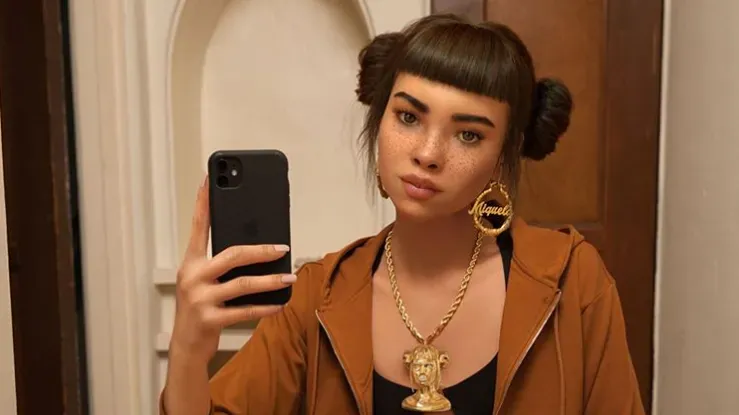
Shockingly, AI influencers can be used to create social media content, build themselves a brand, and become ambassadors, i.e., influencers (omg). In fact, there are AI influencers all over Instagram and TikTok, with some of them hosting channels with over a million followers. Examples include 21 year old ‘robot’ living in L.A, Miquela, who’s got 2.5 million followers on IG to their name. Because you can manage their every move, they should be inherently following brand guidelines - lest you prompt them to go rogue. Performance marketers should consider whether producing an army of AI infleuncers related indirectly to their business makes sense.
6. FAQs
Use an AI influencer video generator to populate your customer service points with AI influencers. Rather than expecting your customer to wade through threads of questions and answers, summarize the key pain points for an AI avatar that you designed! As the market shifts and new queries need fresh, nuanced answers - you can adjust the AI avatar's script and re-render an updated FAQ video in minutes.
7. Content repurposing
Back in 2021 it was believed that brands had to churn out new content daily. Fast forward a couple of years and brands and creators started realising that repurposing content is fundamental to maintaining a consistent calendar. Content that has resonated with your audience should absolutely be a part of your content strategy. If it ain’t broken don’t fix it! Using an AI editing tool like this can help you produce a ton of repurposed content, with or without an AI influencer.
8. Personalized marketing messages
Opening an email with your name in the subject line - even when we know it’s a marketing ploy - makes us feel nice because there’s nothing we love more than the look and sound of our own name. Opening an email with a video of an AI avatar speaking your name - now that’s bound to elicit the tingles. With the ability to produce creative variations at scale, you can literally speak to your email subscribers one on one - and in their mother tongue.
9. Educational content
I don’t envy the hours that educators have invested in producing their Coursera or Udemy courses. With AI avatars doing the presenting, you can have a course up and running in a fraction of the time. Not only that, but online courses are at risk of becoming outdated, requiring educators to recreate materials to stay relevant. An AI influencer just needs their script adjusted and they’re back online, teaching people how to scale marketing video production!
Ethics, disclosure, and compliance with AI regulations
Building an AI influencer comes with responsibilities that you need to take seriously from day one.
Disclose that your influencer is AI. This is both an ethical imperative and an increasingly legal requirement. The EU AI Act includes transparency duties for AI systems that interact with people, and the Digital Services Act imposes ad transparency requirements that cover synthetic personas sharing commercial messaging. Even where disclosure isn't yet mandatory, audiences reward brands that are upfront about AI use and punish those that try to deceive.
Best practice: include a clear statement in your AI influencer's social media bio, add disclosure in captions when running sponsored content, and label AI-generated video where platform tools support it.
Respect likeness and consent. If you're learning how to make an AI person based on a real individual's appearance, explicit consent is non-negotiable. Never create AI people using someone's likeness without their documented permission. Creatify's BYOA (Bring Your Own Avatar) feature is designed for users creating avatars from their own likeness or with proper authorization.
Avoid manipulation. AI influencers that blur the line between real and synthetic without disclosure can erode audience trust and create regulatory exposure. This is particularly sensitive when content targets younger audiences or promotes health, financial, or wellness products. Establish clear internal policies on what your AI persona can and cannot promote, and build review workflows that include legal and compliance teams before publishing.
Document everything. Maintain records of your training sources, consent agreements, and content moderation policies. Data protection regulations like GDPR apply to how you collect and use audience data when running AI influencer campaigns, and regulators are paying increasing attention to synthetic media practices.
How to measure success?
Track the same metrics you'd track for any influencer or ad campaign: engagement rate, click-through rate, conversion rate, cost per acquisition, and ROAS. The difference with AI influencers is that you can isolate variables much more cleanly. When you test the same script with two different avatars, you're measuring the impact of the presenter alone - not confounded by different filming conditions, delivery quality, or editing styles.
Compare your cost per creative against what you'd spend on human influencer partnerships. Traditional influencer video content runs $3,000-$15,000+ per production. Creatify's Pro plan ($49/month) gives you access to 1,500+ avatars, 22+ AI models, and the capacity to produce 40-1,000 videos per month. The math tends to be decisive for brands running high-volume creative testing. Check out Creatify’s case studies to learn more about the real world data from companies implementing these solutions.
FAQs
What is an AI influencer?
An AI influencer is a virtual persona whose appearance, voice, and content are generated using artificial intelligence. Unlike traditional influencers who are real people, AI influencers are digital characters that can deliver scripted content across social media platforms, video ads, and brand campaigns. They range from fully synthetic photorealistic humans to stylized characters, and are used by brands for product promotion, social content, and advertising at scale.
How do you create an AI influencer?
To create an AI influencer, you need three things: a visual identity (the avatar's appearance), a voice, and a script. Platforms like Creatify simplify this into a single workflow - select an avatar from a library of 1,500+ options (or create a custom one), write or generate a script using AI, choose a voice, add emotional delivery tags, and render a finished video. The entire process takes minutes rather than the weeks required for traditional influencer content production.
How much does it cost to make an AI influencer?
Costs vary widely depending on your approach. Knowing how to make an AI influencer affordably depends on your tools. Building a fully custom 3D virtual influencer from scratch with modeling, animation, and voice work can cost tens of thousands of dollars. Using an AI avatar platform is dramatically cheaper. Creatify's free plan includes 10 credits per month for testing. Paid plans start at $19/month (Starter, with 100+ avatars and custom avatar creation) and $49/month (Pro, with 1,500+ avatars, batch mode, and ad platform integrations). Traditional influencer posts cost $500-$50,000+ per execution.
Can AI influencers be used for paid advertising?
Yes, but platform and tool choice matters. Some AI video platforms restrict commercial use of their avatars in paid advertising. Creatify includes commercial usage rights on all paid plans and offers direct ad platform integrations with Meta and TikTok, so you can create AI influencer content and launch it as paid ads from a single workflow.
How do you make an AI person look realistic?
Understanding how to make an AI person look realistic depends on the underlying technology. Creatify's Aurora model uses a proprietary diffusion transformer architecture that renders avatars at 24fps with full-body expressiveness - including facial movements, lip sync, hand gestures, eye contact, and natural expressions. Adding emotional tags to your script (like [excited], [laughing], or [serious]) significantly improves authenticity by varying the avatar's delivery rather than keeping it monotone throughout.
Do you need to disclose that an influencer is AI-generated?
Yes. The EU AI Act and Digital Services Act include transparency requirements for AI-generated content, particularly when it involves commercial messaging. Beyond legal compliance, research consistently shows that audiences respond better to brands that are transparent about AI use. Best practice is to disclose in the account bio, in captions for sponsored content, and through platform labeling tools where available.
What platforms work best for AI influencers?
TikTok and Instagram Reels are currently the strongest platforms for AI influencer video content because short-form vertical video is the dominant format and audiences are already accustomed to varied content styles. YouTube Shorts works well for discovery. For paid advertising, Meta (Facebook and Instagram) and TikTok offer the most developed targeting and measurement infrastructure. Creatify supports 9:16, 16:9, and 1:1 aspect ratios to cover all major platforms.
How do you make AI people for different languages and markets?
Knowing how to make AI people for global markets starts with choosing a platform that supports multilingual voice synthesis. Creatify offers 140+ voices across 75+ languages, so you can take a high-performing AI influencer video and produce localized versions for different markets using the same avatar with a different voice and script. This eliminates the need to find native-speaking creators in each market and dramatically reduces the cost and timeline of global content production.