
Creatify Team
SHARE


IN THIS ARTICLE
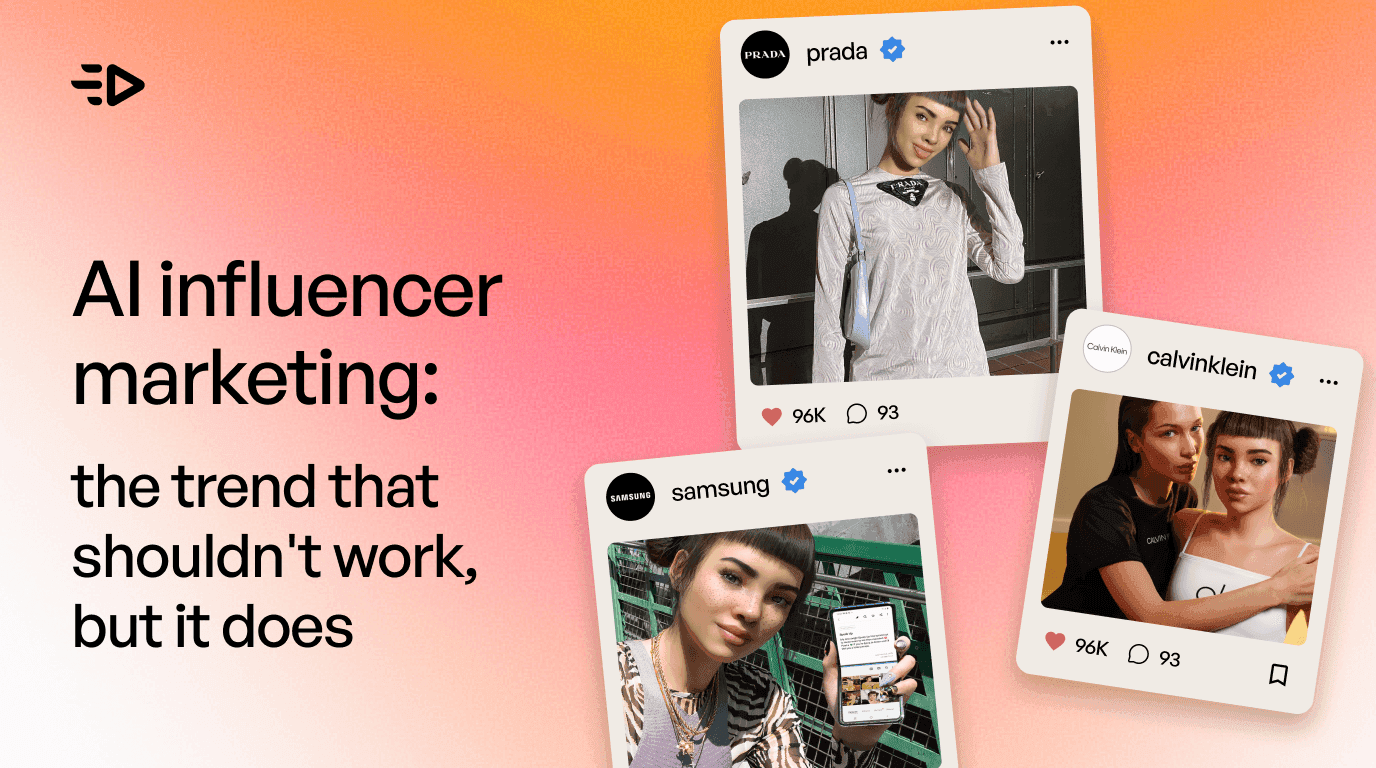
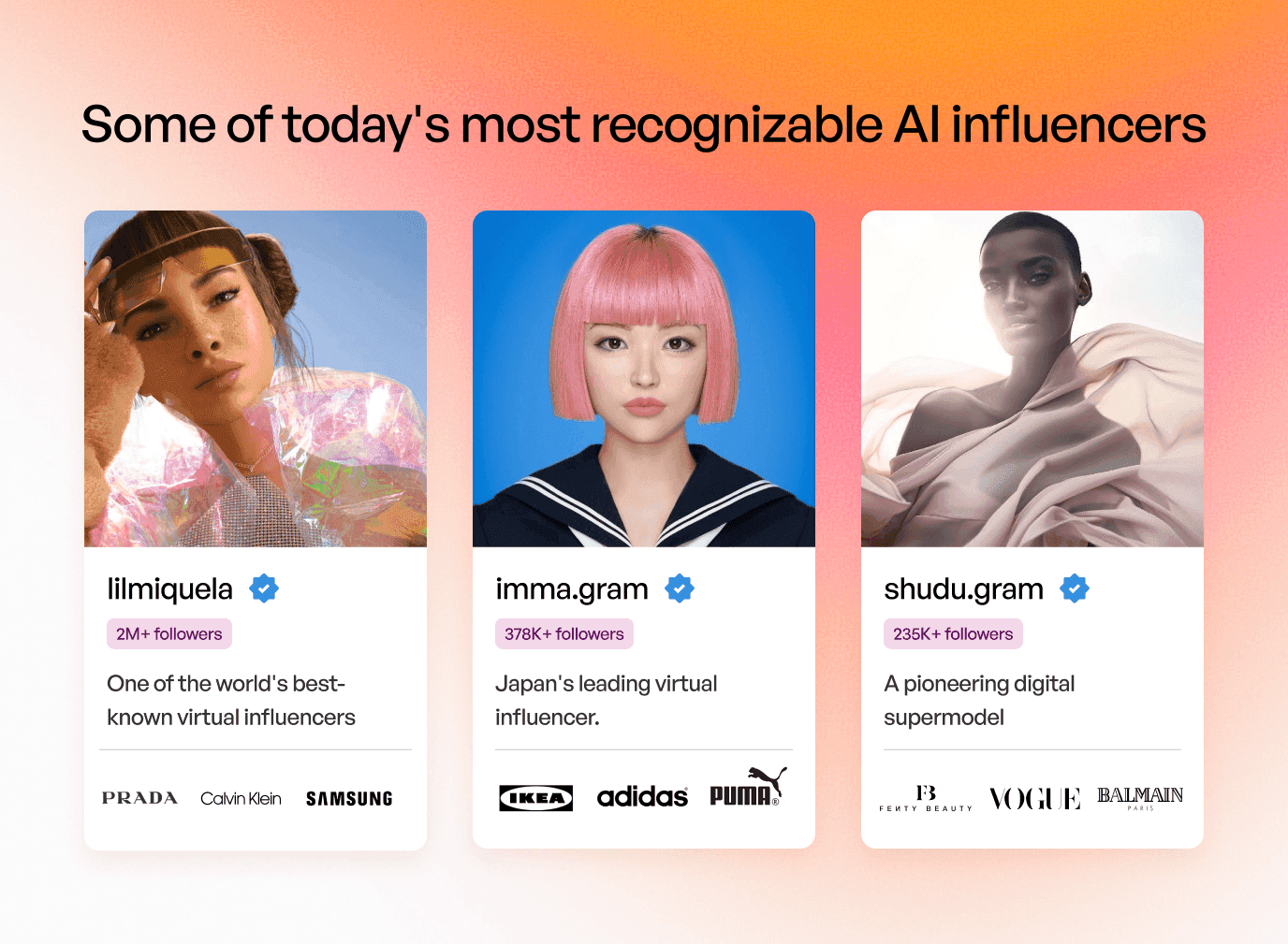
Lil Miquela has more than 2 million Instagram followers and has worked with Prada, Calvin Klein, and Samsung. She's also a 3D render, run by a creative studio in Los Angeles. She has never used a product, held an opinion, or had a single lived experience.
By the logic influencer marketing is built on, that should be fatal. The whole pitch of the format is that a real person shares a real reaction, and you trust it because you believe it happened. A synthetic persona has no skin for the moisturizer to change and no morning routine the coffee brand fits into. It should fall flat. Instead, a Harvard Business Review study found that followers respond more favorably to sponsored posts from virtual influencers than to the same posts from humans. The trend shouldn't work. It does. This is why, where it stops, and what to do about it.
For the ground-level primer on what AI influencers are and how brands build them, we cover that separately.
The paradox, stated plainly
Influencer marketing sells authenticity. The premise is that a creator you follow tried the thing, liked the thing, and told you about it, and their reputation is on the line if they're lying. Strip out the real person and you seem to strip out the whole mechanism.
Yet the numbers refuse to cooperate. Virtual creators pull engagement, land seven-figure brand deals, and, per HBR's research, can beat human influencers on favorability while costing less. Something is going on that the authenticity story doesn't explain. It turns out the mechanism was never quite what marketers thought.
Read also: How to create an AI character for ads, content & social
Parasocial bonds don't need a real person
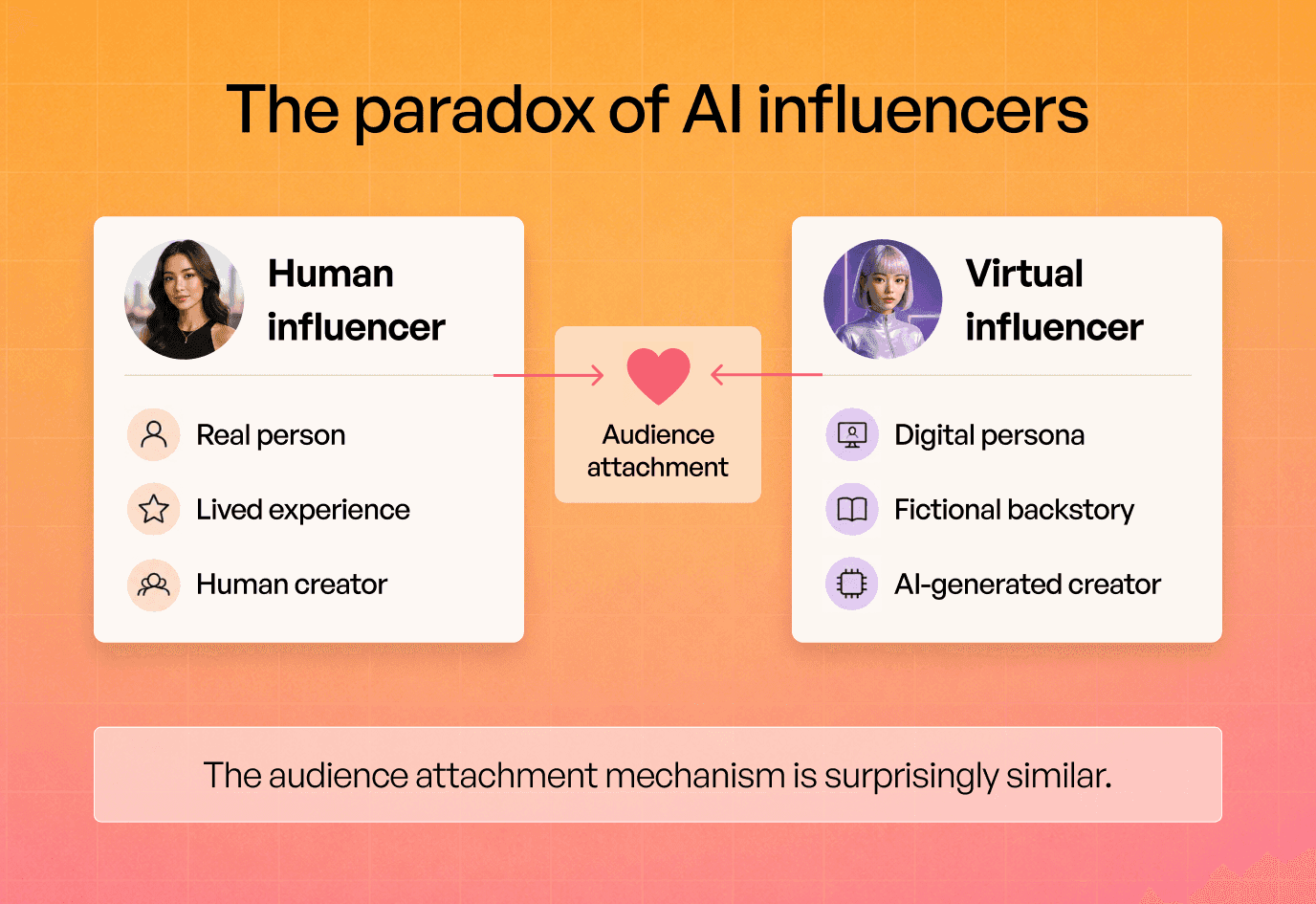
The bond audiences form with creators is parasocial: a one-directional sense of intimacy and knowing, built up over many small exposures. And here's the uncomfortable finding. Peer-reviewed research shows people form parasocial relationships with virtual influencers at levels comparable to human ones. A 2025 study on making and breaking these bonds reached the same conclusion: virtual influencers can foster attachment on par with real creators.
That makes sense once you remember we have always bonded with characters who don't exist. People grieve fictional heroes, quote them, defend them. The brain that forms these attachments responds to consistent personality, voice, and presence over time. It was never running a biological-realness check. A virtual influencer supplies exactly those signals, on schedule, forever.
Performed authenticity reads as authenticity
The second crack in the paradox is that authenticity was always partly performed. Research on virtual influencer authenticity finds that audiences read authenticity from narrative coherence, consistency, and a sense of intimacy, and a well-run synthetic persona produces all three. It has a stable backstory, a recognizable voice, and a point of view that holds up across hundreds of posts.
Human influencers manufacture those same signals. The feed is curated, the "spontaneous" caption is drafted and approved, the messy-authentic moment is lit and framed. The line between a person performing themselves and a persona designed to feel like a person is thinner than the purist version of influencer marketing admits. Audiences respond to the performance, and a virtual creator can perform very well.
Why brands lean into AI influencer marketing
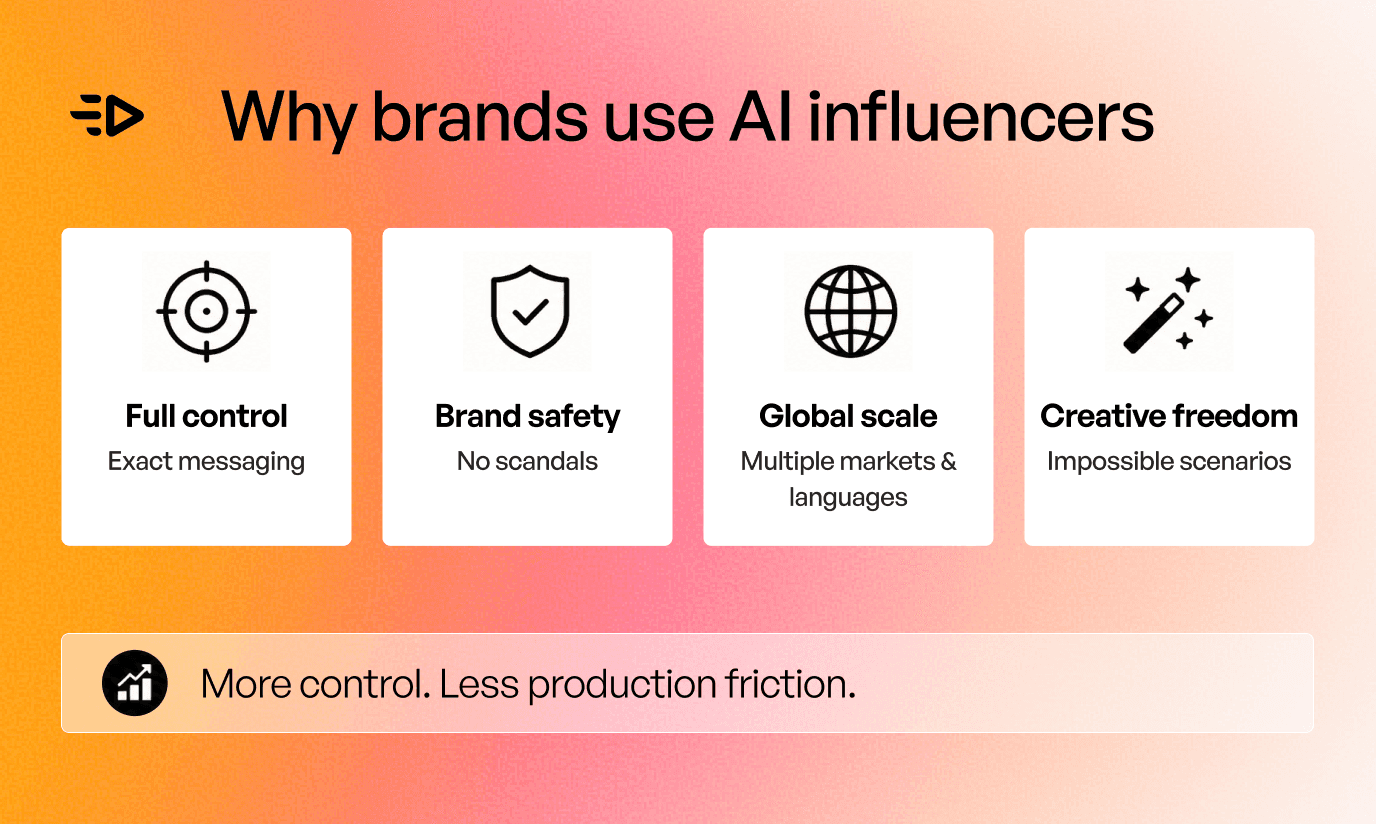
For a brand, the appeal is less philosophical and more operational. A virtual creator delivers total messaging control: the exact claim, in the exact visual context, with none of the improvisation that makes human partnerships risky in finance, healthcare, or luxury. It offers brand safety, since a render has no scandals, no 2 a.m. posts, no off-brand opinions. It scales without friction across markets, time zones, and languages, with no exclusivity conflicts unless the brand writes them in. It grants creative freedom to stage impossible settings and unreleased products. And the economics compound: HBR notes the lower cost and the ability to build a persona from scratch with more diversity than a casting call might yield. This is where influencer marketing AI shifts from novelty to a practical line item.
None of this requires the audience to be fooled. It requires the audience to enjoy the character enough to keep watching, which is a lower and much more achievable bar.
Where it stops working
The paradox has limits, and brands that ignore them get burned. Past a certain point, awareness that the persona is artificial undermines the endorsement. A virtual influencer saying "this serum transformed my skin" is making a claim it structurally cannot back, and audiences notice. Novelty is another trap: the technology pulls a first wave of curious followers, but curiosity fades, and retention depends on content people genuinely value.
Category is the clearest dividing line. Virtual creators do well in visual, aesthetic-first worlds, fashion, beauty, lifestyle, and luxury, where the product is the image. They struggle where the value is lived expertise: a dermatologist's clinical judgment, a reviewer's hands-on testing, a B2B practitioner's scar tissue. In those categories the audience is following a person for what they have genuinely done, and a synthetic stand-in has nothing to offer. Artificial intelligence influencer marketing has to match the category to earn its keep.
The 2026 disclosure reckoning
The trend is running ahead of the rules, and the rules are catching up fast. The FTC's endorsement guides explicitly cover virtual influencers and demand disclosure that is clear and conspicuous: hard to miss, easy to understand, and near the endorsement itself. They also draw a bright line at implied experience, so a virtual persona cannot present product claims as personal use when no personal use is possible.
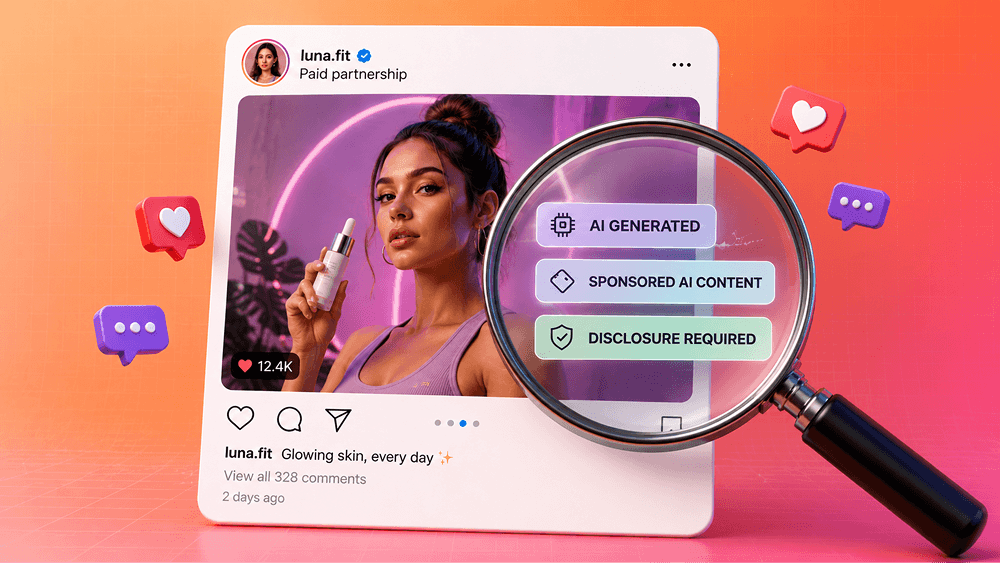
Europe has gone further. Under the EU AI Act's transparency obligations, which took effect on 2 August 2026, deployers must disclose AI-generated or manipulated content shown to the public, with penalties reaching 15 million euros or 3% of worldwide annual turnover. For a brand running an AI persona in the EU, transparency is now a legal requirement with real teeth. The strategic read is simple: disclosure preserves trust, and hiding the synthetic nature of a creator is the fastest way to convert a clever campaign into a backlash.
How to use AI in influencer marketing without getting burned
Treated as one instrument in a broader creator mix, AI influencer marketing is a genuinely useful tool. It fits campaigns that are visual, tightly controlled, multilingual, and brand-safety sensitive. It suits a persistent brand character you want present in many markets at once. It works as a low-risk way to test identities and messaging before committing to a human partnership.
The guardrails are consistent: disclose the synthetic nature obviously, keep humans on community interactions and on any product claim, and measure the persona by the business it drives, since attention alone is easy to win. The underlying production is now accessible, too. Platforms like Creatify offer 1,500-plus AI avatars across 75-plus languages and tools to build a custom character, which is the same avatar infrastructure that makes a consistent virtual persona producible without a full studio. The strategic question is the one that has not changed: for this campaign, this audience, and this category, is a synthetic creator the right call, or would a real person serve the brand better.
Read also: Create your own memorable and unique avatar: the design decisions most people skip
Frequently Asked Questions
Does AI influencer marketing really work?
Yes, within limits. Peer-reviewed research shows audiences form parasocial bonds with virtual influencers comparable to those with human creators, and a Harvard Business Review study found followers can respond more favorably to sponsored posts from virtual influencers than from humans. It performs best in visual, aesthetic-driven categories and weakest where lived expertise is the point.
Why do people follow AI influencers?
For the same reasons they follow any character: a consistent personality, an appealing aesthetic, and a sense of ongoing intimacy built over many posts. People have always formed attachments to figures who don't exist, from fictional heroes onward. A virtual influencer supplies those signals reliably, and audiences respond to the performance itself, whatever the source.
Are AI influencers cheaper than human influencers?
Often, over time. The upfront build can be significant, but the marginal cost of each additional post is lower than booking a human creator for every campaign, and Harvard Business Review notes lower cost as one of the advantages. For brands needing a consistent spokesperson across many touchpoints and markets, the economics can favor a virtual creator.
Do you have to disclose that an influencer is AI?
In many cases, yes. The FTC's endorsement guides require clear and conspicuous disclosure of both sponsorship and the virtual nature of the persona, and they prohibit implying personal experience the persona cannot have. In the EU, the AI Act's transparency rules, in force since August 2026, require disclosure of AI-generated content, with substantial fines for non-compliance.
When should a brand use an AI influencer instead of a human?
Reach for a virtual creator when the campaign needs total messaging control, when the content is primarily visual, when you need one consistent face across many languages and markets, or when you want to test a persona before committing to a human partnership. Choose a human when the value comes from real expertise, hands-on testing, or a lived story the audience watched happen.
Lil Miquela has more than 2 million Instagram followers and has worked with Prada, Calvin Klein, and Samsung. She's also a 3D render, run by a creative studio in Los Angeles. She has never used a product, held an opinion, or had a single lived experience.
By the logic influencer marketing is built on, that should be fatal. The whole pitch of the format is that a real person shares a real reaction, and you trust it because you believe it happened. A synthetic persona has no skin for the moisturizer to change and no morning routine the coffee brand fits into. It should fall flat. Instead, a Harvard Business Review study found that followers respond more favorably to sponsored posts from virtual influencers than to the same posts from humans. The trend shouldn't work. It does. This is why, where it stops, and what to do about it.
For the ground-level primer on what AI influencers are and how brands build them, we cover that separately.
The paradox, stated plainly
Influencer marketing sells authenticity. The premise is that a creator you follow tried the thing, liked the thing, and told you about it, and their reputation is on the line if they're lying. Strip out the real person and you seem to strip out the whole mechanism.
Yet the numbers refuse to cooperate. Virtual creators pull engagement, land seven-figure brand deals, and, per HBR's research, can beat human influencers on favorability while costing less. Something is going on that the authenticity story doesn't explain. It turns out the mechanism was never quite what marketers thought.
Read also: How to create an AI character for ads, content & social
Parasocial bonds don't need a real person
The bond audiences form with creators is parasocial: a one-directional sense of intimacy and knowing, built up over many small exposures. And here's the uncomfortable finding. Peer-reviewed research shows people form parasocial relationships with virtual influencers at levels comparable to human ones. A 2025 study on making and breaking these bonds reached the same conclusion: virtual influencers can foster attachment on par with real creators.
That makes sense once you remember we have always bonded with characters who don't exist. People grieve fictional heroes, quote them, defend them. The brain that forms these attachments responds to consistent personality, voice, and presence over time. It was never running a biological-realness check. A virtual influencer supplies exactly those signals, on schedule, forever.
Performed authenticity reads as authenticity
The second crack in the paradox is that authenticity was always partly performed. Research on virtual influencer authenticity finds that audiences read authenticity from narrative coherence, consistency, and a sense of intimacy, and a well-run synthetic persona produces all three. It has a stable backstory, a recognizable voice, and a point of view that holds up across hundreds of posts.
Human influencers manufacture those same signals. The feed is curated, the "spontaneous" caption is drafted and approved, the messy-authentic moment is lit and framed. The line between a person performing themselves and a persona designed to feel like a person is thinner than the purist version of influencer marketing admits. Audiences respond to the performance, and a virtual creator can perform very well.
Why brands lean into AI influencer marketing
For a brand, the appeal is less philosophical and more operational. A virtual creator delivers total messaging control: the exact claim, in the exact visual context, with none of the improvisation that makes human partnerships risky in finance, healthcare, or luxury. It offers brand safety, since a render has no scandals, no 2 a.m. posts, no off-brand opinions. It scales without friction across markets, time zones, and languages, with no exclusivity conflicts unless the brand writes them in. It grants creative freedom to stage impossible settings and unreleased products. And the economics compound: HBR notes the lower cost and the ability to build a persona from scratch with more diversity than a casting call might yield. This is where influencer marketing AI shifts from novelty to a practical line item.
None of this requires the audience to be fooled. It requires the audience to enjoy the character enough to keep watching, which is a lower and much more achievable bar.
Where it stops working
The paradox has limits, and brands that ignore them get burned. Past a certain point, awareness that the persona is artificial undermines the endorsement. A virtual influencer saying "this serum transformed my skin" is making a claim it structurally cannot back, and audiences notice. Novelty is another trap: the technology pulls a first wave of curious followers, but curiosity fades, and retention depends on content people genuinely value.
Category is the clearest dividing line. Virtual creators do well in visual, aesthetic-first worlds, fashion, beauty, lifestyle, and luxury, where the product is the image. They struggle where the value is lived expertise: a dermatologist's clinical judgment, a reviewer's hands-on testing, a B2B practitioner's scar tissue. In those categories the audience is following a person for what they have genuinely done, and a synthetic stand-in has nothing to offer. Artificial intelligence influencer marketing has to match the category to earn its keep.
The 2026 disclosure reckoning
The trend is running ahead of the rules, and the rules are catching up fast. The FTC's endorsement guides explicitly cover virtual influencers and demand disclosure that is clear and conspicuous: hard to miss, easy to understand, and near the endorsement itself. They also draw a bright line at implied experience, so a virtual persona cannot present product claims as personal use when no personal use is possible.
Europe has gone further. Under the EU AI Act's transparency obligations, which took effect on 2 August 2026, deployers must disclose AI-generated or manipulated content shown to the public, with penalties reaching 15 million euros or 3% of worldwide annual turnover. For a brand running an AI persona in the EU, transparency is now a legal requirement with real teeth. The strategic read is simple: disclosure preserves trust, and hiding the synthetic nature of a creator is the fastest way to convert a clever campaign into a backlash.
How to use AI in influencer marketing without getting burned
Treated as one instrument in a broader creator mix, AI influencer marketing is a genuinely useful tool. It fits campaigns that are visual, tightly controlled, multilingual, and brand-safety sensitive. It suits a persistent brand character you want present in many markets at once. It works as a low-risk way to test identities and messaging before committing to a human partnership.
The guardrails are consistent: disclose the synthetic nature obviously, keep humans on community interactions and on any product claim, and measure the persona by the business it drives, since attention alone is easy to win. The underlying production is now accessible, too. Platforms like Creatify offer 1,500-plus AI avatars across 75-plus languages and tools to build a custom character, which is the same avatar infrastructure that makes a consistent virtual persona producible without a full studio. The strategic question is the one that has not changed: for this campaign, this audience, and this category, is a synthetic creator the right call, or would a real person serve the brand better.
Read also: Create your own memorable and unique avatar: the design decisions most people skip
Frequently Asked Questions
Does AI influencer marketing really work?
Yes, within limits. Peer-reviewed research shows audiences form parasocial bonds with virtual influencers comparable to those with human creators, and a Harvard Business Review study found followers can respond more favorably to sponsored posts from virtual influencers than from humans. It performs best in visual, aesthetic-driven categories and weakest where lived expertise is the point.
Why do people follow AI influencers?
For the same reasons they follow any character: a consistent personality, an appealing aesthetic, and a sense of ongoing intimacy built over many posts. People have always formed attachments to figures who don't exist, from fictional heroes onward. A virtual influencer supplies those signals reliably, and audiences respond to the performance itself, whatever the source.
Are AI influencers cheaper than human influencers?
Often, over time. The upfront build can be significant, but the marginal cost of each additional post is lower than booking a human creator for every campaign, and Harvard Business Review notes lower cost as one of the advantages. For brands needing a consistent spokesperson across many touchpoints and markets, the economics can favor a virtual creator.
Do you have to disclose that an influencer is AI?
In many cases, yes. The FTC's endorsement guides require clear and conspicuous disclosure of both sponsorship and the virtual nature of the persona, and they prohibit implying personal experience the persona cannot have. In the EU, the AI Act's transparency rules, in force since August 2026, require disclosure of AI-generated content, with substantial fines for non-compliance.
When should a brand use an AI influencer instead of a human?
Reach for a virtual creator when the campaign needs total messaging control, when the content is primarily visual, when you need one consistent face across many languages and markets, or when you want to test a persona before committing to a human partnership. Choose a human when the value comes from real expertise, hands-on testing, or a lived story the audience watched happen.