Creatify Team
SHARE


IN THIS ARTICLE
The advertising strategy playbook you already know still has the right chapters. A few of them just got rewritten while everyone was busy chasing the algorithm.
The types of advertising strategies haven't moved. Positioning, targeting, brand versus performance, the choice between an emotional and a rational appeal: these are the same dimensions strategists have argued over for decades. What moved is the adtech underneath them, and the shift produced an awkward plot twist. Several tactics that felt state-of-the-art in 2020 quietly stopped paying off, and several ideas that sounded old-fashioned turned out to be exactly what the evidence supports. This is a tour of that taxonomy with a 2026 verdict on each part: what's still load-bearing, what quietly broke, and where the money now goes to work.
What are advertising strategies, really?
Skip the textbook definition. In practice, an advertising strategy is the set of deliberate choices about three things:
who you're trying to reach
what you want them to think, feel, or do
how you'll buy and measure the attention it takes to get there.
Everything else is a tactic, which is to say a lever. The strategy is the logic that connects those levers to a business outcome, so that a campaign is a bet with a thesis behind it.
The types of advertising strategies below are where those choices get made. Each has a version that used to be the smart answer and a version the current evidence prefers.
Positioning and distinctiveness: from message fit to memory fit
Positioning still matters. The refinement is where the advantage sits. For years the instinct was to keep tuning the message, sharpening the exact words for an exact segment, as if persuasion were the whole job. The Ehrenberg-Bass Institute has spent decades showing that advertising works mostly by building mental availability: refreshing and adding the memory associations that make a brand come to mind in a buying situation. Reach and consistency do more of that work than message precision.
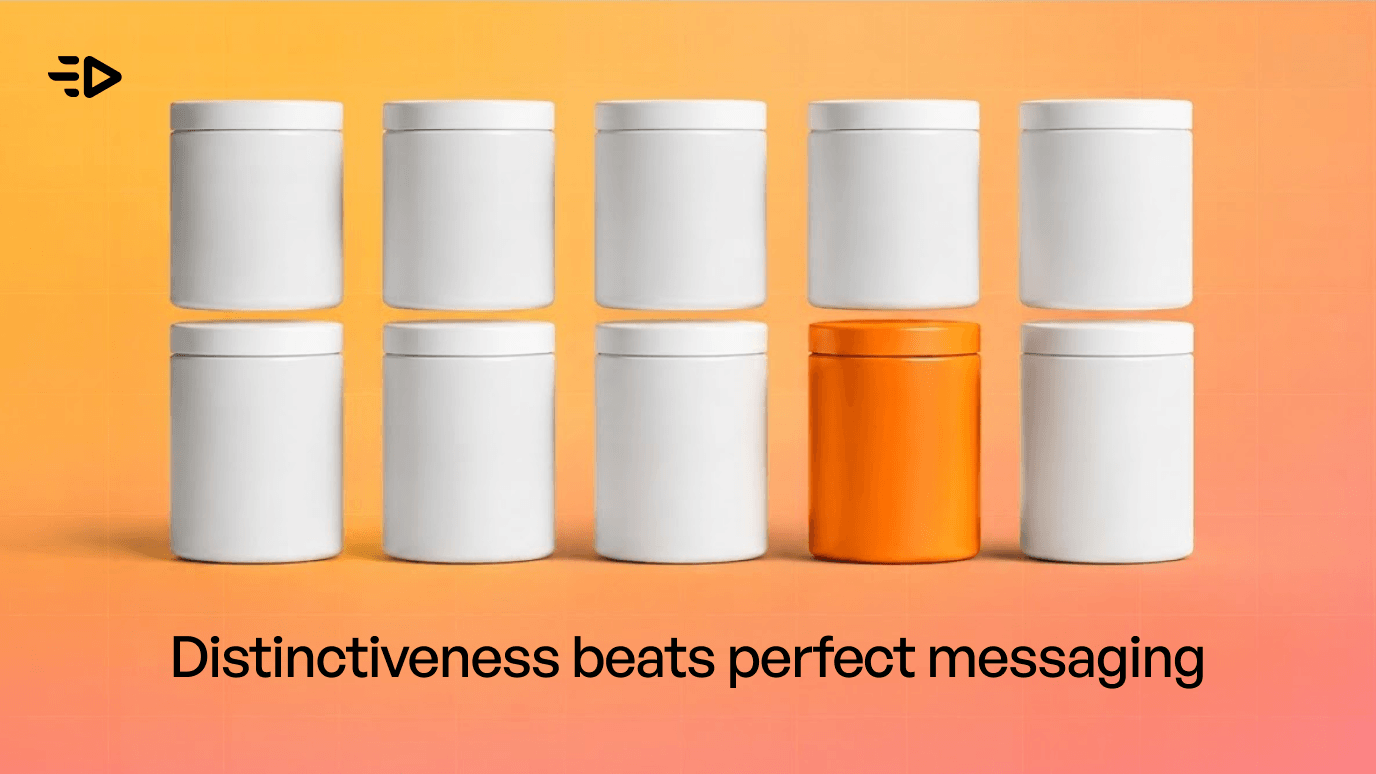
The practical translation is distinctiveness. Kantar's effectiveness research finds that consistent distinctive brand assets, the colors, characters, sounds, and codes that make a brand recognizable at a glance, build the recognition and brand memory that drive commercial impact. Investing in those codes tends to do more for growth than another round of copy tweaks. It helps to map your Category Entry Points, the situations in which someone thinks of your category ("something quick before the gym," "a gift that looks expensive"), and make sure your advertising attaches your brand to as many of those moments as possible. The load-bearing move in 2026 is a memorable, consistent brand that shows up broadly to the people who might one day buy.
Targeting and segmentation: precision was oversold
The defining fantasy of the last decade was one-to-one precision: track everyone, model intent, and serve each person the perfect ad. The returns rarely matched the pitch. And the ground has shifted in a way worth noting, because in 2025 Google stepped back from phasing out third-party cookies in Chrome, keeping them under the browser's existing user-choice settings. The cookie did not die on schedule. That does not rescue the hyper-targeting playbook, though, because privacy rules, Apple's tracking limits, and browsers that already block cookies had made precision fragile regardless.
The evidence points the other way anyway. Ehrenberg-Bass's work on how brands grow shows that most growth comes from lightly reaching a broad base of category buyers, including the many who rarely buy, so narrowing to a tiny high-intent segment leaves the growth on the table. What earns its place in 2026 is clean first-party and consented data, used to feed AI-run buying that optimizes across a wide audience, paired with broad reach as the default setting. Precision is a useful input to the machine. It stopped being a strategy on its own.
Brand versus performance: the false choice
The most expensive mistake in modern advertising is treating brand and performance as rivals for the same budget. Binet and Field's IPA research analyzed close to a thousand campaigns and found that long-term growth is optimized at roughly a 60/40 split, around 60% of spend on brand building and 40% on short-term activation. The exact ratio is a guideline that shifts by category and maturity (B2B tends to sit closer to a 46/54 split), but the direction is consistent: campaigns that lean too hard on activation win the quarter and stall the year.
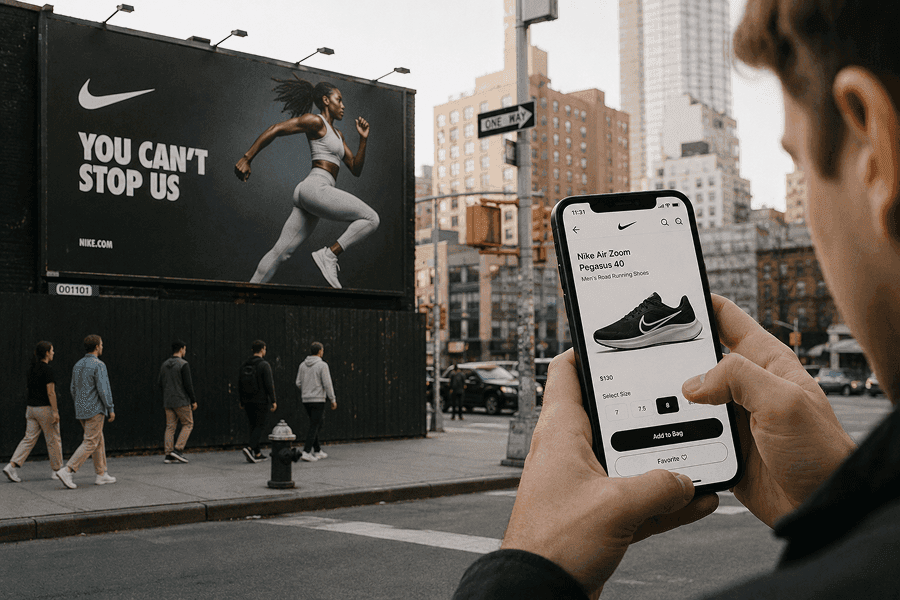
The mechanism is simple once you see it. Brand building creates future demand by making people primed to choose you; performance harvests the demand that already exists. Cut the brand half and performance has a shrinking pool to convert, which is why all-performance accounts often see rising costs over time. What works in 2026 is funding both jobs on purpose and measuring them on their own timelines. What stopped working is pouring the whole budget into the bottom of the funnel and calling it efficiency.
Emotional versus rational appeals
The appeal you choose should match the job. Binet and Field's data shows emotional campaigns produce larger and longer-lasting business effects, because emotion is how brands get encoded in memory and how they earn a price premium. Rational, feature-and-offer messaging does its best work down at the activation end, where someone is already in-market and comparing options. The 2026 move is to let the brand layer carry the emotion and the reach, and let the activation layer carry the specifics and the call to action, so each appeal runs where it performs.
Push, pull, and the advertising methods underneath
The old push-versus-pull distinction still frames the choice cleanly. Push interrupts an audience that wasn't looking for you (display, social, connected TV, out-of-home); pull captures an audience already raising its hand (search, content, and the organic surfaces). Most real strategies use both advertising methods, and the 2026 change is in the plumbing beneath them.
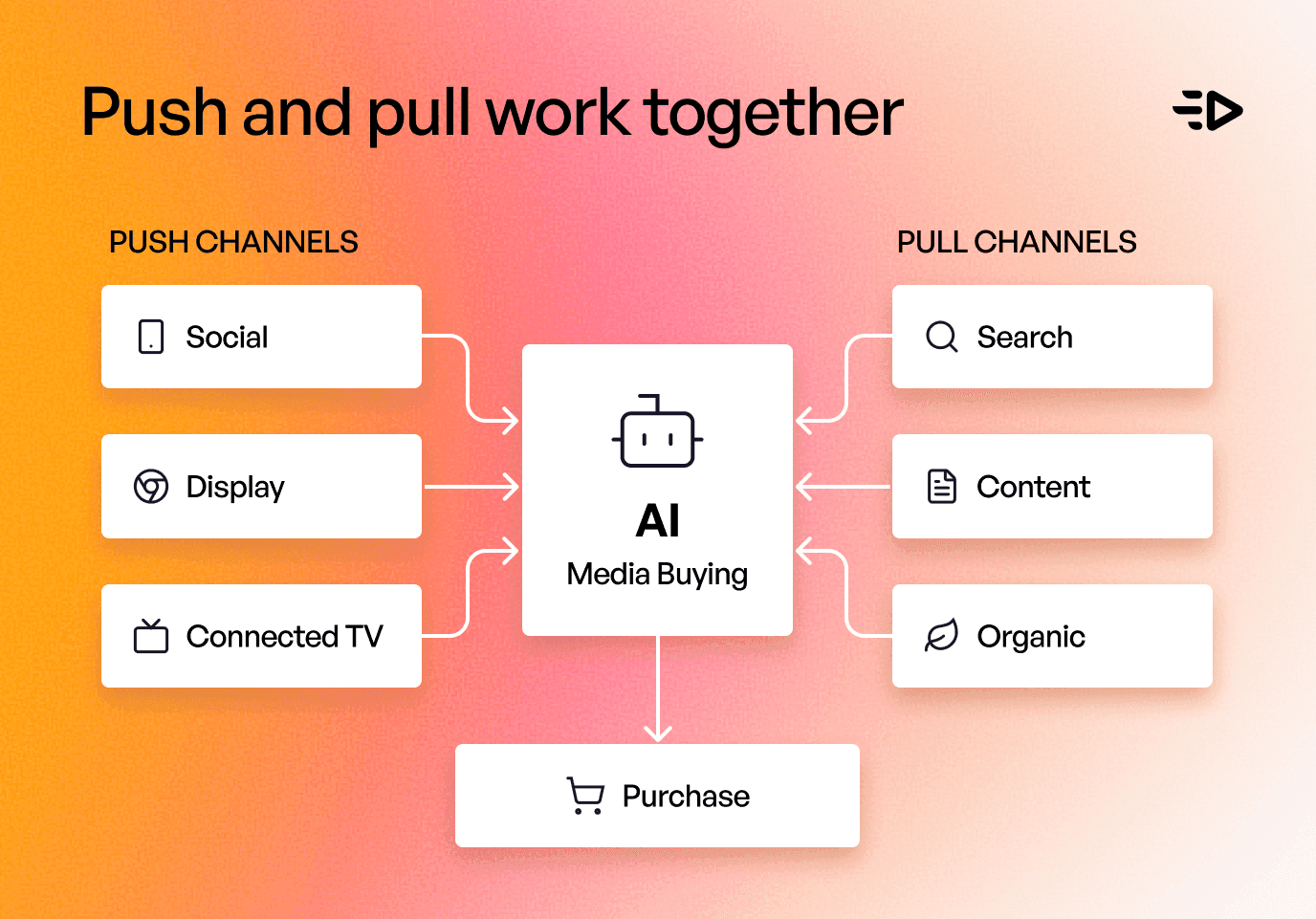
Two shifts matter. First, buying is increasingly run by AI: Performance Max, Advantage+, and Demand Gen abstract the manual targeting and bidding that used to be the craft, which moves your control to the inputs you feed them, creative and clean conversion signals. Second, the fastest-growing places to spend are retail media and connected TV, per eMarketer, because they pair large audiences with purchase data and, in retail media's case, proximity to the transaction. The strategic call is to let the automation handle the levers it handles well, and to point it at the surfaces where your buyers are.
Read also: 7 Genius social media ads examples: What makes people stop scrolling
Measurement: last-click is the part that truly broke
If any single tactic deserves to be retired, it's last-click attribution. Crediting the final touch before a conversion systematically overvalues bottom-funnel activity and starves everything that created the demand in the first place, which is how teams end up defunding the brand work that was feeding their performance channels. It flatters retargeting and search brand terms while making display, video, and upper-funnel look worthless.
The 2026 standard is causal measurement. Incrementality and lift tests, geo holdouts, marketing mix modeling, and brand lift studies all answer the question last-click can't: what would have happened anyway. You lose some of the tidy per-click precision and gain an honest read on what your spend caused. Since NCSolutions research puts creative at roughly half of what drives an ad's sales, measuring only the media and ignoring the creative was always going to mislead you.
The 2026 verdict, in one line
Source: Firmbee.com
The strategy that holds up is boring in the best way: distinctive creative, broad reach, a real brand-and-performance balance, clean first-party signals feeding the AI that now buys the media, and incrementality to tell you what worked. The strategy that quietly stopped paying off is the one that felt most futuristic: precision targeting as the whole plan, last-click as the scorecard, and all-performance-no-brand as the budget.
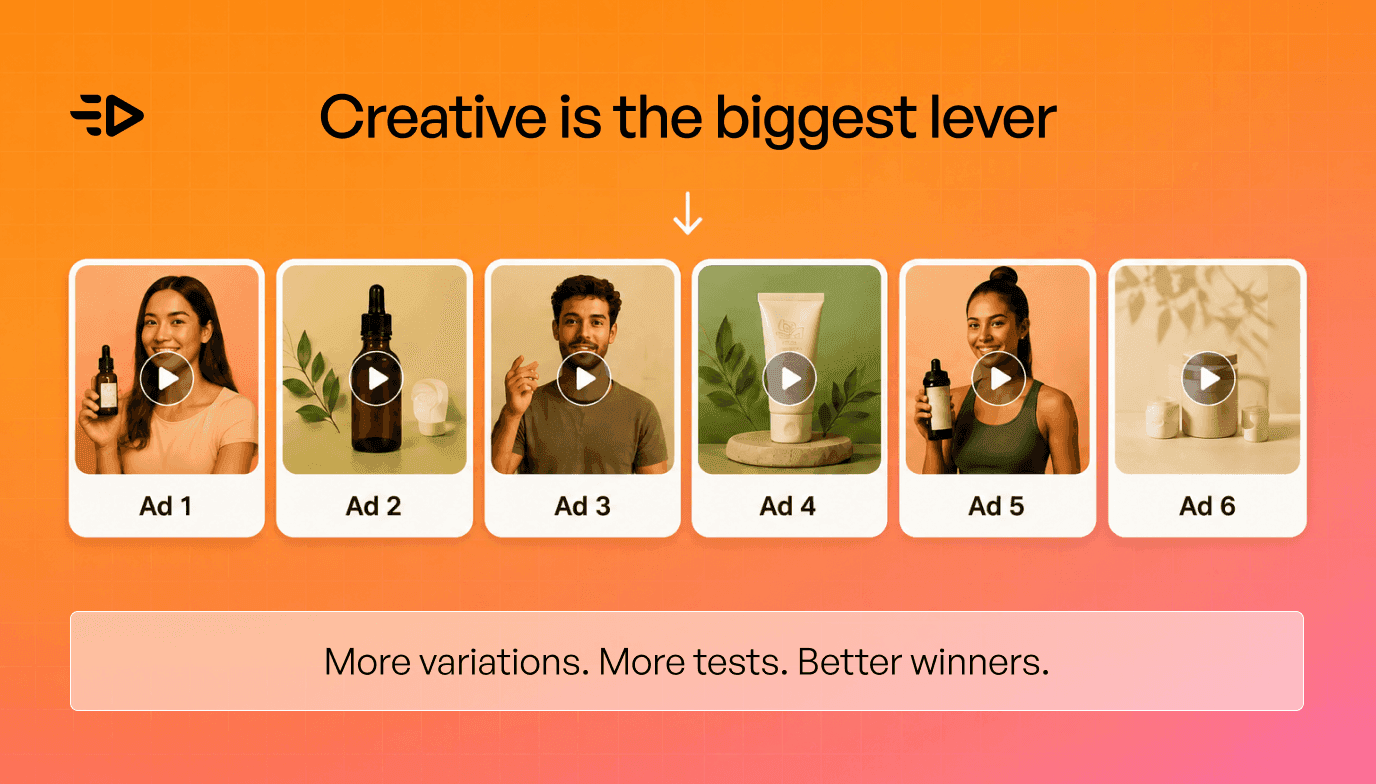
One consequence is worth naming. When the machine handles the buying, creative becomes the biggest lever you still control, and the constraint becomes producing enough distinctive, on-brand variations to test. That production bottleneck is where AI video helps: a tool like Creatify turns a product into video ad variations at volume, so the distinctiveness the evidence rewards can be made and tested at the pace the algorithms now demand.
Read also: How to make an AI commercial that outperforms your last live shoot
Frequently Asked Questions
What is an advertising strategy?
An advertising strategy is the deliberate set of choices about who you're trying to reach, what you want them to think, feel, or do, and how you'll buy and measure the attention to get there. It's the logic that connects individual tactics (a channel, a creative, a targeting setting) to a business goal, so campaigns work toward an outcome.
What are the main types of advertising strategies?
The core dimensions are positioning and distinctiveness (how you occupy space in memory), targeting and segmentation (who you reach and how broadly), brand versus performance (building future demand versus converting present demand), emotional versus rational appeals, and push versus pull (interrupting an audience versus capturing active intent). Most real strategies combine these; the 2026 question is how you weight them given current adtech.
What are some advertising strategy examples that work now?
The strongest advertising strategies examples share a shape: a distinctive brand campaign running broadly across the year, a roughly 60/40 budget split between brand and activation, first-party data used as an input to AI-run buying rather than as a targeting cage, and a geo holdout or lift test doing the measuring. Each one is a specific decision on one of the dimensions above, not a separate playbook.
Which advertising strategies work best in 2026?
The evidence favors distinctive creative, broad reach, a roughly 60/40 brand-to-performance balance, first-party and consented data feeding AI-run buying, and causal measurement like incrementality and marketing mix modeling. The approaches that have lost ground are hyper-targeting as a whole strategy, last-click attribution, and pouring the entire budget into bottom-funnel activation.
Is brand or performance advertising better?
Neither alone. Binet and Field's IPA research found long-term growth is optimized near a 60/40 split toward brand building, because brand creates the demand that performance converts. Starve the brand side and performance has a shrinking audience to work with, which drives costs up over time. The right answer is funding both and measuring each on its own timeline.
Did third-party cookies go away?
No. In 2025 Google stepped back from phasing out third-party cookies in Chrome, keeping them available under the browser's existing privacy settings, so they remain in place. That said, the broader move toward privacy, through Apple's tracking limits, browsers that already block cookies, and consent regulation, still made precision-tracking strategies fragile. The strategic lesson holds even though the cookie itself survived: build on first-party data and broad reach, and treat granular tracking as a fragile bonus.
The advertising strategy playbook you already know still has the right chapters. A few of them just got rewritten while everyone was busy chasing the algorithm.
The types of advertising strategies haven't moved. Positioning, targeting, brand versus performance, the choice between an emotional and a rational appeal: these are the same dimensions strategists have argued over for decades. What moved is the adtech underneath them, and the shift produced an awkward plot twist. Several tactics that felt state-of-the-art in 2020 quietly stopped paying off, and several ideas that sounded old-fashioned turned out to be exactly what the evidence supports. This is a tour of that taxonomy with a 2026 verdict on each part: what's still load-bearing, what quietly broke, and where the money now goes to work.
What are advertising strategies, really?
Skip the textbook definition. In practice, an advertising strategy is the set of deliberate choices about three things:
who you're trying to reach
what you want them to think, feel, or do
how you'll buy and measure the attention it takes to get there.
Everything else is a tactic, which is to say a lever. The strategy is the logic that connects those levers to a business outcome, so that a campaign is a bet with a thesis behind it.
The types of advertising strategies below are where those choices get made. Each has a version that used to be the smart answer and a version the current evidence prefers.
Positioning and distinctiveness: from message fit to memory fit
Positioning still matters. The refinement is where the advantage sits. For years the instinct was to keep tuning the message, sharpening the exact words for an exact segment, as if persuasion were the whole job. The Ehrenberg-Bass Institute has spent decades showing that advertising works mostly by building mental availability: refreshing and adding the memory associations that make a brand come to mind in a buying situation. Reach and consistency do more of that work than message precision.
The practical translation is distinctiveness. Kantar's effectiveness research finds that consistent distinctive brand assets, the colors, characters, sounds, and codes that make a brand recognizable at a glance, build the recognition and brand memory that drive commercial impact. Investing in those codes tends to do more for growth than another round of copy tweaks. It helps to map your Category Entry Points, the situations in which someone thinks of your category ("something quick before the gym," "a gift that looks expensive"), and make sure your advertising attaches your brand to as many of those moments as possible. The load-bearing move in 2026 is a memorable, consistent brand that shows up broadly to the people who might one day buy.
Targeting and segmentation: precision was oversold
The defining fantasy of the last decade was one-to-one precision: track everyone, model intent, and serve each person the perfect ad. The returns rarely matched the pitch. And the ground has shifted in a way worth noting, because in 2025 Google stepped back from phasing out third-party cookies in Chrome, keeping them under the browser's existing user-choice settings. The cookie did not die on schedule. That does not rescue the hyper-targeting playbook, though, because privacy rules, Apple's tracking limits, and browsers that already block cookies had made precision fragile regardless.
The evidence points the other way anyway. Ehrenberg-Bass's work on how brands grow shows that most growth comes from lightly reaching a broad base of category buyers, including the many who rarely buy, so narrowing to a tiny high-intent segment leaves the growth on the table. What earns its place in 2026 is clean first-party and consented data, used to feed AI-run buying that optimizes across a wide audience, paired with broad reach as the default setting. Precision is a useful input to the machine. It stopped being a strategy on its own.
Brand versus performance: the false choice
The most expensive mistake in modern advertising is treating brand and performance as rivals for the same budget. Binet and Field's IPA research analyzed close to a thousand campaigns and found that long-term growth is optimized at roughly a 60/40 split, around 60% of spend on brand building and 40% on short-term activation. The exact ratio is a guideline that shifts by category and maturity (B2B tends to sit closer to a 46/54 split), but the direction is consistent: campaigns that lean too hard on activation win the quarter and stall the year.
The mechanism is simple once you see it. Brand building creates future demand by making people primed to choose you; performance harvests the demand that already exists. Cut the brand half and performance has a shrinking pool to convert, which is why all-performance accounts often see rising costs over time. What works in 2026 is funding both jobs on purpose and measuring them on their own timelines. What stopped working is pouring the whole budget into the bottom of the funnel and calling it efficiency.
Emotional versus rational appeals
The appeal you choose should match the job. Binet and Field's data shows emotional campaigns produce larger and longer-lasting business effects, because emotion is how brands get encoded in memory and how they earn a price premium. Rational, feature-and-offer messaging does its best work down at the activation end, where someone is already in-market and comparing options. The 2026 move is to let the brand layer carry the emotion and the reach, and let the activation layer carry the specifics and the call to action, so each appeal runs where it performs.
Push, pull, and the advertising methods underneath
The old push-versus-pull distinction still frames the choice cleanly. Push interrupts an audience that wasn't looking for you (display, social, connected TV, out-of-home); pull captures an audience already raising its hand (search, content, and the organic surfaces). Most real strategies use both advertising methods, and the 2026 change is in the plumbing beneath them.
Two shifts matter. First, buying is increasingly run by AI: Performance Max, Advantage+, and Demand Gen abstract the manual targeting and bidding that used to be the craft, which moves your control to the inputs you feed them, creative and clean conversion signals. Second, the fastest-growing places to spend are retail media and connected TV, per eMarketer, because they pair large audiences with purchase data and, in retail media's case, proximity to the transaction. The strategic call is to let the automation handle the levers it handles well, and to point it at the surfaces where your buyers are.
Read also: 7 Genius social media ads examples: What makes people stop scrolling
Measurement: last-click is the part that truly broke
If any single tactic deserves to be retired, it's last-click attribution. Crediting the final touch before a conversion systematically overvalues bottom-funnel activity and starves everything that created the demand in the first place, which is how teams end up defunding the brand work that was feeding their performance channels. It flatters retargeting and search brand terms while making display, video, and upper-funnel look worthless.
The 2026 standard is causal measurement. Incrementality and lift tests, geo holdouts, marketing mix modeling, and brand lift studies all answer the question last-click can't: what would have happened anyway. You lose some of the tidy per-click precision and gain an honest read on what your spend caused. Since NCSolutions research puts creative at roughly half of what drives an ad's sales, measuring only the media and ignoring the creative was always going to mislead you.
The 2026 verdict, in one line
Source: Firmbee.com
The strategy that holds up is boring in the best way: distinctive creative, broad reach, a real brand-and-performance balance, clean first-party signals feeding the AI that now buys the media, and incrementality to tell you what worked. The strategy that quietly stopped paying off is the one that felt most futuristic: precision targeting as the whole plan, last-click as the scorecard, and all-performance-no-brand as the budget.
One consequence is worth naming. When the machine handles the buying, creative becomes the biggest lever you still control, and the constraint becomes producing enough distinctive, on-brand variations to test. That production bottleneck is where AI video helps: a tool like Creatify turns a product into video ad variations at volume, so the distinctiveness the evidence rewards can be made and tested at the pace the algorithms now demand.
Read also: How to make an AI commercial that outperforms your last live shoot
Frequently Asked Questions
What is an advertising strategy?
An advertising strategy is the deliberate set of choices about who you're trying to reach, what you want them to think, feel, or do, and how you'll buy and measure the attention to get there. It's the logic that connects individual tactics (a channel, a creative, a targeting setting) to a business goal, so campaigns work toward an outcome.
What are the main types of advertising strategies?
The core dimensions are positioning and distinctiveness (how you occupy space in memory), targeting and segmentation (who you reach and how broadly), brand versus performance (building future demand versus converting present demand), emotional versus rational appeals, and push versus pull (interrupting an audience versus capturing active intent). Most real strategies combine these; the 2026 question is how you weight them given current adtech.
What are some advertising strategy examples that work now?
The strongest advertising strategies examples share a shape: a distinctive brand campaign running broadly across the year, a roughly 60/40 budget split between brand and activation, first-party data used as an input to AI-run buying rather than as a targeting cage, and a geo holdout or lift test doing the measuring. Each one is a specific decision on one of the dimensions above, not a separate playbook.
Which advertising strategies work best in 2026?
The evidence favors distinctive creative, broad reach, a roughly 60/40 brand-to-performance balance, first-party and consented data feeding AI-run buying, and causal measurement like incrementality and marketing mix modeling. The approaches that have lost ground are hyper-targeting as a whole strategy, last-click attribution, and pouring the entire budget into bottom-funnel activation.
Is brand or performance advertising better?
Neither alone. Binet and Field's IPA research found long-term growth is optimized near a 60/40 split toward brand building, because brand creates the demand that performance converts. Starve the brand side and performance has a shrinking audience to work with, which drives costs up over time. The right answer is funding both and measuring each on its own timeline.
Did third-party cookies go away?
No. In 2025 Google stepped back from phasing out third-party cookies in Chrome, keeping them available under the browser's existing privacy settings, so they remain in place. That said, the broader move toward privacy, through Apple's tracking limits, browsers that already block cookies, and consent regulation, still made precision-tracking strategies fragile. The strategic lesson holds even though the cookie itself survived: build on first-party data and broad reach, and treat granular tracking as a fragile bonus.