Equipo Creatify
COMPARTIR


EN ESTE ARTÍCULO
"¿Cuál es la mejor plataforma para testear anuncios?" es la pregunta que todos escriben en Google y la pregunta equivocada. Las herramientas de testeo de anuncios que aparecen en esas listas de "lo mejor de" están diseñadas para responder preguntas completamente diferentes. Una predice si el ojo del espectador se fijará en tu logo. Otra te dice qué título generó una conversión. Una tercera demuestra, con un grupo de control, que tu campaña causó un incremento en lugar de simplemente beneficiarse de una tendencia. Compararlas entre sí es como comparar un termómetro con una báscula.
Así que este es un mapa por función, no una tabla de clasificación. Hay seis cosas que la gente quiere decir cuando habla de "testear anuncios", y la herramienta adecuada depende enteramente de qué estés haciendo y en qué momento del flujo de trabajo te encuentres. A continuación, analizamos cada categoría, las plataformas de testeo de anuncios que destacan en ella y la parte que la mayoría de los análisis omiten: qué puede demostrar esa categoría y qué no.
Primero, ¿qué estás intentando testear?
Seis funciones cubren casi todo en el testeo de anuncios digitales. El testeo predictivo antes del lanzamiento analiza si una audiencia entenderá y preferirá un anuncio antes de que inviertas en él. La predicción de atención analiza si notarán la marca y el mensaje en absoluto. El testeo multivariable analiza qué elemento (el gancho, la imagen, la oferta) está haciendo el trabajo. La analítica creativa analiza qué patrones explican los resultados de los anuncios que ya están activos. Los experimentos nativos dentro de la plataforma analizan qué causó un cambio dentro de Meta o Google. Y la generación creativa con IA responde a una pregunta de producción: cómo creamos suficientes variaciones alineadas con la marca para tener algo que valga la pena testear. Alinea tu pregunta con la categoría y tu lista de opciones se reducirá rápidamente.
Plataformas de testeo creativo previas al lanzamiento: testear el anuncio antes de invertir
Esta es la función más antigua y demuestra su valor cuando un mal anuncio resulta costoso de emitir: un spot de televisión, un video principal o un cambio de marca. Estas plataformas de testeo creativo ponen el trabajo frente a un panel de consumidores o un modelo predictivo antes de comprometer el presupuesto de medios.
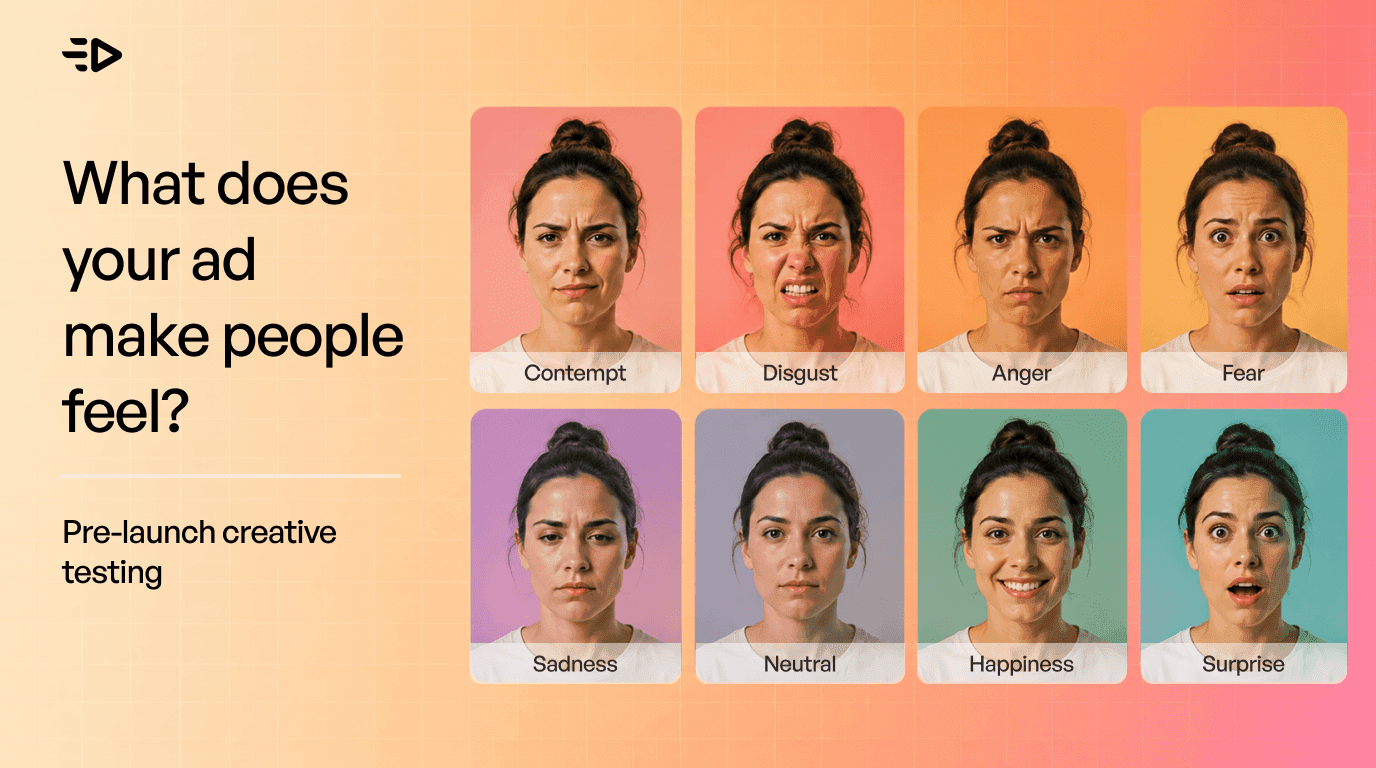
System1 se basa en la respuesta emocional. Su producto Test Your Ad utiliza un método que la empresa llama FaceTrace para capturar cómo se siente la gente segundo a segundo mientras mira el anuncio; System1 afirma que esta lectura emocional predice las ventas a corto plazo y el crecimiento de la marca a largo plazo. Se adapta mejor a videos terminados o casi terminados. Zappi aborda la misma tarea mediante un testeo rápido de anuncios, basado en encuestas rápidas diseñadas para ejecutarse y repetirse a medida que se itera un concepto. Swayable se enfoca en la persuasión causal: asigna a los encuestados a grupos de prueba y de control en un experimento de encuesta aleatorizado, por lo que la pregunta pasa a ser si un mensaje realmente cambió la favorabilidad o la intención frente a un grupo de control. Y LINK de Kantar se sitúa en el extremo corporativo, combinando un diagnóstico creativo basado en encuestas comparativas con una opción más rápida basada en modelos, LINK AI, que califica el material creativo en horas en lugar de los días o semanas que puede tardar un panel completo.
Lo que esta categoría demuestra es la respuesta probable: si la gente dice que entendió, recordó o prefirió el anuncio. Lo que no puede demostrar es lo que sucederá en tu cuenta de anuncios real, porque un panel no es tu audiencia en vivo pujando en una subasta real.
Atención: ¿alguien llegará a notarlo?
Antes de que un anuncio pueda persuadir, tiene que ser visto, y ahora toda una categoría predice la atención visual sin necesidad de realizar un estudio. Neurons es la más conocida: modela dónde es probable que miren los espectadores basándose en una gran base de datos de seguimiento ocular y devuelve mapas de calor junto con una puntuación de atención a la marca, para que puedas comprobar si el logotipo, el producto o la frase clave se encuentran en la trayectoria de atención antes de comprar medios. Herramientas de testeo de anuncios como Dragonfly AI y EyeQuant realizan un trabajo similar para creatividades estáticas, diseño de empaques y diseño de páginas.
La advertencia aquí es aquella sobre la que los proveedores guardan más silencio. Neurons comercializa cifras de precisión superiores al 95%, pero ese número se refiere a predecir dónde se fijará la mirada, no a si el anuncio vende algo. La atención es un requisito previo para la persuasión, no un sustituto de ella. Una imagen impactante puede captar el 100% de las miradas y aun así no comunicar nada, por lo que debes tratar esta categoría como un control de calidad visual rápido y no como un veredicto sobre el rendimiento.
Multivariable: qué parte del anuncio está haciendo el trabajo
Un test A/B estándar te dice que el anuncio A superó al anuncio B. No te dice por qué. El testeo multivariable desglosa un anuncio en sus componentes (imagen, título, gancho, oferta, llamada a la acción), crea múltiples combinaciones e informa qué elemento impulsó el resultado. Marpipe es la plataforma de testeo de anuncios más asociada con este enfoque para el área de paid social. Automatiza la creación de variantes, lanza las combinaciones y genera informes a nivel de elemento, lo que resulta ideal para equipos de comercio electrónico y venta directa al consumidor (DTC) que manejan un alto volumen de creatividades. Marpipe se posiciona como la única plataforma multivariable con algunas de estas capacidades, así que toma ese enfoque con su debido contexto.
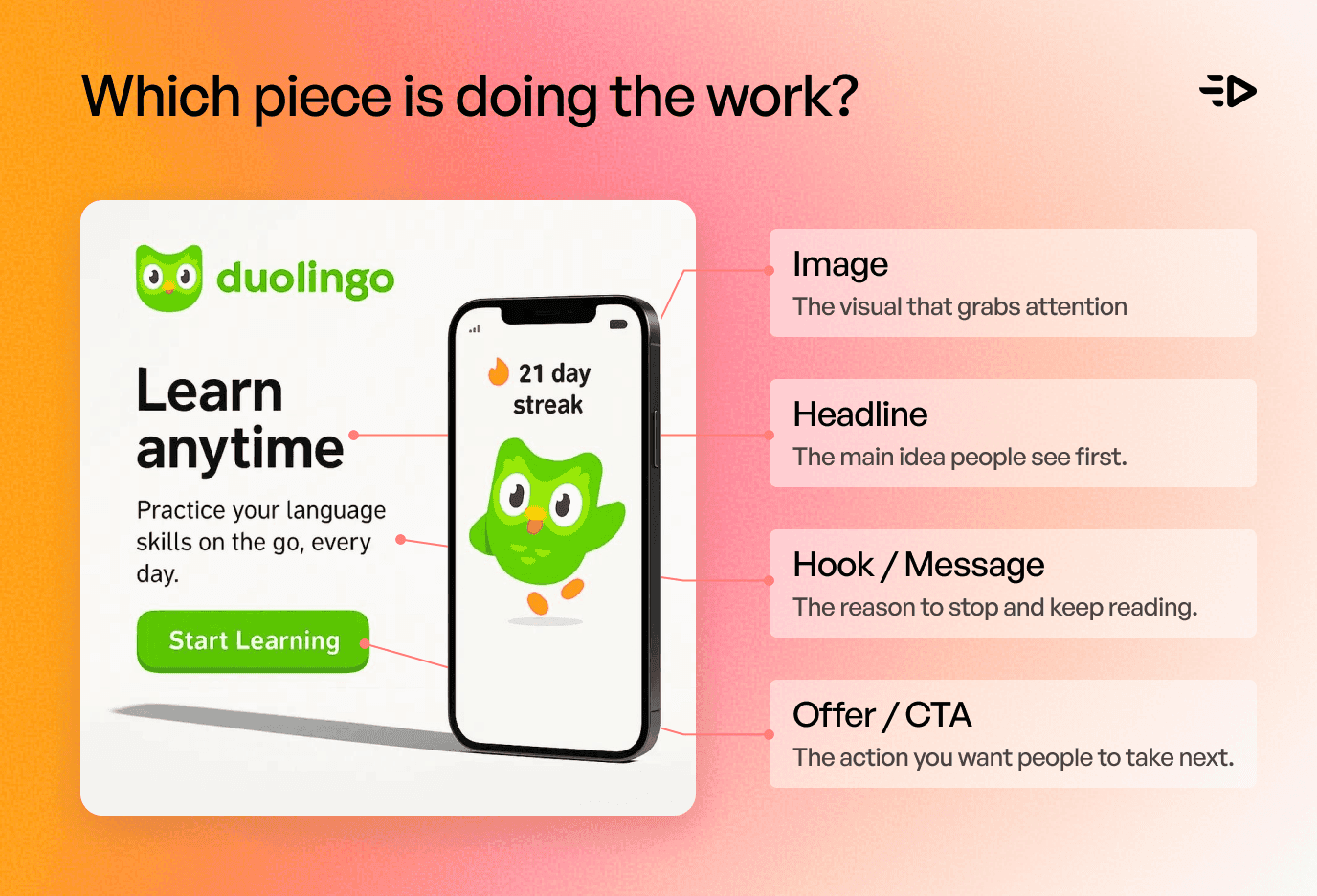
El límite real: el testeo multivariable identifica elementos prometedores dentro de una configuración de entrega específica. Requiere suficiente inversión para alcanzar una significación estadística y variables disciplinadas; además, los cambios de audiencia o la optimización de las plataformas pueden distorsionar qué elemento ganó realmente.
Analítica creativa: lectura de tus anuncios activos
Una vez que los anuncios están activos y recopilando datos reales, la tarea pasa de predecir a explicar. Las plataformas de analítica creativa recopilan el rendimiento en vivo de las redes de anuncios y lo combinan con visión artificial para decirte qué atributos creativos recurrentes se relacionan con los resultados. Motion es una de las favoritas de los equipos de growth para esto: unifica los datos creativos y de rendimiento de Meta, TikTok, YouTube y LinkedIn, etiqueta los anuncios y los lee fotograma a fotograma para revelar qué ganchos y patrones visuales están funcionando y cuáles se están desgastando. VidMob y CreativeX ofrecen la versión corporativa para la misma necesidad, agregando puntuación a nivel de elemento y controles de gobernanza de marca en diferentes mercados y canales.
Un límite importa más que cualquier función aquí. La analítica creativa encuentra patrones en el rendimiento que ya tienes, lo que la hace asociativa en lugar de causal. Te dice que los anuncios ganadores tendieron a empezar con un rostro; no demuestra que el rostro haya causado la victoria. Para eso, necesitas la siguiente categoría.
Experimentos nativos: la opción gratuita y causal
La herramienta de testeo de anuncios más rigurosa para la mayoría de los equipos ya está dentro de la cuenta publicitaria y no cuesta nada de dinero extra. La herramienta de Experimentos de Meta ejecuta un test A/B real dividiendo a tu audiencia de forma aleatoria y asignando a cada segmento una sola variante, lo que representa la forma más limpia de obtener una comparación controlada de múltiples versiones sin que el solapamiento de subastas distorsione el resultado. Sus pruebas de incremento (lift) y de grupo de control van un paso más allá y responden a la pregunta de incrementalidad al ocultar el anuncio a un grupo aleatorio. Google Ads Experiments hace el equivalente en Búsqueda y YouTube, dividiendo el tráfico y el presupuesto entre el original y la prueba, y sus experimentos de video pueden comparar de dos a cuatro versiones entre sí en función del reconocimiento de marca (brand lift) o las conversiones.
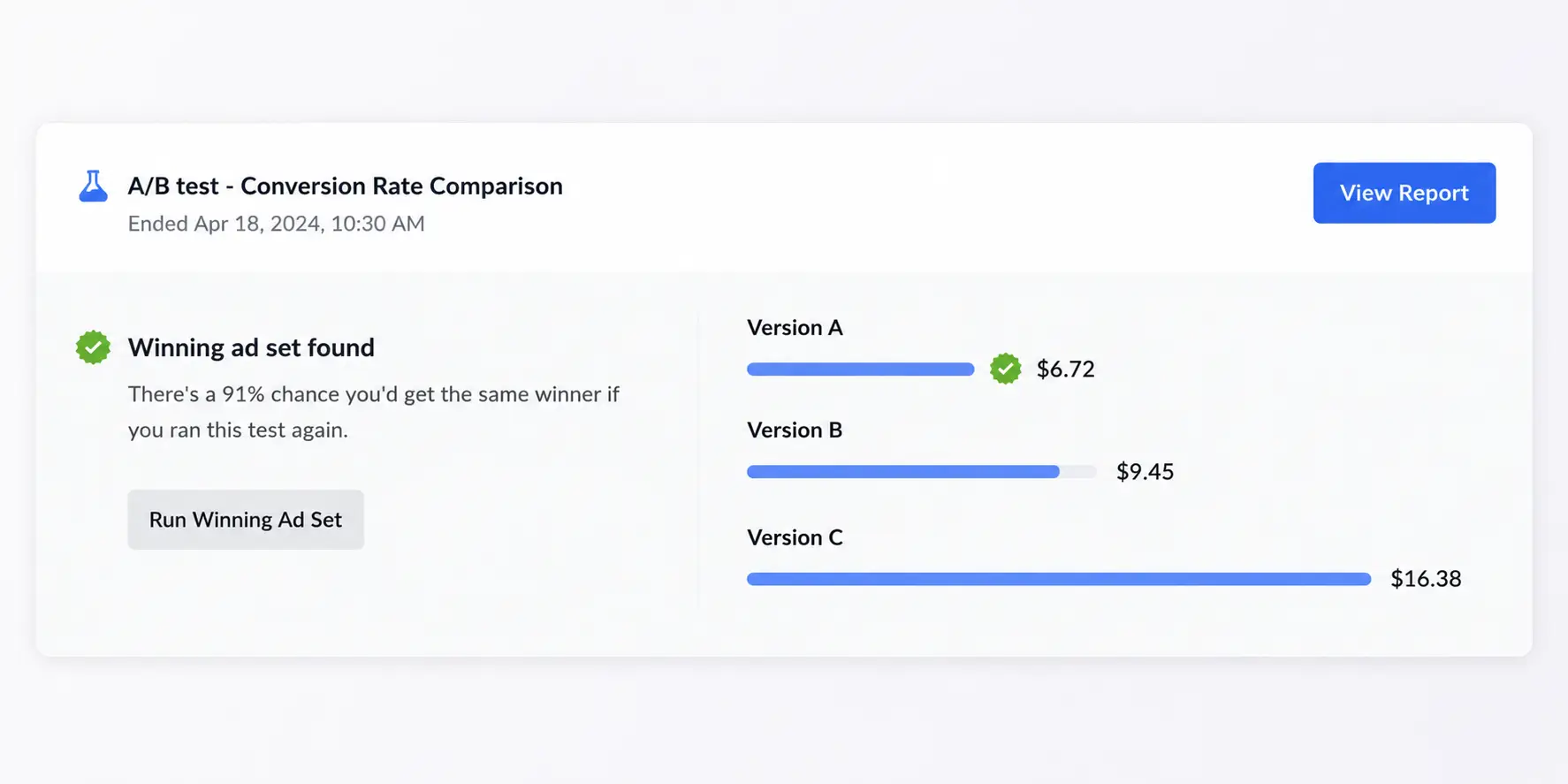
Dos advertencias para mantener la objetividad. Primero, ejecutar "pruebas" dentro de una configuración automatizada como el contenido de Advantage+ es una rotación algorítmica, no un experimento controlado; para obtener lecturas limpias, necesitas usar la herramienta de Experimentos manteniendo constante la automatización. Segundo, incluso el resultado de un experimento nativo está condicionado por la audiencia, el presupuesto, el objetivo de optimización, la ubicación, el momento y la ventana de atribución que hayas elegido. Es lo más cercano a una respuesta causal, dentro de esa plataforma y bajo esas condiciones.
Lee también: Qué empresas utilizan realmente la IA en 2026 y para qué la están usando
Generación con IA: resolviendo el problema de volumen del que depende el testeo rápido de anuncios
Cada una de las categorías anteriores comparte una dependencia oculta: nada de eso importa si solo tienes dos anuncios para testear. Cuando el algoritmo se encarga de la compra, la limitación pasa al volumen creativo, y existe una categoría más nueva para producirlo. Las plataformas de generación creativa con IA transforman un producto o un brief en un lote de variaciones alineadas con la marca de forma rápida. Creatify funciona de esta manera para el formato de video, generando variaciones de anuncios a partir de la URL de un producto para que el equipo de performance pueda alimentar el flujo de testeo en lugar de quedarse sin recursos. AdCreative.ai genera variantes estáticas y de estilo UGC a gran escala, y GenStudio de Adobe y Smartly aportan generación controlada por la marca para el sector corporativo.
Este es el límite que hay que tener claro: estos son sistemas de producción creativa, no sistemas de medición. Cuando una herramienta de generación anuncia resultados de "alta conversión", es una afirmación sobre lo que produce, no una prueba de cómo funcionará. El valor reside en el volumen y la velocidad en la parte superior del embudo (top of the funnel); la prueba aún debe provenir de las herramientas de experimentación en las etapas posteriores.
Cómo combinan las plataformas de testeo de anuncios los mejores equipos
La razón por la que una tabla de clasificación resulta engañosa es que las estructuras más sólidas utilizan varias de estas categorías en secuencia en lugar de elegir una sola. Un flujo de trabajo práctico se ve así: genera un lote de variaciones modulares, filtra los fallos visuales y de mensaje más evidentes con un análisis de atención, ejecuta un panel o un pre-testeo causal para cualquier elemento importante, valida los que superen el filtro con un experimento de Meta o Google en tráfico real y luego analiza la analítica creativa para redactar el próximo brief de testeo. La generación alimenta la parte superior, los experimentos nativos definen la realidad en la parte inferior y las herramientas de investigación intermedias reducen lo que desperdicias en el proceso. En la práctica, la mejor plataforma de testeo de anuncios suele ser una cadena corta de todas ellas.
Lee también: 7 herramientas de optimización de anuncios para cuando tus anuncios ganadores dejan de ganar
Preguntas frecuentes
¿Cuál es la mejor herramienta para testear anuncios?
No existe una sola, porque las herramientas de testeo de anuncios realizan funciones diferentes. Para una lectura controlada y causal sobre tráfico real, las herramientas nativas de Experimentos en Meta y Google son la opción más sólida y no conllevan costos adicionales. Para validar un anuncio costoso antes del lanzamiento, una plataforma de pre-lanzamiento como System1, Zappi o Kantar es la adecuada. Para aprender qué elemento creativo impulsó un resultado, el testeo multivariable (Marpipe) es la mejor opción, y para explicar los anuncios que ya están activos, lo es la analítica creativa (Motion, VidMob). Elige según la pregunta que estés intentando responder.
¿Cuál es la diferencia entre el testeo previo al lanzamiento y el testeo en el mercado?
El testeo previo al lanzamiento (paneles de consumidores, predicción de atención) estima la respuesta probable antes de que inviertas, lo que reduce el riesgo de publicar un anuncio costoso que no funcione. El testeo en el mercado (experimentos nativos, analítica creativa en vivo) mide lo que sucedió una vez que las audiencias reales vieron el anuncio. El previo al lanzamiento es más barato y rápido, pero predictivo; el testeo en el mercado es más lento, pero real. La mayoría de los equipos maduros utilizan ambos, en ese orden.
¿Necesito una plataforma de pago o puedo usar Meta y Google?
Para pruebas controladas A/B y de incrementalidad, Meta Experiments y Google Ads Experiments son gratuitos, están integrados y se encuentran entre las opciones más rigurosas disponibles, por lo que muchos equipos no necesitan nada más para empezar. Las plataformas de pago justifican su coste cuando buscas algo que las redes de anuncios no hacen bien: validación previa al lanzamiento, aprendizaje multivariable a nivel de elemento, analítica creativa multiplataforma o predicción de atención.
¿Son confiables las afirmaciones de precisión de testeo de anuncios con IA?
Trátalas como datos reportados por el propio proveedor hasta que una fuente independiente verifique la afirmación exacta. Una cifra de precisión como el "95%" suele describir un resultado muy específico, como predecir dónde se fijará la mirada, y no significa que la herramienta tenga un 95% de precisión al predecir las ventas. Pregunta qué mide exactamente ese número y contra qué realidad objetiva se compara antes de valorarlo.
¿Cuál es la forma más económica de empezar a testear anuncios?
Comienza con las herramientas de Experimentos nativas en las plataformas donde ya te anuncias, ya que son gratuitas y te ofrecen una lectura limpia de tipo A/B o de grupo de control. Combina eso con suficiente variedad creativa para tener algo que valga la pena testear, que es donde las herramientas de generación con IA ayudan en la parte de producción. Incorpora plataformas de investigación de pago solo cuando una tarea específica (riesgo previo al lanzamiento, aprendizaje a nivel de elemento) justifique la inversión.
"¿Cuál es la mejor plataforma para testear anuncios?" es la pregunta que todos escriben en Google y la pregunta equivocada. Las herramientas de testeo de anuncios que aparecen en esas listas de "lo mejor de" están diseñadas para responder preguntas completamente diferentes. Una predice si el ojo del espectador se fijará en tu logo. Otra te dice qué título generó una conversión. Una tercera demuestra, con un grupo de control, que tu campaña causó un incremento en lugar de simplemente beneficiarse de una tendencia. Compararlas entre sí es como comparar un termómetro con una báscula.
Así que este es un mapa por función, no una tabla de clasificación. Hay seis cosas que la gente quiere decir cuando habla de "testear anuncios", y la herramienta adecuada depende enteramente de qué estés haciendo y en qué momento del flujo de trabajo te encuentres. A continuación, analizamos cada categoría, las plataformas de testeo de anuncios que destacan en ella y la parte que la mayoría de los análisis omiten: qué puede demostrar esa categoría y qué no.
Primero, ¿qué estás intentando testear?
Seis funciones cubren casi todo en el testeo de anuncios digitales. El testeo predictivo antes del lanzamiento analiza si una audiencia entenderá y preferirá un anuncio antes de que inviertas en él. La predicción de atención analiza si notarán la marca y el mensaje en absoluto. El testeo multivariable analiza qué elemento (el gancho, la imagen, la oferta) está haciendo el trabajo. La analítica creativa analiza qué patrones explican los resultados de los anuncios que ya están activos. Los experimentos nativos dentro de la plataforma analizan qué causó un cambio dentro de Meta o Google. Y la generación creativa con IA responde a una pregunta de producción: cómo creamos suficientes variaciones alineadas con la marca para tener algo que valga la pena testear. Alinea tu pregunta con la categoría y tu lista de opciones se reducirá rápidamente.
Plataformas de testeo creativo previas al lanzamiento: testear el anuncio antes de invertir
Esta es la función más antigua y demuestra su valor cuando un mal anuncio resulta costoso de emitir: un spot de televisión, un video principal o un cambio de marca. Estas plataformas de testeo creativo ponen el trabajo frente a un panel de consumidores o un modelo predictivo antes de comprometer el presupuesto de medios.
System1 se basa en la respuesta emocional. Su producto Test Your Ad utiliza un método que la empresa llama FaceTrace para capturar cómo se siente la gente segundo a segundo mientras mira el anuncio; System1 afirma que esta lectura emocional predice las ventas a corto plazo y el crecimiento de la marca a largo plazo. Se adapta mejor a videos terminados o casi terminados. Zappi aborda la misma tarea mediante un testeo rápido de anuncios, basado en encuestas rápidas diseñadas para ejecutarse y repetirse a medida que se itera un concepto. Swayable se enfoca en la persuasión causal: asigna a los encuestados a grupos de prueba y de control en un experimento de encuesta aleatorizado, por lo que la pregunta pasa a ser si un mensaje realmente cambió la favorabilidad o la intención frente a un grupo de control. Y LINK de Kantar se sitúa en el extremo corporativo, combinando un diagnóstico creativo basado en encuestas comparativas con una opción más rápida basada en modelos, LINK AI, que califica el material creativo en horas en lugar de los días o semanas que puede tardar un panel completo.
Lo que esta categoría demuestra es la respuesta probable: si la gente dice que entendió, recordó o prefirió el anuncio. Lo que no puede demostrar es lo que sucederá en tu cuenta de anuncios real, porque un panel no es tu audiencia en vivo pujando en una subasta real.
Atención: ¿alguien llegará a notarlo?
Antes de que un anuncio pueda persuadir, tiene que ser visto, y ahora toda una categoría predice la atención visual sin necesidad de realizar un estudio. Neurons es la más conocida: modela dónde es probable que miren los espectadores basándose en una gran base de datos de seguimiento ocular y devuelve mapas de calor junto con una puntuación de atención a la marca, para que puedas comprobar si el logotipo, el producto o la frase clave se encuentran en la trayectoria de atención antes de comprar medios. Herramientas de testeo de anuncios como Dragonfly AI y EyeQuant realizan un trabajo similar para creatividades estáticas, diseño de empaques y diseño de páginas.
La advertencia aquí es aquella sobre la que los proveedores guardan más silencio. Neurons comercializa cifras de precisión superiores al 95%, pero ese número se refiere a predecir dónde se fijará la mirada, no a si el anuncio vende algo. La atención es un requisito previo para la persuasión, no un sustituto de ella. Una imagen impactante puede captar el 100% de las miradas y aun así no comunicar nada, por lo que debes tratar esta categoría como un control de calidad visual rápido y no como un veredicto sobre el rendimiento.
Multivariable: qué parte del anuncio está haciendo el trabajo
Un test A/B estándar te dice que el anuncio A superó al anuncio B. No te dice por qué. El testeo multivariable desglosa un anuncio en sus componentes (imagen, título, gancho, oferta, llamada a la acción), crea múltiples combinaciones e informa qué elemento impulsó el resultado. Marpipe es la plataforma de testeo de anuncios más asociada con este enfoque para el área de paid social. Automatiza la creación de variantes, lanza las combinaciones y genera informes a nivel de elemento, lo que resulta ideal para equipos de comercio electrónico y venta directa al consumidor (DTC) que manejan un alto volumen de creatividades. Marpipe se posiciona como la única plataforma multivariable con algunas de estas capacidades, así que toma ese enfoque con su debido contexto.
El límite real: el testeo multivariable identifica elementos prometedores dentro de una configuración de entrega específica. Requiere suficiente inversión para alcanzar una significación estadística y variables disciplinadas; además, los cambios de audiencia o la optimización de las plataformas pueden distorsionar qué elemento ganó realmente.
Analítica creativa: lectura de tus anuncios activos
Una vez que los anuncios están activos y recopilando datos reales, la tarea pasa de predecir a explicar. Las plataformas de analítica creativa recopilan el rendimiento en vivo de las redes de anuncios y lo combinan con visión artificial para decirte qué atributos creativos recurrentes se relacionan con los resultados. Motion es una de las favoritas de los equipos de growth para esto: unifica los datos creativos y de rendimiento de Meta, TikTok, YouTube y LinkedIn, etiqueta los anuncios y los lee fotograma a fotograma para revelar qué ganchos y patrones visuales están funcionando y cuáles se están desgastando. VidMob y CreativeX ofrecen la versión corporativa para la misma necesidad, agregando puntuación a nivel de elemento y controles de gobernanza de marca en diferentes mercados y canales.
Un límite importa más que cualquier función aquí. La analítica creativa encuentra patrones en el rendimiento que ya tienes, lo que la hace asociativa en lugar de causal. Te dice que los anuncios ganadores tendieron a empezar con un rostro; no demuestra que el rostro haya causado la victoria. Para eso, necesitas la siguiente categoría.
Experimentos nativos: la opción gratuita y causal
La herramienta de testeo de anuncios más rigurosa para la mayoría de los equipos ya está dentro de la cuenta publicitaria y no cuesta nada de dinero extra. La herramienta de Experimentos de Meta ejecuta un test A/B real dividiendo a tu audiencia de forma aleatoria y asignando a cada segmento una sola variante, lo que representa la forma más limpia de obtener una comparación controlada de múltiples versiones sin que el solapamiento de subastas distorsione el resultado. Sus pruebas de incremento (lift) y de grupo de control van un paso más allá y responden a la pregunta de incrementalidad al ocultar el anuncio a un grupo aleatorio. Google Ads Experiments hace el equivalente en Búsqueda y YouTube, dividiendo el tráfico y el presupuesto entre el original y la prueba, y sus experimentos de video pueden comparar de dos a cuatro versiones entre sí en función del reconocimiento de marca (brand lift) o las conversiones.
Dos advertencias para mantener la objetividad. Primero, ejecutar "pruebas" dentro de una configuración automatizada como el contenido de Advantage+ es una rotación algorítmica, no un experimento controlado; para obtener lecturas limpias, necesitas usar la herramienta de Experimentos manteniendo constante la automatización. Segundo, incluso el resultado de un experimento nativo está condicionado por la audiencia, el presupuesto, el objetivo de optimización, la ubicación, el momento y la ventana de atribución que hayas elegido. Es lo más cercano a una respuesta causal, dentro de esa plataforma y bajo esas condiciones.
Lee también: Qué empresas utilizan realmente la IA en 2026 y para qué la están usando
Generación con IA: resolviendo el problema de volumen del que depende el testeo rápido de anuncios
Cada una de las categorías anteriores comparte una dependencia oculta: nada de eso importa si solo tienes dos anuncios para testear. Cuando el algoritmo se encarga de la compra, la limitación pasa al volumen creativo, y existe una categoría más nueva para producirlo. Las plataformas de generación creativa con IA transforman un producto o un brief en un lote de variaciones alineadas con la marca de forma rápida. Creatify funciona de esta manera para el formato de video, generando variaciones de anuncios a partir de la URL de un producto para que el equipo de performance pueda alimentar el flujo de testeo en lugar de quedarse sin recursos. AdCreative.ai genera variantes estáticas y de estilo UGC a gran escala, y GenStudio de Adobe y Smartly aportan generación controlada por la marca para el sector corporativo.
Este es el límite que hay que tener claro: estos son sistemas de producción creativa, no sistemas de medición. Cuando una herramienta de generación anuncia resultados de "alta conversión", es una afirmación sobre lo que produce, no una prueba de cómo funcionará. El valor reside en el volumen y la velocidad en la parte superior del embudo (top of the funnel); la prueba aún debe provenir de las herramientas de experimentación en las etapas posteriores.
Cómo combinan las plataformas de testeo de anuncios los mejores equipos
La razón por la que una tabla de clasificación resulta engañosa es que las estructuras más sólidas utilizan varias de estas categorías en secuencia en lugar de elegir una sola. Un flujo de trabajo práctico se ve así: genera un lote de variaciones modulares, filtra los fallos visuales y de mensaje más evidentes con un análisis de atención, ejecuta un panel o un pre-testeo causal para cualquier elemento importante, valida los que superen el filtro con un experimento de Meta o Google en tráfico real y luego analiza la analítica creativa para redactar el próximo brief de testeo. La generación alimenta la parte superior, los experimentos nativos definen la realidad en la parte inferior y las herramientas de investigación intermedias reducen lo que desperdicias en el proceso. En la práctica, la mejor plataforma de testeo de anuncios suele ser una cadena corta de todas ellas.
Lee también: 7 herramientas de optimización de anuncios para cuando tus anuncios ganadores dejan de ganar
Preguntas frecuentes
¿Cuál es la mejor herramienta para testear anuncios?
No existe una sola, porque las herramientas de testeo de anuncios realizan funciones diferentes. Para una lectura controlada y causal sobre tráfico real, las herramientas nativas de Experimentos en Meta y Google son la opción más sólida y no conllevan costos adicionales. Para validar un anuncio costoso antes del lanzamiento, una plataforma de pre-lanzamiento como System1, Zappi o Kantar es la adecuada. Para aprender qué elemento creativo impulsó un resultado, el testeo multivariable (Marpipe) es la mejor opción, y para explicar los anuncios que ya están activos, lo es la analítica creativa (Motion, VidMob). Elige según la pregunta que estés intentando responder.
¿Cuál es la diferencia entre el testeo previo al lanzamiento y el testeo en el mercado?
El testeo previo al lanzamiento (paneles de consumidores, predicción de atención) estima la respuesta probable antes de que inviertas, lo que reduce el riesgo de publicar un anuncio costoso que no funcione. El testeo en el mercado (experimentos nativos, analítica creativa en vivo) mide lo que sucedió una vez que las audiencias reales vieron el anuncio. El previo al lanzamiento es más barato y rápido, pero predictivo; el testeo en el mercado es más lento, pero real. La mayoría de los equipos maduros utilizan ambos, en ese orden.
¿Necesito una plataforma de pago o puedo usar Meta y Google?
Para pruebas controladas A/B y de incrementalidad, Meta Experiments y Google Ads Experiments son gratuitos, están integrados y se encuentran entre las opciones más rigurosas disponibles, por lo que muchos equipos no necesitan nada más para empezar. Las plataformas de pago justifican su coste cuando buscas algo que las redes de anuncios no hacen bien: validación previa al lanzamiento, aprendizaje multivariable a nivel de elemento, analítica creativa multiplataforma o predicción de atención.
¿Son confiables las afirmaciones de precisión de testeo de anuncios con IA?
Trátalas como datos reportados por el propio proveedor hasta que una fuente independiente verifique la afirmación exacta. Una cifra de precisión como el "95%" suele describir un resultado muy específico, como predecir dónde se fijará la mirada, y no significa que la herramienta tenga un 95% de precisión al predecir las ventas. Pregunta qué mide exactamente ese número y contra qué realidad objetiva se compara antes de valorarlo.
¿Cuál es la forma más económica de empezar a testear anuncios?
Comienza con las herramientas de Experimentos nativas en las plataformas donde ya te anuncias, ya que son gratuitas y te ofrecen una lectura limpia de tipo A/B o de grupo de control. Combina eso con suficiente variedad creativa para tener algo que valga la pena testear, que es donde las herramientas de generación con IA ayudan en la parte de producción. Incorpora plataformas de investigación de pago solo cuando una tarea específica (riesgo previo al lanzamiento, aprendizaje a nivel de elemento) justifique la inversión.

¿Listo para convertir tu producto en un video atractivo?