
Tu mayor competidor te mostrará toda su estrategia de anuncios gratis ahora mismo. Solo tienes que saber dónde mirar y cómo interpretar lo que encuentres.
Durante años, la inteligencia publicitaria significaba una suscripción de seis cifras a un rastreador basado en paneles como Nielsen o Kantar, diseñado para grandes marcas que controlaban el gasto en televisión nacional. Ese mundo aún existe. Pero ya no es el único. Hoy en día, cada anuncio que tus rivales publican en Meta, Google y TikTok se encuentra en una biblioteca pública y gratuita que cualquiera puede abrir en un navegador.
Así que la ventaja competitiva cambió de lugar. Antes, el acceso era la ventaja. Ahora que todo el mundo puede ver los anuncios de todos, la ventaja está en la interpretación: saber qué anuncios están funcionando, por qué y qué hacer al respecto. Esta guía es el cómo.
Qué significa la inteligencia publicitaria en 2026
La inteligencia publicitaria es la práctica de estudiar los anuncios de un mercado, los de tus competidores y los de tu categoría, para entender qué está funcionando y tomar decisiones creativas y de presupuesto más inteligentes. La fuente de datos cambió. Antes eran los rastreadores privados. Ahora, la fuente más rica son las propias bibliotecas de transparencia de las plataformas, que muestran los anuncios activos de casi cualquier anunciante.
He aquí por qué vale la pena dedicarle tiempo. La creatividad es la palanca más importante en la publicidad moderna. El análisis de Nielsen de cientos de campañas atribuyó aproximadamente la mitad del aumento de ventas de la publicidad a la creatividad en sí, por delante de la segmentación y los medios. Y después de que la App Tracking Transparency de Apple dificultara la segmentación detallada, la creatividad se convirtió en la principal palanca que los anunciantes aún pueden activar. Estudiar la creatividad que utilizan tus rivales es la investigación de mercado más barata en marketing, y la mayoría de los equipos apenas lo hacen.
Dónde encontrar los anuncios de tus competidores
Cuatro bibliotecas gratuitas cubren la mayor parte de donde tus rivales invierten su presupuesto.
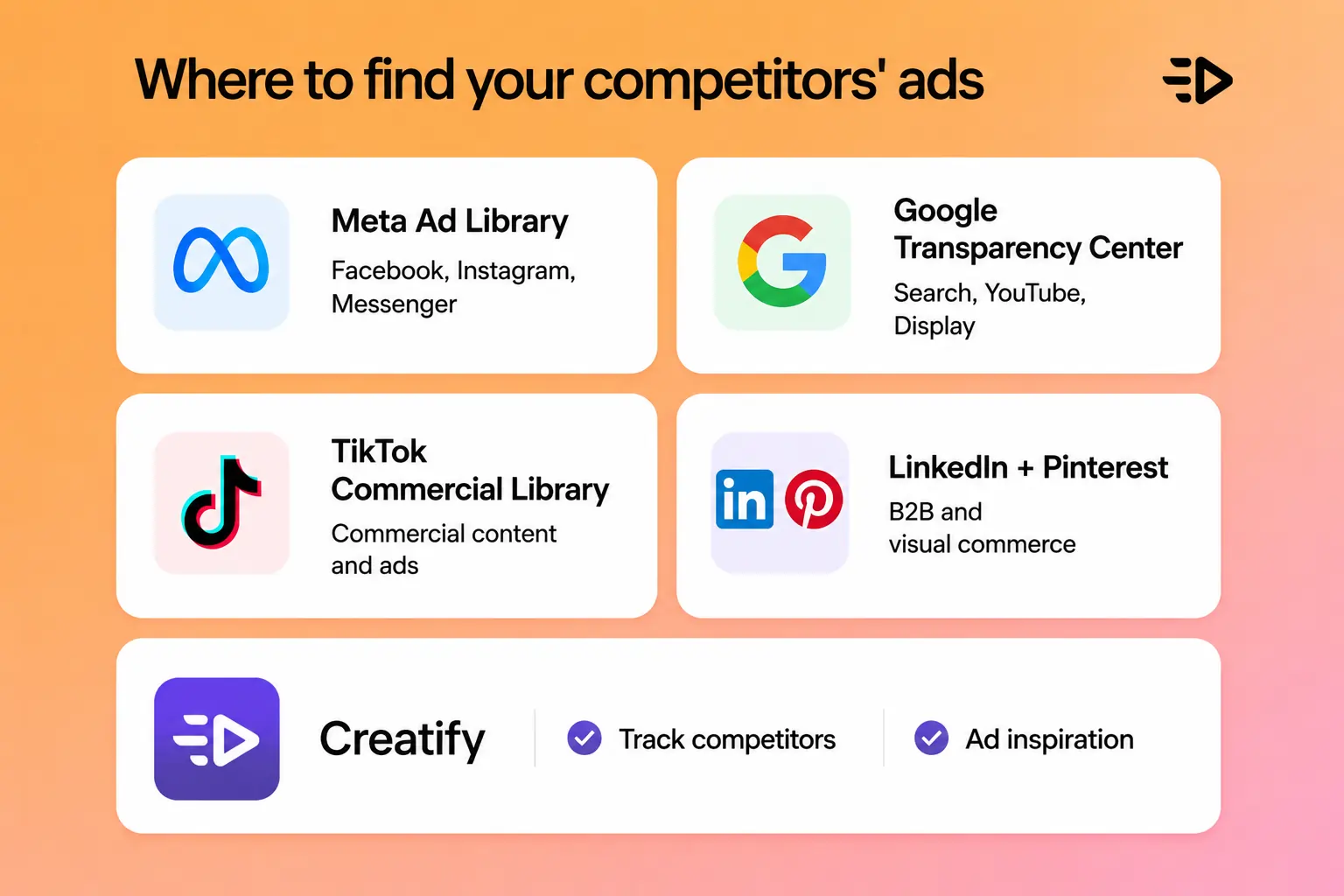
La Biblioteca de anuncios de Meta es la más importante. Muestra cada anuncio activo en Facebook, Instagram, Messenger y la Audience Network, sin necesidad de registrarse. Busca cualquier marca y verás su creatividad activa, cuándo empezó a circular cada anuncio y los formatos que están utilizando. Para las plataformas sociales, aquí es donde empieza la inteligencia de anuncios digitales.
El Centro de transparencia de anuncios de Google hace lo mismo para Search, YouTube y Display. Puedes ver los anuncios que ha publicado un anunciante determinado, filtrar por región, comprobar el formato y ver la última fecha en que se mostró un anuncio. Esta es tu ventana a la inteligencia de anuncios de búsqueda, donde la biblioteca de Meta no llega. Específicamente para la búsqueda de pago, este centro es el núcleo de cualquier flujo de trabajo de inteligencia de anuncios de Google, y los mismos datos de transparencia respaldan la inteligencia de Adwords para los equipos que aún utilizan esa terminología.
TikTok cuenta con una Biblioteca de contenido comercial que cubre la creatividad de los anuncios y otro contenido comercial. El acceso es global, aunque los datos más ricos se concentran en Europa, como señaló Search Engine Land cuando se lanzó. LinkedIn y Pinterest también tienen sus propias bibliotecas de anuncios, a las que vale la pena echar un vistazo para las categorías B2B y de comercio visual.
Si quieres hacer un seguimiento de tus competidores sin tener que buscar manualmente, la función Track Competitors de Creatify te permite añadir marcas y monitorizar sus anuncios automáticamente a medida que se lanzan nuevas creatividades.
Para una inspiración más amplia que vaya más allá de tus competidores directos, la biblioteca Inspiration de Creatify te permite explorar los anuncios con mejor rendimiento por categoría, plataforma y formato, incluidos los que mejor funcionan en Meta. Cuando algo te llame la atención, puedes clonar el concepto del anuncio directamente: recrea la misma estructura creativa con tu propio producto sin tener que empezar desde cero.
Una limitación honesta que debes tener muy en cuenta: las bibliotecas públicas te muestran lo que está activo, no cómo está funcionando. Obtienes la creatividad, la fecha de inicio y el formato. Los datos de inversión, segmentación y conversión permanecen ocultos. La inteligencia publicitaria aquí es inferencia, no un panel de control que te entregan hecho. Las siguientes dos secciones tratan sobre cómo inferir correctamente.
Cómo analizar un solo anuncio
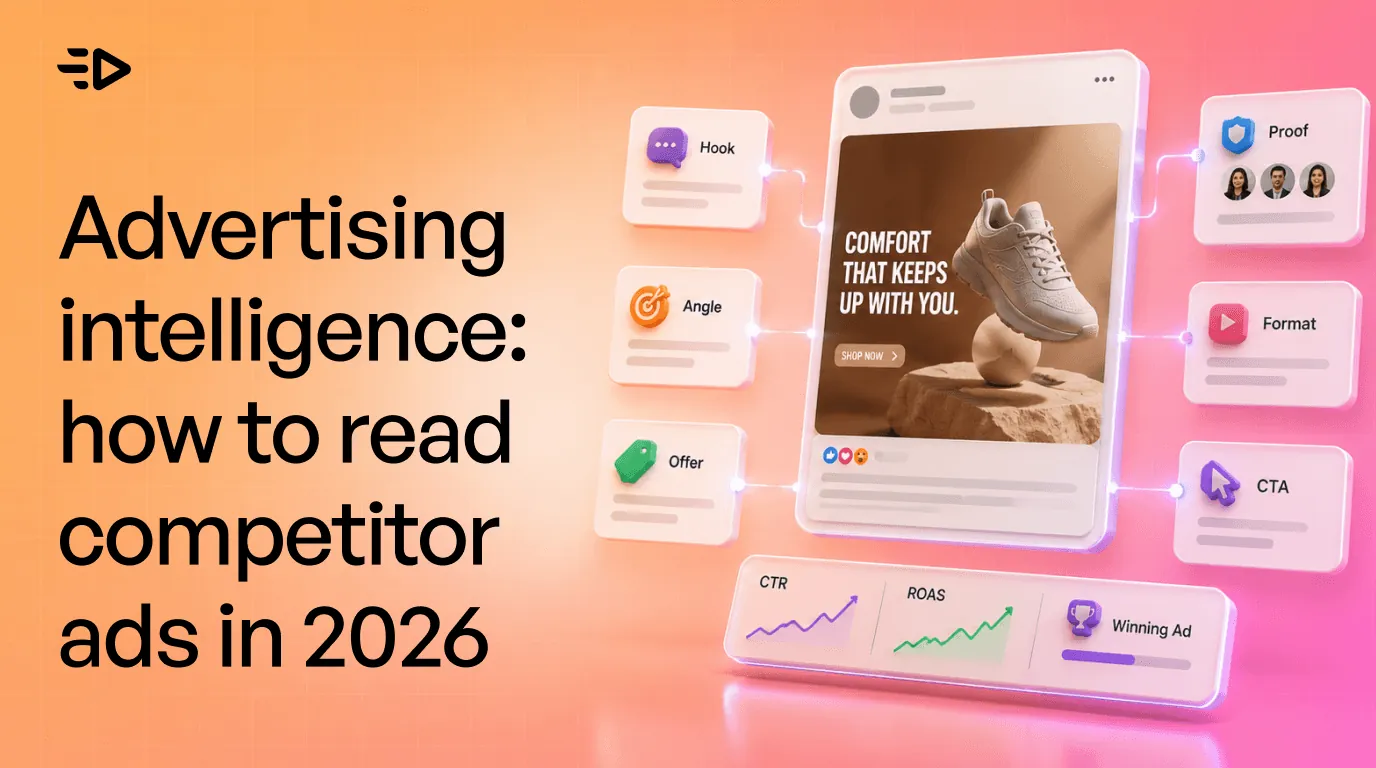
Abre cualquier anuncio de la competencia y analízalo en cinco niveles. La mayoría de la gente mira por encima el aspecto visual y sigue adelante, que es la parte que menos importa.
Empieza con el gancho (hook), la primera frase o los primeros dos segundos. Observa su enfoque: primero el problema ("¿cansado de una piel apagada y sin vida?"), primero el resultado ("consigue fotos de estudio en 10 minutos"), una afirmación audaz, una estadística o una pregunta. El gancho hace la mayor parte del trabajo, porque decide si alguien verá el resto.
Luego el ángulo, la promesa subyacente. Ahorrar tiempo, ahorrar dinero, ganar estatus, evitar un temor, lucir mejor. Dos anuncios pueden vender el mismo producto con ángulos completamente diferentes, y el ángulo es más transferible que cualquier elemento visual individual.
A continuación, la oferta: descuento, paquete, prueba gratuita, garantía, urgencia. Luego la prueba: testimonios, antes y después, UGC, cifras sólidas, autoridad. Después el formato: vídeo de UGC, el fundador hablando a la cámara, demostración de producto, estático, gráfico en movimiento, entrevista en la calle.
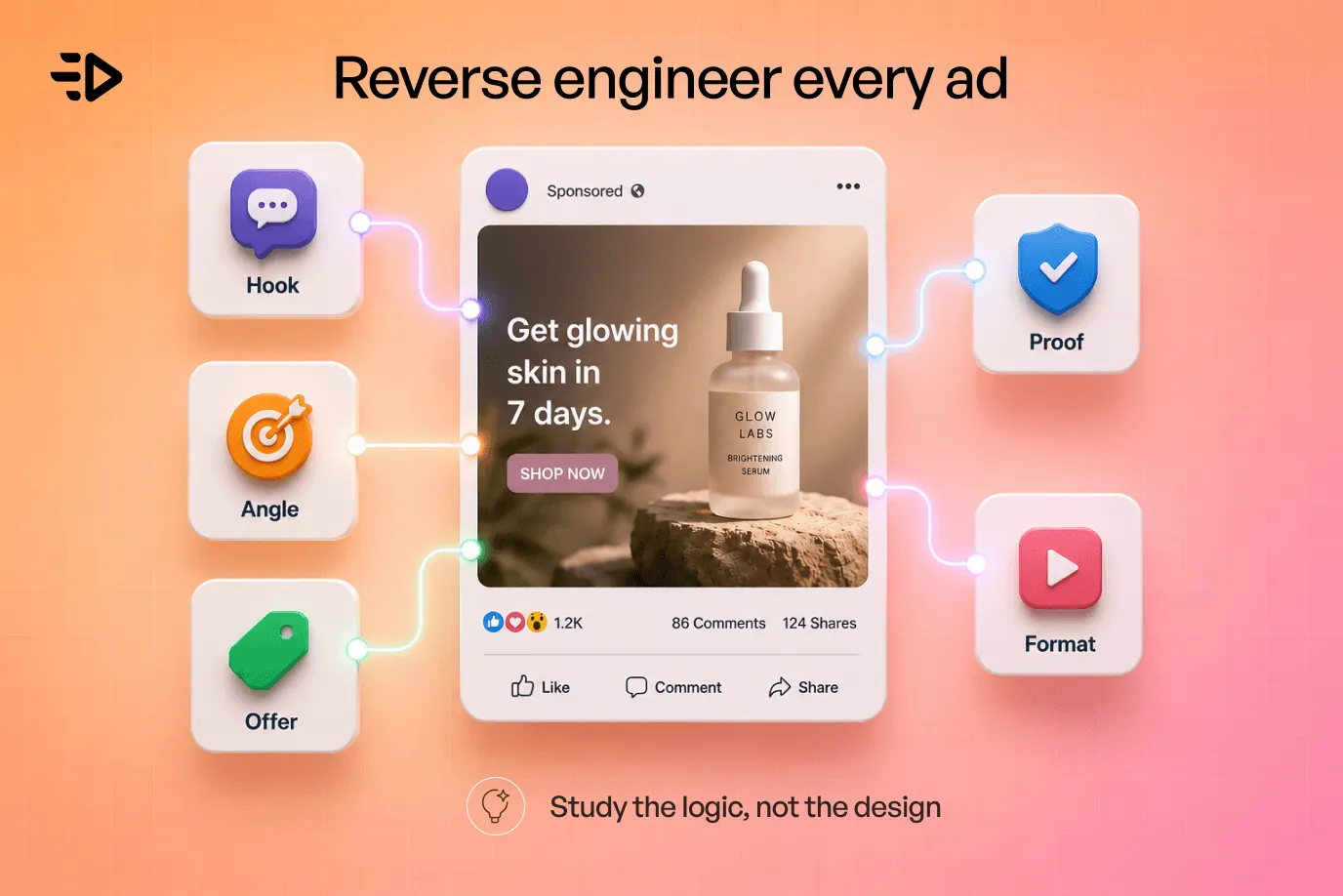
Analiza esos cinco niveles y habrás hecho ingeniería inversa de la lógica del anuncio, no solo de su apariencia.
Cómo saber qué anuncios están ganando
Aquí es donde se desmorona la mayor parte de la investigación de la competencia. La gente hace una captura de pantalla de un anuncio muy atractivo, asume que es un éxito y copia lo incorrecto. Las bibliotecas ocultan los datos de rendimiento, pero te entregan una referencia muy fiable: el tiempo. Una inteligencia de anuncios digitales fiable depende de interpretar correctamente esta referencia en lugar de confiar solo en tu intuición visual.
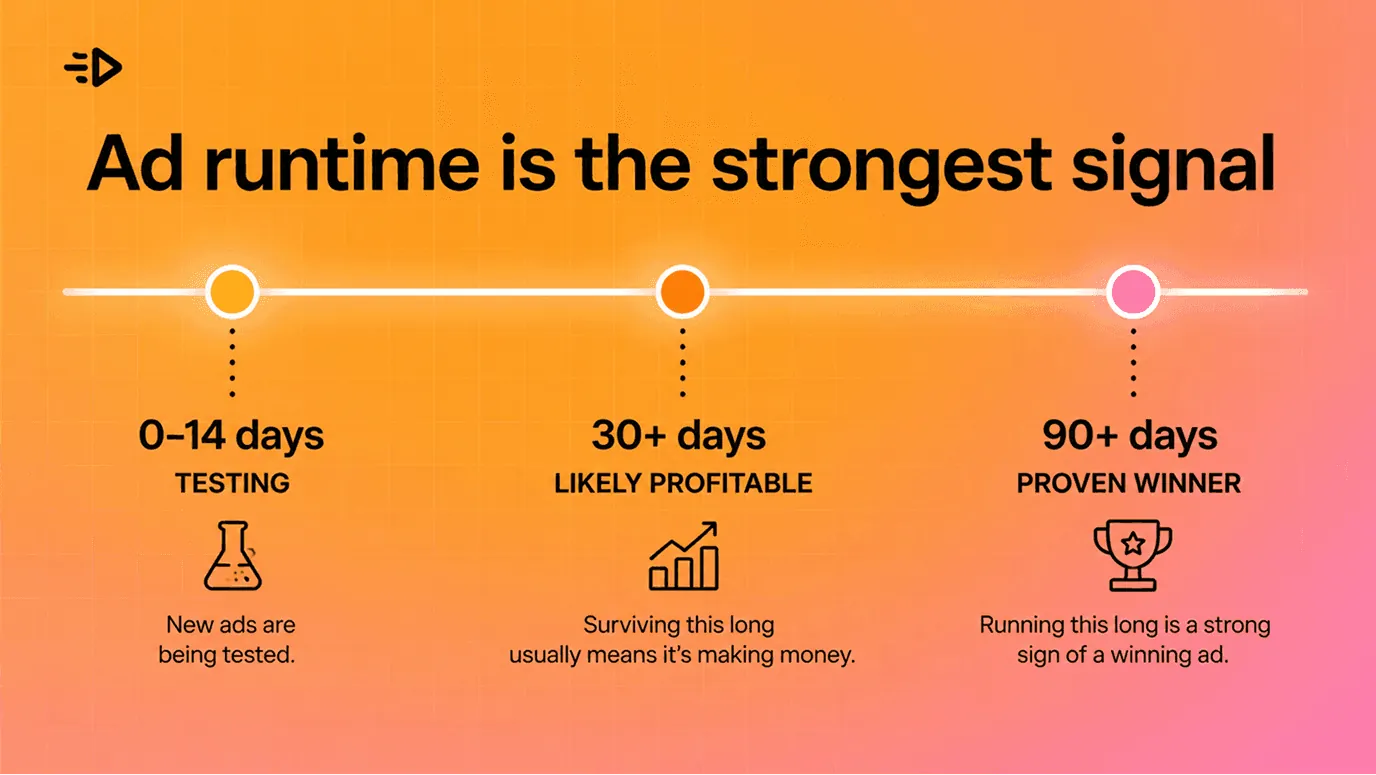
El tiempo de circulación es la señal. Ningún anunciante sigue pagando por mantener activo un anuncio que pierde dinero, por lo que un anuncio que lleva activo 30, 60 o más de 90 días es casi seguro rentable. Cuando abras la biblioteca de un competidor, busca primero los anuncios más antiguos que sigan activos. Esos son los ganadores probados que vale la pena estudiar. El anuncio nuevo con una producción hermosa es solo una hipótesis hasta que demuestre que sobrevive.
El volumen te dice el resto. Cuando una marca publica muchas variaciones de un mismo concepto, significa que ese concepto les está funcionando y lo están escalando. Una avalancha repentina de nuevas creatividades suele indicar que están haciendo pruebas intensivas o impulsando un lanzamiento. Un cambio claro en el ángulo o en la oferta es un cambio de estrategia que vale la pena registrar en tus archivos.
Un movimiento más: busca por categoría, no solo por marca. Buscar el nombre de un rival te muestra sus anuncios. Buscar los puntos de dolor, los tipos de productos y los casos de uso en tu sector revela ángulos y ofertas de marcas que ni siquiera sabías que estaban compitiendo por la misma atención.
Convierte la información en tu próximo anuncio, sin copiar
El objetivo nunca es copiar la creatividad de un competidor. Eso es legalmente arriesgado y estratégicamente inútil, porque su anuncio está diseñado para su producto, su prueba y su audiencia. Lo que se transfiere es la estructura subyacente: el patrón del gancho, la estructura de la oferta, el formato que claramente está funcionando en tu categoría.
Así que extrae el patrón y reconstrúyelo como propio. Toma el estilo de gancho enfocado en el problema que lleva tres meses funcionando, dirígelo al problema real de tu producto, introduce tu propia prueba y escríbelo con tu tono de voz. Estás tomando prestada la estructura probada, no los ladrillos.
Este es el paso que la IA agiliza. Una vez que has detectado una estructura que funciona, Ad Clone te permite tomar un formato de anuncio probado, introducir tu propio producto y generar tu versión en minutos, para que puedas probar la estructura en tu marca en lugar de teorizar sobre ella. Utilízalo en el formato, con tu propio producto y tus propios argumentos, y te mantendrás en el lado correcto de la línea entre aprender e inspirarse y copiar directamente.
Lee también: 8 tendencias de marketing de IA que redefinirán la industria en 2026
Haz que sea un sistema, no algo de una sola vez
Los equipos que triunfan en esto lo tratan como un hábito, no como una actividad ocasional. Reserva de 30 a 45 minutos a la semana para revisar a tus competidores, hacer capturas de pantalla de las novedades y registrar los ángulos, ofertas y cambios que observes. En unos meses tendrás una imagen real de cómo piensa cada rival, lo cual es mucho más útil que cualquier anuncio individual.
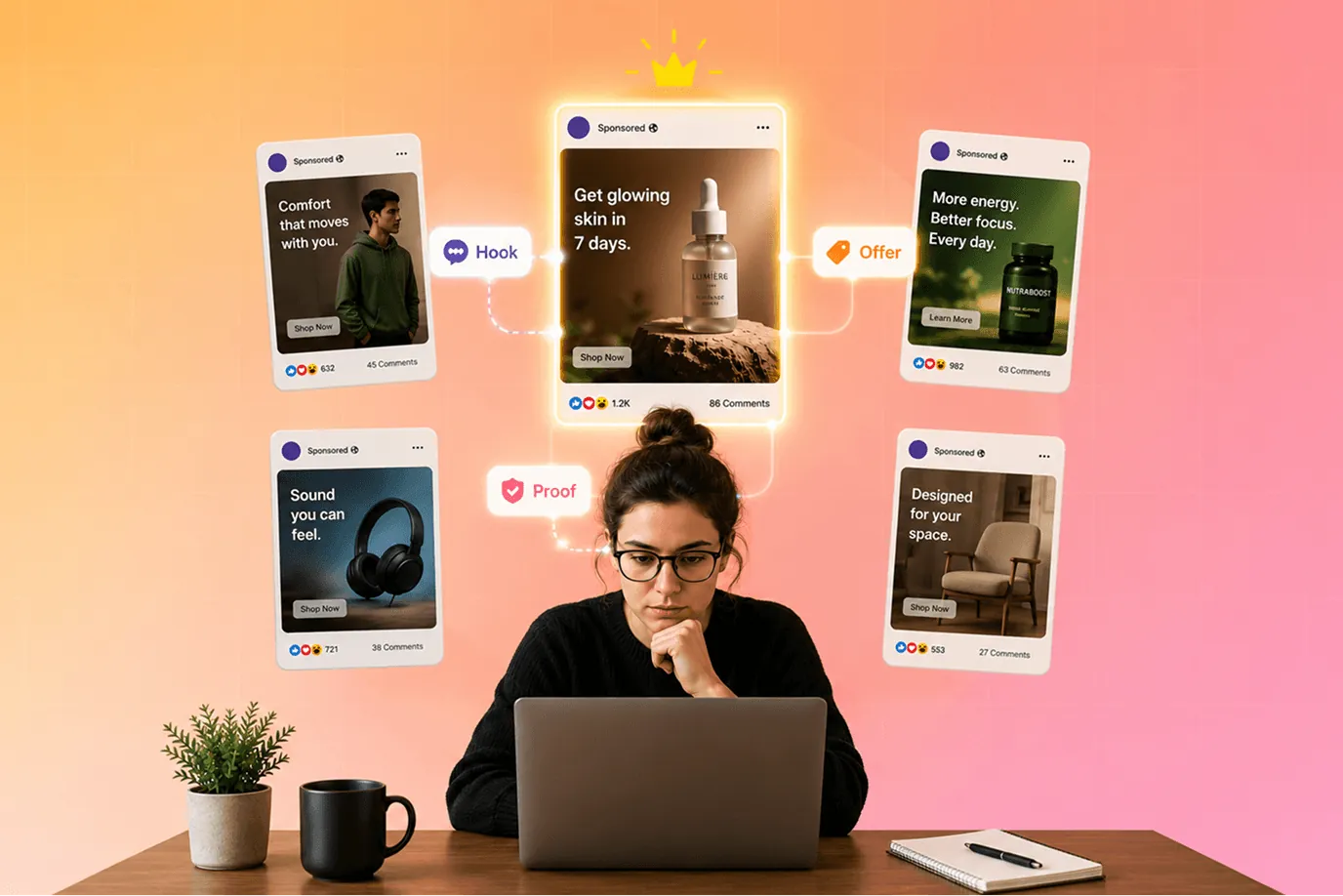
Hacer eso a mano en cuatro bibliotecas diferentes resulta tedioso, razón por la cual la mayoría de la gente lo deja después de dos semanas. Puedes seguir a tus competidores dentro de Creatify y ver sus anuncios e información creativa en un solo lugar en lugar de saltar entre pestañas, de modo que la revisión semanal te tomará solo unos minutos.
Las advertencias honestas
Algunas pautas te ayudarán a que esto sea útil en lugar de engañoso. Un solo avistamiento no demuestra nada, así que apóyate en el tiempo de circulación antes de dar por ganador un anuncio. Las bibliotecas carecen de datos de rendimiento y segmentación, así que trata cada análisis como una inferencia informada y mantén la humildad ante lo que no puedes ver. Resiste la tentación de seguir cada movimiento de la competencia, ya que una marca que hace pruebas fallidas te llevará directo a cometer sus mismos errores. Y mantén la línea clara: estudia patrones, nunca copies creatividades ni activos de marca.
Bien hecha, la inteligencia publicitaria convierte a tus competidores en un equipo de investigación gratuito y siempre activo. Los anuncios están ahí fuera, a la vista de todos. El trabajo consiste en aprender a interpretarlos.
Preguntas Frecuentes
¿Qué es la inteligencia publicitaria?
La inteligencia publicitaria es la práctica de analizar los anuncios activos en un mercado, especialmente los de la competencia, para conocer qué mensajes, ofertas y formatos están funcionando y tomar mejores decisiones creativas y de presupuesto. En 2026, la fuente principal son las bibliotecas públicas de anuncios gratuitas gestionadas por Meta, Google y TikTok.
¿Cómo puedo ver los anuncios de mis competidores gratis?
Utiliza las bibliotecas de transparencia de las plataformas: la Biblioteca de anuncios de Meta para Facebook e Instagram, el Centro de transparencia de anuncios de Google para Search, YouTube y Display, y la Biblioteca de contenido comercial de TikTok. Son gratuitas, no requieren relación con el anunciante y muestran los anuncios activos, las fechas de inicio y los formatos.
¿Cómo sé qué anuncio de la competencia está funcionando?
Utiliza el tiempo de circulación como referencia, ya que las bibliotecas ocultan los datos de rendimiento. Un anuncio que lleva activo 30, 60 o más de 90 días es casi seguro rentable, porque nadie paga por mantener activo un anuncio que pierde dinero. Un largo tiempo de circulación sumado a muchas variaciones de un mismo concepto es la señal más fuerte de un anuncio ganador.
¿Es legal copiar el anuncio de un competidor?
Copiar la creatividad real o los activos de marca de un competidor es legalmente arriesgado y estratégicamente inútil. Lo que puedes y debes hacer es estudiar los patrones, la estructura del gancho, el marco de la oferta y el formato, y reconstruirlos con tu propio producto, pruebas y voz.
¿Cuál es la mejor solución de inteligencia publicitaria?
Para la mayoría de los equipos, las bibliotecas gratuitas de las plataformas junto con un hábito sencillo de seguimiento semanal cubren lo básico de la inteligencia de anuncios digitales. Las herramientas especializadas añaden funciones de monitorización y análisis creativo: Creatify, por ejemplo, te permite seguir a las marcas de la competencia y revisar sus anuncios e información creativa en un solo lugar, para luego clonar las estructuras de los anuncios ganadores para tu propio producto.
¿Con qué frecuencia debo revisar los anuncios de la competencia?
Una revisión enfocada de 30 a 45 minutos una vez a la semana es suficiente para la mayoría de las marcas. La consistencia importa más que el volumen, porque el valor proviene de detectar los cambios a lo largo del tiempo, no de un análisis profundo y aislado.