
Creatify チーム
シェア
この記事では
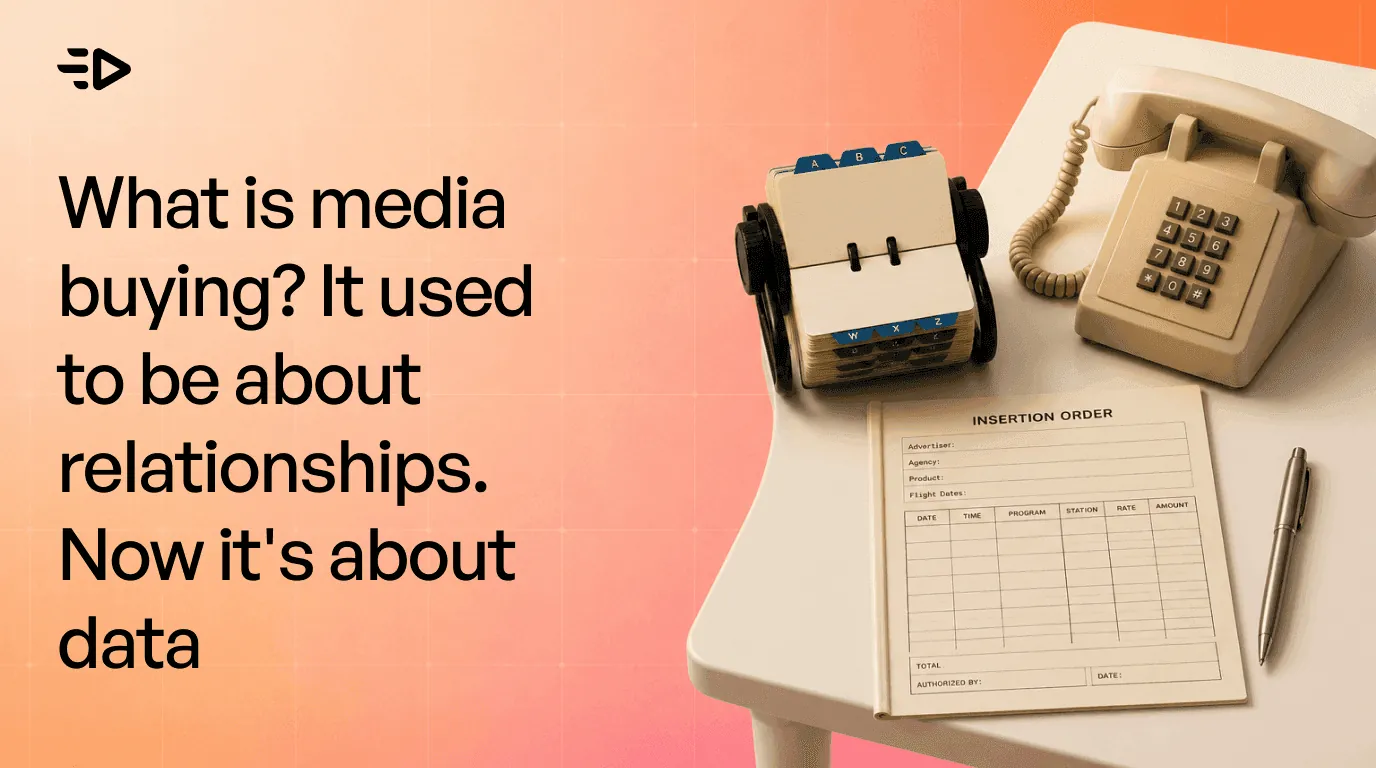
Twenty five years ago, a media buyer's most valuable tool was a Rolodex. The best buyers knew the sales reps, took the right people to lunch, and used that trust to land premium placements at a good rate. Today the most valuable tool is a data stack. That single swap, from who you know to what you can measure, is the whole story of modern media buying.
This is what media buying is, how it works now, and how the job changed from a relationship business into a data business, with a look at where AI is taking it next.
What media buying is
Media buying is the process of purchasing advertising space and time across channels, from TV, radio, and print to search, social, and streaming, to put a message in front of the right audience at the right moment and the right cost. In simple terms, the media buying meaning comes down to one thing: reach the people who matter, and get the most result for every dollar spent.

Source: Tekosin Demirr
It helps to separate two jobs that often get blurred. Media planning is the strategy: who to reach, which channels to use, and how to split the budget. Media buying is the execution: purchasing the inventory, setting the bids, running the ads, and optimizing them once they're live. Planning decides the plan. Buying makes it happen and makes it work.
The relationship era
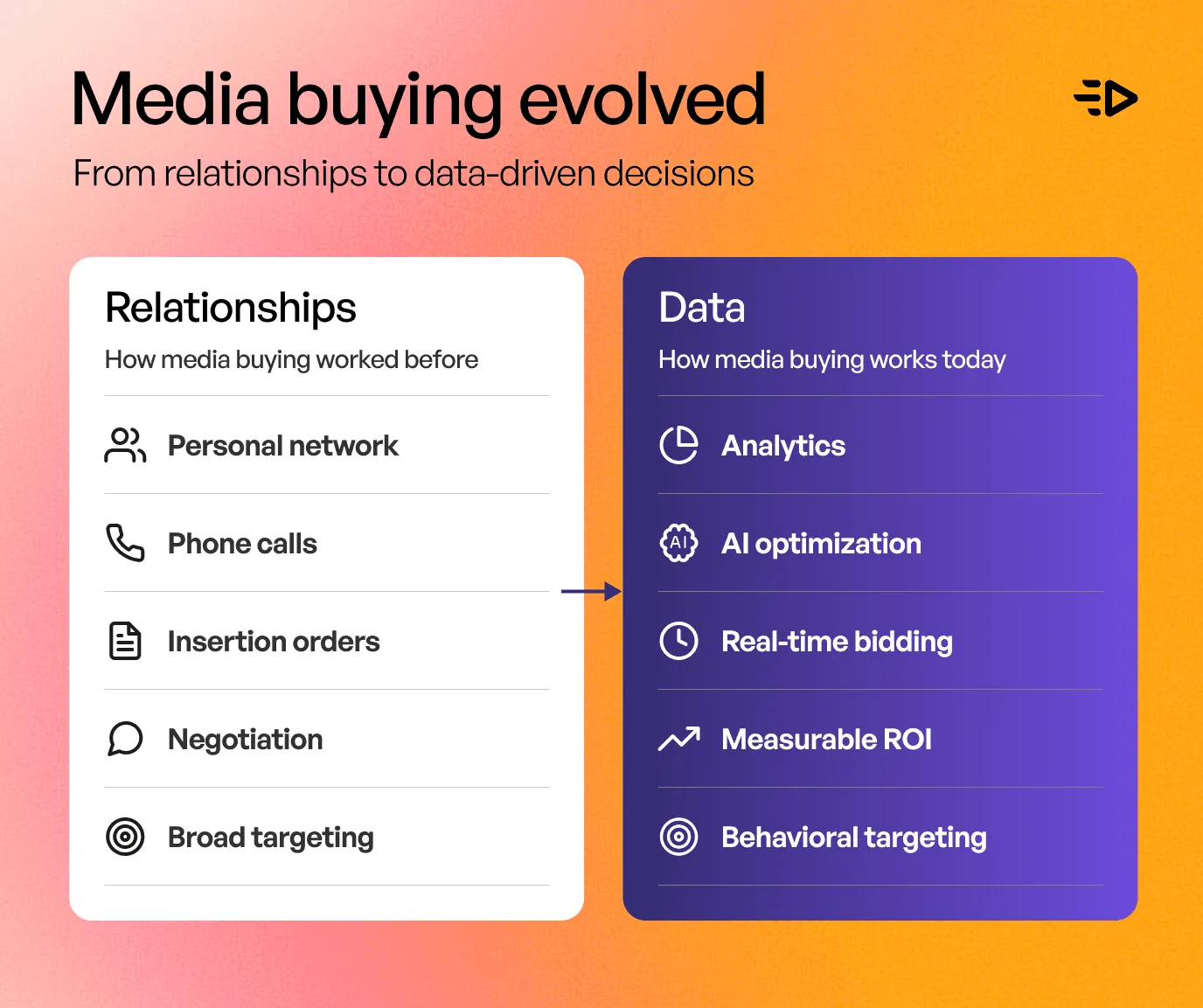
For decades, buying ran on people. A media buyer would call a TV or radio station, negotiate a rate over the phone, and lock the placement with an insertion order sent by fax. Success came from long relationships with sales reps, a good read on audiences, and the bargaining power that a trusted, high-spending buyer earned. The measurement was coarse: ratings books from Nielsen or Arbitron, demographic estimates, and the occasional survey or coupon redemption to see if anything worked.
That world had real strengths. Trust opened doors to premium inventory, protected brands from bad placements, and won favorable rates. It also had real limits. Execution was slow, targeting was blunt, and accountability was thin. You bought a demographic in bulk and hoped it reached the right people.
What changed: the machine and the data

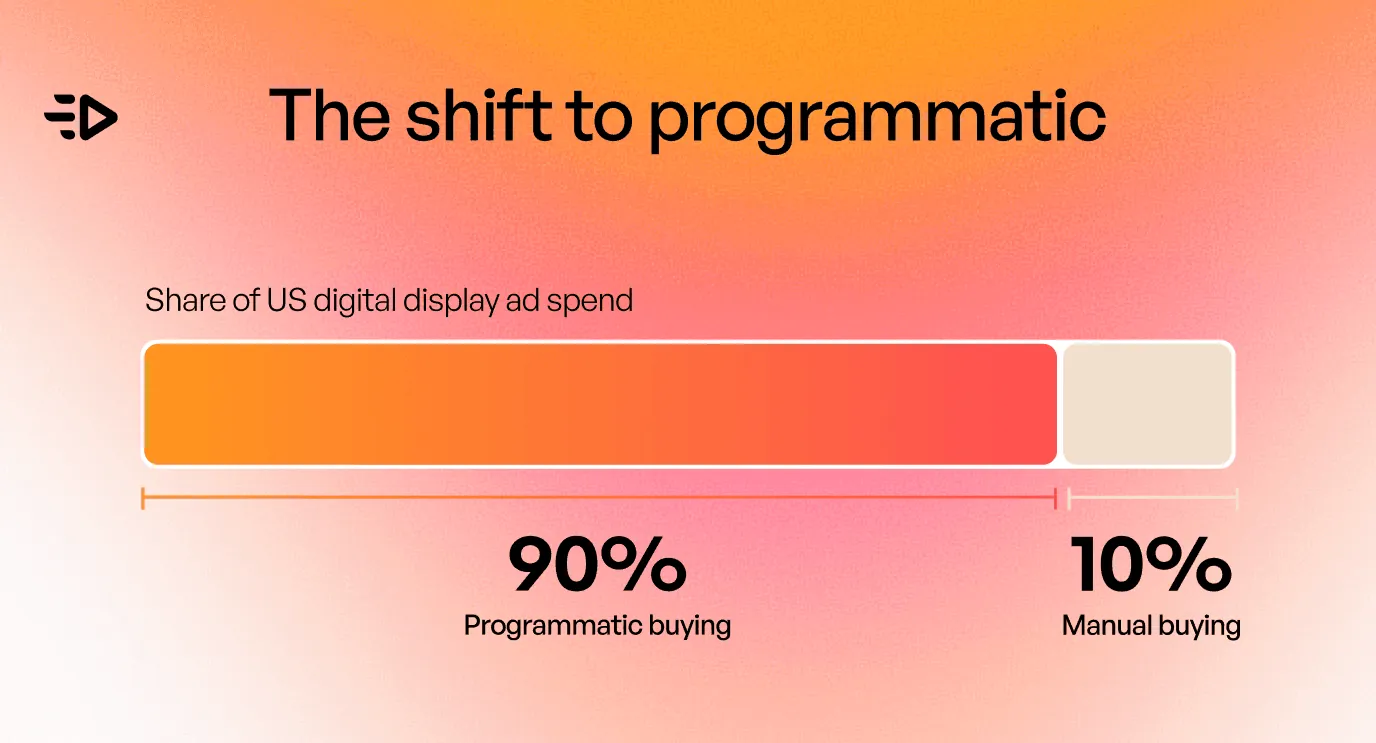
Digital broke the model open. Automated auctions and granular data turned buying from a negotiation into a calculation. Where buyers once purchased a block of airtime, they could now purchase a single impression, in real time, aimed at a specific person, and measure exactly what it returned. The scale of that shift is easy to miss: more than 90% of US digital display ad spending is now bought programmatically through software.
With that, the buyer's advantage moved. It used to come from the relationship that got you a better rate. Now it comes from the data that lets you target by behavior and intent, optimize a campaign in hours, and prove return down to the conversion. This is the heart of media buying in digital marketing: the question changed from "did I get a good deal" to "what did this drive."
Read also: Advertising intelligence: how to read competitor ads in 2026
What a media buyer does now
The modern media buyer is part analyst, part strategist, part technologist. The work lives inside demand-side platforms and ad managers, Meta Ads, Google Ads, TikTok, DV360, and the day is spent building audiences from first-party data, running A/B tests on creative and targeting, and reading attribution to see what earned the sale.
Two arenas hold most of the work. Digital media buying covers online inventory across search, display, video, and connected TV. Social media buying, paid social on Meta, TikTok, LinkedIn, and X, is where much of the performance budget goes, because those platforms pair huge reach with rich targeting and fast feedback. As HubSpot's breakdown of the discipline shows, the toolkit is now a stack of platforms and dashboards where a phone and a rate card once sufficed.
The scorecard changed too. A great buyer used to be measured by the rate they negotiated. Now they're measured by outcomes: cost per acquisition, return on ad spend, and how efficiently a budget turns into results.
Are relationships dead?
Not quite. The relationship business became a data business, but people still matter, in new places. Private marketplaces and direct deals with premium publishers still run on trust and negotiation. Platform account teams at Meta, Google, and TikTok gate early features, support, and favorable terms, often for the biggest spenders. And inside a company, a buyer's results depend on working closely with data analysts and creative teams, which is a relationship game of its own.

Source: Jud Mackrill
The best modern buyers are bilingual: fluent in the numbers and fluent with people. Data leads the decisions now. Relationships still open the doors.
Where media buying is heading: the buyer becomes the director
The job has moved through three eras. First the negotiator, who won on relationships. Then the data conductor, who won on measurement and optimization. Now the AI supervisor, who sets the goals and lets the machine run the buying. Google's Performance Max and Meta's Advantage+ already hand the platform a budget and an objective and let AI pick the audiences, set the bids, and choose the creative. Academic work on AI in programmatic describes the same arc across the industry: prediction and automation taking over the tactical layer.
Tools are being built for exactly this handoff. An AI media buyer can connect to your Meta, Google, and TikTok accounts, audit your spend, surface what's working, and shift budget toward the winners, while you set the strategy and the guardrails it operates within. The buyer's value moves up a level: from clicking the buttons to deciding what the system should optimize for, feeding it clean data, directing the creative, and judging its output.
Data answers what relationships used to guess
Strip away the tools and the mission of media buying never changed: get the right message to the right person at the right cost. What changed is how you find that person. Relationships and gut instinct used to answer the question by approximation. Data answers it by measurement, and does it fast enough to fix a campaign while it's still running.

The Rolodex became a dashboard, and the human part moved up the stack, into strategy, taste, data quality, and judgment. The buyers who win the next dec
ade will pair sharp data instincts with the old relationship skills that still open doors, and point both at a machine that now does the heavy lifting.
Read also: How AI in programmatic advertising quietly changed everything
Frequently Asked Questions
What is media buying?
Media buying is the process of purchasing advertising space and time across channels, such as search, social, display, video, TV, and streaming, to reach a target audience efficiently. It covers negotiating or bidding on inventory, placing the ads, managing the budget, and optimizing performance once campaigns are live.
What is a media buyer?
A media buyer is the person who executes the media plan: they buy the ad inventory, set the bids, launch and monitor campaigns, and optimize spend for the best return. Modern media buyers work mostly in digital ad platforms and rely heavily on data and analytics, a shift from the phone-and-rate-card negotiation of the past.
What is the difference between media buying and media planning?
Media planning is the strategy, deciding who to reach, which channels to use, and how to allocate the budget. Media buying is the execution, purchasing the inventory and running and optimizing the campaigns. Planning designs the approach; buying carries it out and manages performance.
What is digital media buying?
Digital media buying is the purchase of advertising inventory across online channels, including search, social, display, video, and connected TV, using data-driven targeting and real-time optimization. Most of it happens programmatically, through automated auctions.
What is paid media buying?
Paid media buying is any advertising where you pay to place your message in front of an audience, across search, social, display, video, CTV, and native. It's one leg of the paid, owned, and earned media model, and it's the part of marketing that media buyers run.
What skills does a modern media buyer need?
A modern media buyer needs data and analytics fluency, hands-on expertise in ad platforms like Meta and Google Ads, an understanding of attribution and testing, and increasingly the ability to direct and oversee AI-driven automation. The old skills of negotiation and relationship management still help, especially for premium deals and platform access.
Twenty five years ago, a media buyer's most valuable tool was a Rolodex. The best buyers knew the sales reps, took the right people to lunch, and used that trust to land premium placements at a good rate. Today the most valuable tool is a data stack. That single swap, from who you know to what you can measure, is the whole story of modern media buying.
This is what media buying is, how it works now, and how the job changed from a relationship business into a data business, with a look at where AI is taking it next.
What media buying is
Media buying is the process of purchasing advertising space and time across channels, from TV, radio, and print to search, social, and streaming, to put a message in front of the right audience at the right moment and the right cost. In simple terms, the media buying meaning comes down to one thing: reach the people who matter, and get the most result for every dollar spent.

Source: Tekosin Demirr
It helps to separate two jobs that often get blurred. Media planning is the strategy: who to reach, which channels to use, and how to split the budget. Media buying is the execution: purchasing the inventory, setting the bids, running the ads, and optimizing them once they're live. Planning decides the plan. Buying makes it happen and makes it work.
The relationship era
For decades, buying ran on people. A media buyer would call a TV or radio station, negotiate a rate over the phone, and lock the placement with an insertion order sent by fax. Success came from long relationships with sales reps, a good read on audiences, and the bargaining power that a trusted, high-spending buyer earned. The measurement was coarse: ratings books from Nielsen or Arbitron, demographic estimates, and the occasional survey or coupon redemption to see if anything worked.
That world had real strengths. Trust opened doors to premium inventory, protected brands from bad placements, and won favorable rates. It also had real limits. Execution was slow, targeting was blunt, and accountability was thin. You bought a demographic in bulk and hoped it reached the right people.
What changed: the machine and the data

Digital broke the model open. Automated auctions and granular data turned buying from a negotiation into a calculation. Where buyers once purchased a block of airtime, they could now purchase a single impression, in real time, aimed at a specific person, and measure exactly what it returned. The scale of that shift is easy to miss: more than 90% of US digital display ad spending is now bought programmatically through software.
With that, the buyer's advantage moved. It used to come from the relationship that got you a better rate. Now it comes from the data that lets you target by behavior and intent, optimize a campaign in hours, and prove return down to the conversion. This is the heart of media buying in digital marketing: the question changed from "did I get a good deal" to "what did this drive."
Read also: Advertising intelligence: how to read competitor ads in 2026
What a media buyer does now
The modern media buyer is part analyst, part strategist, part technologist. The work lives inside demand-side platforms and ad managers, Meta Ads, Google Ads, TikTok, DV360, and the day is spent building audiences from first-party data, running A/B tests on creative and targeting, and reading attribution to see what earned the sale.
Two arenas hold most of the work. Digital media buying covers online inventory across search, display, video, and connected TV. Social media buying, paid social on Meta, TikTok, LinkedIn, and X, is where much of the performance budget goes, because those platforms pair huge reach with rich targeting and fast feedback. As HubSpot's breakdown of the discipline shows, the toolkit is now a stack of platforms and dashboards where a phone and a rate card once sufficed.
The scorecard changed too. A great buyer used to be measured by the rate they negotiated. Now they're measured by outcomes: cost per acquisition, return on ad spend, and how efficiently a budget turns into results.
Are relationships dead?
Not quite. The relationship business became a data business, but people still matter, in new places. Private marketplaces and direct deals with premium publishers still run on trust and negotiation. Platform account teams at Meta, Google, and TikTok gate early features, support, and favorable terms, often for the biggest spenders. And inside a company, a buyer's results depend on working closely with data analysts and creative teams, which is a relationship game of its own.

Source: Jud Mackrill
The best modern buyers are bilingual: fluent in the numbers and fluent with people. Data leads the decisions now. Relationships still open the doors.
Where media buying is heading: the buyer becomes the director
The job has moved through three eras. First the negotiator, who won on relationships. Then the data conductor, who won on measurement and optimization. Now the AI supervisor, who sets the goals and lets the machine run the buying. Google's Performance Max and Meta's Advantage+ already hand the platform a budget and an objective and let AI pick the audiences, set the bids, and choose the creative. Academic work on AI in programmatic describes the same arc across the industry: prediction and automation taking over the tactical layer.
Tools are being built for exactly this handoff. An AI media buyer can connect to your Meta, Google, and TikTok accounts, audit your spend, surface what's working, and shift budget toward the winners, while you set the strategy and the guardrails it operates within. The buyer's value moves up a level: from clicking the buttons to deciding what the system should optimize for, feeding it clean data, directing the creative, and judging its output.
Data answers what relationships used to guess
Strip away the tools and the mission of media buying never changed: get the right message to the right person at the right cost. What changed is how you find that person. Relationships and gut instinct used to answer the question by approximation. Data answers it by measurement, and does it fast enough to fix a campaign while it's still running.

The Rolodex became a dashboard, and the human part moved up the stack, into strategy, taste, data quality, and judgment. The buyers who win the next dec
ade will pair sharp data instincts with the old relationship skills that still open doors, and point both at a machine that now does the heavy lifting.
Read also: How AI in programmatic advertising quietly changed everything
Frequently Asked Questions
What is media buying?
Media buying is the process of purchasing advertising space and time across channels, such as search, social, display, video, TV, and streaming, to reach a target audience efficiently. It covers negotiating or bidding on inventory, placing the ads, managing the budget, and optimizing performance once campaigns are live.
What is a media buyer?
A media buyer is the person who executes the media plan: they buy the ad inventory, set the bids, launch and monitor campaigns, and optimize spend for the best return. Modern media buyers work mostly in digital ad platforms and rely heavily on data and analytics, a shift from the phone-and-rate-card negotiation of the past.
What is the difference between media buying and media planning?
Media planning is the strategy, deciding who to reach, which channels to use, and how to allocate the budget. Media buying is the execution, purchasing the inventory and running and optimizing the campaigns. Planning designs the approach; buying carries it out and manages performance.
What is digital media buying?
Digital media buying is the purchase of advertising inventory across online channels, including search, social, display, video, and connected TV, using data-driven targeting and real-time optimization. Most of it happens programmatically, through automated auctions.
What is paid media buying?
Paid media buying is any advertising where you pay to place your message in front of an audience, across search, social, display, video, CTV, and native. It's one leg of the paid, owned, and earned media model, and it's the part of marketing that media buyers run.
What skills does a modern media buyer need?
A modern media buyer needs data and analytics fluency, hands-on expertise in ad platforms like Meta and Google Ads, an understanding of attribution and testing, and increasingly the ability to direct and oversee AI-driven automation. The old skills of negotiation and relationship management still help, especially for premium deals and platform access.