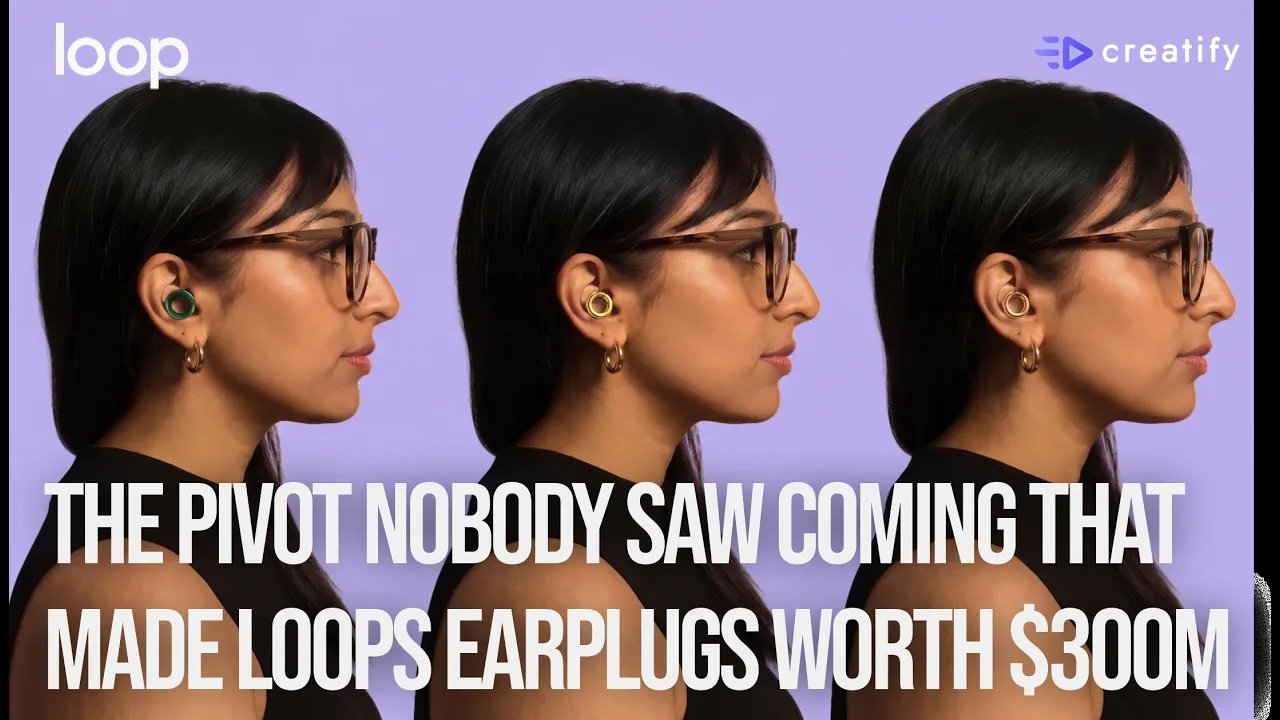
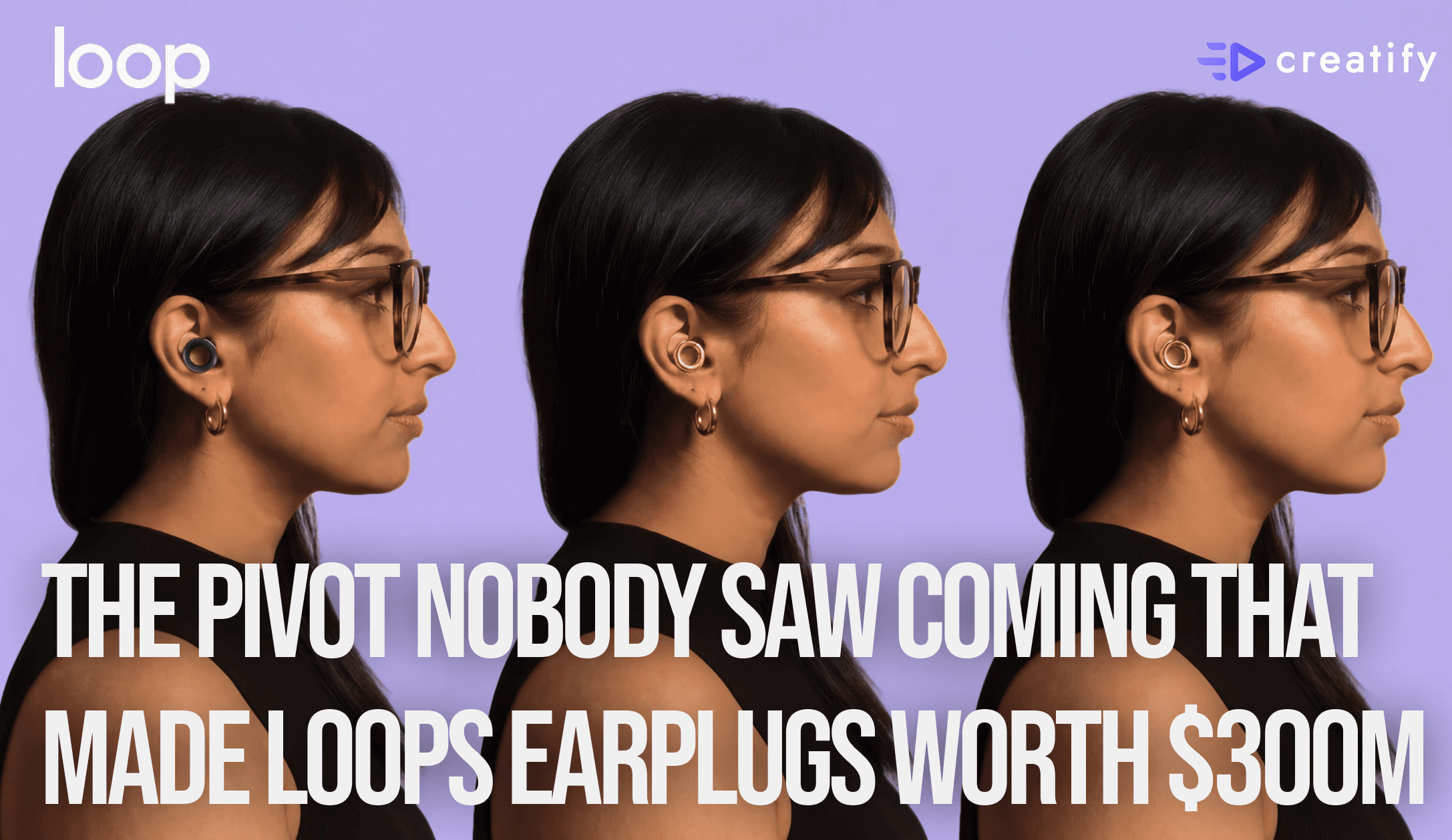
Loops estaba muriendo. Luego hicieron un giro. Ahora están en $300 millones
Loops estaba muriendo. Luego hicieron un giro. Ahora están en $300 millones

Niyah Ali
COMPARTIR


EN ESTE ARTÍCULO
Cómo Loop Earplugs pasó de $20K/mes a ser una marca de $300M | Creatify
Los ingresos de Loop colapsaron de la noche a la mañana cuando el COVID acabó con todo su mercado, y el giro que dieron convirtió una marca de tapones de oído de nicho en una potencia DTC de $300M. Aquí está el plan exacto: la percepción del cliente, el cambio de marca y la máquina de anuncios detrás de ello.
Cómo Loop se reconstruyó desde $20K/mes
Loop fue creado para los asistentes a conciertos. Tapones para los oídos elegantes y cómodos para personas que querían proteger su audición sin parecer que llevaban tapones de espuma de una ferretería. Para 2019, eso estaba funcionando: estaban alcanzando $475K en ingresos anuales. Luego el COVID golpeó y todo su mercado desapareció de la noche a la mañana.
Los ingresos mensuales se desplomaron de $100K a $20K. Los conciertos se acabaron. La base de clientes sobre la que habían construido toda la marca no tenía dónde ir.
En lugar de rendirse, se hicieron una pregunta: ¿quién exactamente necesita esto?
Esa pregunta lo desbloqueó todo. Personas con TDAH que necesitaban ayuda para concentrarse. Personas con sueño ligero. Viajeros frecuentes. Cualquiera cuyo mundo fuera un poco demasiado ruidoso. El sesenta por ciento de los clientes de Loop hoy en día nunca habían comprado tapones de oído antes. No robaron cuota de mercado, construyeron una categoría completamente nueva.
El cambio de marca que multiplicó por 10 sus ingresos en un año
Saber quién necesita tu producto es la mitad del trabajo. La otra mitad es hacer que lo quieran.
La posición original de Loop era funcional: protección auditiva, un dispositivo médico. Ese enfoque funciona para una audiencia de nicho, pero rápidamente limita tu potencial. Así que reenfocaron todo el producto. Ya no vendían protección auditiva. Vendían gafas de sol para tus oídos. Un accesorio de moda que se siente cómodo y se ve bien.
Ese cambio de lo funcional a lo aspiracional es directamente responsable de su salto de €12 millones a €126 millones en un solo año. Mismo producto. Identidad diferente. El movimiento que la mayoría de las marcas pasan por alto: las características convierten la consideración, la identidad convierte el deseo.
Dentro de la operación publicitaria de más de 1,800 anuncios de Loop en Meta
Una vez que tuvieron la posición correcta y los segmentos de audiencia adecuados, Loop escaló el volumen creativo a un nivel que la mayoría de las marcas nunca intenta.
Están ejecutando más de 1,800 anuncios solo en Meta, cada uno con una dirección creativa única. La mezcla: aproximadamente 60% de anuncios en video que transmiten narrativas centradas en personas, testimoniales estilo UGC y exhibiciones de productos, y 40% de anuncios de imagen estática que manejan la retargetización y la respuesta directa con imágenes de productos limpias y declaraciones de beneficios audaces.
Dentro de esos formatos, ejecutan simultáneamente cuatro categorías creativas: anuncios para audiencias frías amplias, anuncios personalizados microsegmentados construidos para usuarios con TDAH, padres y viajeros frecuentes, anuncios funcionales que llevan con el problema y anuncios de estilo de vida que vinculan el producto a una identidad. Su gasto publicitario está alrededor de $1.5 millones al mes solo en Meta.
Los ganchos están diseñados para que sientas el anuncio antes de entenderlo. Las colaboraciones de asociaciones con SoulCycle y McLaren F1 toman prestada la confianza de marcas premium en lugar de reconstruirla desde cero.
La arquitectura del embudo que realmente convierte
El volumen creativo inunda la parte superior del embudo. Lo que lo convierte es lo que vive debajo.
Loop divide el tráfico de dos maneras. El tráfico directo a la página del producto tiene ventas adicionales y cruzadas integradas: el valor del pedido aumenta automáticamente. El tráfico del cuestionario es donde se pone interesante. Su cuestionario hace tres cosas a la vez: captura datos de primera mano, amplía la lista de correos electrónicos y personaliza el viaje de compra basado en el perfil autodefinido.
Cuando alguien elige "viajero frecuente" o "dormidor ligero", la conversión ya ha ocurrido en su mente. Han dicho eso soy yo. Llegan a la página del producto ya convencidos.
El sistema detrás de una marca compuesta
Loop no solo construyó un producto, construyeron un sistema. El volumen creativo, la arquitectura de personajes y la captura de datos se alimentan entre sí. Esa es la diferencia entre una marca que crece y una que compone.
Las marcas que estudian la biblioteca de anuncios de Loop, las proporciones de formato, los ganchos, las rotaciones creativas, pueden descomponer todo el plan. Herramientas como
Creatify te permiten seguir lo que están ejecutando tus competidores y escalar tu propia producción creativa para igualar.
👉 Prueba Creatify gratis → https://app.creatify.ai/auth/login?ut=10
Cómo Loop Earplugs pasó de $20K/mes a ser una marca de $300M | Creatify
Los ingresos de Loop colapsaron de la noche a la mañana cuando el COVID acabó con todo su mercado, y el giro que dieron convirtió una marca de tapones de oído de nicho en una potencia DTC de $300M. Aquí está el plan exacto: la percepción del cliente, el cambio de marca y la máquina de anuncios detrás de ello.
Cómo Loop se reconstruyó desde $20K/mes
Loop fue creado para los asistentes a conciertos. Tapones para los oídos elegantes y cómodos para personas que querían proteger su audición sin parecer que llevaban tapones de espuma de una ferretería. Para 2019, eso estaba funcionando: estaban alcanzando $475K en ingresos anuales. Luego el COVID golpeó y todo su mercado desapareció de la noche a la mañana.
Los ingresos mensuales se desplomaron de $100K a $20K. Los conciertos se acabaron. La base de clientes sobre la que habían construido toda la marca no tenía dónde ir.
En lugar de rendirse, se hicieron una pregunta: ¿quién exactamente necesita esto?
Esa pregunta lo desbloqueó todo. Personas con TDAH que necesitaban ayuda para concentrarse. Personas con sueño ligero. Viajeros frecuentes. Cualquiera cuyo mundo fuera un poco demasiado ruidoso. El sesenta por ciento de los clientes de Loop hoy en día nunca habían comprado tapones de oído antes. No robaron cuota de mercado, construyeron una categoría completamente nueva.
El cambio de marca que multiplicó por 10 sus ingresos en un año
Saber quién necesita tu producto es la mitad del trabajo. La otra mitad es hacer que lo quieran.
La posición original de Loop era funcional: protección auditiva, un dispositivo médico. Ese enfoque funciona para una audiencia de nicho, pero rápidamente limita tu potencial. Así que reenfocaron todo el producto. Ya no vendían protección auditiva. Vendían gafas de sol para tus oídos. Un accesorio de moda que se siente cómodo y se ve bien.
Ese cambio de lo funcional a lo aspiracional es directamente responsable de su salto de €12 millones a €126 millones en un solo año. Mismo producto. Identidad diferente. El movimiento que la mayoría de las marcas pasan por alto: las características convierten la consideración, la identidad convierte el deseo.
Dentro de la operación publicitaria de más de 1,800 anuncios de Loop en Meta
Una vez que tuvieron la posición correcta y los segmentos de audiencia adecuados, Loop escaló el volumen creativo a un nivel que la mayoría de las marcas nunca intenta.
Están ejecutando más de 1,800 anuncios solo en Meta, cada uno con una dirección creativa única. La mezcla: aproximadamente 60% de anuncios en video que transmiten narrativas centradas en personas, testimoniales estilo UGC y exhibiciones de productos, y 40% de anuncios de imagen estática que manejan la retargetización y la respuesta directa con imágenes de productos limpias y declaraciones de beneficios audaces.
Dentro de esos formatos, ejecutan simultáneamente cuatro categorías creativas: anuncios para audiencias frías amplias, anuncios personalizados microsegmentados construidos para usuarios con TDAH, padres y viajeros frecuentes, anuncios funcionales que llevan con el problema y anuncios de estilo de vida que vinculan el producto a una identidad. Su gasto publicitario está alrededor de $1.5 millones al mes solo en Meta.
Los ganchos están diseñados para que sientas el anuncio antes de entenderlo. Las colaboraciones de asociaciones con SoulCycle y McLaren F1 toman prestada la confianza de marcas premium en lugar de reconstruirla desde cero.
La arquitectura del embudo que realmente convierte
El volumen creativo inunda la parte superior del embudo. Lo que lo convierte es lo que vive debajo.
Loop divide el tráfico de dos maneras. El tráfico directo a la página del producto tiene ventas adicionales y cruzadas integradas: el valor del pedido aumenta automáticamente. El tráfico del cuestionario es donde se pone interesante. Su cuestionario hace tres cosas a la vez: captura datos de primera mano, amplía la lista de correos electrónicos y personaliza el viaje de compra basado en el perfil autodefinido.
Cuando alguien elige "viajero frecuente" o "dormidor ligero", la conversión ya ha ocurrido en su mente. Han dicho eso soy yo. Llegan a la página del producto ya convencidos.
El sistema detrás de una marca compuesta
Loop no solo construyó un producto, construyeron un sistema. El volumen creativo, la arquitectura de personajes y la captura de datos se alimentan entre sí. Esa es la diferencia entre una marca que crece y una que compone.
Las marcas que estudian la biblioteca de anuncios de Loop, las proporciones de formato, los ganchos, las rotaciones creativas, pueden descomponer todo el plan. Herramientas como
Creatify te permiten seguir lo que están ejecutando tus competidores y escalar tu propia producción creativa para igualar.
👉 Prueba Creatify gratis → https://app.creatify.ai/auth/login?ut=10

¿Listo para convertir tu producto en un video atractivo?
También te puede interesar





¿Listo para acelerar tu marketing?
Prueba tus nuevas ideas de producto en minutos con anuncios de video generados por IA


¿Listo para acelerar tu marketing?
Prueba tus nuevas ideas de producto en minutos con anuncios de video generados por IA
¿Listo para acelerar tu marketing?
Prueba tus nuevas ideas de producto en minutos con anuncios de video generados por IA
¿Listo para acelerar tu marketing?
Prueba tus nuevas ideas de producto en minutos con anuncios de video generados por IA

Genera anuncios de video atractivos para tus productos
desde cualquier URL



Creatify Lab • Copyright © 2026
Idioma
Spanish
Características
Herramientas
Casos de Uso
Genera anuncios de video atractivos para tus productos
desde cualquier URL
Creatify Lab • Copyright © 2026
Idioma
Spanish
Características
Herramientas
Casos de Uso
Genera anuncios de video atractivos para tus productos
desde cualquier URL
Creatify Lab • Copyright © 2026
Idioma
Spanish
Características
Herramientas
Casos de Uso
YouTube
Snapchat
Shopify
Crear Avatar de IA
OTT y CTV
Generación de Leads
Genera anuncios de video atractivos para tus productos
desde cualquier URL
Creatify Lab • Copyright © 2026
Idioma
Spanish
Características
Herramientas
Casos de Uso