
Equipo Creatify
COMPARTIR


EN ESTE ARTÍCULO
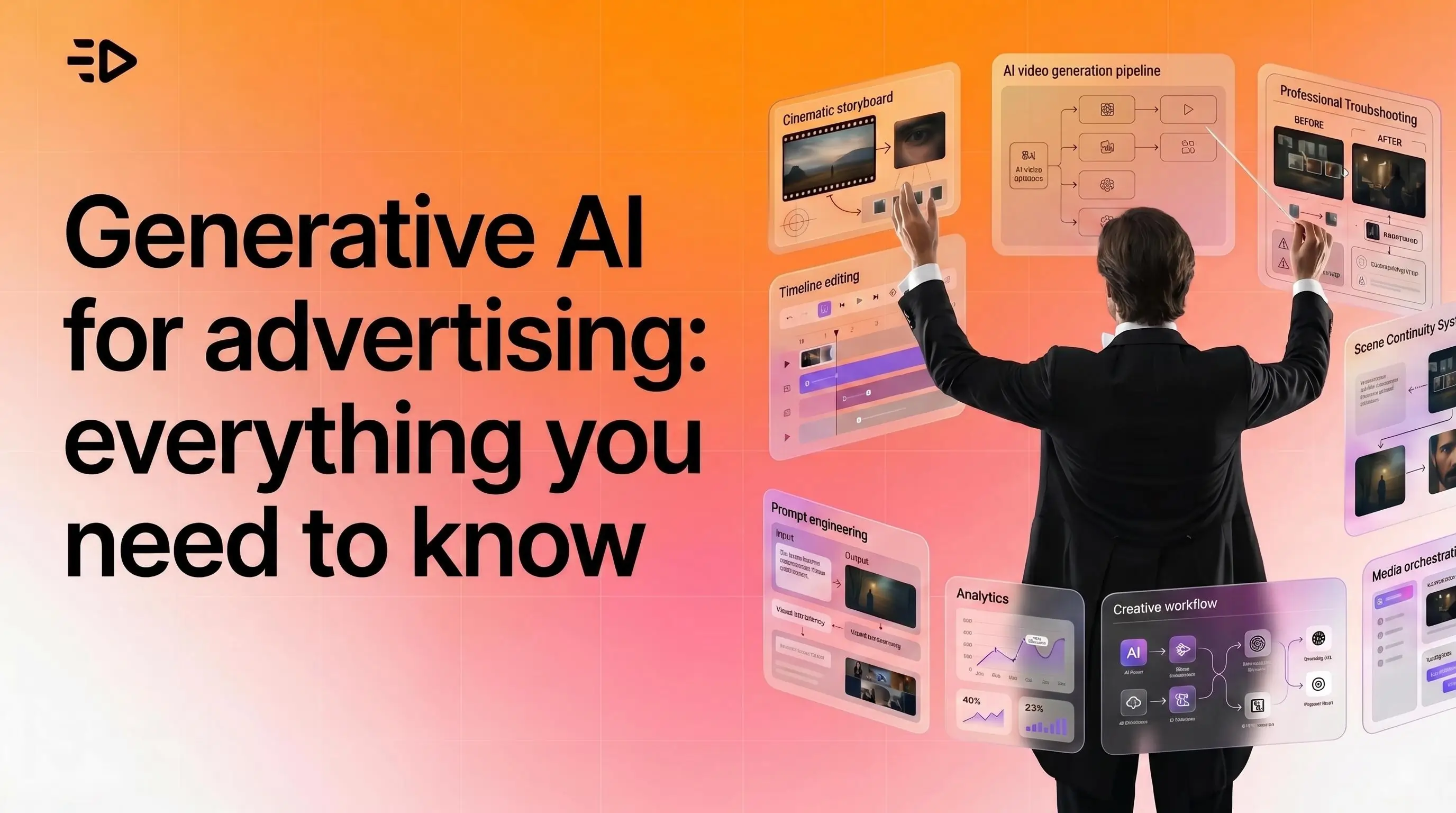
La IA generativa ha dejado atrás la fase de "presionar un botón y obtener un video". Herramientas como AdFlow Co-Pilot ahora permiten a los marketers escribir instrucciones precisas en lenguaje natural y luego ajustar cada elemento (guion, voz en off, avatar, toma de producto, gancho, CTA) a través de nodos individuales en un lienzo visual. Diriges la IA de la misma manera que un director creativo dirige un rodaje, con la diferencia de que cada iteración tarda segundos en lugar de días y cuesta centavos en lugar de miles de dólares.
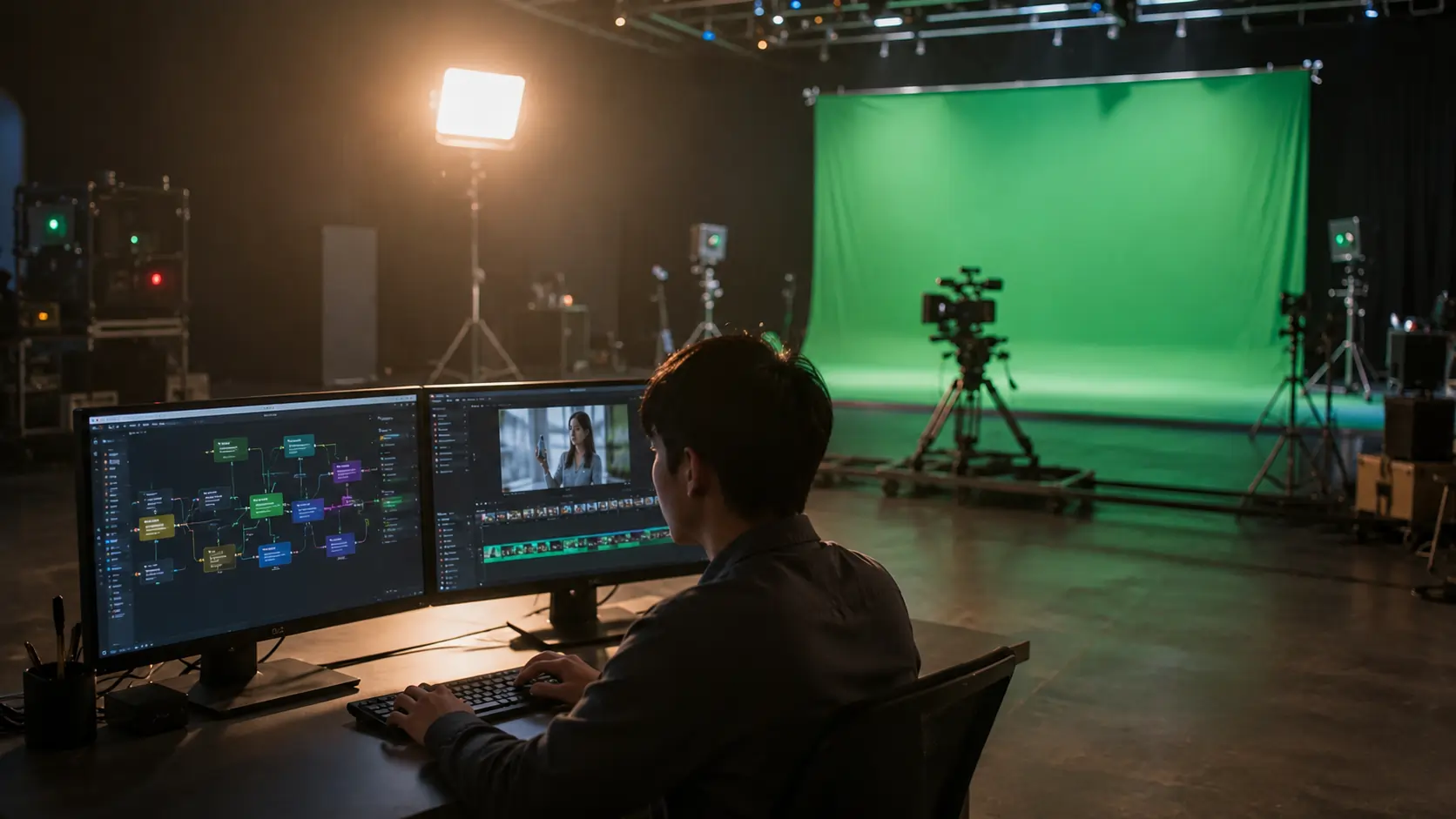
Ese control redefine la forma en que planificas las campañas. Un flujo de trabajo base, 15 ramificaciones. Cambia el gancho en una, el avatar en otra, el CTA en una tercera. Veinte minutos después tienes 15 variantes compitiendo en el mercado y sabes exactamente qué variable marcó la diferencia.
Esta guía explica cómo la IA generativa en la publicidad transforma la producción creativa, la personalización y la medición. Dónde aporta valor real, dónde introduce riesgos y cómo implementarla sin perder la confianza en la marca ni el cumplimiento normativo.
Dónde encaja la IA generativa en el ecosistema publicitario
La mayor parte de la IA en la publicidad ha vivido en el lado analítico: segmentación de audiencias, optimización de pujas, atribución. La IA generativa se sitúa en el lado de la producción. Construye los recursos (guiones, imágenes, video, audio) que luego el lado analítico distribuye y mide.
El Generative AI Playbook de la IAB plantea que esto afecta a cada etapa del flujo de trabajo, desde la ideación hasta la medición. Ese planteamiento es acertado, pero el impacto no está distribuido de manera uniforme. Las mayores ganancias en este momento se encuentran en la producción creativa y en las pruebas de variantes, donde la IA generativa convierte lo que solía ser un problema de equipo y plazos en un problema de flujo de trabajo y prompts.
Cómo la IA generativa está redefiniendo la producción creativa
La producción creativa es donde la IA generativa tiene el impacto más inmediato y medible en los flujos de trabajo publicitarios.
El problema del volumen
La producción de anuncios tradicional crea un cuello de botella que limita cuántas variaciones creativas puede probar un equipo. Un video profesional con actores reales cuesta entre $3,000 y $15,000 por video. Un ciclo completo de producción tarda de 2 a 4 semanas desde el briefing hasta la exportación final. Con ese costo y ese plazo, la mayoría de los equipos solo pueden permitirse producir de 5 a 15 variaciones de video al mes.
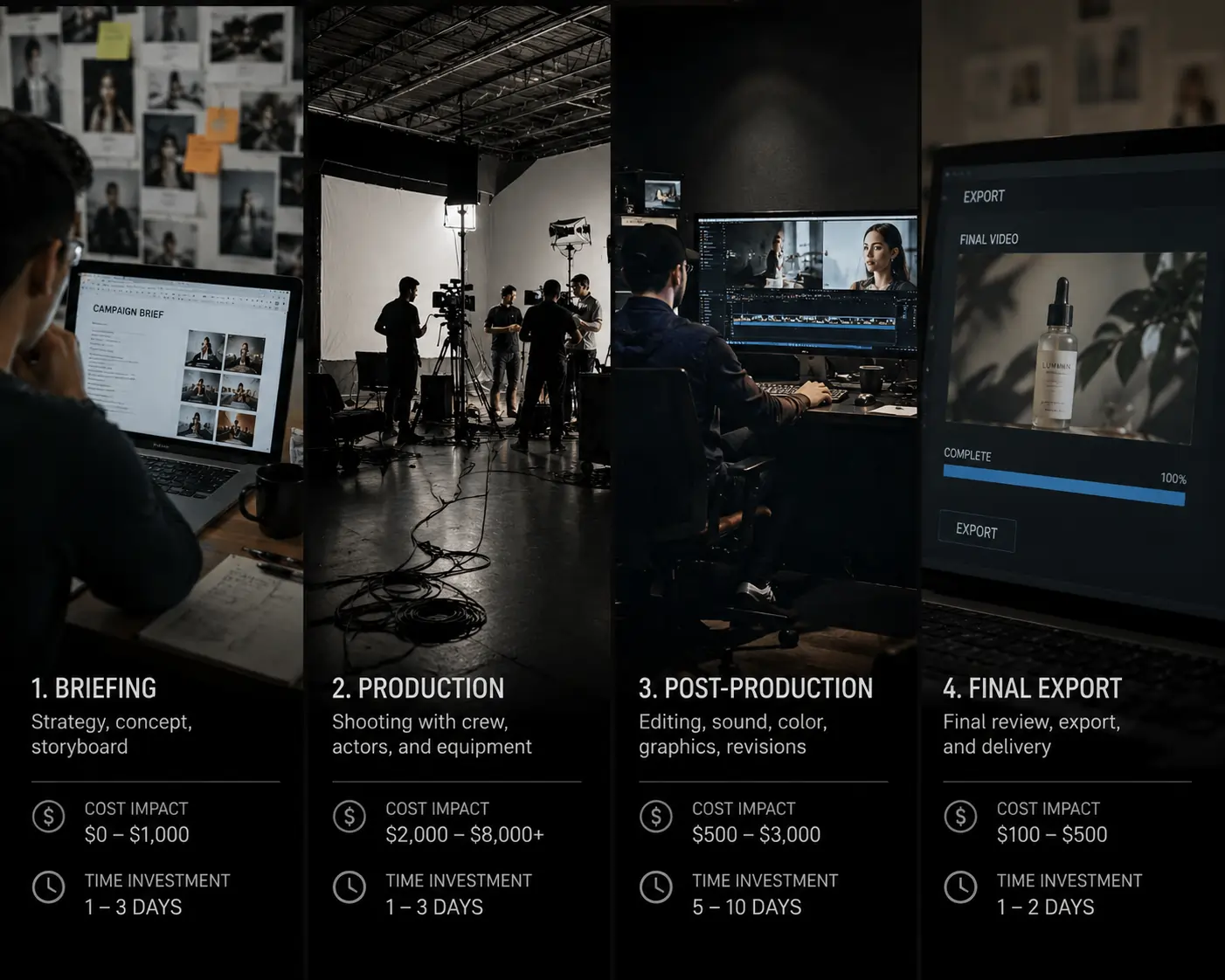
Eso es un problema porque las investigaciones de McKinsey y los datos de rendimiento del sector demuestran sistemáticamente que el volumen creativo impulsa el rendimiento de las campañas, especialmente en plataformas impulsadas por algoritmos donde el sistema publicitario utiliza el contenido creativo para encontrar audiencias. Las marcas que prueban de 20 a 40 variantes de anuncios por campaña encuentran ganadores más rápido, reducen su CPA y escalan el presupuesto con más confianza que las marcas que ejecutan un puñado de creatividades muy pulidas.
La IA generativa reduce drásticamente los plazos de producción. En lugar de semanas por video, los equipos producen variaciones en minutos. En lugar de $3,000 por recurso, el costo se reduce a unos pocos dólares. El límite pasa de ser "cuántos anuncios podemos permitirnos crear" a "cuántos anuncios podemos permitirnos probar".
Cómo se ve esto en la práctica
Amazon Ads documenta varios casos de uso de IA generativa para anunciantes: generación automática de textos publicitarios, mejora de imágenes de producto, pruebas de variación de títulos y creación de videos a partir de fichas de producto. Estas no son funciones experimentales. Están integradas en el flujo de trabajo de creación de anuncios para millones de vendedores.
En el lado de las plataformas, herramientas como Creatify demuestran lo que sucede cuando la IA generativa cubre todo el proceso creativo. Un marketer pega la URL de un producto y el rastreador de IA de la plataforma extrae los datos del producto, genera variaciones del guion, produce videos basados en avatares en más de 75 idiomas con más de 1,500 actores de IA y exporta recursos optimizados para plataformas como Meta, TikTok, YouTube y AppLovin. Alibaba integró este flujo de trabajo directamente en su panel de vendedores, y estos generaron más de 200,000 anuncios de video en 3 meses, implementando más del 80% de esos videos en campañas reales.
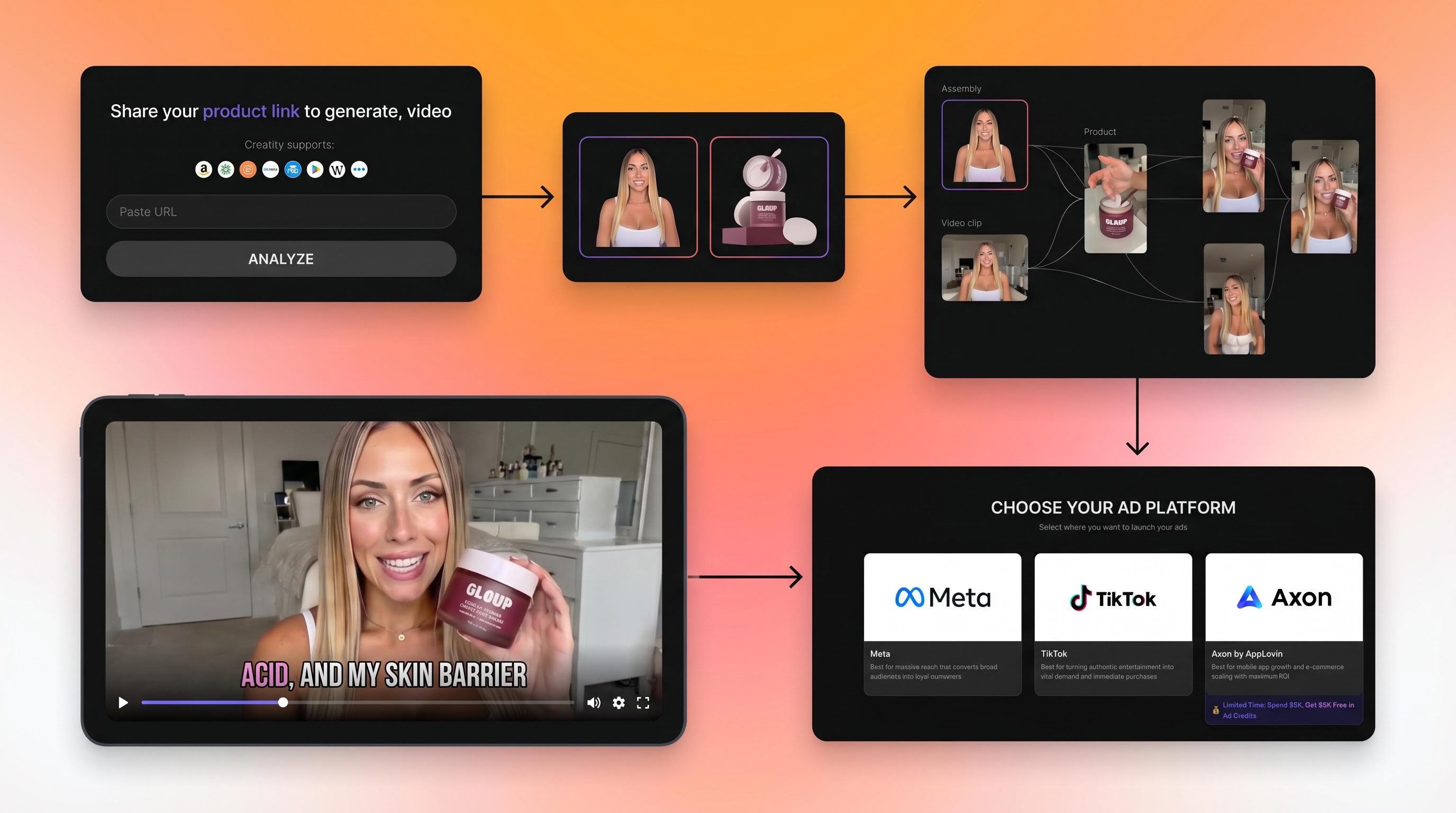
El cambio operativo es concreto: Unicorn Marketers se hizo cargo de una cuenta publicitaria de bajo rendimiento para Designrr (0.77 de ROAS, biblioteca creativa agotada) y utilizó IA generativa para producir más de 150 variaciones de anuncios en 2 semanas. El CPA disminuyó un 45%, el ROAS mejoró un 73% y el cliente aumentó el presupuesto en un 15%.
Esto no es un caso aislado. Es lo que sucede cuando desaparece la limitación de producción y los equipos pueden probar al volumen para el que las plataformas publicitarias están diseñadas para optimizar.
Lee también: Mejores prácticas para anuncios de Facebook: consejos y ejemplos
Personalización y segmentación a escala
La IA generativa cambia la segmentación al hacer que la personalización sea económicamente viable en segmentos que antes eran demasiado pequeños para justificar una creatividad personalizada.
La investigación de McKinsey sobre personalización impulsada por IA describe un cambio de mensajes basados en segmentos amplios a contenido individualizado adaptado por tono, imágenes, texto y experiencia. El cuello de botella nunca fue la capacidad de segmentación (las plataformas publicitarias han tenido segmentación granular durante años), sino la capacidad de producción creativa para ofrecer diferentes mensajes a diferentes audiencias.
Cuando producir cada variación creativa cuesta casi nada, la lógica cambia:
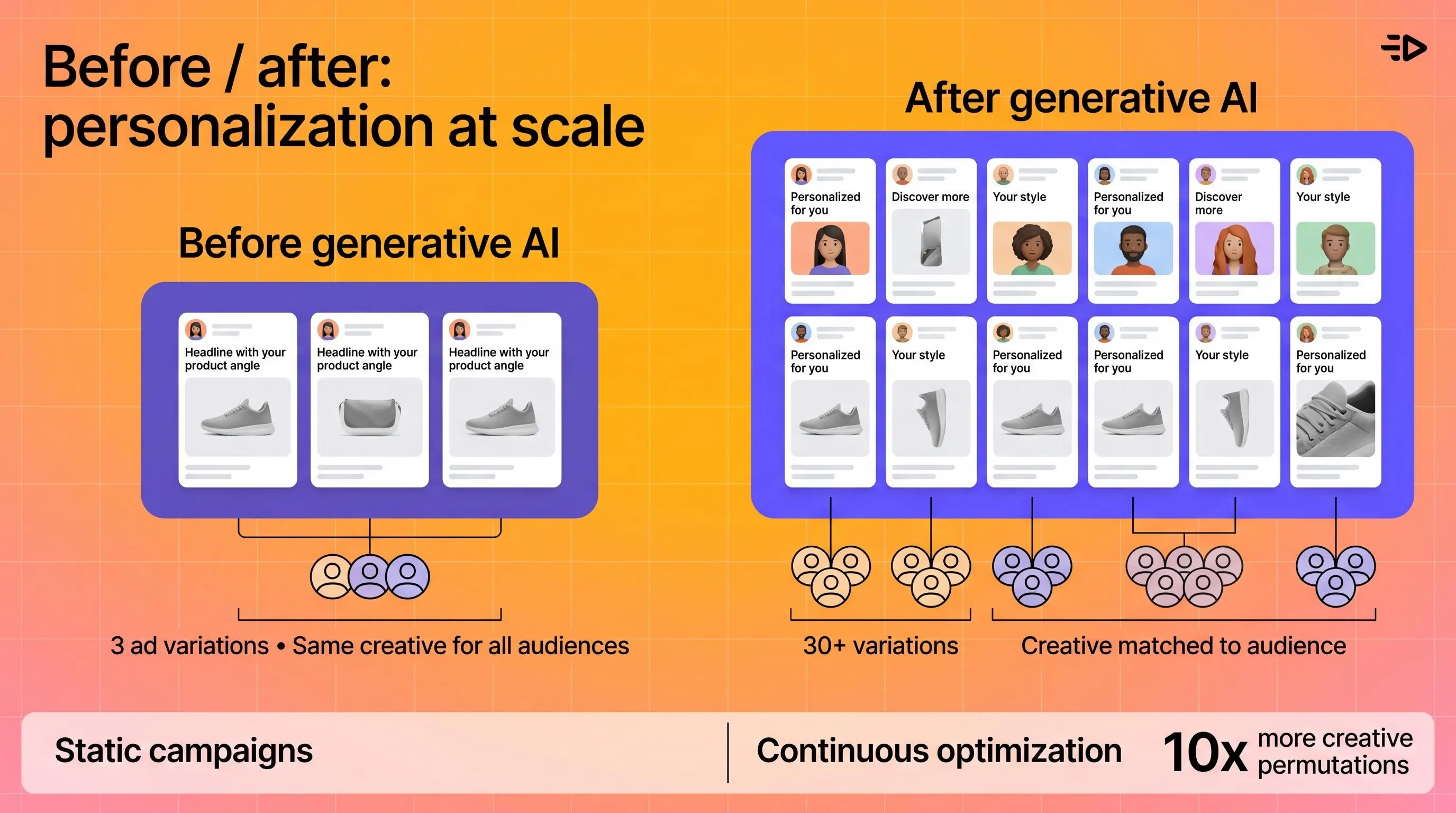
Antes de la IA generativa: Una marca crea 3 variaciones de anuncios y las distribuye en 5 segmentos de audiencia. Cada segmento ve esencialmente el mismo mensaje.
Después de la IA generativa: La misma marca crea 30 variaciones probando diferentes ganchos, avatares, ángulos de producto y CTA, y luego deja que el algoritmo de la plataforma asocie la creatividad adecuada con la audiencia correcta. El algoritmo tiene más señales con las que trabajar y el rendimiento mejora porque el ajuste entre la creatividad y la audiencia es más estrecho.
LAIFE, una marca de longevidad que se lanzó en TikTok Shop, utilizó este enfoque para probar 50 variaciones de video por semana en diferentes ángulos de posicionamiento de producto, estilos de avatar y segmentos de audiencia. Su costo por pedido alcanzó los $3.89 y superaron con éxito la fase de inicio en frío de TikTok, una etapa en la que la mayoría de las marcas fracasan porque no pueden generar suficiente volumen creativo para que el algoritmo optimice.
La personalización no se limita al video. La IA generativa produce textos publicitarios localizados en docenas de idiomas, adapta las descripciones de los productos para diferentes perfiles de compradores y genera variaciones de imágenes que coinciden con las preferencias regionales o demográficas. El resultado son anuncios más relevantes, lo que se traduce en un mayor engagement y menos desperdicio de presupuesto.
Cómo cambia la medición
La IA generativa afecta a la medición de dos maneras: aumenta el volumen de variables que se pueden probar y acorta el flujo de retroalimentación entre la producción creativa y los datos de rendimiento.
Más variables, aprendizaje más rápido
Cuando una marca ejecuta 5 variaciones creativas, el marco de medición es sencillo: ¿cuál de las 5 funcionó mejor? Cuando la misma marca ejecuta 50 o 100 variaciones, la pregunta de medición pasa a ser el reconocimiento de patrones: ¿qué ganchos convierten mejor? ¿Qué estilos de avatar impulsan el engagement en qué segmentos? ¿Qué CTA producen la tasa de conversión más alta por plataforma?
Aquí es donde la investigación de Deloitte sobre la IA generativa en las operaciones de marketing se vuelve relevante. Describen un flujo de trabajo donde el contenido generado por IA y los datos de rendimiento crean un bucle de aprendizaje continuo: generar variantes, implementar, medir y retroalimentar las señales de rendimiento en el siguiente ciclo de generación.
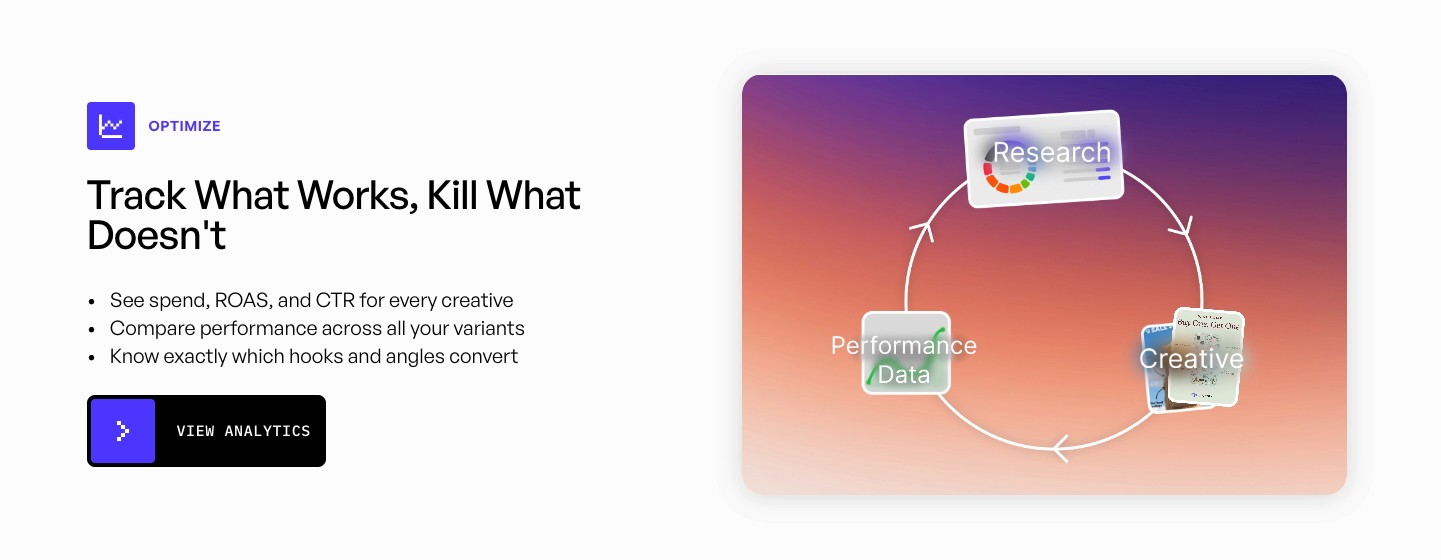
Las plataformas están integrando este bucle directamente en sus herramientas. Las funciones de Ad Insights y analítica creativa de Creatify (disponibles en los planes Pro) conectan los recursos generados con los datos de rendimiento, mostrando qué variantes convierten e informando la siguiente ronda de producción creativa. La creatividad misma se convierte en un instrumento de medición, no solo en un resultado.
El siguiente nivel es la atribución a nivel creativo: sistemas de IA que etiquetan elementos visuales, ganchos, CTA y estilos de producción en cientos de variantes para identificar por qué funcionó un anuncio, no solo si funcionó. Esto traslada la medición de "el anuncio B superó al anuncio A" a "la iluminación cálida, los ganchos enfocados en el problema y los avatares femeninos de 30 a 40 años impulsaron una conversión un 20% mayor en este segmento". Esa granularidad hace que cada ciclo de generación subsiguiente sea más inteligente.
La atribución se vuelve más compleja
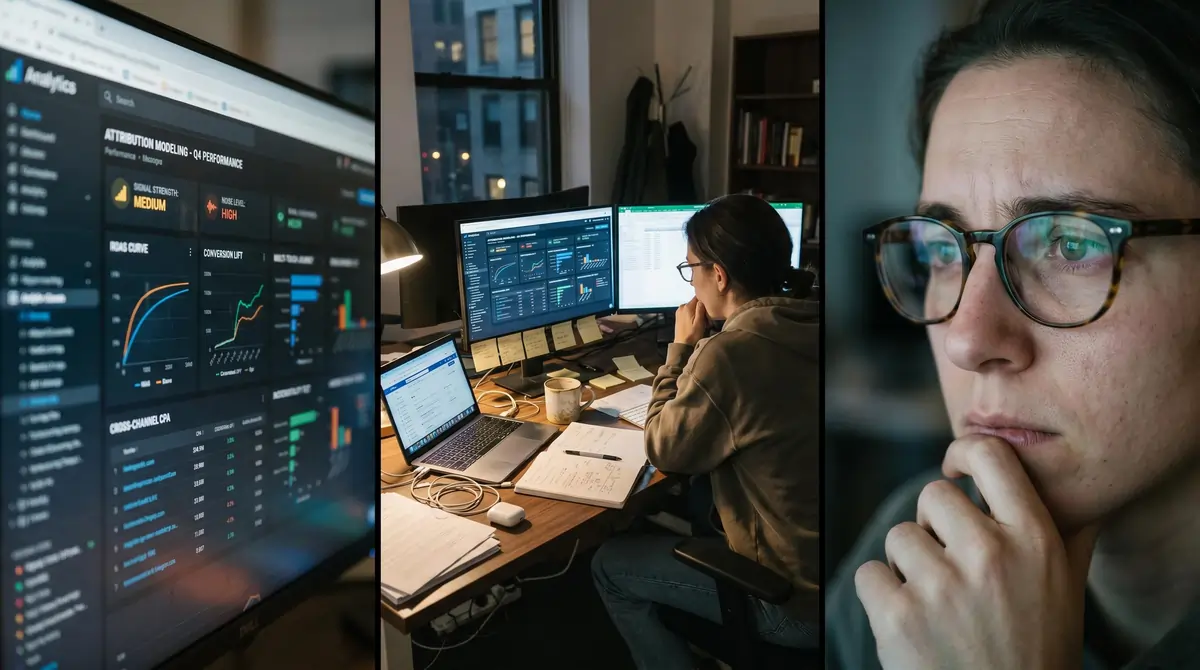
La otra cara de la moneda: más variaciones creativas significa más complejidad en la atribución. Cuando ejecutas 100 variantes de anuncios en 4 plataformas con mensajes personalizados por segmento, aislar qué impulsó una conversión requiere una medición más sofisticada que la simple atribución de último clic.
Esta complejidad es manejable, pero significa que los equipos que adoptan la IA generativa para la publicidad deben invertir en su pila de herramientas de medición junto con su pila de producción creativa. Más creatividad sin una mejor medición solo produce más ruido.
Lee también: Cómo crear un video de capacitación sin un equipo de filmación en 2026
Los riesgos que no debes pasar por alto
La IA generativa introduce riesgos específicos que los anunciantes deben gestionar activamente, y no simplemente reconocer en una presentación.
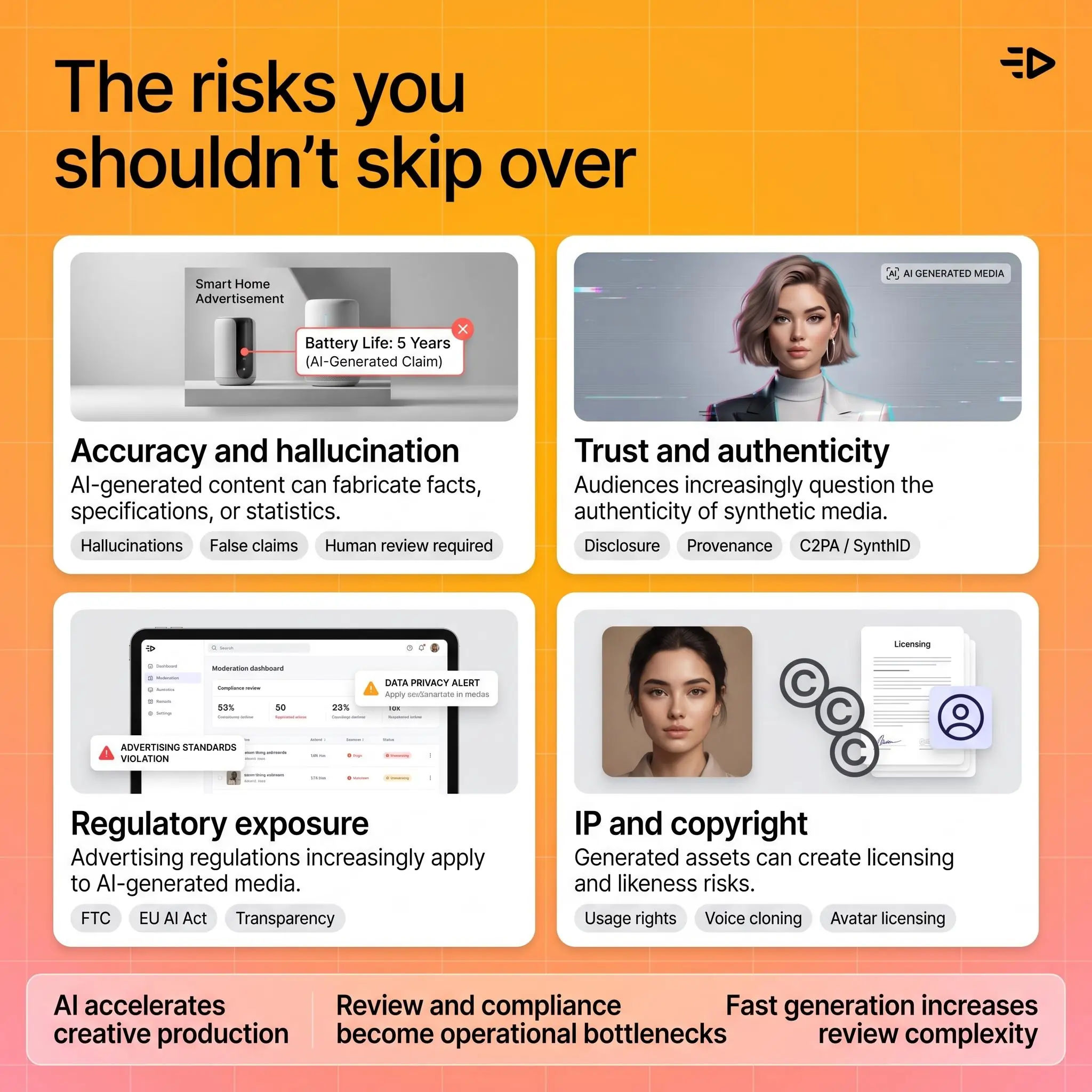
Precisión y alucinación
Los modelos generativos pueden producir contenido que suena seguro pero contiene afirmaciones fabricadas, especificaciones de producto incorrectas o estadísticas engañosas. La guía del NIST sobre contenido sintético documenta estos riesgos en detalle, incluyendo el desafío de detectar imprecisiones en textos generados por IA que se leen como autoritativos.
Para los anunciantes, esto significa que cada afirmación generada por IA necesita una revisión humana antes de publicarse. Un beneficio de producto alucinado en un anuncio no es solo un problema de calidad. Es una posible infracción regulatoria.
Confianza y autenticidad
Los medios sintéticos (imágenes, video y audio generados por IA) plantean dilemas sobre la autenticidad que son especialmente sensibles en la publicidad. La Federación de Científicos Americanos destaca la necesidad de rastrear el origen de los contenidos y de establecer estándares de identificación para mantener la confianza del público en los medios. Estándares como C2PA (adoptado por Adobe, Microsoft y Google) y SynthID de Google ahora integran metadatos de procedencia en el contenido generado por IA, y las principales plataformas publicitarias detectan y etiquetan cada vez más los medios sintéticos de forma automática.
Para las marcas, la pregunta práctica es: ¿aceptará tu audiencia el contenido generado por IA? La respuesta depende de la calidad de la ejecución y de la transparencia. Tec-Do 2.0, un proveedor de marketing digital que atiende a más de 80,000 clientes empresariales, descubrió que los anuncios de video con IA alcanzaban del 70 al 80% del rendimiento de los videos con actores reales, costando un 90% menos. La brecha existe, pero es lo suficientemente estrecha como para que la viabilidad económica favorezca abrumadoramente la producción con IA para pruebas y escalado.
Exposición regulatoria
La FTC ha estado cada vez más activa en la fiscalización del contenido de marketing generado por IA. El análisis legal de Katten describe cómo se aplican las directrices de la FTC a la publicidad generada por IA, haciendo hincapié en la transparencia, la rendición de cuentas y la protección del consumidor.
La conclusión práctica: integra el cumplimiento normativo en tu flujo de trabajo de IA generativa desde el primer día, no como una idea de último momento. Eso significa procesos de revisión documentados, propiedad clara del contenido generado por IA y divulgación cuando lo exija la plataforma o la regulación. Para las marcas que realizan campañas en los mercados de la UE, la Ley de IA de la UE (ahora en vigor) incluye requisitos específicos de transparencia para los medios sintéticos utilizados en publicidad.
Propiedad intelectual y derechos de autor
El manual de la IAB sobre IA, propiedad intelectual y transacciones de publicidad digital aborda el panorama en evolución de los derechos de propiedad intelectual en torno al contenido generado por IA. Los anunciantes deben comprender los términos de licencia de las herramientas que utilizan, especialmente para el contenido que se ejecutará en medios de pago.
La mayoría de las plataformas comerciales de publicidad con IA (incluida Creatify) otorgan derechos de uso en los planes de pago, pero los detalles varían. Revisa los términos de servicio antes de escalar contenido generado por IA en tus campañas. Una consideración adicional: los avatares de IA y la síntesis de voz crean riesgos de derechos de imagen si el resultado se asemeja al aspecto o la voz de una persona real sin su permiso. Limítate a bibliotecas de avatares con licencia o avatares personalizados creados a partir de material original autorizado.
Gobernanza e implementación
Las marcas que obtienen el mayor valor de la IA generativa en la publicidad comparten un patrón común: comienzan con un enfoque acotado, lo miden todo y construyen la gobernanza junto con la producción.
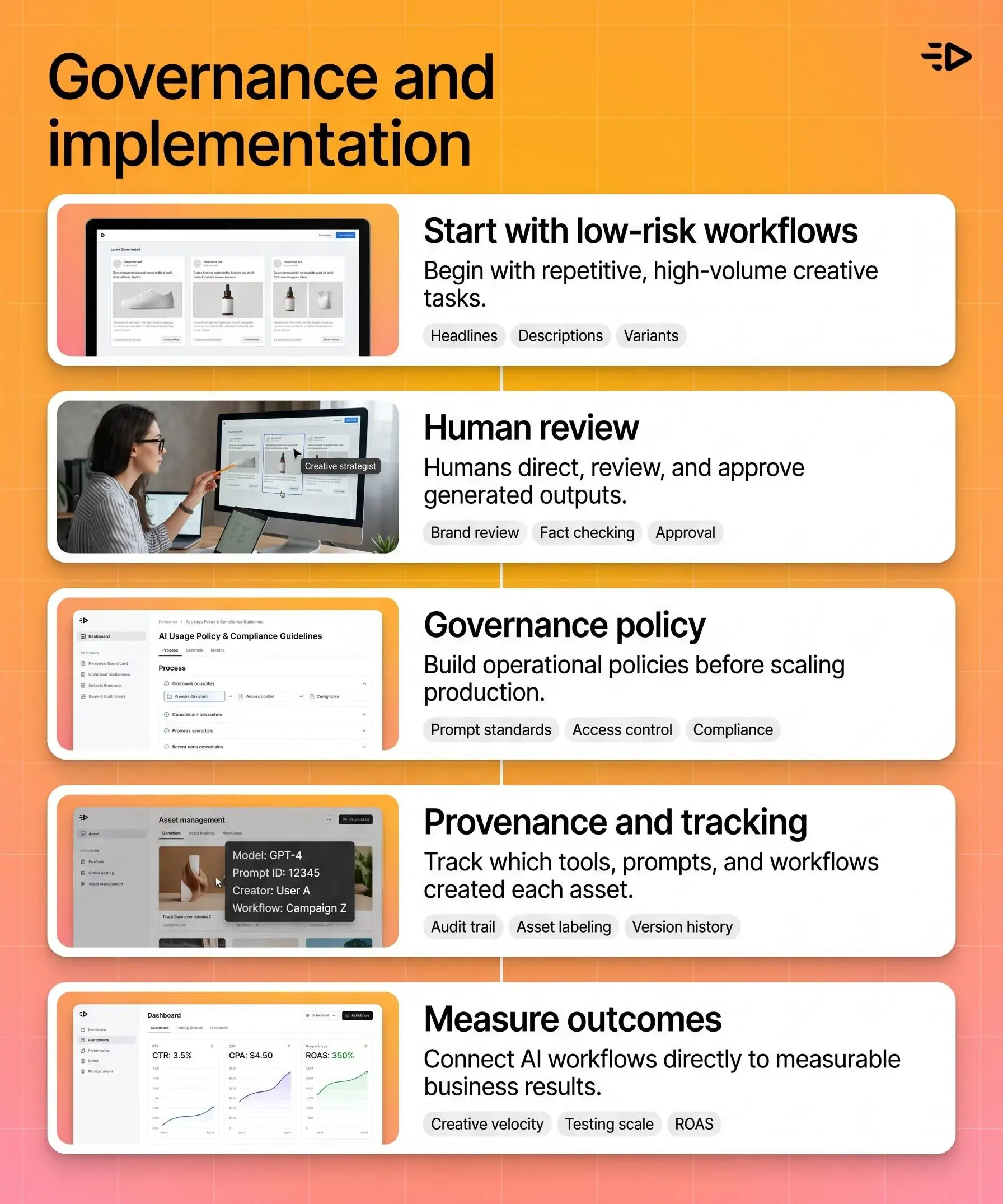
Comienza con casos de uso de alto volumen y bajo riesgo
Amazon Ads recomienda comenzar con la generación de títulos, descripciones de productos y expansión de variantes. Estas son tareas de alto volumen donde la IA ahorra un tiempo valioso y el riesgo de un único resultado negativo es bajo (porque estás probando muchas variaciones y eliminando rápidamente las que no funcionan).
Mantén a los humanos en el proceso
La investigación de Deloitte Digital enfatiza que la IA generativa funciona mejor cuando se combina con el criterio humano, los sistemas de marca y los datos de rendimiento. El rol del humano pasa de "producir la pieza creativa" a "dirigir la IA, revisar el resultado y tomar decisiones estratégicas".
En la práctica, esto se traduce en un equipo de 1 a 3 personas gestionando un flujo de trabajo que antes requería de 8 a 12. Los casos de estudio de Creatify muestran constantemente este patrón: Flamingo Shop pasó de coordinar a fotógrafos, modelos y editores externos a tener a un solo miembro del equipo generando más de 100 videos de avatares de IA al mes. El número de empleados no creció. El volumen de producción sí.
Crea políticas antes de necesitarlas
El manual de la IAB recomienda establecer políticas para el acceso a datos, estándares de prompts, revisión legal y origen del contenido desde el primer día. Esperar a que surja un problema de cumplimiento es más costoso que construir barreras de seguridad de antemano.
Una gobernanza práctica incluye definir quién puede generar contenido, quién lo revisa antes de su implementación, cómo se etiquetan internamente los recursos generados por IA, qué divulgación se requiere externamente y cómo los datos de rendimiento retroalimentan el flujo de trabajo de producción.
Un marco de gobernanza funcional cubre estos puntos específicos:
Filtros de revisión humana. Cada anuncio generado por IA es revisado por un humano antes de publicarse. Sin excepciones para resultados de "alta confianza". La revisión comprueba la precisión de los datos, la alineación con la marca y el cumplimiento normativo.
Sustentación de afirmaciones. El texto generado por IA que incluya afirmaciones sobre productos, estadísticas o lenguaje sobre el rendimiento se contrasta con el material de origen antes de su implementación. Los beneficios alucinados en un anuncio son una responsabilidad regulatoria, no solo un problema de calidad.
Divulgación y etiquetado. Define cuándo y dónde divulgar el contenido generado por IA, tanto según los requisitos de la plataforma como según los estándares internos. Etiqueta todos los recursos generados por IA en tu sistema de gestión de recursos para que el equipo sepa qué es sintético.
Rastreo de procedencia. Registra qué herramienta de IA, modelo y prompt produjeron cada recurso. Esto crea un registro de auditoría para revisiones de cumplimiento y ayuda a los equipos a comprender qué flujos de trabajo producen los mejores resultados.
Registros de aprobación. Documenta quién revisó y aprobó cada recurso antes de su implementación. Si surge una duda de cumplimiento seis meses después, necesitarás un registro documentado.
Vincula todo a resultados medibles
La IA generativa debería mejorar métricas específicas: velocidad creativa (anuncios producidos por semana), alcance de las pruebas (variantes por campaña), tiempo de lanzamiento, CPA, CTR, ROAS o costo de producción por recurso. Si no puedes señalar una métrica que haya mejorado, la implementación no está funcionando.
Lo que distingue a los equipos que toman la delantera
Las predicciones de Marketing Dive para 2026 y la investigación de McKinsey sobre personalización impulsada por IA apuntan en la misma dirección: una integración más profunda de la IA generativa en toda la pila publicitaria, desde la preproducción hasta la medición.
La brecha entre "generar un anuncio" y "lanzar una campaña" se está cerrando rápidamente. Ya existen herramientas que conectan la generación de recursos con la implementación en plataformas. El siguiente paso es cerrar el bucle por completo: los datos de rendimiento retroalimentan el flujo de trabajo de generación de forma automática, de modo que el sistema aprende qué ganchos, avatares y CTA convierten para qué segmentos, y el siguiente lote de variantes refleja esa señal.
Las predicciones de Marketing Dive para 2026 y la investigación de McKinsey sobre personalización impulsada por IA apuntan a lo mismo: una integración más estrecha entre creatividad, medios y medición, con la IA encargándose de una mayor parte de la ejecución mientras los humanos se encargan de la estrategia y el criterio de marca.
Los equipos que están tomando la delantera en este momento tratan la IA generativa como infraestructura, no como una función aislada. Han creado gobernanza, han capacitado a su personal para dirigir flujos de trabajo de IA en lugar de producir recursos manualmente y han conectado su línea de producción creativa con su sistema de medición. Todos los demás siguen generando recursos individuales y subiéndolos a mano.
Lee también: Cómo hacer un video de producto en 2026 (sin necesidad de estudio)
Preguntas frecuentes
¿Qué es la IA generativa en la publicidad?
La IA generativa en la publicidad se refiere a modelos de IA que crean nuevos contenidos (textos publicitarios, imágenes, video, audio) para campañas, a diferencia de la IA analítica que optimiza la segmentación o la atribución. Abarca desde la generación automática de títulos hasta la producción completa de anuncios de video a partir de la URL de un producto.
¿Cómo se utiliza la IA generativa para los anuncios?
La IA generativa para anuncios abarca la producción creativa (generación de video, imágenes y textos), la personalización (adaptación de mensajes para diferentes audiencias y plataformas), las pruebas de variantes (producción de docenas de variaciones creativas para encontrar ganadores) y la automatización del flujo de trabajo (reducción del tiempo de producción de semanas a minutos).
¿Cuáles son los riesgos de la publicidad con IA generativa?
Los principales riesgos incluyen la alucinación de contenido (la IA produce afirmaciones inexactas), preocupaciones sobre la seguridad de la marca con medios sintéticos, exposición regulatoria por parte de la FTC y otros organismos, y ambigüedad de propiedad intelectual/derechos de autor en torno a los recursos generados por IA. Todos ellos son manejables con una gobernanza adecuada, revisión humana y procesos documentados.
¿La IA generativa está reemplazando a los anunciantes humanos?
No. La IA generativa traslada el rol humano de la producción de recursos creativos a la dirección de sistemas de IA, la revisión de resultados y la toma de decisiones estratégicas. Los equipos que utilizan la IA generativa de manera eficaz tienden a producir un volumen creativo de 10 a 50 veces mayor con el mismo o menor número de empleados, pero el criterio estratégico y editorial sigue siendo humano.
¿Cómo mejora la IA generativa el rendimiento de los anuncios?
Al permitir pruebas creativas de alto volumen. En lugar de adivinar qué anuncio funcionará mejor, los equipos generan de 20 a más de 100 variaciones y permiten que los algoritmos de las plataformas encuentren a los ganadores. Este enfoque produce de manera consistente un CPA más bajo, un CTR más alto y un mejor ROAS, porque el algoritmo tiene más señales creativas para optimizar de manera eficiente.
¿Qué deben buscar los anunciantes en las herramientas de IA generativa?
Para anuncios con IA generativa a escala, prioriza herramientas que cubran todo el proceso de producción (guion, imagen, video, exportación), admitan múltiples modelos de IA, se integren con las principales plataformas publicitarias (Meta, TikTok, YouTube), incluyan flujos de trabajo de gobernanza y revisión, y proporcionen análisis de rendimiento que conecten el aspecto creativo con los resultados de negocio.
¿Tengo que revelar que mis anuncios están generados por IA?
Los requisitos de divulgación varían según la plataforma y la jurisdicción. La FTC ha aumentado la fiscalización del contenido de marketing generado por IA, y grupos de la industria como la IAB recomiendan la transparencia. Mejor práctica: divulga cuando sea necesario, etiqueta los recursos generados por IA internamente y mantén la documentación de tu flujo de trabajo de producción con IA.
¿Pueden las pequeñas empresas utilizar la IA generativa para la publicidad?
Sí. Las herramientas de IA generativa con planes gratuitos o de bajo costo (desde $0 a $49/mes) ponen la producción de anuncios profesionales al alcance de empresas que antes no podían permitirse producir videos ni realizar pruebas creativas de alto volumen. La viabilidad económica es especialmente favorable para vendedores de comercio electrónico y marcas DTC que ejecutan campañas de marketing de resultados.
La IA generativa ha dejado atrás la fase de "presionar un botón y obtener un video". Herramientas como AdFlow Co-Pilot ahora permiten a los marketers escribir instrucciones precisas en lenguaje natural y luego ajustar cada elemento (guion, voz en off, avatar, toma de producto, gancho, CTA) a través de nodos individuales en un lienzo visual. Diriges la IA de la misma manera que un director creativo dirige un rodaje, con la diferencia de que cada iteración tarda segundos en lugar de días y cuesta centavos en lugar de miles de dólares.
Ese control redefine la forma en que planificas las campañas. Un flujo de trabajo base, 15 ramificaciones. Cambia el gancho en una, el avatar en otra, el CTA en una tercera. Veinte minutos después tienes 15 variantes compitiendo en el mercado y sabes exactamente qué variable marcó la diferencia.
Esta guía explica cómo la IA generativa en la publicidad transforma la producción creativa, la personalización y la medición. Dónde aporta valor real, dónde introduce riesgos y cómo implementarla sin perder la confianza en la marca ni el cumplimiento normativo.
Dónde encaja la IA generativa en el ecosistema publicitario
La mayor parte de la IA en la publicidad ha vivido en el lado analítico: segmentación de audiencias, optimización de pujas, atribución. La IA generativa se sitúa en el lado de la producción. Construye los recursos (guiones, imágenes, video, audio) que luego el lado analítico distribuye y mide.
El Generative AI Playbook de la IAB plantea que esto afecta a cada etapa del flujo de trabajo, desde la ideación hasta la medición. Ese planteamiento es acertado, pero el impacto no está distribuido de manera uniforme. Las mayores ganancias en este momento se encuentran en la producción creativa y en las pruebas de variantes, donde la IA generativa convierte lo que solía ser un problema de equipo y plazos en un problema de flujo de trabajo y prompts.
Cómo la IA generativa está redefiniendo la producción creativa
La producción creativa es donde la IA generativa tiene el impacto más inmediato y medible en los flujos de trabajo publicitarios.
El problema del volumen
La producción de anuncios tradicional crea un cuello de botella que limita cuántas variaciones creativas puede probar un equipo. Un video profesional con actores reales cuesta entre $3,000 y $15,000 por video. Un ciclo completo de producción tarda de 2 a 4 semanas desde el briefing hasta la exportación final. Con ese costo y ese plazo, la mayoría de los equipos solo pueden permitirse producir de 5 a 15 variaciones de video al mes.
Eso es un problema porque las investigaciones de McKinsey y los datos de rendimiento del sector demuestran sistemáticamente que el volumen creativo impulsa el rendimiento de las campañas, especialmente en plataformas impulsadas por algoritmos donde el sistema publicitario utiliza el contenido creativo para encontrar audiencias. Las marcas que prueban de 20 a 40 variantes de anuncios por campaña encuentran ganadores más rápido, reducen su CPA y escalan el presupuesto con más confianza que las marcas que ejecutan un puñado de creatividades muy pulidas.
La IA generativa reduce drásticamente los plazos de producción. En lugar de semanas por video, los equipos producen variaciones en minutos. En lugar de $3,000 por recurso, el costo se reduce a unos pocos dólares. El límite pasa de ser "cuántos anuncios podemos permitirnos crear" a "cuántos anuncios podemos permitirnos probar".
Cómo se ve esto en la práctica
Amazon Ads documenta varios casos de uso de IA generativa para anunciantes: generación automática de textos publicitarios, mejora de imágenes de producto, pruebas de variación de títulos y creación de videos a partir de fichas de producto. Estas no son funciones experimentales. Están integradas en el flujo de trabajo de creación de anuncios para millones de vendedores.
En el lado de las plataformas, herramientas como Creatify demuestran lo que sucede cuando la IA generativa cubre todo el proceso creativo. Un marketer pega la URL de un producto y el rastreador de IA de la plataforma extrae los datos del producto, genera variaciones del guion, produce videos basados en avatares en más de 75 idiomas con más de 1,500 actores de IA y exporta recursos optimizados para plataformas como Meta, TikTok, YouTube y AppLovin. Alibaba integró este flujo de trabajo directamente en su panel de vendedores, y estos generaron más de 200,000 anuncios de video en 3 meses, implementando más del 80% de esos videos en campañas reales.
El cambio operativo es concreto: Unicorn Marketers se hizo cargo de una cuenta publicitaria de bajo rendimiento para Designrr (0.77 de ROAS, biblioteca creativa agotada) y utilizó IA generativa para producir más de 150 variaciones de anuncios en 2 semanas. El CPA disminuyó un 45%, el ROAS mejoró un 73% y el cliente aumentó el presupuesto en un 15%.
Esto no es un caso aislado. Es lo que sucede cuando desaparece la limitación de producción y los equipos pueden probar al volumen para el que las plataformas publicitarias están diseñadas para optimizar.
Lee también: Mejores prácticas para anuncios de Facebook: consejos y ejemplos
Personalización y segmentación a escala
La IA generativa cambia la segmentación al hacer que la personalización sea económicamente viable en segmentos que antes eran demasiado pequeños para justificar una creatividad personalizada.
La investigación de McKinsey sobre personalización impulsada por IA describe un cambio de mensajes basados en segmentos amplios a contenido individualizado adaptado por tono, imágenes, texto y experiencia. El cuello de botella nunca fue la capacidad de segmentación (las plataformas publicitarias han tenido segmentación granular durante años), sino la capacidad de producción creativa para ofrecer diferentes mensajes a diferentes audiencias.
Cuando producir cada variación creativa cuesta casi nada, la lógica cambia:
Antes de la IA generativa: Una marca crea 3 variaciones de anuncios y las distribuye en 5 segmentos de audiencia. Cada segmento ve esencialmente el mismo mensaje.
Después de la IA generativa: La misma marca crea 30 variaciones probando diferentes ganchos, avatares, ángulos de producto y CTA, y luego deja que el algoritmo de la plataforma asocie la creatividad adecuada con la audiencia correcta. El algoritmo tiene más señales con las que trabajar y el rendimiento mejora porque el ajuste entre la creatividad y la audiencia es más estrecho.
LAIFE, una marca de longevidad que se lanzó en TikTok Shop, utilizó este enfoque para probar 50 variaciones de video por semana en diferentes ángulos de posicionamiento de producto, estilos de avatar y segmentos de audiencia. Su costo por pedido alcanzó los $3.89 y superaron con éxito la fase de inicio en frío de TikTok, una etapa en la que la mayoría de las marcas fracasan porque no pueden generar suficiente volumen creativo para que el algoritmo optimice.
La personalización no se limita al video. La IA generativa produce textos publicitarios localizados en docenas de idiomas, adapta las descripciones de los productos para diferentes perfiles de compradores y genera variaciones de imágenes que coinciden con las preferencias regionales o demográficas. El resultado son anuncios más relevantes, lo que se traduce en un mayor engagement y menos desperdicio de presupuesto.
Cómo cambia la medición
La IA generativa afecta a la medición de dos maneras: aumenta el volumen de variables que se pueden probar y acorta el flujo de retroalimentación entre la producción creativa y los datos de rendimiento.
Más variables, aprendizaje más rápido
Cuando una marca ejecuta 5 variaciones creativas, el marco de medición es sencillo: ¿cuál de las 5 funcionó mejor? Cuando la misma marca ejecuta 50 o 100 variaciones, la pregunta de medición pasa a ser el reconocimiento de patrones: ¿qué ganchos convierten mejor? ¿Qué estilos de avatar impulsan el engagement en qué segmentos? ¿Qué CTA producen la tasa de conversión más alta por plataforma?
Aquí es donde la investigación de Deloitte sobre la IA generativa en las operaciones de marketing se vuelve relevante. Describen un flujo de trabajo donde el contenido generado por IA y los datos de rendimiento crean un bucle de aprendizaje continuo: generar variantes, implementar, medir y retroalimentar las señales de rendimiento en el siguiente ciclo de generación.
Las plataformas están integrando este bucle directamente en sus herramientas. Las funciones de Ad Insights y analítica creativa de Creatify (disponibles en los planes Pro) conectan los recursos generados con los datos de rendimiento, mostrando qué variantes convierten e informando la siguiente ronda de producción creativa. La creatividad misma se convierte en un instrumento de medición, no solo en un resultado.
El siguiente nivel es la atribución a nivel creativo: sistemas de IA que etiquetan elementos visuales, ganchos, CTA y estilos de producción en cientos de variantes para identificar por qué funcionó un anuncio, no solo si funcionó. Esto traslada la medición de "el anuncio B superó al anuncio A" a "la iluminación cálida, los ganchos enfocados en el problema y los avatares femeninos de 30 a 40 años impulsaron una conversión un 20% mayor en este segmento". Esa granularidad hace que cada ciclo de generación subsiguiente sea más inteligente.
La atribución se vuelve más compleja
La otra cara de la moneda: más variaciones creativas significa más complejidad en la atribución. Cuando ejecutas 100 variantes de anuncios en 4 plataformas con mensajes personalizados por segmento, aislar qué impulsó una conversión requiere una medición más sofisticada que la simple atribución de último clic.
Esta complejidad es manejable, pero significa que los equipos que adoptan la IA generativa para la publicidad deben invertir en su pila de herramientas de medición junto con su pila de producción creativa. Más creatividad sin una mejor medición solo produce más ruido.
Lee también: Cómo crear un video de capacitación sin un equipo de filmación en 2026
Los riesgos que no debes pasar por alto
La IA generativa introduce riesgos específicos que los anunciantes deben gestionar activamente, y no simplemente reconocer en una presentación.
Precisión y alucinación
Los modelos generativos pueden producir contenido que suena seguro pero contiene afirmaciones fabricadas, especificaciones de producto incorrectas o estadísticas engañosas. La guía del NIST sobre contenido sintético documenta estos riesgos en detalle, incluyendo el desafío de detectar imprecisiones en textos generados por IA que se leen como autoritativos.
Para los anunciantes, esto significa que cada afirmación generada por IA necesita una revisión humana antes de publicarse. Un beneficio de producto alucinado en un anuncio no es solo un problema de calidad. Es una posible infracción regulatoria.
Confianza y autenticidad
Los medios sintéticos (imágenes, video y audio generados por IA) plantean dilemas sobre la autenticidad que son especialmente sensibles en la publicidad. La Federación de Científicos Americanos destaca la necesidad de rastrear el origen de los contenidos y de establecer estándares de identificación para mantener la confianza del público en los medios. Estándares como C2PA (adoptado por Adobe, Microsoft y Google) y SynthID de Google ahora integran metadatos de procedencia en el contenido generado por IA, y las principales plataformas publicitarias detectan y etiquetan cada vez más los medios sintéticos de forma automática.
Para las marcas, la pregunta práctica es: ¿aceptará tu audiencia el contenido generado por IA? La respuesta depende de la calidad de la ejecución y de la transparencia. Tec-Do 2.0, un proveedor de marketing digital que atiende a más de 80,000 clientes empresariales, descubrió que los anuncios de video con IA alcanzaban del 70 al 80% del rendimiento de los videos con actores reales, costando un 90% menos. La brecha existe, pero es lo suficientemente estrecha como para que la viabilidad económica favorezca abrumadoramente la producción con IA para pruebas y escalado.
Exposición regulatoria
La FTC ha estado cada vez más activa en la fiscalización del contenido de marketing generado por IA. El análisis legal de Katten describe cómo se aplican las directrices de la FTC a la publicidad generada por IA, haciendo hincapié en la transparencia, la rendición de cuentas y la protección del consumidor.
La conclusión práctica: integra el cumplimiento normativo en tu flujo de trabajo de IA generativa desde el primer día, no como una idea de último momento. Eso significa procesos de revisión documentados, propiedad clara del contenido generado por IA y divulgación cuando lo exija la plataforma o la regulación. Para las marcas que realizan campañas en los mercados de la UE, la Ley de IA de la UE (ahora en vigor) incluye requisitos específicos de transparencia para los medios sintéticos utilizados en publicidad.
Propiedad intelectual y derechos de autor
El manual de la IAB sobre IA, propiedad intelectual y transacciones de publicidad digital aborda el panorama en evolución de los derechos de propiedad intelectual en torno al contenido generado por IA. Los anunciantes deben comprender los términos de licencia de las herramientas que utilizan, especialmente para el contenido que se ejecutará en medios de pago.
La mayoría de las plataformas comerciales de publicidad con IA (incluida Creatify) otorgan derechos de uso en los planes de pago, pero los detalles varían. Revisa los términos de servicio antes de escalar contenido generado por IA en tus campañas. Una consideración adicional: los avatares de IA y la síntesis de voz crean riesgos de derechos de imagen si el resultado se asemeja al aspecto o la voz de una persona real sin su permiso. Limítate a bibliotecas de avatares con licencia o avatares personalizados creados a partir de material original autorizado.
Gobernanza e implementación
Las marcas que obtienen el mayor valor de la IA generativa en la publicidad comparten un patrón común: comienzan con un enfoque acotado, lo miden todo y construyen la gobernanza junto con la producción.
Comienza con casos de uso de alto volumen y bajo riesgo
Amazon Ads recomienda comenzar con la generación de títulos, descripciones de productos y expansión de variantes. Estas son tareas de alto volumen donde la IA ahorra un tiempo valioso y el riesgo de un único resultado negativo es bajo (porque estás probando muchas variaciones y eliminando rápidamente las que no funcionan).
Mantén a los humanos en el proceso
La investigación de Deloitte Digital enfatiza que la IA generativa funciona mejor cuando se combina con el criterio humano, los sistemas de marca y los datos de rendimiento. El rol del humano pasa de "producir la pieza creativa" a "dirigir la IA, revisar el resultado y tomar decisiones estratégicas".
En la práctica, esto se traduce en un equipo de 1 a 3 personas gestionando un flujo de trabajo que antes requería de 8 a 12. Los casos de estudio de Creatify muestran constantemente este patrón: Flamingo Shop pasó de coordinar a fotógrafos, modelos y editores externos a tener a un solo miembro del equipo generando más de 100 videos de avatares de IA al mes. El número de empleados no creció. El volumen de producción sí.
Crea políticas antes de necesitarlas
El manual de la IAB recomienda establecer políticas para el acceso a datos, estándares de prompts, revisión legal y origen del contenido desde el primer día. Esperar a que surja un problema de cumplimiento es más costoso que construir barreras de seguridad de antemano.
Una gobernanza práctica incluye definir quién puede generar contenido, quién lo revisa antes de su implementación, cómo se etiquetan internamente los recursos generados por IA, qué divulgación se requiere externamente y cómo los datos de rendimiento retroalimentan el flujo de trabajo de producción.
Un marco de gobernanza funcional cubre estos puntos específicos:
Filtros de revisión humana. Cada anuncio generado por IA es revisado por un humano antes de publicarse. Sin excepciones para resultados de "alta confianza". La revisión comprueba la precisión de los datos, la alineación con la marca y el cumplimiento normativo.
Sustentación de afirmaciones. El texto generado por IA que incluya afirmaciones sobre productos, estadísticas o lenguaje sobre el rendimiento se contrasta con el material de origen antes de su implementación. Los beneficios alucinados en un anuncio son una responsabilidad regulatoria, no solo un problema de calidad.
Divulgación y etiquetado. Define cuándo y dónde divulgar el contenido generado por IA, tanto según los requisitos de la plataforma como según los estándares internos. Etiqueta todos los recursos generados por IA en tu sistema de gestión de recursos para que el equipo sepa qué es sintético.
Rastreo de procedencia. Registra qué herramienta de IA, modelo y prompt produjeron cada recurso. Esto crea un registro de auditoría para revisiones de cumplimiento y ayuda a los equipos a comprender qué flujos de trabajo producen los mejores resultados.
Registros de aprobación. Documenta quién revisó y aprobó cada recurso antes de su implementación. Si surge una duda de cumplimiento seis meses después, necesitarás un registro documentado.
Vincula todo a resultados medibles
La IA generativa debería mejorar métricas específicas: velocidad creativa (anuncios producidos por semana), alcance de las pruebas (variantes por campaña), tiempo de lanzamiento, CPA, CTR, ROAS o costo de producción por recurso. Si no puedes señalar una métrica que haya mejorado, la implementación no está funcionando.
Lo que distingue a los equipos que toman la delantera
Las predicciones de Marketing Dive para 2026 y la investigación de McKinsey sobre personalización impulsada por IA apuntan en la misma dirección: una integración más profunda de la IA generativa en toda la pila publicitaria, desde la preproducción hasta la medición.
La brecha entre "generar un anuncio" y "lanzar una campaña" se está cerrando rápidamente. Ya existen herramientas que conectan la generación de recursos con la implementación en plataformas. El siguiente paso es cerrar el bucle por completo: los datos de rendimiento retroalimentan el flujo de trabajo de generación de forma automática, de modo que el sistema aprende qué ganchos, avatares y CTA convierten para qué segmentos, y el siguiente lote de variantes refleja esa señal.
Las predicciones de Marketing Dive para 2026 y la investigación de McKinsey sobre personalización impulsada por IA apuntan a lo mismo: una integración más estrecha entre creatividad, medios y medición, con la IA encargándose de una mayor parte de la ejecución mientras los humanos se encargan de la estrategia y el criterio de marca.
Los equipos que están tomando la delantera en este momento tratan la IA generativa como infraestructura, no como una función aislada. Han creado gobernanza, han capacitado a su personal para dirigir flujos de trabajo de IA en lugar de producir recursos manualmente y han conectado su línea de producción creativa con su sistema de medición. Todos los demás siguen generando recursos individuales y subiéndolos a mano.
Lee también: Cómo hacer un video de producto en 2026 (sin necesidad de estudio)
Preguntas frecuentes
¿Qué es la IA generativa en la publicidad?
La IA generativa en la publicidad se refiere a modelos de IA que crean nuevos contenidos (textos publicitarios, imágenes, video, audio) para campañas, a diferencia de la IA analítica que optimiza la segmentación o la atribución. Abarca desde la generación automática de títulos hasta la producción completa de anuncios de video a partir de la URL de un producto.
¿Cómo se utiliza la IA generativa para los anuncios?
La IA generativa para anuncios abarca la producción creativa (generación de video, imágenes y textos), la personalización (adaptación de mensajes para diferentes audiencias y plataformas), las pruebas de variantes (producción de docenas de variaciones creativas para encontrar ganadores) y la automatización del flujo de trabajo (reducción del tiempo de producción de semanas a minutos).
¿Cuáles son los riesgos de la publicidad con IA generativa?
Los principales riesgos incluyen la alucinación de contenido (la IA produce afirmaciones inexactas), preocupaciones sobre la seguridad de la marca con medios sintéticos, exposición regulatoria por parte de la FTC y otros organismos, y ambigüedad de propiedad intelectual/derechos de autor en torno a los recursos generados por IA. Todos ellos son manejables con una gobernanza adecuada, revisión humana y procesos documentados.
¿La IA generativa está reemplazando a los anunciantes humanos?
No. La IA generativa traslada el rol humano de la producción de recursos creativos a la dirección de sistemas de IA, la revisión de resultados y la toma de decisiones estratégicas. Los equipos que utilizan la IA generativa de manera eficaz tienden a producir un volumen creativo de 10 a 50 veces mayor con el mismo o menor número de empleados, pero el criterio estratégico y editorial sigue siendo humano.
¿Cómo mejora la IA generativa el rendimiento de los anuncios?
Al permitir pruebas creativas de alto volumen. En lugar de adivinar qué anuncio funcionará mejor, los equipos generan de 20 a más de 100 variaciones y permiten que los algoritmos de las plataformas encuentren a los ganadores. Este enfoque produce de manera consistente un CPA más bajo, un CTR más alto y un mejor ROAS, porque el algoritmo tiene más señales creativas para optimizar de manera eficiente.
¿Qué deben buscar los anunciantes en las herramientas de IA generativa?
Para anuncios con IA generativa a escala, prioriza herramientas que cubran todo el proceso de producción (guion, imagen, video, exportación), admitan múltiples modelos de IA, se integren con las principales plataformas publicitarias (Meta, TikTok, YouTube), incluyan flujos de trabajo de gobernanza y revisión, y proporcionen análisis de rendimiento que conecten el aspecto creativo con los resultados de negocio.
¿Tengo que revelar que mis anuncios están generados por IA?
Los requisitos de divulgación varían según la plataforma y la jurisdicción. La FTC ha aumentado la fiscalización del contenido de marketing generado por IA, y grupos de la industria como la IAB recomiendan la transparencia. Mejor práctica: divulga cuando sea necesario, etiqueta los recursos generados por IA internamente y mantén la documentación de tu flujo de trabajo de producción con IA.
¿Pueden las pequeñas empresas utilizar la IA generativa para la publicidad?
Sí. Las herramientas de IA generativa con planes gratuitos o de bajo costo (desde $0 a $49/mes) ponen la producción de anuncios profesionales al alcance de empresas que antes no podían permitirse producir videos ni realizar pruebas creativas de alto volumen. La viabilidad económica es especialmente favorable para vendedores de comercio electrónico y marcas DTC que ejecutan campañas de marketing de resultados.

¿Listo para convertir tu producto en un video atractivo?