
Algunos de ustedes tenían una función de Meta llamada literalmente Anuncios Automatizados (Automated Ads) y quieren saber qué pasó con ella. Meta la retiró en octubre de 2025 y migró a todos los usuarios a Advantage+. En la siguiente sección analizamos qué ha cambiado y qué medidas tomar al respecto.
El resto de ustedes se está planteando la gran pregunta: ¿qué porcentaje de la gestión de campañas puede asumir una máquina hoy en día y qué parte queda para nosotros? De eso trata el resto de este artículo, desde la compra automatizada hasta la creación de anuncios digitales.
Ambas preguntas comparten el mismo telón de fondo. Ocho millones de anunciantes utilizan ya al menos una de las herramientas creativas de IA de Meta, frente a los 4 millones de finales de 2024, según datos de la directora financiera Susan Li en la llamada de resultados del primer trimestre de 2026, de la que se hizo eco PPC Land. La mayoría de ellos son pequeñas y medianas empresas.
Qué pasó con los Anuncios Automatizados de Meta
Anuncios Automatizados era el creador de campañas guiadas de Meta para pequeñas empresas. Solo tenías que responder a unas pocas preguntas sobre tu objetivo y Meta se encargaba de la segmentación y extraía los recursos creativos de tu página de Facebook. Su razón de ser era que nunca tuvieras que abrir el Administrador de anuncios.
Meta empezó a retirarla progresivamente en octubre de 2025 y trasladó a esos anunciantes a Advantage+. Las campañas activas siguieron publicándose durante la transición.
Tres cosas cambiaron para cualquiera que hiciera esa migración.
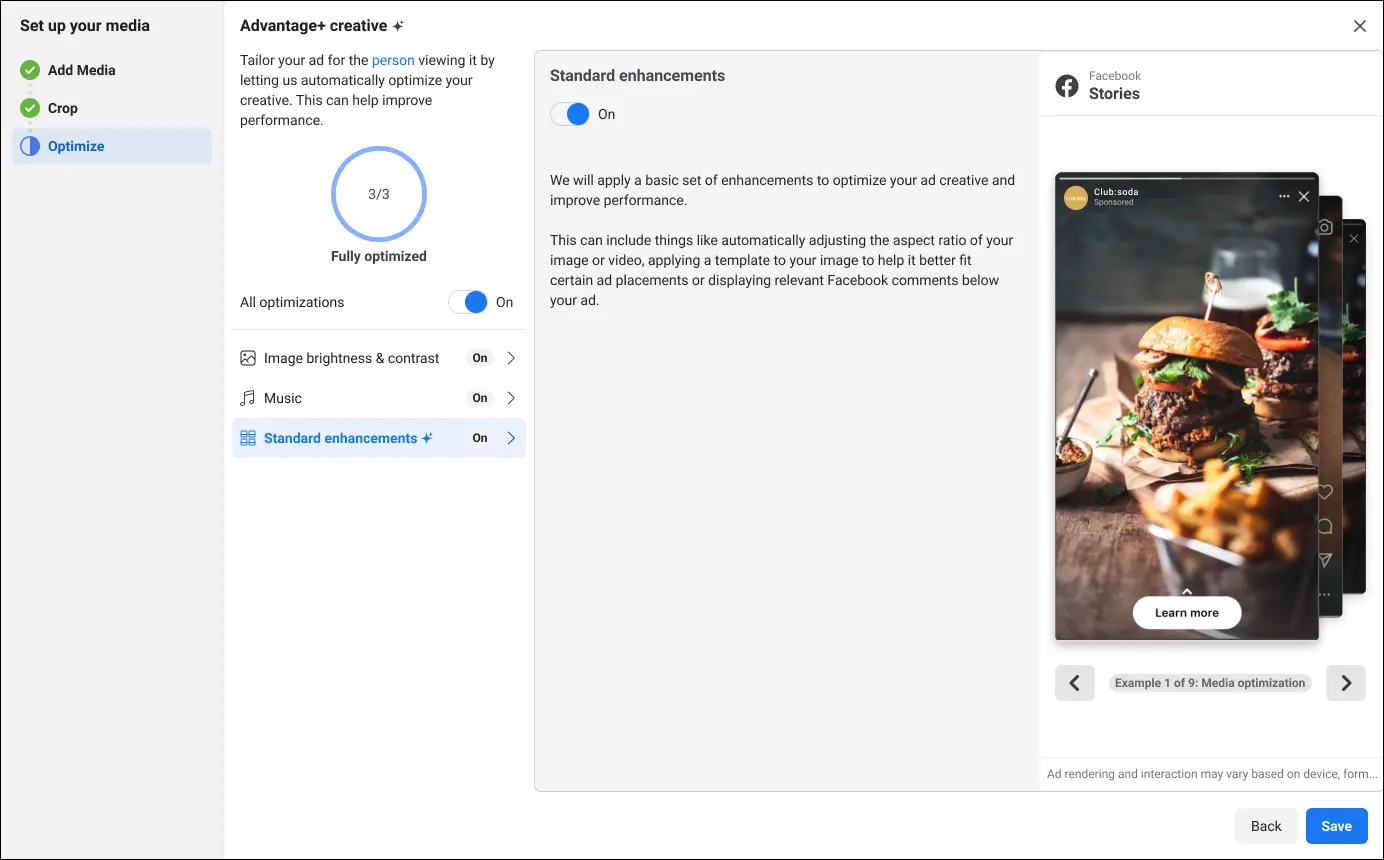
Se decide más por ti, no menos. Advantage+ automatiza un conjunto de decisiones más amplio que Anuncios Automatizados, y sigue expandiéndose. eMarketer informó en febrero de 2025 que Meta está eliminando algunos controles de segmentación manual de los anuncios de catálogo de Advantage+, manteniendo el retargeting y las audiencias personalizadas.
Fuente: Meta
La generación de creatividades cobra un protagonismo mucho mayor. Anuncios Automatizados se limitaba principalmente a reorganizar lo que ya tenías en tu página. Advantage+ funciona de la mano con las herramientas generativas de Meta, que redactan textos y producen vídeos a partir de tus recursos existentes.
El presupuesto y el objetivo siguen siendo tuyos. Eso no ha cambiado. Tú defines qué quieres optimizar y cuánto vas a gastar, y todo lo demás se deriva de esas dos cifras.
Si Anuncios Automatizados era toda tu estructura, la lectura práctica de esta transición es la siguiente: ahora tienes menos palancas manuales pero más volumen de producción, por lo que la calidad del contenido que introduces importa mucho más que antes.
Publicidad automatizada: el concepto general
Fuera del nombre del producto de Meta, la publicidad automatizada se refiere a cualquier sistema en el que la plataforma toma las decisiones de compra, segmentación, ubicación o creatividad por ti. Casi todos los anunciantes entran hoy en esa categoría, lo hayan elegido activamente o no.
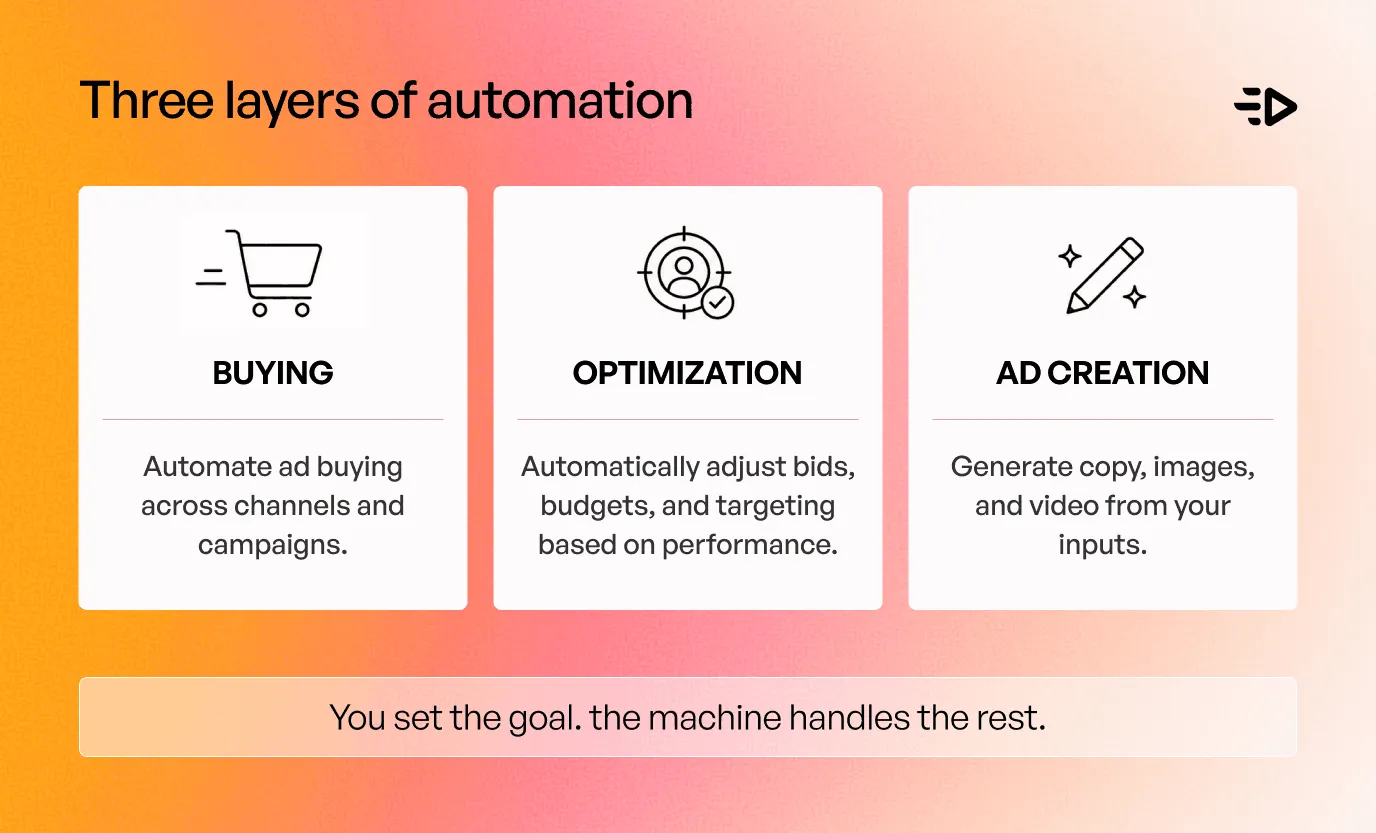
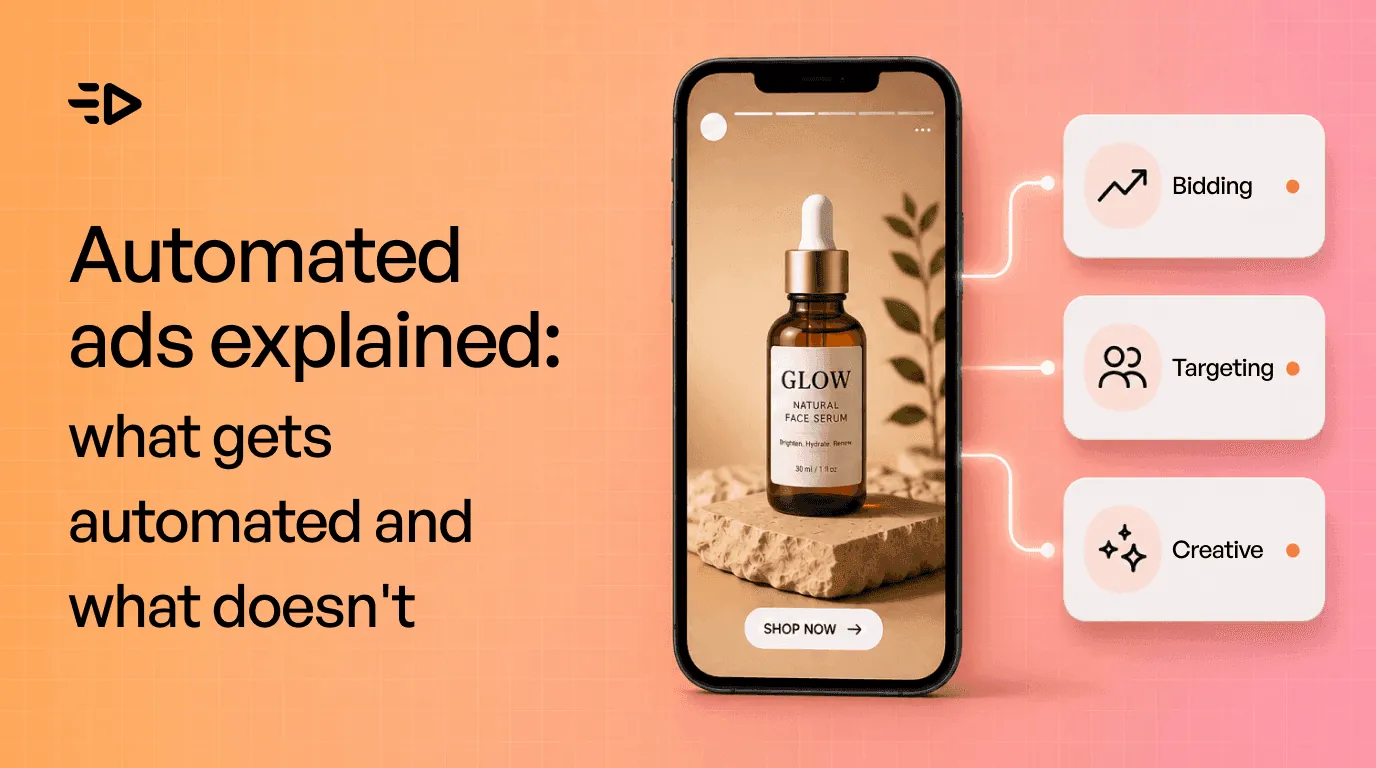
Se trata de tres tipos de automatización independientes, y la mayor parte de la confusión viene de tratarlos como si fueran uno solo.
La compra automatizada es la capa más antigua: software que adquiere inventario a través de subastas en tiempo real en lugar de órdenes de inserción y llamadas telefónicas. Esto es la compra programática, y está plenamente consolidada desde hace más de una década.
La optimización automatizada es la capa intermedia: el aprendizaje automático (machine learning) ajusta las pujas, distribuye los presupuestos, amplía las audiencias y rota las creatividades en función de un objetivo definido por ti.
La creación automatizada de anuncios es la capa más nueva y menos consolidada: sistemas que redactan textos, generan imágenes y montan vídeos a partir de un briefing o de la URL de un producto. Esta es la capa a la que se refiere la mayoría de la gente cuando habla de creación de anuncios digitales.
Saber a qué capa pertenece cada función te permite entender qué puede hacer por ti y qué no.
Qué es lo que realmente se automatiza
Esto es lo que las plataformas afirman que hacen con la publicidad automatizada, según su propia documentación técnica y no su marketing de cara al público.
Segmentación y audiencia
Las campañas Performance Max de Google funcionan sin palabras clave. Tú proporcionas lo que la documentación de Google denomina señales de audiencia, descritas como "compartir preferencias de intención de compra para guiar el aprendizaje". Las señales orientan al modelo; no lo limitan.
Smart+ de TikTok "encuentra automáticamente la audiencia adecuada con unos parámetros mínimos, como la ubicación, la edad y el idioma", según el propio blog de producto de TikTok, aunque los anunciantes pueden "cambiar a la segmentación manual para tener un control total".
Meta es la que ha ido más lejos, eliminando los controles de segmentación manual en varias partes de Advantage+, como mencionamos anteriormente.
Puja, presupuesto y ubicación
Performance Max "dirige automáticamente tu presupuesto hacia el inventario y las ubicaciones con mejor rendimiento" en la Red de Búsqueda, Shopping, YouTube, Display, Discover, Gmail y Maps. Por su parte, la Ubicación Automática Smart+ de TikTok abarca TikTok, Pangle, Lemon8 y el Global App Bundle, "asignando automáticamente el presupuesto a las ubicaciones donde tu creatividad funciona mejor".
Pero el objetivo y el límite los sigues definiendo tú. CPA objetivo, ROAS objetivo, presupuesto diario. Esas cifras nunca se han automatizado y siguen siendo los inputs más determinantes bajo tu control.
Ensamblaje creativo y creación automatizada de anuncios
Performance Max: "Las herramientas de IA generativa combinan tus recursos y creatividades para ayudar a generar imágenes y vídeos atractivos".
La herramienta AI Max para Búsqueda de Google va un paso más allá. La personalización de texto redacta copys de anuncios a partir de "tus anuncios existentes, el texto de tu página de destino y tus recursos, combinados con IA generativa", y la expansión de la URL final decide a qué página de tu sitio web enviar el clic.
La hoja de ruta de Meta es la más agresiva. Marketing Brew informó en abril de 2026 sobre el sistema de recuperación Andromeda, que conecta creatividades diversas con audiencias amplias; la adquisición del agente de IA Manus en diciembre de 2025 que ya aparece dentro del Administrador de anuncios, y la ambición declarada de Zuckerberg de que, con el tiempo, los anunciantes solo tengan que proporcionar un objetivo, un método de pago y nada más.
Los resultados medidos reales son más modestos que esa ambición. En la misma llamada del primer trimestre de 2026, Meta reportó una mejora del 3 % en la tasa de conversión gracias a la generación de vídeo en una prueba a gran escala, algo más del 6 % mediante mejoras de Lattice en anuncios orientados a visitas de páginas de destino y un 1.6 % gracias a su Modelo de Clasificación Adaptativa (Adaptive Ranking Model). Cifras reales, valiosas de conseguir, pero lejos de ser una revolución total. Y, además, son los propios datos de Meta.
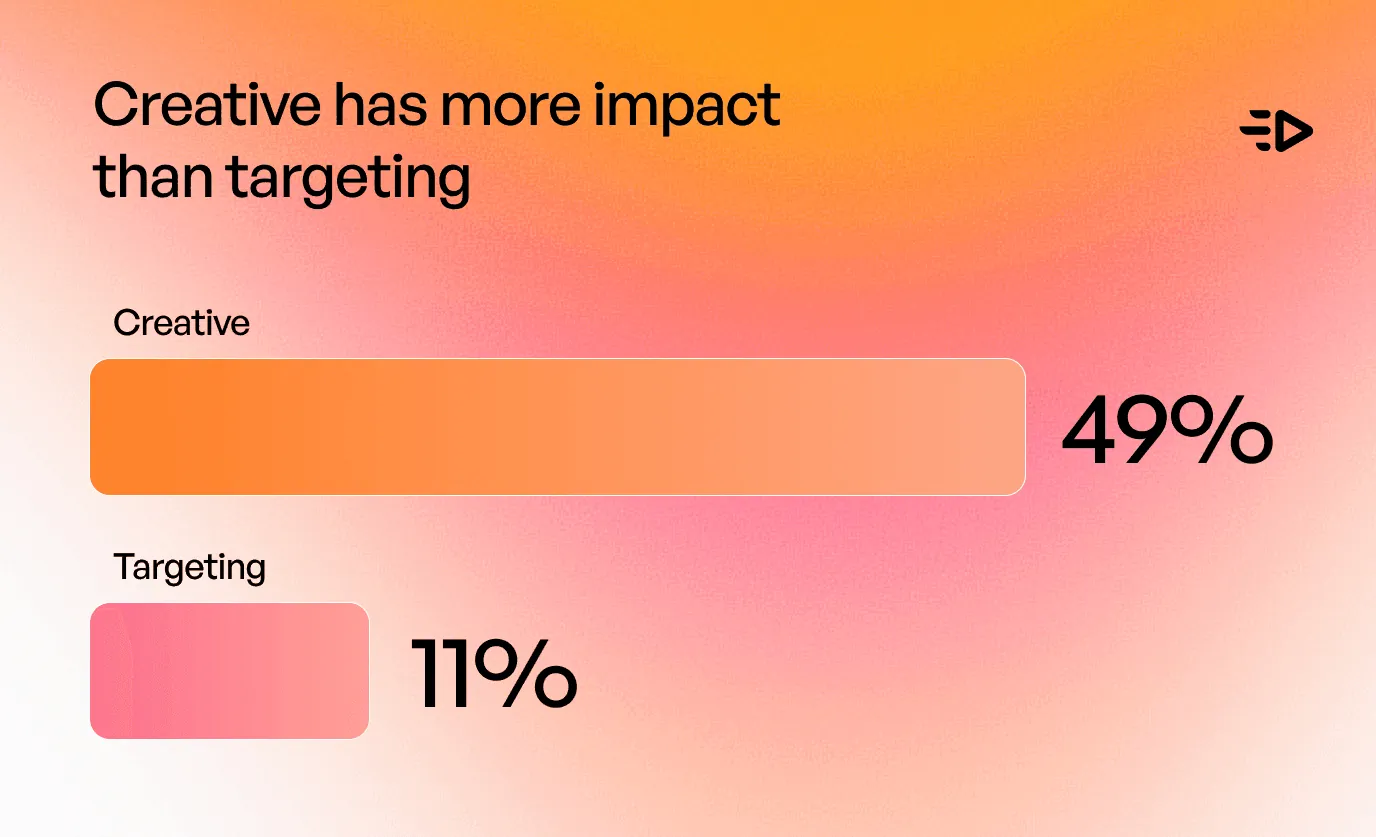
Vale la pena prestar más atención a esta capa creativa que a las otras dos, porque el impacto de la creatividad es mayor que el de la segmentación. Un estudio de NCSolutions sobre casi 450 campañas, actualizado en agosto de 2023, atribuyó a la creatividad el 49 % del incremento de ventas a corto plazo, frente al 11 % de la segmentación. Esa investigación abarca campañas de bienes de consumo masivo (CPG) en lugar de marcas nativas digitales, por lo que el porcentaje exacto debe tomarse como una referencia de la tendencia general. Lo fundamental es el orden de importancia.
Hay que tener clara una limitación específica de las herramientas de las plataformas. Sus optimizadores eligen entre los recursos que tú les has entregado. Encontrarán la mejor combinación dentro del territorio que les has acotado, pero no explorarán uno nuevo. Diseñar un ángulo verdaderamente innovador es una decisión que se toma fuera de la subasta, ya sea por ti o por un sistema diseñado para crear ideas desde cero en lugar de limitarse a combinarlas.
Por qué las plataformas prefieren el modelo de "caja negra"
Es importante analizar con frialdad los incentivos de las plataformas, porque explican el rumbo del mercado mucho mejor que cualquier anuncio de producto.
Agrupar creatividad, puja, ubicación y segmentación en un solo tipo de campaña da a la plataforma más liquidez en las subastas y más libertad para monetizar el inventario de cola larga (long-tail) que los anunciantes de otro modo rechazarían. También reduce la barrera de entrada, algo fundamental si tenemos en cuenta que la mayoría de esos 8 millones de anunciantes son pequeñas empresas que no cuentan con un especialista en medios en plantilla. Esos objetivos coinciden con los tuyos con la suficiente frecuencia como para ser útiles, pero divergen lo suficiente como para obligarte a vigilar de cerca.
Esa divergencia se refleja en los datos. PPC Land reportó una investigación que situaba el retorno de la inversión publicitaria (ROAS) de la Red de Socios de Búsqueda de Google un 37 % por debajo de la Red de Búsqueda pura, en un inventario que los anunciantes no tenían forma de excluir en Performance Max.
Qué sigue bajo tu control
La producción ya no es el límite insalvable. La investigación, los conceptos, los guiones y los vídeos finales se pueden generar de principio a fin con herramientas específicas para ello. Lo que no se automatiza es el conjunto de decisiones estratégicas que exigen conocer a fondo tu negocio.
La oferta. Ningún sistema publicitario decide qué vendes, a qué precio o a quién le importa. La automatización se limita a distribuir una propuesta que no ha sido creada por ella.
La identidad y verdad de la marca. Qué hace tu producto, qué promesas o claims comerciales puedes hacer legalmente, qué dirá y qué no dirá tu marca. Un sistema puede redactar un gancho en segundos, pero no puede conocer tu política de compliance o qué producto se envió la semana pasada a menos que se lo indiques. Por eso, las herramientas que realmente aportan valor te exigen definir estas variables como límites estrictos.
Qué cuenta como una conversión. El objetivo de optimización es un input humano. Si orientas un sistema de IA excelente hacia un evento de conversión erróneo, conseguirá ese evento con una eficiencia impresionante.
Tu margen de beneficio. Las plataformas publicitarias optimizan en función del ROAS que registra su sistema. Ninguna de ellas conoce tu margen bruto por SKU, tu tasa de devoluciones o qué clientes te están costando dinero incluso vendiendo a precio completo. Esa traducción estratégica depende de ti.
Si el crecimiento fue incremental. Las plataformas reportan atribución, no causalidad, y cada una se atribuye el mérito a sí misma. El diseño de pruebas de control (holdout tests) y los análisis de impacto geográfico siguen requiriendo criterio humano.
Las listas de exclusión. La documentación de Google incluye las exclusiones de marca, las palabras clave negativas, las exclusiones de URL y los temas de búsqueda como inputs del anunciante. Alguien tiene que decidir qué se incluye en ellos.
Saber cuándo se equivoca la máquina. Los profesionales citados en el informe de abril de 2026 de Marketing Brew sobre la apuesta de IA de Meta son tajantes al respecto. Hayley Owen, vicepresidenta sénior en Deutsch, describió el trabajo diario de la siguiente manera: "Constantemente tenemos que ir jugando al 'Whac-A-Mole' para descubrir cuál es la nueva función que han activado y de la que no nos informaron". Aaron Edwards de The Charles Group comentó que Meta ha estado "manteniendo las audiencias amplias, dando a los anunciantes menos control". Daniel Johnson de We Scale Startups reportó que con la IA creativa de Meta: "Vemos sistemáticamente peores resultados" que con sistemas de terceros. Jeremy Schulkin de Hawke Media situó Advantage+ en el 60 % o 70 % de su gasto en Meta, al tiempo que señaló que "todavía no ha sustituido a una estructura de cuenta completa".
La frontera: función por función
Función | Qué hace la máquina | Qué sigue bajo tu control |
|---|---|---|
Pujas en subasta | Evalúa señales y establece pujas por impresión | El objetivo de CPA o ROAS y el límite presupuestario |
Ubicación | Asigna el presupuesto entre los diferentes canales de inventario | Listas de exclusión y límites de seguridad de marca (brand safety) |
Audiencia | Se expande más allá de tus señales iniciales utilizando el feedback de conversión | Calidad de tus datos de primera mano (first-party data), listas de exclusión y definir a quién te diriges realmente |
Variación de recursos | Combina, redimensiona, reforma y genera variantes de formato | Material de origen aprobado por la marca y la definición de qué encaja con la identidad de marca |
Concepto creativo | Las herramientas de la plataforma combinan los recursos que subes; los sistemas creativos dedicados generan conceptos, guiones y anuncios listos | La verdad de la marca, los beneficios reales que puedes respaldar y decidir qué dirección estratégica apoyar |
Definición de conversión | Optimiza hacia cualquier evento que especifiques | Elegir el evento que realmente predice el valor para el negocio |
Medición | Reporta la atribución de conversiones dentro de la plataforma | Diseño de pruebas de incrementalidad, cálculo de márgenes y asignación global del presupuesto |
El marco regulatorio cambió en agosto de 2026
Si utilizas la creación automatizada de anuncios y operas en el mercado de la Unión Europea, algo muy importante cambió pocas semanas antes de que leas esto.
Las obligaciones de transparencia del Artículo 50 de la Ley de IA de la UE entraron en vigor el 2 de agosto de 2026. Los proveedores de sistemas generativos deben marcar los resultados como generados o manipulados por IA en un formato legible por máquina. Quienes los implementen deben etiquetar los deepfakes y divulgar el texto generado por IA sobre asuntos de interés público que se publique sin revisión humana. El periodo de gracia es más limitado de lo que suele publicarse: solo cubre la obligación de marcado legible por máquina, y se extiende hasta el 2 de diciembre de 2026 para los sistemas generativos que ya estuvieran en el mercado antes de agosto. Las obligaciones de etiquetado de deepfakes y de divulgación de la interacción con IA comenzaron el 2 de agosto sin transición. Las sanciones pueden alcanzar los 15 millones de euros o el 3 % de la facturación mundial.
La exención que conviene leer con atención se encuentra dentro de esa obligación de etiquetado de texto: no aplica cuando el texto ha pasado por una revisión humana o control editorial y una persona asume la responsabilidad editorial del mismo. Esta obligación cubre el texto publicado para informar al público sobre asuntos de interés general, por lo que la mayor parte de los copys publicitarios quedan fuera de ella y la mayoría de los anunciantes no tendrán que depender de esta exención.
En cualquier caso, la obligación de marcado se aplica a las herramientas de software, algo que debes verificar con tus proveedores. El principio fundamental es uno que probablemente ya querías aplicar: un flujo de trabajo con una persona identificable responsable de lo que se publica está en una posición de riesgo muy diferente a uno que funciona de forma totalmente desatendida.
La automatización también te devuelve el control
La narrativa habitual es que el control manual simplemente está desapareciendo. Sin embargo, la documentación técnica muestra una tendencia más interesante.
Google está probando exclusiones de la Red de Socios de Búsqueda y de la Red de Display para Performance Max en una fase alfa limitada, según PPC Land, con un acceso muy restringido y denegado a algunas agencias. Esas exclusiones responden a la queja principal de los anunciantes desde el lanzamiento del formato.
AI Max incluye ahora funciones de inclusión y exclusión de marcas, controles de ubicación geográfica, inclusiones y exclusiones de URL, así como directrices de texto, que Google describe como controles que "permiten dirigir la IA con mayor precisión". Su sistema de informes ha incorporado un informe de términos de búsqueda que muestra AI Max como un tipo de concordancia, además de titulares, URLs y un informe de páginas de destino con una columna de "Seleccionado por". Por su parte, los módulos Smart+ de TikTok se pueden activar y desactivar de forma individual.
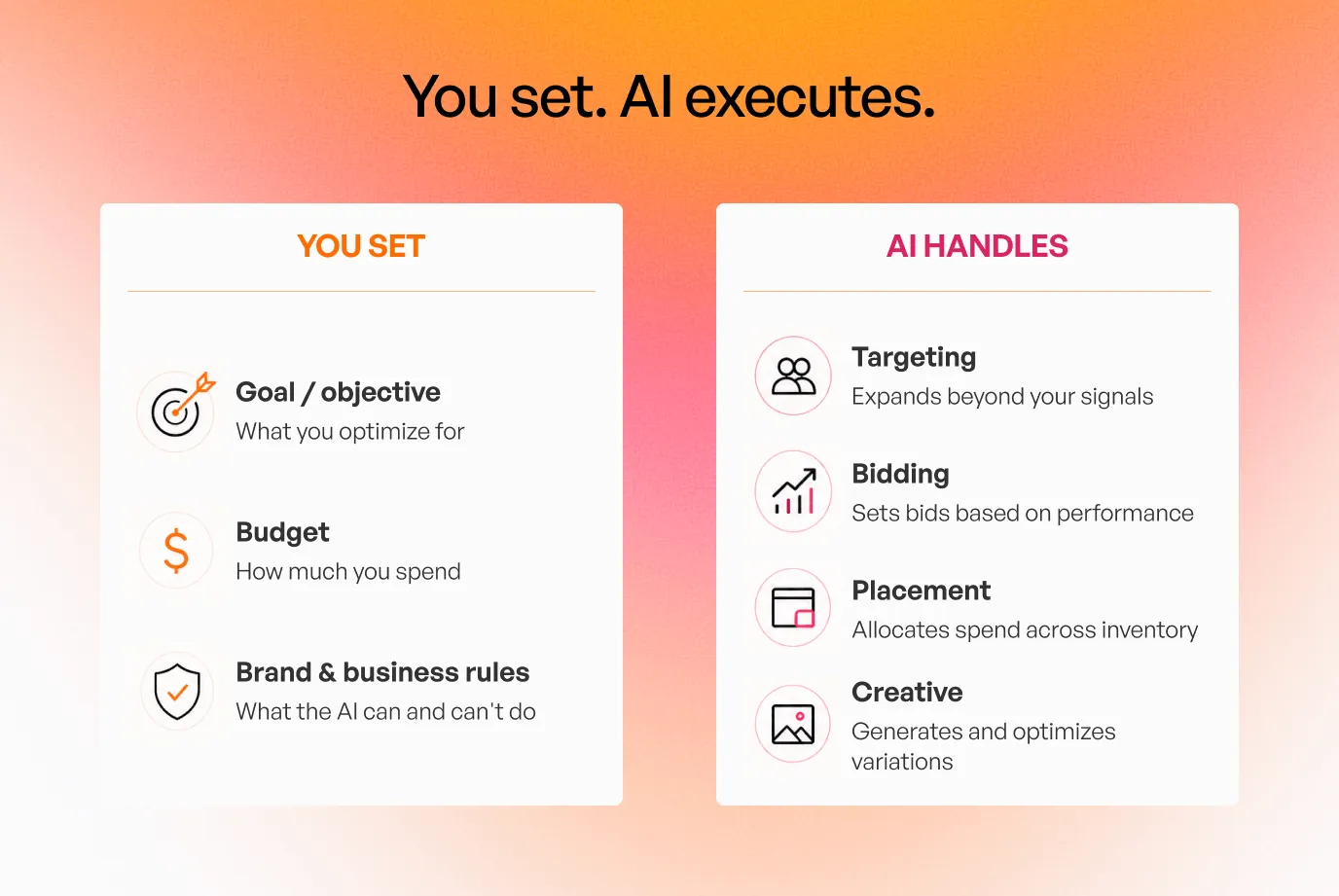
La estructura que se está consolidando es la de una máquina que ejecuta y un humano que define los límites. La habilidad del profesional pasa de operar las palancas manuales a especificar con precisión las reglas de juego.
Un detalle a tener en cuenta sobre cómo se implementa la automatización. Google está migrando los Anuncios Dinámicos de Búsqueda (DSA) a AI Max. A partir de septiembre de 2026 no se podrán crear nuevas campañas DSA, y las campañas que utilicen recursos creados automáticamente o concordancia amplia a nivel de campaña se actualizarán en esa fecha. Google ha pospuesto el fin de DSA y su migración automática hasta febrero de 2027, argumentando que los anunciantes necesitaban más tiempo. Actualizar de forma voluntaria, señala Google, permite mantener "el control total sobre la configuración de tu campaña". La migración activada por defecto es el mecanismo por el cual la mayor parte de la automatización llega a tu cuenta.
Seis reglas para automatizar anuncios sin perder el rumbo
Audita lo que ya está activo. La mayor parte de la automatización viene activada de forma predeterminada. Revisa cada campaña y documenta qué funciones automatizadas elegiste tú y cuáles se activaron solas.
Invierte tus horas en la fase estratégica inicial (upstream). Oferta, concepto, definición de conversión, listas de exclusión. Esos son los inputs que la máquina amplifica, y ahí es donde tu tiempo aporta el mayor retorno de inversión.
Dale opciones entre las que elegir. Los sistemas de optimización seleccionan entre diferentes candidatos. Si solo subes una creatividad, no tienen material para comparar y la ventaja de selección por la que estás pagando se desperdicia.
Establece límites de seguridad, no colas de revisión manual. Un sistema automatizado impacta en miles de ubicaciones al día. Una persona solo puede revisar unas pocas decenas. Por pura matemática, el control debe estructurarse mediante listas de exclusión, límites de presupuesto, configuraciones de brand safety e informes de auditoría, en lugar de aprobación en tiempo real. Adapta el nivel de revisión al riesgo: una variante de titular requiere menos escrutinio que un claim sobre tu producto.
Alimenta el sistema con datos de conversión reales. Envía datos de ingresos cualificados del final del embudo (downstream) de vuelta a la plataforma en lugar de leads brutos, para que el optimizador aprenda de los resultados que realmente impactan en tu negocio.
Revisa la configuración cada trimestre. Los controles de las plataformas cambian constantemente en ambas direcciones, y casi siempre sin previo aviso.
Dónde encaja Creatify en la creación de anuncios digitales
Las plataformas publicitarias se limitan a la recombinación de recursos. Organizan el contenido que les entregas pero no crean nada nuevo, por lo que su IA creativa interna suele ser el elemento del que más se quejan los profesionales.
Creatify, en cambio, gestiona todo el ciclo de forma integral. Creatify Agent investiga tu marca, analiza a tus competidores y lo que está funcionando en tu categoría, escribe los guiones, selecciona los avatares, genera las tomas, añade el audio, realiza el montaje final y valida la calidad respecto al briefing antes de publicar nada, con un coste de entre $5 y $8 por anuncio finalizado. URL to Video toma el enlace de un producto y genera de 5 a 10 variaciones de guion en menos de 60 segundos. Creatify Studio complementa esto sumando a un estratega que desarrolla audiencias (personas), conceptos y ganchos de la mano de la IA y revisa cada pieza antes de su entrega.
Por tanto, la generación de conceptos no es la frontera. La diferencia radica en quién asume la responsabilidad de lo que comunica el concepto, y ahí es donde los límites de seguridad demuestran su valor. Un sistema crítico con capacidades de visión evalúa cada escena frente al briefing antes de incluirla en el montaje final; los claims y características verificadas del producto se configuran como límites estrictos, y los logotipos, colores corporativos y textos en pantalla se validan frente a los datos oficiales de la marca, redirigiendo cualquier error para su regeneración. AdFlow añade una función de reproducción de flujos de trabajo paso a paso, de modo que cualquier miembro del equipo puede abrir un workflow y ver exactamente cómo se construyó un anuncio. Por el lado de la compra de medios, Performance Agent se conecta a Meta, Google, TikTok y AppLovin y realiza auditorías en las cuentas para detectar presupuesto desperdiciado.
Qula360 es un buen ejemplo de cómo el factor humano cumple su papel. Esta agencia de comercio electrónico no contaba con un equipo interno de vídeo y veía cómo sus anuncios de imagen estática perdían efectividad, por lo que diseñó una prueba comparativa controlada para un cliente de detailing de coches: un anuncio de imagen estático frente a un vídeo vertical generado con Creatify, con la misma audiencia e igual presupuesto. La tasa de clics (CTR) pasó del 2.24 % al 6.74 %, y los clics en el enlace aumentaron de 124 a 434 gastando menos presupuesto. La automatización creó el vídeo. Una persona decidió realizar el experimento.
Lee también: Comparativa de herramientas de analítica publicitaria: dashboards, optimizadores y agentes de IA para cerrar el círculo
Preguntas frecuentes
¿Qué son los anuncios automatizados?
Los anuncios automatizados son campañas en las que la plataforma publicitaria toma algunas de las decisiones de compra, segmentación, ubicación o creatividad por ti. En 2026 esto abarca tres niveles independientes: compra automatizada mediante subastas en tiempo real, optimización automatizada de pujas y presupuestos, y creación automatizada de anuncios que genera textos y vídeos a partir de un briefing.
¿Meta eliminó Anuncios Automatizados?
Sí. Meta comenzó a retirar progresivamente su producto Anuncios Automatizados en octubre de 2025 y migró a los anunciantes a campañas Advantage+, manteniendo activas las campañas existentes durante la transición. Los resultados de búsqueda todavía muestran páginas de ayuda de este producto retirado, lo que suele generar confusión en torno al término.
¿Qué es la creación automatizada de anuncios y cómo funciona?
La creación automatizada de anuncios genera piezas creativas a partir de los inputs que tú proporcionas: un briefing, la URL de un producto, recursos de marca o un anuncio existente. Las soluciones de las plataformas combinan los recursos que subes para crear variaciones, mientras que las herramientas dedicadas generan guiones, locuciones y vídeos completos. Ambas opciones funcionan a partir de las pautas y el material que definas.
¿Qué es lo que no se puede automatizar en la publicidad?
Menos de lo que la gente cree. La investigación, los conceptos, los guiones y los vídeos finales ya se pueden generar de principio a fin. Lo que sigue requiriendo criterio humano es el juicio de negocio: qué vendes y a qué precio, qué claims de producto puedes respaldar, qué evento cuenta realmente como una conversión, el análisis de márgenes financieros, determinar la incrementalidad del gasto, definir tus listas de exclusión y asumir la responsabilidad editorial de los mensajes del anuncio.
¿Son los anuncios automatizados mejores que las campañas manuales?
Son mejores en velocidad de ejecución y en su capacidad para evaluar más combinaciones de las que podría analizar una persona. Son peores cuando los inputs iniciales son escasos, cuando el objetivo de optimización está mal definido o cuando nadie supervisa la calidad de las ubicaciones. Los incrementos de rendimiento atribuidos a las funciones de IA de las plataformas suelen situarse en porcentajes de un solo dígito, en lugar de suponer cambios de escala drásticos.
¿Debo declarar si mis anuncios están creados con IA?
Si operas en el mercado de la Unión Europea, las obligaciones de transparencia del Artículo 50 de la Ley de IA de la UE se aplican desde el 2 de agosto de 2026, exigiendo el marcado legible por máquina de los contenidos generados por IA y el etiquetado de deepfakes. La obligación de etiquetado de texto es más acotada de lo que parece: aplica a textos publicados para informar al público sobre temas de interés general, y no es obligatoria si el texto ha pasado por revisión humana y alguien asume la responsabilidad editorial. Consulta con tu equipo legal en lugar de basarte en un resumen.
¿Cómo mantengo el control al automatizar anuncios?
Audita qué funciones de automatización están activadas, define tus objetivos y límites de presupuesto de forma consciente, mantén actualizadas tus listas de exclusión, conserva un filtro de aprobación humana para las creatividades generadas, mide la incrementalidad fuera de las plataformas y revisa los controles disponibles cada trimestre.
Conclusiones
Si buscabas información sobre Anuncios Automatizados de Meta: ahora es Advantage+, dispones de menos controles manuales que antes y la calidad del contenido que introduces importa mucho más que antes.
Si te interesaba la pregunta más amplia: las máquinas asumen la ejecución y, cada vez más, la producción de contenido. Subastas, distribución de presupuesto, ubicación de anuncios, variación de formatos y anuncios terminados en su totalidad. Lo que permanece bajo tu control exclusivo es la oferta de valor, las promesas de producto que puedes respaldar, la definición de conversión, la lógica de márgenes y los límites estratégicos de tu marca.
Una idea para reflexionar: los anunciantes que suelen verse perjudicados por la automatización son los que se empeñan en seguir haciendo tareas que el sistema ya asume (como ajustar manualmente las pujas o crear listas de audiencias), en lugar de dar el paso hacia las funciones que la máquina no puede realizar. Esas decisiones estratégicas previas siempre han sido las más importantes; la automatización simplemente ha eliminado el trabajo operativo que antes ocultaba esa realidad.