
16 Types of Facebook Advertising for Winning Campaigns in 2026

16 Types of Facebook Advertising for Winning Campaigns in 2026

Written by

Creatify Team

16 types of facebook ads
Creatify logo

Creatify Team

SHARE

LinkedIn icon
X icon
Facebook icon

IN THIS ARTICLE

In this digital age, mastering Facebook ads has become essential to expand your business online. It also helps drive meaningful engagement. Facebook has billions of active users monthly, providing access to a global audience. Facebook offers a wide range of ad types. But at the same time, it is unclear how to select the perfect type of Facebook ad for your needs. Let us first explore more about ideal types of Facebook advertising.

What are the 4 Best Facebook advertising practices?

It is important to make your ad stand out among others to garner more responses. Following the below-mentioned key practices will help you achieve your goals, whether it is to increase your engagement, boost your content, attract a new audience, or bring in more customers.

  • Visually Appealing: In social media advertising, creative is everything. Your media should be high-quality, your message clear and concise, and your call to action (CTA) impossible to miss. With 98.5% of Facebook users accessing the platform on mobile, every Facebook ad format you use must be optimized for mobile-first viewing. UGC-style content — ads that look and feel like authentic user posts — consistently outperforms polished studio creative on Meta ads in 2026.

  • Authenticity: Authenticity is the single most important quality separating high-performing Facebook ads from ignored ones. Your ad should reflect your actual brand voice. Misleading or clickbait ads erode trust and damage your long-term Facebook advertising performance — and Meta's algorithm actively deprioritizes low-quality creative.

  • Target Audience: Even the best creative fails if it reaches the wrong people. Facebook Ads Manager provides powerful target audience parameters including age, gender, location, interest-based targeting, and behavioral targeting. More advanced options include lookalike audiences — users who share characteristics with your existing customers — and custom audience uploads from your own CRM data. In 2026, Meta's Advantage+ AI targeting can further automate audience discovery for campaigns focused on conversions.

  • Tracking the response: After launching your Facebook ad campaign, continuous tracking is non-negotiable. The Facebook Pixel and Conversions API feed Meta's algorithm with the performance data it needs to optimize delivery. Monitor click-through rate (CTR), conversion rate, and cost per result at every stage of your Facebook ads funnel. Identifying where potential customers drop off — and adjusting creative or targeting accordingly — is what separates profitable campaigns from expensive ones. A/B testing different ad formats, hooks, and CTAs is the fastest path to improving results.

16 different types of Facebook Ads

A wide variety of ad formats designed for different purposes is offered by Facebook. It can be difficult to select the perfect one according to your needs. Let us discuss different types of Facebook Ads in detail and how they can be used to maximize your advertising impact:


  1. Page Post Engagement Ad


    You might want any post to get a better response and reach more people, that’s where Facebook page post engagement ads come into the picture. Page post engagement ads not only help boost your engagement but also help you reach the target audience by using different parameters provided, such as location, age, gender, etc. Such an ad helps increase your reach and encourages likes, comments, and shares.


  2. Page-like Ads


    Page like ads are something that would help new pages on Facebook. It helps reach a wider audience and aims to bring more likes to your page. Such ads help increase your page’s visibility and prompt page interaction, which promotes your brand on Facebook.


  3. Clicks to Website Ads

    You’ve got an interactive audience on your Facebook page! But, to run an online business, it is equally important to bring a target audience to your website, here, click-to-website ads come into the picture. These ads mainly focus on redirecting your audience from Facebook to a website of your choice. It is useful for promoting any specific product, blog, or content on the website.


  4. Website Conversions


    Website conversion ads focus on attaining specific actions on your website, such as purchases, sign-ups, sharing, downloads, etc. It utilizes Facebook’s pixel to track conversions technology to understand their ad results and yield desired responses.


  5. App Install and Engagement Ads

    App install ads are created to promote mobile apps. They usually prompt users to download a particular app or perform a specific action within the app. This helps garner more users for your app. In short, get more app installs and increase engagement on a certain app.


  6. Event Response Ads

    Suppose you have an event coming up and want to spread the word! This is where event response ads come to your rescue! When promoting any conference, event, local gathering, or webinar, it is ideal to opt for event response ads. These ads help reach a targeted audience who might be interested in that event, hence increasing attendance.


  7. Offer Claim Ads

    Got a big sale and want to inform everyone? Check out Facebook offer claim ads! Facebook offers claim ads garner customers by promoting special offers and deals. Such ads help encourage users to claim the offer online or offline.


  8. Video Views

    Isn’t a visual medium one of the most effective ways to retain audience attention? Video view ads on Facebook help increase the number of views on your videos. This will help you attract more audience.


  9. Local Awareness Ads

    Local awareness ads are effective in driving more audience from your locality. These help promote a local event or bring awareness about issues among locals. You can also share your physical address, or map pin to direct people.


  10. The Carousel Format

    Carousel format refers to having more than one image or video in a single ad format. We can opt for this when we want to share details about any specific product. Or feature a bunch of products that fall under the same category. We can even highlight different features of any product using this format.


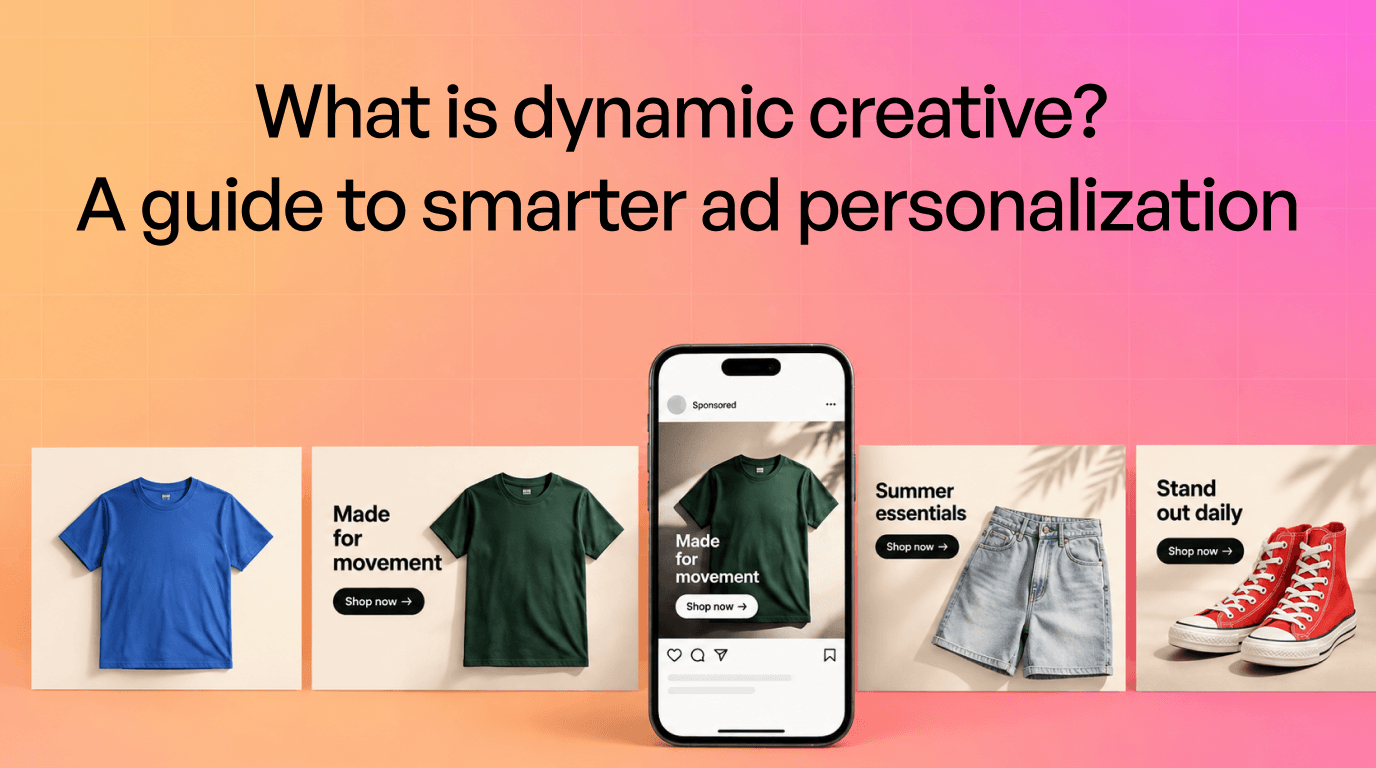
  11. Dynamic Product Ads


    Dynamic product ads automatically promote to previous website visitors. It promotes personalized ads based on user behavior that enhances conversion rates.


  12. Slideshow Ads


    Businesses with limited video resources can resort to slideshow ads. Slideshow Ads are budget-friendly as well. It enables you to create ads using text, pictures, or audio.


  13. Lead Ads

    Do you want to understand the market trends? Or collect some feedback? You should opt for Lead Ads! It helps collect information via surveys, and subscriptions, as well as get contact information. They simplify capturing leads without the users having to leave the platform.


  14. Canvas Ads

    Canvas ads are designed for mobiles only. They provide a full-screen immersive experience, combining images, call-to-action buttons, videos, and text. These give users more interactive content, which helps draw more attention and engage the audience.


  15. Re-targeting Ads


    It is ideal to go for re-targeting ads when you want to bring back an audience who has previously visited your page or interacted with any of the posts or websites. They are usually targeted to audiences who are more likely to re-engage. These are also known as re-marketing ads.


  16. AI video Ads


    AI is the talk of the hour! These video Ads use the most loved modern-day artificial intelligence technology to create personalized. These ad videos are generated using the inputs and data shared by the user. Using this technology can enhance relevancy and engagement by creating tailored content.


What are the 3 levels of Facebook Ads?

There are 3 main levels while creating a Facebook Ad namely, Campaign, Ad Set, and Ad. Each level is essential and works together in Facebook Ad creation. Mastering the 3 levels of Facebook Ads will yield better results.

  • Campaign: The campaign level is where you define your campaign objective — whether that's awareness, traffic, lead generation, or conversions. Your objective determines how Meta's algorithm optimizes delivery and which Facebook ad formats are available to you. This is also where you set your overall budget.

  • Ad Set: The ad set level is where target audience selection, ad placement, scheduling, and budget allocation happen. This is where interest-based targeting, behavioral targeting, lookalike audiences, and retargeting parameters are configured. You can run multiple ad sets within one campaign to test different audience segments simultaneously.

  • Ad: The ad level is where the actual Facebook ad creative lives — your video, image, copy, call to action (CTA), and destination URL. This is what your target audience sees. Strong creative at the ad level is increasingly important under Meta's Andromeda algorithm, which uses your creative itself as the primary targeting signal to determine who sees your Meta ads.

What is the best AI Ad Generator for Facebook Advertising?

Creating high-performing Facebook ads at scale is a major challenge for startups and growth marketers alike. Creatify simplifies the video ad creation process — turn a product URL into a conversion-focused video ad in minutes, with AI avatars, text-to-speech voiceover, and UGC-style content options built for mobile-first Meta ads placements.

Whether you're producing Facebook Reels ads, video ads for the feed, or dynamic creative variations for A/B testing, Creatify's batch video creation generates dozens of Facebook ad variations simultaneously — helping your campaigns move faster and your click-through rate (CTR) improve with every iteration.

Conclusion

In conclusion, it is crucial to master the wide range of Facebook ad types available to maximize the presence of your online business. Each of the mentioned ad types serves a particular purpose, hence it is important to understand and select the ideal one. In addition, make use of Facebook’s extensive targeting feature to ensure that your ad reaches the target audience and make use of the insights feature to track the ad performance.


Frequently Asked Questions

What are the most effective types of Facebook ads in 2026?

For e-commerce, collection ads, dynamic product ads, and carousel ads consistently perform best. For awareness and engagement, Facebook Reels ads and video ads drive the highest click-through rates — with Reels generating 22% more engagement than standard video placements. Lead ads are the top choice for list building, while retargeting ads powered by the Facebook Pixel deliver the strongest conversion rates among warm audiences.

What is the difference between Facebook ad types and Facebook ad formats?

Facebook ad types refer to the campaign purpose — such as page like ads, event response ads, or website conversion ads. Facebook ad formats refer to the creative structure — image, video, carousel, collection, or Instant Experience. A single Facebook ad campaign can combine multiple ad types with different formats depending on your campaign objective.

How do I choose the right Facebook ad for my campaign objective?

Start in Facebook Ads Manager and select your campaign objective first — awareness, consideration, or conversion. Meta's platform will guide you toward the most suitable Facebook ad formats for that goal. As a general rule: use image or video ads for awareness, carousel or lead ads for consideration, and collection ads, dynamic product ads, or website conversion ads for purchase-focused campaigns.

What is the Facebook Pixel and why does it matter for Facebook advertising?

The Facebook Pixel is a piece of tracking code installed on your website that sends conversion data back to Facebook Ads Manager. It enables dynamic product ads, retargeting ads, lookalike audiences, and conversion optimization across all Facebook ad campaigns. Without it, Meta's algorithm has limited data to optimize your ad delivery, which significantly reduces conversion rate and increases wasted spend.

What are AI video ads and how do they fit into Facebook advertising?

AI video ads use artificial intelligence to automatically generate video ad creative from product URLs, images, or scripts — without a film crew or video editor. They're one of the fastest-growing Facebook ad formats in 2026, particularly in the UGC-style content format that performs well in the Facebook feed and Reels placements. Tools like Creatify produce multiple AI video ad variations simultaneously, enabling rapid A/B testing across Facebook ad campaigns.

How much do Facebook ads cost in 2026?

The average cost per click (CPC) for Facebook ads in 2026 is approximately $0.58–$0.87, compared to $2.69–$5.26 for Google Ads — making Facebook advertising significantly more cost-efficient for most campaign objectives. Actual costs vary by industry, target audience competitiveness, ad format, and creative quality. Higher-quality creative with strong click-through rates lowers your effective CPC by improving your ad relevance score in Meta's auction.

In this digital age, mastering Facebook ads has become essential to expand your business online. It also helps drive meaningful engagement. Facebook has billions of active users monthly, providing access to a global audience. Facebook offers a wide range of ad types. But at the same time, it is unclear how to select the perfect type of Facebook ad for your needs. Let us first explore more about ideal types of Facebook advertising.

What are the 4 Best Facebook advertising practices?

It is important to make your ad stand out among others to garner more responses. Following the below-mentioned key practices will help you achieve your goals, whether it is to increase your engagement, boost your content, attract a new audience, or bring in more customers.

  • Visually Appealing: In social media advertising, creative is everything. Your media should be high-quality, your message clear and concise, and your call to action (CTA) impossible to miss. With 98.5% of Facebook users accessing the platform on mobile, every Facebook ad format you use must be optimized for mobile-first viewing. UGC-style content — ads that look and feel like authentic user posts — consistently outperforms polished studio creative on Meta ads in 2026.

  • Authenticity: Authenticity is the single most important quality separating high-performing Facebook ads from ignored ones. Your ad should reflect your actual brand voice. Misleading or clickbait ads erode trust and damage your long-term Facebook advertising performance — and Meta's algorithm actively deprioritizes low-quality creative.

  • Target Audience: Even the best creative fails if it reaches the wrong people. Facebook Ads Manager provides powerful target audience parameters including age, gender, location, interest-based targeting, and behavioral targeting. More advanced options include lookalike audiences — users who share characteristics with your existing customers — and custom audience uploads from your own CRM data. In 2026, Meta's Advantage+ AI targeting can further automate audience discovery for campaigns focused on conversions.

  • Tracking the response: After launching your Facebook ad campaign, continuous tracking is non-negotiable. The Facebook Pixel and Conversions API feed Meta's algorithm with the performance data it needs to optimize delivery. Monitor click-through rate (CTR), conversion rate, and cost per result at every stage of your Facebook ads funnel. Identifying where potential customers drop off — and adjusting creative or targeting accordingly — is what separates profitable campaigns from expensive ones. A/B testing different ad formats, hooks, and CTAs is the fastest path to improving results.

16 different types of Facebook Ads

A wide variety of ad formats designed for different purposes is offered by Facebook. It can be difficult to select the perfect one according to your needs. Let us discuss different types of Facebook Ads in detail and how they can be used to maximize your advertising impact:


  1. Page Post Engagement Ad


    You might want any post to get a better response and reach more people, that’s where Facebook page post engagement ads come into the picture. Page post engagement ads not only help boost your engagement but also help you reach the target audience by using different parameters provided, such as location, age, gender, etc. Such an ad helps increase your reach and encourages likes, comments, and shares.


  2. Page-like Ads


    Page like ads are something that would help new pages on Facebook. It helps reach a wider audience and aims to bring more likes to your page. Such ads help increase your page’s visibility and prompt page interaction, which promotes your brand on Facebook.


  3. Clicks to Website Ads

    You’ve got an interactive audience on your Facebook page! But, to run an online business, it is equally important to bring a target audience to your website, here, click-to-website ads come into the picture. These ads mainly focus on redirecting your audience from Facebook to a website of your choice. It is useful for promoting any specific product, blog, or content on the website.


  4. Website Conversions


    Website conversion ads focus on attaining specific actions on your website, such as purchases, sign-ups, sharing, downloads, etc. It utilizes Facebook’s pixel to track conversions technology to understand their ad results and yield desired responses.


  5. App Install and Engagement Ads

    App install ads are created to promote mobile apps. They usually prompt users to download a particular app or perform a specific action within the app. This helps garner more users for your app. In short, get more app installs and increase engagement on a certain app.


  6. Event Response Ads

    Suppose you have an event coming up and want to spread the word! This is where event response ads come to your rescue! When promoting any conference, event, local gathering, or webinar, it is ideal to opt for event response ads. These ads help reach a targeted audience who might be interested in that event, hence increasing attendance.


  7. Offer Claim Ads

    Got a big sale and want to inform everyone? Check out Facebook offer claim ads! Facebook offers claim ads garner customers by promoting special offers and deals. Such ads help encourage users to claim the offer online or offline.


  8. Video Views

    Isn’t a visual medium one of the most effective ways to retain audience attention? Video view ads on Facebook help increase the number of views on your videos. This will help you attract more audience.


  9. Local Awareness Ads

    Local awareness ads are effective in driving more audience from your locality. These help promote a local event or bring awareness about issues among locals. You can also share your physical address, or map pin to direct people.


  10. The Carousel Format

    Carousel format refers to having more than one image or video in a single ad format. We can opt for this when we want to share details about any specific product. Or feature a bunch of products that fall under the same category. We can even highlight different features of any product using this format.


  11. Dynamic Product Ads


    Dynamic product ads automatically promote to previous website visitors. It promotes personalized ads based on user behavior that enhances conversion rates.


  12. Slideshow Ads


    Businesses with limited video resources can resort to slideshow ads. Slideshow Ads are budget-friendly as well. It enables you to create ads using text, pictures, or audio.


  13. Lead Ads

    Do you want to understand the market trends? Or collect some feedback? You should opt for Lead Ads! It helps collect information via surveys, and subscriptions, as well as get contact information. They simplify capturing leads without the users having to leave the platform.


  14. Canvas Ads

    Canvas ads are designed for mobiles only. They provide a full-screen immersive experience, combining images, call-to-action buttons, videos, and text. These give users more interactive content, which helps draw more attention and engage the audience.


  15. Re-targeting Ads


    It is ideal to go for re-targeting ads when you want to bring back an audience who has previously visited your page or interacted with any of the posts or websites. They are usually targeted to audiences who are more likely to re-engage. These are also known as re-marketing ads.


  16. AI video Ads


    AI is the talk of the hour! These video Ads use the most loved modern-day artificial intelligence technology to create personalized. These ad videos are generated using the inputs and data shared by the user. Using this technology can enhance relevancy and engagement by creating tailored content.


What are the 3 levels of Facebook Ads?

There are 3 main levels while creating a Facebook Ad namely, Campaign, Ad Set, and Ad. Each level is essential and works together in Facebook Ad creation. Mastering the 3 levels of Facebook Ads will yield better results.

  • Campaign: The campaign level is where you define your campaign objective — whether that's awareness, traffic, lead generation, or conversions. Your objective determines how Meta's algorithm optimizes delivery and which Facebook ad formats are available to you. This is also where you set your overall budget.

  • Ad Set: The ad set level is where target audience selection, ad placement, scheduling, and budget allocation happen. This is where interest-based targeting, behavioral targeting, lookalike audiences, and retargeting parameters are configured. You can run multiple ad sets within one campaign to test different audience segments simultaneously.

  • Ad: The ad level is where the actual Facebook ad creative lives — your video, image, copy, call to action (CTA), and destination URL. This is what your target audience sees. Strong creative at the ad level is increasingly important under Meta's Andromeda algorithm, which uses your creative itself as the primary targeting signal to determine who sees your Meta ads.

What is the best AI Ad Generator for Facebook Advertising?

Creating high-performing Facebook ads at scale is a major challenge for startups and growth marketers alike. Creatify simplifies the video ad creation process — turn a product URL into a conversion-focused video ad in minutes, with AI avatars, text-to-speech voiceover, and UGC-style content options built for mobile-first Meta ads placements.

Whether you're producing Facebook Reels ads, video ads for the feed, or dynamic creative variations for A/B testing, Creatify's batch video creation generates dozens of Facebook ad variations simultaneously — helping your campaigns move faster and your click-through rate (CTR) improve with every iteration.

Conclusion

In conclusion, it is crucial to master the wide range of Facebook ad types available to maximize the presence of your online business. Each of the mentioned ad types serves a particular purpose, hence it is important to understand and select the ideal one. In addition, make use of Facebook’s extensive targeting feature to ensure that your ad reaches the target audience and make use of the insights feature to track the ad performance.


Frequently Asked Questions

What are the most effective types of Facebook ads in 2026?

For e-commerce, collection ads, dynamic product ads, and carousel ads consistently perform best. For awareness and engagement, Facebook Reels ads and video ads drive the highest click-through rates — with Reels generating 22% more engagement than standard video placements. Lead ads are the top choice for list building, while retargeting ads powered by the Facebook Pixel deliver the strongest conversion rates among warm audiences.

What is the difference between Facebook ad types and Facebook ad formats?

Facebook ad types refer to the campaign purpose — such as page like ads, event response ads, or website conversion ads. Facebook ad formats refer to the creative structure — image, video, carousel, collection, or Instant Experience. A single Facebook ad campaign can combine multiple ad types with different formats depending on your campaign objective.

How do I choose the right Facebook ad for my campaign objective?

Start in Facebook Ads Manager and select your campaign objective first — awareness, consideration, or conversion. Meta's platform will guide you toward the most suitable Facebook ad formats for that goal. As a general rule: use image or video ads for awareness, carousel or lead ads for consideration, and collection ads, dynamic product ads, or website conversion ads for purchase-focused campaigns.

What is the Facebook Pixel and why does it matter for Facebook advertising?

The Facebook Pixel is a piece of tracking code installed on your website that sends conversion data back to Facebook Ads Manager. It enables dynamic product ads, retargeting ads, lookalike audiences, and conversion optimization across all Facebook ad campaigns. Without it, Meta's algorithm has limited data to optimize your ad delivery, which significantly reduces conversion rate and increases wasted spend.

What are AI video ads and how do they fit into Facebook advertising?

AI video ads use artificial intelligence to automatically generate video ad creative from product URLs, images, or scripts — without a film crew or video editor. They're one of the fastest-growing Facebook ad formats in 2026, particularly in the UGC-style content format that performs well in the Facebook feed and Reels placements. Tools like Creatify produce multiple AI video ad variations simultaneously, enabling rapid A/B testing across Facebook ad campaigns.

How much do Facebook ads cost in 2026?

The average cost per click (CPC) for Facebook ads in 2026 is approximately $0.58–$0.87, compared to $2.69–$5.26 for Google Ads — making Facebook advertising significantly more cost-efficient for most campaign objectives. Actual costs vary by industry, target audience competitiveness, ad format, and creative quality. Higher-quality creative with strong click-through rates lowers your effective CPC by improving your ad relevance score in Meta's auction.
Icon
Icon

Ready to turn your product into an engaging video?

Ready to speed up your marketing?

Test your new product ideas in minutes with AI-generated video ads

Arrow icon.
Gradient

Ready to speed up your marketing?

Test your new product ideas in minutes with AI-generated video ads

Arrow icon.
Gradient

Ready to speed up your marketing?

Test your new product ideas in minutes with AI-generated video ads

Arrow icon.
Gradient

Ready to speed up your marketing?

Test your new product ideas in minutes with AI-generated video ads

Arrow icon.
Gradient
Gradient