Equipe Creatify
COMPARTILHAR


NESTE ARTIGO
Uma coruja de desenho animado faz mais de 100 milhões de pessoas se sentirem culpadas para que façam suas lições de idioma. Um pequeno lagarto verde vende seguros de carro há mais de 20 anos. Nenhum dos dois envelhece, liga para dizer que está doente ou cobra taxa de uso de imagem. Essa é a vantagem silenciosa de um personagem de marca, e a IA acabou de tornar a criação de um deles barata o suficiente para que qualquer marca possa experimentar.
Quando você decide criar um personagem de IA, isso pode significar duas coisas muito diferentes. Pode ser uma pessoa fotorrealista, um avatar ou influenciador virtual que parece humano. Ou pode ser uma criação totalmente ficcional: um mascote, uma criatura fofa, um elenco inteiro de personagens. Ambos são fáceis de gerar hoje em dia. Este guia aborda como criar um personagem de IA de qualquer um dos tipos, como escolher entre eles e como resolver a parte difícil: manter seu personagem consistente em todos os anúncios, vídeos e posts.
Os dois tipos de personagens de IA
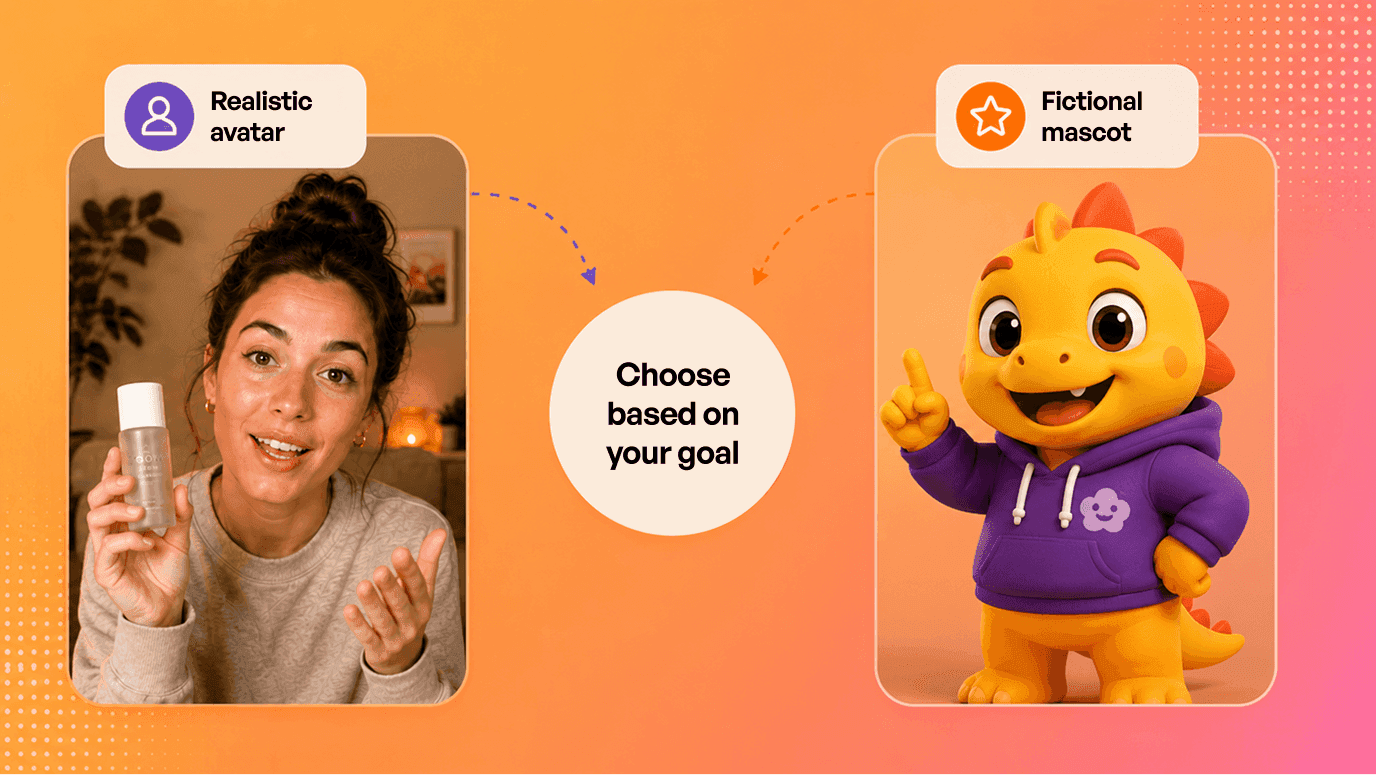
O primeiro tipo é o personagem de IA realista, em estilo humano. Pense em avatars de IA que apresentam seu produto como um criador de UGC, ou influenciadores virtuais como Lil Miquela, que atraiu milhões de seguidores e contratos de marcas com nomes como BMW, apesar de nunca ter existido. Eles funcionam quando você quer um rosto humano com o qual o público se identifique: depoimentos, vídeos explicativos, um porta-voz.
O segundo tipo é o personagem de ficção. Este é o caminho do mascote: o Duo do Duolingo, o lagarto da Geico, o pato da Aflac, o Freddie do Mailchimp, os suricatos da Compare the Market ou o elenco de personagens de um jogo mobile. É uma personalidade inventada que representa a marca.
Até recentemente, ter um personagem de ficção significava contratar um estúdio de animação e gastar um orçamento de cinco dígitos toda vez que você queria uma nova cena. Essa é a parte que a IA mudou. Agora você pode projetar um personagem uma vez e gerá-lo em infinitas situações, que é exatamente o que uma marca precisa para manter um mascote vivo em um calendário de conteúdo.
Por que um personagem funciona, e por que o ficcional geralmente vence
Os argumentos a favor dos personagens aparecem em números concretos. Uma análise da empresa de pesquisa System1, divulgada pela Adweek, descobriu que anúncios protagonizados por um personagem de marca alcançaram uma média de 3,8 estrelas para crescimento previsto a longo prazo, contra 2,7 para anúncios protagonizados por celebridades. Campanhas que usam um mascote têm cerca de 37% mais chances de aumentar a participação de mercado, 27% mais chances de conquistar novos clientes e 30% mais chances de aumentar o lucro, com a lembrança de marca chegando a até 88%. Uma análise da Kantar de 2024 apontou na mesma direção, com personagens superando celebridades no valor de marca a longo prazo.
Os motivos pelos quais um personagem fictício vence são práticos. Ele é totalmente seu, então não há taxas de direito de imagem, nem renegociações, nem risco de escândalos quando seu porta-voz tem uma semana ruim. Ele nunca envelhece, por isso o ativo é atemporal. Ele é distintivo de uma forma que um rosto humano de banco de imagens nunca é, o que torna sua marca mais fácil de reconhecer. E ele pode fazer coisas que nenhum humano consegue, desde voar até encolher ou viver debaixo d'água.
Um avatar de estilo humano ainda tem seu espaço. Quando você quer um depoimento que pareça de um cliente real, ou um rosto confiável explicando uma compra complexa, um personagem de IA realista faz esse trabalho melhor. A regra é escolher pela função que você precisa realizar, não pela opção que parece mais inovadora.
Como criar um personagem de IA, passo a passo
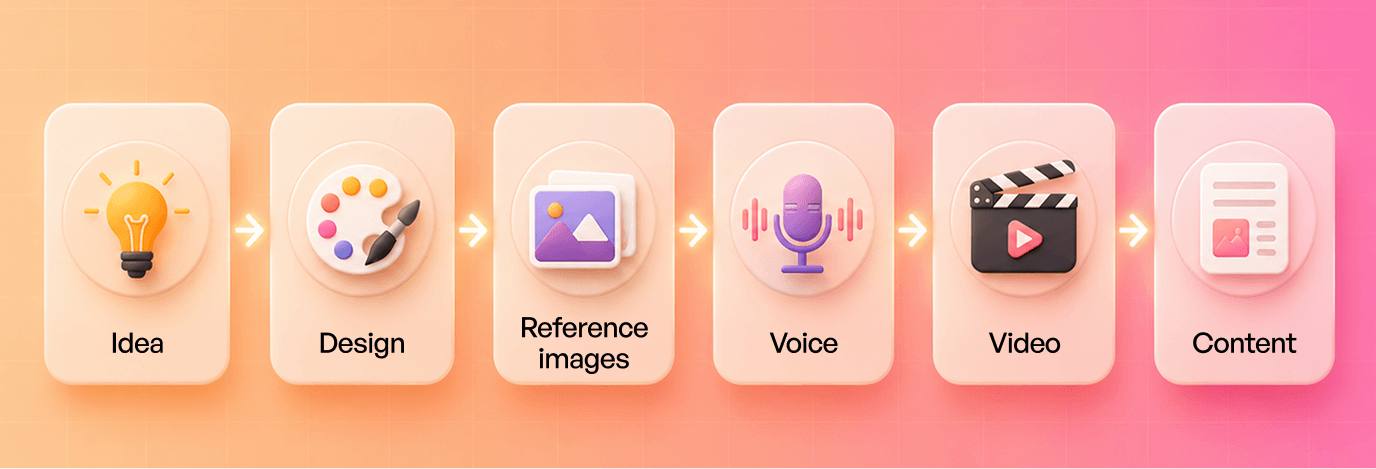
1. Desenvolva a ideia do personagem
Comece com a ideia, antes de qualquer ferramenta. Algumas perguntas te ajudam a chegar lá rápido. Sua marca já tem um mascote que você subutilizou? É hora de finalmente criar um? Se você cria jogos, já tem um elenco que pode trazer para o seu marketing. E o seu produto é reconhecível o suficiente para se tornar um personagem em si, do mesmo jeito que uma garrafa, um tênis ou um lanche podem ganhar um rosto e uma personalidade?
As ideias mais fortes vêm de algo que já é verdade sobre a marca: uma característica que os clientes associam a você, uma forma ou cor que te pertence, uma piada interna com o seu público ou o sentimento que você quer deixar nas pessoas. Escreva duas ou três opções em uma única frase cada, como "um robô nervoso obcecado por dados organizados" ou "um golden retriever que avalia nossos lanches", e depois escolha aquela que você consegue imaginar aparecendo em cem posts diferentes.
2. Visualize-o
Você não precisa de um ilustrador ou de um artista 3D para começar. As ferramentas de imagem de IA transformam uma descrição escrita em uma primeira versão, e o segredo que as faz funcionar são as referências: alimente o modelo com imagens de personagens no estilo que você deseja, e ele entenderá sua ideia muito melhor do que apenas com palavras. Este é o momento em que você realmente cria um personagem de IA, transformando uma frase em algo visual.
No Asset Generator da Creatify, isso leva dois passos. Escolha imagem para imagem e anexe suas imagens de referência, depois faça o prompt do seu personagem usando um modelo como o Nano Banana Pro. Você obtém opções utilizáveis em cerca de um minuto e, como você gera a partir das mesmas referências todas as vezes, o personagem permanece consistente de uma imagem para a outra, que é a parte que costuma falhar. Se você quiser criar uma pessoa de IA em vez de um personagem estilizado, escolha um apresentador realista na biblioteca de avatares da Creatify ou crie um personalizado a partir de uma descrição.
Salve as versões que você gostar como seu conjunto de referências. É isso que mantém o personagem alinhado ao modelo em todos os lugares onde ele aparecer a seguir.
3. Dê voz a eles
Uma imagem estática é apenas o começo. Para usar o personagem em vídeo, dê a ele uma voz e movimento. Ferramentas de voz de IA como a ElevenLabs geram uma voz que combina com a personalidade, desde calorosa até irônica ou totalmente excêntrica.
Você também pode colocar a imagem do personagem no Creatify Agent e fazer com que ele produza seu primeiro vídeo, para que o personagem se mova e fale em vez de ficar estático em uma página. Esse é o passo que transforma um design em um porta-voz.
4. Crie seu primeiro conteúdo
Agora coloque o personagem para trabalhar no que você já publica. Direcione-o para um tutorial ou vídeo explicativo, um conteúdo de rede social ou um anúncio de produto. Mantenha o visual e a personalidade idênticos todas as vezes, porque a repetição é o que transforma um design legal em um personagem que seu público reconhece de imediato.
Como criar uma pessoa de IA versus um mascote fictício
Algumas situações apontam claramente para o caminho fictício.
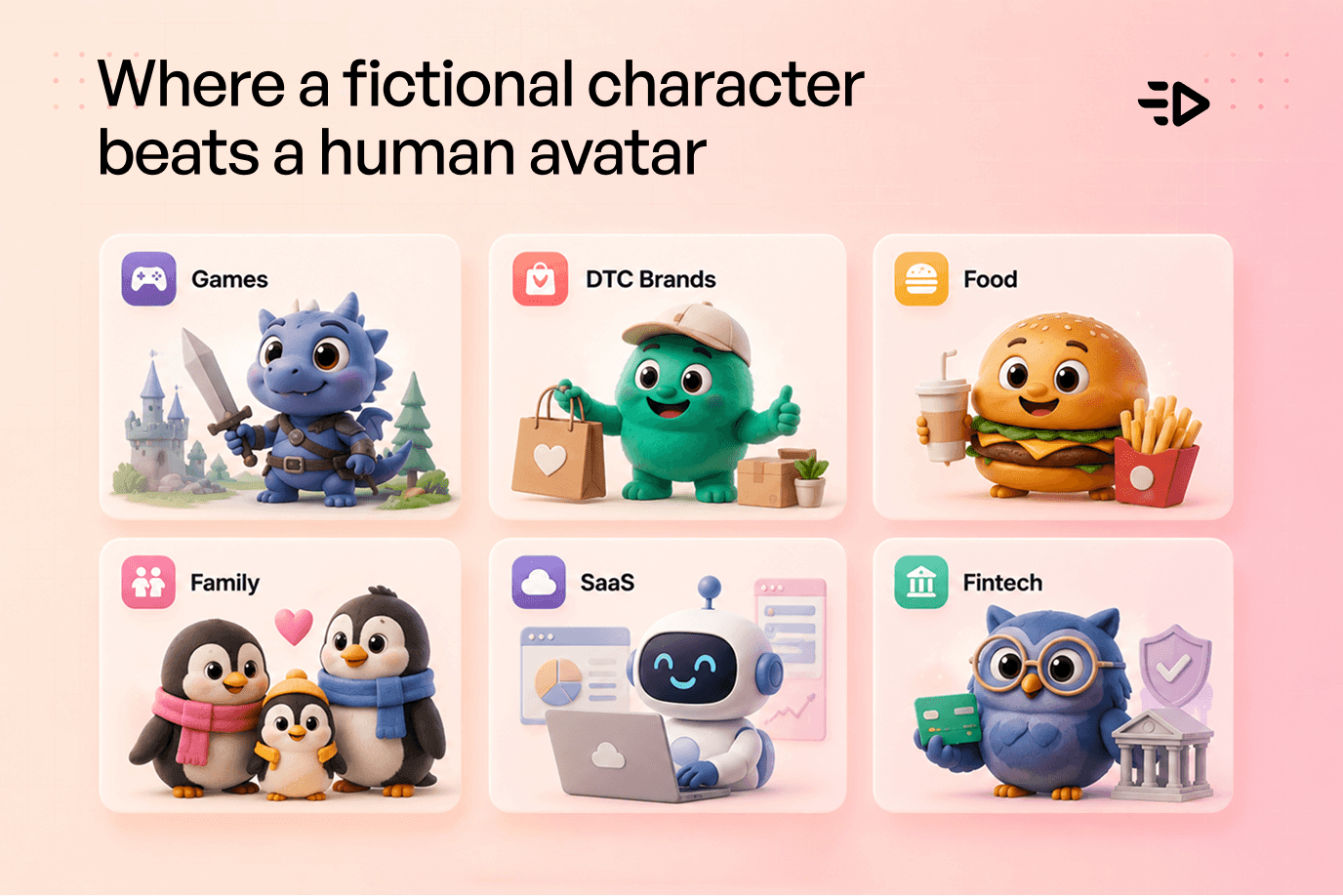
Conteúdo e anúncios para jogos. O elenco de personagens geralmente é a própria marca. A IA permite que um estúdio pequeno produza arte de personagens e vídeos consistentes para cada herói e vilão sem uma equipe de arte completa, e depois os reutilize em anúncios, lojas e redes sociais.
Mascotes de marcas e personagens fofos. Uma criatura amigável carrega uma marca de DTC descontraída ou voltada para a família muito melhor do que um humano comum jamais conseguiria, e te dá algo que os concorrentes não podem copiar.
Marcas infantis, familiares e de alimentos. Um personagem é mais seguro e mais marcante do que uma pessoa real para esses públicos, e é por isso que essa categoria recorre a mascotes há um século.
Um conjunto de personagens. Um elenco, como uma família de suricatos, te entrega um motor de conteúdo quase infinito e um caminho natural para licenciamento de produtos.
Categorias sem um rosto humano natural. SaaS, fintechs, seguros, serviços públicos. Aqui é melhor apostar em um mascote do que tentar fazer uma pessoa de IA carregar a marca, já que um mascote dá a um produto abstrato uma personalidade com a qual os clientes podem se conectar, um grande motivo pelo qual tantas marcas de finanças e tecnologia recorrem a eles.
Leia também: O que são influenciadores de IA e como as marcas usam criadores virtuais?
Uma observação sobre a propriedade do seu personagem de IA
Um aviso sincero, porque isso surge com frequência. Você pode criar um personagem de IA e reutilizá-lo o quanto quiser, mas o status dos direitos autorais de imagens puramente geradas por IA ainda não está definido. O US Copyright Office assumiu a posição de que uma obra precisa de autoria humana significativa para ser registrada, de modo que uma saída direta de texto para imagem pode não se qualificar por si só. O caminho prático é adicionar design e edição humana real ao personagem, e protegê-lo da maneira que as marcas sempre protegeram os mascotes: como uma marca registrada vinculada à identidade da sua marca, e não apenas por direitos autorais. Isso não é um conselho jurídico, e as regras estão mudando, então consulte um profissional antes de construir um negócio baseado em um único personagem.
A real oportunidade
Se você puder guardar apenas uma ideia disso, que seja esta: crie um personagem que só a sua marca poderia criar. A tentação é sempre copiar o que está funcionando para os outros, mas um personagem emprestado não traz resultados para você. Um personagem memorável, com visual, voz e história próprios, é o que gera reconhecimento e destaca você em um mar de mesmice. Busque o distintivo em vez do seguro.
Dando um passo atrás, o momento atual é impressionante. Fazer um personagem fictício falar, agir e se mover costumava exigir um estúdio e um orçamento real. Agora leva uma tarde. A maioria das marcas está direcionando esse novo poder para avatares humanos realistas, o que deixa o espaço para personagens inventados e exclusivos totalmente aberto. As marcas que se moverem primeiro terão a oportunidade de possuir um personagem antes que toda a sua categoria esteja cheia deles, e para os profissionais de marketing essa é uma oportunidade rara.
A mudança mais profunda está por trás de tudo isso. Assim que a IA elimina os gargalos de produção, edição e voz, a execução deixa de ser o diferencial entre um marketing bom e um marketing excelente. O que resta é a ideia. Um personagem que vale a pena se importar e uma história que as pessoas querem acompanhar importam mais agora do que quando simplesmente produzir o trabalho era a parte difícil. O personagem é o canal. A história que você dá a ele é a sua vantagem.
Leia também: Como rodar anúncios no Snapchat: o canal que a maioria dos profissionais de marketing ignora
Perguntas Frequentes
Como eu crio um personagem de IA?
Comece com a ideia: sua marca precisa de um mascote ou você já tem personagens que pode usar? Depois, visualize-o com uma ferramenta de imagem de IA, usando imagens de referência para mantê-lo consistente, dê a ele uma voz e insira-o no seu conteúdo. Você pode criar tanto avatares realistas quanto mascotes totalmente fictícios dessa forma.
Qual é a melhor IA para criar uma pessoa ou personagem de IA realista?
Procure uma ferramenta feita para manter o personagem consistente em imagens e vídeos, e não apenas para gerar uma imagem isolada. A Creatify, por exemplo, oferece mais de 1.500 avatares de IA, avatares personalizados a partir de uma descrição de texto e consistência do personagem entre as cenas, o que importa mais para o marketing do que a qualidade bruta da imagem.
Como faço para manter um personagem de IA consistente?
A consistência vem de uma descrição escrita do personagem, de um conjunto salvo de imagens de referência, de um seed fixo ou referência de personagem e de uma ferramenta projetada para reproduzir o mesmo personagem em diferentes cenas. Mantenha essas referências e um breve guia de estilo, e reutilize-os sempre para que o personagem nunca mude suas características.
Devo usar um avatar realista ou um mascote fictício?
Escolha de acordo com a função. Um avatar realista se adapta a depoimentos, vídeos explicativos e a um rosto humano confiável. Um mascote fictício é ideal para construção de marca, marcas descontraídas ou familiares, jogos e categorias sem um porta-voz natural, e a pesquisa da System1 mostra que os personagens costumam superar as celebridades humanas no crescimento da marca a longo prazo.
É possível ser dono de um personagem de IA?
Você pode criar e reutilizar um livremente, mas os direitos autorais de conteúdos gerados puramente por IA ainda não estão definidos, pois o registro geralmente exige autoria humana. Adicione design e edição humana, e proteja o mascote como uma marca registrada associada à sua marca. Essa é uma área em constante evolução, por isso busque orientação profissional para projetos de grande importância.
Os personagens de IA funcionam bem em anúncios e redes sociais?
Sim, especialmente os recorrentes. Um personagem consistente dá um rosto reconhecível aos seus anúncios e conteúdos de redes sociais, e anúncios com personagens de marca superaram aqueles estrelados por celebridades no crescimento previsto a longo prazo na análise da System1. O segredo é usar o mesmo personagem de forma consistente em tudo o que você publica.
Uma coruja de desenho animado faz mais de 100 milhões de pessoas se sentirem culpadas para que façam suas lições de idioma. Um pequeno lagarto verde vende seguros de carro há mais de 20 anos. Nenhum dos dois envelhece, liga para dizer que está doente ou cobra taxa de uso de imagem. Essa é a vantagem silenciosa de um personagem de marca, e a IA acabou de tornar a criação de um deles barata o suficiente para que qualquer marca possa experimentar.
Quando você decide criar um personagem de IA, isso pode significar duas coisas muito diferentes. Pode ser uma pessoa fotorrealista, um avatar ou influenciador virtual que parece humano. Ou pode ser uma criação totalmente ficcional: um mascote, uma criatura fofa, um elenco inteiro de personagens. Ambos são fáceis de gerar hoje em dia. Este guia aborda como criar um personagem de IA de qualquer um dos tipos, como escolher entre eles e como resolver a parte difícil: manter seu personagem consistente em todos os anúncios, vídeos e posts.
Os dois tipos de personagens de IA
O primeiro tipo é o personagem de IA realista, em estilo humano. Pense em avatars de IA que apresentam seu produto como um criador de UGC, ou influenciadores virtuais como Lil Miquela, que atraiu milhões de seguidores e contratos de marcas com nomes como BMW, apesar de nunca ter existido. Eles funcionam quando você quer um rosto humano com o qual o público se identifique: depoimentos, vídeos explicativos, um porta-voz.
O segundo tipo é o personagem de ficção. Este é o caminho do mascote: o Duo do Duolingo, o lagarto da Geico, o pato da Aflac, o Freddie do Mailchimp, os suricatos da Compare the Market ou o elenco de personagens de um jogo mobile. É uma personalidade inventada que representa a marca.
Até recentemente, ter um personagem de ficção significava contratar um estúdio de animação e gastar um orçamento de cinco dígitos toda vez que você queria uma nova cena. Essa é a parte que a IA mudou. Agora você pode projetar um personagem uma vez e gerá-lo em infinitas situações, que é exatamente o que uma marca precisa para manter um mascote vivo em um calendário de conteúdo.
Por que um personagem funciona, e por que o ficcional geralmente vence
Os argumentos a favor dos personagens aparecem em números concretos. Uma análise da empresa de pesquisa System1, divulgada pela Adweek, descobriu que anúncios protagonizados por um personagem de marca alcançaram uma média de 3,8 estrelas para crescimento previsto a longo prazo, contra 2,7 para anúncios protagonizados por celebridades. Campanhas que usam um mascote têm cerca de 37% mais chances de aumentar a participação de mercado, 27% mais chances de conquistar novos clientes e 30% mais chances de aumentar o lucro, com a lembrança de marca chegando a até 88%. Uma análise da Kantar de 2024 apontou na mesma direção, com personagens superando celebridades no valor de marca a longo prazo.
Os motivos pelos quais um personagem fictício vence são práticos. Ele é totalmente seu, então não há taxas de direito de imagem, nem renegociações, nem risco de escândalos quando seu porta-voz tem uma semana ruim. Ele nunca envelhece, por isso o ativo é atemporal. Ele é distintivo de uma forma que um rosto humano de banco de imagens nunca é, o que torna sua marca mais fácil de reconhecer. E ele pode fazer coisas que nenhum humano consegue, desde voar até encolher ou viver debaixo d'água.
Um avatar de estilo humano ainda tem seu espaço. Quando você quer um depoimento que pareça de um cliente real, ou um rosto confiável explicando uma compra complexa, um personagem de IA realista faz esse trabalho melhor. A regra é escolher pela função que você precisa realizar, não pela opção que parece mais inovadora.
Como criar um personagem de IA, passo a passo
1. Desenvolva a ideia do personagem
Comece com a ideia, antes de qualquer ferramenta. Algumas perguntas te ajudam a chegar lá rápido. Sua marca já tem um mascote que você subutilizou? É hora de finalmente criar um? Se você cria jogos, já tem um elenco que pode trazer para o seu marketing. E o seu produto é reconhecível o suficiente para se tornar um personagem em si, do mesmo jeito que uma garrafa, um tênis ou um lanche podem ganhar um rosto e uma personalidade?
As ideias mais fortes vêm de algo que já é verdade sobre a marca: uma característica que os clientes associam a você, uma forma ou cor que te pertence, uma piada interna com o seu público ou o sentimento que você quer deixar nas pessoas. Escreva duas ou três opções em uma única frase cada, como "um robô nervoso obcecado por dados organizados" ou "um golden retriever que avalia nossos lanches", e depois escolha aquela que você consegue imaginar aparecendo em cem posts diferentes.
2. Visualize-o
Você não precisa de um ilustrador ou de um artista 3D para começar. As ferramentas de imagem de IA transformam uma descrição escrita em uma primeira versão, e o segredo que as faz funcionar são as referências: alimente o modelo com imagens de personagens no estilo que você deseja, e ele entenderá sua ideia muito melhor do que apenas com palavras. Este é o momento em que você realmente cria um personagem de IA, transformando uma frase em algo visual.
No Asset Generator da Creatify, isso leva dois passos. Escolha imagem para imagem e anexe suas imagens de referência, depois faça o prompt do seu personagem usando um modelo como o Nano Banana Pro. Você obtém opções utilizáveis em cerca de um minuto e, como você gera a partir das mesmas referências todas as vezes, o personagem permanece consistente de uma imagem para a outra, que é a parte que costuma falhar. Se você quiser criar uma pessoa de IA em vez de um personagem estilizado, escolha um apresentador realista na biblioteca de avatares da Creatify ou crie um personalizado a partir de uma descrição.
Salve as versões que você gostar como seu conjunto de referências. É isso que mantém o personagem alinhado ao modelo em todos os lugares onde ele aparecer a seguir.
3. Dê voz a eles
Uma imagem estática é apenas o começo. Para usar o personagem em vídeo, dê a ele uma voz e movimento. Ferramentas de voz de IA como a ElevenLabs geram uma voz que combina com a personalidade, desde calorosa até irônica ou totalmente excêntrica.
Você também pode colocar a imagem do personagem no Creatify Agent e fazer com que ele produza seu primeiro vídeo, para que o personagem se mova e fale em vez de ficar estático em uma página. Esse é o passo que transforma um design em um porta-voz.
4. Crie seu primeiro conteúdo
Agora coloque o personagem para trabalhar no que você já publica. Direcione-o para um tutorial ou vídeo explicativo, um conteúdo de rede social ou um anúncio de produto. Mantenha o visual e a personalidade idênticos todas as vezes, porque a repetição é o que transforma um design legal em um personagem que seu público reconhece de imediato.
Como criar uma pessoa de IA versus um mascote fictício
Algumas situações apontam claramente para o caminho fictício.
Conteúdo e anúncios para jogos. O elenco de personagens geralmente é a própria marca. A IA permite que um estúdio pequeno produza arte de personagens e vídeos consistentes para cada herói e vilão sem uma equipe de arte completa, e depois os reutilize em anúncios, lojas e redes sociais.
Mascotes de marcas e personagens fofos. Uma criatura amigável carrega uma marca de DTC descontraída ou voltada para a família muito melhor do que um humano comum jamais conseguiria, e te dá algo que os concorrentes não podem copiar.
Marcas infantis, familiares e de alimentos. Um personagem é mais seguro e mais marcante do que uma pessoa real para esses públicos, e é por isso que essa categoria recorre a mascotes há um século.
Um conjunto de personagens. Um elenco, como uma família de suricatos, te entrega um motor de conteúdo quase infinito e um caminho natural para licenciamento de produtos.
Categorias sem um rosto humano natural. SaaS, fintechs, seguros, serviços públicos. Aqui é melhor apostar em um mascote do que tentar fazer uma pessoa de IA carregar a marca, já que um mascote dá a um produto abstrato uma personalidade com a qual os clientes podem se conectar, um grande motivo pelo qual tantas marcas de finanças e tecnologia recorrem a eles.
Leia também: O que são influenciadores de IA e como as marcas usam criadores virtuais?
Uma observação sobre a propriedade do seu personagem de IA
Um aviso sincero, porque isso surge com frequência. Você pode criar um personagem de IA e reutilizá-lo o quanto quiser, mas o status dos direitos autorais de imagens puramente geradas por IA ainda não está definido. O US Copyright Office assumiu a posição de que uma obra precisa de autoria humana significativa para ser registrada, de modo que uma saída direta de texto para imagem pode não se qualificar por si só. O caminho prático é adicionar design e edição humana real ao personagem, e protegê-lo da maneira que as marcas sempre protegeram os mascotes: como uma marca registrada vinculada à identidade da sua marca, e não apenas por direitos autorais. Isso não é um conselho jurídico, e as regras estão mudando, então consulte um profissional antes de construir um negócio baseado em um único personagem.
A real oportunidade
Se você puder guardar apenas uma ideia disso, que seja esta: crie um personagem que só a sua marca poderia criar. A tentação é sempre copiar o que está funcionando para os outros, mas um personagem emprestado não traz resultados para você. Um personagem memorável, com visual, voz e história próprios, é o que gera reconhecimento e destaca você em um mar de mesmice. Busque o distintivo em vez do seguro.
Dando um passo atrás, o momento atual é impressionante. Fazer um personagem fictício falar, agir e se mover costumava exigir um estúdio e um orçamento real. Agora leva uma tarde. A maioria das marcas está direcionando esse novo poder para avatares humanos realistas, o que deixa o espaço para personagens inventados e exclusivos totalmente aberto. As marcas que se moverem primeiro terão a oportunidade de possuir um personagem antes que toda a sua categoria esteja cheia deles, e para os profissionais de marketing essa é uma oportunidade rara.
A mudança mais profunda está por trás de tudo isso. Assim que a IA elimina os gargalos de produção, edição e voz, a execução deixa de ser o diferencial entre um marketing bom e um marketing excelente. O que resta é a ideia. Um personagem que vale a pena se importar e uma história que as pessoas querem acompanhar importam mais agora do que quando simplesmente produzir o trabalho era a parte difícil. O personagem é o canal. A história que você dá a ele é a sua vantagem.
Leia também: Como rodar anúncios no Snapchat: o canal que a maioria dos profissionais de marketing ignora
Perguntas Frequentes
Como eu crio um personagem de IA?
Comece com a ideia: sua marca precisa de um mascote ou você já tem personagens que pode usar? Depois, visualize-o com uma ferramenta de imagem de IA, usando imagens de referência para mantê-lo consistente, dê a ele uma voz e insira-o no seu conteúdo. Você pode criar tanto avatares realistas quanto mascotes totalmente fictícios dessa forma.
Qual é a melhor IA para criar uma pessoa ou personagem de IA realista?
Procure uma ferramenta feita para manter o personagem consistente em imagens e vídeos, e não apenas para gerar uma imagem isolada. A Creatify, por exemplo, oferece mais de 1.500 avatares de IA, avatares personalizados a partir de uma descrição de texto e consistência do personagem entre as cenas, o que importa mais para o marketing do que a qualidade bruta da imagem.
Como faço para manter um personagem de IA consistente?
A consistência vem de uma descrição escrita do personagem, de um conjunto salvo de imagens de referência, de um seed fixo ou referência de personagem e de uma ferramenta projetada para reproduzir o mesmo personagem em diferentes cenas. Mantenha essas referências e um breve guia de estilo, e reutilize-os sempre para que o personagem nunca mude suas características.
Devo usar um avatar realista ou um mascote fictício?
Escolha de acordo com a função. Um avatar realista se adapta a depoimentos, vídeos explicativos e a um rosto humano confiável. Um mascote fictício é ideal para construção de marca, marcas descontraídas ou familiares, jogos e categorias sem um porta-voz natural, e a pesquisa da System1 mostra que os personagens costumam superar as celebridades humanas no crescimento da marca a longo prazo.
É possível ser dono de um personagem de IA?
Você pode criar e reutilizar um livremente, mas os direitos autorais de conteúdos gerados puramente por IA ainda não estão definidos, pois o registro geralmente exige autoria humana. Adicione design e edição humana, e proteja o mascote como uma marca registrada associada à sua marca. Essa é uma área em constante evolução, por isso busque orientação profissional para projetos de grande importância.
Os personagens de IA funcionam bem em anúncios e redes sociais?
Sim, especialmente os recorrentes. Um personagem consistente dá um rosto reconhecível aos seus anúncios e conteúdos de redes sociais, e anúncios com personagens de marca superaram aqueles estrelados por celebridades no crescimento previsto a longo prazo na análise da System1. O segredo é usar o mesmo personagem de forma consistente em tudo o que você publica.

Pronto para transformar seu produto em um vídeo envolvente?