Equipo Creatify
COMPARTIR


EN ESTE ARTÍCULO
A principios de 2024, el internet se convenció de que el actor Michael Cera había inventado en secreto CeraVe. Fotos falsas de paparazzi, dermatólogos "desmintiéndolo", una conspiración que crecía poco a poco. La gente dejaba de hacer scroll para averiguar si algo de esto era real. No lo era, y ese era justamente el punto.
Ese doble vistazo es todo el juego de la publicidad en redes sociales. En un feed que se mueve a toda velocidad, tienes un instante, tal vez un segundo o dos, antes de que un pulgar decida si tu anuncio merece más atención o si es mejor pasarlo de largo. Detener el scroll es un problema creativo antes de ser un problema de medios, y los anuncios que lo logran rompen el patrón, abren una pregunta o transmiten una emoción, para luego recompensar la pausa rápidamente.
Aquí tienes siete de los mejores ejemplos de anuncios en redes sociales de 2024 a 2026, con un análisis de por qué exactamente cada uno detiene el scroll y qué puedes aprender de ellos. Analiza suficientes ejemplos de anuncios en redes sociales y verás que las mismas mecánicas empiezan a repetirse.
Por qué se detiene realmente el scroll
Antes de los ejemplos, hablemos de la mecánica, porque se repite en todos ellos. Un feed social entrena a tu cerebro para filtrar rápido. Buscas la forma de cosas que ya conoces (un anuncio, una selfie, un meme) y pasas de largo todo lo que te resulte familiar. Un anuncio se gana una pausa al negarse a encajar en ese molde.
Hay algunas formas confiables de romper el patrón. Puedes interrumpirlo visualmente, con algo tan extraño que el cerebro no pueda clasificarlo de un vistazo. Puedes abrir una brecha de curiosidad, una pregunta que el espectador necesite responder. Puedes apelar a una emoción con tanta fuerza que pasar de largo se sienta mal. Puedes aprovechar un momento cultural que ya le interese a la gente. O puedes disfrazar el anuncio como el contenido que lo rodea, de modo que la pausa ocurra antes de que alguien se dé cuenta de que es publicidad. Las mejores campañas combinan dos o tres de estas tácticas y recompensan rápidamente al espectador por detenerse. Cada ejemplo a continuación es una combinación diferente.
1. CeraVe te hizo cuestionar la realidad
La campaña "Michael CeraVe" de CeraVe ejecutó la brecha de curiosidad más inteligente del año. Se desarrolló en tres actos: primero, fotos de paparazzi preparadas y rumores de que Michael Cera afirmaba haber creado CeraVe; luego, dermatólogos y creadores disputándolo públicamente; después, la revelación en el Super Bowl de que la marca está hecha con dermatólogos y que Cera no tuvo nada que ver. La campaña obtuvo miles de millones de impresiones y un Super Clio incluso antes de que comenzara el juego.
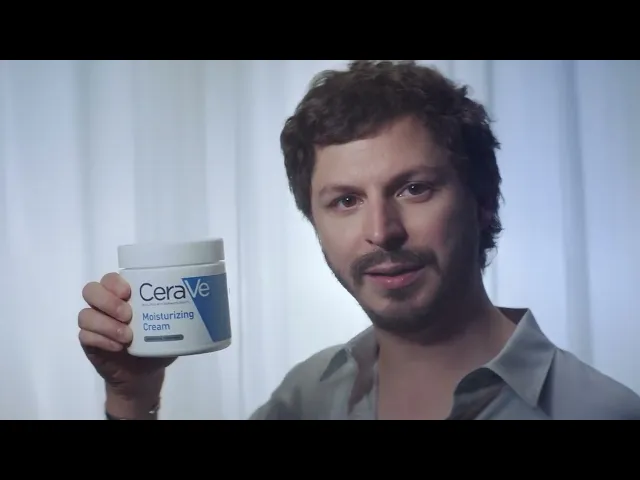
Por qué detiene el scroll: es un misterio que necesitas resolver. Un rostro famoso sumado a una afirmación absurda genera una pregunta que el cerebro quiere cerrar, y cada nueva publicación añadía una pieza. Lo que lo hace especial es la disciplina de la revelación lenta; la recompensa se dosificó a lo largo de semanas, por lo que la gente seguía regresando para el siguiente capítulo.
2. CoorDown hizo que pasar de largo se sintiera mal
Para el Día Mundial del Síndrome de Down, "Assume That I Can" de CoorDown presentó a una joven con síndrome de Down enfrentándose a las bajas expectativas que se tienen de ella, argumentando que cuando asumes que no puede, a menudo no puede, porque nadie le da la oportunidad. Superó los 150 millones de vistas en una semana y ganó siete Leones de Cannes y un premio UN SDG Action Award.

Por qué detiene el scroll: confrontación emocional cruda con un punto de vista contundente. El video expone una profecía autocumplida que la mayoría de la gente nunca ha articulado, y lo hace con un rostro y una voz mirando directamente a la cámara. Lo que lo hace especial es que la emoción está ligada a una idea específica y accionable, por lo que deja a la gente con un pensamiento para reflexionar, y el sentimiento le otorga a ese pensamiento su poder de permanencia.
3. Nutter Butter se negó a tener sentido
Una marca de galletas de 55 años se convirtió en una de las cuentas más extrañas de TikTok. El "Nutterverse" de Nutter Butter es un sueño febril surrealista y casi de terror, lleno de personajes de baja resolución e historias inexplicables que parecen un sueño que apenas recuerdas. Consiguió unos 250 millones de vistas, hizo crecer la cuenta de unos 3,100 seguidores a 700,000 y generó miles de millones de impresiones en medios.
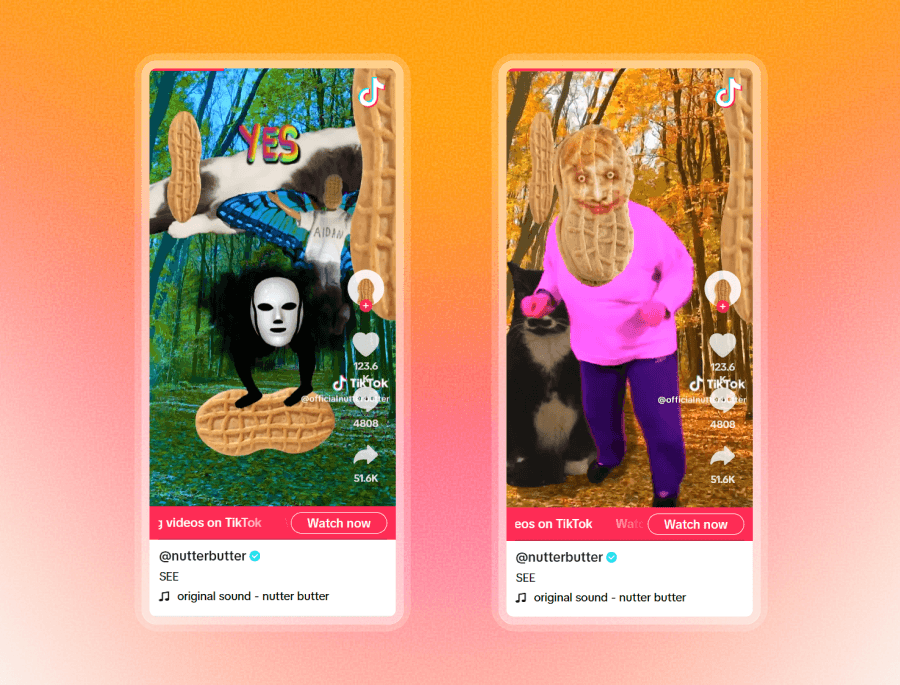
Por qué detiene el scroll: es una interrupción pura del patrón. Los videos son tan extraños que tu cerebro no puede categorizarlos de un vistazo, por lo que se detiene para entender qué es lo que está viendo. Lo que lo hace especial es que la rareza invitaba a descifrarla; los espectadores creaban teorías sobre la historia de fondo, lo que convirtió la visualización pasiva en participación activa y mantuvo la cuenta creciendo casi sin inversión en medios.
4. Flonase disfrazó un anuncio de tráiler
Una marca de alergias se apoderó de la serie más grande del streaming. "Talk of the Ton" de Flonase y Shondaland produjo un spot filmado para lucir exactamente como un tráiler oficial de Bridgerton de la época de la Regencia, lanzado en redes sociales justo antes del estreno de la temporada, por lo que los fans lo confundieron con un avance real hasta que apareció el giro de las alergias. Generó casi 300 millones de impresiones y elevó la favorabilidad y la consideración de Flonase en 29 puntos cada una.
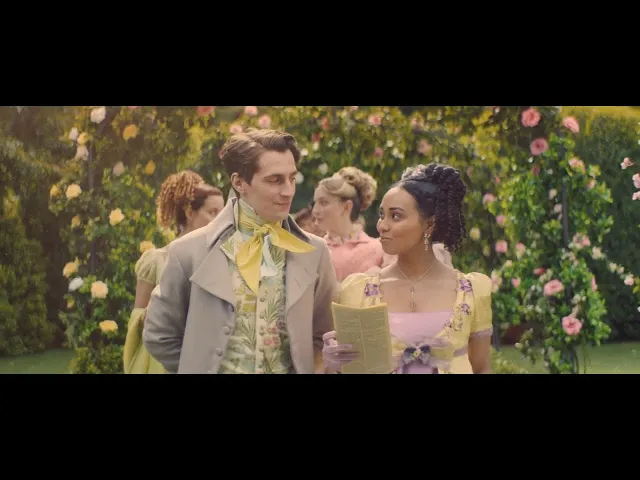
Por qué detiene el scroll: disfraz de formato. Detiene a la misma audiencia que detendría un tráiler real de Bridgerton, porque durante los primeros segundos realmente lo parece. Lo que lo hace especial es el timing, subiéndose exactamente a la ola de un momento cultural cuando la atención de los fans ya estaba en su punto máximo, por lo que el anuncio tomó prestada una audiencia que ya estaba lista para interesarse.
5. Nuveen convirtió un meme en una lección de finanzas
La prueba de que incluso el B2B puede detener el scroll. Cada mes de julio, los fanáticos del deporte celebran el "Día de Bobby Bonilla", la broma recurrente de que un jugador de béisbol retirado todavía cobra más de un millón de dólares al año por un contrato diferido. Nuveen y Front Office Sports replantearon ese meme en un cortometraje sobre el valor de los ingresos garantizados y la planificación financiera. Generó más de 19 millones de impresiones, y el video principal superó los 10 millones de vistas.
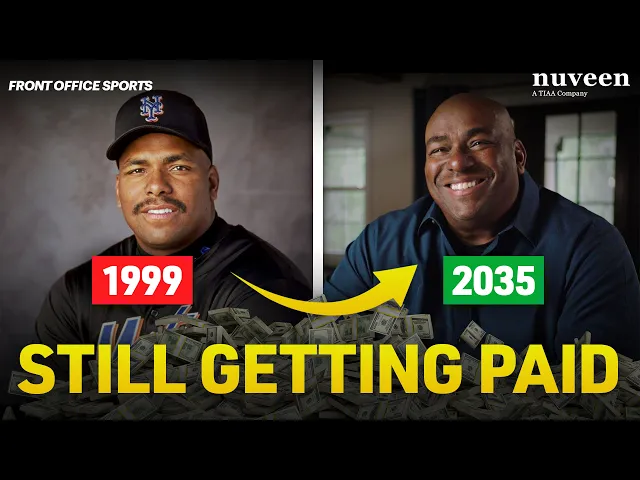
Por qué detiene el scroll: relevancia cultural en un lugar inesperado. Los fanáticos de los deportes ya conocen y aman la broma de Bonilla, por lo que verla aparecer en torno a un mensaje financiero genera un agradable chispazo de reconocimiento. Lo que lo hace especial es la traducción: convirtió un tema árido como la planificación de la jubilación en una historia que la audiencia ya estaba predispuesta a compartir.
6. La Roche-Posay convirtió la sección de comentarios en el anuncio
La idea más nativa de la plataforma en esta lista puso a la audiencia dentro de la pieza creativa. La campaña en la sección de comentarios de La Roche-Posay en los países nórdicos convirtió el campo de comentarios de TikTok en el lienzo: los creadores compartieron sus propias historias de arrepentimiento de tatuajes e invitaron a la gente a publicar sus imágenes y confesiones directamente en los comentarios, y esas contribuciones se convirtieron en la campaña. En seis semanas generó el 39% del engagement anual total de la marca en la región nórdica.
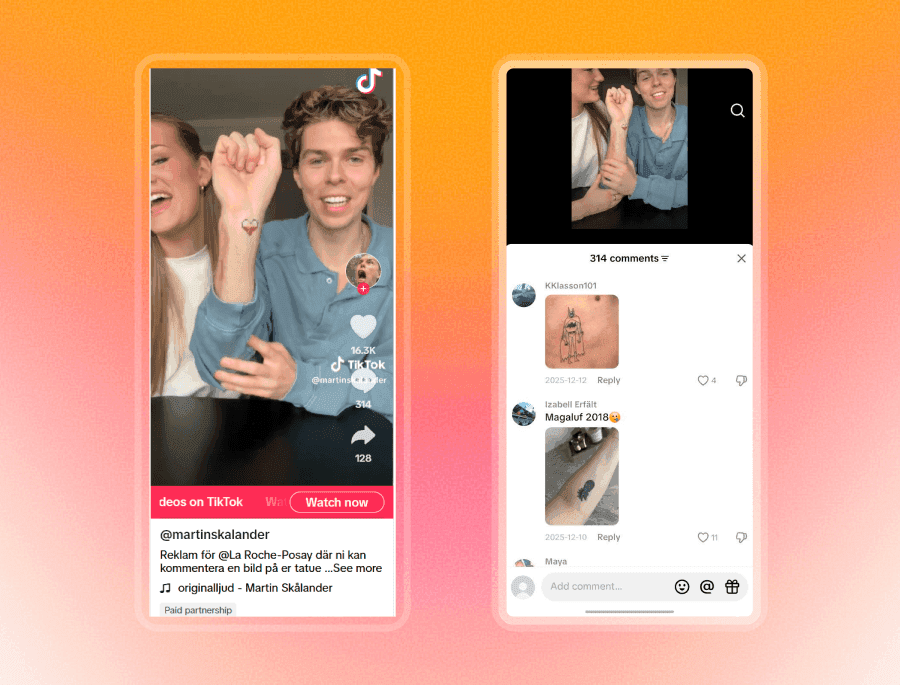
Por qué detiene el scroll: participación. El anuncio pide algo en lugar de solo mostrar algo, y ver a personas reales amontonarse en los comentarios es más magnético que cualquier spot pulido. Lo que lo hace especial es que la propia mecánica de la plataforma, la sección de comentarios, fue la idea, por lo que la campaña solo podía existir en TikTok.
7. Liquid Death hizo un anuncio que odia los anuncios
El agua enlatada construyó su base de seguidores sonando para nada como una marca de bebidas. Liquid Death contrata a escritores de comedia de programas como Adult Swim y enfoca sus redes sociales a burlarse de los clichés de bienestar de su propia categoría, todo bajo el eslogan "murder your thirst" (asesina tu sed). Este enfoque les ayudó a alcanzar $333 millones de dólares en ingresos y una valoración de $1.4 mil millones de dólares.
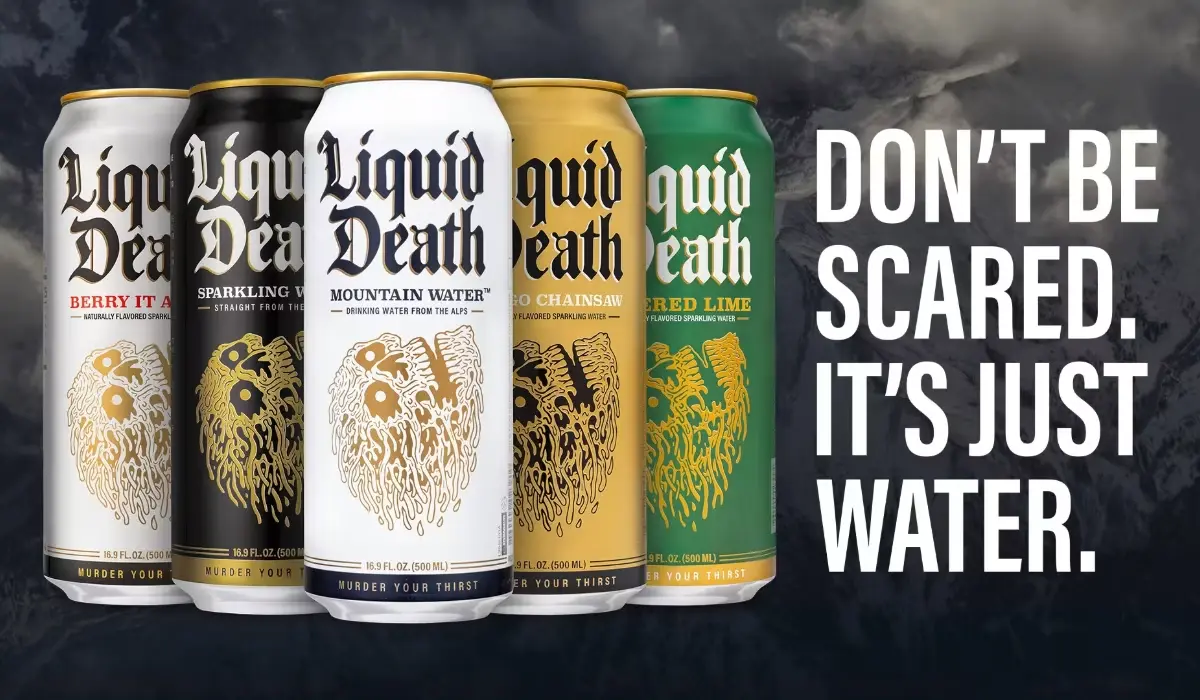
Por qué detiene el scroll: se lee como una persona con un punto de vista, por lo que el cerebro lo clasifica como contenido en lugar de publicidad y lo deja pasar por el filtro. Lo que lo hace especial es una voz consistente y comprometida; el chiste nunca se suaviza para sonar seguro, que es exactamente por qué sigue funcionando.
Qué tienen en común los mejores ejemplos de publicidad en redes sociales
Analiza estos siete ejemplos y verás que se repiten los mismos rasgos. Se sienten nativos de la plataforma en la que corren, por lo que la parada ocurre antes de que el anuncio se lea como tal. Abren con algo extraño, emocional o culturalmente relevante: un gancho que rompe el patrón. Recompensan la atención rápido, antes de que caiga. Están construidos en torno a una idea memorable que el espectador podría repetir después. Y la mayoría invita a la participación (una teoría que descifrar, un comentario que agregar, un chiste que compartir), lo que convierte una sola vista en una cadena de ellas. Los ejemplos más sólidos de publicidad en redes sociales rara vez dependen únicamente del presupuesto, dependen de una idea que valga la pena compartir.
Lee también: 8 ejemplos de anuncios de Instagram para robar en tu próxima campaña
Cómo crear tus propios anuncios que detengan el scroll
No necesitas un presupuesto de Super Bowl para aplicar estas lecciones. La mayoría de los ejemplos de anuncios en redes sociales anteriores gastaron mucho menos en medios de lo que sugieren las impresiones. Se aplican algunos principios clave.
Elige una idea disruptiva y apuesta fuerte por ella. Un solo gancho extraño o emocional supera a un anuncio prolijo que nadie recuerda. Escribe para el primer segundo, no para los treinta completos, porque el fotograma de apertura decide si el resto se verá. Adáptate al lenguaje nativo de la plataforma para que tu anuncio parezca algo que publicaría un usuario real. Y construye pensando en los comentarios, dúos e interacciones que convierten a un espectador en muchos.
La limitación práctica es el volumen. Rara vez sabes qué gancho detendrá el scroll hasta que pruebas varios, y producir tantos es donde la mayoría de los equipos se estancan. Aquí es donde el video con IA ayuda: una herramienta como Creatify convierte un producto en variaciones de anuncios de video listos para la plataforma, de modo que puedas poner cinco ganchos frente a una audiencia y dejar que los números elijan al ganador.
Lee también: ¿Qué es la compra de medios? Solía tratarse de relaciones. Ahora se trata de datos
Preguntas Frecuentes
¿Qué hace que un anuncio en redes sociales detenga el scroll?
Los anuncios que detienen el scroll rompen el patrón del feed en el primer o segundo segundo. Interrumpen visualmente con algo extraño, abren una brecha de curiosidad, apelan a una emoción, aprovechan un momento cultural o se disfrazan de contenido nativo, y luego recompensan la pausa rápidamente. Los ejemplos más sólidos combinan dos o tres de estas tácticas a la vez.
¿Cuáles son buenos ejemplos de anuncios en redes sociales?
Ejemplos destacados recientes de anuncios en redes sociales incluyen la campaña de conspiración "Michael CeraVe" de CeraVe, "Assume That I Can" de CoorDown, el surrealista "Nutterverse" de Nutter Butter en TikTok, el tráiler estilo Bridgerton de Flonase, el video del Día de Bobby Bonilla de Nuveen, la campaña de la sección de comentarios de La Roche-Posay y los anuncios cómicos de Liquid Death. Cada uno detiene el scroll con una mecánica diferente.
¿Cuánto tiempo tienes para captar la atención en las redes sociales?
Solo un instante. En un feed que se mueve rápido, la gente decide en el primer o segundo segundo si sigue viendo, y los anuncios de video pierden espectadores rápidamente si el gancho no está al principio. El fotograma de apertura se lleva la mayor parte del peso, así que lidera con tu imagen o idea más fuerte.
¿Qué hace que un anuncio en redes sociales se vuelva viral?
La viralidad generalmente proviene de una única idea memorable que la gente quiere compartir, combinada con un formato nativo de la plataforma y una invitación a participar. Los anuncios que provocan un comentario, un dúo, una teoría o una acción compartida llegan mucho más allá de su audiencia pagada, que es lo que lograron varios de los ejemplos anteriores con poca o ninguna inversión en medios.
¿Cómo creo anuncios de video que detengan el scroll?
Comienza con un gancho audaz y diseña los primeros dos segundos en torno a él, mantén el anuncio corto y nativo de la plataforma, y añade una razón para interactuar. Luego prueba varios ganchos con el mismo producto antes de escalar, ya que es difícil predecir cuál será el ganador, y destina presupuesto a la versión que retenga mejor la atención.
A principios de 2024, el internet se convenció de que el actor Michael Cera había inventado en secreto CeraVe. Fotos falsas de paparazzi, dermatólogos "desmintiéndolo", una conspiración que crecía poco a poco. La gente dejaba de hacer scroll para averiguar si algo de esto era real. No lo era, y ese era justamente el punto.
Ese doble vistazo es todo el juego de la publicidad en redes sociales. En un feed que se mueve a toda velocidad, tienes un instante, tal vez un segundo o dos, antes de que un pulgar decida si tu anuncio merece más atención o si es mejor pasarlo de largo. Detener el scroll es un problema creativo antes de ser un problema de medios, y los anuncios que lo logran rompen el patrón, abren una pregunta o transmiten una emoción, para luego recompensar la pausa rápidamente.
Aquí tienes siete de los mejores ejemplos de anuncios en redes sociales de 2024 a 2026, con un análisis de por qué exactamente cada uno detiene el scroll y qué puedes aprender de ellos. Analiza suficientes ejemplos de anuncios en redes sociales y verás que las mismas mecánicas empiezan a repetirse.
Por qué se detiene realmente el scroll
Antes de los ejemplos, hablemos de la mecánica, porque se repite en todos ellos. Un feed social entrena a tu cerebro para filtrar rápido. Buscas la forma de cosas que ya conoces (un anuncio, una selfie, un meme) y pasas de largo todo lo que te resulte familiar. Un anuncio se gana una pausa al negarse a encajar en ese molde.
Hay algunas formas confiables de romper el patrón. Puedes interrumpirlo visualmente, con algo tan extraño que el cerebro no pueda clasificarlo de un vistazo. Puedes abrir una brecha de curiosidad, una pregunta que el espectador necesite responder. Puedes apelar a una emoción con tanta fuerza que pasar de largo se sienta mal. Puedes aprovechar un momento cultural que ya le interese a la gente. O puedes disfrazar el anuncio como el contenido que lo rodea, de modo que la pausa ocurra antes de que alguien se dé cuenta de que es publicidad. Las mejores campañas combinan dos o tres de estas tácticas y recompensan rápidamente al espectador por detenerse. Cada ejemplo a continuación es una combinación diferente.
1. CeraVe te hizo cuestionar la realidad
La campaña "Michael CeraVe" de CeraVe ejecutó la brecha de curiosidad más inteligente del año. Se desarrolló en tres actos: primero, fotos de paparazzi preparadas y rumores de que Michael Cera afirmaba haber creado CeraVe; luego, dermatólogos y creadores disputándolo públicamente; después, la revelación en el Super Bowl de que la marca está hecha con dermatólogos y que Cera no tuvo nada que ver. La campaña obtuvo miles de millones de impresiones y un Super Clio incluso antes de que comenzara el juego.
Por qué detiene el scroll: es un misterio que necesitas resolver. Un rostro famoso sumado a una afirmación absurda genera una pregunta que el cerebro quiere cerrar, y cada nueva publicación añadía una pieza. Lo que lo hace especial es la disciplina de la revelación lenta; la recompensa se dosificó a lo largo de semanas, por lo que la gente seguía regresando para el siguiente capítulo.
2. CoorDown hizo que pasar de largo se sintiera mal
Para el Día Mundial del Síndrome de Down, "Assume That I Can" de CoorDown presentó a una joven con síndrome de Down enfrentándose a las bajas expectativas que se tienen de ella, argumentando que cuando asumes que no puede, a menudo no puede, porque nadie le da la oportunidad. Superó los 150 millones de vistas en una semana y ganó siete Leones de Cannes y un premio UN SDG Action Award.
Por qué detiene el scroll: confrontación emocional cruda con un punto de vista contundente. El video expone una profecía autocumplida que la mayoría de la gente nunca ha articulado, y lo hace con un rostro y una voz mirando directamente a la cámara. Lo que lo hace especial es que la emoción está ligada a una idea específica y accionable, por lo que deja a la gente con un pensamiento para reflexionar, y el sentimiento le otorga a ese pensamiento su poder de permanencia.
3. Nutter Butter se negó a tener sentido
Una marca de galletas de 55 años se convirtió en una de las cuentas más extrañas de TikTok. El "Nutterverse" de Nutter Butter es un sueño febril surrealista y casi de terror, lleno de personajes de baja resolución e historias inexplicables que parecen un sueño que apenas recuerdas. Consiguió unos 250 millones de vistas, hizo crecer la cuenta de unos 3,100 seguidores a 700,000 y generó miles de millones de impresiones en medios.
Por qué detiene el scroll: es una interrupción pura del patrón. Los videos son tan extraños que tu cerebro no puede categorizarlos de un vistazo, por lo que se detiene para entender qué es lo que está viendo. Lo que lo hace especial es que la rareza invitaba a descifrarla; los espectadores creaban teorías sobre la historia de fondo, lo que convirtió la visualización pasiva en participación activa y mantuvo la cuenta creciendo casi sin inversión en medios.
4. Flonase disfrazó un anuncio de tráiler
Una marca de alergias se apoderó de la serie más grande del streaming. "Talk of the Ton" de Flonase y Shondaland produjo un spot filmado para lucir exactamente como un tráiler oficial de Bridgerton de la época de la Regencia, lanzado en redes sociales justo antes del estreno de la temporada, por lo que los fans lo confundieron con un avance real hasta que apareció el giro de las alergias. Generó casi 300 millones de impresiones y elevó la favorabilidad y la consideración de Flonase en 29 puntos cada una.
Por qué detiene el scroll: disfraz de formato. Detiene a la misma audiencia que detendría un tráiler real de Bridgerton, porque durante los primeros segundos realmente lo parece. Lo que lo hace especial es el timing, subiéndose exactamente a la ola de un momento cultural cuando la atención de los fans ya estaba en su punto máximo, por lo que el anuncio tomó prestada una audiencia que ya estaba lista para interesarse.
5. Nuveen convirtió un meme en una lección de finanzas
La prueba de que incluso el B2B puede detener el scroll. Cada mes de julio, los fanáticos del deporte celebran el "Día de Bobby Bonilla", la broma recurrente de que un jugador de béisbol retirado todavía cobra más de un millón de dólares al año por un contrato diferido. Nuveen y Front Office Sports replantearon ese meme en un cortometraje sobre el valor de los ingresos garantizados y la planificación financiera. Generó más de 19 millones de impresiones, y el video principal superó los 10 millones de vistas.
Por qué detiene el scroll: relevancia cultural en un lugar inesperado. Los fanáticos de los deportes ya conocen y aman la broma de Bonilla, por lo que verla aparecer en torno a un mensaje financiero genera un agradable chispazo de reconocimiento. Lo que lo hace especial es la traducción: convirtió un tema árido como la planificación de la jubilación en una historia que la audiencia ya estaba predispuesta a compartir.
6. La Roche-Posay convirtió la sección de comentarios en el anuncio
La idea más nativa de la plataforma en esta lista puso a la audiencia dentro de la pieza creativa. La campaña en la sección de comentarios de La Roche-Posay en los países nórdicos convirtió el campo de comentarios de TikTok en el lienzo: los creadores compartieron sus propias historias de arrepentimiento de tatuajes e invitaron a la gente a publicar sus imágenes y confesiones directamente en los comentarios, y esas contribuciones se convirtieron en la campaña. En seis semanas generó el 39% del engagement anual total de la marca en la región nórdica.
Por qué detiene el scroll: participación. El anuncio pide algo en lugar de solo mostrar algo, y ver a personas reales amontonarse en los comentarios es más magnético que cualquier spot pulido. Lo que lo hace especial es que la propia mecánica de la plataforma, la sección de comentarios, fue la idea, por lo que la campaña solo podía existir en TikTok.
7. Liquid Death hizo un anuncio que odia los anuncios
El agua enlatada construyó su base de seguidores sonando para nada como una marca de bebidas. Liquid Death contrata a escritores de comedia de programas como Adult Swim y enfoca sus redes sociales a burlarse de los clichés de bienestar de su propia categoría, todo bajo el eslogan "murder your thirst" (asesina tu sed). Este enfoque les ayudó a alcanzar $333 millones de dólares en ingresos y una valoración de $1.4 mil millones de dólares.
Por qué detiene el scroll: se lee como una persona con un punto de vista, por lo que el cerebro lo clasifica como contenido en lugar de publicidad y lo deja pasar por el filtro. Lo que lo hace especial es una voz consistente y comprometida; el chiste nunca se suaviza para sonar seguro, que es exactamente por qué sigue funcionando.
Qué tienen en común los mejores ejemplos de publicidad en redes sociales
Analiza estos siete ejemplos y verás que se repiten los mismos rasgos. Se sienten nativos de la plataforma en la que corren, por lo que la parada ocurre antes de que el anuncio se lea como tal. Abren con algo extraño, emocional o culturalmente relevante: un gancho que rompe el patrón. Recompensan la atención rápido, antes de que caiga. Están construidos en torno a una idea memorable que el espectador podría repetir después. Y la mayoría invita a la participación (una teoría que descifrar, un comentario que agregar, un chiste que compartir), lo que convierte una sola vista en una cadena de ellas. Los ejemplos más sólidos de publicidad en redes sociales rara vez dependen únicamente del presupuesto, dependen de una idea que valga la pena compartir.
Lee también: 8 ejemplos de anuncios de Instagram para robar en tu próxima campaña
Cómo crear tus propios anuncios que detengan el scroll
No necesitas un presupuesto de Super Bowl para aplicar estas lecciones. La mayoría de los ejemplos de anuncios en redes sociales anteriores gastaron mucho menos en medios de lo que sugieren las impresiones. Se aplican algunos principios clave.
Elige una idea disruptiva y apuesta fuerte por ella. Un solo gancho extraño o emocional supera a un anuncio prolijo que nadie recuerda. Escribe para el primer segundo, no para los treinta completos, porque el fotograma de apertura decide si el resto se verá. Adáptate al lenguaje nativo de la plataforma para que tu anuncio parezca algo que publicaría un usuario real. Y construye pensando en los comentarios, dúos e interacciones que convierten a un espectador en muchos.
La limitación práctica es el volumen. Rara vez sabes qué gancho detendrá el scroll hasta que pruebas varios, y producir tantos es donde la mayoría de los equipos se estancan. Aquí es donde el video con IA ayuda: una herramienta como Creatify convierte un producto en variaciones de anuncios de video listos para la plataforma, de modo que puedas poner cinco ganchos frente a una audiencia y dejar que los números elijan al ganador.
Lee también: ¿Qué es la compra de medios? Solía tratarse de relaciones. Ahora se trata de datos
Preguntas Frecuentes
¿Qué hace que un anuncio en redes sociales detenga el scroll?
Los anuncios que detienen el scroll rompen el patrón del feed en el primer o segundo segundo. Interrumpen visualmente con algo extraño, abren una brecha de curiosidad, apelan a una emoción, aprovechan un momento cultural o se disfrazan de contenido nativo, y luego recompensan la pausa rápidamente. Los ejemplos más sólidos combinan dos o tres de estas tácticas a la vez.
¿Cuáles son buenos ejemplos de anuncios en redes sociales?
Ejemplos destacados recientes de anuncios en redes sociales incluyen la campaña de conspiración "Michael CeraVe" de CeraVe, "Assume That I Can" de CoorDown, el surrealista "Nutterverse" de Nutter Butter en TikTok, el tráiler estilo Bridgerton de Flonase, el video del Día de Bobby Bonilla de Nuveen, la campaña de la sección de comentarios de La Roche-Posay y los anuncios cómicos de Liquid Death. Cada uno detiene el scroll con una mecánica diferente.
¿Cuánto tiempo tienes para captar la atención en las redes sociales?
Solo un instante. En un feed que se mueve rápido, la gente decide en el primer o segundo segundo si sigue viendo, y los anuncios de video pierden espectadores rápidamente si el gancho no está al principio. El fotograma de apertura se lleva la mayor parte del peso, así que lidera con tu imagen o idea más fuerte.
¿Qué hace que un anuncio en redes sociales se vuelva viral?
La viralidad generalmente proviene de una única idea memorable que la gente quiere compartir, combinada con un formato nativo de la plataforma y una invitación a participar. Los anuncios que provocan un comentario, un dúo, una teoría o una acción compartida llegan mucho más allá de su audiencia pagada, que es lo que lograron varios de los ejemplos anteriores con poca o ninguna inversión en medios.
¿Cómo creo anuncios de video que detengan el scroll?
Comienza con un gancho audaz y diseña los primeros dos segundos en torno a él, mantén el anuncio corto y nativo de la plataforma, y añade una razón para interactuar. Luego prueba varios ganchos con el mismo producto antes de escalar, ya que es difícil predecir cuál será el ganador, y destina presupuesto a la versión que retenga mejor la atención.

¿Listo para convertir tu producto en un video atractivo?