Equipo Creatify
COMPARTIR


EN ESTE ARTÍCULO
Most of your future clients will never answer a cold email. In AgencyAnalytics' 2026 benchmark survey of 494 agency professionals, 85% named referrals and 72% named word of mouth as sources of new business, with SEO and content next at 38%. Outbound outreach trailed them all at 33%. So if you run a marketing, creative, or SEO agency and you're tired of grinding through cold DMs and unanswered sequences, the good news is that the channels that actually win agency clients are ones you can compound over time instead of chasing. This guide walks through nine of them, with the specific tactics and a simple workflow for each, so clients start coming to you.
The thread running through all of them is trust. Inbound clients don't come from traffic alone; they come from earned confidence. Your job is to make the agency easy to hear about, easy to check out, easy to find the moment a buyer has a problem, and easy to contact once they're ready. No single tactic does that. A few working together do.
9 Lead Generation Sources Agencies Actually Use in 2026
1. Turn your WoM referrals into a system
Referrals are the number-one source of agency clients, and most agencies leave them to chance. The fix is to treat referrals as a repeatable process instead of an occasional lucky break.
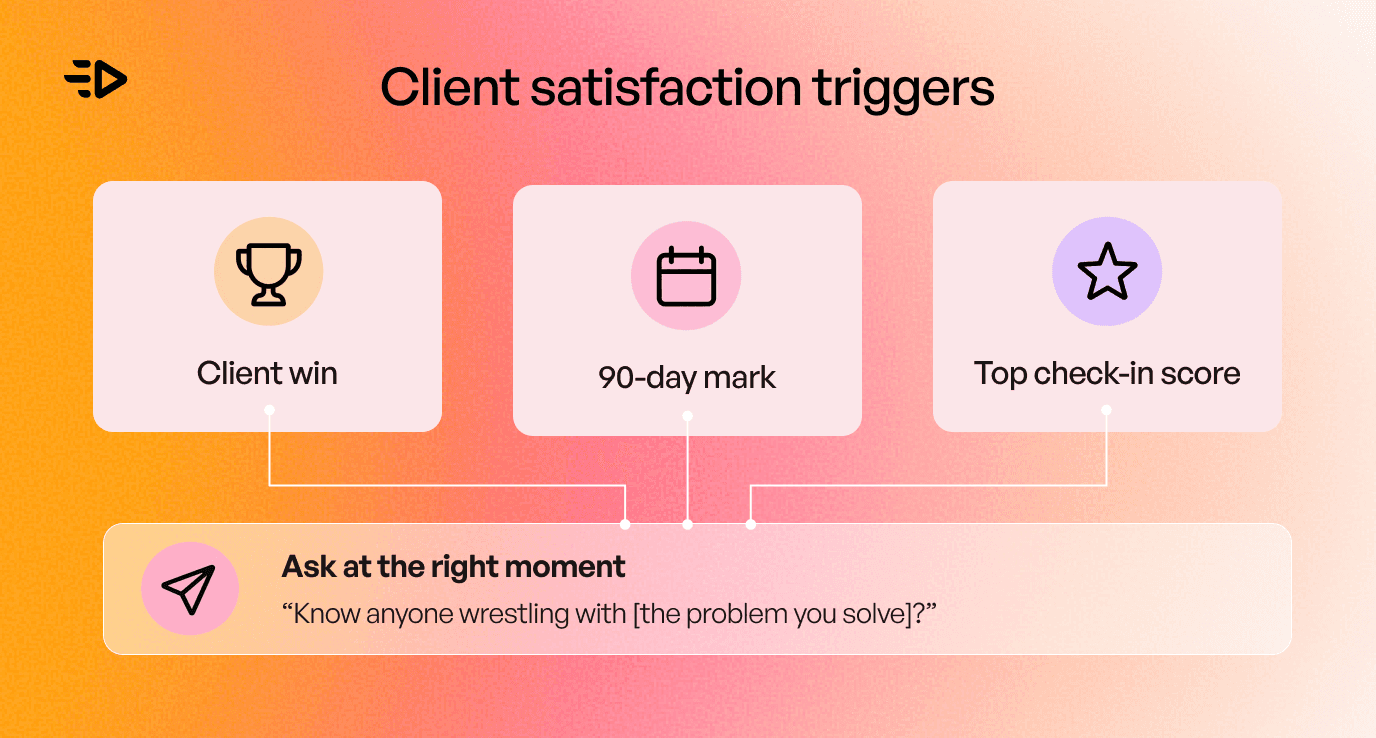
Ask at the moment of peak satisfaction, not at random. Set a trigger: when a client hits a real win, passes their 90-day mark, or gives you a top score on a check-in, that's the cue to ask. Make the ask frictionless by handing them the words: "We have room for one or two new [type] clients next quarter. Know anyone wrestling with [the problem you solve]? Here's a two-sentence intro you can forward." Add incentives where it fits, like a service credit toward next month's retainer, and build reciprocal referral relationships with non-competing agencies, so the SEO shop sends you the design work and you send back the paid media.
A workflow that runs itself: flag the satisfaction trigger in your CRM, have the account lead send a 60-second personal video thanking the client and naming the win, then drop in the copy-paste intro blurb. That's it. You've turned a good feeling into a warm introduction.
2. Build a founder-led presence, especially on LinkedIn
Agency buyers trust people before they trust logos. When the founder or a senior lead publishes useful thinking in public, prospects arrive at the first call already convinced you know your craft.
The content that works is a mix, weighted toward substance: mostly tactical teardowns of real work, some contrarian takes that challenge lazy industry assumptions, and the occasional direct offer. Show the actual work, anonymized where you must. At some point you can stop treating every post as a separate lift: record one ten-minute screen share explaining a strategy or teardown, and turn that single recording into a carousel, a couple of text posts, and a newsletter issue.
The workflow is half publishing, half showing up. Post from that repurposed material, then spend fifteen minutes a day leaving genuinely useful comments on posts from the CMOs, founders, and marketing leads you'd love to work with.
When someone engages, reply with value rather than a pitch: "Saw your comment on the tracking post, here's the [non-gated template we use] if it's helpful." That's how you generate inbound interest in public.
3. Prioritize ranking for bottom-of-funnel search intent
Search still delivers clients, but the pages that convert are the bottom-of-funnel ones, not generic blog posts. A founder searching "Shopify migration agency for DTC brands" is ready to hire; someone reading "what is XYZ" is probably not.
Build service pages around your most profitable niches, and make them specific: the vertical, the platform, real performance numbers, client logos, and a short case video. Then structure that content so AI answer engines can use it, because buyers increasingly ask ChatGPT or Google's AI Overviews for agency suggestions. Clear question-and-answer headings, summary bullets, schema markup, and proprietary data give those systems something quotable, which improves your odds of being named in the answer. Those engines pull from the same well as everyone else, meaning strong third-party reviews and genuine authority, so treat it as a layer on top of solid SEO rather than a shortcut around it.
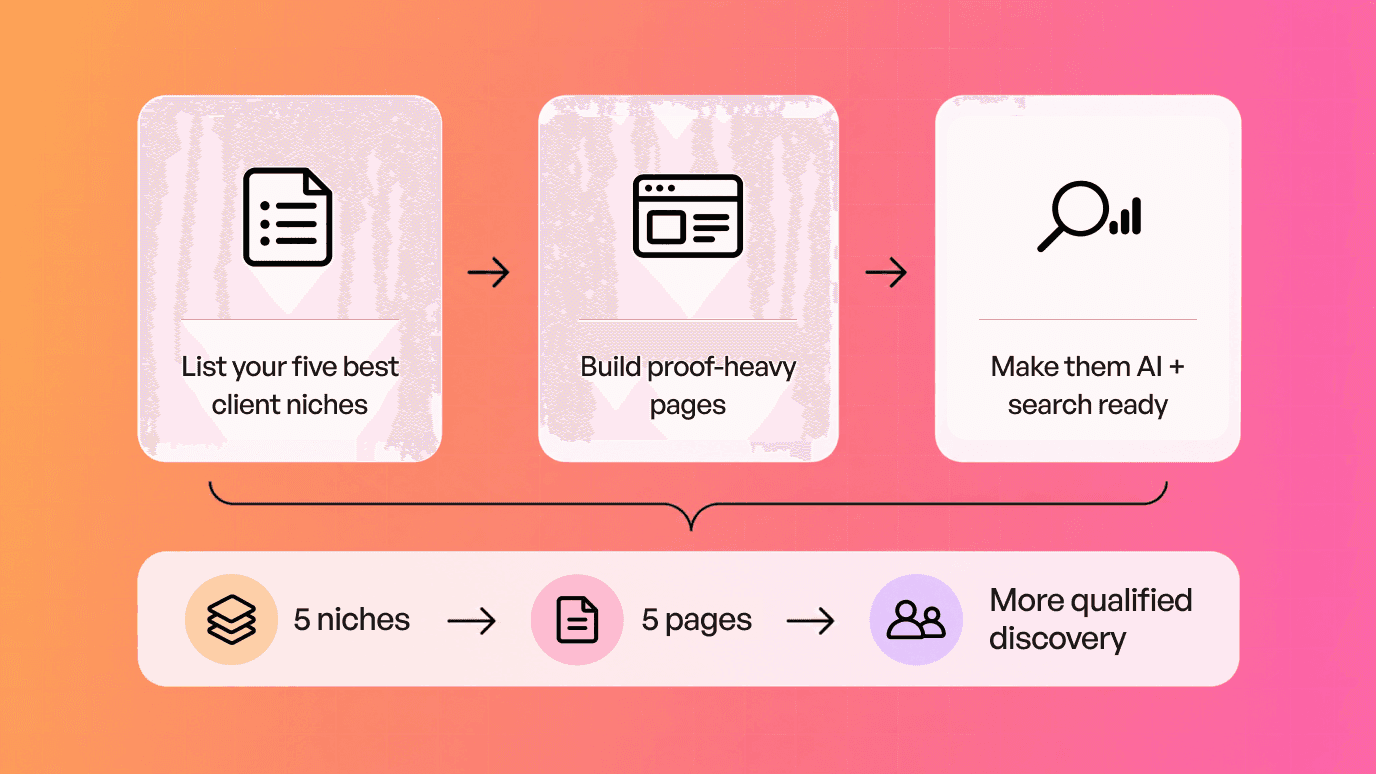
The workflow: list your five best client niches, publish a detailed, proof-heavy page for each, and mark it up so both search crawlers and AI engines understand exactly what you do and who you do it for.
4. Make your proof do the selling
High-ticket buyers are trying to lower their risk before they ever book a call. A strong stack of real-life case studies answers their objections in advance.
Write case studies as a tight narrative: the situation, the bottleneck that was holding the client back, what you did, and the result in numbers that matter, like revenue or cost per acquisition. Pair a sixty-second client video with a screenshot of the actual dashboard, because a real analytics screen reads as true in a way a polished quote never will. Placing that proof where decisions happen matters as much as having it: put a short case study on your "thank you" page, and send a tailored one to a prospect before the discovery call so they arrive pre-sold. One more proof move that doubles as a lead magnet: showing the standard of work you'd produce, whether that's a sample campaign, a creative concept, or a mock ad. Turning a lukewarm lead into a warm one.
5. Plug into platform partner ecosystems
When you attach your agency to the software your clients already buy, you get access to buyers who have committed budget and now need help using the tool. Programs like the HubSpot Solutions Partner Program, Shopify Partners, the Klaviyo Partner Program, and Webflow's Certified Partner Program run directories where those buyers go looking, and some add matchmaking on top.
Get certified in the platform that shows up across most of your best clients, keep your tier high, and build a relationship with the vendor's account reps. When a rep sells software to a company that lacks the internal bandwidth to run it, they need someone to hand the implementation to, and a helpful, certified partner is the obvious choice. Offer those reps free short audits for their struggling accounts, and you become the solution they reach for rather than a competitor they avoid. Keep your directory profile in the platform's marketplace current and specific, since that listing is what a searching buyer sees first.
6. Show up in the directories buyers check
When a company is comparing agencies, it often ends up on a review portal built for exactly that. Clutch and Sortlist are the ones built around agency procurement, with The Manifest (Clutch's sister site) running buyer shortlists; G2 is worth a profile too, though buyers lean on it more for software than for hiring an agency. If you're not there with strong, recent reviews, you're not on the shortlist.
Run a review-velocity habit: after a good quarter or a successful project, send satisfied clients a direct link to leave a verified review. And resist the urge to look like everyone else. A profile that says "full-service digital agency" competes with thousands; one tuned to a specific capability and vertical ranks near the top of the filtered category a buyer actually searches. Feature those verified badges on your proposals and in your email signature, where they quietly reinforce credibility.
7. Borrow other people's audiences
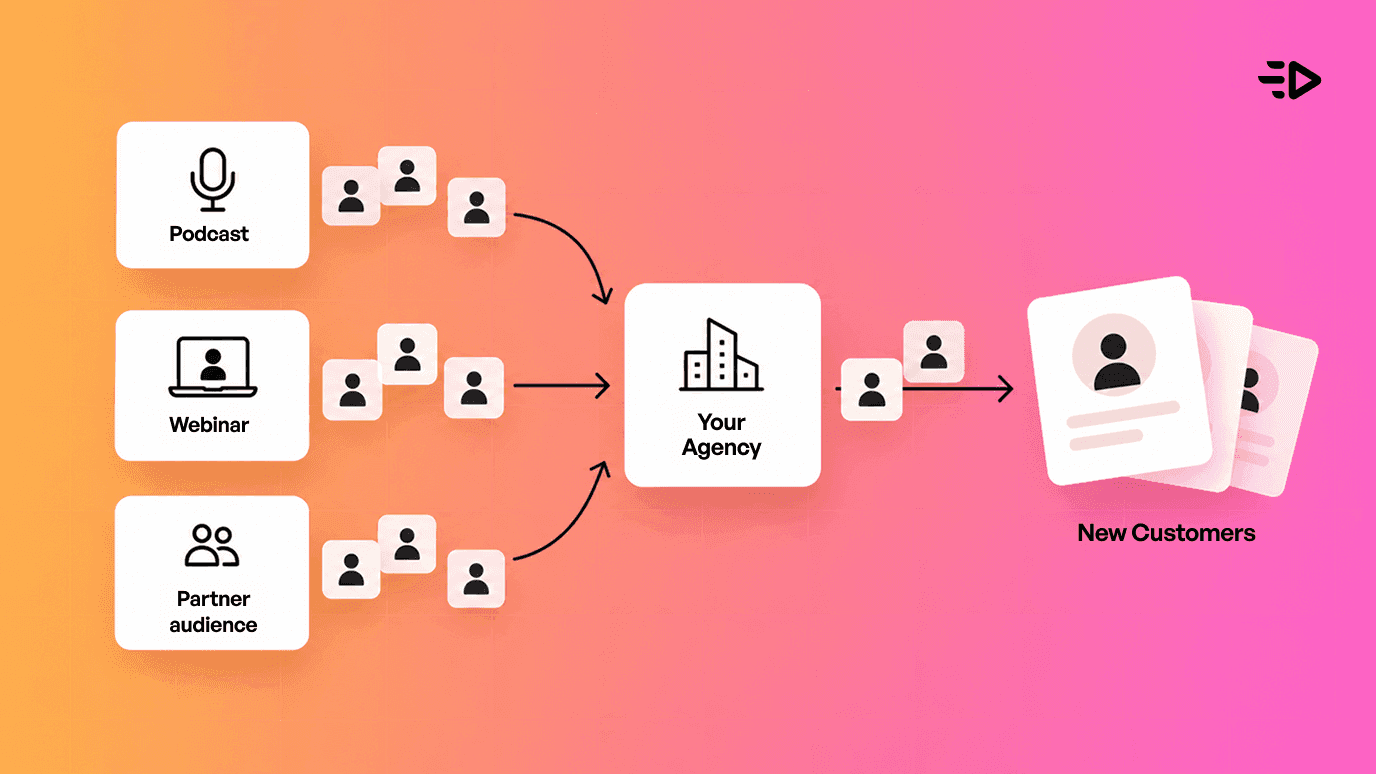
You don't have to build a following from zero to reach your buyers. Other people have already gathered them, and they need content.
Guest on the niche podcasts your buyers listen to, not general marketing shows, and pitch hosts with specific teardown topics drawn from real campaigns rather than a vague "I'd love to come on." Co-host webinars with complementary, non-competing tools, so you split the promotion and share each other's audiences. In every appearance, point listeners to a dedicated URL with a genuinely useful, ungated resource, which turns passive listeners into people you can follow up with.
8. Give value before you ever pitch
The fastest way to earn a first conversation is to be useful before asking for anything. Skip the generic thirty-page ebook; offer something immediate and specific to the prospect.
A short recorded audit works well: give someone a free five-minute walkthrough of three concrete improvements on their own site or account. Interactive tools work too, like a simple calculator that takes a couple of their numbers and returns a personalized result they care about. The workflow is quick: capture the site URL, email, and main challenge; deliver a personalized three-to-five-minute video within a day pointing out real fixes; and close with a light invitation to go deeper. You've demonstrated competence on their exact situation, which is worth more than any promise.
9. Stay in the inbox until they're ready
Agency deals often take months to come together, and most prospects who aren't ready today simply forget you exist by the time they are. A simple newsletter fixes that.
Send one short, useful email on a regular schedule, each sharing a single real tactic that's working across your client work. It keeps you top of mind without nagging, and it quietly proves your expertise week after week. Build a light win-back sequence too, so proposals that stalled six months ago get a gentle nudge when the timing may finally be right. Close soft: "When you're ready to tackle [problem], here are two ways we can help."
How to start attracting customers?
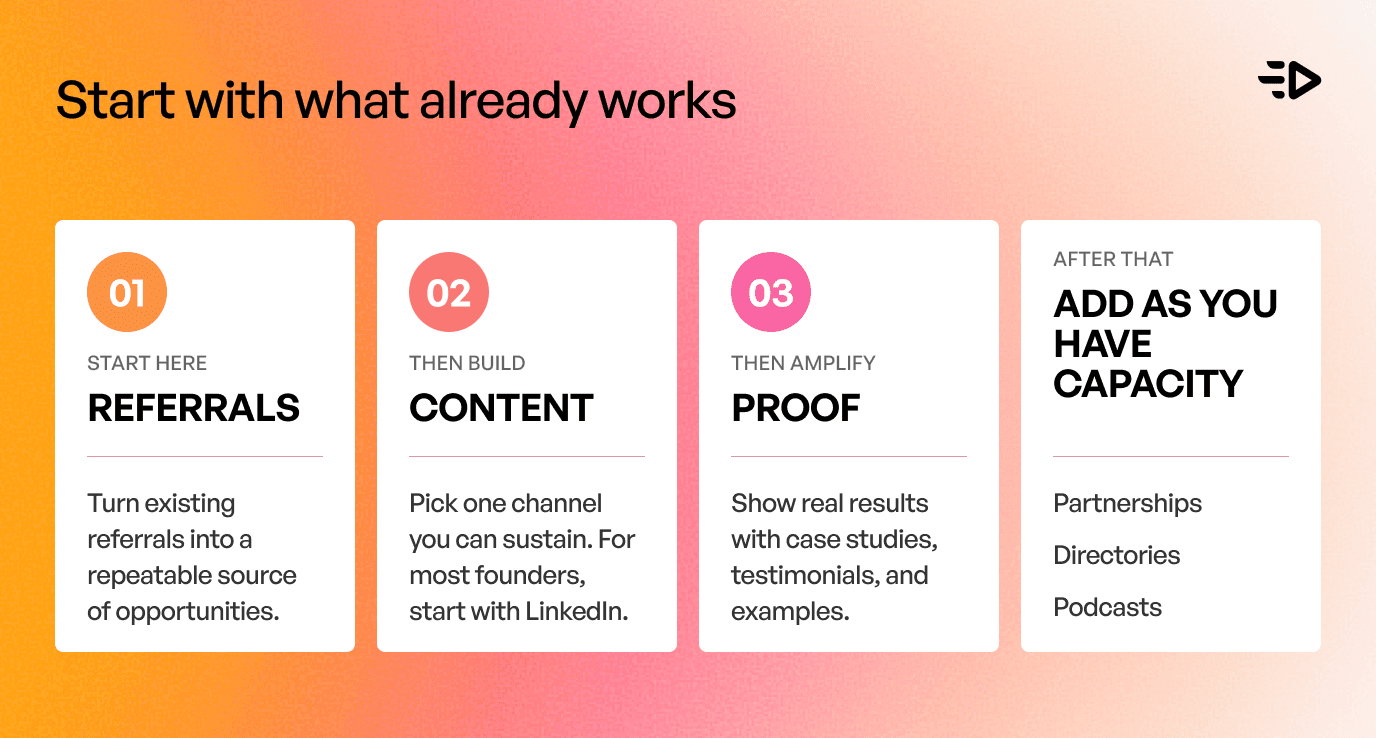
Trying to run every channel at once is how agencies end up doing all of them badly. Start with one, two, or three. First, systematize referrals, since that's already your biggest source and the fastest to improve. Second, pick one content channel you can genuinely sustain, which for most founders is publishing on LinkedIn. Third, build the proof stack, because it makes every other channel convert better. Add partnerships, directories, and podcasts as you have the capacity. Inbound compounds rather than spikes, so give it a quarter or two before you judge it, and keep going once it starts to work.
FAQ
How do agencies get clients without cold outreach?
Mostly through warm and inbound channels: referrals and word of mouth, which AgencyAnalytics found account for the large majority of agency new business, plus founder-led content, search and content that ranks for high-intent terms, strong case studies, platform partner programs, review directories, podcasts and webinars, free audits, and email nurture. The common thread is building trust so buyers come to you rather than being interrupted by a cold pitch.
What's the fastest inbound channel for a new agency?
Referrals and proof. Even a brand-new agency usually has a few happy clients or past colleagues; asking for introductions at the right moment and packaging your results into clear case studies produces warm conversations faster than waiting for content or SEO to compound. Founder posting on LinkedIn is the next fastest, because it can start generating inbound within weeks rather than months.
Do referrals really beat cold outreach for agencies?
By a wide margin. In AgencyAnalytics' 2026 survey, 85% of respondents cited referrals and 72% cited word of mouth as sources of new business, well ahead of outbound outreach at 33%. Referred clients also tend to close faster and stay longer, because they arrive already trusting you.
How long does inbound take to work?
It depends on the channel. Referrals and proof can produce results in weeks; founder-led content usually takes one to three months of consistency before inbound conversations start; SEO and directory presence often take a quarter or two to build momentum. The trade-off is durability: once these channels are working, they keep producing without the constant grind that cold outreach demands.
Are directories like Clutch worth it for agencies?
For most B2B and service agencies, yes, because they capture buyers at the exact moment they're comparing options. The value comes from recent, verified reviews and a specific, narrowly positioned profile rather than a generic "full-service" listing. Treat gathering reviews as an ongoing habit, not a one-time setup.
Most of your future clients will never answer a cold email. In AgencyAnalytics' 2026 benchmark survey of 494 agency professionals, 85% named referrals and 72% named word of mouth as sources of new business, with SEO and content next at 38%. Outbound outreach trailed them all at 33%. So if you run a marketing, creative, or SEO agency and you're tired of grinding through cold DMs and unanswered sequences, the good news is that the channels that actually win agency clients are ones you can compound over time instead of chasing. This guide walks through nine of them, with the specific tactics and a simple workflow for each, so clients start coming to you.
The thread running through all of them is trust. Inbound clients don't come from traffic alone; they come from earned confidence. Your job is to make the agency easy to hear about, easy to check out, easy to find the moment a buyer has a problem, and easy to contact once they're ready. No single tactic does that. A few working together do.
9 Lead Generation Sources Agencies Actually Use in 2026
1. Turn your WoM referrals into a system
Referrals are the number-one source of agency clients, and most agencies leave them to chance. The fix is to treat referrals as a repeatable process instead of an occasional lucky break.
Ask at the moment of peak satisfaction, not at random. Set a trigger: when a client hits a real win, passes their 90-day mark, or gives you a top score on a check-in, that's the cue to ask. Make the ask frictionless by handing them the words: "We have room for one or two new [type] clients next quarter. Know anyone wrestling with [the problem you solve]? Here's a two-sentence intro you can forward." Add incentives where it fits, like a service credit toward next month's retainer, and build reciprocal referral relationships with non-competing agencies, so the SEO shop sends you the design work and you send back the paid media.
A workflow that runs itself: flag the satisfaction trigger in your CRM, have the account lead send a 60-second personal video thanking the client and naming the win, then drop in the copy-paste intro blurb. That's it. You've turned a good feeling into a warm introduction.
2. Build a founder-led presence, especially on LinkedIn
Agency buyers trust people before they trust logos. When the founder or a senior lead publishes useful thinking in public, prospects arrive at the first call already convinced you know your craft.
The content that works is a mix, weighted toward substance: mostly tactical teardowns of real work, some contrarian takes that challenge lazy industry assumptions, and the occasional direct offer. Show the actual work, anonymized where you must. At some point you can stop treating every post as a separate lift: record one ten-minute screen share explaining a strategy or teardown, and turn that single recording into a carousel, a couple of text posts, and a newsletter issue.
The workflow is half publishing, half showing up. Post from that repurposed material, then spend fifteen minutes a day leaving genuinely useful comments on posts from the CMOs, founders, and marketing leads you'd love to work with.
When someone engages, reply with value rather than a pitch: "Saw your comment on the tracking post, here's the [non-gated template we use] if it's helpful." That's how you generate inbound interest in public.
3. Prioritize ranking for bottom-of-funnel search intent
Search still delivers clients, but the pages that convert are the bottom-of-funnel ones, not generic blog posts. A founder searching "Shopify migration agency for DTC brands" is ready to hire; someone reading "what is XYZ" is probably not.
Build service pages around your most profitable niches, and make them specific: the vertical, the platform, real performance numbers, client logos, and a short case video. Then structure that content so AI answer engines can use it, because buyers increasingly ask ChatGPT or Google's AI Overviews for agency suggestions. Clear question-and-answer headings, summary bullets, schema markup, and proprietary data give those systems something quotable, which improves your odds of being named in the answer. Those engines pull from the same well as everyone else, meaning strong third-party reviews and genuine authority, so treat it as a layer on top of solid SEO rather than a shortcut around it.
The workflow: list your five best client niches, publish a detailed, proof-heavy page for each, and mark it up so both search crawlers and AI engines understand exactly what you do and who you do it for.
4. Make your proof do the selling
High-ticket buyers are trying to lower their risk before they ever book a call. A strong stack of real-life case studies answers their objections in advance.
Write case studies as a tight narrative: the situation, the bottleneck that was holding the client back, what you did, and the result in numbers that matter, like revenue or cost per acquisition. Pair a sixty-second client video with a screenshot of the actual dashboard, because a real analytics screen reads as true in a way a polished quote never will. Placing that proof where decisions happen matters as much as having it: put a short case study on your "thank you" page, and send a tailored one to a prospect before the discovery call so they arrive pre-sold. One more proof move that doubles as a lead magnet: showing the standard of work you'd produce, whether that's a sample campaign, a creative concept, or a mock ad. Turning a lukewarm lead into a warm one.
5. Plug into platform partner ecosystems
When you attach your agency to the software your clients already buy, you get access to buyers who have committed budget and now need help using the tool. Programs like the HubSpot Solutions Partner Program, Shopify Partners, the Klaviyo Partner Program, and Webflow's Certified Partner Program run directories where those buyers go looking, and some add matchmaking on top.
Get certified in the platform that shows up across most of your best clients, keep your tier high, and build a relationship with the vendor's account reps. When a rep sells software to a company that lacks the internal bandwidth to run it, they need someone to hand the implementation to, and a helpful, certified partner is the obvious choice. Offer those reps free short audits for their struggling accounts, and you become the solution they reach for rather than a competitor they avoid. Keep your directory profile in the platform's marketplace current and specific, since that listing is what a searching buyer sees first.
6. Show up in the directories buyers check
When a company is comparing agencies, it often ends up on a review portal built for exactly that. Clutch and Sortlist are the ones built around agency procurement, with The Manifest (Clutch's sister site) running buyer shortlists; G2 is worth a profile too, though buyers lean on it more for software than for hiring an agency. If you're not there with strong, recent reviews, you're not on the shortlist.
Run a review-velocity habit: after a good quarter or a successful project, send satisfied clients a direct link to leave a verified review. And resist the urge to look like everyone else. A profile that says "full-service digital agency" competes with thousands; one tuned to a specific capability and vertical ranks near the top of the filtered category a buyer actually searches. Feature those verified badges on your proposals and in your email signature, where they quietly reinforce credibility.
7. Borrow other people's audiences
You don't have to build a following from zero to reach your buyers. Other people have already gathered them, and they need content.
Guest on the niche podcasts your buyers listen to, not general marketing shows, and pitch hosts with specific teardown topics drawn from real campaigns rather than a vague "I'd love to come on." Co-host webinars with complementary, non-competing tools, so you split the promotion and share each other's audiences. In every appearance, point listeners to a dedicated URL with a genuinely useful, ungated resource, which turns passive listeners into people you can follow up with.
8. Give value before you ever pitch
The fastest way to earn a first conversation is to be useful before asking for anything. Skip the generic thirty-page ebook; offer something immediate and specific to the prospect.
A short recorded audit works well: give someone a free five-minute walkthrough of three concrete improvements on their own site or account. Interactive tools work too, like a simple calculator that takes a couple of their numbers and returns a personalized result they care about. The workflow is quick: capture the site URL, email, and main challenge; deliver a personalized three-to-five-minute video within a day pointing out real fixes; and close with a light invitation to go deeper. You've demonstrated competence on their exact situation, which is worth more than any promise.
9. Stay in the inbox until they're ready
Agency deals often take months to come together, and most prospects who aren't ready today simply forget you exist by the time they are. A simple newsletter fixes that.
Send one short, useful email on a regular schedule, each sharing a single real tactic that's working across your client work. It keeps you top of mind without nagging, and it quietly proves your expertise week after week. Build a light win-back sequence too, so proposals that stalled six months ago get a gentle nudge when the timing may finally be right. Close soft: "When you're ready to tackle [problem], here are two ways we can help."
How to start attracting customers?
Trying to run every channel at once is how agencies end up doing all of them badly. Start with one, two, or three. First, systematize referrals, since that's already your biggest source and the fastest to improve. Second, pick one content channel you can genuinely sustain, which for most founders is publishing on LinkedIn. Third, build the proof stack, because it makes every other channel convert better. Add partnerships, directories, and podcasts as you have the capacity. Inbound compounds rather than spikes, so give it a quarter or two before you judge it, and keep going once it starts to work.
FAQ
How do agencies get clients without cold outreach?
Mostly through warm and inbound channels: referrals and word of mouth, which AgencyAnalytics found account for the large majority of agency new business, plus founder-led content, search and content that ranks for high-intent terms, strong case studies, platform partner programs, review directories, podcasts and webinars, free audits, and email nurture. The common thread is building trust so buyers come to you rather than being interrupted by a cold pitch.
What's the fastest inbound channel for a new agency?
Referrals and proof. Even a brand-new agency usually has a few happy clients or past colleagues; asking for introductions at the right moment and packaging your results into clear case studies produces warm conversations faster than waiting for content or SEO to compound. Founder posting on LinkedIn is the next fastest, because it can start generating inbound within weeks rather than months.
Do referrals really beat cold outreach for agencies?
By a wide margin. In AgencyAnalytics' 2026 survey, 85% of respondents cited referrals and 72% cited word of mouth as sources of new business, well ahead of outbound outreach at 33%. Referred clients also tend to close faster and stay longer, because they arrive already trusting you.
How long does inbound take to work?
It depends on the channel. Referrals and proof can produce results in weeks; founder-led content usually takes one to three months of consistency before inbound conversations start; SEO and directory presence often take a quarter or two to build momentum. The trade-off is durability: once these channels are working, they keep producing without the constant grind that cold outreach demands.
Are directories like Clutch worth it for agencies?
For most B2B and service agencies, yes, because they capture buyers at the exact moment they're comparing options. The value comes from recent, verified reviews and a specific, narrowly positioned profile rather than a generic "full-service" listing. Treat gathering reviews as an ongoing habit, not a one-time setup.

¿Listo para convertir tu producto en un video atractivo?