
Boris Goncharov
COMPARTILHAR


NESTE ARTIGO
Most clothing ads are a pretty picture of some clothes. A model, good lighting, a logo, a price. They are pleasant, forgettable, and they sell about as well as a folded shirt on a shelf. The clothing ads that do move product do something different: they give you a reason to stop scrolling and a reason to buy, usually in the first second. A laugh that points straight at the product. An identity you can put on. Proof it will look good on a body like yours. A real deadline. Pretty is a commodity. A reason is not.
This is a field guide to those reasons, built from real, viral fashion advertisement examples across every format, from a full-page newspaper ad that told people not to shop, to fried-chicken-scented Crocs that sold out in half an hour. Whether you run a giant brand or sell shirts out of your spare room, the same handful of moves show up in the ads for clothes that actually convert. Here they are, with examples worth stealing.
The one thing every converting clothing ad has
Before the examples, the rule that ties them together: a clothing ad converts when the creative has a job. Not "look nice," but a specific job the viewer feels instantly. Is this ad here to make me laugh, to tell me who I would become if I wore this, to prove it fits real people, or to make me act before it is gone? Great clothing ads pick one and commit. Weak ones pick none and just show the hoodie again. As you read on, notice that every clothes advertisement example below has an obvious job, and the garment is never incidental to it.
1. Make the joke do a job
Funny clothing ads are catnip, but a joke alone is a wasted budget. The trick is that the punchline has to point at the product.
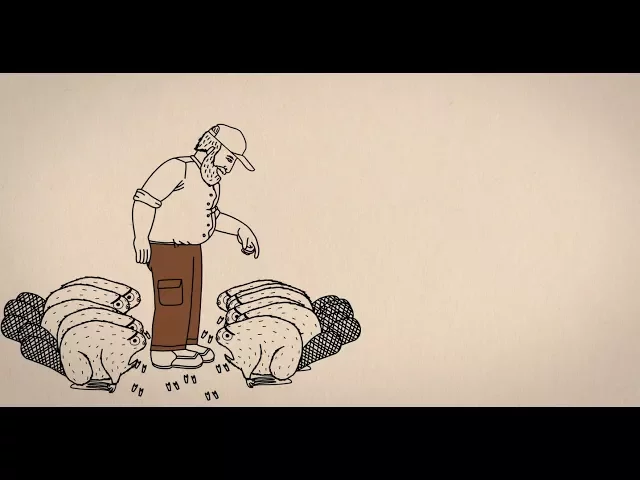
Duluth Trading Company built a whole identity on this. Its ads are cartoonish and a little crude, famous for things like an animated beaver taking a bite out of a pair of work pants, and the gag always lands on a real benefit: your clothes should not betray you when you move. The comedy makes an unglamorous category, workwear and underwear, impossible to forget, and it points straight at comfort and durability. According to the brand's creative agency, one cheeky underwear spot had to be pulled off air early because the product sold out, and denim sales doubled while a national ad ran. Treat those as the agency's reported results rather than audited numbers, but the creative principle is rock solid.
Chubbies has done the same for short shorts since 2011, wrapping them in a gleefully ridiculous "the weekend is sacred" brand voice, complete with the rallying cry "Sky's out, thighs out." The jokes are the ad, but they are always selling one thing: a carefree identity you buy into.
Then there is the ad that is just the product. When MSCHF dropped its Big Red Boots in early 2023, giant glossy cartoon boots that look like they walked off a Saturday-morning screen, it barely needed a campaign. Vogue noted how quickly the fashion world was wearing and talking about them before they even released. The boots explained themselves in a single frame; every photo and reaction video became the ad. The lesson is not "make a weird video." It is to make something so instantly legible that the punchline is the product, and the answer to "what are those?" is a link to buy.
▶ See the real ads: Duluth Trading's angry beaver spot · Chubbies (official channel) · MSCHF Big Red Boots
2. Sell an identity people can wear
People do not buy clothes; they buy the version of themselves the clothes create. The best clothing ads sell that identity so clearly you can feel yourself joining a club.
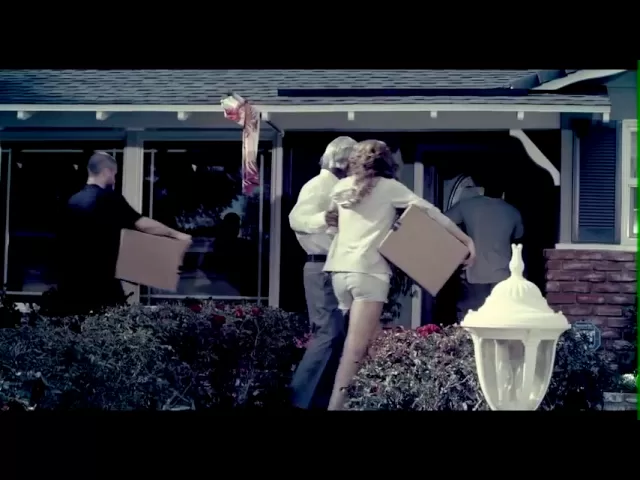
Chubbies again: nobody is studying the inseam, they are buying "fun weekend guy." Supreme turned this into a religion, using stark, context-free images to announce its limited Thursday drops, and the product became a membership card in a subculture. VF Corporation acquired the brand for about $2.1 billion in 2020, which tells you how much an identity is worth even when the ads say almost nothing about the clothes.
▶ See it: How Supreme's weekly drops work
The point for your own ads: the garment has to complete an identity, not decorate one. In the fashion advertisement examples that work this way, the ad shows the life the buyer wants and puts your product at the center of it, so the viewer thinks "that is who I want to be" and only then "and I need that jacket to do it."
3. Take a real stand, and back it up
A point of view converts because it filters. It repels the people who were never going to buy and bonds the ones who will.
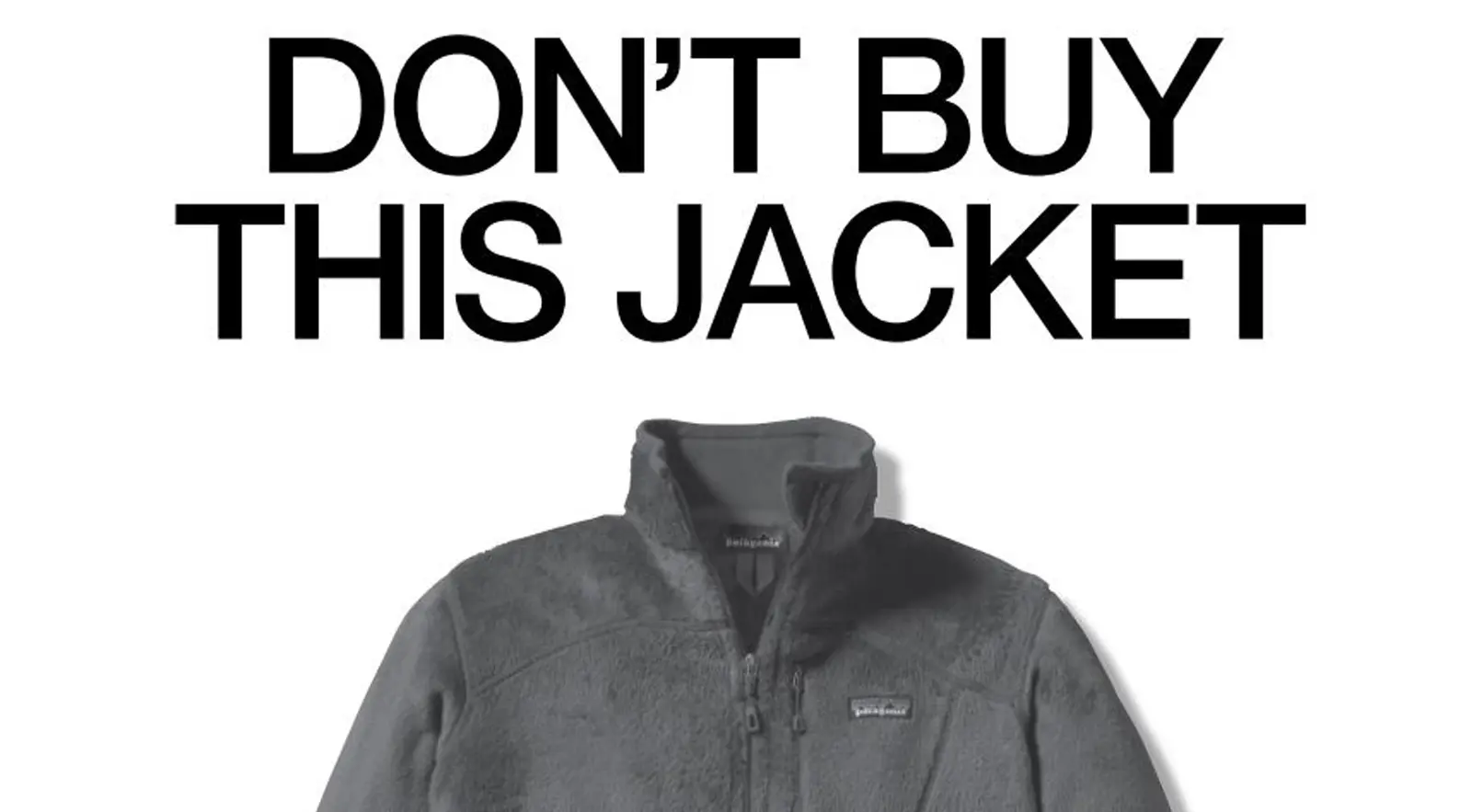
The all-time example is Patagonia's "Don't Buy This Jacket," a full-page ad it ran in The New York Times on Black Friday in 2011, showing one of its own fleece jackets under a headline telling you not to buy it. The body copy laid out the environmental cost of making the thing and asked people to reduce, repair, reuse, and recycle before buying more. It is genuinely counterintuitive: an advertisement for clothing arguing against clothing consumption. What made it work was not the stunt but the credibility behind it, since Patagonia already ran repair and reuse programs. It became one of the most enduring brand-trust stories in retail. Fair warning for your own version: you will see a "sales jumped 30%" figure attached to this ad all over the internet, but it is not cleanly traceable to Patagonia, so admire the trust it built rather than quoting a number.
▶ See it: Patagonia's "Don't Buy This Jacket" ad
Nike did the polarizing version in 2018 with "Dream Crazy," the two-minute film narrated by Colin Kaepernick that closed on "Believe in something. Even if it means sacrificing everything." It drew boycotts and, according to MIT Sloan, more than five million YouTube views in its first 24 hours, and it later won an Emmy. It worked because the stance fit a customer identity Nike had spent decades building, not because controversy is a magic conversion trick. The takeaway: a stand converts only when it is operationally true. A slogan with no product, policy, or behavior behind it is just noise.
▶ Watch: Nike — "Dream Crazy"
4. Replace polish with real
The quiet conversion killer in fashion is the gap between the ad and the mirror: "sure, it looks good on her." Close that gap and you win.
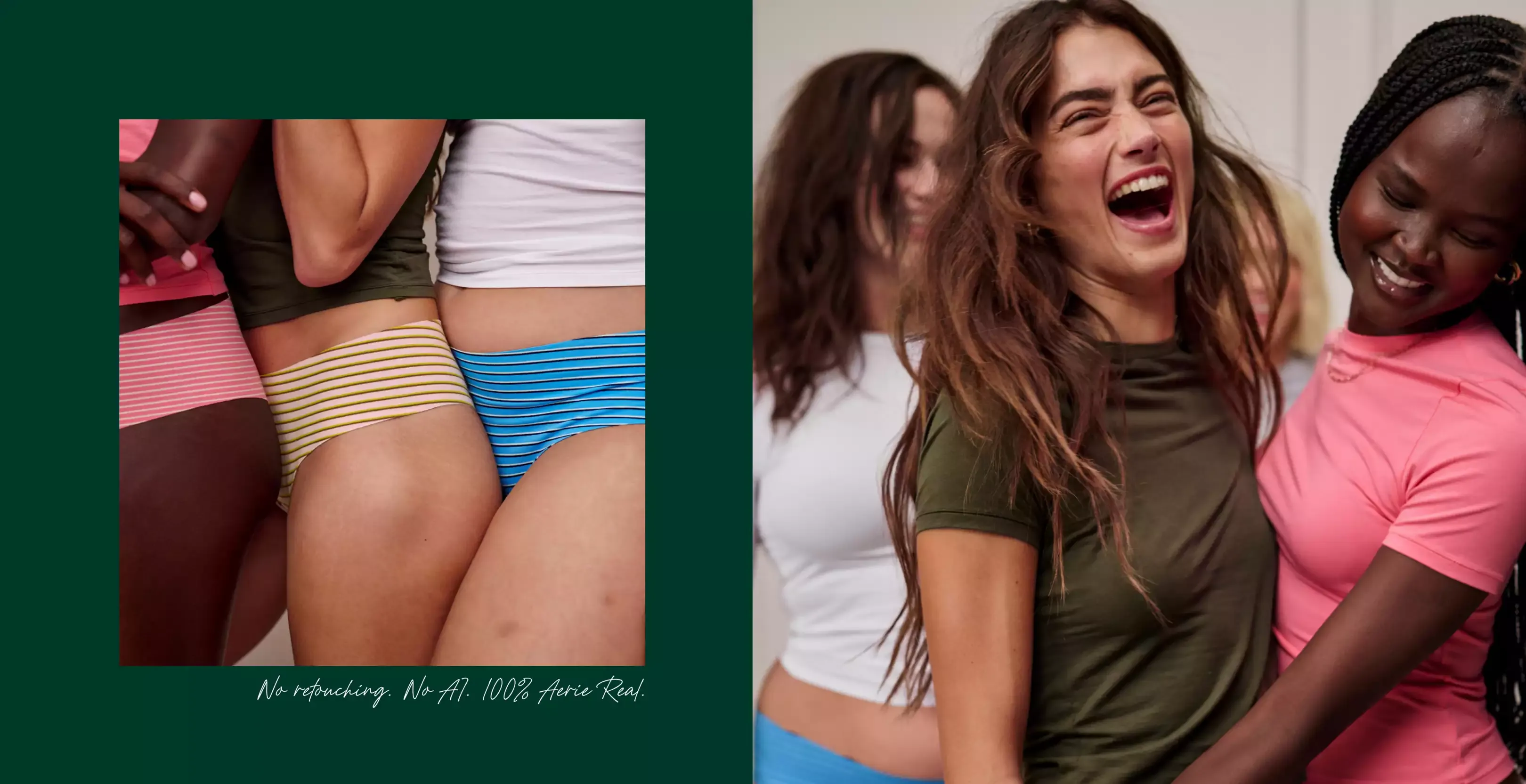
Aerie did it in 2014 by simply stopping. It stopped retouching the bodies in its campaigns, showing stretch marks, rolls, and tattoos under the banner #AerieREAL. Real bodies made shoppers believe what they saw and picture themselves in it, and its parent company reported that Aerie's sales grew about 20% in the year after the launch. Savage X Fenty took the same idea to the runway, casting models across sizes, skin tones, ages, and abilities, so inclusivity showed up in the product and the styling rather than in a slogan.
▶ See the real ads: Aerie - #AerieREAL · Savage X Fenty (official channel)
Proof also means showing the benefit, not claiming it. Bombas built its socks around one-for-one giving (every pair bought triggers a donated pair, more than 200 million items donated to date), but its ads also demo the actual product, pointing at the honeycomb arch support and seamless toe that make the sock worth more than the three-pack at the drugstore. And Spanx became a household name largely without traditional advertising: founder Sara Blakely cut the feet off a pair of control-top pantyhose to solve a visible-panty-line problem, then sold the idea by showing buyers the before-and-after difference rather than describing it. For any "invisible" benefit, smoothing, opacity, warmth, squat-proofness, pockets, the more visual the problem, the more visual your evidence has to be.
▶ See the real ads: Bombas TV spots · Spanx - Sara Blakely's story
5. Engineer participation that looks like a movement
User-generated content converts because shoppers trust other shoppers. But "post your haul" is a weak ask. The brands that win give people a reason to make content that happens to sell clothes. In practice, these are ads for clothes made by the people wearing them.
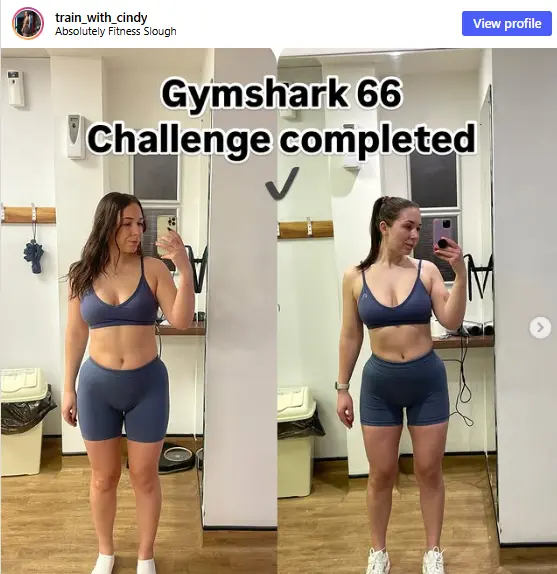
Gymshark's #Gymshark66 is the model: a 66-day fitness challenge that handed creators a story arc, set a goal, document the grind, reveal the transformation, with the brand's leggings and gym wear along for the ride the whole time. That is far more persuasive than paying someone to pose in a package. Fashion Nova built a machine out of a different version of this, repurposing a constant stream of real customers and micro-creators in their outfits, so a shopper sees the garment on dozens of real bodies instead of one studio model. The SHEIN "haul" turned a try-on into a bundled product demo, piles of pieces modeled and reacted to in a native format.
▶ See it: Gymshark 66 · Fashion Nova on Instagram · #SHEINhaul on TikTok
One honest note, because it matters for both trust and the law: most of what people call UGC is not spontaneous. It is worth knowing the difference between genuine customer posts, gifted creator content, paid creator ads, and affiliate content where the creator earns a commission, and to disclose the relationship. The goal is not fake authenticity; it is a real, specific product experience that a viewer can trust. So design the ask: "show how you style one piece three ways" or "test whether these really are squat-proof" produces far more purchase-relevant proof than "tag us."
6. Use scarcity honestly
Urgency is the oldest conversion lever there is, and it still works in a clothes advertisement, as long as the deadline is real.
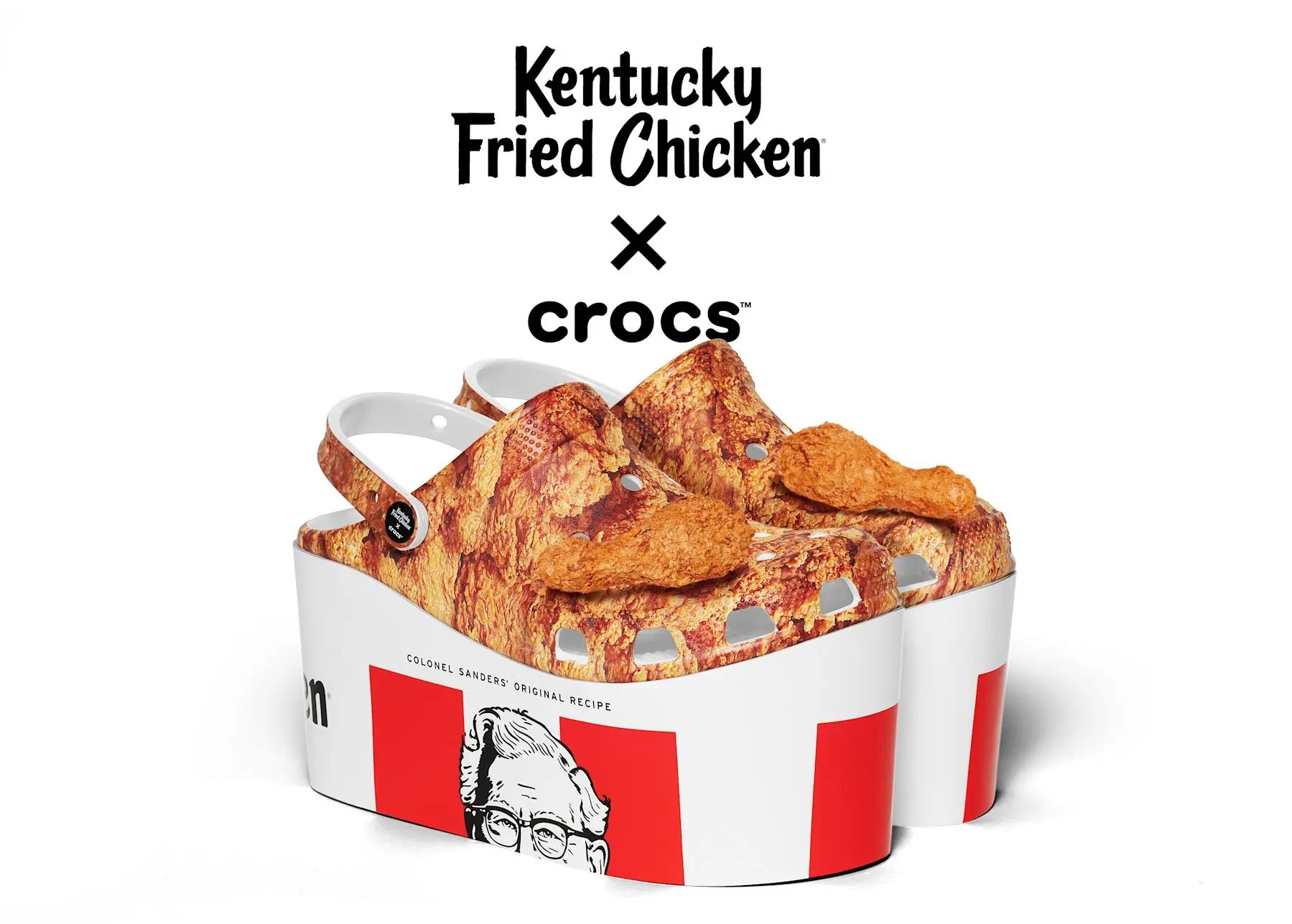
The most fun example is the Crocs and KFC collaboration in 2020: bright clogs printed like a bucket of iconic KFC bucket offering. It was absurd enough to earn a wave of free attention, and the limited drop gave people a reason to buy immediately. The clogs went live at noon and were reported sold out about half an hour later, with KFC joking that you could still buy the real chicken, just "don't wear them." Supreme runs the disciplined version of this every week, with genuinely limited inventory and the shared understanding that if you snooze, it is gone.
▶ See it: Crocs × KFC (Wieden+Kennedy case)
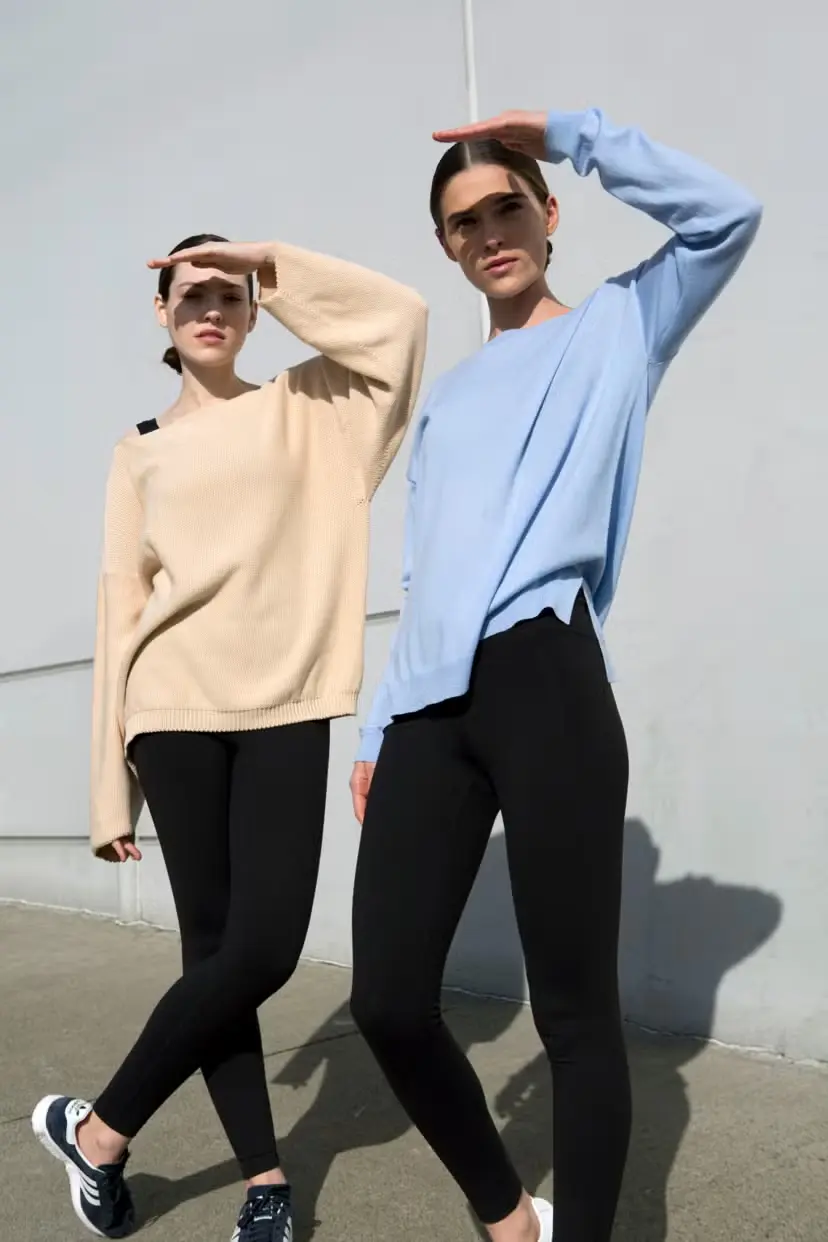
Girlfriend Collective showed a gentler flavor with a 2016 promotion, offering its recycled-water-bottle leggings for free if you covered shipping and shared the campaign, which removed the risk of trying a new brand and built sharing into the offer itself. Fashionista reported the promotion crashed the site in its first days. The rule underneath all of these: scarcity converts when it is true. A real colorway retirement, a preorder that truly closes, a limited collaboration, an event date. A permanent "last chance" banner that resets every morning trains people to ignore you.
▶ See it: Girlfriend Collective's giveaway launch (Fashionista)
How to make your own ad for clothing
You do not need a chicken-scented shoe or a Super Bowl budget. You need to pick a job and commit. Here is the short version.
Choose one job for the ad: a laugh, an identity, a piece of proof, or a real reason to act now. Lead with a hook in the first second, before anyone decides to scroll. Put the garment on a real person who looks like your buyer, and make the benefit visible, the stretch, the fit, the movement, the pockets, whatever the product is secretly great at. Give exactly one clear next step. Then, and this is the part most people skip, make many cheap versions and let the winners run, because you will not guess which hook lands. This last step is where a lot of small brands stall, and it is what we built Creatify for: turning a product link or a few photos into a batch of on-brand video and UGC-style clothing ads you can test without booking a shoot. However you make them, the brands that win are the ones producing the most good, varied creative, not the ones with the single most polished photo.
▶ Read also: AI in social media marketing: what works in 2026 and what's still catching up
Frequently Asked Questions
What makes a clothing ad convert?
A clear job and a reason to act, delivered fast. The clothing ads that sell make one thing obvious in the first second, a laugh that points at the product, an identity the buyer wants, proof it works on a real body, or a genuine deadline, and they show the garment doing something rather than just sitting there looking nice.
What is the best format for a clothing ad?
The one that fits your product and where your buyer is, not a single "best" format. Short vertical video works for most brands now because it shows fit and movement, but a stark image drop (Supreme), a funny cartoon spot (Duluth), a real-bodies campaign (Aerie), and a creator try-on (Gymshark) all convert when the creative has a job. Match the format to the job.
Where should I look for good clothing advertisement examples?
Start with the campaigns above, then watch what your own competitors and customers are posting. Some people search for clothing ads, some type clothing adds, and some want fashion advertising examples from big brands, but they are all after the same thing: a clothes ad with an obvious job they can copy at their own scale.
Do funny clothing ads really sell?
Yes, when the joke has a point. Chubbies, Duluth Trading, and the Crocs and KFC drop all used humor that led straight back to the product or the identity it sells. A weird video that does not connect to a reason to buy just gets a laugh and a scroll. Make it funny in the first second and make the punchline the product.
How do I make clothing ads on a small budget?
Skip the studio and lean on real people and real proof: film the garment on yourself or a customer, show the benefit up close, and let a genuine point of view or joke do the heavy lifting. Then make several cheap variations instead of one expensive hero ad, and put budget behind whichever hook performs. Spanx grew largely on demonstrations and word of mouth long before it ran polished campaigns.
How many clothing ads should I make?
More than one, and on an ongoing basis. Because you cannot reliably guess which hook or angle will land, the durable approach is to produce a steady stream of fresh variations, test hooks and formats against each other, and keep feeding new creative as winners wear out. Volume of good, varied ads beats a single perfect one.
Most clothing ads are a pretty picture of some clothes. A model, good lighting, a logo, a price. They are pleasant, forgettable, and they sell about as well as a folded shirt on a shelf. The clothing ads that do move product do something different: they give you a reason to stop scrolling and a reason to buy, usually in the first second. A laugh that points straight at the product. An identity you can put on. Proof it will look good on a body like yours. A real deadline. Pretty is a commodity. A reason is not.
This is a field guide to those reasons, built from real, viral fashion advertisement examples across every format, from a full-page newspaper ad that told people not to shop, to fried-chicken-scented Crocs that sold out in half an hour. Whether you run a giant brand or sell shirts out of your spare room, the same handful of moves show up in the ads for clothes that actually convert. Here they are, with examples worth stealing.
The one thing every converting clothing ad has
Before the examples, the rule that ties them together: a clothing ad converts when the creative has a job. Not "look nice," but a specific job the viewer feels instantly. Is this ad here to make me laugh, to tell me who I would become if I wore this, to prove it fits real people, or to make me act before it is gone? Great clothing ads pick one and commit. Weak ones pick none and just show the hoodie again. As you read on, notice that every clothes advertisement example below has an obvious job, and the garment is never incidental to it.
1. Make the joke do a job
Funny clothing ads are catnip, but a joke alone is a wasted budget. The trick is that the punchline has to point at the product.
Duluth Trading Company built a whole identity on this. Its ads are cartoonish and a little crude, famous for things like an animated beaver taking a bite out of a pair of work pants, and the gag always lands on a real benefit: your clothes should not betray you when you move. The comedy makes an unglamorous category, workwear and underwear, impossible to forget, and it points straight at comfort and durability. According to the brand's creative agency, one cheeky underwear spot had to be pulled off air early because the product sold out, and denim sales doubled while a national ad ran. Treat those as the agency's reported results rather than audited numbers, but the creative principle is rock solid.
Chubbies has done the same for short shorts since 2011, wrapping them in a gleefully ridiculous "the weekend is sacred" brand voice, complete with the rallying cry "Sky's out, thighs out." The jokes are the ad, but they are always selling one thing: a carefree identity you buy into.
Then there is the ad that is just the product. When MSCHF dropped its Big Red Boots in early 2023, giant glossy cartoon boots that look like they walked off a Saturday-morning screen, it barely needed a campaign. Vogue noted how quickly the fashion world was wearing and talking about them before they even released. The boots explained themselves in a single frame; every photo and reaction video became the ad. The lesson is not "make a weird video." It is to make something so instantly legible that the punchline is the product, and the answer to "what are those?" is a link to buy.
▶ See the real ads: Duluth Trading's angry beaver spot · Chubbies (official channel) · MSCHF Big Red Boots
2. Sell an identity people can wear
People do not buy clothes; they buy the version of themselves the clothes create. The best clothing ads sell that identity so clearly you can feel yourself joining a club.
Chubbies again: nobody is studying the inseam, they are buying "fun weekend guy." Supreme turned this into a religion, using stark, context-free images to announce its limited Thursday drops, and the product became a membership card in a subculture. VF Corporation acquired the brand for about $2.1 billion in 2020, which tells you how much an identity is worth even when the ads say almost nothing about the clothes.
▶ See it: How Supreme's weekly drops work
The point for your own ads: the garment has to complete an identity, not decorate one. In the fashion advertisement examples that work this way, the ad shows the life the buyer wants and puts your product at the center of it, so the viewer thinks "that is who I want to be" and only then "and I need that jacket to do it."
3. Take a real stand, and back it up
A point of view converts because it filters. It repels the people who were never going to buy and bonds the ones who will.
The all-time example is Patagonia's "Don't Buy This Jacket," a full-page ad it ran in The New York Times on Black Friday in 2011, showing one of its own fleece jackets under a headline telling you not to buy it. The body copy laid out the environmental cost of making the thing and asked people to reduce, repair, reuse, and recycle before buying more. It is genuinely counterintuitive: an advertisement for clothing arguing against clothing consumption. What made it work was not the stunt but the credibility behind it, since Patagonia already ran repair and reuse programs. It became one of the most enduring brand-trust stories in retail. Fair warning for your own version: you will see a "sales jumped 30%" figure attached to this ad all over the internet, but it is not cleanly traceable to Patagonia, so admire the trust it built rather than quoting a number.
▶ See it: Patagonia's "Don't Buy This Jacket" ad
Nike did the polarizing version in 2018 with "Dream Crazy," the two-minute film narrated by Colin Kaepernick that closed on "Believe in something. Even if it means sacrificing everything." It drew boycotts and, according to MIT Sloan, more than five million YouTube views in its first 24 hours, and it later won an Emmy. It worked because the stance fit a customer identity Nike had spent decades building, not because controversy is a magic conversion trick. The takeaway: a stand converts only when it is operationally true. A slogan with no product, policy, or behavior behind it is just noise.
▶ Watch: Nike — "Dream Crazy"
4. Replace polish with real
The quiet conversion killer in fashion is the gap between the ad and the mirror: "sure, it looks good on her." Close that gap and you win.
Aerie did it in 2014 by simply stopping. It stopped retouching the bodies in its campaigns, showing stretch marks, rolls, and tattoos under the banner #AerieREAL. Real bodies made shoppers believe what they saw and picture themselves in it, and its parent company reported that Aerie's sales grew about 20% in the year after the launch. Savage X Fenty took the same idea to the runway, casting models across sizes, skin tones, ages, and abilities, so inclusivity showed up in the product and the styling rather than in a slogan.
▶ See the real ads: Aerie - #AerieREAL · Savage X Fenty (official channel)
Proof also means showing the benefit, not claiming it. Bombas built its socks around one-for-one giving (every pair bought triggers a donated pair, more than 200 million items donated to date), but its ads also demo the actual product, pointing at the honeycomb arch support and seamless toe that make the sock worth more than the three-pack at the drugstore. And Spanx became a household name largely without traditional advertising: founder Sara Blakely cut the feet off a pair of control-top pantyhose to solve a visible-panty-line problem, then sold the idea by showing buyers the before-and-after difference rather than describing it. For any "invisible" benefit, smoothing, opacity, warmth, squat-proofness, pockets, the more visual the problem, the more visual your evidence has to be.
▶ See the real ads: Bombas TV spots · Spanx - Sara Blakely's story
5. Engineer participation that looks like a movement
User-generated content converts because shoppers trust other shoppers. But "post your haul" is a weak ask. The brands that win give people a reason to make content that happens to sell clothes. In practice, these are ads for clothes made by the people wearing them.
Gymshark's #Gymshark66 is the model: a 66-day fitness challenge that handed creators a story arc, set a goal, document the grind, reveal the transformation, with the brand's leggings and gym wear along for the ride the whole time. That is far more persuasive than paying someone to pose in a package. Fashion Nova built a machine out of a different version of this, repurposing a constant stream of real customers and micro-creators in their outfits, so a shopper sees the garment on dozens of real bodies instead of one studio model. The SHEIN "haul" turned a try-on into a bundled product demo, piles of pieces modeled and reacted to in a native format.
▶ See it: Gymshark 66 · Fashion Nova on Instagram · #SHEINhaul on TikTok
One honest note, because it matters for both trust and the law: most of what people call UGC is not spontaneous. It is worth knowing the difference between genuine customer posts, gifted creator content, paid creator ads, and affiliate content where the creator earns a commission, and to disclose the relationship. The goal is not fake authenticity; it is a real, specific product experience that a viewer can trust. So design the ask: "show how you style one piece three ways" or "test whether these really are squat-proof" produces far more purchase-relevant proof than "tag us."
6. Use scarcity honestly
Urgency is the oldest conversion lever there is, and it still works in a clothes advertisement, as long as the deadline is real.
The most fun example is the Crocs and KFC collaboration in 2020: bright clogs printed like a bucket of iconic KFC bucket offering. It was absurd enough to earn a wave of free attention, and the limited drop gave people a reason to buy immediately. The clogs went live at noon and were reported sold out about half an hour later, with KFC joking that you could still buy the real chicken, just "don't wear them." Supreme runs the disciplined version of this every week, with genuinely limited inventory and the shared understanding that if you snooze, it is gone.
▶ See it: Crocs × KFC (Wieden+Kennedy case)
Girlfriend Collective showed a gentler flavor with a 2016 promotion, offering its recycled-water-bottle leggings for free if you covered shipping and shared the campaign, which removed the risk of trying a new brand and built sharing into the offer itself. Fashionista reported the promotion crashed the site in its first days. The rule underneath all of these: scarcity converts when it is true. A real colorway retirement, a preorder that truly closes, a limited collaboration, an event date. A permanent "last chance" banner that resets every morning trains people to ignore you.
▶ See it: Girlfriend Collective's giveaway launch (Fashionista)
How to make your own ad for clothing
You do not need a chicken-scented shoe or a Super Bowl budget. You need to pick a job and commit. Here is the short version.
Choose one job for the ad: a laugh, an identity, a piece of proof, or a real reason to act now. Lead with a hook in the first second, before anyone decides to scroll. Put the garment on a real person who looks like your buyer, and make the benefit visible, the stretch, the fit, the movement, the pockets, whatever the product is secretly great at. Give exactly one clear next step. Then, and this is the part most people skip, make many cheap versions and let the winners run, because you will not guess which hook lands. This last step is where a lot of small brands stall, and it is what we built Creatify for: turning a product link or a few photos into a batch of on-brand video and UGC-style clothing ads you can test without booking a shoot. However you make them, the brands that win are the ones producing the most good, varied creative, not the ones with the single most polished photo.
▶ Read also: AI in social media marketing: what works in 2026 and what's still catching up
Frequently Asked Questions
What makes a clothing ad convert?
A clear job and a reason to act, delivered fast. The clothing ads that sell make one thing obvious in the first second, a laugh that points at the product, an identity the buyer wants, proof it works on a real body, or a genuine deadline, and they show the garment doing something rather than just sitting there looking nice.
What is the best format for a clothing ad?
The one that fits your product and where your buyer is, not a single "best" format. Short vertical video works for most brands now because it shows fit and movement, but a stark image drop (Supreme), a funny cartoon spot (Duluth), a real-bodies campaign (Aerie), and a creator try-on (Gymshark) all convert when the creative has a job. Match the format to the job.
Where should I look for good clothing advertisement examples?
Start with the campaigns above, then watch what your own competitors and customers are posting. Some people search for clothing ads, some type clothing adds, and some want fashion advertising examples from big brands, but they are all after the same thing: a clothes ad with an obvious job they can copy at their own scale.
Do funny clothing ads really sell?
Yes, when the joke has a point. Chubbies, Duluth Trading, and the Crocs and KFC drop all used humor that led straight back to the product or the identity it sells. A weird video that does not connect to a reason to buy just gets a laugh and a scroll. Make it funny in the first second and make the punchline the product.
How do I make clothing ads on a small budget?
Skip the studio and lean on real people and real proof: film the garment on yourself or a customer, show the benefit up close, and let a genuine point of view or joke do the heavy lifting. Then make several cheap variations instead of one expensive hero ad, and put budget behind whichever hook performs. Spanx grew largely on demonstrations and word of mouth long before it ran polished campaigns.
How many clothing ads should I make?
More than one, and on an ongoing basis. Because you cannot reliably guess which hook or angle will land, the durable approach is to produce a steady stream of fresh variations, test hooks and formats against each other, and keep feeding new creative as winners wear out. Volume of good, varied ads beats a single perfect one.

Pronto para transformar seu produto em um vídeo envolvente?