
MiniMax H3 (also called Hailuo-03) and Kling 3.0 from Kuaishou sit in the same spot in Creatify: clips of up to 15 seconds with sound made in the same render, at a price per second you can test with. Both start from text or from a first frame, and both can land on a last frame you choose.
The difference is in how each one builds a clip. Kling 3.0 can cut between several shots inside one generation. MiniMax H3 is set up for one continuous take, at a higher 2K resolution and in more frame shapes. Here's how they compare on the settings and credit prices each has in Creatify today, with real clips from both.
MiniMax H3 and Kling 3.0 compared
| MiniMax H3 | Kling 3.0 | |
|---|---|---|
| Made by | MiniMax | Kuaishou |
| Duración | Any length from 4 to 15 seconds | Any length from 3 to 15 seconds |
| Resolución | 768P o 2K | Up to 1080p (Pro) |
| Aspect ratios | 21:9, 16:9, 4:3, 1:1, 3:4, 9:16 | 16:9, 9:16, 1:1 |
| Audio nativo | Yes, no off switch | Yes, can be switched off |
| Multi-shot from one prompt | No indicado | Sí |
| Start and end frame | Sí | Sí |
| Referencias | Up to 9 images, 3 videos and 3 audio clips | Up to 4 images and 3 elements (Kling O3) |
| Cheaper tiers | MiniMax H3 Max (480P or 768P) | Kling 3.0 Standard, Kling 3.0 Turbo |
| Plan | Inicial | Pro (Standard is on Starter) |
One unbroken take or a sequence with cuts
Both models' pages have a fashion film with a silk gown, and the two prompts show the split well. The MiniMax H3 prompt asks for a single 15-second camera move that carries the model through four settings without a cut. The Kling 3.0 Pro prompt asks for three shots, a wide, a low tracking shot and a close-up, with cuts between them. The prompts are different, so compare the structure, not the detail.
MiniMax H3, one 15-second take: desert dunes, a snowstorm, a rainy rooftop and a sunrise beach, with the gown changing color in each.
Kling 3.0 Pro, one prompt with three shots: a walk through a marble hall, the silk train rippling down a staircase, and a whispered "wear the moment" in close-up.
If your ad needs a little story, Kling 3.0's shots save you from generating three clips and hoping the light and wardrobe match. If the idea is one fluid move, MiniMax H3 is built for it. MiniMax H3's settings don't list a multi-shot mode, so for cuts you would make separate clips and edit them together.
Resolution and frame shape
MiniMax H3 renders at 768P or 2K. Kling 3.0 Pro renders at 1080p with no resolution setting, and Kling 3.0 Turbo lets you pick 720p or 1080p. For feeds, both are sharp enough. The 2K option matters when you plan to crop or reframe in the edit.
Frame shapes are a bigger gap. Kling 3.0 makes 16:9, 9:16 and 1:1. MiniMax H3 adds 21:9, 4:3 and 3:4 from text, and from an image it takes the image's shape. A cinema-wide hero shot comes out at its final size without cropping a 16:9 frame.
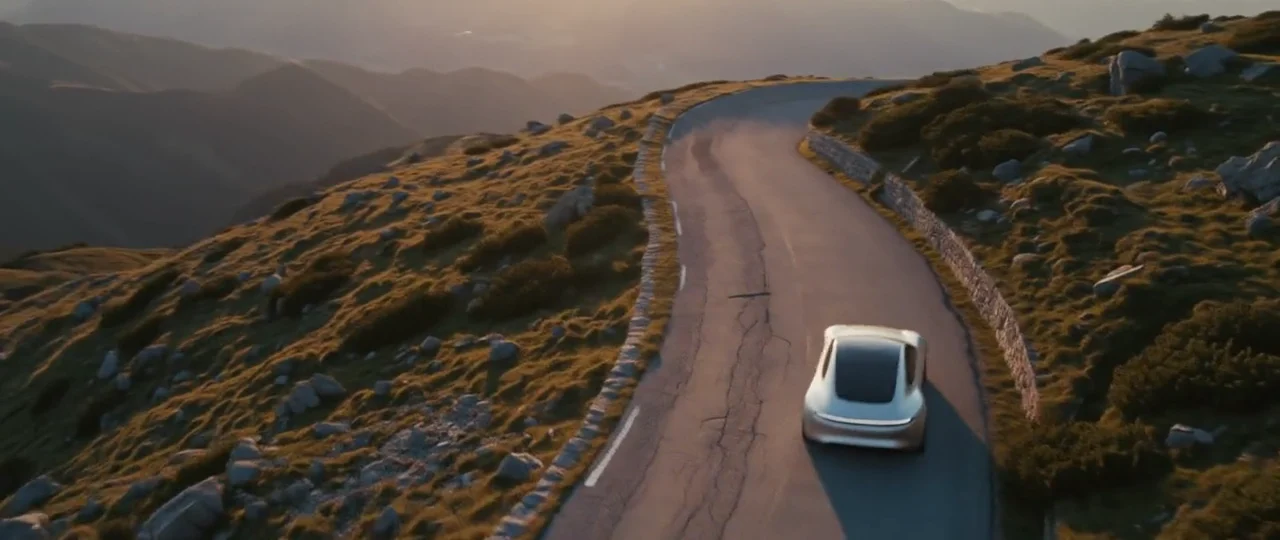
MiniMax H3 in 21:9 at 2K: a graphite coupe races a thunderstorm across a mirror salt lake, from one paragraph of text.
References and control
MiniMax H3's reference mode takes up to 9 images (the first 5 at no extra cost), up to 3 video clips of 2 to 15 seconds, and up to 3 audio clips, referred to in the prompt as Image 1, Video 1 and so on. Kling 3.0 handles references through elements: up to 3 characters or objects set up once and called by name. Its sibling Kling O3 Pro adds up to 4 reference images and can copy the motion of a 3- to 10-second video.
Kling 3.0 also gives you two dials MiniMax H3 doesn't: a negative prompt for things to keep out, and a guidance setting for how closely it sticks to your prompt. Its voices are English or Chinese, and other languages are translated to English.
A dog, two models
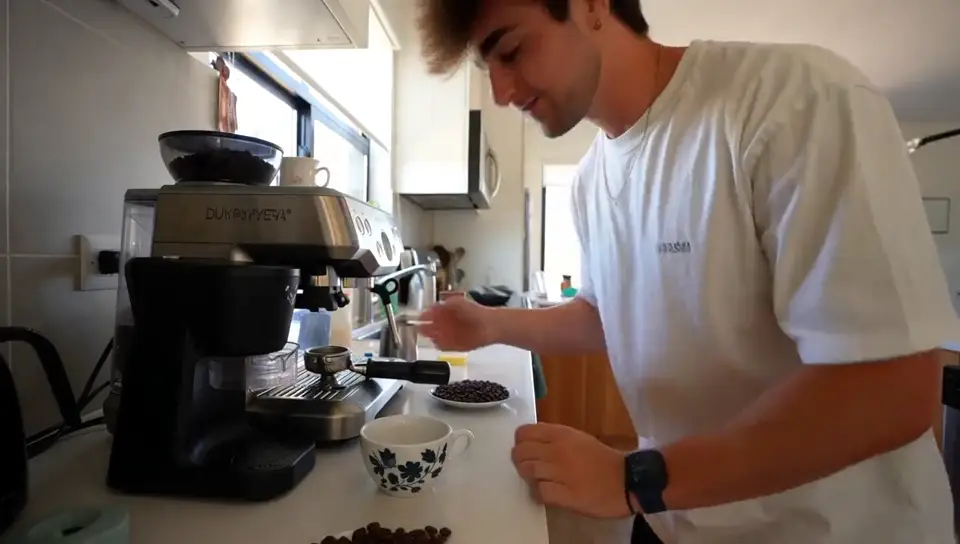
Two everyday clips with a dog, each from its model's own page and written as phone footage. The prompts differ (a park walk with a line to camera, a beach walk with no dialogue), so this is a feel for each model, not a test.
MiniMax H3: "First walk where he didn't pull once. I'm almost emotional." Vertical, crunching leaves underfoot. The page shows the clip's first five seconds.
Kling 3.0 Pro: a couple walks the waterline at sunset as their retriever runs into the waves, with wind and surf on the soundtrack.
Credits for a 15-second clip
Credits as each model is priced in Creatify today, for 15 seconds, the longest clip either one makes. MiniMax H3 bills by length and resolution; Kling 3.0 by length.
| Modelo | Credits per second | A 15-second clip |
|---|---|---|
| MiniMax H3 (2K) | 1.3 | 19.5 |
| MiniMax H3 (768P) | 0.8 | 12 |
| MiniMax H3 Max (768P) | 0.8 | 12 |
| MiniMax H3 Max (480P) | 0.5 | 7.5 |
| Kling 3.0 Pro | 1.68 | 25.5 |
| Kling 3.0 Estándar | 1.26 | 19 |
| Kling 3.0 Turbo (720p, silent) | 1.12 | 17 |
MiniMax H3 at 2K costs less per second than Kling 3.0 Pro: 1.3 vs 1.68 credits, about 77% of the Kling rate. For volume testing, MiniMax H3 Max at 480P is 7.5 credits for 15 seconds. Kling 3.0 Turbo is cheap too, but per Creatify's Kling page it makes silent video, so it suits drafts more than finished ads.
Which one should you pick?
- Pick MiniMax H3 for one continuous take, 2K output, 21:9, 4:3 or 3:4 frames, reference videos or audio, or a lower price per second on a Starter plan.
- Pick Kling 3.0 for several shots with cuts from one prompt, a negative prompt, silent footage on request, or reusable elements for a character or product.
- Test on H3 Max or Kling 3.0 Standard, then render the version that works on the full model.
To run them yourself, open MiniMax H3 or Kling 3.0 in Creatify's Model Playground.
Or skip the choice and describe the ad
Single take or multi-shot is one call in a long list. An ad still needs a script, a voiceover, music, captions and an edit that works at 6, 15 and 30 seconds.
Creatify's Ad Agent makes those calls for you. Tell it the ad in plain words, like "a 15-second Instagram ad for my dog harness, real owners, upbeat", or paste your product link. It writes the script, picks the models each shot, voice and music bed needs, checks every take and redoes the ones that miss, and hands you a finished, edited video.