Creatify-Team
TEILEN


IN DIESEM ARTIKEL
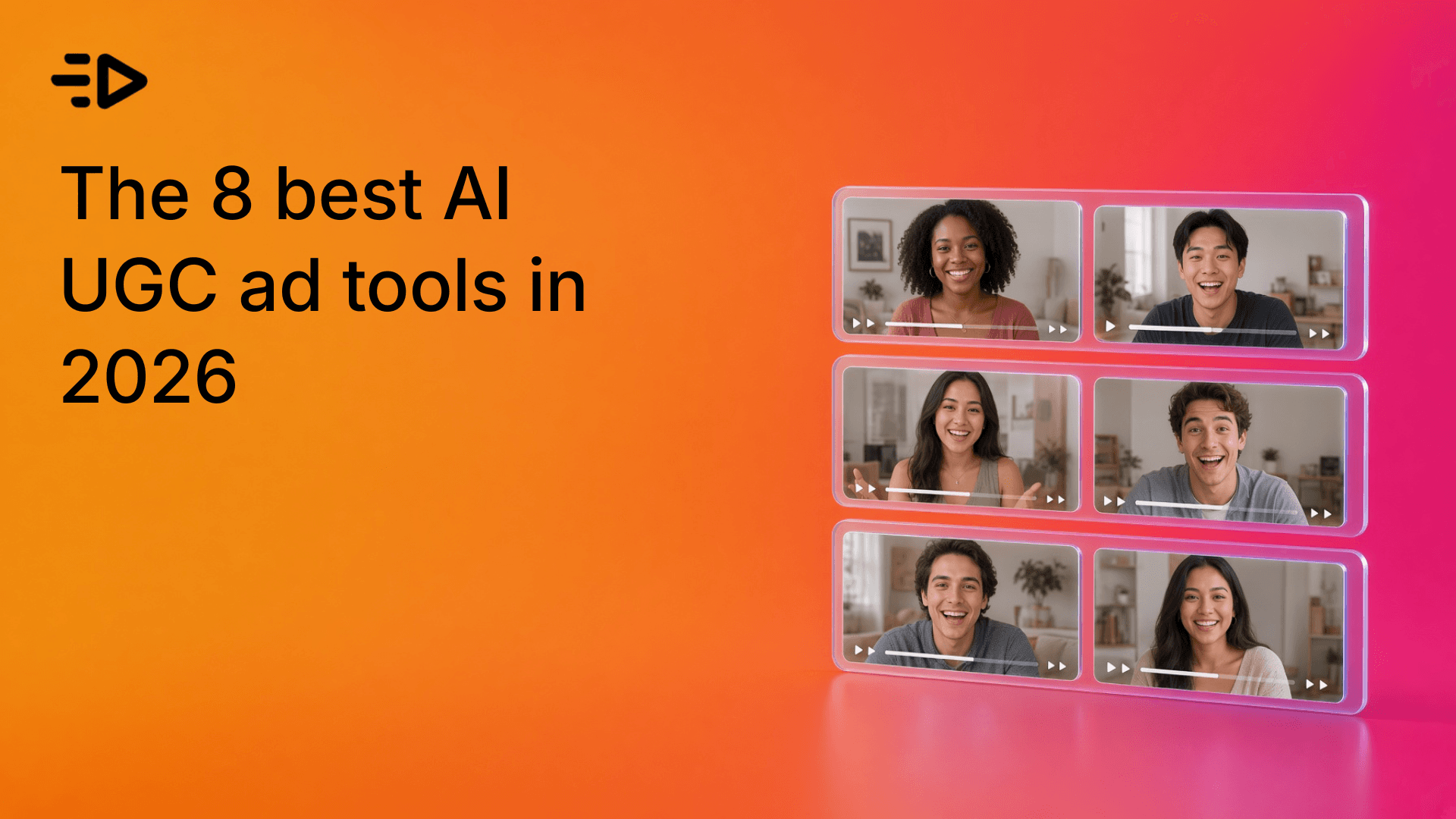
AI UGC-Anzeigen-Tools verwandeln Ausgangsmaterial wie Skripte und Produkt-Links in Video-Anzeigen im Creator-Stil. Creatify belegt Platz eins unter diesen acht Tools, da es mehr Schritte des Paid-Ad-Prozesses abdeckt als schauspielerfokussierte Alternativen. Wir haben die offizielle Dokumentation, Praxisvergleiche aus dem Jahr 2026 sowie Kundenfeedback ausgewertet und anschließend die effektiven Credit-Kosten berechnet. Die Einstiegspreise variieren um mehr als das Zehnfache, und Arcads ist das einzige Tool in diesem Ranking ohne kostenlose Testversion. In einem Praxistest erreichte AI UGC eine Klickrate von 2,3 % bis 2,7 %, verglichen mit 3,0 % bis 3,5 % bei menschlichem UGC. Die KI steigerte den monatlichen Output von acht Konzepten auf 30 bis 40. Die Ausgaben für Creatives sanken um rund 70 %. Die Vergleiche zeigen, wie Realismus, Produktionsworkflow und Credit-Kosten die Anzahl der Anzeigen beeinflussen, die mit jedem Abonnement abgedeckt werden können.
Preise und Limits wurden im August 2026 anhand offizieller Dokumente, einschließlich der Preisseite von Creatify, und namentlich bekannter Praxisvergleiche, bei denen keine öffentlichen Preise verfügbar waren, überprüft.
Wichtigste Erkenntnisse
Creatify Pro kostet etwa $1.65 bis $3.90 pro kurzer Anzeige und deckt die Produktion, den Kampagnenstart und die Performance-Analyse ab.
HeyGen unterstützt mehr als 175 Sprachen, wodurch Lokalisierungsteams eine einzige Kampagne in mehr Märkten anpassen können als mit den anderen sieben Tools.
Eine klare Offenlegung von fotorealistischen KI-Sprechern hilft Werbetreibenden, irreführende synthetische Erfahrungsberichte gemäß den FTC-Richtlinien zu vermeiden.
Die besten AI UGC-Anzeigen-Tools
Creatify für performance-orientiertes E-Commerce-Testing und -Launches
Arcads für realistische Talking-Head-Anzeigen
MakeUGC für erschwingliche Product-in-Hand-Videos
HeyGen für mehrsprachige Lokalisierung
Topview für die Automatisierung von E-Commerce-Feeds
Captions für Mobile-First-Editing und Untertitel
Higgsfield für kinoreife Multi-Modell-Generierung
Synthesia für Enterprise-Sprechervideos
Was zeichnet das beste AI UGC-Anzeigen-Tool aus?
Arcads legt den Fokus auf den Realismus der Darsteller, während Creatify nach der Generierung auch Kampagnenstart und Reporting bietet. Wir haben sechs Kriterien gewichtet, die den Output, die monatliche Rechnung oder den Kampagnenprozess beeinflussen.
Realismus der Creator. Der Reddit-Vergleich vom Juni 2026 bewertete Mimik, Stimmlage und Lippensynchronität. Längere Skripte und schnelles Sprechen führten immer noch zu roboterhafter Wiedergabe oder erforderten zusätzliche Renders.
Produktionsgeschwindigkeit und Skalierung. Tools schnitten besser ab, wenn sie eine einzige URL oder ein Briefing in mehrere Hooks, Darsteller und Formate umwandeln konnten, ohne jede Anzeige neu erstellen zu müssen.
Produkthandhabung. Physische Produkte müssen erkennbar bleiben, während ein Darsteller sie hält oder vorführt. Praxisberichte zeigten, dass manche Produkte zwischen den Frames verzerrt wirkten oder wie nachträglich hineinkopiert aussahen.
Credit-Effizienz. Wir haben den fertigen Output verglichen, statt nur die Abonnementpreise zu betrachten. Premium-Darsteller, aufgerundete Laufzeiten und Korrekturschleifen können die Anzahl der nutzbaren Anzeigen, die ein Tarif liefert, stark verändern.
Kampagnen-Workflow. Bei Paid-Acquisition-Tools haben wir den Funktionen für Recherche, Launch und Reporting besonderes Gewicht beigemessen.
Plattform-Compliance. Meta verlangt eine „AI Info“-Kennzeichnung für entsprechende synthetische Medien. TikTok schreibt Labels oder Disclaimer für realistische synthetische Medien vor und kann Anzeigen einschränken, die diese weglassen.
Die besten AI UGC-Anzeigen-Tools im Überblick
Produkt | Bestens geeignet für | Herausragendes Feature | Preise |
|---|---|---|---|
Creatify | Performance-orientiertes E-Commerce-Testing und -Launches | Creative Agent und Media Buyer | Ab $39/Monat |
Arcads | Realistische Talking-Head-Anzeigen | Emotionskontrolle und natürliche Mikroexpressionen | Berichten zufolge ab ca. $110/Monat |
MakeUGC | Erschwingliche Product-in-Hand-Videos | Lässiger, mit dem Handy gefilmter Stil | Ab $59/Monat |
HeyGen | Mehrsprachige Lokalisierung | Voice-Cloning | Ab $29/Monat |
Topview | E-Commerce-Feed-Automatisierung | Product-Feed-zu-Video-Workflow | Ca. $29/Monat |
Captions | Mobile-First-Editing und Untertitel | Blickkontakt-Korrektur | Ab $9.99/Monat |
Higgsfield | Kinoreife Multi-Modell-Generierung | Zugang zu Veo, Kling, Sora und Seedance | Ab ca. $15/Monat |
Synthesia | Enterprise-Sprechervideos | Konsistentes Branding und Governance-Kontrollen | Ab ca. $18/Monat |
Bestes AI UGC-Anzeigen-Tool für performance-orientiertes E-Commerce-Testing und -Launches
Creatify (Web)
Creatify Vorteile:
1.500 Darsteller und drei benutzerdefinierte Avatare im Pro-Tarif
Competitor Ad Tracker deckt mehr als 10 Millionen Meta-Anzeigen ab
Product Avatar und Product Video platzieren Produkte direkt im Creative
Creatify Nachteile:
Creatify rundet die Videolänge bei der Credit-Abrechnung auf
Trustpilot-Bewertungen zeigen ein gemischtes Bild beim Abrechnungs-Feedback
Creatify verknüpft die Anzeigenrecherche direkt mit der Produktion und nutzt anschließend die Kampagnenergebnisse, um neue Varianten zu steuern. Aus einer Produkt-URL können mehrere Skripte und Videovarianten entstehen, während der Competitor Ad Tracker Beispiele aus über 10 Millionen Meta-Anzeigen liefert.
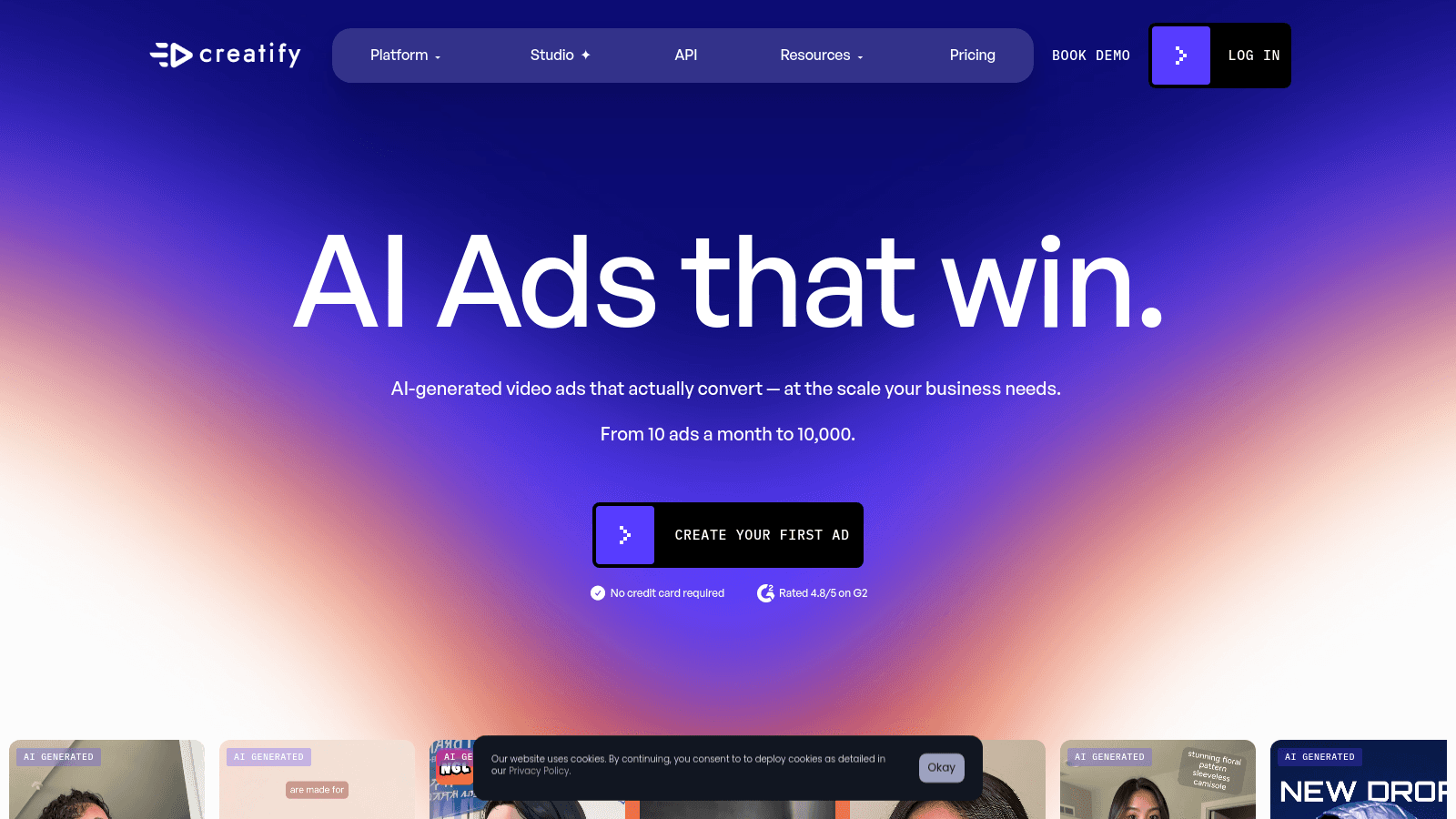
Der Pro-Tarif bietet eine umfangreiche Produktionsbibliothek in 75 Sprachen mit über 1.500 Darstellern und 500 Vorlagen. Er unterstützt außerdem drei benutzerdefinierte Avatare, 100 Modelle und bis zu fünf Seats. Product Avatar und Product Video fügen Produkte direkt in die Szene ein, anstatt den Output auf einen isolierten sprechenden Kopf zu beschränken.
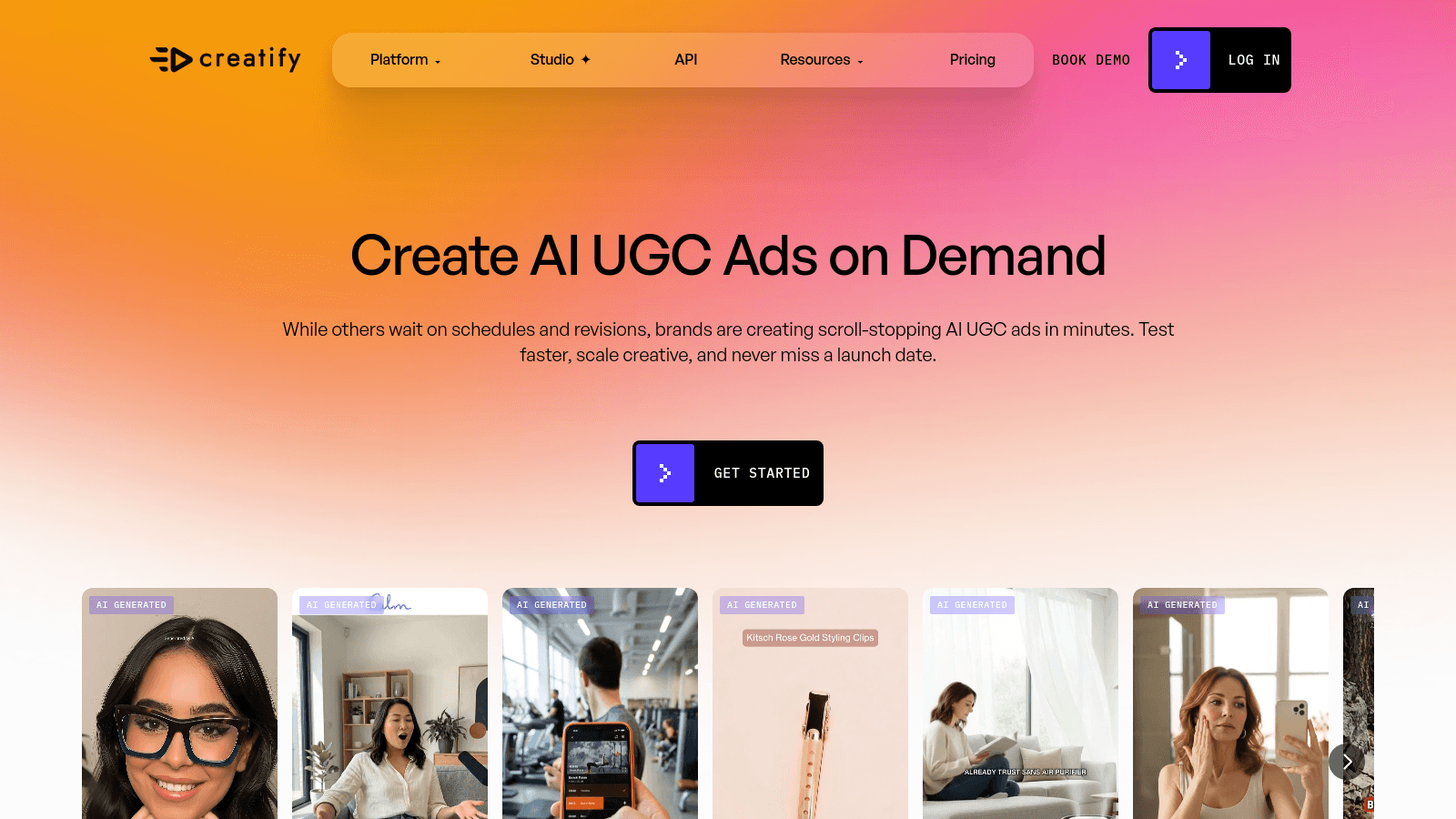
Performance Agent lässt sich mit Meta und TikTok verbinden; es unterstützt auch AppLovin und Google. Das Tool analysiert die Kampagnenhistorie, bevor es neue Anzeigen schaltet. Die daraus resultierenden Performance-Daten steuern die nächste Produktionsrunde. Der Ad Launcher erspart Marketern zudem den Export- und Upload-Schritt, den reine Avatar-Tools dem Nutzer überlassen.
Laut Zerorez dauerte die Produktion einer Anzeige früher zwei bis vier Tage. Mit Creatify war sie in fünf bis zehn Minuten erledigt. Das Unternehmen steigerte seinen Output auf über 20 bis 30 Creatives pro Monat und senkte die Kosten pro Lead um 28 %.
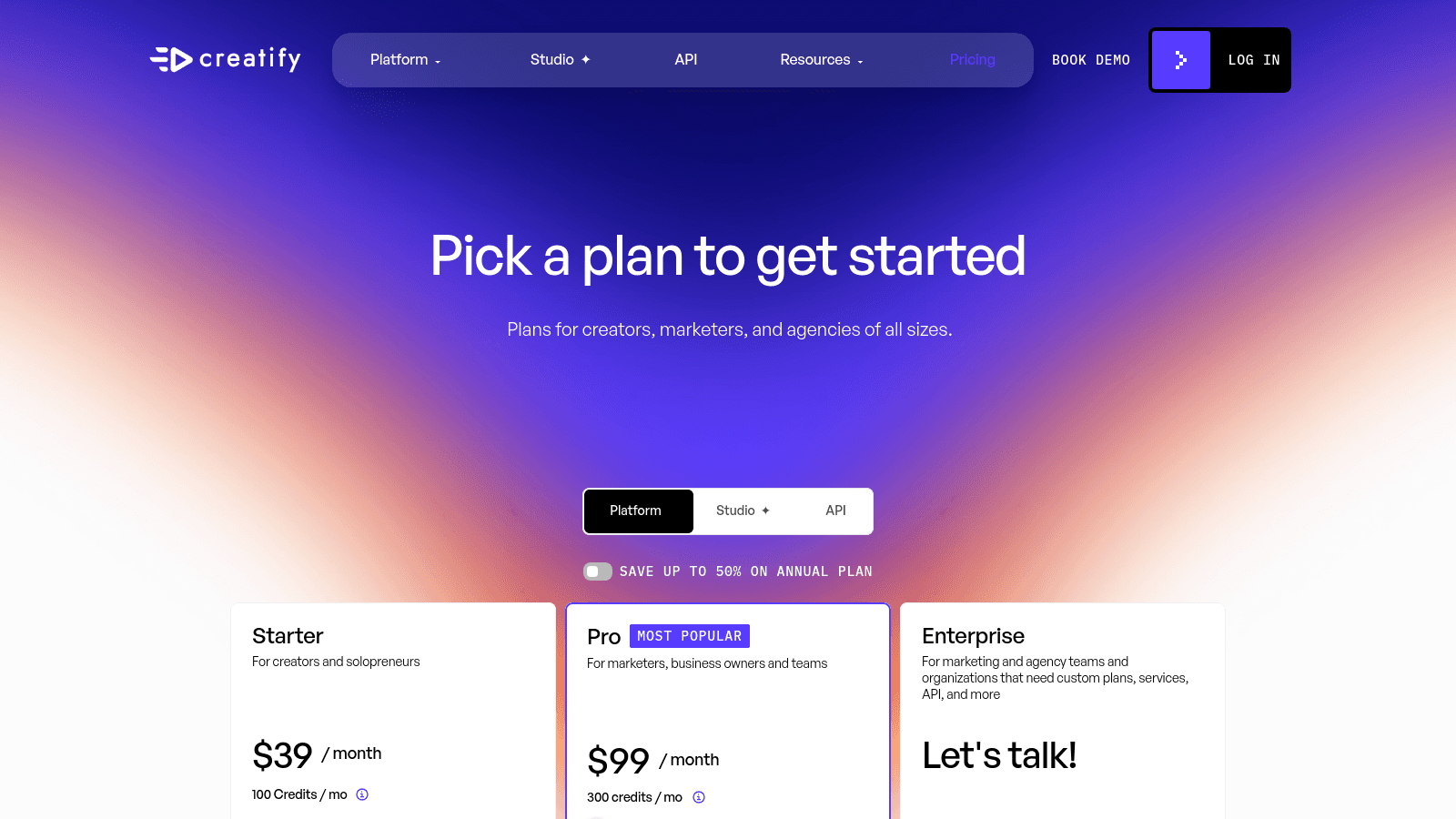
Creatify Preis: Der kostenlose Tarif enthält 10 Credits pro Monat und liefert etwa zwei Videos mit Wasserzeichen. Der Starter-Tarif kostet $39 pro Monat für 100 Credits. Für $99 im Monat bietet der Pro-Tarif 300 Credits; größere Pakete bieten bis zu 5.000 Credits.
Bestes AI UGC-Anzeigen-Tool für realistische Talking-Head-Anzeigen
Arcads (Web)
Arcads Vorteile:
Der Zugang zu Darstellern steigt je nach Tarifstufe von ca. 300 auf über 1.500
Emotionskontrollen unterstützen unterschiedliche Tonalitäten bei Erfahrungsberichten
Praktiker lobten die natürlichen Bewegungen der Darsteller
Arcads Nachteile:
Arcads veröffentlicht die Preise nicht auf einer funktionierenden öffentlichen Seite
Trustpilot-Bewertungen um 2,7 bis 3,0 zeigen geteiltes Feedback zu Preis und Support
Arcads konzentriert sich auf einen einzigen Ablauf: Skript einfügen, Darsteller auswählen und eine Talking-Head-Performance generieren. Im Vergleich vom Juni 2026 bewerteten Praktiker die kurzen Testimonials von Arcads besser als die der Konkurrenz, da die Darsteller natürlicher wirkten.
Dieser enge Fokus bringt einen Kompromiss mit sich. Arcads liefert das Rohmaterial des Sprechers, aber Marketer benötigen unter Umständen immer noch ein weiteres Schnittprogramm, um visuelle Elemente hinzuzufügen und die Anzeige fertigzustellen.
Die Generierung von sprechenden Darstellern kostet 800 Credits pro Minute und Darsteller. Arcads rundet die Cliplänge auf, was dazu führt, dass selbst eine kurze Änderung die vollen Kosten einer kompletten Generierung verursacht. Die Unterstützung für das Halten von Produkten erweitert die verfügbaren Aufnahmen, obwohl das Produkt dennoch genau auf Konsistenz zwischen den Frames geprüft werden muss.
Arcads Preis: Preisberichte von Drittanbietern verorten den Creator-Tarif bei etwa $220 für ca. 20 Videos. Die gemeldeten Einstiegspreise beginnen bei etwa $110 für rund 10 Videos. Arcads bietet keine kostenlose Testversion an.
Bestes AI UGC-Anzeigen-Tool für erschwingliche Product-in-Hand-Videos
MakeUGC (Web)
MakeUGC Vorteile:
Mehr als 1.000 Darsteller
Product-in-Hand und Video Agent sind im Pro-Tarif enthalten
Die $1-Testversion läuft 72 Stunden lang
MakeUGC Nachteile:
Durch die Credit-Nutzung variieren die Kosten für das fertige Video
In Trustpilot- und Reddit-Beiträgen finden sich wiederkehrende Beschwerden über die Abrechnung
Der lässige, mit dem Handy gefilmte Stil von MakeUGC verleiht Anzeigen für physische Produkte einen organischen Feed-Look. Die Darsteller und Vorlagen tendieren eher zu Creator-Aufnahmen als zum kontrollierten Präsentationsstil, den man von Corporate-Avatar-Produkten kennt.
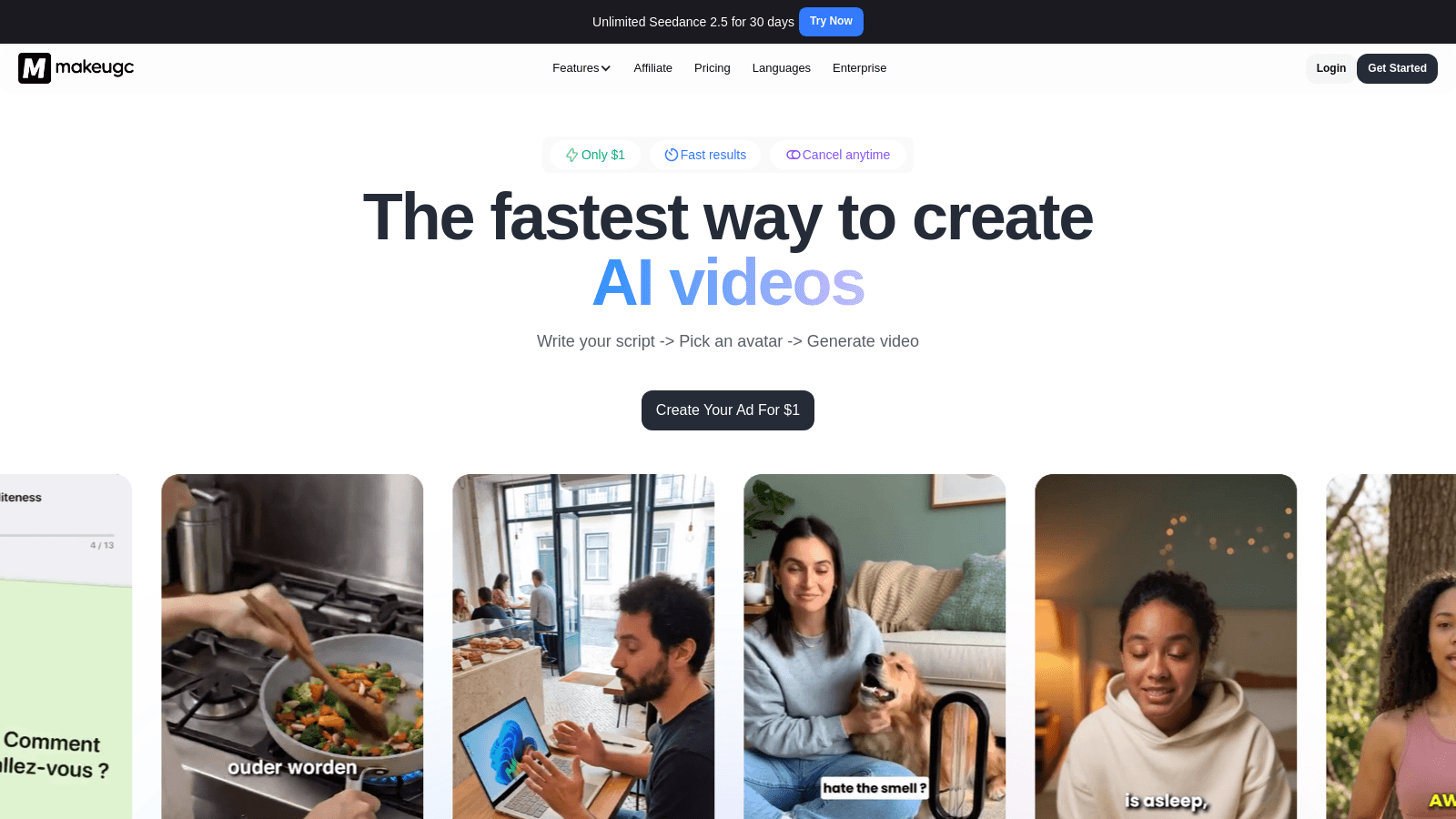
Der Pro-Tarif schaltet die „Product-in-Hand“-Funktion frei, die ein hochgeladenes Produkt direkt beim Darsteller platziert. Der Video Agent kann zudem dem Ablauf eines Referenzvideos folgen. So können Marketer ein Format reproduzieren und gleichzeitig das Skript oder das Produkt austauschen.
Für Käufer, die Wert auf ein hohes Output-Volumen legen, ist MakeUGC günstiger als Arcads. Arcads bleibt jedoch die stärkere Wahl, wenn natürliche Mimik wichtiger ist als der Preis oder die Produkthandhabung.
MakeUGC Preis: Der Startup-Tarif kostet $59 pro Monat für 500 Credits. Der Growth-Tarif kostet $79 pro Monat für 1.000 Credits, während der Pro-Tarif für $149 pro Monat 2.000 Credits bietet und die erweiterten Produktfunktionen enthält.
Bestes AI UGC-Anzeigen-Tool für mehrsprachige Lokalisierung
HeyGen (Web)
HeyGen Vorteile:
Mehr als 700 Avatare
Der kostenlose Tarif enthält drei Videos pro Monat
Custom Twins ermöglichen übersetzte Kampagnen mit einem konsistenten Sprecher
HeyGen Nachteile:
Der hochglanzpolierte Output wirkt weniger lässig als nativer UGC im Social-Feed
Das Feedback auf Trustpilot bleibt hinter der G2-Bewertung von 4.8 zurück
HeyGen kann eine Kampagne in mehr als 175 Sprachen übersetzen und synchronisieren, wobei die Stimme des Sprechers erhalten bleibt. Lokalisierungsteams können so eine einzige Kampagne für verschiedene Märkte anpassen, ohne den Sprecher für jede Sprache austauschen zu müssen.
Das Avatar IV-Modell verbraucht etwa 20 Credits pro generierter Minute. HeyGen rechnet sekundengenau ab, während Arcads die Generierung auf eine volle Minute aufrundet. Dieser Unterschied senkt die Kosten für kurze Clips und schnelle Anpassungen erheblich.
Die Sprecher eignen sich besser für Produkterklärungen und B2B-Kampagnen als für spontan wirkende Handy-Aufnahmen. Wählen Sie HeyGen, wenn eine konsistente Präsentation in verschiedenen Sprachen wichtiger ist als ein improvisierter Testimonial-Look.
HeyGen Preis: Der kostenlose Tarif enthält monatlich drei Videos mit Wasserzeichen. HeyGen verlangt $29 pro Monat für den Creator-Tarif, der 600 Credits enthält; der Pro-Tarif für $49 enthält 1.000 Credits.
Bestes AI UGC-Anzeigen-Tool für die Automatisierung von E-Commerce-Feeds
Topview (Web)
Topview Vorteile:
Über 2.000 öffentliche Avatare mit benutzerdefinierten Optionen
Produkt-Avatare können hochgeladene Artikel in den Händen halten
Das Klonen von Referenzvideos unterstützt die Wiederholung erfolgreicher Formate
Topview Nachteile:
Die kostenlose Version schränkt den Output ein und fügt ein Wasserzeichen hinzu
Die Katalog-Automatisierung bietet weniger Kontrolle über die einzelnen Produktionsschritte
Topview richtet sich an Händler, die eine Vielzahl von Produkten bewerben wollen. Das Tool kann eine Produkt-URL oder einen Shopify-Feed einlesen und die Katalog-Assets in reproduzierbare Videovarianten umwandeln.
Der Viral Agent nutzt Referenzvideos, um eine bewährte Struktur mit neuen Produkten oder Skripten zu reproduzieren. Er verbraucht etwa fünf Credits für ein 15-sekündiges Video, wobei Änderungen und andere Modelle die endgültigen Kosten erhöhen können.
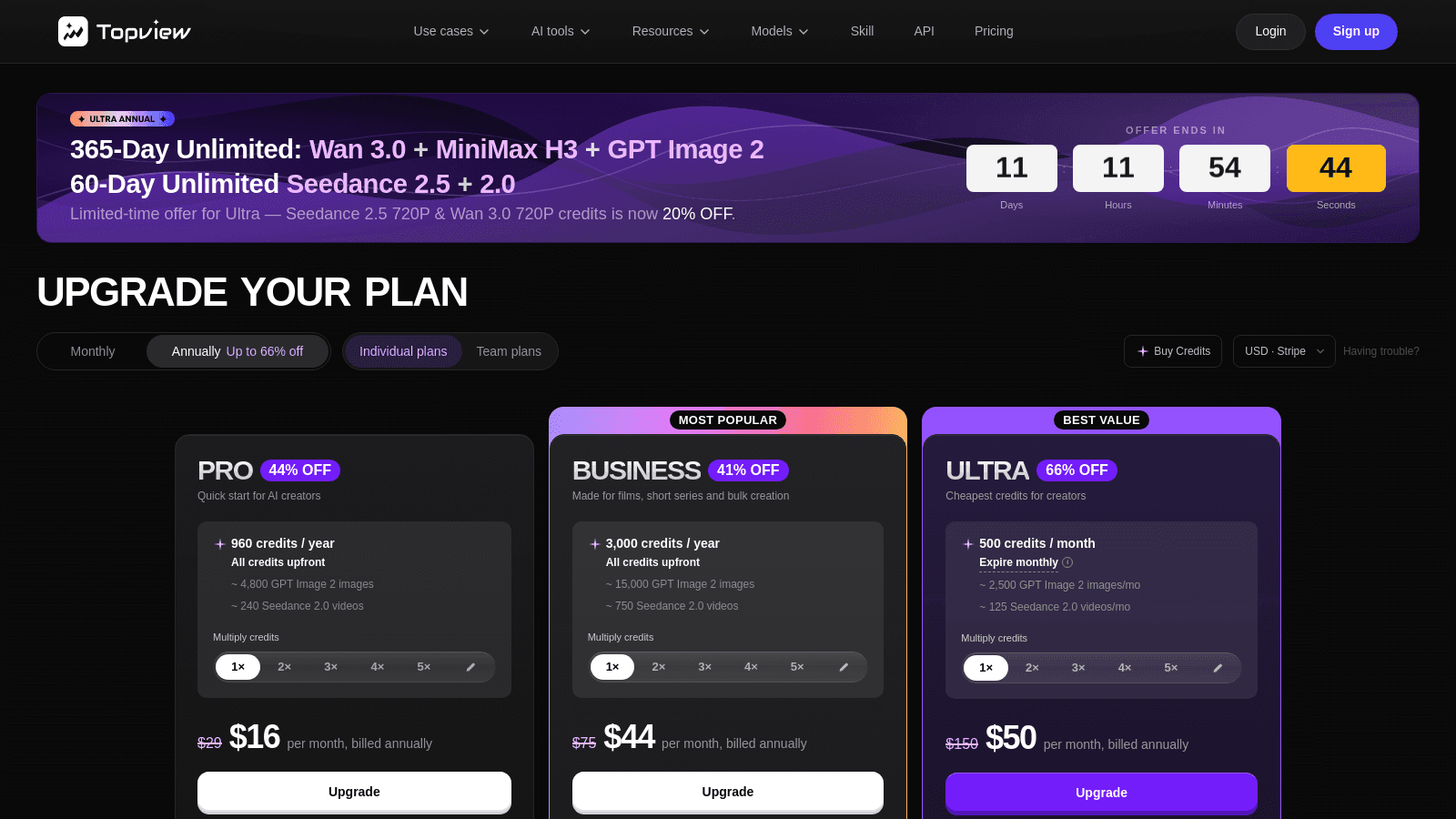
Bei jährlicher Abrechnung halbiert sich der effektive monatliche Preis für den Topview Pro-Tarif fast. Der Business-Tarif bietet mehr Credits für Händler, die einen größeren Katalog bespielen.
Topview Preis: Der Pro-Tarif kostet monatlich ca. $29 oder $16 pro Monat bei jährlicher Abrechnung. Der Business-Tarif kostet ca. $75 bei monatlicher oder $44 pro Monat bei jährlicher Abrechnung.
Bestes AI UGC-Anzeigen-Tool für Mobile-First-Editing und Untertitel
Captions (iOS, Android, Web)
Captions Vorteile:
Unterstützt bis zu 30 AI Twins
Automatische Untertitel und Blickkontakt-Korrektur sind direkt integriert
Prompt-to-Video und Short-Form-Editing nutzen dasselbe Interface
Captions Nachteile:
Die Mirage-Generierung verbraucht acht Credits pro Sekunde
Der kostenlose Tarif bietet nur begrenzte Kapazitäten für eine laufende Produktion
Captions bietet Creatoren eine einheitliche Oberfläche für die Erstellung und den Feinschliff von vertikalen Videos. Mirage liefert die Darsteller, während der Editor das Styling der Untertitel, Schnitte und Korrekturen nach der Generierung übernimmt.
Die Blickkontakt-Korrektur ist ein klarer Vorteil. Sie optimiert das Material, wenn ein Sprecher an der Kamera vorbeischaut, und die Untertitel-Tools machen den Wechsel zu einer externen mobilen Editing-App überflüssig.
Mirage verbraucht acht Credits pro generierter Sekunde. Eine 30-sekündige Generierung kostet somit 240 Credits, noch bevor eine weitere Version oder ein alternativer Take erstellt wird.
Captions Preis: Der Basic-Tarif kostet $9.99 pro Monat für 200 Credits. Der Max-Tarif kostet $24.99 pro Monat für 500 Credits, und der Scale-Tarif kostet $69.99 pro Monat für mindestens 1.400 Credits.
Bestes AI UGC-Anzeigen-Tool für kinoreife Multi-Modell-Generierung
Higgsfield (Web)
Higgsfield Vorteile:
Über 40 Darsteller mit benutzerdefinierten „Soul“-Charakteren
UGC Builder bietet Vorlagen im Creator-Stil
Marketing Studio enthält Produktaufnahmen und Kamera-Presets
Higgsfield Nachteile:
Der Credit-Verbrauch variiert je nach Modell
Generierungen mit Veo und Kling kosten mehr als Standardoptionen
Higgsfield ist ein vielseitiger Videogenerator mit einem leistungsstarken UGC-Modus. Er gibt Marketern Zugriff auf Modelle wie Veo, Kling und Sora, anstatt jeden Shot auf ein einziges Avatar-System zu beschränken.
Der UGC Builder kümmert sich um das Creator-Material, während das Marketing Studio Produktaufnahmen und wiederverwendbare Vorlagen beisteuert. Kamera-Presets unterstützen Anzeigen, die Bewegung oder stilisiertes B-Roll-Material um den Sprecher herum erfordern.
Diese Modellvielfalt eignet sich hervorragend für Anzeigen, die einen Creator mit kinoreifen Produktszenen kombinieren. Der monatliche Output ist schwerer vorherzusagen, da Premium-Modelle mehr Credits verbrauchen als Standard-Generierungen.
Higgsfield Preis: Kostenpflichtige Tarife beginnen bei ca. $15 pro Monat. Der Plus-Tarif kostet etwa $39 pro Monat, während die Ultra-Stufen mehr Kapazität für Premium-Modelle bieten.
Bestes AI UGC-Anzeigen-Tool für Enterprise-Sprechervideos
Synthesia (Web)
Synthesia Vorteile:
Hunderte von Stock-Avataren mit Optionen für eigene Sprecher
Brand-Controls sorgen für Konsistenz bei wiederholten Produktionen
Enterprise-Features unterstützen kontrollierte Corporate-Workflows
Synthesia Nachteile:
Synthesia bietet eine Demo anstelle eines klassischen kostenlosen Tarifs
Der Präsentationsstil wirkt in den Feeds von Meta und TikTok weniger nativ
Synthesia priorisiert kontrollierte Unternehmensvideos gegenüber organischem UGC. Seine professionellen Sprecher bieten regulierten Teams konsistente Skripte und Markenkonformität.
Die Plattform eignet sich am besten für strukturierte Erklärvideos und Sprecherpräsentationen. Direktmarketing-Testimonials erfordern meist natürlichere Gesten und einen lässigeren Bildausschnitt, wie man ihn bei Arcads oder MakeUGC findet.
Enterprise-Kunden können benutzerdefinierte Sprecher und Governance-Kontrollen über mehrere Produktionen hinweg nutzen. Diese Kontrollen sind für freigabepflichtige Unternehmensbotschaften wertvoller als für das schnelle Testen von Social-Media-Hooks.
Synthesia Preis: Der kostenpflichtige Zugang beginnt bei etwa $18 bis $29 pro Monat. Längere Videos, eigene Sprecher und Enterprise-Kontrollen können den Preis erhöhen.
Welches AI UGC-Anzeigen-Tool sollten Sie wählen?
Creatify ist unsere erste Empfehlung für Marken und Agenturen, die Produktion und Kampagnenabwicklung in einem System bündeln möchten. Arcads eignet sich für Käufer, denen der Realismus der Darsteller am wichtigsten ist, während HeyGen ideal für Teams ist, die eine Kampagne in viele Sprachen übersetzen. Topview und MakeUGC passen am besten zu Produktkatalogen, Captions eignet sich für mobile Editoren, Higgsfield unterstützt kinoreife Experimente und Synthesia ist die richtige Wahl für Organisationen mit strengeren Governance-Anforderungen.
Praktiker berichten von einem effizienten Hybrid-Prozess: Hooks in großem Stil mit KI testen, menschliche Creator für die bewährten Konzepte engagieren und die Gewinner-Anzeigen in CapCut oder Descript finalisieren.
FAQs
Was sind AI UGC-Anzeigen-Tools und wie funktionieren sie?
Sie verwandeln Inputs wie Skripte, Produkt-URLs oder Briefings in Videoanzeigen im Creator-Stil – oft mit Optionen für verschiedene Darsteller, Hooks, Formate und Sprachen –, sodass Sie schneller produzieren und testen können als mit herkömmlichen Drehs.
Warum ist Creatify im Jahr 2026 auf Platz 1?
Weil es im Gegensatz zu darstellerfokussierten Tools, die meist nach der Generierung aufhören, den gesamten Workflow für Paid-Ads abdeckt (Recherche → Produktion → Kampagnenstart → Performance-Analyse).
Wie sollte ich die Preise dieser Tools vergleichen?
Vergleichen Sie die effektiven Credit-/Output-Kosten (z. B. die Kosten pro fertiger, nutzbarer Anzeige) statt nur den reinen Paketpreis – da Credit-Aufrundungen, Revisionen und die Wahl der Darsteller/Modelle die Anzahl der Anzeigen, die Sie letztendlich erhalten, stark beeinflussen können.
Helfen diese Tools bei der Einhaltung von Plattform-Richtlinien für synthetische Medien?
Sie sollten Kennzeichnungs-Workflows unterstützen (z. B. Meta AI Info-Deklarationen und TikTok-Labels für synthetische Medien). Fügen Sie immer die erforderlichen Disclaimer hinzu, um Probleme mit irreführenden synthetischen Testimonials gemäß den FTC-Regeln zu vermeiden.
Welches Tool ist am besten, wenn ich mehrsprachige Kampagnen benötige?
HeyGen – dank der Unterstützung für über 175 Sprachen ist es im Vergleich zu anderen Tools viel einfacher, eine einzige Kampagne für viele verschiedene Märkte anzupassen.
AI UGC-Anzeigen-Tools verwandeln Ausgangsmaterial wie Skripte und Produkt-Links in Video-Anzeigen im Creator-Stil. Creatify belegt Platz eins unter diesen acht Tools, da es mehr Schritte des Paid-Ad-Prozesses abdeckt als schauspielerfokussierte Alternativen. Wir haben die offizielle Dokumentation, Praxisvergleiche aus dem Jahr 2026 sowie Kundenfeedback ausgewertet und anschließend die effektiven Credit-Kosten berechnet. Die Einstiegspreise variieren um mehr als das Zehnfache, und Arcads ist das einzige Tool in diesem Ranking ohne kostenlose Testversion. In einem Praxistest erreichte AI UGC eine Klickrate von 2,3 % bis 2,7 %, verglichen mit 3,0 % bis 3,5 % bei menschlichem UGC. Die KI steigerte den monatlichen Output von acht Konzepten auf 30 bis 40. Die Ausgaben für Creatives sanken um rund 70 %. Die Vergleiche zeigen, wie Realismus, Produktionsworkflow und Credit-Kosten die Anzahl der Anzeigen beeinflussen, die mit jedem Abonnement abgedeckt werden können.
Preise und Limits wurden im August 2026 anhand offizieller Dokumente, einschließlich der Preisseite von Creatify, und namentlich bekannter Praxisvergleiche, bei denen keine öffentlichen Preise verfügbar waren, überprüft.
Wichtigste Erkenntnisse
Creatify Pro kostet etwa $1.65 bis $3.90 pro kurzer Anzeige und deckt die Produktion, den Kampagnenstart und die Performance-Analyse ab.
HeyGen unterstützt mehr als 175 Sprachen, wodurch Lokalisierungsteams eine einzige Kampagne in mehr Märkten anpassen können als mit den anderen sieben Tools.
Eine klare Offenlegung von fotorealistischen KI-Sprechern hilft Werbetreibenden, irreführende synthetische Erfahrungsberichte gemäß den FTC-Richtlinien zu vermeiden.
Die besten AI UGC-Anzeigen-Tools
Creatify für performance-orientiertes E-Commerce-Testing und -Launches
Arcads für realistische Talking-Head-Anzeigen
MakeUGC für erschwingliche Product-in-Hand-Videos
HeyGen für mehrsprachige Lokalisierung
Topview für die Automatisierung von E-Commerce-Feeds
Captions für Mobile-First-Editing und Untertitel
Higgsfield für kinoreife Multi-Modell-Generierung
Synthesia für Enterprise-Sprechervideos
Was zeichnet das beste AI UGC-Anzeigen-Tool aus?
Arcads legt den Fokus auf den Realismus der Darsteller, während Creatify nach der Generierung auch Kampagnenstart und Reporting bietet. Wir haben sechs Kriterien gewichtet, die den Output, die monatliche Rechnung oder den Kampagnenprozess beeinflussen.
Realismus der Creator. Der Reddit-Vergleich vom Juni 2026 bewertete Mimik, Stimmlage und Lippensynchronität. Längere Skripte und schnelles Sprechen führten immer noch zu roboterhafter Wiedergabe oder erforderten zusätzliche Renders.
Produktionsgeschwindigkeit und Skalierung. Tools schnitten besser ab, wenn sie eine einzige URL oder ein Briefing in mehrere Hooks, Darsteller und Formate umwandeln konnten, ohne jede Anzeige neu erstellen zu müssen.
Produkthandhabung. Physische Produkte müssen erkennbar bleiben, während ein Darsteller sie hält oder vorführt. Praxisberichte zeigten, dass manche Produkte zwischen den Frames verzerrt wirkten oder wie nachträglich hineinkopiert aussahen.
Credit-Effizienz. Wir haben den fertigen Output verglichen, statt nur die Abonnementpreise zu betrachten. Premium-Darsteller, aufgerundete Laufzeiten und Korrekturschleifen können die Anzahl der nutzbaren Anzeigen, die ein Tarif liefert, stark verändern.
Kampagnen-Workflow. Bei Paid-Acquisition-Tools haben wir den Funktionen für Recherche, Launch und Reporting besonderes Gewicht beigemessen.
Plattform-Compliance. Meta verlangt eine „AI Info“-Kennzeichnung für entsprechende synthetische Medien. TikTok schreibt Labels oder Disclaimer für realistische synthetische Medien vor und kann Anzeigen einschränken, die diese weglassen.
Die besten AI UGC-Anzeigen-Tools im Überblick
Produkt | Bestens geeignet für | Herausragendes Feature | Preise |
|---|---|---|---|
Creatify | Performance-orientiertes E-Commerce-Testing und -Launches | Creative Agent und Media Buyer | Ab $39/Monat |
Arcads | Realistische Talking-Head-Anzeigen | Emotionskontrolle und natürliche Mikroexpressionen | Berichten zufolge ab ca. $110/Monat |
MakeUGC | Erschwingliche Product-in-Hand-Videos | Lässiger, mit dem Handy gefilmter Stil | Ab $59/Monat |
HeyGen | Mehrsprachige Lokalisierung | Voice-Cloning | Ab $29/Monat |
Topview | E-Commerce-Feed-Automatisierung | Product-Feed-zu-Video-Workflow | Ca. $29/Monat |
Captions | Mobile-First-Editing und Untertitel | Blickkontakt-Korrektur | Ab $9.99/Monat |
Higgsfield | Kinoreife Multi-Modell-Generierung | Zugang zu Veo, Kling, Sora und Seedance | Ab ca. $15/Monat |
Synthesia | Enterprise-Sprechervideos | Konsistentes Branding und Governance-Kontrollen | Ab ca. $18/Monat |
Bestes AI UGC-Anzeigen-Tool für performance-orientiertes E-Commerce-Testing und -Launches
Creatify (Web)
Creatify Vorteile:
1.500 Darsteller und drei benutzerdefinierte Avatare im Pro-Tarif
Competitor Ad Tracker deckt mehr als 10 Millionen Meta-Anzeigen ab
Product Avatar und Product Video platzieren Produkte direkt im Creative
Creatify Nachteile:
Creatify rundet die Videolänge bei der Credit-Abrechnung auf
Trustpilot-Bewertungen zeigen ein gemischtes Bild beim Abrechnungs-Feedback
Creatify verknüpft die Anzeigenrecherche direkt mit der Produktion und nutzt anschließend die Kampagnenergebnisse, um neue Varianten zu steuern. Aus einer Produkt-URL können mehrere Skripte und Videovarianten entstehen, während der Competitor Ad Tracker Beispiele aus über 10 Millionen Meta-Anzeigen liefert.
Der Pro-Tarif bietet eine umfangreiche Produktionsbibliothek in 75 Sprachen mit über 1.500 Darstellern und 500 Vorlagen. Er unterstützt außerdem drei benutzerdefinierte Avatare, 100 Modelle und bis zu fünf Seats. Product Avatar und Product Video fügen Produkte direkt in die Szene ein, anstatt den Output auf einen isolierten sprechenden Kopf zu beschränken.
Performance Agent lässt sich mit Meta und TikTok verbinden; es unterstützt auch AppLovin und Google. Das Tool analysiert die Kampagnenhistorie, bevor es neue Anzeigen schaltet. Die daraus resultierenden Performance-Daten steuern die nächste Produktionsrunde. Der Ad Launcher erspart Marketern zudem den Export- und Upload-Schritt, den reine Avatar-Tools dem Nutzer überlassen.
Laut Zerorez dauerte die Produktion einer Anzeige früher zwei bis vier Tage. Mit Creatify war sie in fünf bis zehn Minuten erledigt. Das Unternehmen steigerte seinen Output auf über 20 bis 30 Creatives pro Monat und senkte die Kosten pro Lead um 28 %.
Creatify Preis: Der kostenlose Tarif enthält 10 Credits pro Monat und liefert etwa zwei Videos mit Wasserzeichen. Der Starter-Tarif kostet $39 pro Monat für 100 Credits. Für $99 im Monat bietet der Pro-Tarif 300 Credits; größere Pakete bieten bis zu 5.000 Credits.
Bestes AI UGC-Anzeigen-Tool für realistische Talking-Head-Anzeigen
Arcads (Web)
Arcads Vorteile:
Der Zugang zu Darstellern steigt je nach Tarifstufe von ca. 300 auf über 1.500
Emotionskontrollen unterstützen unterschiedliche Tonalitäten bei Erfahrungsberichten
Praktiker lobten die natürlichen Bewegungen der Darsteller
Arcads Nachteile:
Arcads veröffentlicht die Preise nicht auf einer funktionierenden öffentlichen Seite
Trustpilot-Bewertungen um 2,7 bis 3,0 zeigen geteiltes Feedback zu Preis und Support
Arcads konzentriert sich auf einen einzigen Ablauf: Skript einfügen, Darsteller auswählen und eine Talking-Head-Performance generieren. Im Vergleich vom Juni 2026 bewerteten Praktiker die kurzen Testimonials von Arcads besser als die der Konkurrenz, da die Darsteller natürlicher wirkten.
Dieser enge Fokus bringt einen Kompromiss mit sich. Arcads liefert das Rohmaterial des Sprechers, aber Marketer benötigen unter Umständen immer noch ein weiteres Schnittprogramm, um visuelle Elemente hinzuzufügen und die Anzeige fertigzustellen.
Die Generierung von sprechenden Darstellern kostet 800 Credits pro Minute und Darsteller. Arcads rundet die Cliplänge auf, was dazu führt, dass selbst eine kurze Änderung die vollen Kosten einer kompletten Generierung verursacht. Die Unterstützung für das Halten von Produkten erweitert die verfügbaren Aufnahmen, obwohl das Produkt dennoch genau auf Konsistenz zwischen den Frames geprüft werden muss.
Arcads Preis: Preisberichte von Drittanbietern verorten den Creator-Tarif bei etwa $220 für ca. 20 Videos. Die gemeldeten Einstiegspreise beginnen bei etwa $110 für rund 10 Videos. Arcads bietet keine kostenlose Testversion an.
Bestes AI UGC-Anzeigen-Tool für erschwingliche Product-in-Hand-Videos
MakeUGC (Web)
MakeUGC Vorteile:
Mehr als 1.000 Darsteller
Product-in-Hand und Video Agent sind im Pro-Tarif enthalten
Die $1-Testversion läuft 72 Stunden lang
MakeUGC Nachteile:
Durch die Credit-Nutzung variieren die Kosten für das fertige Video
In Trustpilot- und Reddit-Beiträgen finden sich wiederkehrende Beschwerden über die Abrechnung
Der lässige, mit dem Handy gefilmte Stil von MakeUGC verleiht Anzeigen für physische Produkte einen organischen Feed-Look. Die Darsteller und Vorlagen tendieren eher zu Creator-Aufnahmen als zum kontrollierten Präsentationsstil, den man von Corporate-Avatar-Produkten kennt.
Der Pro-Tarif schaltet die „Product-in-Hand“-Funktion frei, die ein hochgeladenes Produkt direkt beim Darsteller platziert. Der Video Agent kann zudem dem Ablauf eines Referenzvideos folgen. So können Marketer ein Format reproduzieren und gleichzeitig das Skript oder das Produkt austauschen.
Für Käufer, die Wert auf ein hohes Output-Volumen legen, ist MakeUGC günstiger als Arcads. Arcads bleibt jedoch die stärkere Wahl, wenn natürliche Mimik wichtiger ist als der Preis oder die Produkthandhabung.
MakeUGC Preis: Der Startup-Tarif kostet $59 pro Monat für 500 Credits. Der Growth-Tarif kostet $79 pro Monat für 1.000 Credits, während der Pro-Tarif für $149 pro Monat 2.000 Credits bietet und die erweiterten Produktfunktionen enthält.
Bestes AI UGC-Anzeigen-Tool für mehrsprachige Lokalisierung
HeyGen (Web)
HeyGen Vorteile:
Mehr als 700 Avatare
Der kostenlose Tarif enthält drei Videos pro Monat
Custom Twins ermöglichen übersetzte Kampagnen mit einem konsistenten Sprecher
HeyGen Nachteile:
Der hochglanzpolierte Output wirkt weniger lässig als nativer UGC im Social-Feed
Das Feedback auf Trustpilot bleibt hinter der G2-Bewertung von 4.8 zurück
HeyGen kann eine Kampagne in mehr als 175 Sprachen übersetzen und synchronisieren, wobei die Stimme des Sprechers erhalten bleibt. Lokalisierungsteams können so eine einzige Kampagne für verschiedene Märkte anpassen, ohne den Sprecher für jede Sprache austauschen zu müssen.
Das Avatar IV-Modell verbraucht etwa 20 Credits pro generierter Minute. HeyGen rechnet sekundengenau ab, während Arcads die Generierung auf eine volle Minute aufrundet. Dieser Unterschied senkt die Kosten für kurze Clips und schnelle Anpassungen erheblich.
Die Sprecher eignen sich besser für Produkterklärungen und B2B-Kampagnen als für spontan wirkende Handy-Aufnahmen. Wählen Sie HeyGen, wenn eine konsistente Präsentation in verschiedenen Sprachen wichtiger ist als ein improvisierter Testimonial-Look.
HeyGen Preis: Der kostenlose Tarif enthält monatlich drei Videos mit Wasserzeichen. HeyGen verlangt $29 pro Monat für den Creator-Tarif, der 600 Credits enthält; der Pro-Tarif für $49 enthält 1.000 Credits.
Bestes AI UGC-Anzeigen-Tool für die Automatisierung von E-Commerce-Feeds
Topview (Web)
Topview Vorteile:
Über 2.000 öffentliche Avatare mit benutzerdefinierten Optionen
Produkt-Avatare können hochgeladene Artikel in den Händen halten
Das Klonen von Referenzvideos unterstützt die Wiederholung erfolgreicher Formate
Topview Nachteile:
Die kostenlose Version schränkt den Output ein und fügt ein Wasserzeichen hinzu
Die Katalog-Automatisierung bietet weniger Kontrolle über die einzelnen Produktionsschritte
Topview richtet sich an Händler, die eine Vielzahl von Produkten bewerben wollen. Das Tool kann eine Produkt-URL oder einen Shopify-Feed einlesen und die Katalog-Assets in reproduzierbare Videovarianten umwandeln.
Der Viral Agent nutzt Referenzvideos, um eine bewährte Struktur mit neuen Produkten oder Skripten zu reproduzieren. Er verbraucht etwa fünf Credits für ein 15-sekündiges Video, wobei Änderungen und andere Modelle die endgültigen Kosten erhöhen können.
Bei jährlicher Abrechnung halbiert sich der effektive monatliche Preis für den Topview Pro-Tarif fast. Der Business-Tarif bietet mehr Credits für Händler, die einen größeren Katalog bespielen.
Topview Preis: Der Pro-Tarif kostet monatlich ca. $29 oder $16 pro Monat bei jährlicher Abrechnung. Der Business-Tarif kostet ca. $75 bei monatlicher oder $44 pro Monat bei jährlicher Abrechnung.
Bestes AI UGC-Anzeigen-Tool für Mobile-First-Editing und Untertitel
Captions (iOS, Android, Web)
Captions Vorteile:
Unterstützt bis zu 30 AI Twins
Automatische Untertitel und Blickkontakt-Korrektur sind direkt integriert
Prompt-to-Video und Short-Form-Editing nutzen dasselbe Interface
Captions Nachteile:
Die Mirage-Generierung verbraucht acht Credits pro Sekunde
Der kostenlose Tarif bietet nur begrenzte Kapazitäten für eine laufende Produktion
Captions bietet Creatoren eine einheitliche Oberfläche für die Erstellung und den Feinschliff von vertikalen Videos. Mirage liefert die Darsteller, während der Editor das Styling der Untertitel, Schnitte und Korrekturen nach der Generierung übernimmt.
Die Blickkontakt-Korrektur ist ein klarer Vorteil. Sie optimiert das Material, wenn ein Sprecher an der Kamera vorbeischaut, und die Untertitel-Tools machen den Wechsel zu einer externen mobilen Editing-App überflüssig.
Mirage verbraucht acht Credits pro generierter Sekunde. Eine 30-sekündige Generierung kostet somit 240 Credits, noch bevor eine weitere Version oder ein alternativer Take erstellt wird.
Captions Preis: Der Basic-Tarif kostet $9.99 pro Monat für 200 Credits. Der Max-Tarif kostet $24.99 pro Monat für 500 Credits, und der Scale-Tarif kostet $69.99 pro Monat für mindestens 1.400 Credits.
Bestes AI UGC-Anzeigen-Tool für kinoreife Multi-Modell-Generierung
Higgsfield (Web)
Higgsfield Vorteile:
Über 40 Darsteller mit benutzerdefinierten „Soul“-Charakteren
UGC Builder bietet Vorlagen im Creator-Stil
Marketing Studio enthält Produktaufnahmen und Kamera-Presets
Higgsfield Nachteile:
Der Credit-Verbrauch variiert je nach Modell
Generierungen mit Veo und Kling kosten mehr als Standardoptionen
Higgsfield ist ein vielseitiger Videogenerator mit einem leistungsstarken UGC-Modus. Er gibt Marketern Zugriff auf Modelle wie Veo, Kling und Sora, anstatt jeden Shot auf ein einziges Avatar-System zu beschränken.
Der UGC Builder kümmert sich um das Creator-Material, während das Marketing Studio Produktaufnahmen und wiederverwendbare Vorlagen beisteuert. Kamera-Presets unterstützen Anzeigen, die Bewegung oder stilisiertes B-Roll-Material um den Sprecher herum erfordern.
Diese Modellvielfalt eignet sich hervorragend für Anzeigen, die einen Creator mit kinoreifen Produktszenen kombinieren. Der monatliche Output ist schwerer vorherzusagen, da Premium-Modelle mehr Credits verbrauchen als Standard-Generierungen.
Higgsfield Preis: Kostenpflichtige Tarife beginnen bei ca. $15 pro Monat. Der Plus-Tarif kostet etwa $39 pro Monat, während die Ultra-Stufen mehr Kapazität für Premium-Modelle bieten.
Bestes AI UGC-Anzeigen-Tool für Enterprise-Sprechervideos
Synthesia (Web)
Synthesia Vorteile:
Hunderte von Stock-Avataren mit Optionen für eigene Sprecher
Brand-Controls sorgen für Konsistenz bei wiederholten Produktionen
Enterprise-Features unterstützen kontrollierte Corporate-Workflows
Synthesia Nachteile:
Synthesia bietet eine Demo anstelle eines klassischen kostenlosen Tarifs
Der Präsentationsstil wirkt in den Feeds von Meta und TikTok weniger nativ
Synthesia priorisiert kontrollierte Unternehmensvideos gegenüber organischem UGC. Seine professionellen Sprecher bieten regulierten Teams konsistente Skripte und Markenkonformität.
Die Plattform eignet sich am besten für strukturierte Erklärvideos und Sprecherpräsentationen. Direktmarketing-Testimonials erfordern meist natürlichere Gesten und einen lässigeren Bildausschnitt, wie man ihn bei Arcads oder MakeUGC findet.
Enterprise-Kunden können benutzerdefinierte Sprecher und Governance-Kontrollen über mehrere Produktionen hinweg nutzen. Diese Kontrollen sind für freigabepflichtige Unternehmensbotschaften wertvoller als für das schnelle Testen von Social-Media-Hooks.
Synthesia Preis: Der kostenpflichtige Zugang beginnt bei etwa $18 bis $29 pro Monat. Längere Videos, eigene Sprecher und Enterprise-Kontrollen können den Preis erhöhen.
Welches AI UGC-Anzeigen-Tool sollten Sie wählen?
Creatify ist unsere erste Empfehlung für Marken und Agenturen, die Produktion und Kampagnenabwicklung in einem System bündeln möchten. Arcads eignet sich für Käufer, denen der Realismus der Darsteller am wichtigsten ist, während HeyGen ideal für Teams ist, die eine Kampagne in viele Sprachen übersetzen. Topview und MakeUGC passen am besten zu Produktkatalogen, Captions eignet sich für mobile Editoren, Higgsfield unterstützt kinoreife Experimente und Synthesia ist die richtige Wahl für Organisationen mit strengeren Governance-Anforderungen.
Praktiker berichten von einem effizienten Hybrid-Prozess: Hooks in großem Stil mit KI testen, menschliche Creator für die bewährten Konzepte engagieren und die Gewinner-Anzeigen in CapCut oder Descript finalisieren.
FAQs
Was sind AI UGC-Anzeigen-Tools und wie funktionieren sie?
Sie verwandeln Inputs wie Skripte, Produkt-URLs oder Briefings in Videoanzeigen im Creator-Stil – oft mit Optionen für verschiedene Darsteller, Hooks, Formate und Sprachen –, sodass Sie schneller produzieren und testen können als mit herkömmlichen Drehs.
Warum ist Creatify im Jahr 2026 auf Platz 1?
Weil es im Gegensatz zu darstellerfokussierten Tools, die meist nach der Generierung aufhören, den gesamten Workflow für Paid-Ads abdeckt (Recherche → Produktion → Kampagnenstart → Performance-Analyse).
Wie sollte ich die Preise dieser Tools vergleichen?
Vergleichen Sie die effektiven Credit-/Output-Kosten (z. B. die Kosten pro fertiger, nutzbarer Anzeige) statt nur den reinen Paketpreis – da Credit-Aufrundungen, Revisionen und die Wahl der Darsteller/Modelle die Anzahl der Anzeigen, die Sie letztendlich erhalten, stark beeinflussen können.
Helfen diese Tools bei der Einhaltung von Plattform-Richtlinien für synthetische Medien?
Sie sollten Kennzeichnungs-Workflows unterstützen (z. B. Meta AI Info-Deklarationen und TikTok-Labels für synthetische Medien). Fügen Sie immer die erforderlichen Disclaimer hinzu, um Probleme mit irreführenden synthetischen Testimonials gemäß den FTC-Regeln zu vermeiden.
Welches Tool ist am besten, wenn ich mehrsprachige Kampagnen benötige?
HeyGen – dank der Unterstützung für über 175 Sprachen ist es im Vergleich zu anderen Tools viel einfacher, eine einzige Kampagne für viele verschiedene Märkte anzupassen.

Bereit, Ihr Produkt in ein fesselndes Video zu verwandeln?