
Tim Creatify
BAGIKAN


DALAM ARTIKEL INI
Anggaran pemasaran telah mandek di angka 7,7% dari pendapatan perusahaan, dan dalam Survei Pengeluaran CMO 2025 dari Gartner, 59% pemimpin pemasaran menyatakan bahwa jumlah tersebut tidak cukup untuk mengeksekusi strategi mereka. Syuting langsung menghabiskan sebagian besar anggaran kampanye sebelum tayangan pertama berjalan, yakni untuk kru, lokasi, talenta, dan peralatan, dan Anda baru mengetahui apakah iklan tersebut berhasil setelah uangnya habis.
Itulah kelemahan nyata dari syuting langsung, dan ini tidak ada hubungannya dengan kualitas. Metode ini hanya menghasilkan satu jawaban yang mahal. Belajar membuat iklan AI memberi Anda sesuatu yang berbeda: sebuah sistem pengujian, dengan banyak versi pada sebagian kecil dari biaya per konsep, serta variasi yang cukup untuk menemukan pemenang sebelum Anda meningkatkan anggaran belanja iklan Anda. Itulah cara iklan AI mengungguli syuting langsung terakhir Anda, dan begini cara membuat iklan yang seperti itu.
Mengapa Syuting Langsung Mengalami Stagnasi dan Iklan AI Tidak
Syuting tradisional menumpuk risiko di awal. Uang dikeluarkan lebih cepat, habis dalam satu hari produksi, dan hasilnya biasanya hanya satu potongan utama (hero cut) ditambah beberapa potongan pendek. Jika hook-nya salah, memperbaikinya berarti harus melakukan syuting lagi. Anda berkomitmen sebelum memiliki bukti apa pun, dan format tersebut sulit diubah setelah selesai direkam.
Produksi AI membalikkan kurva biaya tersebut. Ketika satu video jadi hanya memakan biaya beberapa dolar saja, bukan ribuan dolar, Anda dapat membuat banyak video dan mempelajari mana yang berhasil sebelum berkomitmen pada anggaran media. Dua cara yang disampaikan para CMO kepada Gartner tentang bagaimana AI generatif telah memberikan hasil nyata adalah efisiensi waktu dan efisiensi biaya, yang merupakan hal utama yang dibutuhkan oleh proses kreatif padat pengujian. McKinsey memperkirakan bahwa AI generatif dapat meningkatkan produktivitas fungsi pemasaran sebesar 5 hingga 15% dari total pengeluaran pemasaran, dan sebagian besar dari perolehan tersebut berasal dari pembuatan konten yang lebih banyak, lebih personal, dan lebih cepat.
Alasan mengapa volume sangat penting bermuara pada apa yang mendorong hasil. Analisis terhadap ratusan kampanye oleh NCSolutions, yang sebelumnya bernama Nielsen Catalina Solutions, menemukan bahwa kreatif adalah pendorong tunggal terbesar dari penjualan yang dihasilkan sebuah iklan, dengan kontribusi sekitar 49% dari dampak, di atas penargetan, jangkauan, dan kebaruan. Kreatif adalah tuasnya. AI memungkinkan Anda menarik tuas tersebut lebih sering.
Mulailah dengan strategi, bukan alat generator
Cara paling umum orang gagal saat belajar menggunakan AI untuk mempromosikan bisnis mereka adalah dengan memulai langsung dari alatnya. Anda membuka generator, mengetik nama produk, dan mendapatkan sesuatu yang terlihat seperti iklan tetapi tidak menjual apa pun.
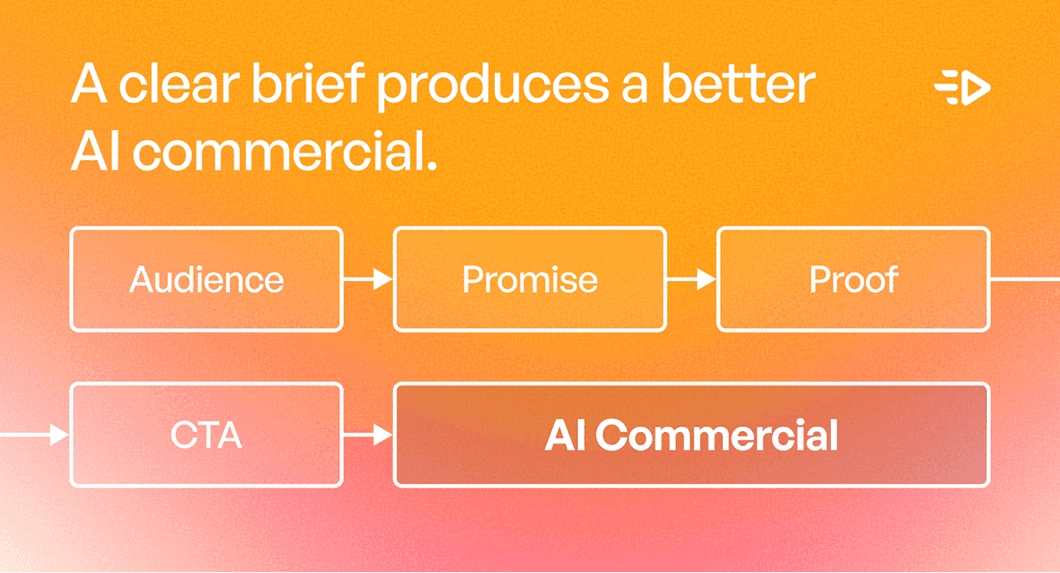
Lakukan analisis mendalam terlebih dahulu. Tentukan satu audiens, satu janji, satu bukti, dan satu tindakan. Untuk siapa iklan ini, apa satu hal yang Anda tawarkan, mengapa mereka harus memercayainya, dan apa yang Anda ingin mereka lakukan. Panduan (brief) yang tajam adalah apa yang membedakan iklan komersial dengan potongan klip biasa, dan sehebat apa pun generator tidak akan bisa memperbaiki panduan yang tidak jelas. Gunakan AI untuk menguji posisi dan draf sudut pandang Anda, dan serahkan keputusan strategis pada manusia. Disiplin ini adalah perbedaan antara membuat iklan yang berkinerja tinggi dan menghasilkan konten pengisi belaka.
Tulis naskah modular yang mengutamakan hook
Di media sosial, satu hingga dua detik pertama memegang peranan paling penting dalam menentukan apakah sisa iklan akan ditonton atau tidak. Mulailah dengan visual terkuat atau pertanyaan paling tajam, dan amankan detik berikutnya sebelum Anda memperkenalkan merek Anda.
Kemudian bangun naskah dalam beberapa blok: hook, masalah, bukti, dan ajakan bertindak (call to action). Menulis naskah secara modular adalah hal yang memungkinkan keunggulan pengujian, karena setiap blok menjadi slot yang dapat Anda tukar. Lima hook untuk isi iklan yang sama, tiga penutup untuk hook yang sama, atau bukti berbeda untuk audiens yang berbeda. Satu konsep berubah menjadi belasan variasi nyata tanpa menulis ulang semuanya, dan masing-masing adalah peluang terpisah pada 49% performa yang dikendalikan oleh materi kreatif. Pendekatan modular ini juga yang membuat iklan media sosial AI sangat efisien untuk diproduksi dalam skala besar.
Hasilkan variasi: Buat iklan AI dalam jumlah besar
Di sinilah AI melakukan pekerjaan berat yang tidak bisa dilakukan oleh syuting langsung. Untuk membuat iklan AI dalam jumlah besar, Anda menghasilkan bagian-bagiannya secara terpisah dan menggabungkannya kembali menjadi potongan video jadi.
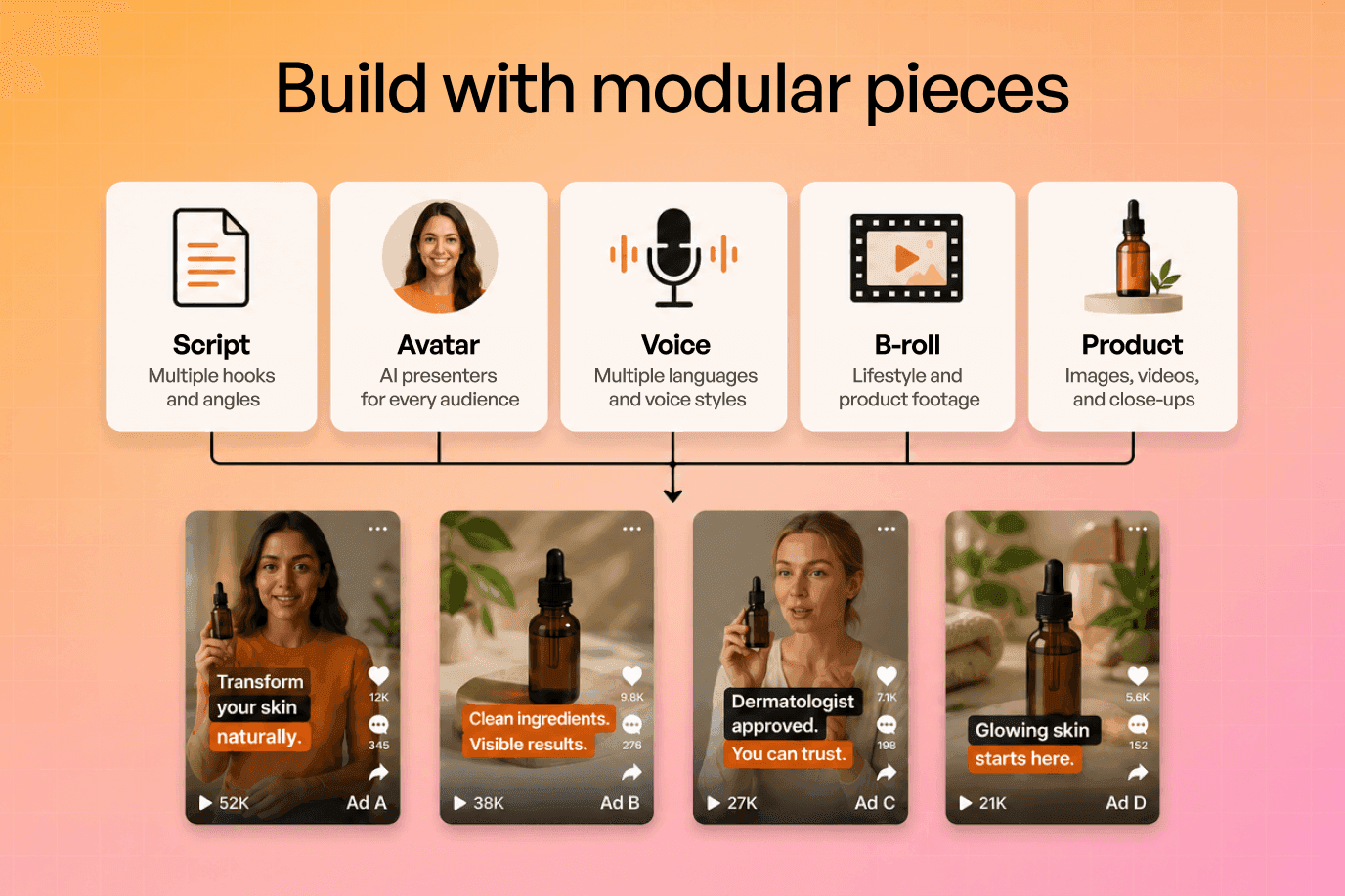
Semua bagiannya sudah ada di sini sekarang: naskah, presenter di layar, sulih suara (voiceover), b-roll, dan foto produk, yang masing-masing dapat diproduksi dan divariasikan oleh AI. Alat seperti Creatify mengubah URL produk menjadi iklan video jadi dalam waktu kurang dari satu menit dan memberikan beberapa variasi naskah untuk diuji, serta pustakanya yang berisi lebih dari 1.500 avatar AI dan lebih dari 75 bahasa memungkinkan Anda melokalkan iklan tanpa perlu melakukan casting ulang atau syuting ulang. Fitur Video Produk miliknya mengambil satu gambar produk dan menghasilkan puluhan varian, jenis cakupan yang biasanya membutuhkan waktu syuting seharian penuh untuk didapatkan. Intinya adalah kepadatan aset: banyak potongan modular yang dapat Anda campur menjadi banyak versi jadi dengan biaya murah, sehingga melakukan lebih banyak pengujian menjadi pengaturan standar Anda.
Hindari tanda-tanda yang membuat iklan media sosial AI gagal
Iklan AI bisa gagal dalam bentuk yang mudah dikenali, dan masing-masing dapat dihindari. Wajah dan produk yang berubah-ubah di antara adegan akan langsung merusak kepercayaan penonton. Kesamaan yang generik dan tidak natural akan terasa seperti spam. Dan iklan format lanskap (widescreen) yang dimasukkan ke dalam feed vertikal akan terlihat seperti tidak digarap dengan serius.
Lawan hal ini di dua lini. Pilih alat yang dibuat untuk konsistensi: asisten AI Creatify menjalankan filter berbasis visual yang memeriksa setiap adegan terhadap panduan awal dan menjaga konsistensi karakter di berbagai adegan dan variasi, sehingga presenter dan produk Anda tetap sama dari satu iklan ke iklan lainnya. Kemudian tetap libatkan manusia untuk hal-hal yang tidak dapat dinilai dengan baik oleh model AI, seperti identitas merek (brand voice), kebenaran emosional, serta keakuratan faktual dan hukum dari setiap klaim. Kredibilitas adalah apa yang membuat iklan berfungsi, jadi jagalah hal itu.
Baca juga: 7 Contoh iklan media sosial yang jenius: Apa yang membuat orang berhenti menggulir
Uji, lalu alokasikan anggaran untuk pemenangnya
Membuat variasi barulah setengah jalan. Setengah jalan lainnya adalah membiarkan data yang memilih.
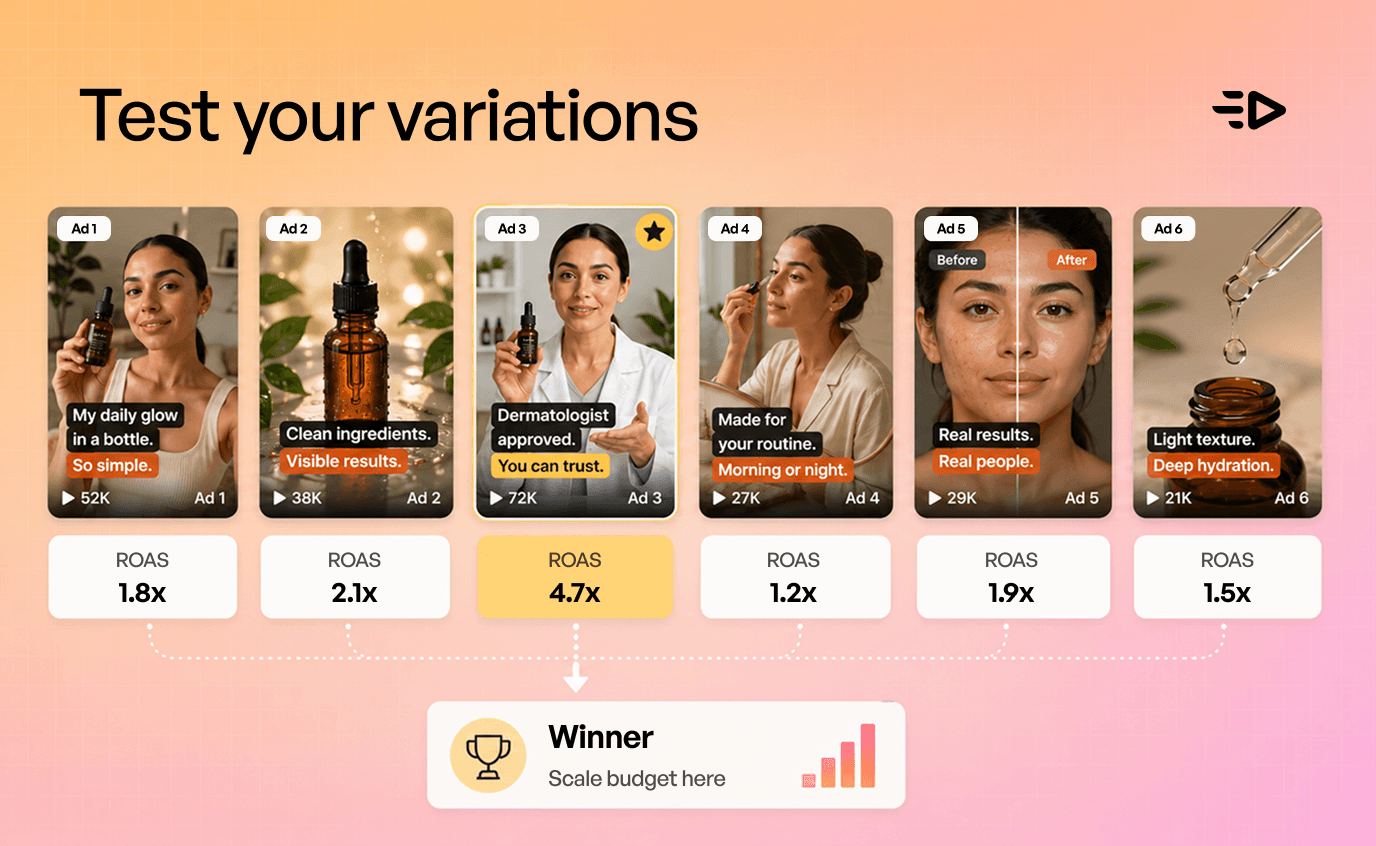
Jalankan varian Anda secara langsung dengan anggaran kecil, baca sinyal awal, rasio hook (hook rate), rasio klik-tayang (click-through), dan biaya per hasil, lalu pangkas yang kalah dan pindahkan anggaran ke pemenang. Ini adalah langkah yang mengalahkan syuting langsung, karena Anda menemukan iklan yang berhasil dengan data audiens nyata sebelum Anda berkomitmen mengeluarkan uang besar. Seorang pembeli media AI dapat menjalankan siklus ini untuk Anda: milik Creatify, yang didukung oleh Claude, terhubung ke Meta, Google, TikTok, dan AppLovin, memantau performa, dan mengalihkan anggaran ke arah apa yang menghasilkan konversi. Pendekatan kemenangan pada platform saat ini adalah memproduksi dan menguji sebanyak-banyaknya, dan AI adalah hal yang membuat kecepatan tersebut menjadi sangat terjangkau.
Baca juga: 7 alat optimasi iklan saat iklan pemenang Anda mulai kehilangan performanya
Pertanyaan yang Sering Diajukan
Bagaimana cara membuat iklan AI?
Mulailah dengan panduan (brief) yang ketat: satu audiens, satu janji, satu bukti, satu tindakan. Tulis naskah yang mengutamakan hook dalam blok modular, lalu gunakan AI untuk menghasilkan potongan-potongan tersebut (naskah, avatar atau presenter, sulih suara, b-roll, foto produk) dan gabungkan kembali menjadi beberapa variasi. Tinjau setiap potongan video untuk akurasi dan konsistensi merek, luncurkan varian dengan anggaran kecil, dan tingkatkan anggaran untuk varian yang berkinerja terbaik.
Apakah iklan AI dapat mengungguli video tradisional?
Bisa, jika Anda memperlakukan AI sebagai sistem pengujian: banyak versi yang diluncurkan dan diukur, dengan anggaran yang dialihkan ke pemenang. Syuting langsung menghasilkan satu potongan video yang mahal; AI menghasilkan banyak video dengan murah, dan karena materi kreatif mendorong hampir setengah dari dampak penjualan iklan, menguji lebih banyak versi akan meningkatkan peluang Anda menemukan pemenang. Keunggulannya adalah volume dan kecepatan iterasi, di samping biaya yang lebih rendah.
Berapa biaya pembuatan iklan AI?
Jauh lebih murah daripada syuting. Produksi video tradisional umumnya berkisar dari sekitar seribu dolar untuk iklan sederhana hingga puluhan ribu dolar untuk produksi penuh, sementara alat AI dapat menghasilkan iklan video hanya dengan beberapa dolar saja dalam hitungan menit. Penghematan yang lebih besar adalah bahwa variasi yang murah memungkinkan Anda menguji sebelum berkomitmen pada anggaran media, yang mengurangi risiko kerugian akibat mendukung materi kreatif yang salah.
Apakah iklan AI legal secara hukum?
Secara umum ya, tetapi tanggung jawab atas konten tersebut ada pada Anda. Pastikan klaim tetap jujur dan terbukti, amankan hak untuk musik, rekaman, atau kemiripan wajah yang Anda gunakan, ikuti aturan pengungkapan media sintetis di masing-masing platform, dan hindari menyiratkan dukungan (endorsement) yang tidak Anda miliki. Peninjauan oleh manusia untuk kepatuhan hukum dan merek harus ada dalam setiap alur kerja.
Bagaimana cara membuat iklan AI yang tidak terlihat seperti buatan AI?
Konsistensi dan keahlian pembuatan. Gunakan alat yang menjaga wajah, produk, dan gaya tetap stabil di berbagai adegan, tulis naskah untuk format vertikal asli platform, mulai dengan hook yang nyata, dan biarkan manusia yang mengedit untuk ritme serta kebenaran emosionalnya. Tanda-tanda mencolok (objek yang berubah bentuk, kesamaan yang aneh, sulih suara yang generik) adalah hal yang menandai suatu iklan sebagai buatan mesin, dan konsistensi karakter yang stabil ditambah penilaian manusia akan menghilangkan sebagian besar tanda tersebut.
Anggaran pemasaran telah mandek di angka 7,7% dari pendapatan perusahaan, dan dalam Survei Pengeluaran CMO 2025 dari Gartner, 59% pemimpin pemasaran menyatakan bahwa jumlah tersebut tidak cukup untuk mengeksekusi strategi mereka. Syuting langsung menghabiskan sebagian besar anggaran kampanye sebelum tayangan pertama berjalan, yakni untuk kru, lokasi, talenta, dan peralatan, dan Anda baru mengetahui apakah iklan tersebut berhasil setelah uangnya habis.
Itulah kelemahan nyata dari syuting langsung, dan ini tidak ada hubungannya dengan kualitas. Metode ini hanya menghasilkan satu jawaban yang mahal. Belajar membuat iklan AI memberi Anda sesuatu yang berbeda: sebuah sistem pengujian, dengan banyak versi pada sebagian kecil dari biaya per konsep, serta variasi yang cukup untuk menemukan pemenang sebelum Anda meningkatkan anggaran belanja iklan Anda. Itulah cara iklan AI mengungguli syuting langsung terakhir Anda, dan begini cara membuat iklan yang seperti itu.
Mengapa Syuting Langsung Mengalami Stagnasi dan Iklan AI Tidak
Syuting tradisional menumpuk risiko di awal. Uang dikeluarkan lebih cepat, habis dalam satu hari produksi, dan hasilnya biasanya hanya satu potongan utama (hero cut) ditambah beberapa potongan pendek. Jika hook-nya salah, memperbaikinya berarti harus melakukan syuting lagi. Anda berkomitmen sebelum memiliki bukti apa pun, dan format tersebut sulit diubah setelah selesai direkam.
Produksi AI membalikkan kurva biaya tersebut. Ketika satu video jadi hanya memakan biaya beberapa dolar saja, bukan ribuan dolar, Anda dapat membuat banyak video dan mempelajari mana yang berhasil sebelum berkomitmen pada anggaran media. Dua cara yang disampaikan para CMO kepada Gartner tentang bagaimana AI generatif telah memberikan hasil nyata adalah efisiensi waktu dan efisiensi biaya, yang merupakan hal utama yang dibutuhkan oleh proses kreatif padat pengujian. McKinsey memperkirakan bahwa AI generatif dapat meningkatkan produktivitas fungsi pemasaran sebesar 5 hingga 15% dari total pengeluaran pemasaran, dan sebagian besar dari perolehan tersebut berasal dari pembuatan konten yang lebih banyak, lebih personal, dan lebih cepat.
Alasan mengapa volume sangat penting bermuara pada apa yang mendorong hasil. Analisis terhadap ratusan kampanye oleh NCSolutions, yang sebelumnya bernama Nielsen Catalina Solutions, menemukan bahwa kreatif adalah pendorong tunggal terbesar dari penjualan yang dihasilkan sebuah iklan, dengan kontribusi sekitar 49% dari dampak, di atas penargetan, jangkauan, dan kebaruan. Kreatif adalah tuasnya. AI memungkinkan Anda menarik tuas tersebut lebih sering.
Mulailah dengan strategi, bukan alat generator
Cara paling umum orang gagal saat belajar menggunakan AI untuk mempromosikan bisnis mereka adalah dengan memulai langsung dari alatnya. Anda membuka generator, mengetik nama produk, dan mendapatkan sesuatu yang terlihat seperti iklan tetapi tidak menjual apa pun.
Lakukan analisis mendalam terlebih dahulu. Tentukan satu audiens, satu janji, satu bukti, dan satu tindakan. Untuk siapa iklan ini, apa satu hal yang Anda tawarkan, mengapa mereka harus memercayainya, dan apa yang Anda ingin mereka lakukan. Panduan (brief) yang tajam adalah apa yang membedakan iklan komersial dengan potongan klip biasa, dan sehebat apa pun generator tidak akan bisa memperbaiki panduan yang tidak jelas. Gunakan AI untuk menguji posisi dan draf sudut pandang Anda, dan serahkan keputusan strategis pada manusia. Disiplin ini adalah perbedaan antara membuat iklan yang berkinerja tinggi dan menghasilkan konten pengisi belaka.
Tulis naskah modular yang mengutamakan hook
Di media sosial, satu hingga dua detik pertama memegang peranan paling penting dalam menentukan apakah sisa iklan akan ditonton atau tidak. Mulailah dengan visual terkuat atau pertanyaan paling tajam, dan amankan detik berikutnya sebelum Anda memperkenalkan merek Anda.
Kemudian bangun naskah dalam beberapa blok: hook, masalah, bukti, dan ajakan bertindak (call to action). Menulis naskah secara modular adalah hal yang memungkinkan keunggulan pengujian, karena setiap blok menjadi slot yang dapat Anda tukar. Lima hook untuk isi iklan yang sama, tiga penutup untuk hook yang sama, atau bukti berbeda untuk audiens yang berbeda. Satu konsep berubah menjadi belasan variasi nyata tanpa menulis ulang semuanya, dan masing-masing adalah peluang terpisah pada 49% performa yang dikendalikan oleh materi kreatif. Pendekatan modular ini juga yang membuat iklan media sosial AI sangat efisien untuk diproduksi dalam skala besar.
Hasilkan variasi: Buat iklan AI dalam jumlah besar
Di sinilah AI melakukan pekerjaan berat yang tidak bisa dilakukan oleh syuting langsung. Untuk membuat iklan AI dalam jumlah besar, Anda menghasilkan bagian-bagiannya secara terpisah dan menggabungkannya kembali menjadi potongan video jadi.
Semua bagiannya sudah ada di sini sekarang: naskah, presenter di layar, sulih suara (voiceover), b-roll, dan foto produk, yang masing-masing dapat diproduksi dan divariasikan oleh AI. Alat seperti Creatify mengubah URL produk menjadi iklan video jadi dalam waktu kurang dari satu menit dan memberikan beberapa variasi naskah untuk diuji, serta pustakanya yang berisi lebih dari 1.500 avatar AI dan lebih dari 75 bahasa memungkinkan Anda melokalkan iklan tanpa perlu melakukan casting ulang atau syuting ulang. Fitur Video Produk miliknya mengambil satu gambar produk dan menghasilkan puluhan varian, jenis cakupan yang biasanya membutuhkan waktu syuting seharian penuh untuk didapatkan. Intinya adalah kepadatan aset: banyak potongan modular yang dapat Anda campur menjadi banyak versi jadi dengan biaya murah, sehingga melakukan lebih banyak pengujian menjadi pengaturan standar Anda.
Hindari tanda-tanda yang membuat iklan media sosial AI gagal
Iklan AI bisa gagal dalam bentuk yang mudah dikenali, dan masing-masing dapat dihindari. Wajah dan produk yang berubah-ubah di antara adegan akan langsung merusak kepercayaan penonton. Kesamaan yang generik dan tidak natural akan terasa seperti spam. Dan iklan format lanskap (widescreen) yang dimasukkan ke dalam feed vertikal akan terlihat seperti tidak digarap dengan serius.
Lawan hal ini di dua lini. Pilih alat yang dibuat untuk konsistensi: asisten AI Creatify menjalankan filter berbasis visual yang memeriksa setiap adegan terhadap panduan awal dan menjaga konsistensi karakter di berbagai adegan dan variasi, sehingga presenter dan produk Anda tetap sama dari satu iklan ke iklan lainnya. Kemudian tetap libatkan manusia untuk hal-hal yang tidak dapat dinilai dengan baik oleh model AI, seperti identitas merek (brand voice), kebenaran emosional, serta keakuratan faktual dan hukum dari setiap klaim. Kredibilitas adalah apa yang membuat iklan berfungsi, jadi jagalah hal itu.
Baca juga: 7 Contoh iklan media sosial yang jenius: Apa yang membuat orang berhenti menggulir
Uji, lalu alokasikan anggaran untuk pemenangnya
Membuat variasi barulah setengah jalan. Setengah jalan lainnya adalah membiarkan data yang memilih.
Jalankan varian Anda secara langsung dengan anggaran kecil, baca sinyal awal, rasio hook (hook rate), rasio klik-tayang (click-through), dan biaya per hasil, lalu pangkas yang kalah dan pindahkan anggaran ke pemenang. Ini adalah langkah yang mengalahkan syuting langsung, karena Anda menemukan iklan yang berhasil dengan data audiens nyata sebelum Anda berkomitmen mengeluarkan uang besar. Seorang pembeli media AI dapat menjalankan siklus ini untuk Anda: milik Creatify, yang didukung oleh Claude, terhubung ke Meta, Google, TikTok, dan AppLovin, memantau performa, dan mengalihkan anggaran ke arah apa yang menghasilkan konversi. Pendekatan kemenangan pada platform saat ini adalah memproduksi dan menguji sebanyak-banyaknya, dan AI adalah hal yang membuat kecepatan tersebut menjadi sangat terjangkau.
Baca juga: 7 alat optimasi iklan saat iklan pemenang Anda mulai kehilangan performanya
Pertanyaan yang Sering Diajukan
Bagaimana cara membuat iklan AI?
Mulailah dengan panduan (brief) yang ketat: satu audiens, satu janji, satu bukti, satu tindakan. Tulis naskah yang mengutamakan hook dalam blok modular, lalu gunakan AI untuk menghasilkan potongan-potongan tersebut (naskah, avatar atau presenter, sulih suara, b-roll, foto produk) dan gabungkan kembali menjadi beberapa variasi. Tinjau setiap potongan video untuk akurasi dan konsistensi merek, luncurkan varian dengan anggaran kecil, dan tingkatkan anggaran untuk varian yang berkinerja terbaik.
Apakah iklan AI dapat mengungguli video tradisional?
Bisa, jika Anda memperlakukan AI sebagai sistem pengujian: banyak versi yang diluncurkan dan diukur, dengan anggaran yang dialihkan ke pemenang. Syuting langsung menghasilkan satu potongan video yang mahal; AI menghasilkan banyak video dengan murah, dan karena materi kreatif mendorong hampir setengah dari dampak penjualan iklan, menguji lebih banyak versi akan meningkatkan peluang Anda menemukan pemenang. Keunggulannya adalah volume dan kecepatan iterasi, di samping biaya yang lebih rendah.
Berapa biaya pembuatan iklan AI?
Jauh lebih murah daripada syuting. Produksi video tradisional umumnya berkisar dari sekitar seribu dolar untuk iklan sederhana hingga puluhan ribu dolar untuk produksi penuh, sementara alat AI dapat menghasilkan iklan video hanya dengan beberapa dolar saja dalam hitungan menit. Penghematan yang lebih besar adalah bahwa variasi yang murah memungkinkan Anda menguji sebelum berkomitmen pada anggaran media, yang mengurangi risiko kerugian akibat mendukung materi kreatif yang salah.
Apakah iklan AI legal secara hukum?
Secara umum ya, tetapi tanggung jawab atas konten tersebut ada pada Anda. Pastikan klaim tetap jujur dan terbukti, amankan hak untuk musik, rekaman, atau kemiripan wajah yang Anda gunakan, ikuti aturan pengungkapan media sintetis di masing-masing platform, dan hindari menyiratkan dukungan (endorsement) yang tidak Anda miliki. Peninjauan oleh manusia untuk kepatuhan hukum dan merek harus ada dalam setiap alur kerja.
Bagaimana cara membuat iklan AI yang tidak terlihat seperti buatan AI?
Konsistensi dan keahlian pembuatan. Gunakan alat yang menjaga wajah, produk, dan gaya tetap stabil di berbagai adegan, tulis naskah untuk format vertikal asli platform, mulai dengan hook yang nyata, dan biarkan manusia yang mengedit untuk ritme serta kebenaran emosionalnya. Tanda-tanda mencolok (objek yang berubah bentuk, kesamaan yang aneh, sulih suara yang generik) adalah hal yang menandai suatu iklan sebagai buatan mesin, dan konsistensi karakter yang stabil ditambah penilaian manusia akan menghilangkan sebagian besar tanda tersebut.