
Boris Goncharov
COMPARTILHAR


NESTE ARTIGO
O que é o Google Performance Max? Um guia completo
O Performance Max promete uma única campanha em todo o inventário do Google. Pesquisa, YouTube, Display, Gmail, Maps, Discover, altamente automatizado, com lances e entrega otimizados dinamicamente. Essa é a proposta.
O porém: o desempenho depende muito da qualidade dos seus inputs, e a maioria dos anunciantes configura isso errado. Este guia cobre o que é PMax, como ele funciona e o que separa campanhas que escalam daquelas que drenam orçamento silenciosamente.
O que é o Google Performance Max?
Performance Max (comumente chamado de PMax) é um tipo de campanha baseada em objetivos no Google Ads. Diferente de campanhas de Pesquisa, Display ou YouTube, que rodam em um único canal, o PMax roda em todas as superfícies de publicidade do Google simultaneamente a partir de uma única configuração de campanha.
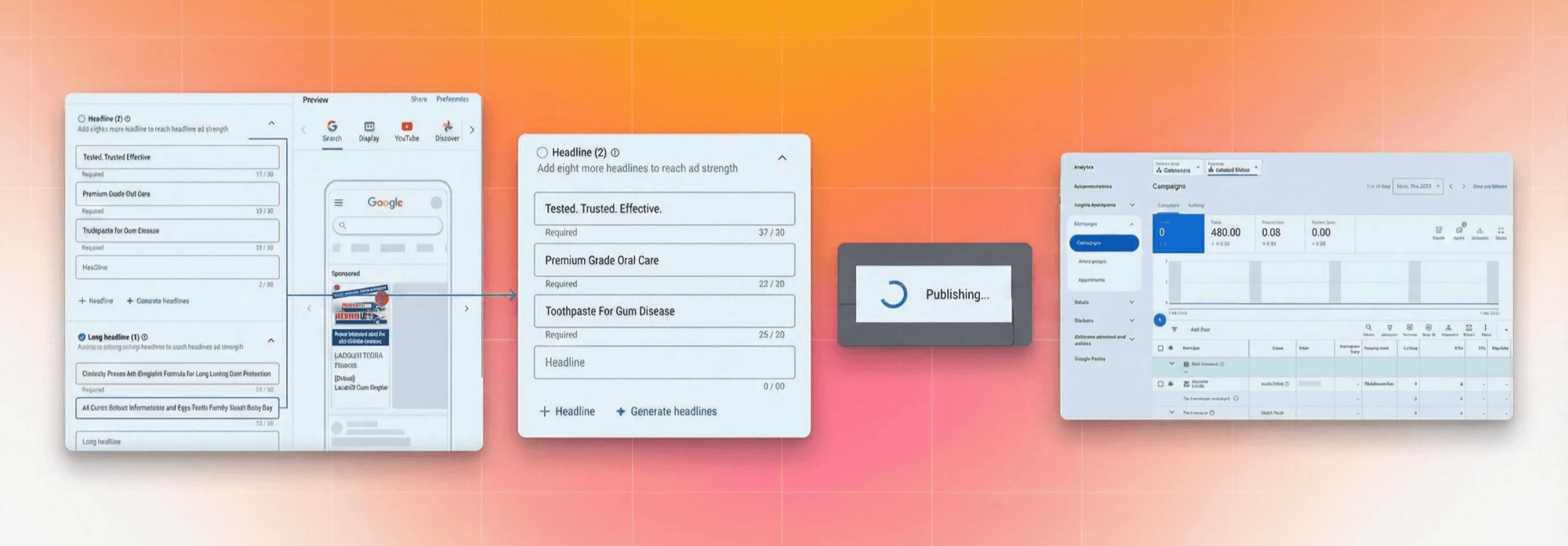
Você fornece os inputs: objetivos de conversão, assets criativos (títulos, descrições, imagens, vídeos, logos) e sinais de público. A IA do Google cuida do resto: onde mostrar seus anúncios, para quem, com qual lance e em qual formato.
O PMax foi lançado no fim de 2021. Em seguida, o Google migrou as campanhas Smart Shopping e Local para ele até o fim de 2022, tornando-o o principal caminho para anunciantes que antes usavam esses tipos de campanha.
Por que o Google o construiu
O Google Ads tradicional exigia gerenciar campanhas separadas para cada canal. Uma conta típica de ecommerce podia rodar campanhas de Pesquisa, Shopping, Display e YouTube com orçamentos, lances e criativos separados para cada uma.
As campanhas Google Performance Max são a resposta do Google a essa complexidade. A ideia: dê ao Google seu objetivo de conversão e seus assets criativos, e a IA descobre a forma mais eficiente de alcançar clientes em todas as superfícies ao mesmo tempo.
Isso também reflete a mudança mais ampla na publicidade digital em direção à automação. O lance manual por palavra-chave e a seleção de posicionamento estão sendo cada vez mais substituídos por sistemas de machine learning que otimizam em tempo real com mais sinais do que qualquer humano conseguiria processar manualmente.
Como o Performance Max funciona
O modelo operacional é direto. Você define:
Um objetivo de conversão (vendas, leads, visitas à loja)
Grupos de assets: conjuntos de títulos, descrições, imagens, logos e vídeos
Sinais de público: dados próprios, listas de clientes, públicos de remarketing ou segmentos personalizados
Uma estratégia de lances: CPA desejado, ROAS desejado ou Maximizar conversões
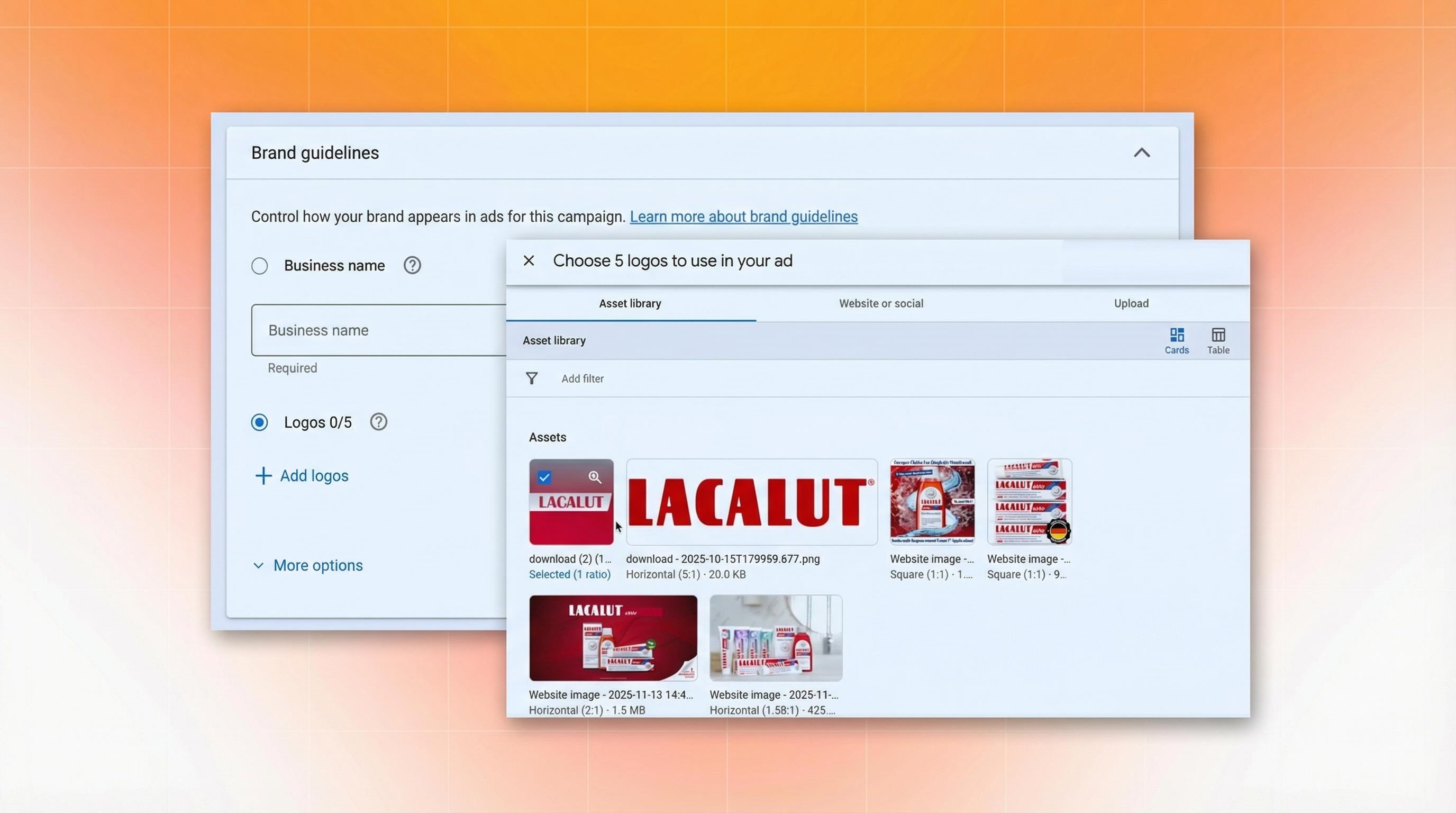
O sistema do Google então monta os anúncios a partir dos seus assets, decide quais combinações mostrar e onde, e ajusta os lances em tempo real com base na probabilidade de conversão.
O PMax não usa palavras-chave da mesma forma que campanhas de Pesquisa. Ele usa sinais de público e machine learning para determinar quem vê seus anúncios. O Google passou a adicionar controles semelhantes a palavras-chave, incluindo temas de pesquisa e palavras-chave negativas, que dão aos anunciantes mais direcionamento, mas o controle no nível de consulta continua fundamentalmente diferente de uma campanha de Pesquisa padrão.
Onde os anúncios do PMax aparecem
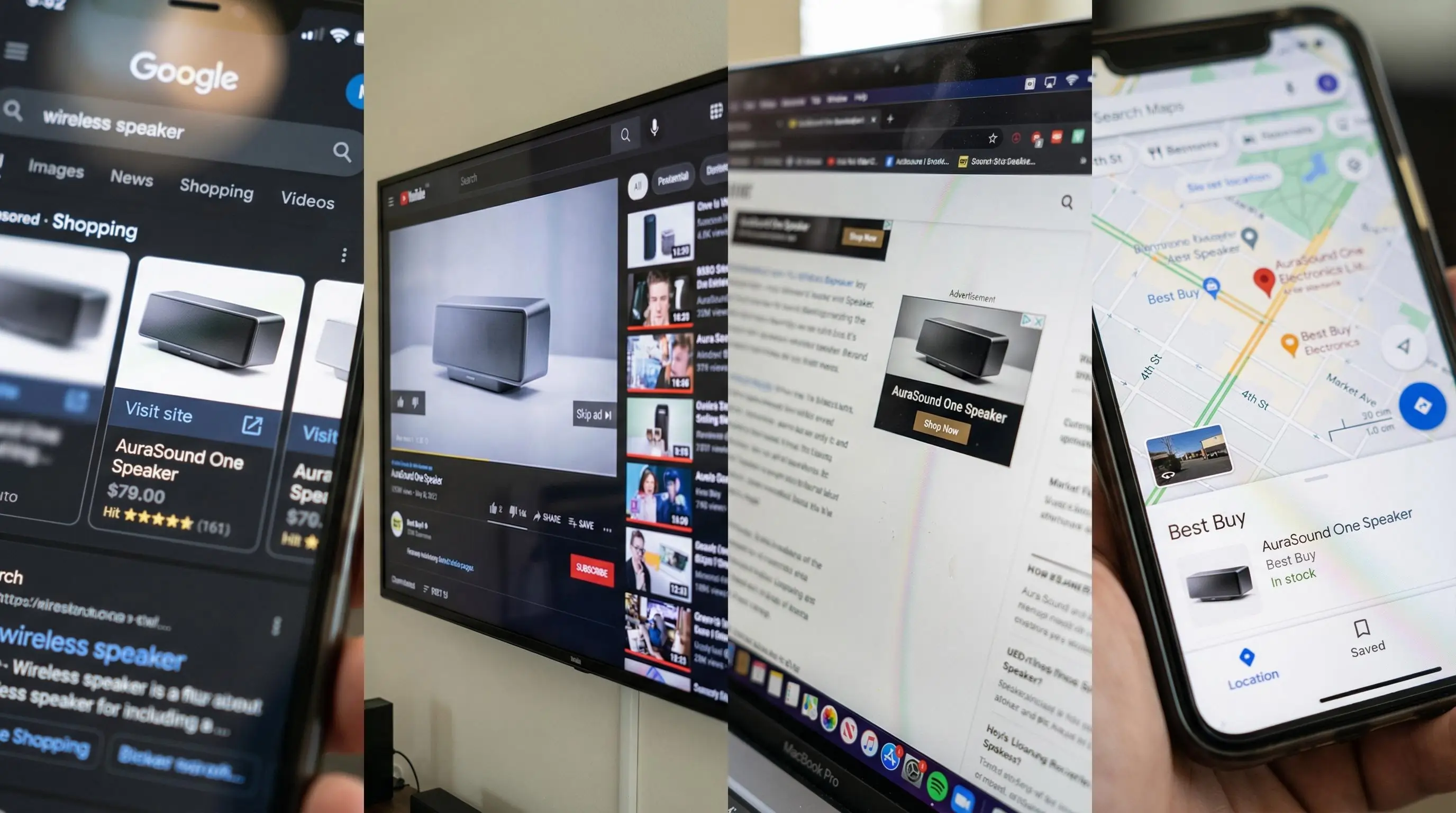
Uma única campanha PMax pode veicular anúncios em:
Google Search (incluindo resultados do Shopping)
YouTube
Rede de Display do Google
Discover
Gmail
Google Maps
O Google adapta automaticamente seus criativos aos requisitos de formato de cada posicionamento. O mesmo grupo de assets pode gerar um anúncio de texto no Search, um anúncio em vídeo no YouTube e um anúncio gráfico responsivo na Rede de Display.
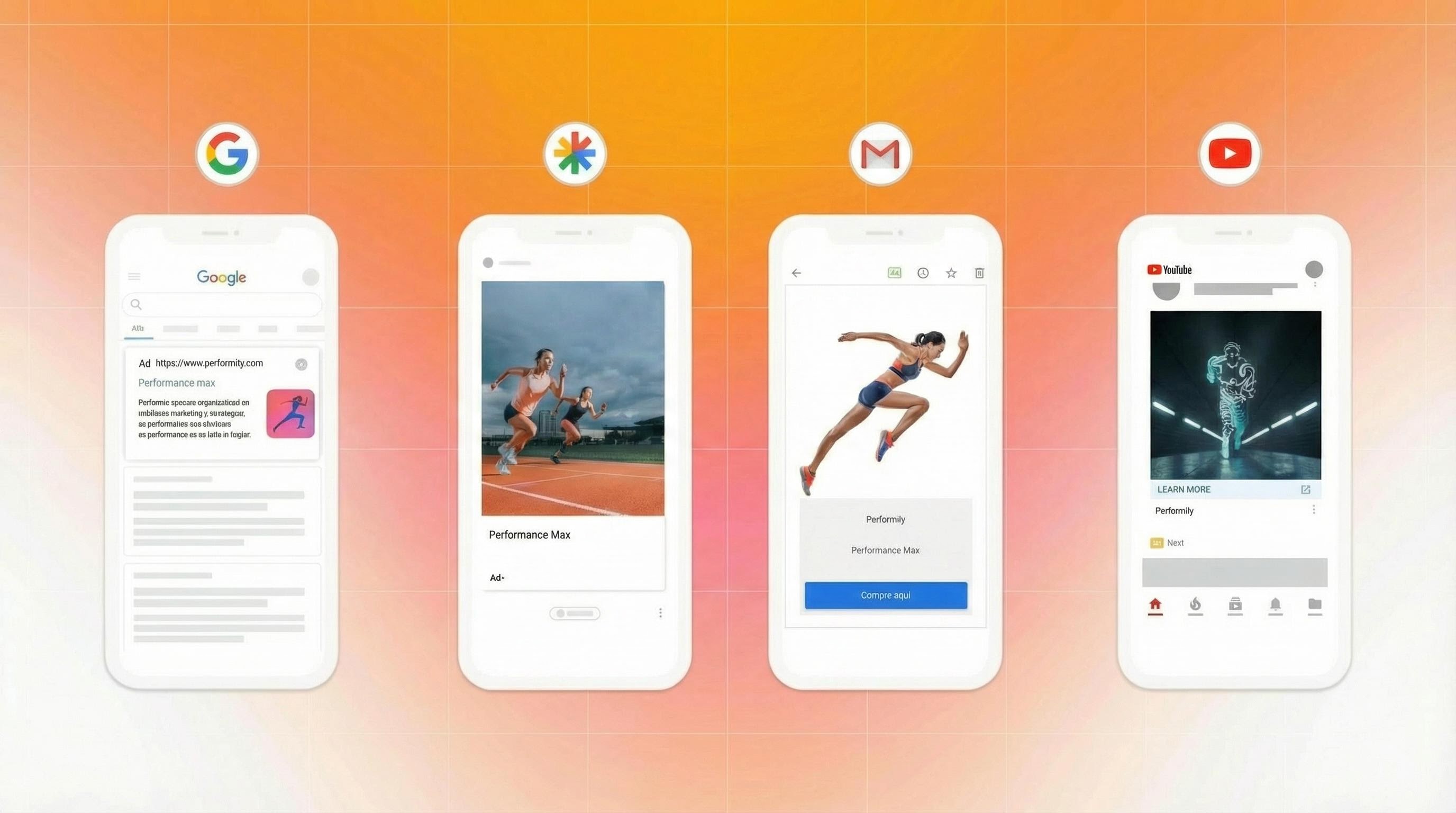
A entrega real nesses canais depende da qualidade dos seus assets, dos dados de conversão, do orçamento e de quão bem seus sinais de público correspondem a cada superfície.
Principais benefícios
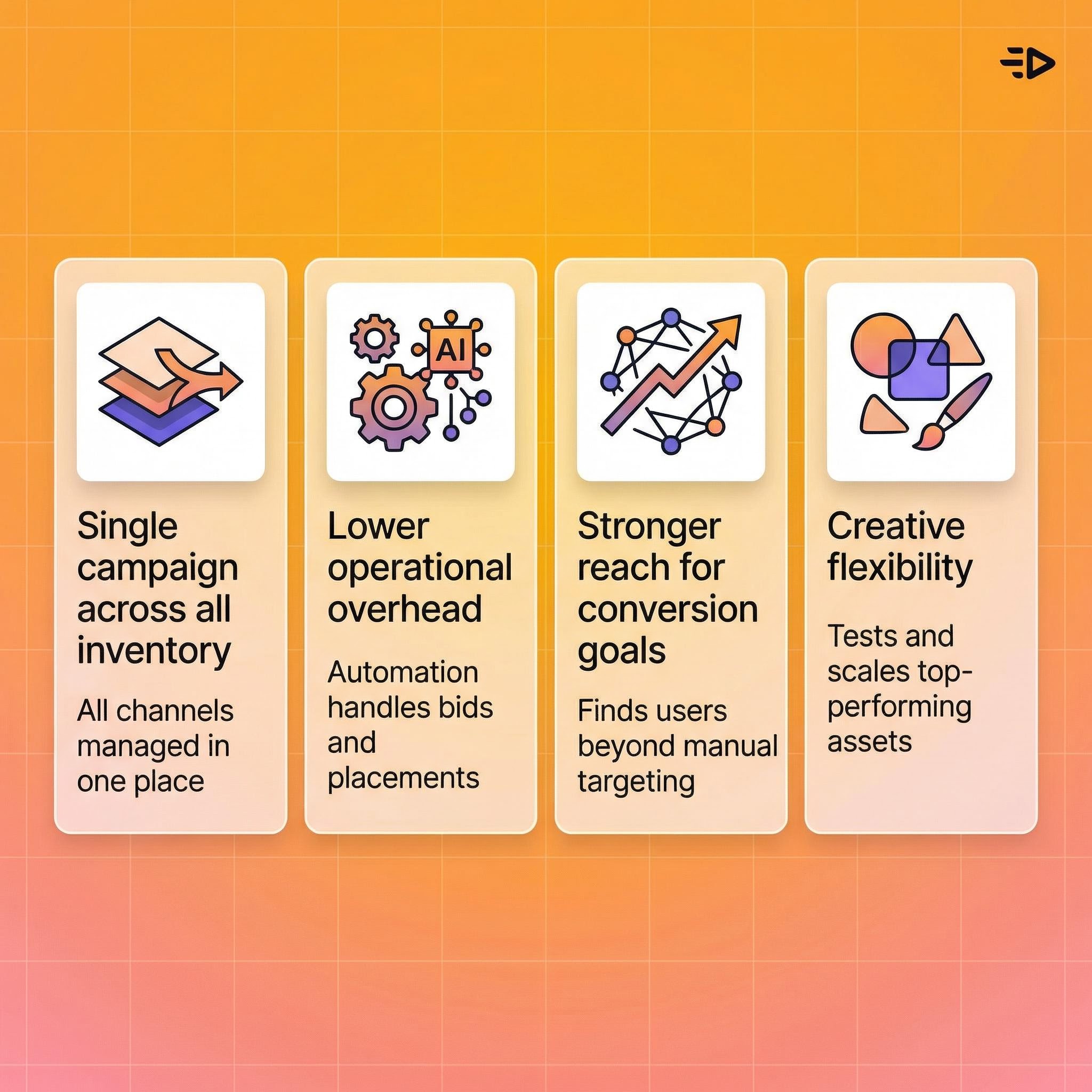
Uma única campanha em todo o inventário. Em vez de gerenciar orçamentos e lances separados em cinco tipos de campanha, o PMax consolida tudo em um só.
Menor sobrecarga operacional. As decisões de lance e posicionamento são automatizadas, liberando tempo para estratégia de nível mais alto.
Alcance mais forte para objetivos focados em conversão. O PMax pode identificar caminhos de conversão que o targeting manual deixaria passar, especialmente para alcançar usuários mais cedo na jornada de compra.
Flexibilidade criativa. O Google testa automaticamente combinações de assets e mostra quais performam melhor, para que você aprenda o que funciona em diferentes formatos sem rodar experimentos separados.
Principais limitações e trade-offs
O PMax abre mão de controle em troca de alcance e automação. Esse trade-off nem sempre é o ideal.
Menos transparência. As primeiras versões do PMax davam aos anunciantes quase nenhuma visibilidade sobre para onde o orçamento estava indo ou quais posicionamentos estavam convertendo. O Google melhorou isso significativamente com relatórios de performance por canal e avaliações em nível de asset, mas ainda é menos granular do que campanhas específicas por canal.
Controles semelhantes a palavras-chave, não targeting por palavras-chave. O PMax não usa palavras-chave da mesma forma que campanhas de Pesquisa. Ele usa sinais de público e machine learning para determinar quem vê seus anúncios. Dito isso, o Google adicionou controles semelhantes a palavras-chave ao longo do tempo, incluindo temas de pesquisa (que permitem fornecer sinais de intenção para o algoritmo por grupo de assets) e palavras-chave negativas em nível de campanha. Isso melhora a direção e o filtro, mas não oferece o controle consulta por consulta que você teria em uma campanha de Pesquisa.
Dependência de dados. A IA do PMax precisa de dados de conversão para aprender. Muitos profissionais tratam 30 a 50 conversões por mês como um ponto de partida prático para uma otimização estável. Sem sinal suficiente, o sistema tende a ter desempenho abaixo do esperado.
Canibalização de termos de marca. Sem uma configuração cuidadosa de exclusão de marca, o PMax pode gastar orçamento em seus próprios termos de busca de marca, inflando os números de conversão com tráfego que converteria de qualquer forma.
Performance Max vs. outros tipos de campanha do Google Ads
Performance Max | Pesquisa / Shopping / Display / YouTube | |
|---|---|---|
Targeting | Sinais de público + automação | Palavras-chave manuais ou baseadas em posicionamento |
Canais | Cross-channel, todo o inventário do Google | Canal único ou mais restrito |
Controle | Menor | Maior |
Criativo | Baseado em assets, montado automaticamente | Geralmente específico por canal |
Relatórios | Melhorando, mas menos granular | Mais granular |
Melhor para | Objetivos de conversão e escala | Precisão, controle de intenção, estratégia específica por canal |
PMax e campanhas de Pesquisa não são mutuamente exclusivas. A maioria dos profissionais as executa juntas, usando Search para termos de marca e de categoria com alta intenção e o PMax para descoberta e alcance incremental.
Quando usar o Performance Max
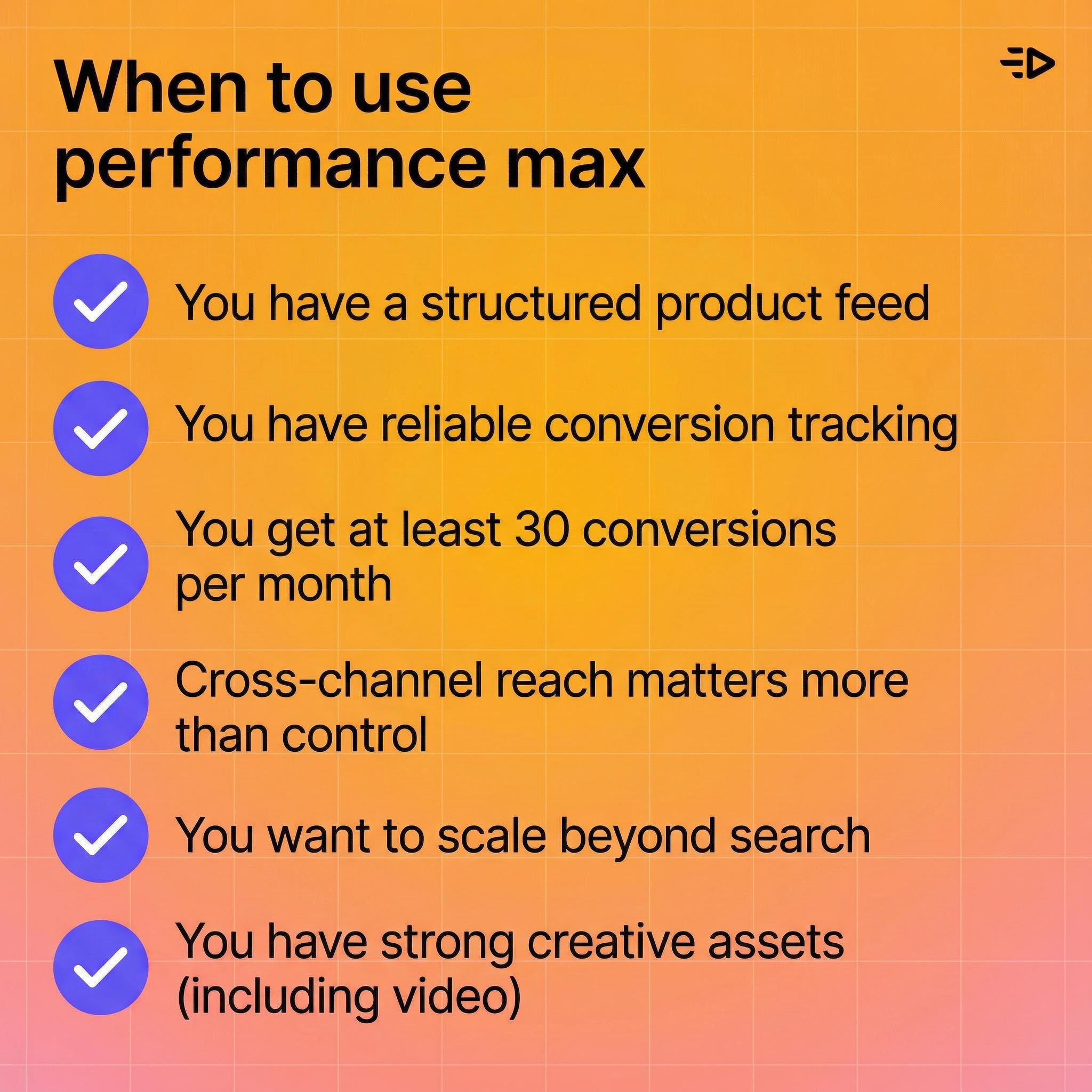
As campanhas Google Performance Max tendem a performar melhor quando:
Você é uma marca de ecommerce com um feed de produtos bem estruturado e rastreamento de conversão forte
Você tem volume de conversão suficiente para a IA do Google aprender (30+ conversões por mês é uma linha de base inicial comum)
O alcance cross-channel importa mais do que o controle no nível da consulta
Você quer escalar além da Pesquisa sem gerenciar vários tipos de campanha separadamente
Você tem assets criativos fortes, incluindo vídeo, para alimentar YouTube e Display
Os próprios estudos de caso do Google mostram resultados fortes para anunciantes focados em conversão. A Discovery+ relatou uma redução de 21% no custo por aquisição após migrar para o PMax, e a Rothy's viu um aumento de 60% nas conversões.
Quando não depender apenas do PMax
O PMax não é a opção certa em todas as situações.
Rastreamento de conversão incompleto. Se sua mensuração de conversão não for sólida, o sistema otimiza para os sinais errados. Isso é especialmente comum em geração de leads, onde preenchimentos de formulário nem sempre indicam leads qualificados.
Requisitos de brand safety. Se você precisa de controle rígido sobre quais consultas e posicionamentos mostram sua marca, a automação do PMax pode não oferecer os guardrails necessários.
Mensagens segmentadas por público ou etapa do funil. O PMax não oferece o tipo de messaging granular específico por público que uma campanha bem estruturada de Pesquisa ou Display pode entregar.
Contas com baixo volume de conversão. Se sua conta gera menos de 30 conversões por mês, o PMax não tem dados suficientes para otimizar e provavelmente terá desempenho fraco.
Quais inputs impulsionam os resultados do Performance Max
A automação só funciona tão bem quanto o que você alimenta nela. Os inputs que mais importam:
Rastreamento de conversão. Dados de conversão precisos e completos são a base. Sem isso, nada mais funciona bem.
Assets criativos. O Google classifica cada asset como Low, Good ou Best com base na contribuição de performance. Assets fracos ou repetitivos limitam o que o sistema consegue fazer. Isso significa que você precisa de variedade criativa suficiente entre imagens, vídeos, títulos e descrições para dar à IA opções reais para testar.
Sinais de público. Listas de clientes de dados próprios e públicos de remarketing dão ao sistema um ponto de partida forte. Quanto mais específicos forem seus sinais, mais rápido o PMax aprende.
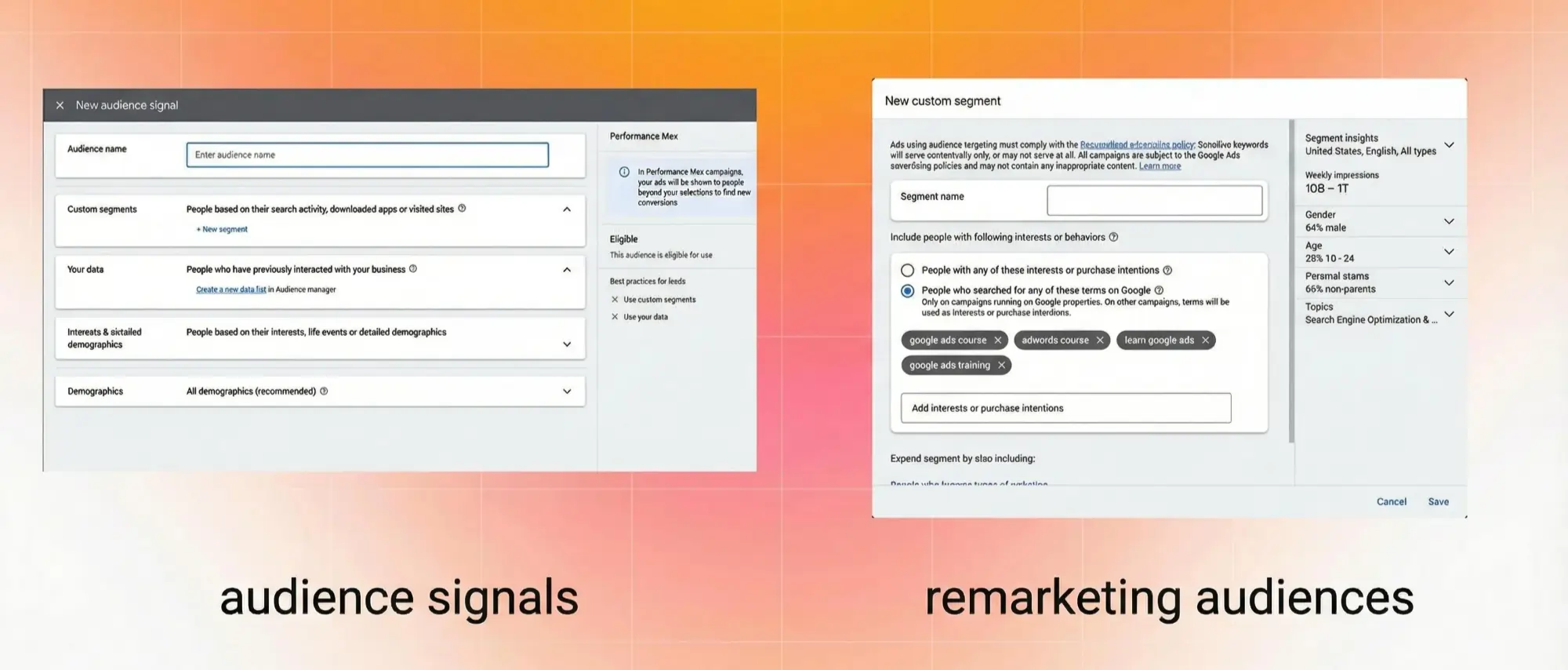
Qualidade do feed de produtos (para ecommerce). Um feed limpo, completo e bem estruturado é um dos inputs de maior alavancagem para campanhas de retail PMax.
Relevância da landing page. O PMax controla posicionamento e lance, mas não o que acontece depois do clique. Landing pages fracas limitam a taxa de conversão, independentemente de quão bem a campanha esteja configurada.
Como otimizar o Performance Max
Comece com mensuração precisa. Configure o rastreamento de conversão antes do lançamento. Lances baseados em valor (Target ROAS) exigem dados reais de valor de conversão, não apenas contagem de conversões. Use rastreamento de conversão baseado em eventos sempre que possível, e não apenas rastreamento por clique. Muitos anunciantes usam Google Tag Manager para configurar eventos de conversão personalizados vinculados à atividade do usuário.
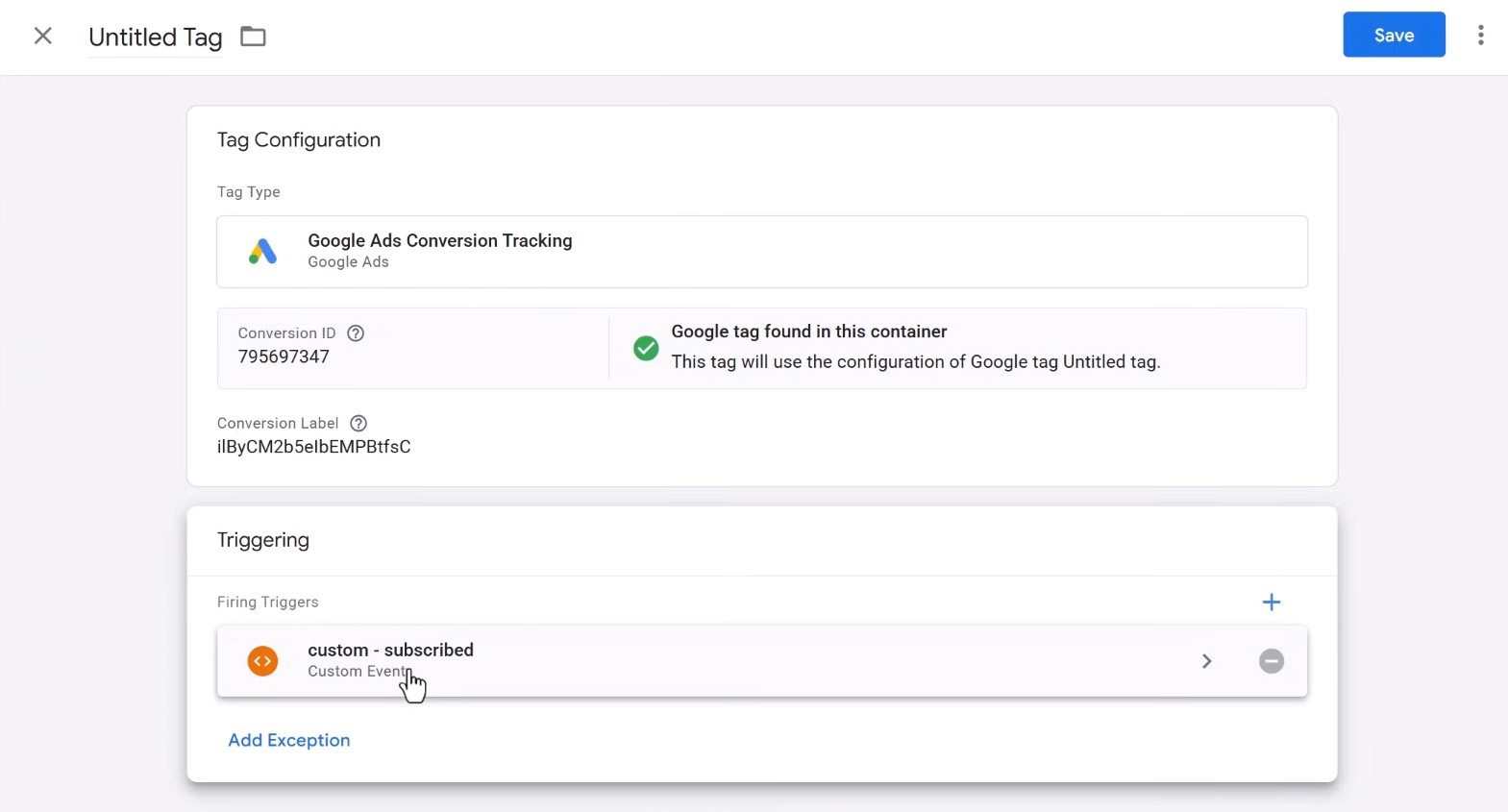
Forneça forte diversidade criativa. Faça upload do maior número possível de variações de assets de alta qualidade. O sistema do Google precisa de opções para testar. Uma única imagem e um único título não são suficientes.
Use exclusões de marca. Adicione sua própria marca à lista de exclusão para evitar que o PMax canibalize o tráfego de busca de marca. O Google adicionou controles de exclusão de marca self-service que agora estão disponíveis diretamente nas configurações da campanha.
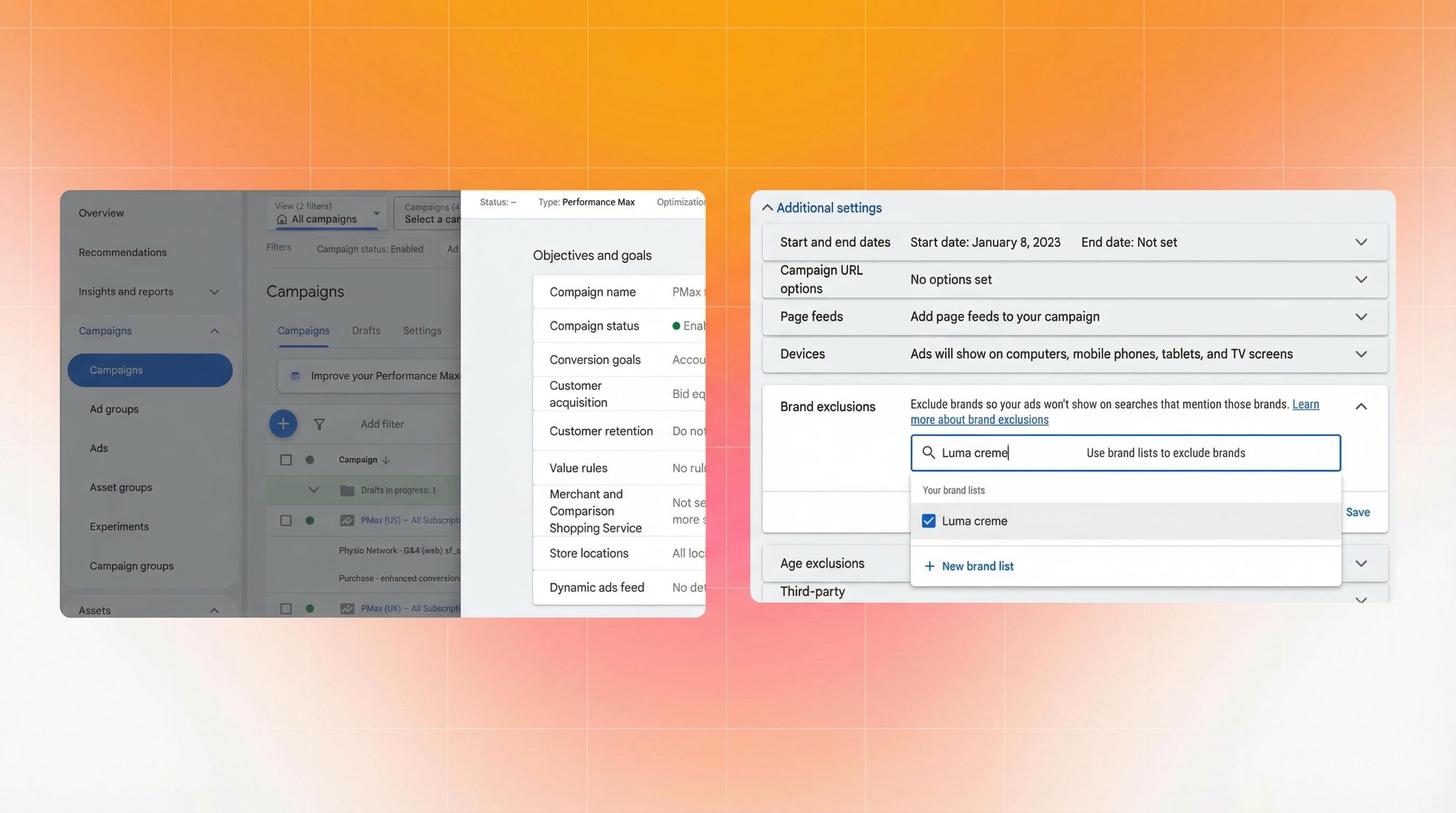
Adicione palavras-chave negativas em nível de campanha. O Google liberou controles de palavras-chave negativas em nível de campanha para todos os anunciantes, permitindo excluir consultas pouco lucrativas ou irrelevantes. Comece pelas óbvias: grátis, faça você mesmo, barato ou qualquer coisa que seu produto não seja.
Revise a performance dos assets regularmente. O Google classifica os assets como Low, Good ou Best. Substitua assets com nota Low. Teste novas direções criativas quando a performance estabilizar.
Dê tempo. O PMax tem um período de aprendizado. Evite mudanças grandes nas primeiras 2 a 4 semanas. Mudanças de orçamento, alterações na estratégia de lances ou edições significativas no grupo de assets reiniciam a fase de aprendizado.
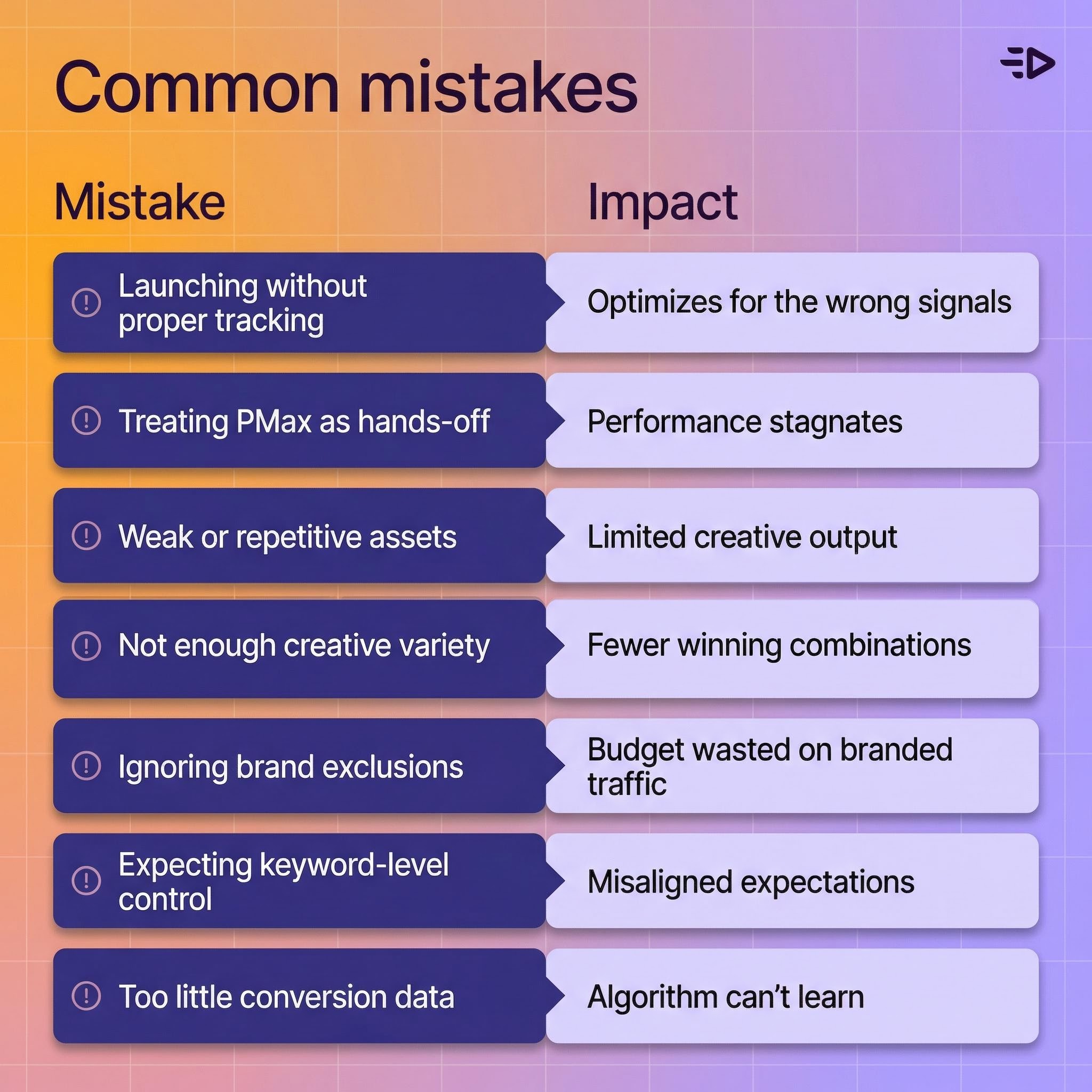
Erros comuns
Lançar sem um rastreamento de conversão sólido em funcionamento
Tratar o PMax como totalmente sem intervenção após o lançamento
Fazer upload de alguns assets fracos ou repetitivos e esperar resultados fortes
Não fornecer variedade suficiente de criativos
Ignorar exclusões de marca e perder orçamento para tráfego de marca
Esperar relatórios no nível de palavra-chave de um sistema construído para automação
Rodar PMax em contas com volume de conversão baixo demais para aprender
O papel do criativo no Performance Max
Essa é a parte em que a maioria dos anunciantes investe menos do que deveria.
O PMax monta anúncios automaticamente, mas ele só consegue trabalhar com o que você faz upload. Se suas imagens são genéricas, seus vídeos estão ausentes ou seus títulos são variações da mesma frase, o sistema está montando anúncios a partir de um conjunto limitado e de baixa qualidade. Isso aparece nas avaliações dos assets e, com o tempo, na performance.
Vídeo merece atenção especial. O PMax veicula anúncios no YouTube e no Discover, ambos favorecem vídeo. Se você não enviar assets em vídeo, o Google os gera automaticamente a partir das suas imagens, o que normalmente tem desempenho inferior ao de criativos em vídeo feitos sob medida.
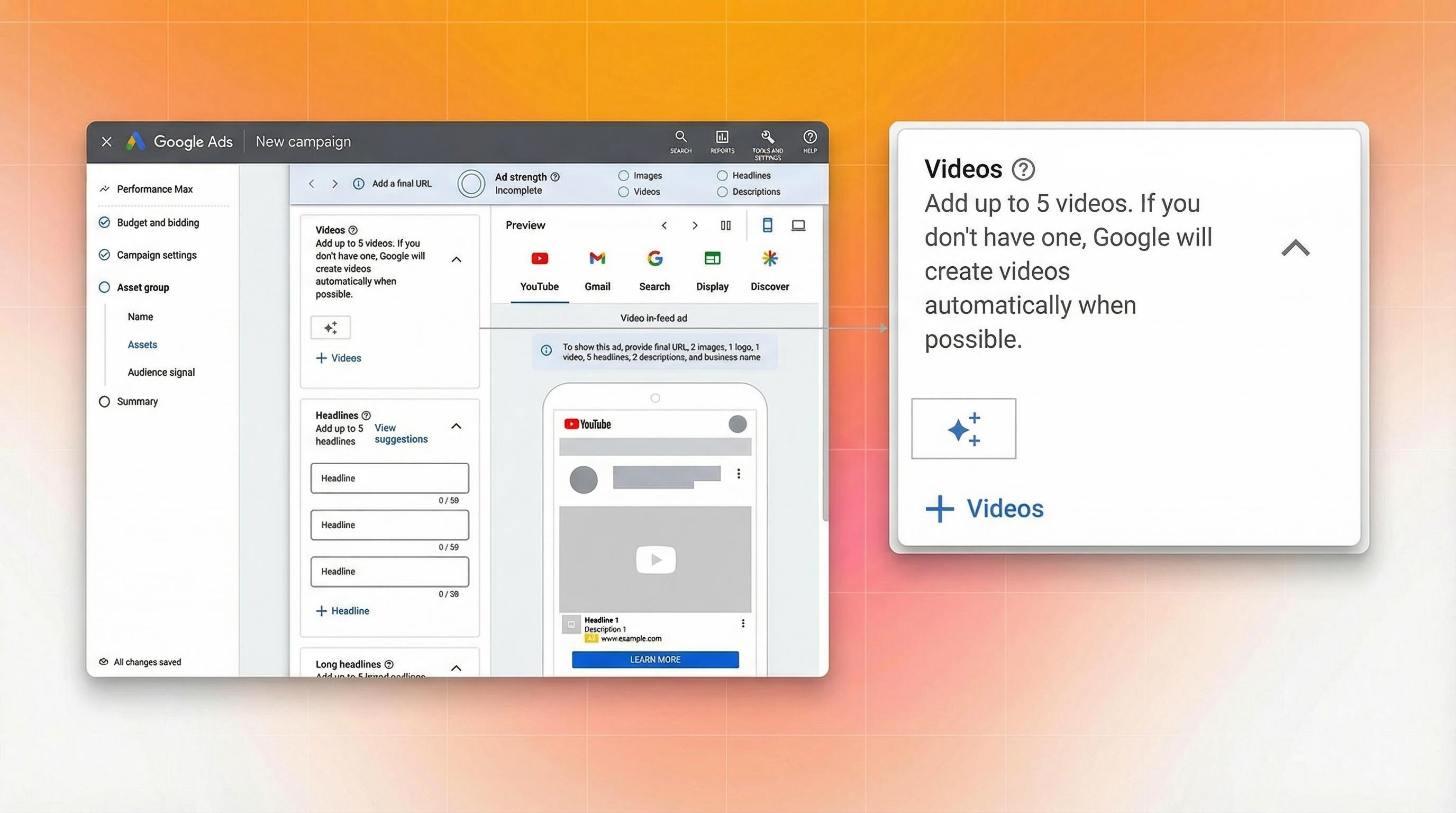
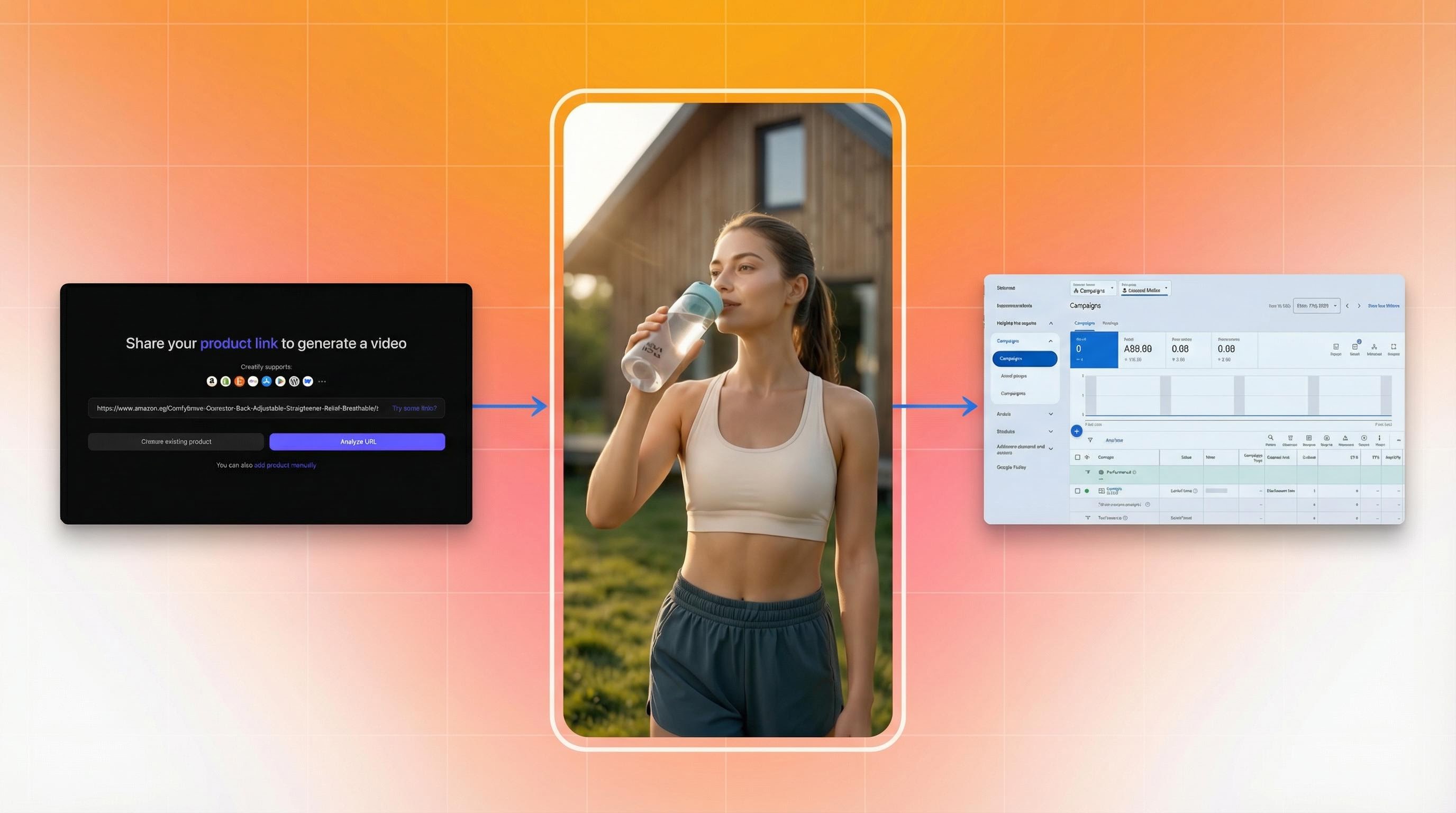
Para marcas de ecommerce e DTC, o volume de produção criativa costuma ser o verdadeiro gargalo. Testar vários hooks, CTAs e ângulos de produto em formatos de vídeo e estático exige um fluxo constante de assets. Algumas equipes usam ferramentas de geração de vídeo e imagem por IA para aumentar a produção criativa sem expandir os orçamentos de produção. Creatify, por exemplo, permite gerar variações de anúncios em vídeo e imagem a partir de uma URL de produto, o que pode ajudar a completar os grupos de assets do PMax com mais variedade criativa do que um fluxo de produção tradicional permitiria.
Performance Max em 2025 e além
O PMax avançou muito desde sua reputação inicial de "caixa preta". Ciclos recentes de atualização adicionaram palavras-chave negativas em nível de campanha, relatórios de performance por canal, segmentação de grupos de assets, temas de pesquisa e targeting de novos clientes de alto valor, dando aos anunciantes muito mais controle e visibilidade do que a versão original oferecia.
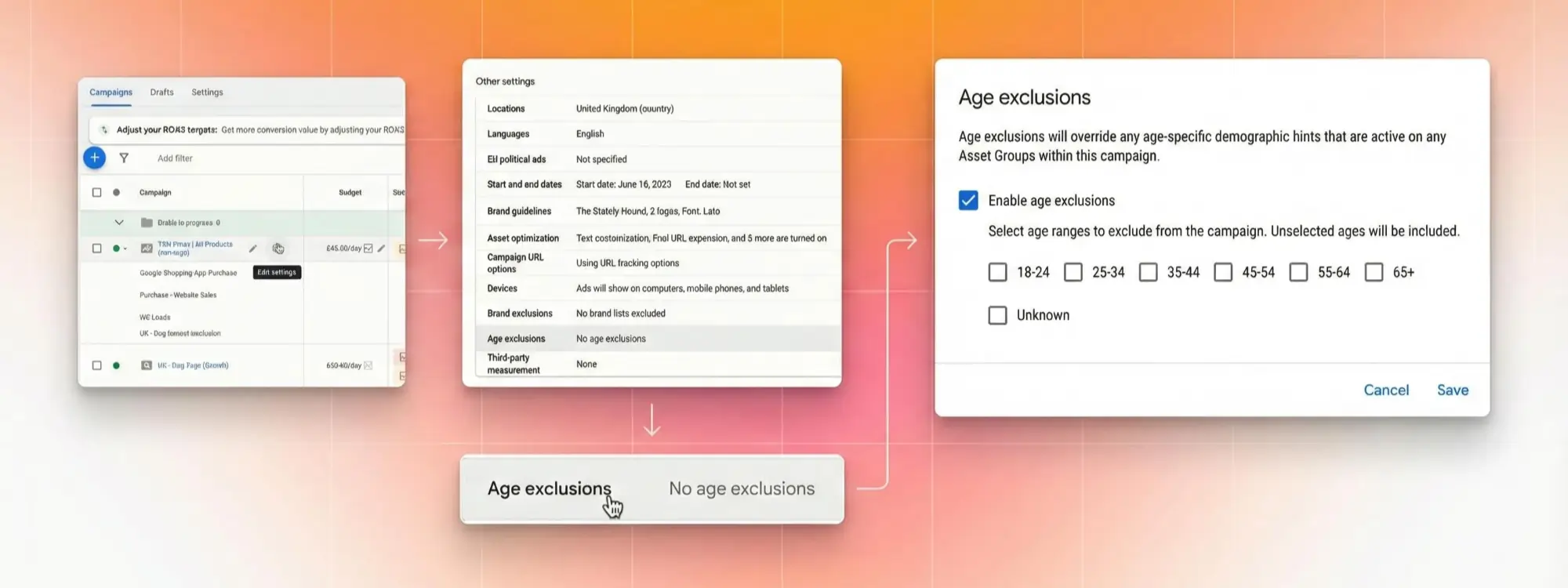
A atualização de recursos do Google para 2025 também introduziu exclusões demográficas por idade em beta e expandiu regras de targeting com URL-contains.
O papel do anunciante no PMax mudou silenciosamente. Antes, você gerenciava lances, posicionamentos e tipos de correspondência. Agora você gerencia inputs: dados de conversão, assets criativos, sinais de público e qualidade do feed. O algoritmo cuida da execução. Isso soa como menos trabalho, e em alguns aspectos é. Mas também significa que o teto do que o PMax pode fazer é definido pela qualidade dos inputs que você fornece.
Uma coisa que a maioria dos guias não cobre é como as campanhas Performance Max interagem com suas campanhas de Pesquisa existentes. PMax e Search podem se sobrepor em algumas consultas e, nesses casos, a mecânica do leilão e o matching de palavras-chave determinam qual anúncio é exibido. Na prática, a Search geralmente mantém prioridade quando há uma correspondência exata de palavra-chave, enquanto o PMax ainda pode capturar demanda adjacente ou não atendida.
A implicação prática: não pense no PMax como substituto da Search. Rode as duas juntas, proteja seus termos de Search mais importantes e deixe o PMax lidar com alcance mais amplo e demanda incremental.
Leia também: Publicidade gerada por IA: Tudo o que você precisa saber em 2026
Perguntas frequentes
O que é o Google Performance Max (PMax)?
O Google Performance Max é um tipo de campanha no Google Ads que veicula anúncios em todo o inventário do Google, incluindo Search, YouTube, Display, Discover, Gmail e Maps, a partir de uma única campanha. Os anunciantes fornecem objetivos de conversão, assets e sinais de público; a IA do Google cuida dos lances, do targeting e da montagem dos anúncios.
O que significa PMax?
PMax é a abreviação de Performance Max, o tipo de campanha cross-channel e baseado em objetivos do Google. Você verá o termo como PMax, campanhas PMax, anúncios PMax ou Google Ads Performance Max de forma intercambiável.
Qual é a diferença entre Performance Max e campanhas de Pesquisa?
As campanhas de Pesquisa rodam em palavras-chave específicas e dão aos anunciantes controle direto sobre quais consultas acionam seus anúncios. O Performance Max usa sinais de público e machine learning em vez de palavras-chave, roda em todos os canais do Google simultaneamente e automatiza lances e posicionamentos. A Search oferece mais controle; o PMax oferece mais alcance.
Quando devo usar uma campanha Performance Max?
O PMax funciona melhor para anunciantes focados em conversão com rastreamento de conversão forte, pelo menos 30+ conversões por mês, um feed de produtos bem estruturado (para ecommerce) e assets criativos diversos, incluindo vídeo. É uma ótima opção para escalar o alcance além da Search sem gerenciar vários tipos de campanha separadamente.
Quais são as maiores limitações do Google Performance Max?
Menor transparência sobre posicionamento e performance no nível da consulta, ausência de targeting tradicional por palavra-chave e forte dependência da qualidade dos dados de conversão. A canibalização de termos de marca também é um problema comum sem exclusões de marca adequadas.
Como otimizo uma campanha Performance Max?
Configure primeiro um rastreamento de conversão preciso. Faça upload de assets diversos e de alta qualidade, incluindo vídeo. Adicione exclusões de marca e palavras-chave negativas em nível de campanha. Revise regularmente as avaliações de performance dos assets e substitua os assets classificados como Low. Evite mudanças grandes durante o período de aprendizado (primeiras 2 a 4 semanas).
Preciso de vídeo para o Performance Max?
Você não precisa fazer upload de vídeo, mas isso é fortemente recomendado. Se nenhum asset em vídeo for fornecido, o Google o gera automaticamente a partir das suas imagens, o que normalmente tem desempenho inferior ao de criativos em vídeo personalizados. O PMax veicula anúncios no YouTube e no Discover, ambos são superfícies orientadas para vídeo.
Quais assets criativos preciso para uma campanha Performance Max?
O Google recomenda fornecer: até 15 imagens, 5 logos, 5 vídeos, 5 títulos (30 caracteres), 5 títulos longos (90 caracteres) e 5 descrições (60-90 caracteres) por grupo de assets. Mais variedade dá à IA mais opções para testar e aumenta a probabilidade de avaliações fortes dos assets.
O que é o Google Performance Max? Um guia completo
O Performance Max promete uma única campanha em todo o inventário do Google. Pesquisa, YouTube, Display, Gmail, Maps, Discover, altamente automatizado, com lances e entrega otimizados dinamicamente. Essa é a proposta.
O porém: o desempenho depende muito da qualidade dos seus inputs, e a maioria dos anunciantes configura isso errado. Este guia cobre o que é PMax, como ele funciona e o que separa campanhas que escalam daquelas que drenam orçamento silenciosamente.
O que é o Google Performance Max?
Performance Max (comumente chamado de PMax) é um tipo de campanha baseada em objetivos no Google Ads. Diferente de campanhas de Pesquisa, Display ou YouTube, que rodam em um único canal, o PMax roda em todas as superfícies de publicidade do Google simultaneamente a partir de uma única configuração de campanha.
Você fornece os inputs: objetivos de conversão, assets criativos (títulos, descrições, imagens, vídeos, logos) e sinais de público. A IA do Google cuida do resto: onde mostrar seus anúncios, para quem, com qual lance e em qual formato.
O PMax foi lançado no fim de 2021. Em seguida, o Google migrou as campanhas Smart Shopping e Local para ele até o fim de 2022, tornando-o o principal caminho para anunciantes que antes usavam esses tipos de campanha.
Por que o Google o construiu
O Google Ads tradicional exigia gerenciar campanhas separadas para cada canal. Uma conta típica de ecommerce podia rodar campanhas de Pesquisa, Shopping, Display e YouTube com orçamentos, lances e criativos separados para cada uma.
As campanhas Google Performance Max são a resposta do Google a essa complexidade. A ideia: dê ao Google seu objetivo de conversão e seus assets criativos, e a IA descobre a forma mais eficiente de alcançar clientes em todas as superfícies ao mesmo tempo.
Isso também reflete a mudança mais ampla na publicidade digital em direção à automação. O lance manual por palavra-chave e a seleção de posicionamento estão sendo cada vez mais substituídos por sistemas de machine learning que otimizam em tempo real com mais sinais do que qualquer humano conseguiria processar manualmente.
Como o Performance Max funciona
O modelo operacional é direto. Você define:
Um objetivo de conversão (vendas, leads, visitas à loja)
Grupos de assets: conjuntos de títulos, descrições, imagens, logos e vídeos
Sinais de público: dados próprios, listas de clientes, públicos de remarketing ou segmentos personalizados
Uma estratégia de lances: CPA desejado, ROAS desejado ou Maximizar conversões
O sistema do Google então monta os anúncios a partir dos seus assets, decide quais combinações mostrar e onde, e ajusta os lances em tempo real com base na probabilidade de conversão.
O PMax não usa palavras-chave da mesma forma que campanhas de Pesquisa. Ele usa sinais de público e machine learning para determinar quem vê seus anúncios. O Google passou a adicionar controles semelhantes a palavras-chave, incluindo temas de pesquisa e palavras-chave negativas, que dão aos anunciantes mais direcionamento, mas o controle no nível de consulta continua fundamentalmente diferente de uma campanha de Pesquisa padrão.
Onde os anúncios do PMax aparecem
Uma única campanha PMax pode veicular anúncios em:
Google Search (incluindo resultados do Shopping)
YouTube
Rede de Display do Google
Discover
Gmail
Google Maps
O Google adapta automaticamente seus criativos aos requisitos de formato de cada posicionamento. O mesmo grupo de assets pode gerar um anúncio de texto no Search, um anúncio em vídeo no YouTube e um anúncio gráfico responsivo na Rede de Display.
A entrega real nesses canais depende da qualidade dos seus assets, dos dados de conversão, do orçamento e de quão bem seus sinais de público correspondem a cada superfície.
Principais benefícios
Uma única campanha em todo o inventário. Em vez de gerenciar orçamentos e lances separados em cinco tipos de campanha, o PMax consolida tudo em um só.
Menor sobrecarga operacional. As decisões de lance e posicionamento são automatizadas, liberando tempo para estratégia de nível mais alto.
Alcance mais forte para objetivos focados em conversão. O PMax pode identificar caminhos de conversão que o targeting manual deixaria passar, especialmente para alcançar usuários mais cedo na jornada de compra.
Flexibilidade criativa. O Google testa automaticamente combinações de assets e mostra quais performam melhor, para que você aprenda o que funciona em diferentes formatos sem rodar experimentos separados.
Principais limitações e trade-offs
O PMax abre mão de controle em troca de alcance e automação. Esse trade-off nem sempre é o ideal.
Menos transparência. As primeiras versões do PMax davam aos anunciantes quase nenhuma visibilidade sobre para onde o orçamento estava indo ou quais posicionamentos estavam convertendo. O Google melhorou isso significativamente com relatórios de performance por canal e avaliações em nível de asset, mas ainda é menos granular do que campanhas específicas por canal.
Controles semelhantes a palavras-chave, não targeting por palavras-chave. O PMax não usa palavras-chave da mesma forma que campanhas de Pesquisa. Ele usa sinais de público e machine learning para determinar quem vê seus anúncios. Dito isso, o Google adicionou controles semelhantes a palavras-chave ao longo do tempo, incluindo temas de pesquisa (que permitem fornecer sinais de intenção para o algoritmo por grupo de assets) e palavras-chave negativas em nível de campanha. Isso melhora a direção e o filtro, mas não oferece o controle consulta por consulta que você teria em uma campanha de Pesquisa.
Dependência de dados. A IA do PMax precisa de dados de conversão para aprender. Muitos profissionais tratam 30 a 50 conversões por mês como um ponto de partida prático para uma otimização estável. Sem sinal suficiente, o sistema tende a ter desempenho abaixo do esperado.
Canibalização de termos de marca. Sem uma configuração cuidadosa de exclusão de marca, o PMax pode gastar orçamento em seus próprios termos de busca de marca, inflando os números de conversão com tráfego que converteria de qualquer forma.
Performance Max vs. outros tipos de campanha do Google Ads
Performance Max | Pesquisa / Shopping / Display / YouTube | |
|---|---|---|
Targeting | Sinais de público + automação | Palavras-chave manuais ou baseadas em posicionamento |
Canais | Cross-channel, todo o inventário do Google | Canal único ou mais restrito |
Controle | Menor | Maior |
Criativo | Baseado em assets, montado automaticamente | Geralmente específico por canal |
Relatórios | Melhorando, mas menos granular | Mais granular |
Melhor para | Objetivos de conversão e escala | Precisão, controle de intenção, estratégia específica por canal |
PMax e campanhas de Pesquisa não são mutuamente exclusivas. A maioria dos profissionais as executa juntas, usando Search para termos de marca e de categoria com alta intenção e o PMax para descoberta e alcance incremental.
Quando usar o Performance Max
As campanhas Google Performance Max tendem a performar melhor quando:
Você é uma marca de ecommerce com um feed de produtos bem estruturado e rastreamento de conversão forte
Você tem volume de conversão suficiente para a IA do Google aprender (30+ conversões por mês é uma linha de base inicial comum)
O alcance cross-channel importa mais do que o controle no nível da consulta
Você quer escalar além da Pesquisa sem gerenciar vários tipos de campanha separadamente
Você tem assets criativos fortes, incluindo vídeo, para alimentar YouTube e Display
Os próprios estudos de caso do Google mostram resultados fortes para anunciantes focados em conversão. A Discovery+ relatou uma redução de 21% no custo por aquisição após migrar para o PMax, e a Rothy's viu um aumento de 60% nas conversões.
Quando não depender apenas do PMax
O PMax não é a opção certa em todas as situações.
Rastreamento de conversão incompleto. Se sua mensuração de conversão não for sólida, o sistema otimiza para os sinais errados. Isso é especialmente comum em geração de leads, onde preenchimentos de formulário nem sempre indicam leads qualificados.
Requisitos de brand safety. Se você precisa de controle rígido sobre quais consultas e posicionamentos mostram sua marca, a automação do PMax pode não oferecer os guardrails necessários.
Mensagens segmentadas por público ou etapa do funil. O PMax não oferece o tipo de messaging granular específico por público que uma campanha bem estruturada de Pesquisa ou Display pode entregar.
Contas com baixo volume de conversão. Se sua conta gera menos de 30 conversões por mês, o PMax não tem dados suficientes para otimizar e provavelmente terá desempenho fraco.
Quais inputs impulsionam os resultados do Performance Max
A automação só funciona tão bem quanto o que você alimenta nela. Os inputs que mais importam:
Rastreamento de conversão. Dados de conversão precisos e completos são a base. Sem isso, nada mais funciona bem.
Assets criativos. O Google classifica cada asset como Low, Good ou Best com base na contribuição de performance. Assets fracos ou repetitivos limitam o que o sistema consegue fazer. Isso significa que você precisa de variedade criativa suficiente entre imagens, vídeos, títulos e descrições para dar à IA opções reais para testar.
Sinais de público. Listas de clientes de dados próprios e públicos de remarketing dão ao sistema um ponto de partida forte. Quanto mais específicos forem seus sinais, mais rápido o PMax aprende.
Qualidade do feed de produtos (para ecommerce). Um feed limpo, completo e bem estruturado é um dos inputs de maior alavancagem para campanhas de retail PMax.
Relevância da landing page. O PMax controla posicionamento e lance, mas não o que acontece depois do clique. Landing pages fracas limitam a taxa de conversão, independentemente de quão bem a campanha esteja configurada.
Como otimizar o Performance Max
Comece com mensuração precisa. Configure o rastreamento de conversão antes do lançamento. Lances baseados em valor (Target ROAS) exigem dados reais de valor de conversão, não apenas contagem de conversões. Use rastreamento de conversão baseado em eventos sempre que possível, e não apenas rastreamento por clique. Muitos anunciantes usam Google Tag Manager para configurar eventos de conversão personalizados vinculados à atividade do usuário.
Forneça forte diversidade criativa. Faça upload do maior número possível de variações de assets de alta qualidade. O sistema do Google precisa de opções para testar. Uma única imagem e um único título não são suficientes.
Use exclusões de marca. Adicione sua própria marca à lista de exclusão para evitar que o PMax canibalize o tráfego de busca de marca. O Google adicionou controles de exclusão de marca self-service que agora estão disponíveis diretamente nas configurações da campanha.
Adicione palavras-chave negativas em nível de campanha. O Google liberou controles de palavras-chave negativas em nível de campanha para todos os anunciantes, permitindo excluir consultas pouco lucrativas ou irrelevantes. Comece pelas óbvias: grátis, faça você mesmo, barato ou qualquer coisa que seu produto não seja.
Revise a performance dos assets regularmente. O Google classifica os assets como Low, Good ou Best. Substitua assets com nota Low. Teste novas direções criativas quando a performance estabilizar.
Dê tempo. O PMax tem um período de aprendizado. Evite mudanças grandes nas primeiras 2 a 4 semanas. Mudanças de orçamento, alterações na estratégia de lances ou edições significativas no grupo de assets reiniciam a fase de aprendizado.
Erros comuns
Lançar sem um rastreamento de conversão sólido em funcionamento
Tratar o PMax como totalmente sem intervenção após o lançamento
Fazer upload de alguns assets fracos ou repetitivos e esperar resultados fortes
Não fornecer variedade suficiente de criativos
Ignorar exclusões de marca e perder orçamento para tráfego de marca
Esperar relatórios no nível de palavra-chave de um sistema construído para automação
Rodar PMax em contas com volume de conversão baixo demais para aprender
O papel do criativo no Performance Max
Essa é a parte em que a maioria dos anunciantes investe menos do que deveria.
O PMax monta anúncios automaticamente, mas ele só consegue trabalhar com o que você faz upload. Se suas imagens são genéricas, seus vídeos estão ausentes ou seus títulos são variações da mesma frase, o sistema está montando anúncios a partir de um conjunto limitado e de baixa qualidade. Isso aparece nas avaliações dos assets e, com o tempo, na performance.
Vídeo merece atenção especial. O PMax veicula anúncios no YouTube e no Discover, ambos favorecem vídeo. Se você não enviar assets em vídeo, o Google os gera automaticamente a partir das suas imagens, o que normalmente tem desempenho inferior ao de criativos em vídeo feitos sob medida.
Para marcas de ecommerce e DTC, o volume de produção criativa costuma ser o verdadeiro gargalo. Testar vários hooks, CTAs e ângulos de produto em formatos de vídeo e estático exige um fluxo constante de assets. Algumas equipes usam ferramentas de geração de vídeo e imagem por IA para aumentar a produção criativa sem expandir os orçamentos de produção. Creatify, por exemplo, permite gerar variações de anúncios em vídeo e imagem a partir de uma URL de produto, o que pode ajudar a completar os grupos de assets do PMax com mais variedade criativa do que um fluxo de produção tradicional permitiria.
Performance Max em 2025 e além
O PMax avançou muito desde sua reputação inicial de "caixa preta". Ciclos recentes de atualização adicionaram palavras-chave negativas em nível de campanha, relatórios de performance por canal, segmentação de grupos de assets, temas de pesquisa e targeting de novos clientes de alto valor, dando aos anunciantes muito mais controle e visibilidade do que a versão original oferecia.
A atualização de recursos do Google para 2025 também introduziu exclusões demográficas por idade em beta e expandiu regras de targeting com URL-contains.
O papel do anunciante no PMax mudou silenciosamente. Antes, você gerenciava lances, posicionamentos e tipos de correspondência. Agora você gerencia inputs: dados de conversão, assets criativos, sinais de público e qualidade do feed. O algoritmo cuida da execução. Isso soa como menos trabalho, e em alguns aspectos é. Mas também significa que o teto do que o PMax pode fazer é definido pela qualidade dos inputs que você fornece.
Uma coisa que a maioria dos guias não cobre é como as campanhas Performance Max interagem com suas campanhas de Pesquisa existentes. PMax e Search podem se sobrepor em algumas consultas e, nesses casos, a mecânica do leilão e o matching de palavras-chave determinam qual anúncio é exibido. Na prática, a Search geralmente mantém prioridade quando há uma correspondência exata de palavra-chave, enquanto o PMax ainda pode capturar demanda adjacente ou não atendida.
A implicação prática: não pense no PMax como substituto da Search. Rode as duas juntas, proteja seus termos de Search mais importantes e deixe o PMax lidar com alcance mais amplo e demanda incremental.
Leia também: Publicidade gerada por IA: Tudo o que você precisa saber em 2026
Perguntas frequentes
O que é o Google Performance Max (PMax)?
O Google Performance Max é um tipo de campanha no Google Ads que veicula anúncios em todo o inventário do Google, incluindo Search, YouTube, Display, Discover, Gmail e Maps, a partir de uma única campanha. Os anunciantes fornecem objetivos de conversão, assets e sinais de público; a IA do Google cuida dos lances, do targeting e da montagem dos anúncios.
O que significa PMax?
PMax é a abreviação de Performance Max, o tipo de campanha cross-channel e baseado em objetivos do Google. Você verá o termo como PMax, campanhas PMax, anúncios PMax ou Google Ads Performance Max de forma intercambiável.
Qual é a diferença entre Performance Max e campanhas de Pesquisa?
As campanhas de Pesquisa rodam em palavras-chave específicas e dão aos anunciantes controle direto sobre quais consultas acionam seus anúncios. O Performance Max usa sinais de público e machine learning em vez de palavras-chave, roda em todos os canais do Google simultaneamente e automatiza lances e posicionamentos. A Search oferece mais controle; o PMax oferece mais alcance.
Quando devo usar uma campanha Performance Max?
O PMax funciona melhor para anunciantes focados em conversão com rastreamento de conversão forte, pelo menos 30+ conversões por mês, um feed de produtos bem estruturado (para ecommerce) e assets criativos diversos, incluindo vídeo. É uma ótima opção para escalar o alcance além da Search sem gerenciar vários tipos de campanha separadamente.
Quais são as maiores limitações do Google Performance Max?
Menor transparência sobre posicionamento e performance no nível da consulta, ausência de targeting tradicional por palavra-chave e forte dependência da qualidade dos dados de conversão. A canibalização de termos de marca também é um problema comum sem exclusões de marca adequadas.
Como otimizo uma campanha Performance Max?
Configure primeiro um rastreamento de conversão preciso. Faça upload de assets diversos e de alta qualidade, incluindo vídeo. Adicione exclusões de marca e palavras-chave negativas em nível de campanha. Revise regularmente as avaliações de performance dos assets e substitua os assets classificados como Low. Evite mudanças grandes durante o período de aprendizado (primeiras 2 a 4 semanas).
Preciso de vídeo para o Performance Max?
Você não precisa fazer upload de vídeo, mas isso é fortemente recomendado. Se nenhum asset em vídeo for fornecido, o Google o gera automaticamente a partir das suas imagens, o que normalmente tem desempenho inferior ao de criativos em vídeo personalizados. O PMax veicula anúncios no YouTube e no Discover, ambos são superfícies orientadas para vídeo.
Quais assets criativos preciso para uma campanha Performance Max?
O Google recomenda fornecer: até 15 imagens, 5 logos, 5 vídeos, 5 títulos (30 caracteres), 5 títulos longos (90 caracteres) e 5 descrições (60-90 caracteres) por grupo de assets. Mais variedade dá à IA mais opções para testar e aumenta a probabilidade de avaliações fortes dos assets.

Pronto para transformar seu produto em um vídeo envolvente?