

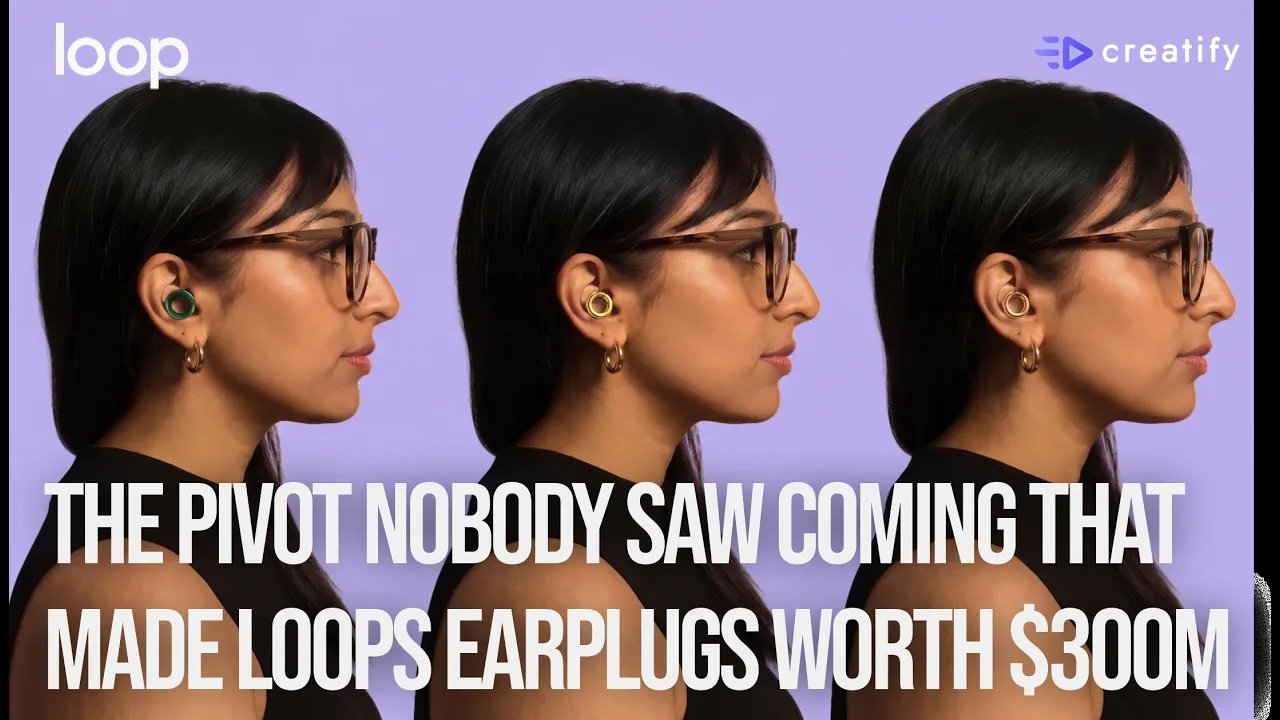
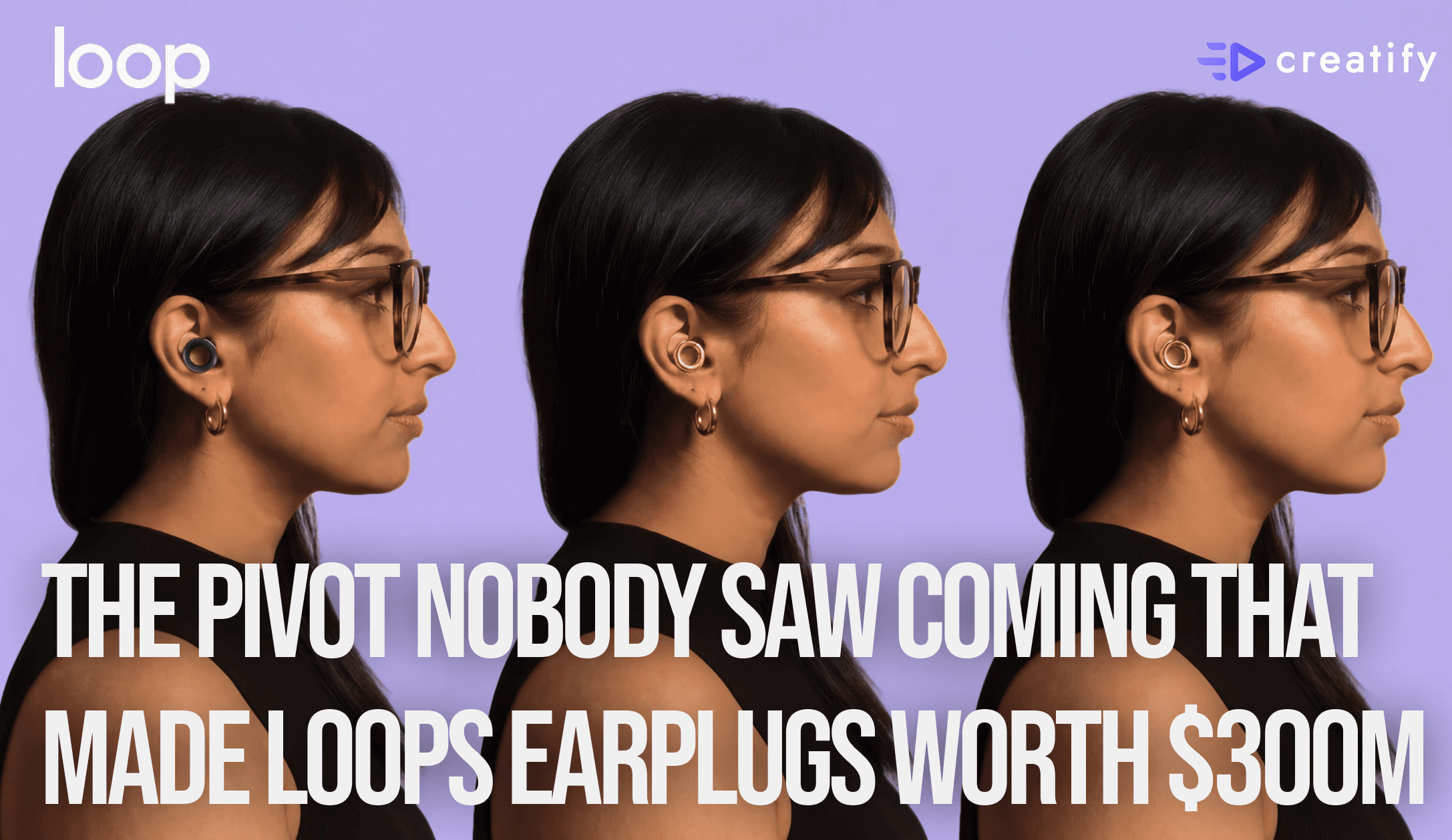
Loops estava morrendo. então eles fizeram um pivot. agora estão em $300M
Loops estava morrendo. então eles fizeram um pivot. agora estão em $300M

Escrito por
Niyah Ali
•
Niyah Ali
COMPARTILHAR


NESTE ARTIGO
Como Loop Earplugs Passou de $20K/Mês para Uma Marca de $300M | Creatify
A receita da Loop desabou da noite para o dia quando a COVID acabou com todo o seu mercado — e a mudança que eles fizeram transformou uma marca de protetores de ouvido de nicho em uma potência DTC de $300M. Aqui está o exato manual: o insight dos consumidores, a rebranding e a máquina de anúncios por trás disso.
Como a Loop se reconstruiu a partir de $20K/mês
Loop foi criada para frequentadores de shows. Protetores de ouvido estilosos e confortáveis para pessoas que queriam proteger sua audição sem parecer que estavam usando protetores de espuma de uma loja de ferramentas. Em 2019, isso estava funcionando — eles estavam faturando 475K em receita anual. Então a COVID chegou e todo o seu mercado desapareceu da noite para o dia.
A receita mensal caiu de $100K para $20K. Os shows acabaram. A base de clientes sobre a qual eles construíram toda a marca não tinha para onde ir.
Em vez de desistir, eles fizeram uma pergunta: quem exatamente precisa disto?
Essa pergunta desbloqueou tudo. Pessoas com TDAH que precisavam de ajuda para se concentrar. Pessoas com sono leve. Passageiros frequentes. Qualquer pessoa cujo mundo estava um pouco barulhento demais. Sessenta por cento dos clientes da Loop hoje nunca compraram protetores de ouvido antes. Eles não roubaram participação de mercado — eles criaram uma categoria completamente nova.
A rebranding que multiplicou por 10 a sua receita em um ano
Saber quem precisa do seu produto é metade do trabalho. A outra metade é fazer com que eles queiram.
O posicionamento original da Loop era funcional — proteção auditiva, um dispositivo médico. Essa abordagem funciona para um público de nicho, mas limita seu crescimento rapidamente. Então eles redefiniram todo o produto. Eles não estavam mais vendendo proteção auditiva. Estavam vendendo óculos de sol para os ouvidos. Um acessório de moda que é confortável e bonito.
Essa mudança de funcional para aspiracional é diretamente responsável por sua ascensão de €12 milhões para €126 milhões em um único ano. Mesmo produto. Diferente identidade. A medida que a maioria das marcas perde: recursos convertem consideração, identidade converte desejo.
Dentro da operação de 1.800+ anúncios da Loop no Meta
Depois de ter o posicionamento certo e o público-alvo correto, a Loop escalou o volume criativo para um nível que a maioria das marcas nunca tenta.
Eles estão executando mais de 1.800 anúncios apenas no Meta, cada um com uma direção criativa única. A mistura: cerca de 60% de anúncios em vídeo com narrativas orientadas por personagens, depoimentos no estilo UGC, e vitrines de produtos — e 40% anúncios de imagens estáticas lidando com retargeting e resposta direta com fotos de produtos limpas e declarações ousadas de benefícios.
Dentro desses formatos, eles executam quatro categorias criativas simultaneamente: anúncios de audiência ampla e fria, anúncios de persona micro-segmentados feitos para usuários com TDAH, pais e passageiros frequentes, anúncios funcionais que começam com o problema, e anúncios de estilo de vida que associam o produto a uma identidade. Seus gastos com anúncios ficam em torno de $1.5 milhão por mês apenas no Meta.
Os ganchos são projetados para que você sinta o anúncio antes mesmo de compreendê-lo. Colaborações de parceria com SoulCycle e McLaren F1 emprestam confiança de marcas premium em vez de reconstruí-la do zero.
A arquitetura de funil que realmente converte
O volume criativo inunda o topo do funil. O que o converte é o que vive embaixo dele.
Loop divide o tráfego de duas maneiras. O tráfego direto da página do produto tem vendas cruzadas e upsells integrados — o valor do pedido sobe automaticamente. O tráfego do quiz é onde fica interessante. Seu quiz faz três coisas ao mesmo tempo: captura dados de primeira parte, aumenta a lista de e-mails, e personaliza a jornada de compra com base na persona autoidentificada.
Quando alguém escolhe "passageiro frequente" ou "sono leve", a conversão já aconteceu na cabeça dela. Ela disse esse sou eu. Ela acessa a página do produto já convencida.
O sistema por trás de uma marca que se compõe
Loop não apenas criou um produto — eles criaram um sistema. Volume criativo, arquitetura de persona, e captura de dados se alimentam uns aos outros. Essa é a diferença entre uma marca que cresce e uma que se compõe.
As marcas que estudam a biblioteca de anúncios da Loop — as proporções de formato, os ganchos, as rotações criativas — podem engenharia reversa de todo o manual. Ferramentas como
Creatify permitem que você acompanhe o que os concorrentes estão executando e escale sua própria produção criativa para corresponder.
👉 Experimente Creatify gratuitamente → https://app.creatify.ai/auth/login?ut=10
Como Loop Earplugs Passou de $20K/Mês para Uma Marca de $300M | Creatify
A receita da Loop desabou da noite para o dia quando a COVID acabou com todo o seu mercado — e a mudança que eles fizeram transformou uma marca de protetores de ouvido de nicho em uma potência DTC de $300M. Aqui está o exato manual: o insight dos consumidores, a rebranding e a máquina de anúncios por trás disso.
Como a Loop se reconstruiu a partir de $20K/mês
Loop foi criada para frequentadores de shows. Protetores de ouvido estilosos e confortáveis para pessoas que queriam proteger sua audição sem parecer que estavam usando protetores de espuma de uma loja de ferramentas. Em 2019, isso estava funcionando — eles estavam faturando 475K em receita anual. Então a COVID chegou e todo o seu mercado desapareceu da noite para o dia.
A receita mensal caiu de $100K para $20K. Os shows acabaram. A base de clientes sobre a qual eles construíram toda a marca não tinha para onde ir.
Em vez de desistir, eles fizeram uma pergunta: quem exatamente precisa disto?
Essa pergunta desbloqueou tudo. Pessoas com TDAH que precisavam de ajuda para se concentrar. Pessoas com sono leve. Passageiros frequentes. Qualquer pessoa cujo mundo estava um pouco barulhento demais. Sessenta por cento dos clientes da Loop hoje nunca compraram protetores de ouvido antes. Eles não roubaram participação de mercado — eles criaram uma categoria completamente nova.
A rebranding que multiplicou por 10 a sua receita em um ano
Saber quem precisa do seu produto é metade do trabalho. A outra metade é fazer com que eles queiram.
O posicionamento original da Loop era funcional — proteção auditiva, um dispositivo médico. Essa abordagem funciona para um público de nicho, mas limita seu crescimento rapidamente. Então eles redefiniram todo o produto. Eles não estavam mais vendendo proteção auditiva. Estavam vendendo óculos de sol para os ouvidos. Um acessório de moda que é confortável e bonito.
Essa mudança de funcional para aspiracional é diretamente responsável por sua ascensão de €12 milhões para €126 milhões em um único ano. Mesmo produto. Diferente identidade. A medida que a maioria das marcas perde: recursos convertem consideração, identidade converte desejo.
Dentro da operação de 1.800+ anúncios da Loop no Meta
Depois de ter o posicionamento certo e o público-alvo correto, a Loop escalou o volume criativo para um nível que a maioria das marcas nunca tenta.
Eles estão executando mais de 1.800 anúncios apenas no Meta, cada um com uma direção criativa única. A mistura: cerca de 60% de anúncios em vídeo com narrativas orientadas por personagens, depoimentos no estilo UGC, e vitrines de produtos — e 40% anúncios de imagens estáticas lidando com retargeting e resposta direta com fotos de produtos limpas e declarações ousadas de benefícios.
Dentro desses formatos, eles executam quatro categorias criativas simultaneamente: anúncios de audiência ampla e fria, anúncios de persona micro-segmentados feitos para usuários com TDAH, pais e passageiros frequentes, anúncios funcionais que começam com o problema, e anúncios de estilo de vida que associam o produto a uma identidade. Seus gastos com anúncios ficam em torno de $1.5 milhão por mês apenas no Meta.
Os ganchos são projetados para que você sinta o anúncio antes mesmo de compreendê-lo. Colaborações de parceria com SoulCycle e McLaren F1 emprestam confiança de marcas premium em vez de reconstruí-la do zero.
A arquitetura de funil que realmente converte
O volume criativo inunda o topo do funil. O que o converte é o que vive embaixo dele.
Loop divide o tráfego de duas maneiras. O tráfego direto da página do produto tem vendas cruzadas e upsells integrados — o valor do pedido sobe automaticamente. O tráfego do quiz é onde fica interessante. Seu quiz faz três coisas ao mesmo tempo: captura dados de primeira parte, aumenta a lista de e-mails, e personaliza a jornada de compra com base na persona autoidentificada.
Quando alguém escolhe "passageiro frequente" ou "sono leve", a conversão já aconteceu na cabeça dela. Ela disse esse sou eu. Ela acessa a página do produto já convencida.
O sistema por trás de uma marca que se compõe
Loop não apenas criou um produto — eles criaram um sistema. Volume criativo, arquitetura de persona, e captura de dados se alimentam uns aos outros. Essa é a diferença entre uma marca que cresce e uma que se compõe.
As marcas que estudam a biblioteca de anúncios da Loop — as proporções de formato, os ganchos, as rotações criativas — podem engenharia reversa de todo o manual. Ferramentas como
Creatify permitem que você acompanhe o que os concorrentes estão executando e escale sua própria produção criativa para corresponder.
👉 Experimente Creatify gratuitamente → https://app.creatify.ai/auth/login?ut=10

Pronto para transformar seu produto em um vídeo envolvente?
Você também pode gostar





Pronto para acelerar seu marketing?
Teste suas novas ideias de produto em minutos com anúncios em vídeo gerados por IA


Pronto para acelerar seu marketing?
Teste suas novas ideias de produto em minutos com anúncios em vídeo gerados por IA
Pronto para acelerar seu marketing?
Teste suas novas ideias de produto em minutos com anúncios em vídeo gerados por IA
Pronto para acelerar seu marketing?
Teste suas novas ideias de produto em minutos com anúncios em vídeo gerados por IA

Crie anúncios de vídeo envolventes para seus produtos
de qualquer URL



Creatify Lab • Copyright © 2026
Idioma
Portuguese (Brazil)
Recursos
Ferramentas
Casos de Uso
Crie anúncios de vídeo envolventes para seus produtos
de qualquer URL
Creatify Lab • Copyright © 2026
Idioma
Portuguese (Brazil)
Recursos
Ferramentas
Casos de Uso
Crie anúncios de vídeo envolventes para seus produtos
de qualquer URL
Creatify Lab • Copyright © 2026
Idioma
Portuguese (Brazil)
Recursos
Ferramentas
Casos de Uso
YouTube
Snapchat
Shopify
Criar Avatar de IA
OTT e CTV
Geração de Leads
Crie anúncios de vídeo envolventes para seus produtos
de qualquer URL
Creatify Lab • Copyright © 2026
Idioma
Portuguese (Brazil)
Recursos
Ferramentas
Casos de Uso
